"I am not one who was born in the custody of wisdom. I am one who is fond of olden times and intense in quest of the sacred knowing of the ancients." Gustave Courbet
Showing posts with label pyle. Show all posts

05 August 2026

Triggers.


Andrea Immel at the Cotsen Children’s Library has triggers for wonderous dreams ...
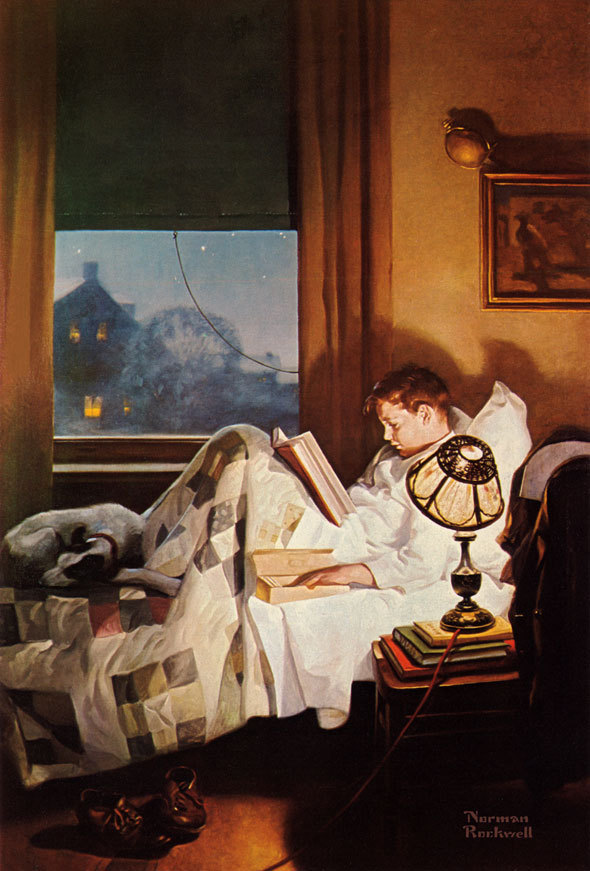
Between the ages of four and eight, the young Charles Lamb became “extremely inquisitive about witches and witch-stories” after he went into his father’s “book-closet” and wrestled the two folio volumes of Thomas Stackhouse’s New History of the Bible down from the upper shelf. The physical exertion was repaid by the pleasure of studying the splendid engravings, except for the one which provided the container of his night terrors, which he regretted having ever seen. The plate of the witch of Endor was a trigger: the actual source of the terrors were “archetypes” deep within the mind which “afford some probable insight into our ante-mundane condition, and a peep at least into the shadow-land of pre-existence.”  Samuel was depicted in Stackhouse as a terrible old man wrapped in a mantle, and every night this spectre sent a hag that perched on Charles’ pillow.  He was so frightened that he avoided going into his room even in broad daylight.

Lamb’s memories offer evidence that children did indeed examine large books like Stackhouse which were not specifically intended for children, but neither excluded them because of the wealth of illustrations on subjects they would have learned about elsewhere.  But they are also the earliest of which I am aware which describe accurately and vividly a book illustration that made an indelible impression on a child reader accompanied by a penetrating analysis of its meaning.  

Execupundit with two of the all-time masters

09 July 2025

Declaration.

Pyle, Reading the Declaration before Washington’s Army, New York, July 9, 1776, 1892


Early this evening in 1776, George Washington's troops were read The Declaration of Independence. Later in the night, the citizens destroyed a statue of King George III, which stood at the foot of Broadway on the Bowling Green ...
[The statue] has been pulled down to make musket ball of, so that his troops will probably have melted Majesty fired at them. 
Ebenezer Benezer, United States Postmaster General
Pyle, Pulling Down the Statue of King George III, 1854

19 April 2025

Rise.

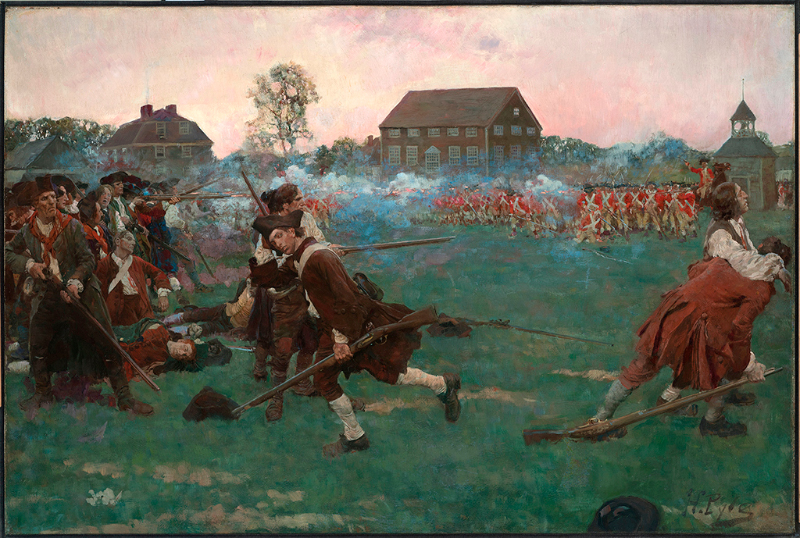
Pyle, The Fight on Lexington Common, April 19, 1775, 1898


The BATTLE of LEXINGTON

Now haste thee while the way is clear, Paul Revere!
Haste, Dawes! but haste thee not, O Sun!
To Lexington.

Then Devens looked and saw the light:
He got him forth into the night,
And watched alone on the river-shore,
And marked the British ferrying o'er.

John Parker! rub thine eyes and yawn:
But one o'clock and yet 'tis Dawn!
Quick, rub thine eyes and draw thy hose:
The Morning comes ere darkness goes,
Have forth and call the yeomen out,
For somewhere, somewhere close about
Full soon a Thing must come to be
Thine honest eyes shall stare to see
Full soon before thy patriot eyes
Freedom from out of a Wound shall rise.

Then haste ye, Prescott and Revere!
Bring all the men of Lincoln here;
Let Chelmsford, Littleton, Carlisle,
Let Acton, Bedford, hither file —
Oh hither file, and plainly see
Out of a wound leap Liberty.

Say, Woodman April! all in green,
Say, Robin April! hast thou seen
In all thy travel round the earth
Ever a morn of calmer birth?
But Morning's eye alone serene
Can gaze across yon village-green
To where the trooping British run
Through Lexington.

Good men in fustian, stand ye still;
The men in red come o'er the hill.
Lay down your arms, damned Rebels! cry
The men in red full haughtily.
But never a grounding gun is heard;
The men in fustian stand unstirred;
Dead calm, save maybe a wise bluebird
Puts in his little heavenly word.

O men in red! if ye but knew
The half as much as bluebirds do,
Now in this little tender calm
Each hand would out, and every palm
With patriot palm strike brotherhood's stroke
Or ere these lines of battle broke.

O men in red! if ye but knew
The least of the all that bluebirds do,
Now in this little godly calm
Yon voice might sing the Future's Psalm—
The Psalm of Love with the brotherly eyes
Who pardons and is very wise—
Yon voice that shouts, high-hoarse with ire,
Fire!

The redcoats fire, the homespuns fall:
The homespuns' anxious voices call,
Brother, art hurt? and Where hit, John?
And, Wipe this blood, and Men, come on,
And Neighbor, do but lift my head,
And Who is wounded? Who is dead?
Seven are killed. My God! my God!
Seven lie dead on the village sod.
Two Harringtons, Parker, Hadley, Brown,
Munroe and Porter,—these are down.
Nay, look! stout Harrington not yet dead!
He crooks his elbow, lifts his head.
He lies at the step of his own house-door;
He crawls and makes a path of gore.
The wife from the window hath seen, and rushed;
He hath reached the step, but the glood hath gushed;
He hath crawled to the step of his own house-door,
But his head hath dropped: he will crawl no more.
Clasp, Wife, and kiss, and lift the head:
Harrington lies at his door-step dead.

But, O ye Six that round him lay
And bloodied up that April day!
As Harrington fell, ye likewise fell—
At the door of the House wherein ye dwell;
As Harrington came, ye likewise came
And died at the door of your House of Fame.

Sidney Lanier

05 March 2025

Happy Birthday, Pyle

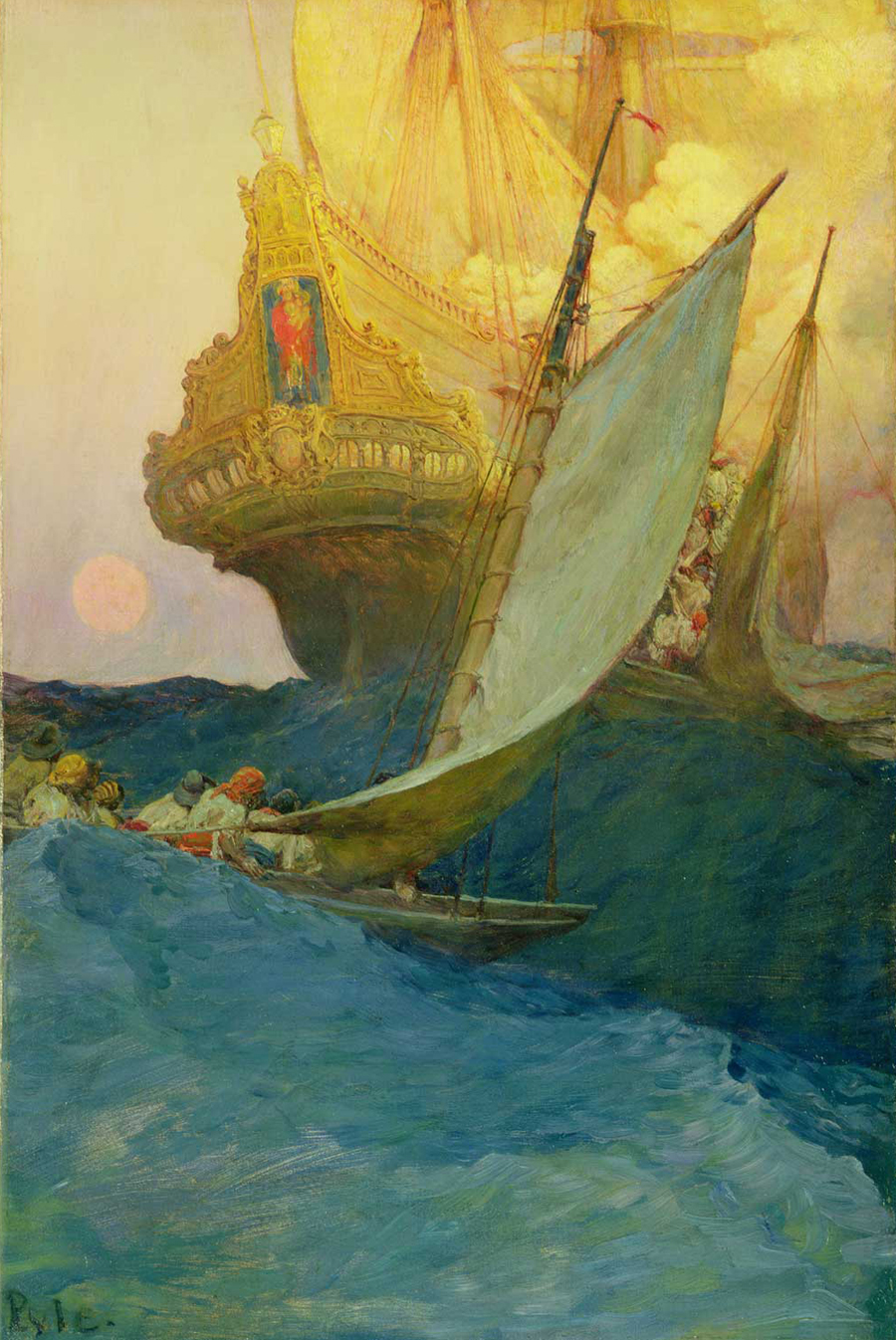
Pyle, An Attack on a Galleon, 1905


N.C. Wyeth's mentor, Howard Pyle, was born on this day in 1853.

19 April 2024

Spirit.

Pyle, The Fight on Lexington Common, April 19, 1775, 1898


The American Revolution began on this morning in 1775.

CONCORD HYMN

By the rude bridge that arched the flood, 
   Their flag to April’s breeze unfurled, 
Here once the embattled farmers stood 
   And fired the shot heard round the world. 

The foe long since in silence slept; 
   Alike the conqueror silent sleeps; 
And Time the ruined bridge has swept 
   Down the dark stream which seaward creeps. 

On this green bank, by this soft stream, 
   We set today a votive stone; 
That memory may their deed redeem, 
   When, like our sires, our sons are gone. 

Spirit, that made those heroes dare 
   To die, and leave their children free, 
Bid Time and Nature gently spare 
   The shaft we raise to them and thee.

Ralph Waldo Emerson

Further ...

17 June 2023

Hear.


An ELEGIAC POEM, COMPOSED on the NEVER-TO-BE-FORGOTTEN TERRIBLE and BLOODY BATTLE FOUGHT at an ENTRENCHMENT on BUNKER HILL

Adieu to wanton songs and foolish joys,
    To idle tales that fill the ear,
A mournful theme my heart employs,
    And hope the living will it hear.
A horrid fight there hap'd of late,
    'Twas on June seventeen,
When a great number met their fate
    In fighting on the green.
Yes, hundreds of poor souls are dead,
    In battle they were slain,
Both sides met with a heavy stroke,
    T' rehearse it gives me pain.
What shall we say when 'tis decreed,
    By fate it must be so?
To cause our dearest brethren's blood
    From ev'ry vein to flow,
Unless kind mercy interfere,
    Its gracious aid to lend;
O! may each Christian earnest pray
    There soon may be an end.
A fort was late erected at
    A place call'd BUNKER-HILL,
Where thousands of fierce Regulars
    Our people fought to kill.
But Scripture surely teaches us,
    As we at large may read,
That whoso takes the sword to kill
    By the same sword shall bleed.
Large cannon balls by hundreds flew,
    From ships and batt'ries plac'd
But our intrenchments and our lines
    These brave Calumbans grac'd.
The fight was fierce, the carnage great,
    When friends and foes by hundreds fell,
Alass! O dreadful to relate
    What on that day befell.
Whole ranks of Regulars were slain,
    Fresh troops their place supply'd,
In trying our strong lines to gain,
    But soon! ah! soon they dy'd.

A hostile bloody 'trench it was,
    The Regulars all say,
Tho' they exultingly rejoice
    That they have won the day.
A dear-bought victory they gain'd,
    If it is called so,
When most the flower of British troops
    Met with their overthrow.
Small was our loss compar'd with those
    Who now the lines possess;
Great was the slaughter of our foes,
    And poor was their success.
[Some?] say their loss of maim'd and slain
    Is fifteen hundred men;
Tis thought they never'll more attempt
    Our lines to force again.
We sore lament both one and all,
    In sackcloth let us mourn,
Brave General WARREN's hapless fate
    And weep upon his urn.
My trembling hand, my aking heart,
    O! how it throbs this day!
His loss is felt in ev'ry part
    Of vast America.
Ah! twice he wept the cruel fate
    Of murder'd brethren's blood!
Was spilt, as story doth relate,
    By a fierce, tyrant brood.
Twice did our HERO have applause
    From multitudes, who shouted loud,
When he maintain'd fair Freedon's cause,
    What plaudits had he from the crowd.
The list'ning world attention gave
    To ev'ry sound and word;
What spake this CÆSAR of the age,
    Much pleasure did afford.
His pensive brow, his honest heart,
    Such truths it did unfold,
When taking fair Calumba's part
    He sought not filthy gold.

His only study was the good
    Of country and of court;
He made his practice and delight,
    To Heaven for aid [resort?] .
The names of Gardner, Parker, Moors and West
    Let's mourn now o'er their grave,
Who late with courage did their best,
    And twice repuls'd the brave.
We feel and sympathize for them
    Who late in battle fell,
We mean those NINETY hardy men,
    Their names to ages tell
But O! poor Charlestown's dismal fate,
    Let floods of tears now [flow?] ,
A shocking scene thus to relate,
    Its fatal overthrow.
If that the LORD is on our side
    We need not fear our foe,
And if that gracious Isr'el's GOD
    Now with our armies go;
Our heads he'll cover when in sight,
    From harm he will us keep,
If that we seek his face aright,
    Nor let our feet to slip.
With conq'ring might he will us shield,
    And foes will all destroy,
He'll help us thus to win the field,
    And slay those that annoy
Let's seek the LORD by ways aright,
    Now while he may be found;
And not forsake the path that's right,
    Nor yet the gospel sound ;
Then smiling trade with her fair train
    Of blessings will cause;
And Old-England glad to live
    In concord with the New.
Thus may the Patriot and the Sage
    Live in much unity,
O! What a joyful sight it is
    For brethren to agree.

If we believe that sacred writ,
    'Tis like to precious oyl;
For why should we thus disagree,
    And live in endless broil.
For reformation let us strive,
    Let's one and all now join,
To serve the LORD with one accord,
    With good Joshua combine:
Who thus determin'd with his house
    The LORD's favor to seek,
And doubtless did a blessing find,
    As he will bless the meek.
He'll be with them that call on Him
    By ways and means aright,
And he'll not leave nor yet forsake
    The heart that is contrite.
New-England sees a dismal day
    Of darkness and distress!
May we not fear, alas! I say,
    It's for our wickedness?
Our sins more aggravated are
    Than Sodom or of Lot,
Then may we not expect to find
    That death is in the pot?
For sins reward it surely is,
    Think of it as we may,
If we forget to call on GOD,
    And seek him in his way.
His way is perfect and it leads
    To purest rest and peace,
His righteous paths will guide us straight
    To realms of endless bliss.
This day in sackcloth let us mourn,
    Each one in ashes lay,
And from our sins by fasting turn,
    And seek CHRIST while we may.
A blessing we may then expect
    On trade and politics,
If that we harden not our hearts,
    Nor crooked bend our necks.

John Dickinson

05 March 2022

Incomprehensible.

Pyle, Thomas Jefferson Writing the Declaration of Independence, 1898


What a stupendous, what an incomprehensible machine is man! who can endure toil, famine, stripes, imprisonment or death itself in vindication of his own liberty, and the next moment be deaf to all those motives whose power supported him thro’ his trial, and inflict on his fellow men a bondage, one hour of which is fraught with more misery than ages of that which he rose in rebellion to oppose.
Thomas Jefferson, from a letter to Jean Nicolas Démeunier, 26 June 1786

Happy Birthday, Pyle

Pyle, Robin and Little John Go Their Ways in Search of Adventure, 1883


Howard Pyle was born on this day in 1853.

Howard Pyle and The Illustrated Story ...

16 June 2021

Honor's.

Pyle, The Nation Makers, 1903


The BATTLE of LOVELL'S POND

Cold, cold is the north wind and rude is the blast
That sweeps like a hurricane loudly and fast,
As it moans through the tall waving pines lone and drear,
Sighs a requiem sad o'er the warrior's bier.

The war-whoop is still, and the savage's yell
Has sunk into silence along the wild dell;
The din of the battle, the tumult, is o'er,
And the war-clarion's voice is now heard no more.

The warriors that fought for their country, and bled,
Have sunk to their rest; the damp earth is their bed;
No stone tells the place where their ashes repose,
Nor points out the spot from the graves of their foes.

They died in their glory, surrounded by fame,
And Victory's loud trump their death did proclaim;
They are dead; but they live in each Patriot's breast,
And their names are engraven on honor's bright crest.

Henry Wadsworth Longfellow

12 March 2021

Dream-cap.

Pyle, An Attack on a Galleon, 1905


Here we are! And now I will wind the clock. Gurr! gurr! gurr! Tick-tock! tick-tock! I put on my dream-cap one day and stepped into Wonderland.Along the road I jogged and never dusted my shoes, and all the time the pleasant sun shone and never burned my back, and the little white clouds floated across the blue sky and never let fall a drop of rain to wet my jacket. And by and by I came to a steep hill.  I climbed the hill, though I had more than one tumble in doing it, and there, on the tip-top, I found a house as old as the world itself. That was where Father Time lived; and who should sit in the sun at the door, spinning away for dear life, but Time's Grandmother herself; and if you would like to know how old she is you will have to climb to the top of the church steeple and ask the wind as he sits upon the weather-cock, humming the tune of Over-yonder song to himself."  Good-morning," says Time's Grandmother to me."  Good-morning," says I to her."And what do you seek here?" says she to me."  I come to look for odds and ends," says I to her.  "Very well," says she; "just climb the stairs to the garret, and there you will find more than ten men can think about."

Howard Pyle, from The Wonder Clock

24 June 2020

Right.

Pyle, The Nation Makers, 1902


Whatever is my right as a man is also the right of another; and it becomes my duty to guarantee as well as to possess.

Thomas Paine

I never knew Hans Klopek fought in the Revolution.

17 June 2020

Choaky.

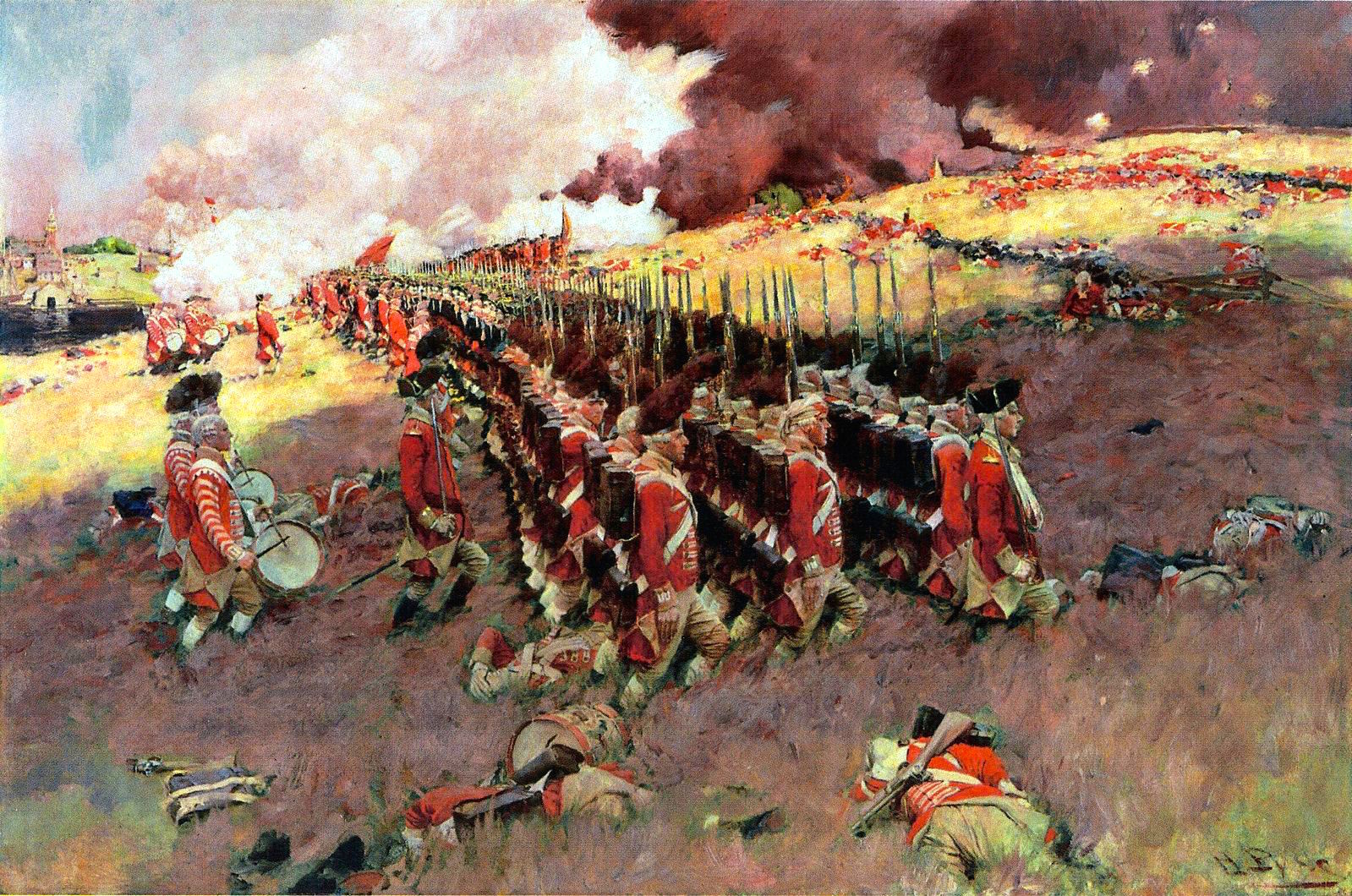
Pyle, The Battle of Bunker Hill, 1897


The Battle of Bunker Hill took place on this date in 1775.

On the morning of June 17, as the rebels frantically threw up breastworks of earth, fence posts and stone, the British bombarded the hill. One cannonball decapitated a man as his comrades worked on, “fatigued by our Labour, having no sleep the night before, very little to eat, no drink but rum,” a private wrote. “The danger we were in made us think there was treachery, and that we were brought there to be all slain.”

Exhausted and exposed, the Americans were also a motley collection of militia from different colonies, with little coordination and no clear chain of command. By contrast, the British, who at midday began disembarking from boats near the American position, were among the best-trained troops in Europe. And they were led by seasoned commanders, one of whom marched confidently at the head of his men accompanied by a servant carrying a bottle of wine. The British also torched Charlestown, at the base of Breed’s Hill, turning church steeples into “great pyramids of fire” and adding ferocious heat to what was already a warm June afternoon.

All this was clearly visible to the many spectators crowded on hills, rooftops and steeples in and around Boston, including Abigail Adams and her young son, John Quincy, who cried at the flames and the “thunders” of British cannons. Another observer was British Gen. John Burgoyne, who watched from Copp’s Hill. “And now ensued one of the greatest scenes of war that can be conceived,” he wrote of the blazing town, the roaring cannons and the sight of red-coated troops ascending Breed’s Hill.

However, the seemingly open pasture proved to be an obstacle course. The high, unmown hay obscured rocks, holes and other hazards. Fences and stone walls also slowed the British. The Americans, meanwhile, were ordered to hold their fire until the attackers closed to 50 yards or less. The wave of British “advanced towards us in order to swallow us up,” wrote Pvt. Peter Brown, “but they found a Choaky mouthful of us.”

CONNECT

The American Revolution Institute presents Nathaniel Philbrick's fresh perspective to the story that ignited the American Revolution. The real central character in this story is Boston, where vigilantes fill the streets with a sinister and frightening violence even as calmer patriots struggle to see their way to rebellion. The action of the book tracks in detail the eighteen months following the Boston Tea Party (Dec. 1773), as Boston turned from the center of patriot defiance to a British-occupied city under a patriot siege ...