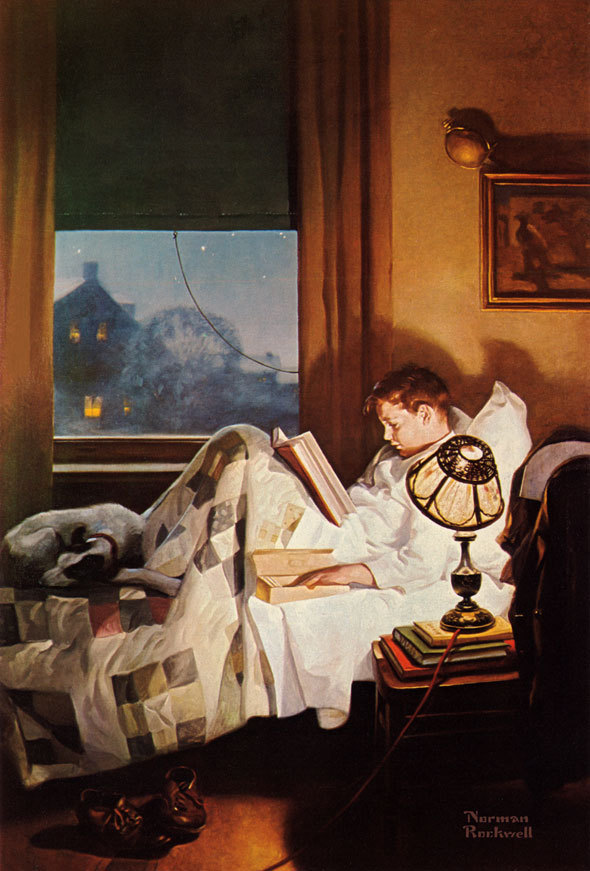
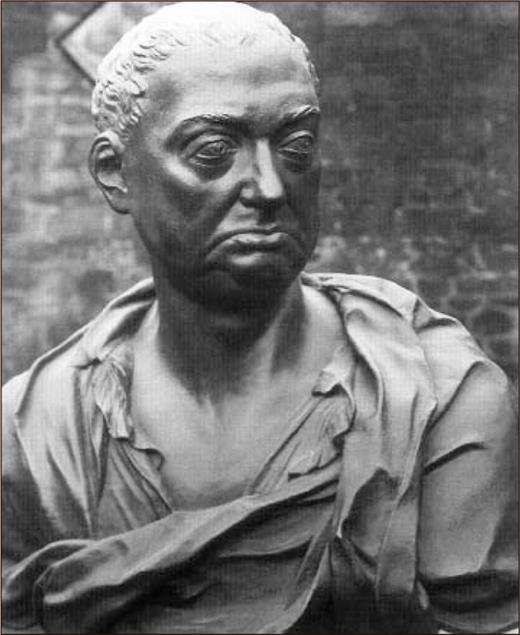
"I am not one who was born in the custody of wisdom. I am one who is fond of olden times and intense in quest of the sacred knowing of the ancients." Gustave Courbet
Showing posts with label civilization. Show all posts

07 September 2026

Learn.


The West's greatest writers are subversive of all values, both ours and their own. Scholars who urge us to find the source of our morality and our politics in Plato, or in Isaiah, are out of touch with the social reality in which we live. If we read the Western Canon in order to form our social, political, or personal moral values, I firmly believe we will become monsters of selfishness and exploitation. To read in the service of any ideology is not, in my judgment, to read at all. The reception of aesthetic power enables us to learn how to talk to ourselves and how to endure ourselves. 

Tension.


From Russell Kirk's "Ten Conservative Principles"...
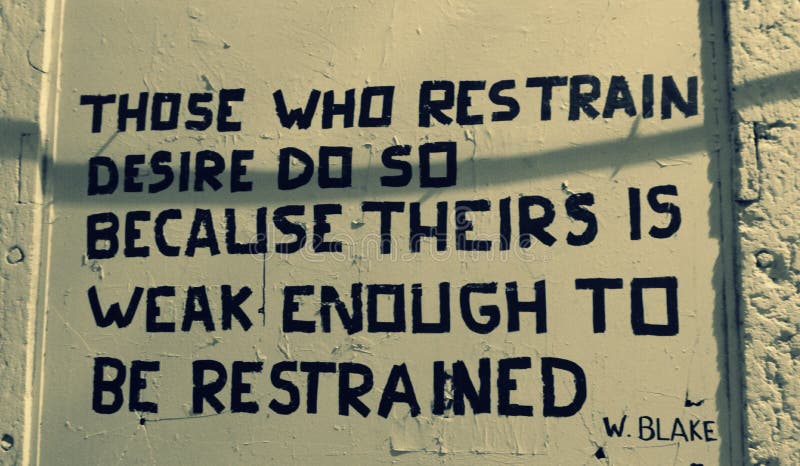
[T]he conservative perceives the need for prudent restraints upon power and upon human passions. Politically speaking, power is the ability to do as one likes, regardless of the wills of one’s fellows. A state in which an individual or a small group are able to dominate the wills of their fellows without check is a despotism, whether it is called monarchical or aristocratic or democratic. When every person claims to be a power unto himself, then society falls into anarchy. Anarchy never lasts long, being intolerable for everyone, and contrary to the ineluctable fact that some persons are more strong and more clever than their neighbors. To anarchy there succeeds tyranny or oligarchy, in which power is monopolized by a very few.

The conservative endeavors to so limit and balance political power that anarchy or tyranny may not arise. In every age, nevertheless, men and women are tempted to overthrow the limitations upon power, for the sake of some fancied temporary advantage. It is characteristic of the radical that he thinks of power as a force for good—so long as the power falls into his hands. In the name of liberty, the French and Russian revolutionaries abolished the old restraints upon power; but power cannot be abolished; it always finds its way into someone’s hands. That power which the revolutionaries had thought oppressive in the hands of the old regime became many times as tyrannical in the hands of the radical new masters of the state.

Knowing human nature for a mixture of good and evil, the conservative does not put his trust in mere benevolence. Constitutional restrictions, political checks and balances, adequate enforcement of the laws, the old intricate web of restraints upon will and appetite—these the conservative approves as instruments of freedom and order. A just government maintains a healthy tension between the claims of authority and the claims of liberty.

06 September 2026

Solace.


NUN'S FRET NOT at THEIR CONVENT'S NARROW ROOM

In truth the prison, unto which we doom
Ourselves, no prison is: and hence for me,
In sundry moods, ’twas pastime to be bound
Within the Sonnet’s scanty plot of ground;
Pleased if some Souls (for such there needs must be)
Who have felt the weight of too much liberty,
Should find brief solace there, as I have found.

William Wordsworth

Liberty.

Gardner, "The Last Photograph Taken of Lincoln from Life," 1865


The world has never had a good definition of the word liberty.  With some the word liberty may mean for each man to do as he pleases with himself, and the product of his labor; while with others the same word may mean for some men to do as they please with other men, and the product of other men’s labor. Here are two, not only different, but incompatible things, called by the same name—liberty.

Abraham Lincoln, from his address at Sanitary Fair in Baltimore April 18, 1864

Absence.


If we can wander, without fear, not only in the streets of Paris, which bristle with police, but especially in rustic walks where you rarely meet passersby, is it to the police that we owe this security or rather to the absence of people who care to rob or murder us?

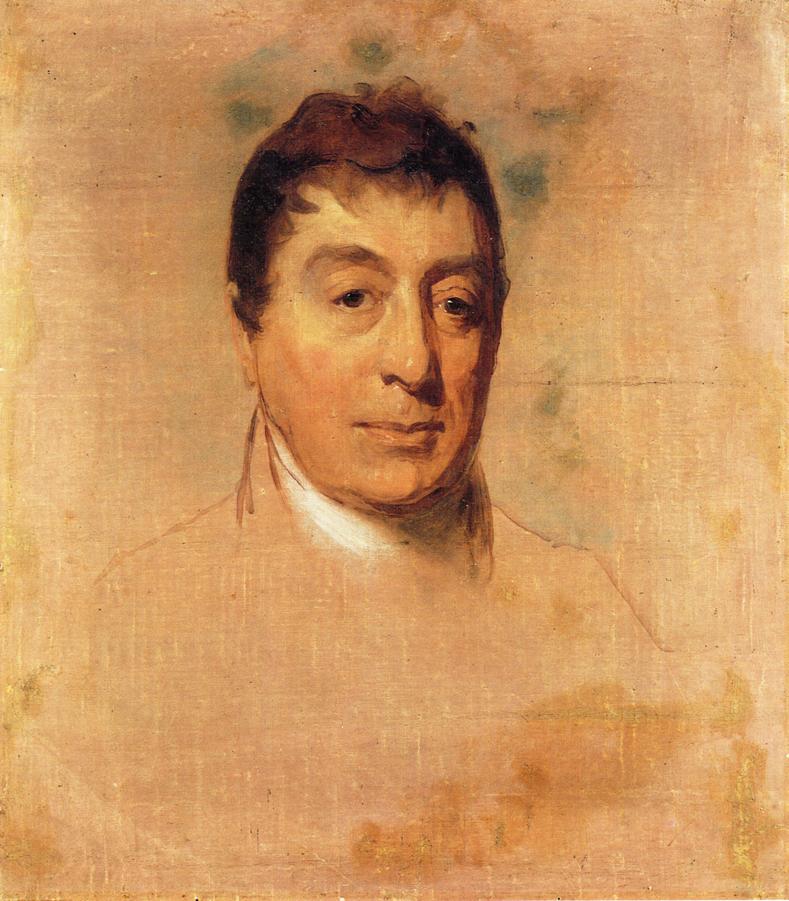
Happy Birthday, Marie-Joseph Paul Yves Roch Gilbert du Motier de La Fayette, Marquis de La Fayette

Sully, Life Study of The Marquis de Lafayette, 1825


Liberty consists in the freedom to do everything which injures no one else; hence the exercise of the natural rights of each man has no limits except those which assure to the other members of the society the enjoyment of the same rights.

Marquis de Lafayette, born on this day in 1757, from the "Declaration of the Rights of Man and of the Citizen"

04 August 2026

Judgment.


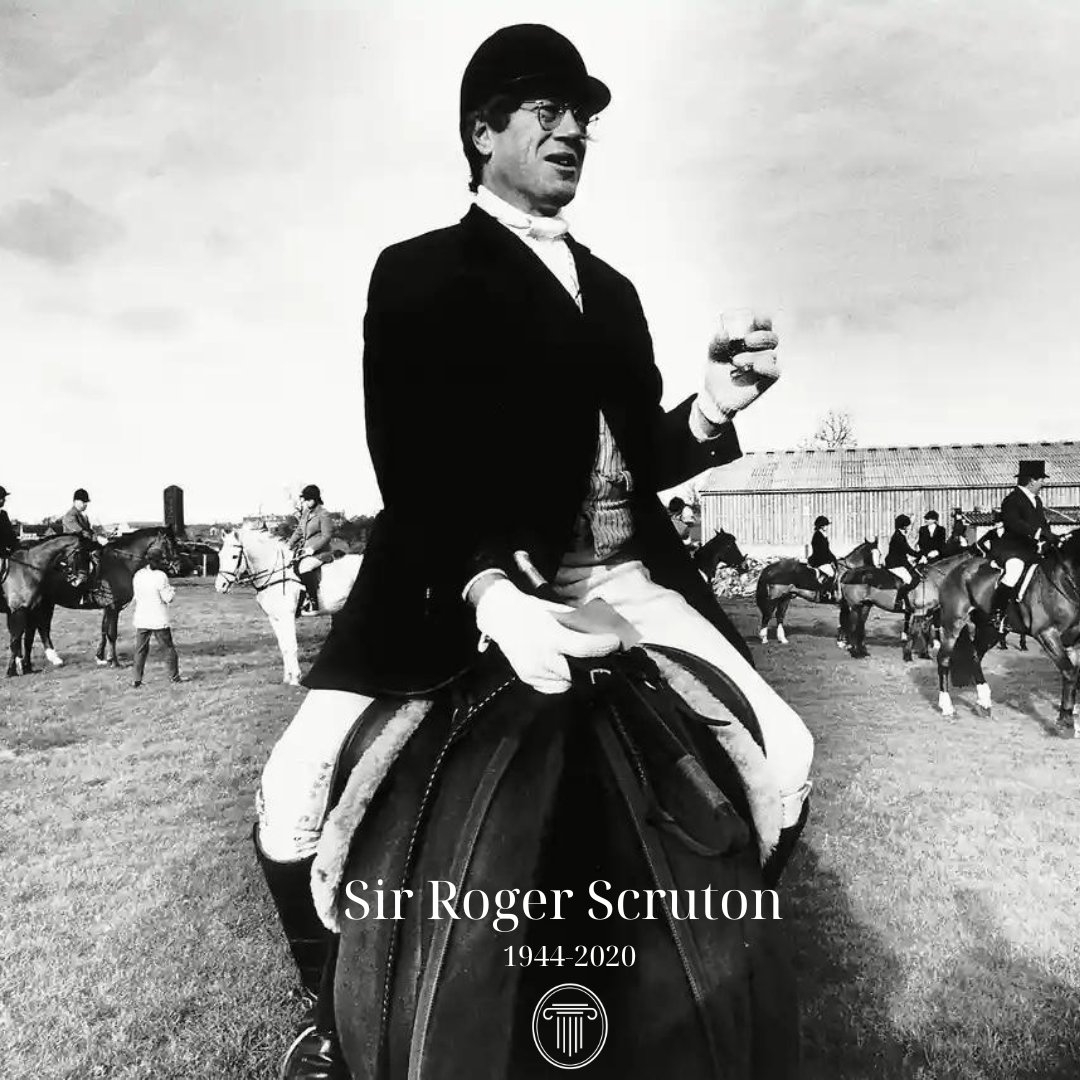
When we make aesthetic judgments we do not, as a rule, praise things as beautiful, sublime, or transcendental, in the manner of the romantic artist. We say instead that this is right, that wrong; this fits, that jars; and so on. In other words we extend the language of manners to the world of inanimate things, and in doing so we make them animate: we bring them into the community and subject them to the rules of good behavior. Hence “right” and “wrong” have a far greater role than “beautiful” and “ugly” in the aesthetics of everyday life, and that is as it should be, since everyday life aims at accommodation and equilibrium. It does not aim at the great experiences that shake us to the core, and which we can absorb, if at all, only on the special occasions when we are consciously exposed to them.

This does not mean that beauty has no place in ordinary things. On the contrary; it means that it does have a place, but a place that is adapted to everyday experience, so as to guide our judgments of what fits, what harmonizes, what is right here and now. This judgment makes sense because it brings with it an incipient sense of community. It speaks for the indefinitely many others who stand at our shoulders when we ask the question whether this or that arrangement is right, or whether it “works.” Everyday aesthetic judgment is profoundly rooted in the sense of community, and also forms a part of the collective effort whereby communities are brought into being and maintained in equilibrium.

There is no clearer proof of this than the cities bequeathed to us by former civilizations, where we gaze with wonder at the way in which every nook and cranny, every corner and parapet, is embellished with ornament and fitted to its neighbor. We are presented with an overwhelming sense of a community united in its determination to be, in which buildings stand side by side in full acknowledgement of each other’s right, in which space is something shared, and each detail offers itself to the eye as a subject of judgment.

Sir Roger Scruton, from "The Beauty of Belonging"

02 August 2026

Masks.


All visible objects, man, are but as pasteboard masks. But in each event—in the living act, the undoubted deed—there, some unknown but still reasoning thing puts forth the mouldings of its features from behind the unreasoning mask. If man will strike, strike through the mask! How can the prisoner reach outside except by thrusting through the wall? To me, the white whale is that wall, shoved near to me. 

That inscrutable thing is chiefly what I hate; and be the white whale agent, or be the white whale principal, I will wreak that hate upon him. Who’s over me? Truth hath no confines.

Swerve me? The path to my fixed purpose is laid with iron rails, whereon my soul is grooved to run. Over unsounded gorges, through the rifled hearts of mountains, under torrents’ beds, unerringly I rush! Naught’s an obstacle, naught’s an angle to the iron way!

Herman Melville, born on on this day in 1819, from Moby-Dick, or The Whale

01 August 2026

Provided.


Men die for a home, not for walls and tables.
Men die for a cathedral, not for stones.
Men die for a people, not for a mob.
Men die for love of Man—provided that Man is the keystone in the arch of their community.

Antoine de Saint-Exupéry, from Wind, Sand and Stars

Top-Gallant.


Delight is to him—a far, far upward, and inward delight—who against the proud gods and commodores of this earth, ever stands forth his own inexorable self. Delight is to him whose strong arms yet support him, when the ship of this base treacherous world has gone down beneath him. Delight is to him, who gives no quarter in the truth, and kills, burns, and destroys all sin though he pluck it out from under the robes of Senators and Judges. Delight,—top-gallant delight is to him, who acknowledges no law or lord, but the Lord his God, and is only a patriot to heaven.

Herman Melville, born on on this day in 1819, from Moby-Dick, or The Whale

Gut-Punch.

Doane Hall, Denison University, Granville, Ohio.  

Since 1895, it has sat proudly as the grand greeting to all ascending the wooded, winding entrance to the school.

Additions, called renovations, are being made.

Before ...


After (AI-generated mock-ups) ...


The gut-punch ...


Just guess what the renovations will house.

ANECDOTE of the JAR

I placed a jar in Tennessee,   
And round it was, upon a hill.   
It made the slovenly wilderness   
Surround that hill.

The wilderness rose up to it,
And sprawled around, no longer wild.   
The jar was round upon the ground   
And tall and of a port in air.

It took dominion everywhere.   
The jar was gray and bare.
It did not give of bird or bush,   
Like nothing else in Tennessee.

Wallace Stevens

Baneful.


In all the changes to which you may be invited, remember that time and habit are at least as necessary to fix the true character of governments as of other human institutions; that experience is the surest standard by which to test the real tendency of the existing constitution of a country; that facility in changes, upon the credit of mere hypothesis and opinion, exposes to perpetual change, from the endless variety of hypothesis and opinion; and remember, especially, that for the efficient management of your common interests, in a country so extensive as ours, a government of as much vigor as is consistent with the perfect security of liberty is indispensable. Liberty itself will find in such a government, with powers properly distributed and adjusted, its surest guardian. It is, indeed, little else than a name, where the government is too feeble to withstand the enterprises of faction, to confine each member of the society within the limits prescribed by the laws, and to maintain all in the secure and tranquil enjoyment of the rights of person and property.

I have already intimated to you the danger of parties in the State, with particular reference to the founding of them on geographical discriminations. Let me now take a more comprehensive view, and warn you in the most solemn manner against the baneful effects of the spirit of party generally.

This spirit, unfortunately, is inseparable from our nature, having its root in the strongest passions of the human mind. It exists under different shapes in all governments, more or less stifled, controlled, or repressed; but, in those of the popular form, it is seen in its greatest rankness, and is truly their worst enemy.

The alternate domination of one faction over another, sharpened by the spirit of revenge, natural to party dissension, which in different ages and countries has perpetrated the most horrid enormities, is itself a frightful despotism. But this leads at length to a more formal and permanent despotism. The disorders and miseries which result gradually incline the minds of men to seek security and repose in the absolute power of an individual; and sooner or later the chief of some prevailing faction, more able or more fortunate than his competitors, turns this disposition to the purposes of his own elevation, on the ruins of public liberty.

George Washington, from his "Farewell Address" from 1796 

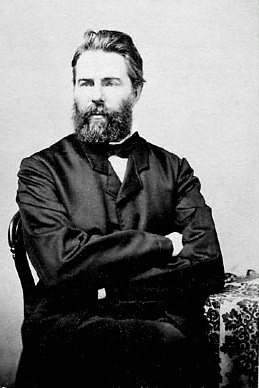
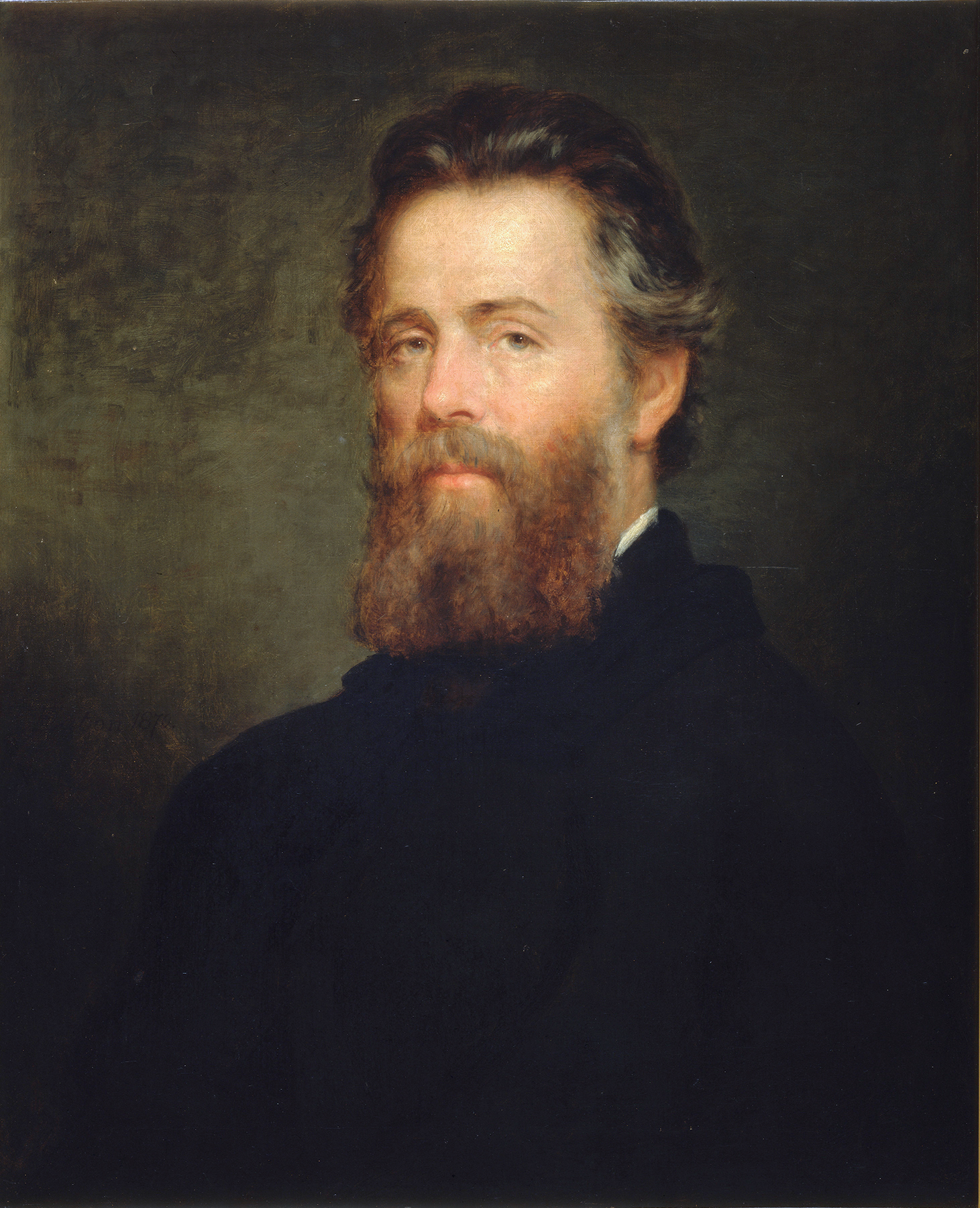
Happy Birthday, Herman Melville

Eaton, Herman Melville, 1870


Know ye now, Bulkington? Glimpses do ye seem to see of that mortally intolerable truth; that all deep, earnest thinking is but the intrepid effort of the soul to keep the open independence of her sea; while the wildest winds of heaven and earth conspire to cast her on the treacherous, slavish shore?

But as in landlessness alone resides the highest truth, shoreless, indefinite as God—so, better is it to perish in that howling infinite, than be ingloriously dashed upon the lee, even if that were safety! For worm-like, then, oh! who would craven crawl to land!

Herman Melville, born on on this day in 1819, from Moby-Dick, or The Whale

24 March 2026

Produce.


Apart from the desire to produce beautiful things, the leading passion of my life has been and is hatred of modern civilization.

William Morris, born on this day in 1834

22 March 2026

Work.


Steve points to timely wisdom ...
If education is the transmission of civilization, we are unquestionably progressing.  Civilization is not inherited; it has to be learned and earned by each generation anew; if the transmission should be interrupted for one century, civilization would die, and we should be savages again.

15 January 2026

Happy Birthday, Reverend Dr. Martin Luther King


I am convinced that love is the most durable power in the world. It is not an expression of impractical idealism, but of practical realism. Far from being the pious injunction of a Utopian dreamer, love is an absolute necessity for the survival of our civilization. To return hate for hate does nothing but intensify the existence of evil in the universe. In struggling for human dignity, the oppressed people of the world must not allow themselves to become bitter or indulge in hate campaigns.  Someone must have sense enough and morality enough to cut off the chain of hate. This can be done only by projecting the ethics of love to the center of our lives.

Rev. Dr. Martin Luther King, Jr., born on this day in 1929

Whither leadership?

28 September 2025

Hope.


I conclude that civilizations, like every other human creation, wax and wane. By the nature of the case there can never be a lasting civilization anymore than there can be a lasting spring or lasting happiness in an individual life or a lasting stability in a society. It’s in the nature of man and of all that he constructs to perish, and it must ever be so. The world is full of the debris of past civilizations, and others are known to have existed which have not left any debris behind them but have just disappeared….

In these circumstances why should anyone expect Christendom to go on forever or see in its impending collapse a cosmic catastrophe?  If, then, all the signs point to the decline and impending fall of what we continue to call Western Civilization, to be followed by another Dark Age, this no more represents any finality in human history than other such developments have in the past.

I think of St. Augustine when in A. D. 410 the news was brought to him in Carthage that Rome had been sacked. It was a sore blow, but as he explained to his flock: “All earthly cities are vulnerable. Men build them and men destroy them. At the same time there is the City of God which men did not build and cannot destroy and which is everlasting.

So, amidst the shambles of a fallen Christendom, I feel a renewed confidence in the light of the Christian revelation with which it first began. I should hate you to think that this view that I’ve put before you is a pessimistic view. Strangely enough, I believe it to be the only way to a proper and real hope.

Malcolm Muggeridge, from The End of Christendom

17 September 2025

Credulous.


It is one of the fantasies of the twentieth century that believers are credulous people, sentimental people, and that you have to be a materialist and a scientist and a humanist to have a skeptical mind. But of course exactly the opposite is true. It is believers who can be astringent and skeptical, whereas people who believe seriously that this universe exists only in order to provide a theatre for man must take man with deadly seriousness. I believe myself that the age we are living in now will go down in history as one of the most credulous ever. How could anyone look at television advertisements without reaching that conclusion?

Malcolm Muggeridge, from The End of Christendom

24 March 2025

Produce.


Apart from the desire to produce beautiful things, the leading passion of my life has been and is hatred of modern civilization.

William Morris, born on this day in 1834

29 July 2024

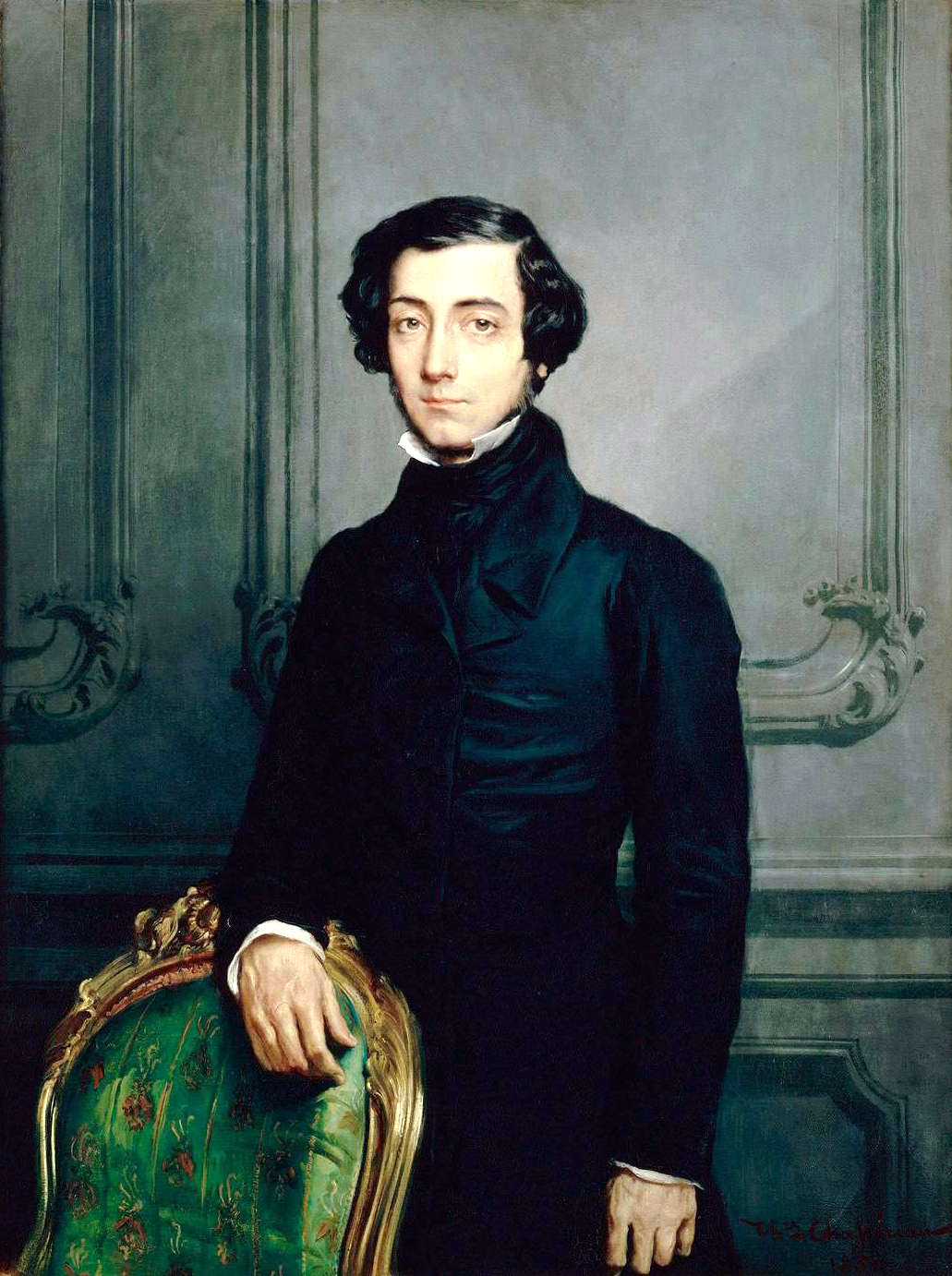
Happy Birthday, Tocqueville

Chassériau, Alexis de Tocqueville, 1850


If men are to remain civilized, or to become so, the art of associating together must grow and improve in the same ratio in which the equality of conditions is increased.

Alexis de Tocqueville, born on this day in 1805, from Democracy in America, Volume II