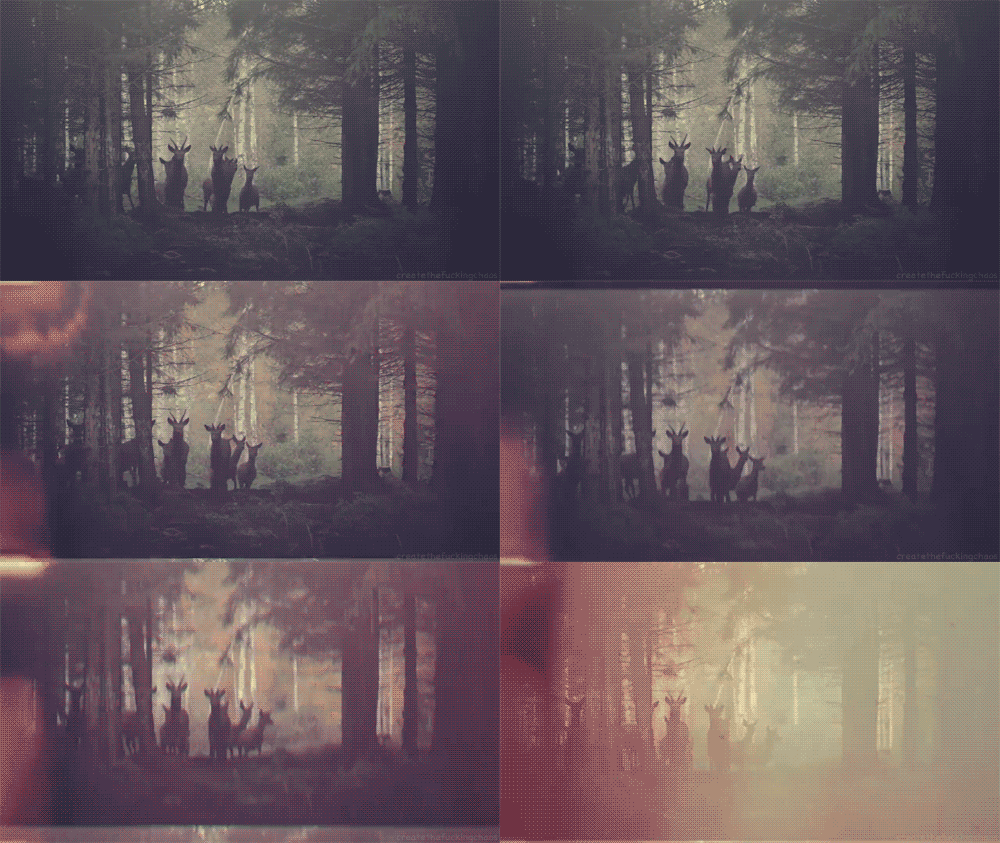
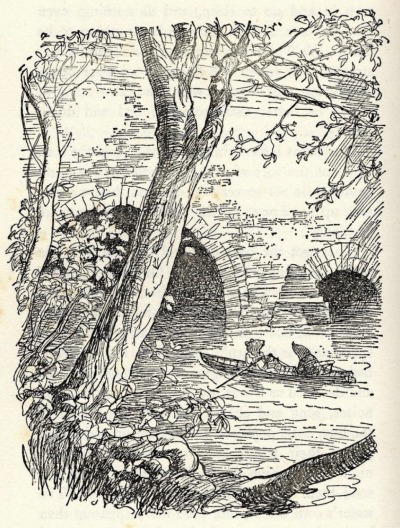
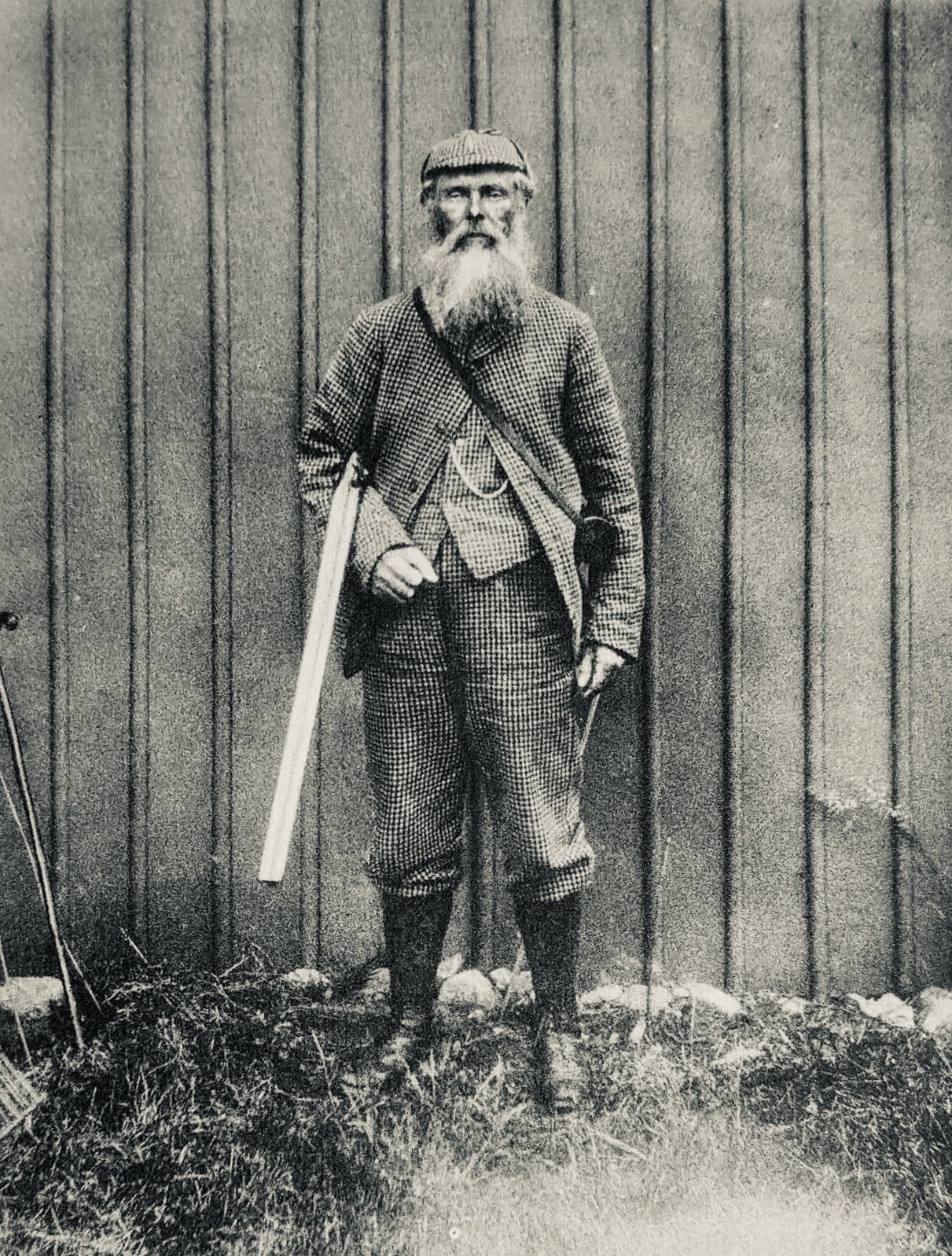
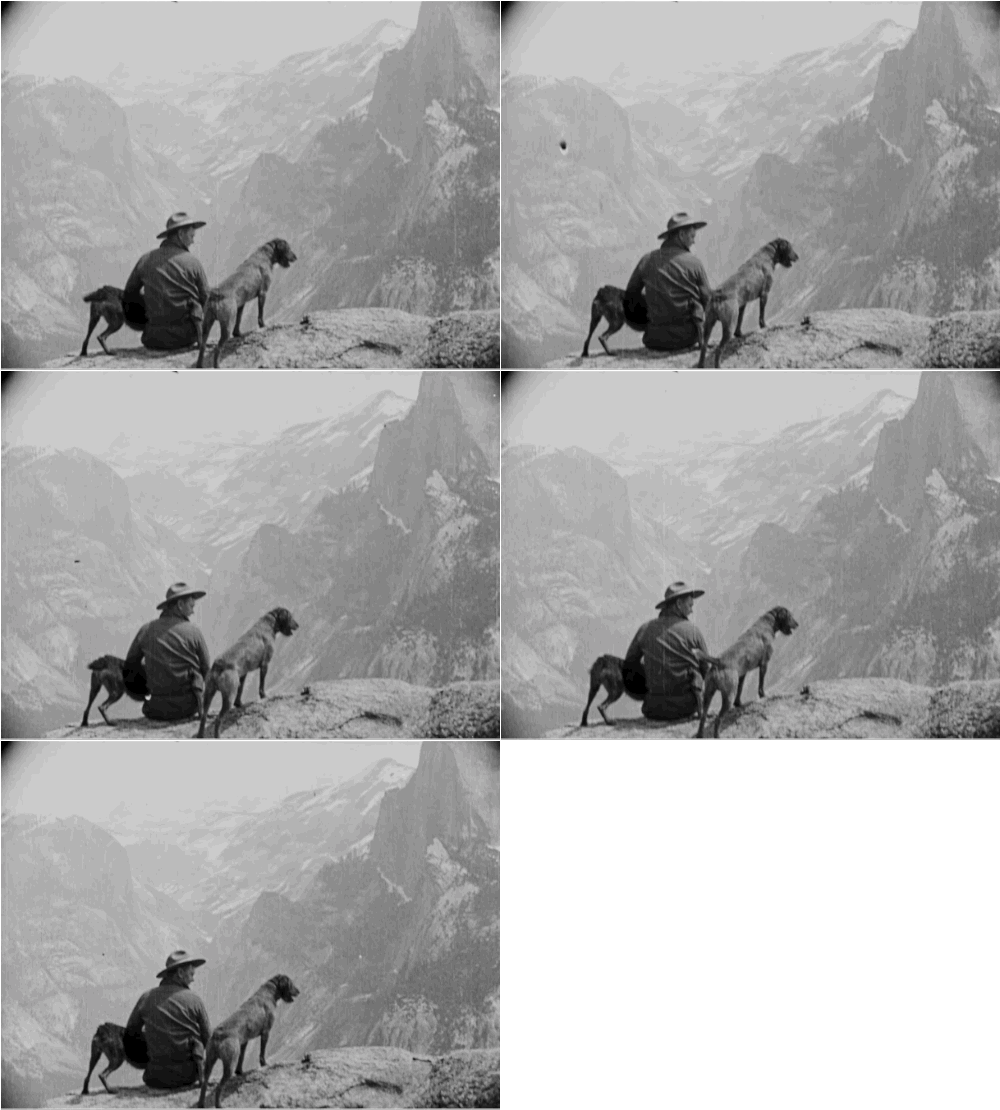
It's sandwich time.
23 December 2021


Rigour.

St. John's Rules ...
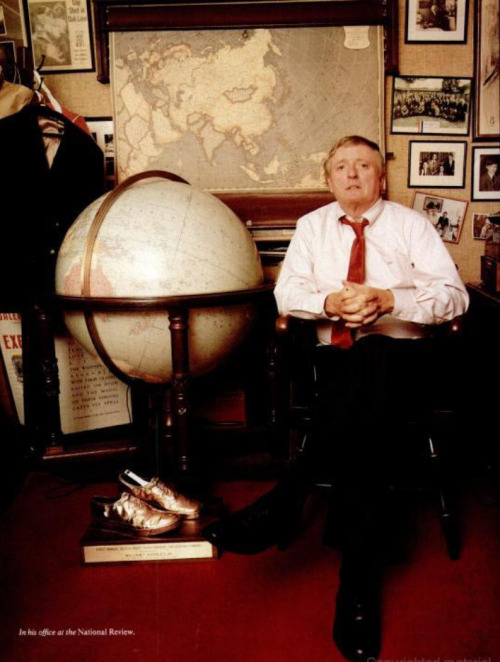
"We just quietly go about our business," says Gulliver, coffee slopping over the side of his cup as he slaps the table. "We don't do vision." Henderson contemplatively sips his mid-morning madeira. "Yes, and there's still lots to do," he says. "There's always tweaking to be done." Better to list the things they don't believe in than those they do. Set menus? Not even when business is bad. Posh wines from around the world? France will suffice. Bawling out the staff? Not necessary. The lure of MasterChef? No, thanks. Finally, they come up with a word: rigour. "There is a rigour here," says Gulliver. "You have to be quite stubborn to do something like this."
Neale, "Good King Wenceslas"
The Westminster Cathedral Choir performs with soloists Aled Jones and Benjamin Luxon ...
Pleasure.

From Fergus Henderson's The Complete Nose to Tail ...
SEVEN THINGS I SHOULD MENTIONWhen having lunch at Sweetings, you sit at a bar behind which a waiter is trapped, you order your smoked eel, they yell to a runner who delivers your eel over your shoulder to the waiter, who then places it under the counter and then in front of you as if they had it all along. Not an entirely practical way of getting your food, but a splendid eating ritual, and a wonderful lunch."Nose to Tail" eating means it would be disingenuous to the animal not to make the most of the whole beast; there is a set of delights, textural and flavoursome, which lie beyond the fillet.This is a book about cooking and eating at home with friends and relations, not replicating restaurant plates of food.Do not be afraid of cooking, as your ingredients will know, and misbehave. Enjoy your cooking and the food will behave; moreover it will pass your pleasure on to those who eat it.The perfect recipe manages to steady and uplift at the same time.One afternoon my flat was broken into. The strange thing is, before I went out I had put a hare in the oven to braise, which filled the flat with delicious gamey smells. I cannot help but think that it must have been very distracting to the burglar, the musk of the braising hare.Unctuous potential: Trotter Gear is your gastronomical friend.
Undaunted.
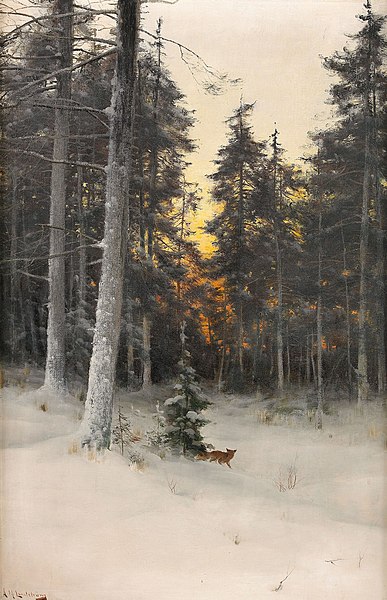
Lindström, Fox in Winter Forest, 1876
RUN with the FOX
Now the season now the question
Time to breathe a moments grace
For the hunter and the hunted
Taking time to break the pace
Are you hopeful are you haunted
By the ghosts of Christmas past
Face the future undaunted
Step aside or take your chance
Run with the fox
Into the wind on to the dawn of tomorrow
Run with the fox
Into the wild into the wild and the cold
Beware of the rocks
And be prepared prepare for love comes and goes
Run with the fox
Every year the revolution
Won or lost before begun
While we thrive on mass confusion
Thus we walk before we run
Run with the fox
Into the wind on to the dawn of tomorrow
Run with the fox
Into the wild into the wild and the cold
Beware of the rocks
And be prepared prepare for love finally grows
Let us live to tell our story
Here on earth and out in space
Forward on the road to glory
History records the chase
Have yourselves that certain Christmas
Eat be glad and drink the wine
Leave your sadness by the river
Giving love and given time
Across the ice of frozen lakes
Run with the fox
Along the lanes a lover takes
Run with the fox
Beneath the moon a Christmas moon
Run with the fox
And sing a tune a dreamers tune
Run with the fox
Across the bridge of many ways
Run with the fox
On to the planes where dreamers play
Run with the fox
Chris Squire and Alan White

Published.
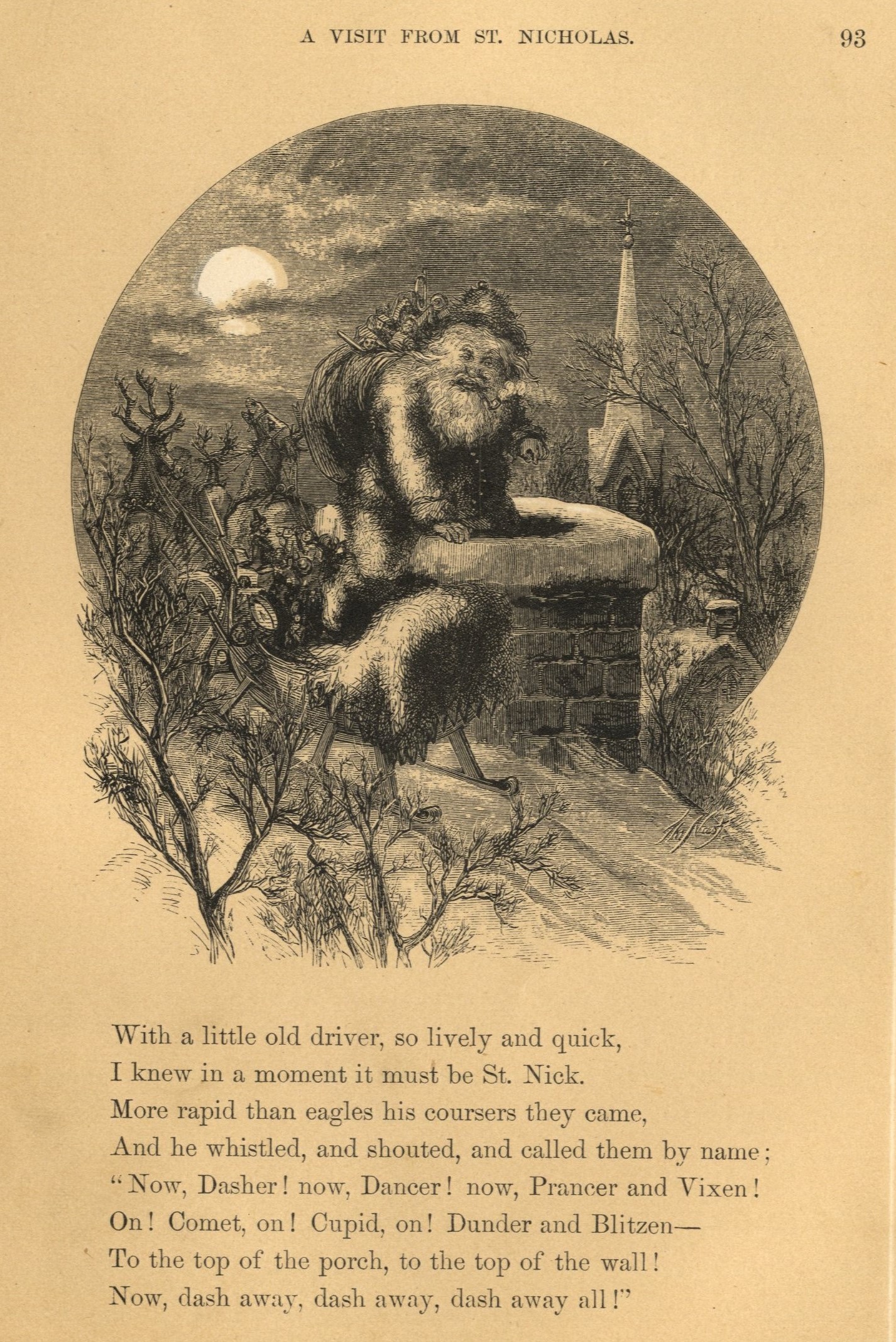
A VISIT from ST. NICHOLAS
'Twas the night before Christmas, when all through the house
Not a creature was stirring, not even a mouse;
The stockings were hung by the chimney with care,
In hopes that St. Nicholas soon would be there;
The children were nestled all snug in their beds;
While visions of sugar-plums danced in their heads;
And mamma in her 'kerchief, and I in my cap,
Had just settled our brains for a long winter's nap,
When out on the lawn there arose such a clatter,
I sprang from my bed to see what was the matter.
Away to the window I flew like a flash,
Tore open the shutters and threw up the sash.
The moon on the breast of the new-fallen snow,
Gave a lustre of midday to objects below,
When what to my wondering eyes did appear,
But a miniature sleigh and eight tiny rein-deer,
With a little old driver so lively and quick,
I knew in a moment he must be St. Nick.
More rapid than eagles his coursers they came,
And he whistled, and shouted, and called them by name:
"Now, Dasher! now, Dancer! now Prancer and Vixen!
On, Comet! on, Cupid! on, Donner and Blitzen!
To the top of the porch! to the top of the wall!
Now dash away! dash away! dash away all!"
As leaves that before the wild hurricane fly,
When they meet with an obstacle, mount to the sky;
So up to the housetop the coursers they flew
With the sleigh full of toys, and St. Nicholas too—
And then, in a twinkling, I heard on the roof
The prancing and pawing of each little hoof.
As I drew in my head, and was turning around,
Down the chimney St. Nicholas came with a bound.
He was dressed all in fur, from his head to his foot,
And his clothes were all tarnished with ashes and soot;
A bundle of toys he had flung on his back,
And he looked like a pedler just opening his pack.
His eyes—how they twinkled! his dimples, how merry!
His cheeks were like roses, his nose like a cherry!
His droll little mouth was drawn up like a bow,
And the beard on his chin was as white as the snow;
The stump of a pipe he held tight in his teeth,
And the smoke, it encircled his head like a wreath;
He had a broad face and a little round belly
That shook when he laughed, like a bowl full of jelly.
He was chubby and plump, a right jolly old elf,
And I laughed when I saw him, in spite of myself;
A wink of his eye and a twist of his head
Soon gave me to know I had nothing to dread;
He spoke not a word, but went straight to his work,
And filled all the stockings; then turned with a jerk,
And laying his finger aside of his nose,
And giving a nod, up the chimney he rose;
He sprang to his sleigh, to his team gave a whistle,
And away they all flew like the down of a thistle.
But I heard him exclaim, ere he drove out of sight—
“Happy Christmas to all, and to all a good night!”
Clement C. Moore
From 1946 ...
From 1946 ...
VOCES8, "O Come, O Come, Emmanuel"
O come, Thou Dayspring, from on high,
And cheer us by Thy drawing nigh;
Disperse the gloomy clouds of night,
And death's dark shadows put to flight.
Rejoice! Rejoice! Emmanuel
Shall come to thee, O Israel
22 December 2021

21 December 2021
Big.
Ahhh, yes. Today, the last day before Christmas Break, was one for the books. I was told by one of my little lambs, "I just figured I'd go big or go home."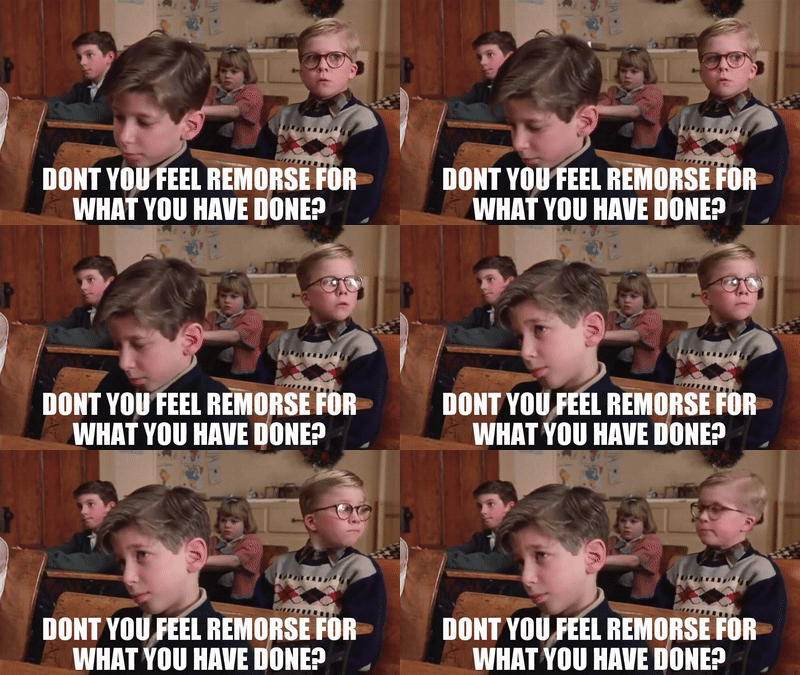
O, wonder!How many goodly creatures are there here!How beauteous mankind is! O brave new world,That has such people in't!William Shakespeare
Atavism.

I have an idea that some men are born out of their due place. Accident has cast them amid certain surroundings, but they have always a nostalgia for a home they know not. They are strangers in their birthplace, and the leafy lanes they have known from childhood or the populous streets in which they have played, remain but a place of passage. They may spend their whole lives aliens among their kindred and remain aloof among the only scenes they have ever known. Perhaps it is this sense of strangeness that sends men far and wide in the search for something permanent, to which they may attach themselves. Perhaps some deep-rooted atavism urges the wanderer back to lands which his ancestors left in the dim beginnings of history.
W. Somerset Maugham

Among.
Ruskin, From Above Baveno, Looking Northwest to Monte Orfano, and the Entrance to the Domodossola Valley Leading to the Simplon Pass, 1845

How divine,
The liberty, for frail, for mortal, man
To roam at large among unpeopled glens
And mountainous retirements . . .
. . . regions consecrate
To oldest time! and, reckless of the storm
That keeps the raven quiet in her nest,
Be as a presence or a motion — one
Among the many there; and while the mists
Flying, and rainy vapours, call out shapes
And phantoms from the crags and solid earth
As fast as a musician scatters sounds
Out of an instrument; and while the streams
(As at a first creation and in haste
To exercise their untried faculties)
Descending from the region of the clouds,
And starting from the hollows of the earth
More multitudinous every moment, rend
Their way before them — what a joy to roam
An equal among mightiest energies;
And haply sometimes with articulate voice,
Amid the deafening tumult, scarcely heard
By him that utters it, exclaim aloud,
"Rage on, ye elements! let moon and stars
Their aspects lend, and mingle in their turn
With this commotion (ruinous though it be)
From day to night, from night to day, prolonged!"
William Wordsworth
Listen.
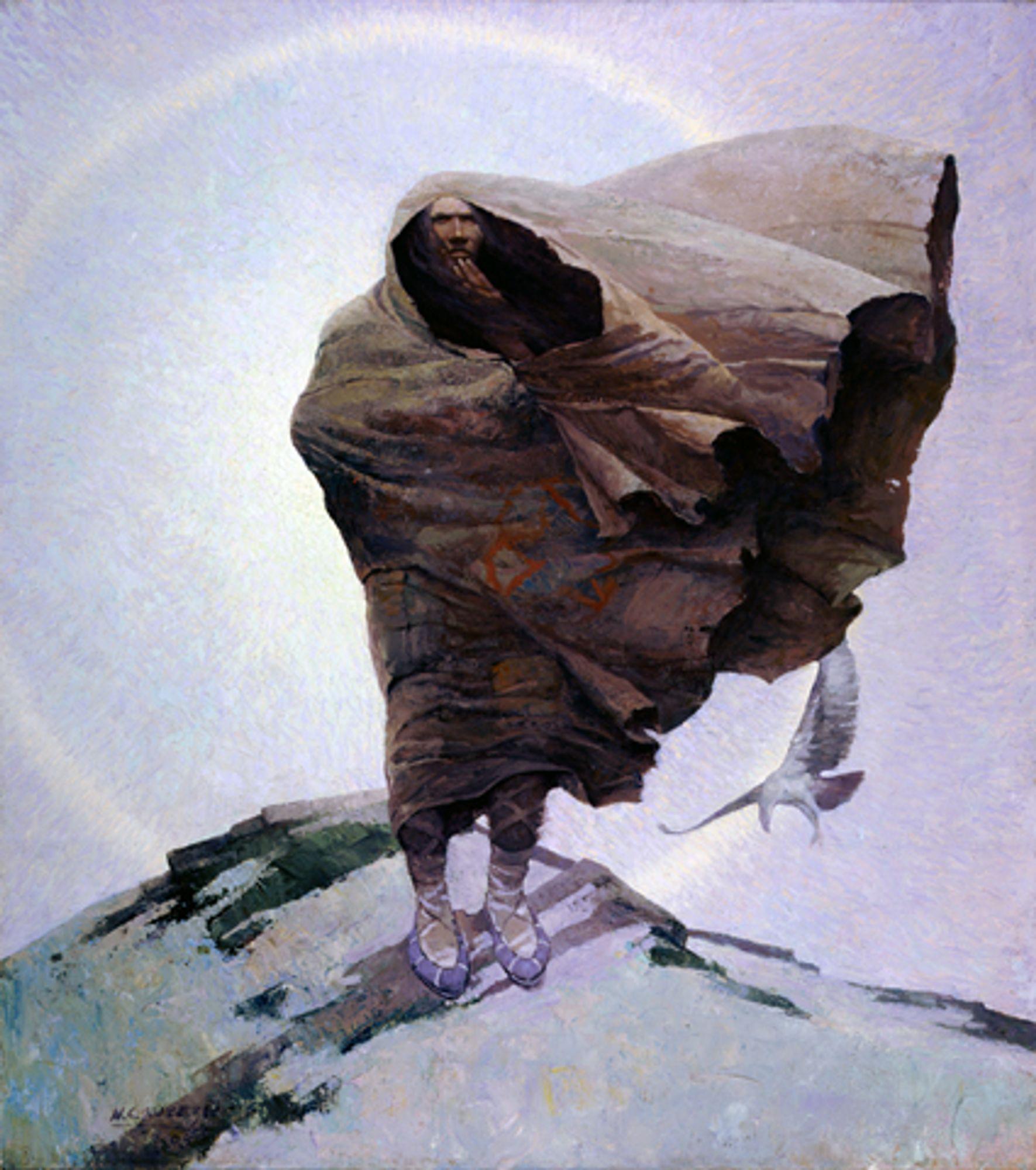
Wyeth, N.C., Cold Maker, Winter, 1909
The SHORTEST DAY
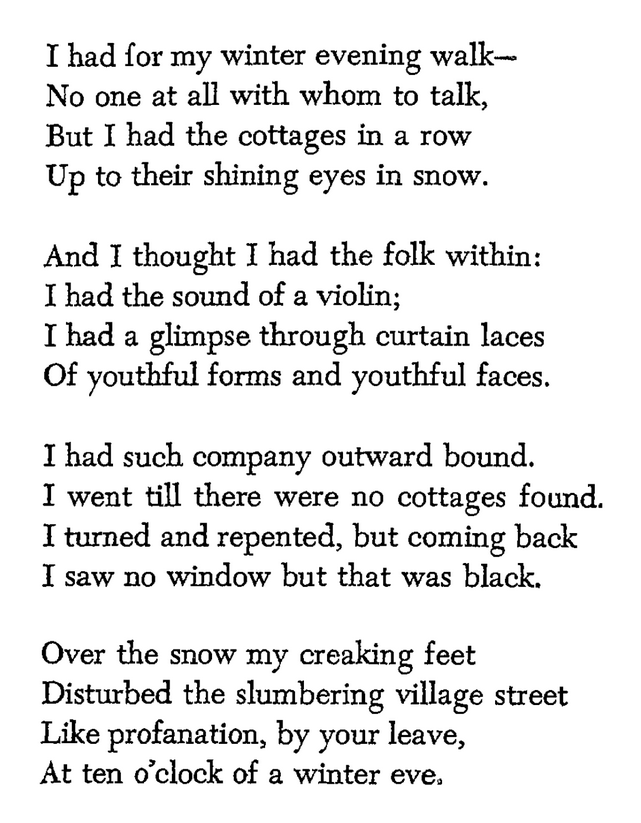
So the shortest day came, and the year died,
And everywhere down the centuries of the snow-white world
Came people singing, dancing,
To drive the dark away.
They lighted candles in the winter trees;
They hung their homes with evergreen;
They burned beseeching fires all night long
To keep the year alive,
And when the new year's sunshine blazed awake
They shouted, reveling.
Through all the frosty ages you can hear them
Echoing behind us - Listen!!
All the long echoes sing the same delight,
This shortest day,
As promise wakens in the sleeping land:
They carol, fest, give thanks,
And dearly love their friends,
And hope for peace.
And so do we, here, now,
This year and every year.
Welcome Yule!
Susan Cooper

20 December 2021
Extend.
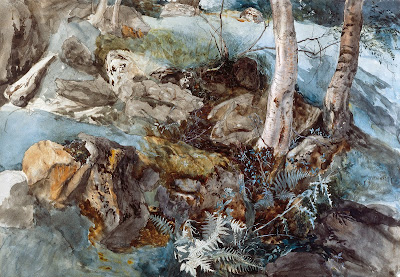
Ruskin, Rocks and Ferns in a Wood at Crossmount, Perthshire, 1847
And for the sublime, — if we consider what are the cares that occupy the passing day, and how remote is the practice and the course of life from the sources of sublimity, in the soul of Man, can it be wondered that there is little existing preparation for a poet charged with a new mission to extend its kingdom, and to augment and spread its enjoyments?
William Wordsworth
19 December 2021
Choose.
INTERVIEWERHow do you account historically for the school of resentment?BLOOMIn the universities, the most surprising and reprehensible development came some twenty years ago, around 1968, and has had a very long-range effect, one that is still percolating. Suddenly all sorts of people, faculty members at the universities, graduate and undergraduate students, began to blame the universities not just for their own palpable ills and malfeasances, but for all the ills of history and society. They were blamed, and to some extent still are, by the budding school of resentment and its precursors, as though they were not only representative of these ills but, weirdly enough, as though they had somehow helped cause these ills and, even more weirdly, quite surrealistically, as though they were somehow capable of ameliorating these ills. It’s still going on—this attempt to ascribe both culpability and apocalyptic potential to the universities. It’s really asking the universities to take the place that was once occupied by religion, philosophy, and science. These are our conceptual modes. They have all failed us. The entire history of Western culture, from Alexandrian days until now, shows that when a society’s conceptual modes fail it, then willy-nilly it becomes a literary culture. This is probably neither good nor bad, but just the way things become. And we can’t really ask literature or the representatives of a literary culture, in or out of the university, to save society. Literature is not an instrument of social change or an instrument of social reform. It is more a mode of human sensations and impressions, which do not reduce very well to societal rules or forms.INTERVIEWERHow does one react to the school of resentment? By declaring oneself an aesthete?BLOOMWell, I do that now, of course, in furious reaction to their school and to so much other pernicious nonsense that goes on. I would certainly see myself as an aesthete in the sense advocated by Ruskin, indeed to a considerable degree by Emerson, and certainly by the divine Walter and the sublime Oscar. It is a very engaged kind of mode. Literary criticism in the United States increasingly is split between very low level literary journalism and what I increasingly regard as a disaster, which is literary criticism in the academies, particularly in the younger generations. Increasingly scores and scores of graduate students have read the absurd Lacan but have never read Edmund Spenser; or have read a great deal of Foucault or Derrida but scarcely read Shakespeare or Milton. That’s obviously an absurd defeat for literary study. When I was a young man back in the fifties starting out on what was to be my career, I used to proclaim that my chosen profession seemed to consist of secular clergy or clerisy. I was thinking, of course, of the highly Anglo-Catholic New Criticism under the sponsorship or demigodness of T. S. Eliot. But I realized in latish middle age that, no better or worse, I was surrounded by a pride of displaced social workers, a rabblement of lemmings, all rushing down to the sea carrying their subject down to destruction with them. The school of resentment is an extraordinary sort of mélange of latest-model feminists, Lacanians, that whole semiotic cackle, latest-model pseudo-Marxists, so-called New Historicists, who are neither new nor historicist, and third generation deconstructors, who I believe have no relationship whatever to literary values. It’s really a very paltry kind of a phenomenon. But it is pervasive, and it seems to be waxing rather than waning. It is a very rare thing indeed to encounter one critic, academic or otherwise, not just in the English-speaking world, but also in France or Italy, who has an authentic commitment to aesthetic values, who reads for the pleasure of reading, and who values poetry or story as such, above all else. Reading has become a very curious kind of activity. It has become tendentious in the extreme. A sheer deliquescence has taken place because of this obsession with the methods or supposed method. Criticism starts—it has to start—with a real passion for reading. It can come in adolescence, even in your twenties, but you must fall in love with poems. You must fall in love with what we used to call “imaginative literature.” And when you are in love that way, with or without provocation from good teachers, you will pass on to encounter what used to be called the sublime. And as soon as you do this, you pass into the agonistic mode, even if your own nature is anything but agonistic. In the end, the spirit that makes one a fan of a particular athlete or a particular team is different only in degree, not in kind, from the spirit that teaches one to prefer one poet to another, or one novelist to another. That is to say there is some element of competition at every point in one’s experience as a reader. How could there not be? Perhaps you learn this more fully as you get older, but in the end you choose between books, or you choose between poems, the way you choose between people. You can’t become friends with every acquaintance you make, and I would not think that it is any different with what you read.INTERVIEWERDo you foresee any change, or improvement, in the critical fashions?BLOOMI don’t believe in myths of decline or myths of progress, even as regards to the literary scene. The world does not get to be a better or a worse place; it just gets more senescent. The world gets older, without getting either better or worse and so does literature. But I do think that the drab current phenomenon that passes for literary studies in the university will finally provide its own corrective. That is to say, sooner or later, students and teachers are going to get terribly bored with all the technocratic social work going on now. There will be a return to aesthetic values and desires, or these people will simply do something else with their time. But I find a great deal of hypocrisy in what they’re doing now. It is tiresome to be encountering myths called “The Social Responsibility of the Critic” or “The Political Responsibility of the Critic.” I would rather walk into a bookstore and find a book called “The Aesthetic Responsibilities of the Statesman,” or “The Literary Responsibilities of the Engineer.” Criticism is not a program for social betterment, not an engine for social change. I don’t see how it possibly could be. If you look for the best instance of a socially radical critic, you find a very good one indeed in William Hazlitt. But you will not find that his social activism on the left in any way conditions his aesthetic judgments, or that he tries to make imaginative literature a machine for revolution. You would not find much difference in aesthetic response between Hazlitt and Dr. Samuel Johnson on Milton, though Dr. Johnson is very much on the right politically, and Hazlitt, of course, very much an enthusiast for the French Revolution and for English radicalism. But I can’t find much in the way of a Hazlittian or Johnsonian temperament in life and literature anywhere on the current scene. There are so many tiresomenesses going on. Everyone is so desperately afraid of being called a racist or a sexist that they connive—whether actively or passively—the almost total breakdown of standards that has taken place both in and out of the universities, where writings by blacks or Hispanics or in many cases simply women are concerned.
Your marching orders ...
Tales.
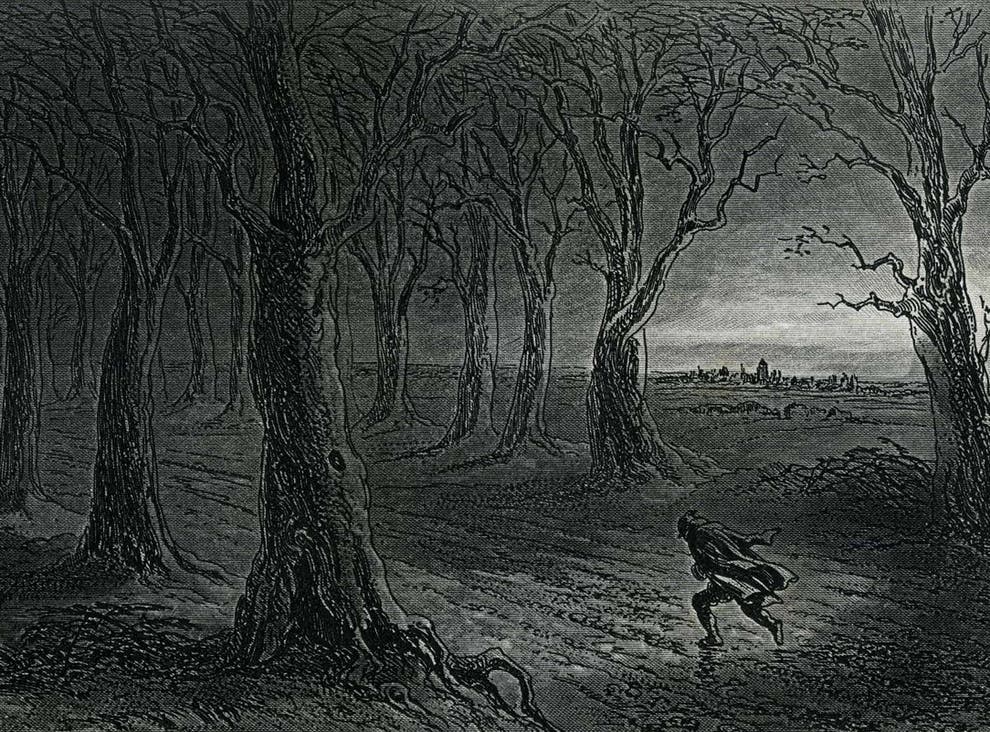
Smithsonian's plea to resurrect the Christmas tradition of telling ghost stories ...
Now I remember those old women’s words,Who in my wealth would tell me winter’s tales,And speak of spirits and ghosts by night.
The Cambridge Critique seconds ...
The occasion is Christmas Eve. The place is King’s College Cambridge. The year is somewhere towards the beginning of the 20th century. And the time is nearing midnight. There is a mood of merriment, with the expectant hint of foreboding.The Christmas choir has just finished its rendition of "We Three Kings", and the fellows and students file out of the College chapel. After a warm helping of spiced beer, conversation flags and guests retire to bed - another year of festivities draws to a close within the cloistered quad. But not all. With a nod of a head to each other, a select few make their way to the sitting-room of M.R. James.In his sitting room lit only by the open fire and a handful of flickering candles, the guests take their seats. Rows of books line the walls and leathered armchairs abut the thick burgundy carpet. Rare and ancient manuscripts clutter the corner desk. The fire crackles. The spine chilling Jamesian custom is about to begin. In the adjoining room M.R. prepares for the ritual. A rustling of papers follows. Then a clearing of a throat. The listening audience distribute their snuff and port and finish their sardines on toast.There is nothing left to do now but wait.
Pleasant.

Fine oranges well roasted with sugar and wine in a cup, they’ll make a sweet Bishop when gentlefolk sup.Jonathan Swift
Originating in Britain and immortalized by Charles Dickens (1812-1870), a Smoking Bishop is a "smoking" hot drink of wine and port mulled together with the juice of roasted bitter oranges, cloves, star anise, sugar and (occasionally) cinnamon. Compared to traditional mulled wine, which can sometimes be overwhelming, the spices take a minor role in a Smoking Bishop. With port, oranges and sugar, one would expect an overly sweet drink. But the after-punch of bitter fruit is the real star here, pulling our taste buds along a pleasant tightrope of flavor. Finding the balance is key to a good Smoking Bishop… and people have been trying since the 1800’s.
18 December 2021

15 December 2021
Heisman.
Not trying to be offensive with this line, but Desmond Howard won the Heisman Trophy on this date 30 years ago.
14 December 2021
Satisfaction.
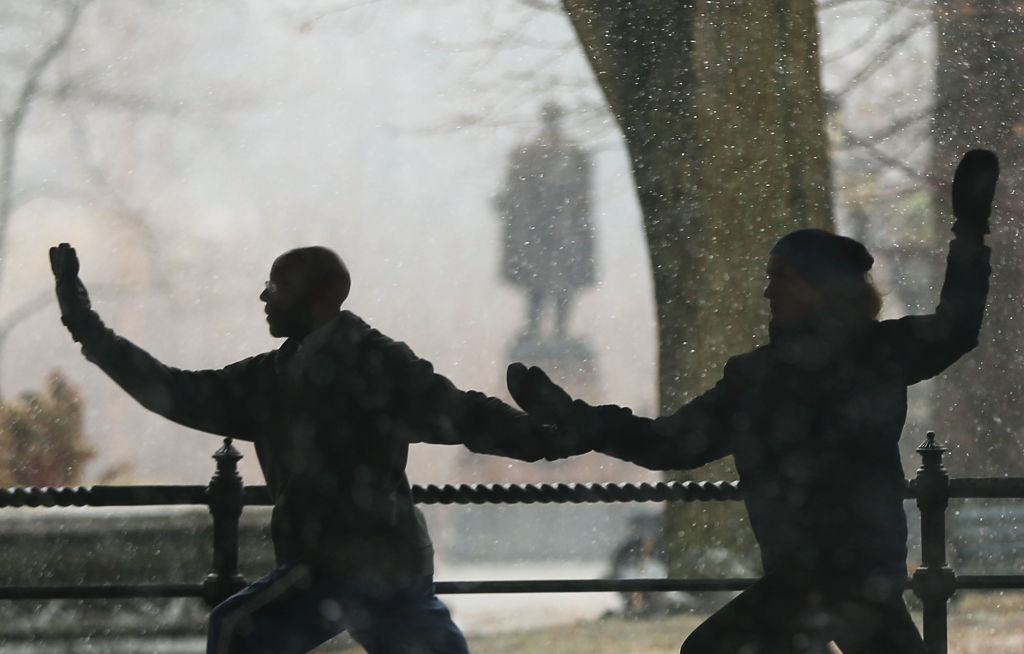
Two things can be mutually opposed, and at the same time, mutually connected. You can be, for example, in an anxious state and still have perfect control of your situation and your life. Thinking in this way allows a person to tolerate contradictions and to accept the uncertainties that inevitably present themselves.
Happy Birthday, Scott

Mike Scott was born on this date in 1958.
Doing Yeats' "Mad as the Mist and Snow" with Steve Wickham ...

Vivaldi, Gloria, RV 588/589
The most beautiful voice on the planet, Sara Mingardo, performs with Concerto Italiano, directed by Rinaldo Alessandrini ...
13 December 2021
12 December 2021
Frank Sinatra, "It Was a Very Good Year"
Thinking of Mozart, van Gogh, ... and reminded of how lucky we are to have this look at an artist at work ...
Smell.
There is probably a smell of roasted chestnuts and other good comfortable things all the time, for we are telling winter stories - ghost stories, or more shame for us - round the Christmas fire; and we have never stirred, except to draw a little nearer to it.
Charles Dickens
Foolproof procedure ... HERE.
Tchaikovsky, Violin Concerto in D major, Op. 35
Anna Kondratenko performs the Canzonetta: Andante with the Macedonian Philharmonic Orchestra ...
Least.

It was the hour in which objects lose the consistency of shadow that accompanies them during the night and gradually reacquire colors, but seem to cross meanwhile an uncertain limbo, faintly touched, just breathed on by light; the hour in which one is least certain of the world's existence.
Italo Calvino
Mountain.

I never weary of great churches. It is my favorite kind of mountain scenery.
Robert Louis Stevenson

Thank.
From George Steiner's lecture, Universitas? ...
What is a true university? It’s libraries; it is a custodian, and engagement with the living past. It strives to advance knowledge and clarify critically the processes of thought. A true university serves neither political purpose nor social programs, necessarily partisan and transitory. Above all, it rebukes censorship and correctness of any kind. What we have done through political correctness. The lies we are teaching, or having to accept. The questions we are not allowed to ask. Not even to ask. No question of answering. Political correctness makes impossible great fields of comparative study.A university should house and it should honor anarchic provocation and the passion of uselessness. What is the most wonderful passion in the world? Uselessness. If someone comes to me and says, “I’m going to give my life to the study of Tang Dynasty bronzes,” I say, “You’re a very lucky person. You’re going to be a very happy and hungry person, but you lead a blessed life.” The notion that the useless is the highest form of human activity.First and foremost we must insist on recapturing some of the ground the humanities have yielded to the sciences. Is a 21st century-educated man or woman literate when in total ignorance of elementary mathematics, of the concept of numeracy, which organize and determine the world around us? When she or he cannot grasp such a notion as a mean average, an irrational? Notions instrumental to our socioeconomic existence, indispensible to current debates on genetic modification, euthanasia, and law. The frequent assignment to the least gifted, to the most disillusioned, of the teaching of mathematics in our schools is a suicidal scandal. How does it go in the university of Newton, and Crick? If you get a first in mathematics, you can go on to research. If you get a good second, you will enter hedge funds and banking, which are very sophisticated in their mathematics. If you are a third—the worst—you will go teach mathematics. [audience laughs] You realize, the self-fulfilling lunacy of such a system. Overnight, Stalin decided that schoolteachers of mathematics would be paid as much as university professors, and honored throughout society. And he brought on the great revolution in Soviet and then in Russian mathematical literacy. It can be done. It can be done, it’s not impossible.It is never too late. A core curriculum should, I’m persuaded, contain—and now I hope you will bear with me. This is my one very practical reform. At the center of our curriculum should be architecture. Why? It draws on mathematics—very richly, of course; geology; what I call in English the material sciences: steel, iron, wood. It draws on environmental politics at every level. It embodies ancestry and futurity. In architecture the notorious gap between the two cultures is wholly abolished. Archimedes joins Michelangelo. Together they teach us, and the technical phrase is so beautiful, “how to read a building.” How to read a building, that is the phrase they teach you. There is no aspect of law, sociology, environmental economics, but also urban politics, which architecture does not involve in our daily lives. How to read. How to read a building. How to read? Which is the center of my remarks this morning.We are learning to read together. No secondary text, please. No criticism. No comments on comments on comments. Complete loss of truth. You learn to read together. And what do you do at the end—and this is the end of my too-long remarks this morning. The closing or rather opening motion is that of memorization. We learn by heart, par cœur. Not by brain. We learn by heart. The poem or piece of relevant prose to memorize is to thank for what the text has given us. It’s the only effective way of saying merci, thank you, danke. For the inexhaustible liberality of meaning, for the miracle of sense. What we know by heart cannot be taken from us. Never forget that.
"Science and the Humanities" ...
"The Humanities Don't Humanize" ...
"How to Reform the Humanities" ...
Each.
that like people each stretch had a different voice
varying with the current, the nature
of its bed and banks, logjams, boulders,
alder or cedar branches, low-slung
and sweeping the current, the hush of eddies.
In a deep pool I saw the traces of last night’s moon.
Jim Harrison
Contour.
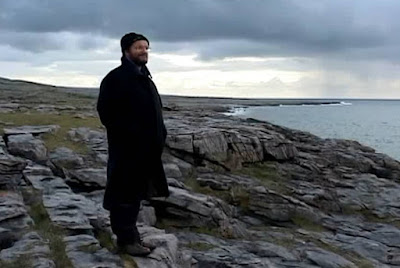
On Being's Krista Tippett discusses "the invisible world" with John O'Donohue ...
Ms. Tippett: I know that “landscape” is a really pivotal word for you that you use, not just in describing the natural world, but an important word in talking about how human beings know themselves and move through the world. I haven’t been to precisely the place you’re from, but I think the west coast of Scotland, the west coast of Ireland, it is this completely unusual, this wild, raw, bleak beauty. But talk to me about how you have come to understand landscape as something that forms each of us.
Mr. O’Donohue: Well, I think it makes a huge difference, when you wake in the morning and come out of your house, whether you believe you are walking into dead geographical location, which is used to get to a destination, or whether you are emerging out into a landscape that is just as much, if not more, alive as you, but in a totally different form, and if you go towards it with an open heart and a real, watchful reverence, that you will be absolutely amazed at what it will reveal to you.And I think that that was one of the recognitions of the Celtic imagination — that landscape wasn’t just matter, but that it was actually alive. What amazes me about landscape — landscape recalls you into a mindful mode of stillness, solitude, and silence, where you can truly receive time.Ms. Tippett: Are you just talking, though, about landscape as the natural world around us? I’ll tell you, I remember a summer I spent, a few years after I had first gone to this beautiful, raw, wild edge of Scotland, and I was working with children in a very impoverished inner-city neighborhood. And I would often wish that I could just transport them for an hour so that what they saw when they opened their eyes and looked around them was that kind of beauty that opens so much possibility. So I wonder how this Celtic sensibility would also speak to people who don’t have that kind of beauty at hand — that kind of beauty.Mr. O’Donohue: Yeah, I do agree with you that an awful lot of urban planning, particularly in poor areas, has doubly impoverished the poor by the ugliness which surrounds them. And it’s understandable that it’s so difficult to reach and sustain gentleness there. And I do think — like a friend of mine just in the last week, who was absolutely exhausted in London, just came away down to southern England and spent the week by the slow ocean, and she’s totally recovered. She’s come back to herself.But I do think, though, that it’s not just a matter of the outer presence of the landscape. I mean the dawn goes up, and the twilight comes, even in the most roughest inner-city place. And I think that connecting to the elemental can be a way of coming into rhythm with the universe. And I do think that there is a way in which the outer presence, even through memory or imagination, can be brought inward as a sustaining thing.I mean I think that — and it’s the question of beauty, I mean you’re asking, essentially — as we are speaking, that there are individuals holding out on frontlines, holding the humane tissue alive in areas of ultimate barbarity, where things are visible that the human eye should never see. And they’re able to sustain it, because there is, in them, some kind of sense of beauty that knows the horizon that we are really called to in some way. I love Pascal’s phrase, that you should always keep something beautiful in your mind. And I have often — like in times when it’s been really difficult for me, if you can keep some kind of little contour that you can glimpse sideways at, now and again, you can endure great bleakness.
O'Donohue's site is HERE.
Heart

A canon is a guarded catalogue of that speech, music and art which houses inside us, which is irrevocably familiar to our homecomings. And this will include, if honestly arrived at and declared (even if solely to oneself), all manner of ephemera, trivial, and possibly mendacious matter. No man or woman need justify his personal anthology, his canonic welcomes. Love does not argue its necessities. The most important tribute any human being can pay to a poem or a piece of prose he or she really loves is to learn it by heart. Not by brain, by heart. What you know by heart, the bastards cannot touch; they cannot take it from you.
George Steiner
Consecrates.

We press forward.
But this march of time --
consider it a glimpse
of what endures.
All that hurries will
soon enough be over,
because what lingers
is what consecrates us.
O, young ones, don't waste
your courage on speed
or squander it in flight.
Everything is at rest:
darkness and light,
blossom and book.
Rainer Maria Rilke

Wind-eye.
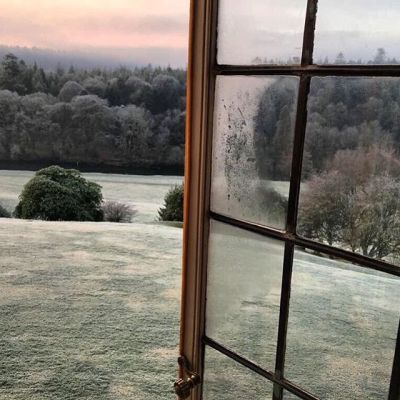
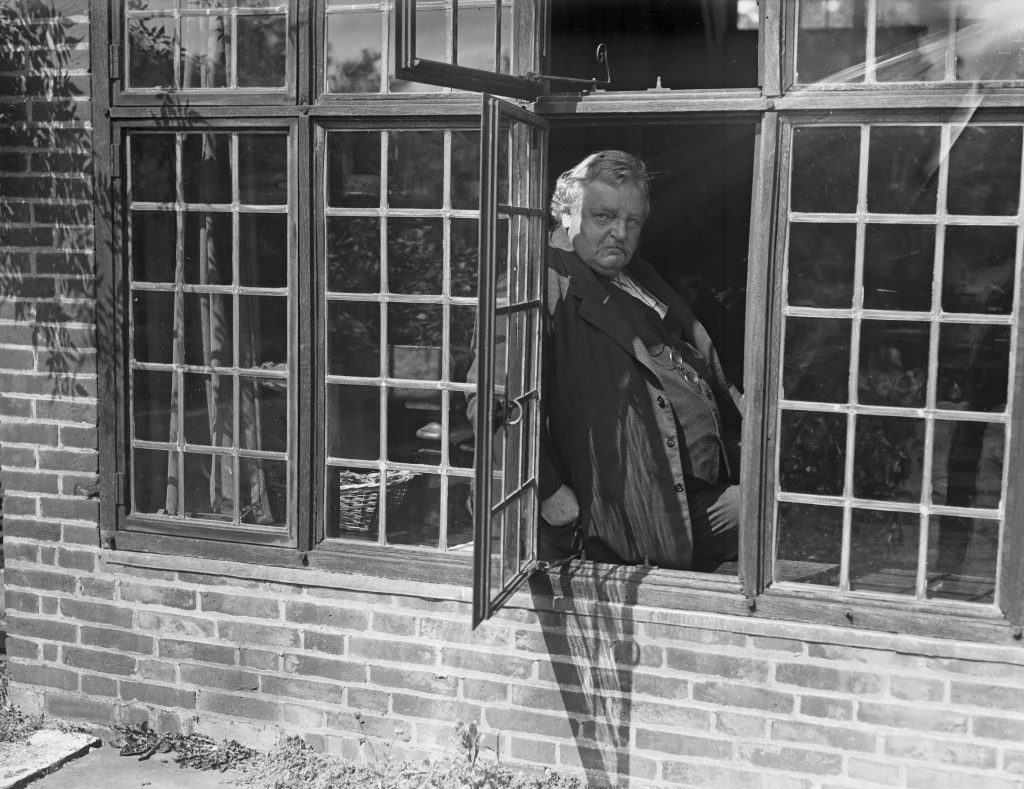
He felt at peace only in the hour before dawn, when the darkness seemed to give way slowly to a mist, and it was at this hour that he would wake and sit by his window.
Peter Ackroyd, from Hawksmoor
From Online Etymology Dictionary ...
window (n.)c. 1200, literally "wind-eye," from Old Norse vindauga, from vindr "wind" (see wind (n.1)) + auga "eye" (from PIE root *okw- "to see"). Replaced Old English eagþyrl, literally "eye-hole," and eagduru, literally "eye-door." Compare Old Frisian andern "window," literally "breath-door."Originally an unglazed hole in a roof. Most Germanic languages later adopted a version of Latin fenestra to describe the glass version (such as German Fenster, Swedish fönster), and English used fenester as a parallel word till mid-16c.
Subscribe to:
Posts (Atom)