"I am not one who was born in the custody of wisdom. I am one who is fond of olden times and intense in quest of the sacred knowing of the ancients." Gustave Courbet
Showing posts with label practice. Show all posts

10 January 2026

Meaning.


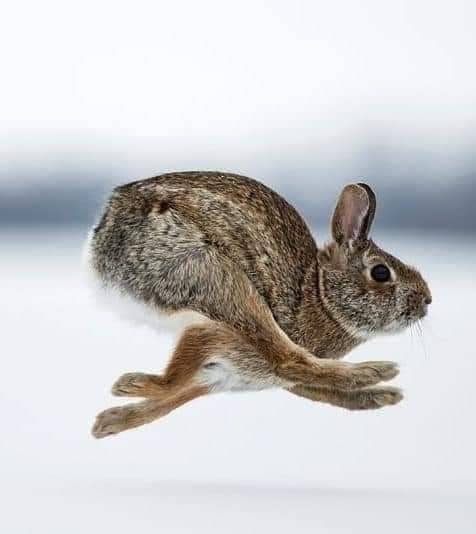
It is said that there are four kinds of horses: excellent ones, good ones, poor ones, and bad ones. The best horse will run slow and fast, right and left, at the driver’s will, before it sees the shadow of the whip; the second best will run as well as the first one does, just before the whip reaches its skin; the third one will run when it feels pain on its body; the fourth will run after the pain penetrates to the marrow of its bones. You can imagine how difficult it is for the fourth one to learn how to run!

When we hear this story, almost all of us want to be the best horse. If it is impossible to be the best one, we want to be the second best. That is, I think, the usual understanding of this story, and of Zen. You may think that when you sit in zazen you will find out whether you are one of the best horses or one of the worst ones. Here, however, there is a misunderstanding of Zen. If you think the aim of Zen practice is to train you to become one of the best horses, you will have a big problem. This is not the right understanding. If you practice Zen in the right way it does not matter whether you are the best horse or the worst one. When you consider the mercy of Buddha, how do you think Buddha will feel about the four kinds of horses? He will have more sympathy for the worst one than for the best one.

When you are determined to practice zazen with the great mind of Buddha, you will find the worst horse is the most valuable one. In your very imperfections you will find the basis for your firm, way-seeking mind. Those who can sit perfectly physically usually take more time to obtain the true way of Zen, the actual feeling of Zen, the marrow of Zen. But those who find great difficulties in practicing Zen will find more meaning in it. So I think that sometimes the best horse may be the worst horse, and the worst horse can be the best one.

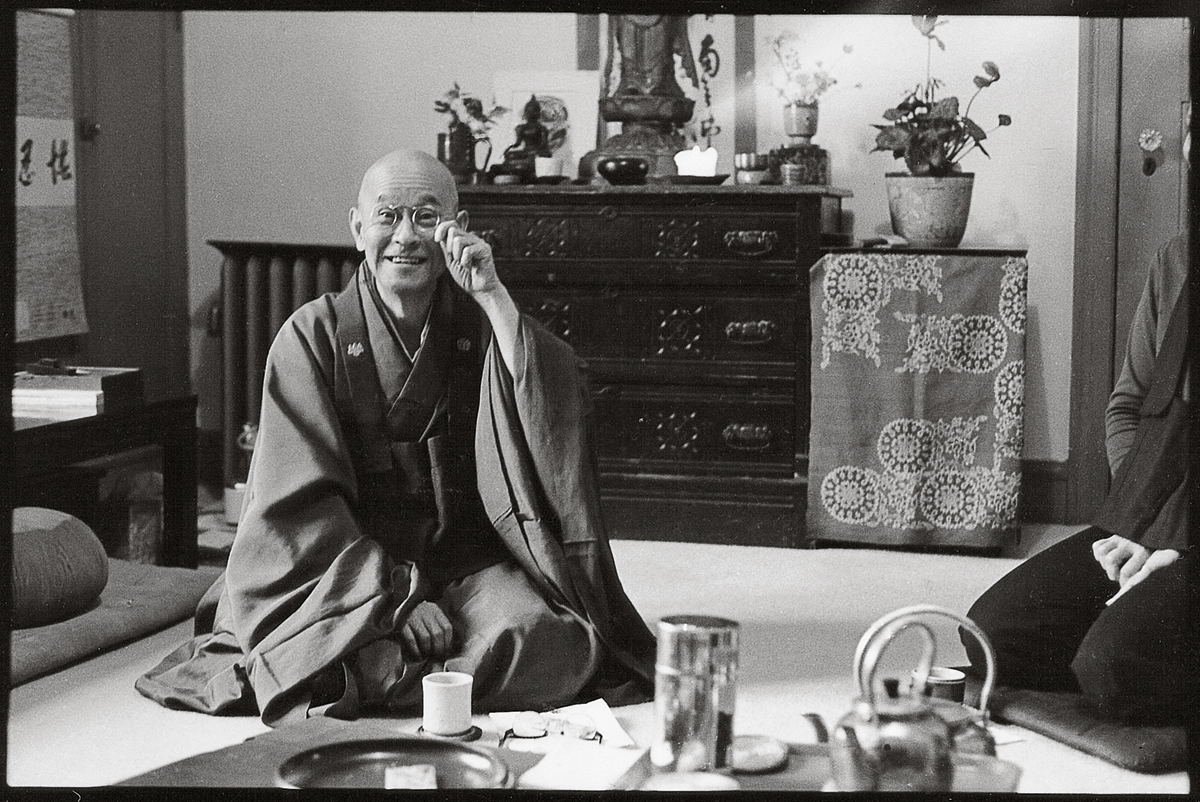
Shunryu Suzuki

10 July 2024

Practice.


If you understand real practice, then archery or other activities can be zen. If you don't understand how to practice archery in its true sense, then even though you practice very hard, what you acquire is just technique. It won't help you through and through. Perhaps you can hit the mark without trying, but without a bow and arrow you cannot do anything. If you understand the point of practice, then even without a bow and arrow the archery will help you. How you get that kind of power or ability is only through right practice.

14 December 2021

Satisfaction.


Is a long life such a good thing if it is lived in daily dread or in constant search for satisfaction in a tomorrow which never comes?

Two things can be mutually opposed, and at the same time, mutually connected. You can be, for example, in an anxious state and still have perfect control of your situation and your life. Thinking in this way allows a person to tolerate contradictions and to accept the uncertainties that inevitably present themselves.

06 September 2021

Cultivate.


Tricycle on joy as a radical act ...
Joy, as we typically understand it, is passive and reactive; it’s caused by something else. A new promotion, a “yes” to a marriage proposal, or a sudden fortune makes us feel joy. Then with time, that joy fades into a dull memory. That type of conditioned happiness is part of what the Buddha called dukkha, or suffering.

But there is another type of joy, a much subtler and more sustainable joy that we can uncover. This joy—which I will refer to here as innate or unconditional joy—cannot be exhausted because it resides within us at all times, though it is often hidden. No external stimulus can evoke it, but as we expand our awareness, our joy is revealed to be increasingly vast and exquisitely infectious. This innate joy is a radical act, because once we learn to recognize it, we can begin to toss aside the everyday understanding of happiness at the heart of our culture as well as any harmful systems that depend on or benefit from our underlying dissatisfaction.

As with many Buddhist notions, the subject of joy can be taken up philosophically, or it can be understood through direct experience. Here, I will do both. I’ll begin by discussing how conditioned and unconditioned joy look in the world, and then I’ll lay out a meditation practice that can allow us to uncover innate joy over time.

Sure, you may think, joy sounds great, but how, in a society founded upon the “pursuit of happiness,” is it radical? The term radical typically conjures up the image of a political extremist or a progressive revolutionary, but what really makes something radical is the extent to which it challenges  conventional paradigms. In order to make a radical change, we first have to return to the root of the problem: our fundamental understanding.

In this sense, supporting a political party or lobbying for a cause is not radical. That doesn’t mean that both sides are the same or that activism can’t be important, righteous, and noble, but when we fixate on our views and contract into our limiting beliefs, we are accepting the underlying framework of the conflict itself. A truly radical act, on the other hand, goes deeper, uprooting the whole system of how we perceive ourselves in the world in order to start anew. Innate joy does just that. It changes the game.

Finding unconditional joy is especially subversive in modern Western culture, where the dominant paradigm equates happiness with conditional joy, which often means material or social gain. I know that in my youth, the idea that inner contentment could be cultivated was totally foreign. I looked for happiness the way the people around me did—in things. Yet, no matter what delicious food I ate or video games I played, a sense of hollowness and disconnection seemed to follow me.

This experience is neither rare nor unique to our era. (During the Buddha’s time, the dharma wasn’t exactly common sense. Otherwise his enlightenment would have been no big deal.) But as our technology advances and makes the world smaller, our conditional view of happiness is accelerating toward its ultimate conclusion: if joy depends on consumption and the things we consume are limited, then there is a finite amount of joy in the world and we must take from others in order to have more for ourselves. Some systems try to redistribute this commodified joy evenly, while others give a disproportionate share of joy to a select few (who do or don’t deserve it, according to one’s worldview). What makes innate joy radical is that it denies the basic idea that happiness is a zero-sum game. Instead of joy being fleeting and dependent, it is revealed to be ever-present and unconditional. By cultivating innate joy, we can turn scarcity into abundance and undermine the whole economy of commodified happiness.

It is in this way that joy is also an act. We tend to only consider something to be an act when it exerts an external force. And while joy can effect change, even before it does, it is already an act—an internal motion that flips the proverbial chess board. We place a disproportionate emphasis on figuring out external solutions to the world’s problems, when it is just as important to consider how we approach life from within. That said, a joyful person will be almost incapable of keeping their compassion from overflowing, whether it is through charity or advocacy or through subtler and smaller kindnesses in everyday interactions (more on this in the practice portion). Joy is also an act in another sense: we need to cultivate it. For most, inner joy is developed over time through regular practice.

cultivate (v.)
... from Latin cultus "care, labor; cultivation," from past participle of colere "to cultivate, to till; to inhabit; to frequent, practice, respect; tend, guard," from PIE root *kwel- (1) "revolve, move round; sojourn, dwell."

21 June 2021

Imperfections.


It is said that there are four kinds of horses: excellent ones, good ones, poor ones, and bad ones. The best horse will run slow and fast, right and left, at the driver’s will, before it sees the shadow of the whip; the second best will run as well as the first one does, just before the whip reaches its skin; the third one will run when it feels pain on its body; the fourth will run after the pain penetrates to the marrow of its bones. You can imagine how difficult it is for the fourth one to learn how to run!

When we hear this story, almost all of us want to be the best horse. If it is impossible to be the best one, we want to be the second best. That is, I think, the usual understanding of this story, and of Zen. You may think that when you sit in zazen you will find out whether you are one of the best horses or one of the worst ones. Here, however, there is a misunderstanding of Zen. If you think the aim of Zen practice is to train you to become one of the best horses, you will have a big problem. This is not the right understanding. If you practice Zen in the right way it does not matter whether you are the best horse or the worst one. When you consider the mercy of Buddha, how do you think Buddha will feel about the four kinds of horses? He will have more sympathy for the worst one than for the best one.

When you are determined to practice zazen with the great mind of Buddha, you will find the worst horse is the most valuable one. In your very imperfections you will find the basis for your firm, way-seeking mind. Those who can sit perfectly physically usually take more time to obtain the true way of Zen, the actual feeling of Zen, the marrow of Zen. But those who find great difficulties in practicing Zen will find more meaning in it. So I think that sometimes the best horse may be the worst horse, and the worst horse can be the best one.

If you understand real practice, then archery or other activities can be zen. If you don't understand how to practice archery in its true sense, then even though you practice very hard, what you acquire is just technique. It won't help you through and through. Perhaps you can hit the mark without trying, but without a bow and arrow you cannot do anything. If you understand the point of practice, then even without a bow and arrow the archery will help you. How you get that kind of power or ability is only through right practice.

If you study calligraphy you will find that those who are not so clever usually become the best calligraphers. Those who are very clever with their hands often encounter great difficulty after they have reached a certain stage. This is also true in art and in Zen. It is true in life. So when we talk about Zen we cannot say, 'He is good,' or 'He is bad,' in the ordinary sense of the words. The posture taken in zazen is not the same for each of us. For some it may be impossible to take the cross-legged posture. But even though you cannot take the right posture, when you arouse your real, way-seeking mind, you can practice Zen in its true sense. Actually it is easier for those who have difficulties in sitting to arouse the true way-seeking mind that for those who can sit easily.

Shunryu Suzuki, from Not Always So: Practicing the True Spirit of Zen

09 April 2019

Dares.


Just slap anything on when you see a blank canvas staring you in the face like some imbecile. You don't know how paralyzing that is, that stare of a blank canvas is, which says to the painter, "You can't do a thing." The canvas has an idiotic stare and mesmerizes some painters so much that they turn into idiots themselves. Many painters are afraid in front of the blank canvas, but the blank canvas is afraid of the real, passionate painter who dares and who has broken the spell of "you can't" once and for all.

Vincent van Gogh

30 March 2019

Continuous.


Continuous practice, day after day, is the most appropriate way of expressing gratitude. This means that you practice continuously, without wasting a single day of your life, without using it for your own sake. Why is it so? Your life is a fortunate outcome of the continuous practice of the past. You should express your gratitude immediately.

Dōgen

30 August 2018

Notice.


Francis Terry reflects on sketching with his father, Quinlan ...

For me this is the point of sketching. It forces you to go slowly and see things which take time to notice. So my advice to the students of Notre Dame is to buy a hard backed sketch book with good paper and go to some old and obscure European town. You could choose the florid baroque of Southern Germany or perhaps the Moorish work of Andalucia and come home with your sketch books filled with work by unknown architects. Make sure you find time to track down the best restaurants and always remember to buy your ink on arrival.

CONNECT

05 December 2017

Practicing.


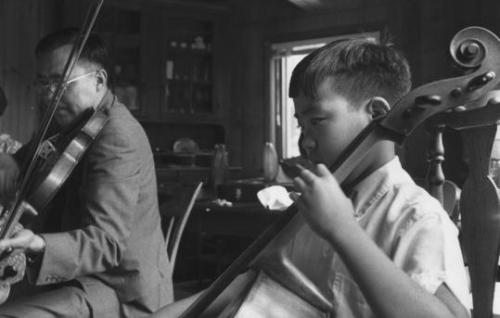
I actually enjoy practicing more and more … as a child, I practiced because I had to practice and you didn’t want to mess up. But that’s not a good thing. You want to please your teacher, you want to please your parents, you want to please your peers. And now I practice because I’ve experienced so much love that you practice out of loving a phrase, loving motivic change, loving a structure or harmony change or the way a sound can get to something.

Yo-Yo Ma

Thank you, Cultural Offering.

27 January 2016

Happy birthday, Mozart.

Lange, Mozart, 1783


The greatest composer who ever lived, Johannes Chrysostomus Wolfgangus Theophilus Mozart, was born on this day in 1756.

What a delight this is! All this inventing, this producing, takes place in a pleasing, lively dream.  It is a mistake to think that the practice of my art has become easy to me. I assure you, dear friend, no one has given so much care to the study of composition as I. There is scarcely a famous master in music whose works I have not frequently and diligently studied.  Neither a lofty degree of intelligence nor imagination nor both together go to the making of genius. Love, love, love, that is the soul of genius.

Wolfgang Amadeus Mozart 

The Magic Flute


The Magic Flute, for children ...


25 February 2015

Practice.


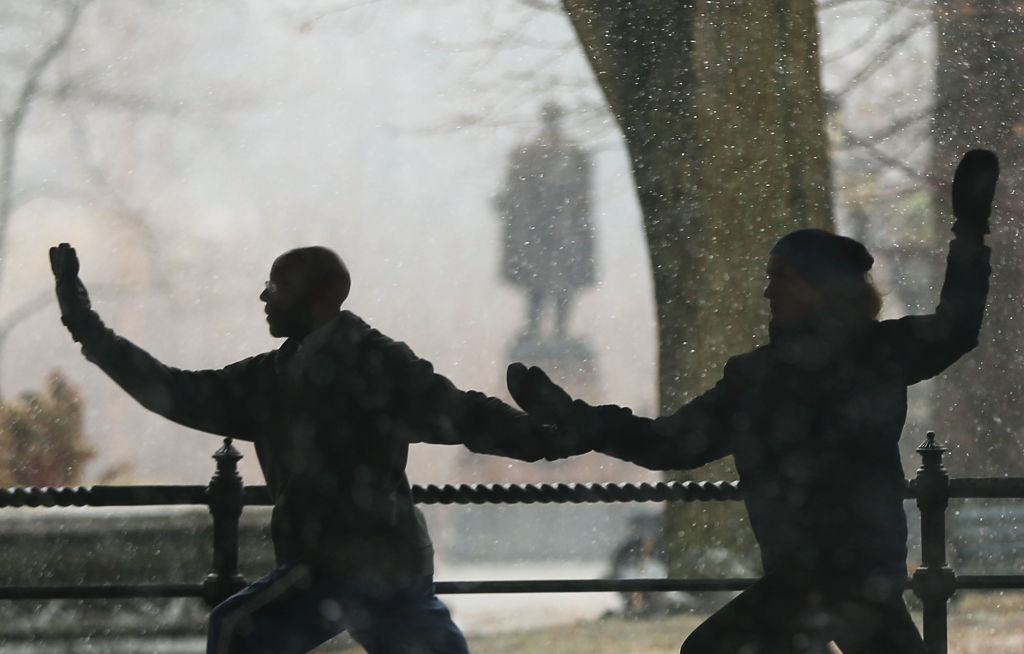
If you think you will get something from practicing zazen, already you are involved in impure practice.  You do not say, “This is enlightenment,” or “That is not right practice.” Even in wrong practice, when you realize it and continue, there is right practice.” 

Actually we do not have any particular name for our practice; when we practice zazen we just practice it, and whether we find joy in our practice or not, we just do it.  But if you make your best effort just to continue your practice with your whole mind and body, without gaining ideas, then whatever you do will be true practice.

Shunryū Suzuki

10 August 2014

Practice.


How many times have you heard that,“practice makes perfect?” Well, a new meta-analysis of dozens of previous studies shows that it is not always true.

15 January 2014

Changing.

O'Keeffe, White Rose, 1927


A new study out of Brown University has found that a form of mindfulness meditation known as MBSR may act as a “volume knob” for attention, changing brain wave patterns.

CONNECT