"I am not one who was born in the custody of wisdom. I am one who is fond of olden times and intense in quest of the sacred knowing of the ancients." Gustave Courbet
Showing posts with label out there. Show all posts

05 September 2026

Wonder.


What I wanted to hear from my teachers on my first day of school.

What would I have wanted to hear from my teachers on my first day of school, or what would I want them to tell me if I became a student again?

Tales about my vacations? No. Those of my classmates? No. I would already know everything. You have to study? This is going to be difficult? We’re going to have to make more of an effort? No, no thank you. I know. This is why I’m here, and besides I’m deaf from the ear of duties. Tell me something different, something new, so that I don’t start getting bored already, but rather that I might feel even just a slight desire to start this school year. From the ear of passion, I can hear perfectly.

Show me that it’s worth my while to stay here for a whole year listening to you. Tell me please that all this will be relevant to my everyday life, that it will help me better understand the world and myself, that it’s worthwhile for me to be here. Show me, most of all through your own lives, that the effort you demand of me will fill my own life the way it fills yours. You have dedicated studies, efforts and dreams to teach me your subject, now show be that it’s all true, that you are conveyors of something desirable and indispensable, something that you own and that you wish to impart upon me as a gift. Show me that you lose sleep to teach me these things that — you say — are worth my efforts. I want to look into your eyes and if they’re not shining I’m going to get bored, I’m telling you now, and I’m going to do something else. You can’t lie to me. If you don’t believe it, then why should I? And don’t tell me about your salaries, about the union, about [Italian education minister] Gelmini, about your family and relationship troubles, about your failures and your obsessions. No. Tell me about how much you love the force of the sun that has burned for 5 billion years and transforms hydrogen into light, life and energy. Tell me how this happens, this miracle that will continue for at least another 5 billion years. Tell me why the moon always shows me her same face and teach me how to interrogate her like Leopardi’s shepherd did. Tell me how it’s possible that a rose has petals arranged according to a divine and infallible proportion and why the heart is a muscle that beats involuntarily and how the eye transforms light into images.

There are so many things in this world that I don’t know and that you could teach me, with eyes shining, because only wonder knows.

And tell me about the mystery of humans, tell me how the Greeks built their temples that you feel like you’re in contact with the gods, and how the Romans managed to combine beauty and utility like nobody else. Tell me how Leonardo da Vinci did it, how Magellan did it. Tell me the secret of Einstein, Gaudi’, or Mozart. If you know it, tell me.

Tell me, how am I supposed to decide what to do with my life, if I don’t know about the lives of others? Tell me, how am I supposed to find my own story, if I have not a bit of passion for those that left their mark? Tell me what I should gamble my life for. Or no, don’t tell me. I will decide for myself. You show me the possibilities. Help me discover my passions, my talents, and my dreams. And remember that you will only succeed if you yourself have dreams, projects and passions of your own. Otherwise how am I supposed to believe you? And remind me that my life is not repeatable, that it’s made for greatness, and help me not to settle for small pleasures, real and virtual, that may satisfy me in the moment, but that deep down just bore me…

Challenge me, put my best qualities to the test, and write them on your register along with all those grades that are always the same. Help me not to believe illusions, not to live on dreams filled with air, but at the same time teach me to dream and to have the patience to realize these dreams, turning them into projects.

Teach me to reason, such that I may not derive my beliefs from common cliches, from the dominant thought, from unreasoned thought. Help me to be free. Remind me of the unity of knowlegde and don’t tell me about the unity of Italy, but be united among each other: don’t talk ill of one another, I beg you. And remind me of how beautiful this country is, talk about it, make me want to discover everything it is hiding before I begin to long for a tropical vacation.

And please, one last favor, keep your cynicism to yourselves. Don’t hide your battles from me, but give me the strength to bear them and don’t poison my hopes even before I have conceived them.

For this, one day, I will remember you.


Thank you, Prof. 2.0.

12 August 2026

Behold.


We can’t crucify beauty without steadily walking into hell. Every time we walk the dog we are surrounded by hints of the Kingdom of Heaven. That’s a big thought to swim into. One of the ways we can practice being saintly is to notice that sort of grace.  The more we abide in it, the more folks around us start to notice. This is one of the attributes that used to define saints; you glimpse more of the Kingdom of Heaven around them. They are literally an eye-opener. A saint has had the saliva and dirt of the great druid Yeshua wipe the blindness from their eye. They behold.

Martin Shaw, from Liturgies of the Wild: Myths That Make Us

26 June 2026

Thanks.


ODE on INTIMATIONS of IMMORTALITY from RECOLLECTIONS of EARLY CHILDHOOD

There was a time when meadow, grove, and stream,
The earth, and every common sight
                 To me did seem
            Apparelled in celestial light,
The glory and the freshness of a dream.
It is not now as it hath been of yore;—
             Turn wheresoe’er I may,
              By night or day,
The things which I have seen I now can see no more.

            The rainbow comes and goes,
            And lovely is the rose;
            The moon doth with delight
     Look round her when the heavens are bare;
            Waters on a starry night
            Are beautiful and fair;
     The sunshine is a glorious birth;
     But yet I know, where’er I go,
That there hath past away a glory from the earth.

Now, while the birds thus sing a joyous song,
     And while the young lambs bound
            As to the tabor’s sound,
To me alone there came a thought of grief:
A timely utterance gave that thought relief,
            And I again am strong.
The cataracts blow their trumpets from the steep,—
No more shall grief of mine the season wrong:
I hear the echoes through the mountains throng.
The winds come to me from the fields of sleep,
            And all the earth is gay;
                Land and sea
     Give themselves up to jollity,
            And with the heart of May
     Doth every beast keep holiday;—
                Thou child of joy,
Shout round me, let me hear thy shouts, thou happy
        Shepherd-boy!
                 Ye blesséd Creatures, I have heard the call 
     Ye to each other make; I see
The heavens laugh with you in your jubilee;
     My heart is at your festival,
       My head hath its coronal,
The fulness of your bliss, I feel—I feel it all.
         O evil day! if I were sullen
         While Earth herself is adorning
              This sweet May-morning;
         And the children are culling
              On every side
         In a thousand valleys far and wide
         Fresh flowers; while the sun shines warm,
And the babe leaps up on his mother’s arm:—
         I hear, I hear, with joy I hear!
         —But there’s a tree, of many, one,
A single field which I have look’d upon,
Both of them speak of something that is gone:
              The pansy at my feet
              Doth the same tale repeat:
Whither is fled the visionary gleam?
Where is it now, the glory and the dream?

Our birth is but a sleep and a forgetting;
The Soul that rises with us, our life’s Star,
          Hath had elsewhere its setting
               And cometh from afar;
          Not in entire forgetfulness,
          And not in utter nakedness,
But trailing clouds of glory do we come 
               From God, who is our home:
Heaven lies about us in our infancy!
Shades of the prison-house begin to close
               Upon the growing Boy,
But he beholds the light, and whence it flows,
               He sees it in his joy;
The Youth, who daily farther from the east
     Must travel, still is Nature’s priest,
          And by the vision splendid
          Is on his way attended;
At length the Man perceives it die away,
And fade into the light of common day.

Earth fills her lap with pleasures of her own;
Yearnings she hath in her own natural kind,
And, even with something of a mother’s mind,
               And no unworthy aim,
          The homely nurse doth all she can
To make her foster-child, her inmate, Man,
               Forget the glories he hath known,
And that imperial palace whence he came.

Behold the Child among his new-born blisses,
A six years’ darling of a pigmy size!
See, where ’mid work of his own hand he lies,
Fretted by sallies of his mother’s kisses,
With light upon him from his father’s eyes!
See, at his feet, some little plan or chart,
Some fragment from his dream of human life,
Shaped by himself with newly-learned art;
          A wedding or a festival,
          A mourning or a funeral;
               And this hath now his heart,
          And unto this he frames his song:
               Then will he fit his tongue
To dialogues of business, love, or strife;
          But it will not be long
          Ere this be thrown aside,
          And with new joy and pride
The little actor cons another part;
Filling from time to time his ‘humorous stage’
With all the Persons, down to palsied Age,
That life brings with her in her equipage;
          As if his whole vocation
          Were endless imitation.

Thou, whose exterior semblance doth belie
          Thy soul’s immensity;
Thou best philosopher, who yet dost keep
Thy heritage, thou eye among the blind,
That, deaf and silent, read’st the eternal deep,
Haunted for ever by the eternal Mind,—
          Mighty Prophet! Seer blest!
          On whom those truths rest
Which we are toiling all our lives to find,
In darkness lost, the darkness of the grave;
Thou, over whom thy Immortality
Broods like the day, a master o’er a slave,
A Presence which is not to be put by;
          To whom the grave
Is but a lonely bed, without the sense of sight
Of day or the warm light,
A place of thoughts where we in waiting lie;
Thou little child, yet glorious in the might
Of heaven-born freedom on thy being’s height,
Why with such earnest pains dost thou provoke
The years to bring the inevitable yoke,
Thus blindly with thy blessedness at strife?
Full soon thy soul shall have her earthly freight,
And custom lie upon thee with a weight
Heavy as frost, and deep almost as life!
          O joy! that in our embers
          Is something that doth live,
          That Nature yet remembers
          What was so fugitive!
The thought of our past years in me doth breed
Perpetual benediction: not indeed
For that which is most worthy to be blest,
Delight and liberty, the simple creed
Of Childhood, whether busy or at rest,
With new-fledged hope still fluttering in his breast:—
          —Not for these I raise
          The song of thanks and praise;
     But for those obstinate questionings
     Of sense and outward things,
     Fallings from us, vanishings,
     Blank misgivings of a creature
Moving about in worlds not realized, 
High instincts, before which our mortal nature 
Did tremble like a guilty thing surprised:
     But for those first affections,
     Those shadowy recollections,
          Which, be they what they may,
Are yet the fountain-light of all our day,
Are yet a master-light of all our seeing;
     Uphold us—cherish—and have power to make
Our noisy years seem moments in the being 
Of the eternal Silence: truths that wake,
               To perish never;
Which neither listlessness, nor mad endeavour,
               Nor man nor boy,
Nor all that is at enmity with joy,
Can utterly abolish or destroy!
   Hence, in a season of calm weather
          Though inland far we be,
Our souls have sight of that immortal sea
               Which brought us hither;
          Can in a moment travel thither—
And see the children sport upon the shore,
And hear the mighty waters rolling evermore.

Then, sing, ye birds, sing, sing a joyous song!
          And let the young lambs bound
          As to the tabor’s sound!
     We, in thought, will join your throng,
          Ye that pipe and ye that play,
          Ye that through your hearts to-day
          Feel the gladness of the May!
What though the radiance which was once so bright
Be now for ever taken from my sight,
     Though nothing can bring back the hour
Of splendour in the grass, of glory in the flower;
          We will grieve not, rather find
          Strength in what remains behind;
          In the primal sympathy
          Which having been must ever be;
          In the soothing thoughts that spring
          Out of human suffering;
          In the faith that looks through death,
In years that bring the philosophic mind.

And O, ye Fountains, Meadows, Hills, and Groves,
Forebode not any severing of our loves!
Yet in my heart of hearts I feel your might;
I only have relinquish’d one delight
To live beneath your more habitual sway;
I love the brooks which down their channels fret
Even more than when I tripp’d lightly as they;
The innocent brightness of a new-born day
               Is lovely yet;
The clouds that gather round the setting sun
Do take a sober colouring from an eye
That hath kept watch o’er man’s mortality;
Another race hath been, and other palms are won.
   Thanks to the human heart by which we live,
   Thanks to its tenderness, its joys, and fears,
   To me the meanest flower that blows can give
   Thoughts that do often lie too deep for tears.

William Wordsworth

23 August 2025

Remember.


REMEMBRANCE

And this is where we went, I thought,
Now here, now there, upon the grass
Some forty years ago.
I had returned and walked along the streets
And saw the house where I was born
And grown and had my endless days.
The days being short now, simply I had come
To gaze and look and stare upon
The thought of that once endless maze of afternoons.
But most of all I wished to find the places where I ran
As dogs do run before or after boys,
The paths put down by Indians or brothers wise and swift
Pretending at a tribe.
I came to the ravine.
I half slid down the path
A man with graying hair but seeming supple thoughts
And saw the place was empty.
Fools! I thought. O, boys of this new year,
Why don’t you know the Abyss waits you here?
Ravines are special fine and lovely green
And secretive and wandering with apes and thugs
And bandit bees that steal from flowers to give to trees.
Caves echo here and creeks for wading after loot:
A water-strider, crayfish, precious stone
Or long-lost rubber boot --
It is a natural treasure-house, so why the silent place?
What’s happened to our boys that they no longer race
And stand them still to contemplate Christ’s handiwork:
His clear blood bled in syrups from the lovely wounded trees?
Why only bees and blackbird winds and bending grass?
No matter. Walk. Walk, look, and sweet recall.

I came upon an oak where once when I was twelve
I had climbed up and screamed for Skip to get me down.
It was a thousand miles to earth. I shut my eyes and yelled.
My brother, richly compelled to mirth, gave shouts of laughter
And scaled up to rescue me.
"What were you doing there?" he said.
I did not tell. Rather drop me dead.
But I was there to place a note within a squirrel nest
On which I’d written some old secret thing now long forgot.
Now in the green ravine of middle years I stood
Beneath that tree. Why, why, I thought, my God,
It’s not so high. Why did I shriek?
It can’t be more than fifteen feet above. I’ll climb it handily.
And did.
And squatted like an aging ape alone and thanking God
That no one saw this ancient man at antics
Clutched grotesquely to the bole.
But then, ah God, what awe.
The squirrel’s hole and long-lost nest were there.

I lay upon the limb a long while, thinking.
I drank in all the leaves and clouds and weathers
Going by as mindless
As the days.
What, what, what if? I thought. But no. Some forty years beyond!
The note I’d put? It’s surely stolen off by now.
A boy or screech-owl’s pilfered, read, and tattered it.
It’s scattered to the lake like pollen, chestnut leaf
Or smoke of dandelion that breaks along the wind of time...

No. No.

I put my hand into the nest. I dug my fingers deep.
Nothing. And still more nothing. Yet digging further
I brought forth:
The note.
Like mothwings neatly powdered on themselves, and folded close
It had survived. No rains had touched, no sunlight bleached
Its stuff. It lay upon my palm. I knew its look:
Ruled paper from an old Sioux Indian Head scribble writing book.
What, what, oh, what had I put there in words
So many years ago?
I opened it. For now I had to know.
I opened it, and wept. I clung then to the tree
And let the tears flow out and down my chin.
Dear boy, strange child, who must have known the years
And reckoned time and smelled sweet death from flowers
In the far churchyard.
It was a message to the future, to myself.
Knowing one day I must arrive, come, seek, return.
From the young one to the old. From the me that was small
And fresh to the me that was large and no longer new.
What did it say that made me weep?

I remember you.
I remember you.

Ray Bradbury

10 August 2025

Wander.

Firchau, Mum and Dad's, 2023


MY LOST YOUTH

Often I think of the beautiful town
That is seated by the sea;
Often in thought go up and down
The pleasant streets of that dear old town,
And my youth comes back to me.
And a verse of a Lapland song
Is haunting my memory still
‘A boy’s will is the wind’s will,
And the thoughts of youth are long, long thoughts.’

I can see the shadowy lines of its trees,
And catch, in sudden gleams,
The sheen of the far-surrounding seas,
And islands that were the Hesperides
Of all my boyish dreams.
And the burden of that old song,
It murmurs and whispers still:
'A boy’s will is the wind’s will,
And the thoughts of youth are long, long thoughts.’

I remember the black wharves and the slips,
And the sea-tides tossing free;
And the Spanish sailors with bearded lips,
And the beauty and mystery of the ships,
And the magic of the sea.
And the voice of that wayward song
Is singing and saying still:
'A boy’s will is the wind’s will,
And the thoughts of youth are long, long thoughts.’

I remember the bulwarks by the shore,
And the fort upon the hill;
The sunrise gun, with its hollow roar,
The drum-beat repeated o'er and o'er,
And the bugle wild and shrill.
And the music of that old song
Throbs in my memory still:
'A boy’s will is the wind’s will,
And the thoughts of youth are long, long thoughts.’

I remember the sea-fight far away,
How it thundered o'er the tide!
And the dead captains, as they lay
In their graves, o'erlooking the tranquil bay
Where they in battle died.
And the sound of that mournful song
Goes through me with a thrill:
'A boy’s will is the wind’s will,
And the thoughts of youth are long, long thoughts.’

I can see the breezy dome of groves,
The shadows of Deering’s Woods;
And the friendship old and the early loves
Come back with a Sabbath sound, as of doves
In quiet neighborhoods.
And the verse of that sweet old song,
It flutters and murmurs still:
'A boy’s will is the wind’s will,
And the thoughts of youth are long, long thoughts.’

I remember the gleams and glooms that dart
Across the school-boy’s brain;
The song and the silence in the heart,
That in part are prophecies, and in part
Are longings wild and vain.
And the voice of that fitful song
Sings on, and is never still:
'A boy’s will is the wind’s will,
And the thoughts of youth are long, long thoughts.’

There are things of which I may not speak;
There are dreams that cannot die;
There are thoughts that make the strong heart weak,
And bring a pallor into the cheek,
And a mist before the eye.
And the words of that fatal song
Come over me like a chill:
'A boy’s will is the wind’s will,
And the thoughts of youth are long, long thoughts.’

Strange to me now are the forms I meet
When I visit the dear old town;
But the native air is pure and sweet,
And the trees that o'ershadow each well-known street,
As they balance up and down,
Are singing the beautiful song,
Are sighing and whispering still:
'A boy’s will is the wind’s will,
And the thoughts of youth are long, long thoughts.’

And Deering’s Woods are fresh and fair,
And with joy that is almost pain
My heart goes back to wander there,
And among the dreams of the days that were,
I find my lost youth again.
And the strange and beautiful song,
The groves are repeating it still:
'A boy’s will is the wind’s will,
And the thoughts of youth are long, long thoughts.’

Henry Wadsworth Longfellow

02 February 2025

Out.


THE LAND of HEART'S DESIRE

God spreads the heavens above us like great wings
And gives a little round of deeds and days,
And then come the wrecked angels and set snares,
And bait them with light hopes and heavy dreams,
Until the heart is puffed with pride and goes
Half shuddering and half joyous from God's peace;
And it was some wrecked angel, blind with tears,
Who flattered Edane's heart with merry words.

Come, faeries, take me out of this dull house!
Let me have all the freedom I have lost;
Work when I will and idle when I will!
Faeries, come take me out of this dull world,
For I would ride with you upon the wind,
Run on the top of the dishevelled tide,
And dance upon the mountains like a flame.

I would take the world
And break it into pieces in my hands
To see you smile watching it crumble away.

Once a fly dancing in a beam of the sun,
Or the light wind blowing out of the dawn,
Could fill your heart with dreams none other knew,
But now the indissoluble sacrament
Has mixed your heart that was most proud and cold
With my warm heart for ever; the sun and moon
Must fade and heaven be rolled up like a scroll
But your white spirit still walk by my spirit.

When winter sleep is abroad my hair grows thin,
My feet unsteady. When the leaves awaken
My mother carries me in her golden arms;
I'll soon put on my womanhood and marry
The spirits of wood and water, but who can tell
When I was born for the first time?

The wind blows out of the gates of the day,
The wind blows over the lonely of heart,
And the lonely of heart is withered away;
While the faeries dance in a place apart,
Shaking their milk-white feet in a ring,
Tossing their milk-white arms in the air;
For they hear the wind laugh and murmur and sing
Of a land where even the old are fair,
And even the wise are merry of tongue;
But I heard a reed of Coolaney say--
When the wind has laughed and murmured and sung,
The lonely of heart is withered away.

W.B. Yeats

Vision.


Some day we shall have a science of education comparable to the science of medicine; but even when that day arrives the art of education will still remain the inspiration and the guide of all wise teachers. The laws that regulate our physical and mental development will be reduced to order; but the impulses which lead each new generation to play its way into possession of all that is best in life will still have to be interpreted for us by the artists who, with the wisdom of years, have not lost the direct vision of children.

Earl Barnes, from the Preface to The Art of the Storyteller by Marie L. Shedlock

18 October 2024

Enter.

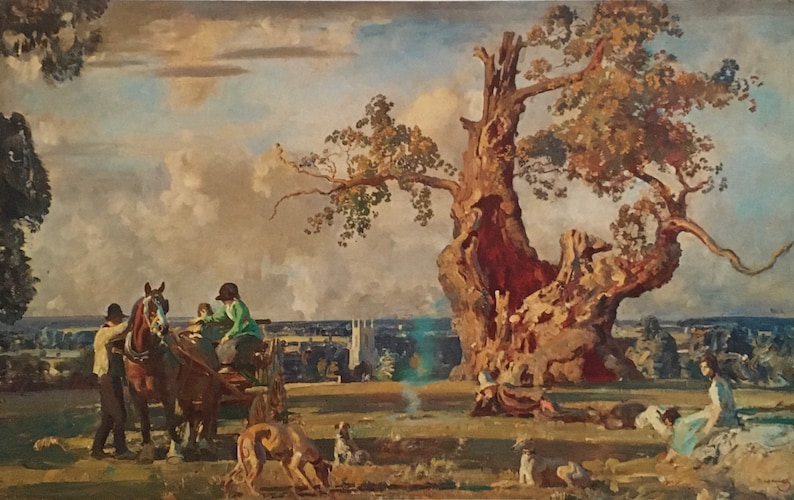
Munnings, The Old Oak, 1959


What is the good of your stars and trees, your sunrise and the wind, if they do not enter into our daily lives? 

E.M. Forster, from Howards End

29 September 2024

Thoughts.


ODE: INTIMATION of IMMORTALITY from RECOLLECTIONS of EARLY CHILDHOOD

   The child is father of the man;
And I could wish my days to be
   Bound each to each by natural piety.


There was a time when meadow, grove, and stream,
       The earth, and every common sight,
                          To me did seem
                      Apparelled in celestial light,
            The glory and the freshness of a dream.
It is not now as it hath been of yore;—
                      Turn wheresoe'er I may,
                          By night or day.
The things which I have seen I now can see no more.

                      The Rainbow comes and goes,
                      And lovely is the Rose,
                      The Moon doth with delight
       Look round her when the heavens are bare,
                      Waters on a starry night
                      Are beautiful and fair;
       The sunshine is a glorious birth;
       But yet I know, where'er I go,
That there hath past away a glory from the earth.

Now, while the birds thus sing a joyous song,
       And while the young lambs bound
                      As to the tabor's sound,
To me alone there came a thought of grief:
A timely utterance gave that thought relief,
                      And I again am strong:
The cataracts blow their trumpets from the steep;
No more shall grief of mine the season wrong;
I hear the Echoes through the mountains throng,
       The Winds come to me from the fields of sleep,
                      And all the earth is gay;
                           Land and sea
                Give themselves up to jollity,
                      And with the heart of May
                 Doth every Beast keep holiday;—
                      Thou Child of Joy,
Shout round me, let me hear thy shouts, thou happy Shepherd-boy.

Ye blessèd creatures, I have heard the call
      Ye to each other make; I see
The heavens laugh with you in your jubilee;
      My heart is at your festival,
            My head hath its coronal,
The fulness of your bliss, I feel—I feel it all.
                      Oh evil day! if I were sullen
                      While Earth herself is adorning,
                         This sweet May-morning,
                      And the Children are culling
                         On every side,
In a thousand valleys far and wide,
                      Fresh flowers; while the sun shines warm,
And the Babe leaps up on his Mother's arm:—
                      I hear, I hear, with joy I hear!
                      —But there's a Tree, of many, one,
A single field which I have looked upon,
Both of them speak of something that is gone;
                      The Pansy at my feet
                      Doth the same tale repeat:
Whither is fled the visionary gleam?
Where is it now, the glory and the dream?

Our birth is but a sleep and a forgetting:
The Soul that rises with us, our life's Star,
                      Hath had elsewhere its setting,
                         And cometh from afar:
                      Not in entire forgetfulness,
                      And not in utter nakedness,
But trailing clouds of glory do we come
                      From God, who is our home:
Heaven lies about us in our infancy!
Shades of the prison-house begin to close
                      Upon the growing Boy,
But he beholds the light, and whence it flows,
                      He sees it in his joy;
The Youth, who daily farther from the east
                      Must travel, still is Nature's Priest,
                      And by the vision splendid
                      Is on his way attended;
At length the Man perceives it die away,
And fade into the light of common day.

Earth fills her lap with pleasures of her own;
Yearnings she hath in her own natural kind,
                      And, even with something of a Mother's mind,
                      And no unworthy aim,
The homely Nurse doth all she can
To make her Foster-child, her Inmate Man,
                      Forget the glories he hath known,
And that imperial palace whence he came.

Behold the Child among his new-born blisses,
A six years' Darling of a pigmy size!
See, where 'mid work of his own hand he lies,
Fretted by sallies of his mother's kisses,
With light upon him from his father's eyes!
See, at his feet, some little plan or chart,
Some fragment from his dream of human life,
Shaped by himself with newly-learn{e}d art
                      A wedding or a festival,
                      A mourning or a funeral;
                         And this hath now his heart,
                      And unto this he frames his song:
                         Then will he fit his tongue
To dialogues of business, love, or strife;
                      But it will not be long
                      Ere this be thrown aside,
                      And with new joy and pride
The little Actor cons another part;
Filling from time to time his "humorous stage"
With all the Persons, down to palsied Age,
That Life brings with her in her equipage;
                      As if his whole vocation
                      Were endless imitation.

Thou, whose exterior semblance doth belie
                      Thy Soul's immensity;
Thou best Philosopher, who yet dost keep
Thy heritage, thou Eye among the blind,
That, deaf and silent, read'st the eternal deep,
Haunted for ever by the eternal mind,—
                      Mighty Prophet! Seer blest!
                      On whom those truths do rest,
Which we are toiling all our lives to find,
In darkness lost, the darkness of the grave;
Thou, over whom thy Immortality
Broods like the Day, a Master o'er a Slave,
A Presence which is not to be put by;
Thou little Child, yet glorious in the might
Of heaven-born freedom on thy being's height,
Why with such earnest pains dost thou provoke
The years to bring the inevitable yoke,
Thus blindly with thy blessedness at strife?
Full soon thy Soul shall have her earthly freight,
And custom lie upon thee with a weight,
Heavy as frost, and deep almost as life!

                      O joy! that in our embers
                      Is something that doth live,
                      That Nature yet remembers
What was so fugitive!
The thought of our past years in me doth breed
Perpetual benediction: not indeed
For that which is most worthy to be blest;
Delight and liberty, the simple creed
Of Childhood, whether busy or at rest,
With new-fledged hope still fluttering in his breast:—
                      Not for these I raise
                      The song of thanks and praise
                But for those obstinate questionings
                Of sense and outward things,
                Fallings from us, vanishings;
                Blank misgivings of a Creature
Moving about in worlds not realised,
High instincts before which our mortal Nature
Did tremble like a guilty thing surprised:
                      But for those first affections,
                      Those shadowy recollections,
                Which, be they what they may
Are yet the fountain-light of all our day,
Are yet a master-light of all our seeing;
                Uphold us, cherish, and have power to make
Our noisy years seem moments in the being
Of the eternal Silence: truths that wake,
                To perish never;
Which neither listlessness, nor mad endeavour,
                      Nor Man nor Boy,
Nor all that is at enmity with joy,
Can utterly abolish or destroy!
                Hence in a season of calm weather
                      Though inland far we be,
Our Souls have sight of that immortal sea
                      Which brought us hither,
                Can in a moment travel thither,
And see the Children sport upon the shore,
And hear the mighty waters rolling evermore.

Then sing, ye Birds, sing, sing a joyous song!
                      And let the young Lambs bound
                      As to the tabor's sound!
We in thought will join your throng,
                      Ye that pipe and ye that play,
                      Ye that through your hearts to-day
                      Feel the gladness of the May!
What though the radiance which was once so bright
Be now for ever taken from my sight,
                Though nothing can bring back the hour
Of splendour in the grass, of glory in the flower;
                      We will grieve not, rather find
                      Strength in what remains behind;
                      In the primal sympathy
                      Which having been must ever be;
                      In the soothing thoughts that spring
                      Out of human suffering;
                      In the faith that looks through death,
In years that bring the philosophic mind.
And O, ye Fountains, Meadows, Hills, and Groves,
Forebode not any severing of our loves!
Yet in my heart of hearts I feel your might;
I only have relinquished one delight
To live beneath your more habitual sway.
I love the Brooks which down their channels fret,
Even more than when I tripped lightly as they;
The innocent brightness of a new-born Day
                      Is lovely yet;
The Clouds that gather round the setting sun
Do take a sober colouring from an eye
That hath kept watch o'er man's mortality;
Another race hath been, and other palms are won.
Thanks to the human heart by which we live,
Thanks to its tenderness, its joys, and fears,
To me the meanest flower that blows can give
Thoughts that do often lie too deep for tears.

William Wordsworth

13 August 2024

Search.


Logical activity is not the whole of intelligence. One can be intelligent without being particularly logical. The main functions of intelligence, that of inventing solutions, and that of verifying them, do not necessarily involve one another. The first partakes of imagination, the second alone is properly logical. Demonstration, search for truth, is therefore the true function of logic. 

09 August 2024

Before.


If you would be more creative stay in part a child, with the creativity and invention that characterizes children before they are deformed by adult society.

Jean Piaget

05 July 2024

Not-Understanding.

Sloane, Low Tide, 1979


What is necessary, after all, is only this: solitude, vast inner solitude. To walk inside yourself and meet no one for hours — that is what you must be able to attain. To be solitary as you were when you were a child, when the grown-ups walked around involved with matters that seemed large and important because they looked so busy and because you didn’t understand a thing about what they were doing.

And when you realize that their activities are shabby, that their vocations are petrified and no longer connected with life, why not then continue to look upon it all as a child would, as if you were looking at something unfamiliar, out of the depths of your own solitude, which is itself work and status and vocation? Why should you want to give up a child’s wise not-understanding in exchange for defensiveness and scorn, since not understanding is, after all, a way of being alone, whereas defensiveness and scorn are participation in precisely what, by these means, you want to separate yourself from.

Rainer Maria Rilke, from Letters to a Young Poet

Thanks to Walker's Arms for the image.

28 June 2024

Happy Birthday, Rousseau


Fresh air affects children’s constitutions, particularly in early years. It enters every pore of a soft and tender skin, it has a powerful effect on their young bodies. Its effects can never be destroyed. So I should not agree with those who take a country woman from her village and shut her up in one room in a town and her nursling with her. I would rather send him to breathe the fresh air of the country than the foul air of the town. He will take his new mother’s position, will live in her cottage, where his tutor will follow him. The reader will bear in mind that this tutor is not a paid servant, but the father’s friend. But if this friend cannot be found, if this transfer is not easy, if none of my advice can be followed, you will say to me, “What shall I do instead?” I have told you already—“Do what you are doing;” no advice is needed there.

Men are not made to be crowded together in ant-hills, but scattered over the earth to till it. The more they are massed together, the more corrupt they become. Disease and vice are the sure results of over-crowded cities. Of all creatures man is least fitted to live in herds. Huddled together like sheep, men would very soon die. Man’s breath is fatal to his fellows. This is literally as well as figuratively true.

Men are devoured by our towns. In a few generations the race dies out or becomes degenerate; it needs renewal, and it is always renewed from the country. Send your children to renew themselves, so to speak, send them to regain in the open fields the strength lost in the foul air of our crowded cities. Women hurry home that their children may be born in the town; they ought to do just the opposite, especially those who mean to nurse their own children. They would lose less than they think, and in more natural surroundings the pleasures associated by nature with maternal duties would soon destroy the taste for other delights.

Jean-Jacques Rousseau, born on this day in 1712, from Emile, or Education

18 June 2024

Among.


Libraries are not childcare facilities but sometimes feral children raise themselves among the stacks.

19 May 2024

Beyond.


Early youth is a baffling time. The present moment is nice but it does not last. Living in it is like waiting in a junction town for the morning limited; the junction may be interesting but someday you will have to leave it and you do not know where the limited will take you. Sooner or later you must move down an unknown road that leads beyond the range of the imagination, and the only certainty is that the trip has to be made. In this respect early youth is exactly like old age; it is a time of waiting before a big trip to an unknown destination. The chief difference is that youth waits for the morning limited and age waits for the night train.

Bruce Catton, from Waiting for the Morning Train: An American Boyhood

24 February 2024

Onward.


FOREIGN LANDS

Up into the cherry tree 
Who should climb but little me? 
I held the trunk with both my hands 
And looked abroad in foreign lands. 

I saw the next door garden lie, 
Adorned with flowers, before my eye, 
And many pleasant places more 
That I had never seen before. 

I saw the dimpling river pass 
And be the sky's blue looking-glass; 
The dusty roads go up and down 
With people tramping in to town. 

If I could find a higher tree 
Farther and farther I should see, 
To where the grown-up river slips 
Into the sea among the ships, 

To where the road on either hand 
Lead onward into fairy land, 
Where all the children dine at five, 
And all the playthings come alive.

Robert Louis Stevenson

'Tis.


The UNSEEN PLAYMATE

When children are playing alone on the green,  
In comes the playmate that never was seen.  
When children are happy and lonely and good,  
The Friend of the Children comes out of the wood.  
  
Nobody heard him and nobody saw,         
His is a picture you never could draw,  
But he’s sure to be present, abroad or at home,  
When children are happy and playing alone.  
  
He lies in the laurels, he runs on the grass,  
He sings when you tinkle the musical glass;   
Whene’er you are happy and cannot tell why,  
The Friend of the Children is sure to be by!  
  
He loves to be little, he hates to be big,  
’Tis he that inhabits the caves that you dig;  
’Tis he when you play with your soldiers of tin   
That sides with the Frenchman and never can win.  
’Tis he, when at night you go off to your bed,  
Bids you go to your sleep and not trouble your head;  
For wherever they’re lying, in cupboard or shelf,  
’Tis he will take care of your playthings himself!

Robert Louis Stevenson

24 January 2024

Within.


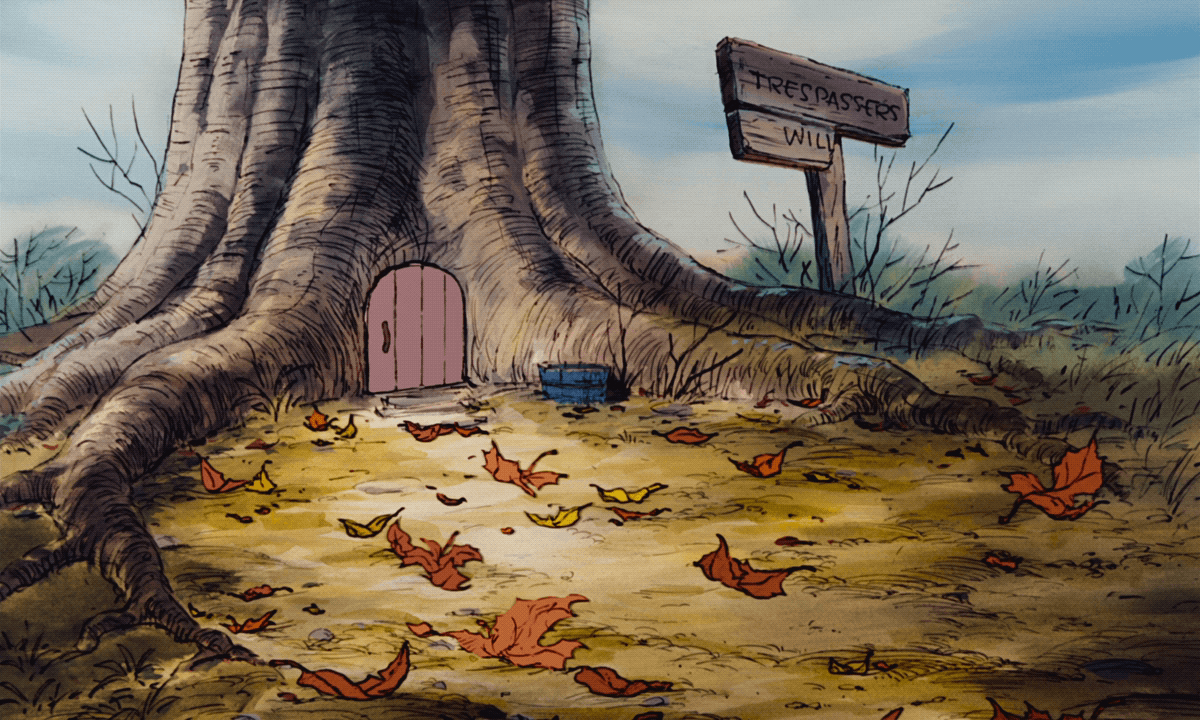
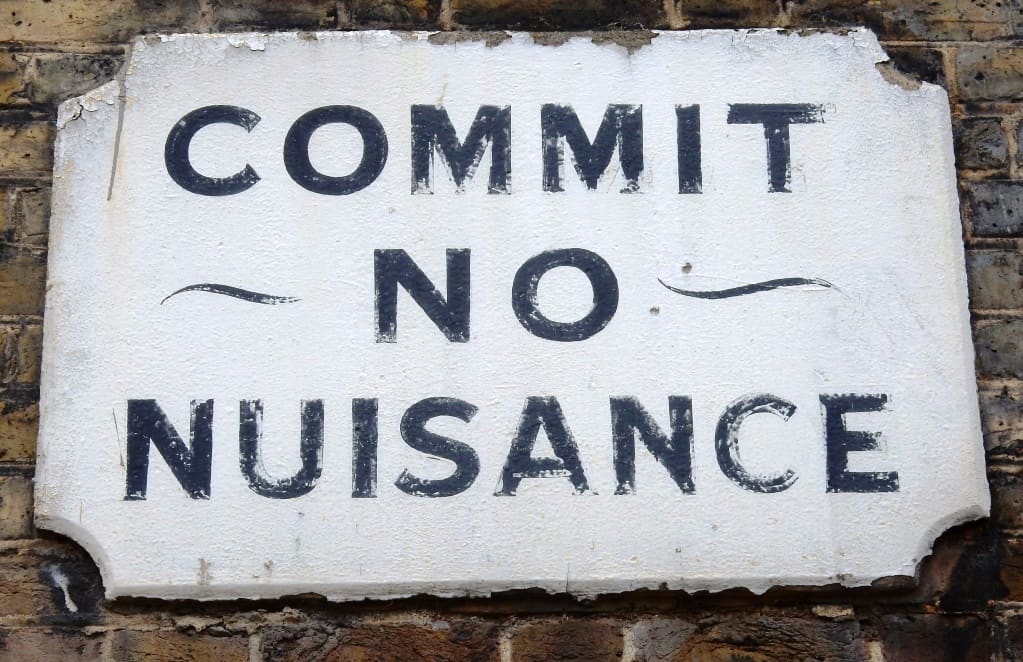
Childhood and Romanticism alike put the mind's own life at the heart of experience.  Wordsworth writes of his childhood ways of thinking as "the hiding places of my power" and says that the paths to them seem "open" until he approaches, at which point they close, tantalizingly, so "I see glimpses now."  As ifonly in those brief moments when the guards are off duty can he nip back to the light.  But Romanticism finds too often that this way (of thinking) has been barred and padlocked, no way through, and those who try to cross over are mocked and attacked like Wordsworth and Coleridge, despised and ignored like Blake, or Keats or Ibsen.  John Clare found the TRESPASSERS WILL sign nailed up in his own mind, as so completely does he identify with his land that the paths on the ground are fused with the pathways of his mind, the tracks of his memory.
On paths to freedom and to childhood dear
A board sticks up to notice "no road here."

Novalis thought of fairy tales as "that homeland which is everywhere and nowhere."  Where is that?  Right inside the mind, in the cosmic trespass of imagination.  This is the heart of it: this is why Romanticism comprehends what is perennially important, beautiful, valuable and good in the human condition, and finds those treasures within us all. 

Jay Griffiths, from A Country Called Childhood: Children and the Exuberant World