17 September 2021
Chains.
People.
On this day in 1787, the United States Constitution was completed and signed by the delegates of the Continental Congress.
We the People of the United States, in Order to form a more perfect Union, establish Justice, insure domestic Tranquility, provide for the common defense, promote the general Welfare, and secure the Blessings of Liberty to ourselves and our Posterity, do ordain and establish this Constitution for the United States of America.
Given.
15 September 2021
Translated.
14 September 2021
Not-Quite-Weightless.
A secret came a week ago though I already
knew it just beyond the bruised lips of consciousness.
The very alive souls of thirty-five hundred dead birds
are harbored in my body. It’s not uncomfortable.
I’m only temporary habitat for these not-quite-
weightless creatures. I offered a wordless invitation
and now they’re roosting within me, recalling
how I had watched them at night
in fall and spring passing across earth moons,
little clouds of black confetti, chattering and singing
on their way north or south. Now in my dreams
I see from the air the rumpled green and beige,
the watery face of earth as if they’re carrying
me rather than me carrying them. Next winter
I’ll release them near the estuary west of Alvarado
and south of Veracruz. I can see them perching
on undiscovered Olmec heads. We’ll say goodbye
and I’ll return my dreams to earth.
Contention.
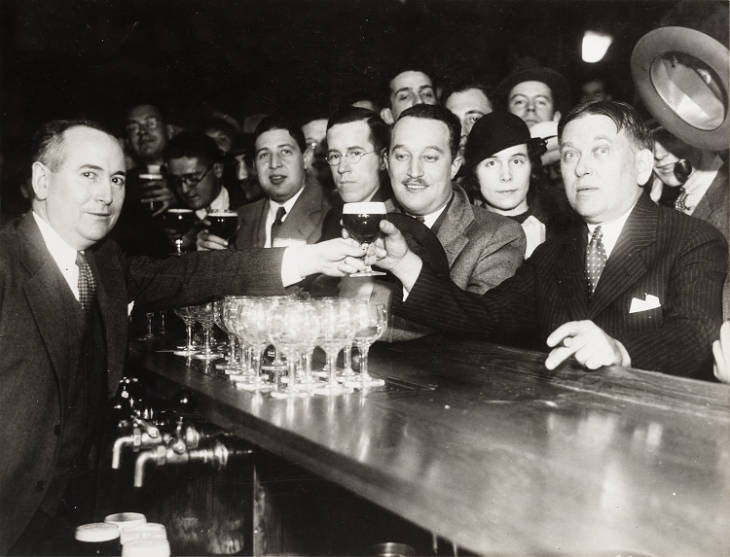
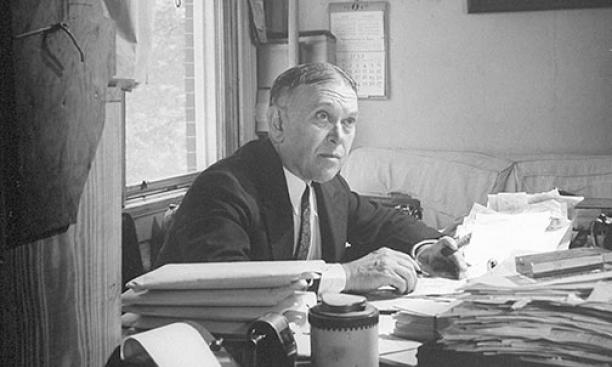
In the year 1904, when the Herald office was destroyed in the great Baltimore fire and we had to print the paper for five weeks in Philadelphia, I was sent ahead to look for accommodations for the printers. I found them in one of those old-fashioned dollar-a-day hotels that were all bar on the first floor. The proprietor, a German with goat whiskers, was somewhat reluctant to come to terms, for he had heard that printers were wild fellows who might be expected to break up his furniture and rough his chambermaids, but when I told him that a beer champion was among them he showed a friendly interest, and when I began to brag about Bill’s extraordinary talents he proposed amiably that some Philadelphia foam jumpers be invited in to make it a race.The first heat was run the very next night, and Bill won hands down. In fact, he won so easily that he offered grandly to go on until he had drunk twice as much as the next-best entry. We restrained him and got him to bed, for there had been some ominous whispering among the other starters and it was plain that they were planning to call in help.The next night it appeared in the shape of a tall, thin man from Allentown, Pennsylvania, who was introduced as the champion of the Lehigh Valley. He claimed to be not only a beer-drinker of high gifts but also a member of the Bach Choir at Bethlehem, and when he got down his first dozen mugs—the boys were drinking from the wood—he cut loose with an exultant yodel that he said was one of Bach’s forgotten minor works. But he might very well have saved his wind, for Bill soon had him, and at the end of the setting he was four or five mugs behind and in a state resembling suffocation. The next afternoon I saw his fans taking him home, a sadder and a much less melodious man.On the first two nights there were only slim galleries, but on the third the bar was jammed, and anyone could see that something desperate was afoot. It turned out to be the introduction of two super-champions, the one a short, saturnine Welshman from Wilkes-Barre and the other a hearty, blond young fellow from one of the Philadelphia suburbs, who said that he was half German and half Irish. The Welshman was presented as the man who had twice drunk Otto the Brewery Horse under the table, and we were supposed to know who Otto was, though we didn’t. The Celto-Teutonic mongrel had a committee with him, and the chairman thereof offered to lay twenty-five dollars on him at even money. The printers in Bill’s corner made up the money at once, and it had grown to fifty dollars in forty minutes by the clock, for the hybrid took only that long to blow up. The Welshman lasted much better, and there were some uneasy moments when he seemed destined to make history again by adding Bill to Otto, but in the end he succumbed so suddenly that it seemed like a bang, and his friends laid him out on the floor and began fanning him with bar towels.
Bill was very cocky after that and talked grandiosely of taking on two champions at a time, in a marathon series. There were no takers for several nights, but then they began to filter in from the remotest wilds of the Pennsylvania-Dutch country, and the whole Herald staff was kept busy guarding Bill by day, to make sure that he did not waste any energy on malt liquor in the afternoons. He knocked off twenty or thirty challengers during the ensuing month, including another alleged member of the Bach Choir, two more Welshmen from the hard-coal country, a Scotsman with an ear missing, and a bearded Dunkard from Lancaster County. They were mainly pushovers, but now and then there was a tough one. Bill did not let this heavy going interfere with the practice of his profession. He set type every night from 6 p.m. to midnight in the office of the Evening Telegraph, where we were printing the Herald, and never began his combats until twelve-thirty. By two o’clock he was commonly in bed, with another wreath of laurels hanging on the gas jet.
To ease your suspense, I’ll tell you at once that he was never beaten. Germans, Irishmen, Welshmen, and Scotsmen went down before him like so many Sunday-school superintendents, and he bowled over everyday Americans with such facility that only two of them ever lasted more than half an hour. But I should in candor add that he was out of service during the last week of our stay in Philadelphia. What fetched him is still a bone of contention among the pathologists at the Johns Hopkins Medical School, to whom the facts were presented officially on our return to our rehabilitated printing plant in Baltimore ...
Sing.
Abnormal.
Wisely.
Announcing.
Smithsonian tells the story of how the flag that flew proudly over Fort McHenry inspired an anthem and made its way to the museum ...
On a rainy September 13, 1814, British warships sent a downpour of shells and rockets onto Fort McHenry in Baltimore Harbor, relentlessly pounding the American fort for 25 hours. The bombardment, known as the Battle of Baltimore, came only weeks after the British had attacked Washington, D.C., burning the Capitol, the Treasury and the President's house. It was another chapter in the ongoing War of 1812.A week earlier, Francis Scott Key, a 35-year-old American lawyer, had boarded the flagship of the British fleet on the Chesapeake Bay in hopes of persuading the British to release a friend who had recently been arrested. Key's tactics were successful, but because he and his companions had gained knowledge of the impending attack on Baltimore, the British did not let them go. They allowed the Americans to return to their own vessel but continued guarding them. Under their scrutiny, Key watched on September 13 as the barrage of Fort McHenry began eight miles away."It seemed as though mother earth had opened and was vomiting shot and shell in a sheet of fire and brimstone," Key wrote later. But when darkness arrived, Key saw only red erupting in the night sky. Given the scale of the attack, he was certain the British would win. The hours passed slowly, but in the clearing smoke of "the dawn's early light" on September 14, he saw the American flag—not the British Union Jack—flying over the fort, announcing an American victory.
Undissected.
Released.
I'll be coming again like an old dog in painBlown through the eye of the hurricaneDown to the stones where old ghosts play.Ian Anderson, from "Old Ghosts"
13 September 2021
Released.
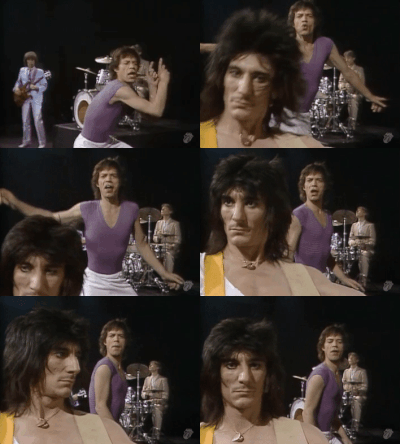
I can hear you calling mePrettiest girl that I've ever seenRonald David Wood, from "I Can Feel the Fire"
Released.
Supertramp released Crime of the Century on this day in 1974.
So you think your schooling is phoneyI guess it's hard not to agreeRichard Davies, from "Bloody Well Right"
Happy Birthday, Dahl
Roal Dahl was born on this day in 1916.
I began to realize how important it was to be an enthusiast in life. He taught me that if you are interested in something, no matter what it is, go at it at full speed ahead. Embrace it with both arms, hug it, love it and above all become passionate about it. Lukewarm is no good. Hot is no good either. White hot and passionate is the only thing to be.
Roald Dahl
As near as you will find to a twentieth-century renaissance man -- and inside that head there's a controlled kaleidoscope of riotous imagination, immense literary skill, and, most important of all to him, the sheer enjoyment of living ...
Released.
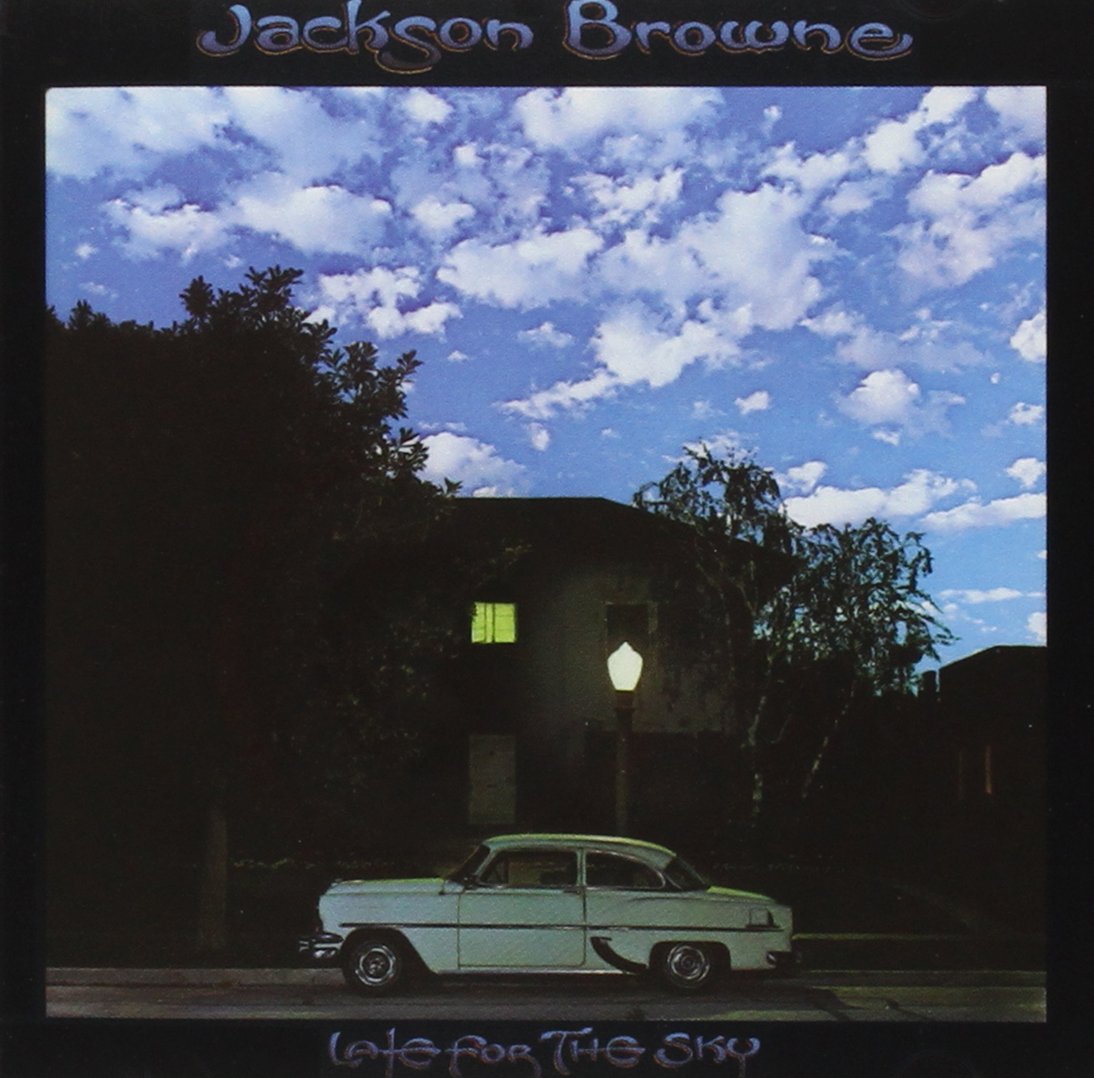
Jackson Browne release Late for the Sky on this day in 1974.
Some of them were dreamersAnd some of them were foolsWho were making plans and thinking of the future
Jackson Browne, from "Before the Deluge"
12 September 2021
Happy Birthday, Professor
Standardized.
Transcendental.
Endless.
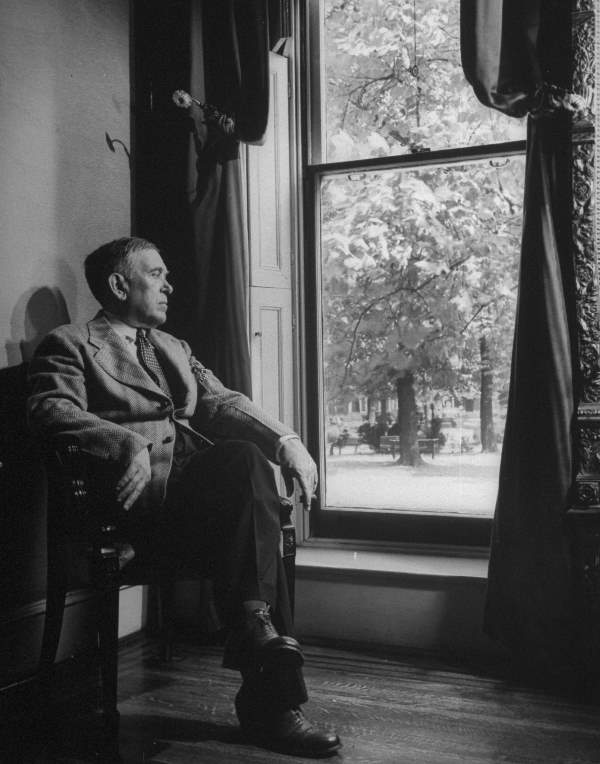
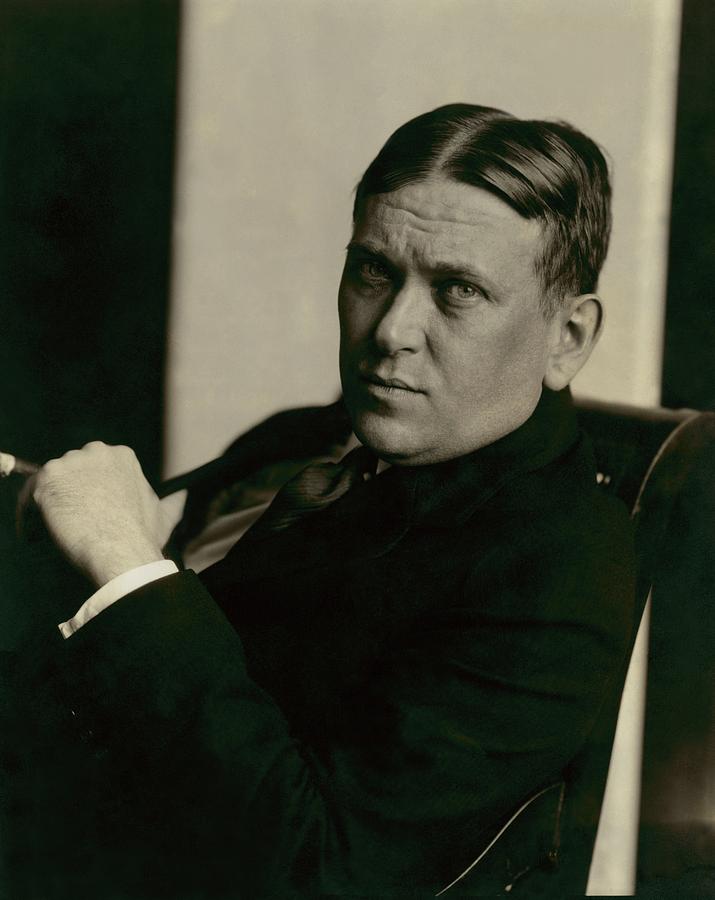
Civilization, in fact, grows more maudlin and hysterical; especially under democracy it tends to degenerate into a mere combat of crazes; the whole aim of practical politics is to keep the populace alarmed (and hence clamorous to be led to safety) by an endless series of hobgoblins, most of them imaginary. Wars are no longer waged by the will of superior men, capable of judging dispassionately and intelligently the causes behind them and the effects flowing out of them. The are now begun by first throwing a mob into a panic; they are ended only when it has spent its ferine fury.
Happy Birthday, Mencken
11 September 2021
Never.
Gratitude.
FDNY Engine 28 Firefighter Mike Kehoe headed up on September 11, 2001.
In normal life we hardly realize how much more we receive than we give, and life cannot be rich without such gratitude. It is so easy to overestimate the importance of our own achievements compared with what we owe to the help of others.
Dietrich Bonhoeffer
10 September 2021
Ready.
Happy Birthday, Oliver
09 September 2021
Hang.
08 September 2021
07 September 2021
Crave.
Asking questions can be a treasure for you guys because you have a lot of knowledge around you. Use it to your advantage. Nobody is going to knock on your door and say, 'Hey! I'm going to teach you something.' You actually have to knock on the door and say, 'Show me something today.' When you crave for learning, you learn. That's really what it is ... get the knowledge and then have fun."
Wet Leg, "Chaise Longue"
Do.
06 September 2021
Imagine.
Developing.
Advanced.
On one side of town, the German food culture of the Firchaus was deeply ingrained with the plying of homemade sausages, sauerkraut (sealed in earthenware crocks and buried in the backyard), bread, and butter, and Grandpa's pear wine (served in pimento-jar juice glasses with strict instruction to, "Make it last").
- 1½ cups all-purpose flour
- ¼ cup sugar
- ¼ cup quick-cooking oats
- ¼ cup butter
- ⅓ cup milk
- 1 large egg, divided
- Sliced almonds
- Preheat oven to 400°.
- In a medium bowl, combine flour, sugar, and oats. Using a pastry blender, cut in butter until mixture resembles coarse crumbs.
- In a small bowl, combine milk and egg yolk; stir into flour mixture.
- On a lightly floured surface, roll out dough to ½-inch thickness. Using 1½-inch round cutter, cut biscuits. Place on baking sheet. Brush with lightly beaten egg white and top with sliced almonds.
- Bake for 10 to 12 minutes or until lightly browned.
- Transfer to wire racks to cool.
Cultivate.
Joy, as we typically understand it, is passive and reactive; it’s caused by something else. A new promotion, a “yes” to a marriage proposal, or a sudden fortune makes us feel joy. Then with time, that joy fades into a dull memory. That type of conditioned happiness is part of what the Buddha called dukkha, or suffering.But there is another type of joy, a much subtler and more sustainable joy that we can uncover. This joy—which I will refer to here as innate or unconditional joy—cannot be exhausted because it resides within us at all times, though it is often hidden. No external stimulus can evoke it, but as we expand our awareness, our joy is revealed to be increasingly vast and exquisitely infectious. This innate joy is a radical act, because once we learn to recognize it, we can begin to toss aside the everyday understanding of happiness at the heart of our culture as well as any harmful systems that depend on or benefit from our underlying dissatisfaction.As with many Buddhist notions, the subject of joy can be taken up philosophically, or it can be understood through direct experience. Here, I will do both. I’ll begin by discussing how conditioned and unconditioned joy look in the world, and then I’ll lay out a meditation practice that can allow us to uncover innate joy over time.Sure, you may think, joy sounds great, but how, in a society founded upon the “pursuit of happiness,” is it radical? The term radical typically conjures up the image of a political extremist or a progressive revolutionary, but what really makes something radical is the extent to which it challenges conventional paradigms. In order to make a radical change, we first have to return to the root of the problem: our fundamental understanding.In this sense, supporting a political party or lobbying for a cause is not radical. That doesn’t mean that both sides are the same or that activism can’t be important, righteous, and noble, but when we fixate on our views and contract into our limiting beliefs, we are accepting the underlying framework of the conflict itself. A truly radical act, on the other hand, goes deeper, uprooting the whole system of how we perceive ourselves in the world in order to start anew. Innate joy does just that. It changes the game.Finding unconditional joy is especially subversive in modern Western culture, where the dominant paradigm equates happiness with conditional joy, which often means material or social gain. I know that in my youth, the idea that inner contentment could be cultivated was totally foreign. I looked for happiness the way the people around me did—in things. Yet, no matter what delicious food I ate or video games I played, a sense of hollowness and disconnection seemed to follow me.This experience is neither rare nor unique to our era. (During the Buddha’s time, the dharma wasn’t exactly common sense. Otherwise his enlightenment would have been no big deal.) But as our technology advances and makes the world smaller, our conditional view of happiness is accelerating toward its ultimate conclusion: if joy depends on consumption and the things we consume are limited, then there is a finite amount of joy in the world and we must take from others in order to have more for ourselves. Some systems try to redistribute this commodified joy evenly, while others give a disproportionate share of joy to a select few (who do or don’t deserve it, according to one’s worldview). What makes innate joy radical is that it denies the basic idea that happiness is a zero-sum game. Instead of joy being fleeting and dependent, it is revealed to be ever-present and unconditional. By cultivating innate joy, we can turn scarcity into abundance and undermine the whole economy of commodified happiness.It is in this way that joy is also an act. We tend to only consider something to be an act when it exerts an external force. And while joy can effect change, even before it does, it is already an act—an internal motion that flips the proverbial chess board. We place a disproportionate emphasis on figuring out external solutions to the world’s problems, when it is just as important to consider how we approach life from within. That said, a joyful person will be almost incapable of keeping their compassion from overflowing, whether it is through charity or advocacy or through subtler and smaller kindnesses in everyday interactions (more on this in the practice portion). Joy is also an act in another sense: we need to cultivate it. For most, inner joy is developed over time through regular practice.
cultivate (v.)... from Latin cultus "care, labor; cultivation," from past participle of colere "to cultivate, to till; to inhabit; to frequent, practice, respect; tend, guard," from PIE root *kwel- (1) "revolve, move round; sojourn, dwell."
About Me
- Rob Firchau
- "A man should stir himself with poetry, stand firm in ritual, and complete himself in music." -Gary Snyder
Think ...
GASTON BACHELARD
"The house shelters day-dreaming, the house protects the dreamer, the house allows one to dream in peace.”
ARCHIVES
-
▼
2026
(1288)
-
▼
October
(26)
- No title
- Attentiveness.
- Mad.
- Happy Birthday, e.e. cummings
- Remembering.
- Happy Birthday, Sammy Hagar
- Same.
- Steve Winwood, "Dear Mr. Fantasy"
- Excellent.
- Sing.
- Purcell, Welcome to All the Pleasures, Z. 339
- Fun.
- Truer.
- Noticing.
- Wonder.
- Excellent.
- Bach, Jesu, der du meine Seele, BWV 78
- Happy Birthday, Frederic Remington
- Holborne, The Night Watch
- Happy Birthday, Jean-François Millet
- Released.
- Happy Birthday, Stevie Ray Vaughan
- Thanksgiving.
- Indian-Summer-Breathing.
- Excellent.
- O'er.
-
▼
October
(26)
CARL R. FIRCHAU (1884-1973)
"The strength of a man’s virtue should not be measured by his special exertions but by his habitual acts.” Blaise Pascal
SEARCH THIS BLOG
REMEMBER
SUPPORT OUR TROOPS
C.S. LEWIS
G.K. CHESTERTON
"Tradition refuses to submit to the small and arrogant oligarchy of those who merely happen to be walking about."
KENNETH GRAHAME
"O Mole! the beauty of it! The merry bubble and joy, the thin, clear, happy call of the distant piping!"
BARRY HINES
"That's why it makes me mad when I take her out and I'll hear somebody say, 'Look, there's Billy Casper there wi' his pet hawk. I could shout at 'em; it's not a pet, Sir, hawks are not pets. Or when folks stop me and say, 'Is it tame?' Is it heck tame, it's trained that's all. It's fierce, and it's wild, an' it's not bothered about anybody, not even about me, right. And that's why it's great.Look, there's Billy Casper there wi' his pet hawk.' I could shout at 'em. It's not a pet, Sir. Hawks are not pets. Or when folks stop me and say, 'Is it tame?' Is it heck tame, it's trained, that's all. It's fierce, and it's wild, an' it's not bothered about anybody, not even about me right. And that's why it's great." (A Kestrel for a Knave)
GEORDIE WALKER
ECHO & THE BUNNYMEN
JIM HARRISON
37. Beware, O wanderer, the road is walking too, said Rilke one day to no one in particular as good poets everywhere address the six directions. If you can’t bow, you’re dead meat. You’ll break like uncooked spaghetti. Listen to the gods. They’re shouting in your ear every second.
GIMME FIIIVE!
THE FURS
Suggestions
WOLFGANG AMADEUS MOZART
"When I am, as it were, completely myself, entirely alone and of good cheer – say travelling in a carriage or walking after a good meal, or during the night when I cannot sleep – it is on such occasions that my ideas flow best and most abundantly. Whence, and how, they come I know not ; nor can I force them. Those ideas that please me I retain in memory and am accustomed, as I have been told, to hum them to myself. If I continue in this way, it soon occurs to me how I may turn this dainty morsel to account, so as to make a good dish of it. That is to say, agreeable to the rules of counterpoint, to the peculiarities of various instruments etc. All this fires my soul, and, provided I am not disturbed, my subject enlarges itself, becomes methodised, and defined, and the whole, though it be long, stands almost complete and finished in my mind, so that I can survey it like a fine picture or a beautiful statue at a glance. Nor do I hear in my imagination the parts successively, but I hear them, as it were, all at once. What a delight this is, I cannot tell."
HOOKY
MARY SHELLEY
GREEN MAN
"Feel wind stir the greenwood, or turn pages of a book made from his flesh -- lean close, then, and hear, Green Man's voice."
WALLACE STEVENS
"Technique is the proof of your seriousness."
N.C. WYETH
Cold Maker, Winter, 1909
Dick's Pour House, Lake Leelanau, Michigan
Smelt Basket
PanAm "Pacific Clipper" (1941)
JOHN SINGER SARGENT
Elizabeth Winthrop Chanler (detail), 1893
WILLIAM F. BUCKLEY JR.
SIR WINSTON CHURCHILL
"A gentleman does not have a ham sandwich without mustard."
J.R.R. TOLKIEN
"If more of us valued food and cheer and song above hoarded gold, it would be a merrier world."
JOHN MASEFIELD
"When the midnight strikes in the belfry dark/And the white goose quakes at the fox’s bark/We saddle the horse that is hayless, oatless/Hoofless and pranceless, kickless and coatless/We canter off for a midnight prowl/Whoo-hoo-hoo, says the hook-eared owl."
IKKYU
VIRGINIA WOOLF
JOHN QUINCY ADAMS
"However tiresome to others, the most indefatigable orator is never tedious to himself. The sound of his own voice never loses its harmony to his own ear; and among the delusions, which self-love is ever assiduous in attempting to pass upon virtue, he fancies himself to be sounding the sweetest tones."
SIR KENNETH GRAHAME
"Take the Adventure, heed the call, now, ere the irrevocable moment passes! ‘Tis but a banging of the door behind you, a blithesome step forward, and you are out of the old life and into the new! Then some day, some day long hence, jog home here if you will, when the cup has been drained and the play has been played, and sit down by your quiet river with a store of goodly memories for company."
JIM HARRISON
"Barring love I'll take my life in large doses alone--rivers, forests, fish, grouse, mountains. Dogs."
WILLIAM WORDSWORTH
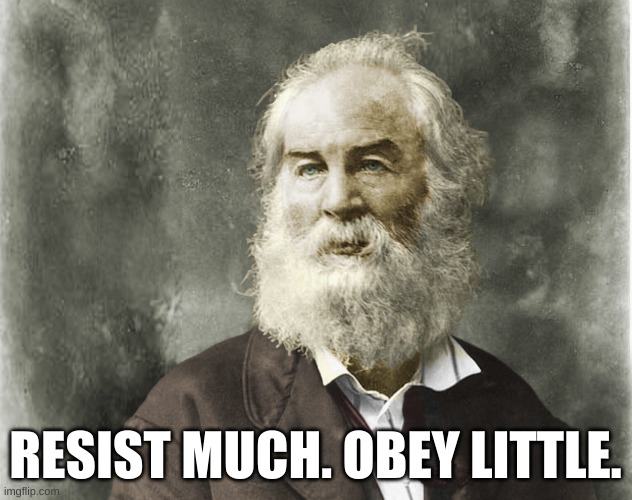
WALT WHITMAN
The spotted hawk swoops by and accuses me, he complains of my gab and my loitering. I too am not a bit tamed, I too am untranslatable, I sound my barbaric yawp over the roofs of the world. The last scud of day holds back for me, It flings my likeness after the rest and true as any on the shadow’d wilds, It coaxes me to the vapor and the dusk. I depart as air, I shake my white locks at the runaway sun, I effuse my flesh in eddies, and drift it in lacy jags. I bequeath myself to the dirt to grow from the grass I love, If you want me again look for me under your boot-soles. You will hardly know who I am or what I mean, But I shall be good health to you nevertheless, And filter and fibre your blood. Failing to fetch me at first keep encouraged, Missing me one place search another, I stop somewhere waiting for you.
SAMUEL ADAMS
"It is a very great mistake to imagine that the object of loyalty is the authority and interest of one individual man, however dignified by the applause or enriched by the success of popular actions."
TAO TE CHING, Lao Tzu
MARCUS AURELIUS
"Is your cucumber bitter? Throw it away. Are there briars in your path? Turn aside. That is enough. Do not go on and say, 'Why were things of this sort ever brought into this world?' neither intolerable nor everlasting - if thou bearest in mind that it has its limits, and if thou addest nothing to it in imagination. Pain is either an evil to the body (then let the body say what it thinks of it!)-or to the soul. But it is in the power of the soul to maintain its own serenity and tranquility."
VINCENT van GOGH
"What am I in the eyes of most people? A nonentity or an oddity or a disagreeable person — someone who has and will have no position in society, in short a little lower than the lowest. Very well — assuming that everything is indeed like that, then through my work I’d like to show what there is in the heart of such an oddity, such a nobody. This is my ambition, which is based less on resentment than on love in spite of everything, based more on a feeling of serenity than on passion. Even though I’m often in a mess, inside me there’s still a calm, pure harmony and music. In the poorest little house, in the filthiest corner, I see paintings or drawings. And my mind turns in that direction as if with an irresistible urge. As time passes, other things are increasingly excluded, and the more they are the faster my eyes see the picturesque. Art demands persistent work, work in spite of everything, and unceasing observation."
RICK LEACH (1975-1978)
RICHARD ADAMS
"One cloud feels lonely."
JOHN SINGER SARGENT
"Cultivate an ever continuous power of observation. Wherever you are, be always ready to make slight notes of postures, groups and incidents. Store up in the mind a continuous stream of observations."
WINSLOW HOMER
The Lone Boat, North Woods Club, Adirondacks, 1892
THOMAS BABINGTON MACAULEY
And how can man die better / Than facing fearful odds / For the ashes of his fathers / And the temples of his gods
WATERHOUSE, BOREAS, 1903
WHITE HORSES Far out at sea / There are horses to ride, / Little white horses / That race with the tide. / Their tossing manes / Are the white sea-foam, / And the lashing winds / Are driving them home- / To shadowy stables / Fast they must flee, / To the great green caverns / Down under the sea. Irene Pawsey
UMBERTO LIMONGIELLO
F. SCOTT FITZGERALD
"I don't want to repeat my innocence. I want the pleasure of losing it again.” This Side of Paradise
RALPH WALDO EMERSON
"In skating over thin ice, our safety is in our speed."
ROBERT PLANT
GARY SNYDER
"There are those who love to get dirty and fix things. They drink coffee at dawn, beer after work. And those who stay clean, just appreciate things. At breakfast they have milk and juice at night. There are those who do both, they drink tea.”
IMMANUEL KANT
"Enlightenment is man's emergence from his self-imposed nonage. Nonage is the inability to use one's own understanding without another's guidance. This nonage is self-imposed if its cause lies not in lack of understanding but in indecision and lack of courage to use one's own mind without another's guidance. Dare to know! Sapere aude. 'Have the courage to use your own understanding,' is therefore the motto of the enlightenment."
DAN CAMPBELL
"We’re gonna kick you in the teeth, and when you punch us back we’re gonna smile at you, and when you knock us down we’re going to get up, and on the way, we’re going to bite a kneecap off. We’re going to stand up, and it’s going to take two more shots to knock us down. And on the way up, we’re going to take your other kneecap, and we’re going to get up, and it’s gonna take three shots to get us down. And when we do, we’re gonna take another hunk out of you."
THOMAS HUXLEY
"Sit down before fact as a little child, be prepared to give up every conceived notion, follow humbly wherever and whatever abysses nature leads, or you will learn nothing."
JOHN DRYDEN
"Bold knaves thrive without one grain of sense, but good men starve for want of impudence.”
WILLIAM BLAKE
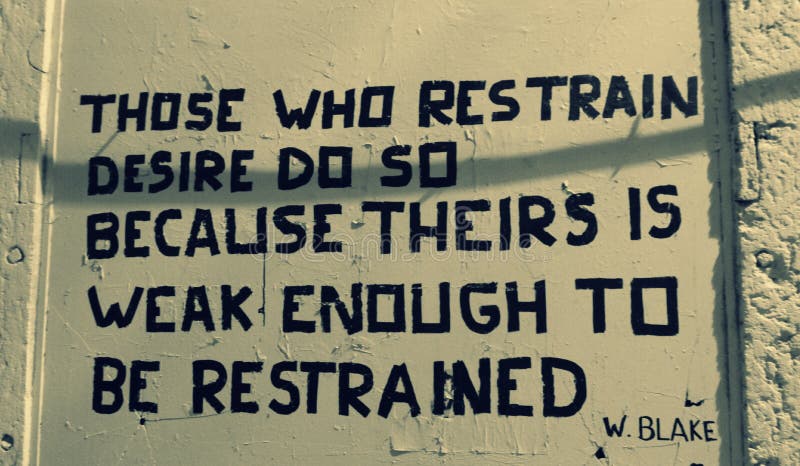
"Those who restrain desire do so because theirs is weak enough to be restrained."
HERMANN HESSE
"Whoever wants music instead of noise, joy instead of pleasure, soul instead of gold, creative work instead of business, passion instead of foolery, finds no home in this trivial world of ours."
GEORGE MACDONALD
"Certainly work is not always required of a man. There is such a thing as a sacred idleness, the cultivation of which is now fearfully neglected."
REV. DR. CORNEL WEST
"You have to have a habitual vision of greatness … you have to believe in fact that you will refuse to settle for mediocrity. You won’t confuse your financial security with your personal integrity, you won’t confuse your success with your greatness or your prosperity with your magnanimity … believe in fact that living is connected to giving.”
IT'S A WONDERFUL LIFE
"You see George, you've really had a wonderful life. Don't you see what a mistake it would be to just throw it away?"
WOODY
"There's a basic rule which runs through all kinds of music, kind of an unwritten rule. I don't know what it is, but I've got it."
MIGGY
"Exuberance is beauty." (William Blake)
Festina Lente
GARAGE SALINGER
JOHN RUSKIN
"Sunshine is delicious, rain is refreshing, wind braces us up, snow is exhilarating; there is really no such thing as bad weather, only different kinds of good weather."
Spitzweg, The Bookworm, 1850
"Literature is the most agreeable way of ignoring life.” Fernando Pessoa
WILLIAM F. BUCKLEY JR.
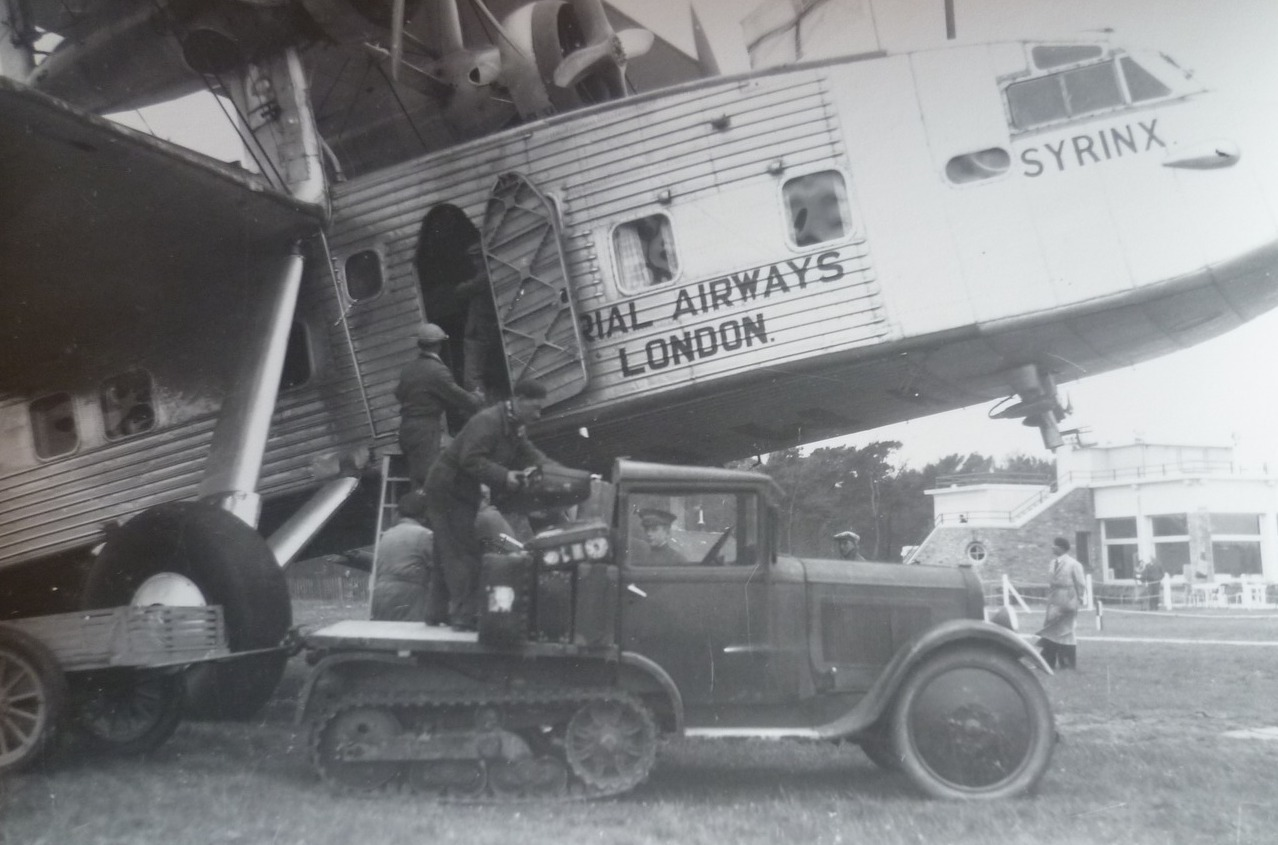
SYRINX
TINA WEYMOUTH
WALT WHITMAN
"Do I contradict myself? Very well then I contradict myself, (I am large, I contain multitudes)."
H.L. MENCKEN
"Every normal man must be tempted, at times, to spit on his hands, hoist the black flag, and begin slitting throats. But this business, alas, is fatal to the placid moods and fine other-worldliness of the poet."
FYODOR DOSTOEVSKY
"I say let the world go to hell, but I should always have my tea."
DUDLEY
"We all come from our own little planets. That's why we're all different. That's what makes life interesting."
HERMAN MELVILLE
"We're just dancing in the rain ..."
LEO TOLSTOY
"If, then, I were asked for the most important advice I could give, that which I considered to be the most useful to the men of our century, I should simply say: in the name of God, stop a moment, cease your work, look around you."
HAROLD BLOOM
"It is hard to go on living without some hope of encountering the extraordinary."
I'm reading ...
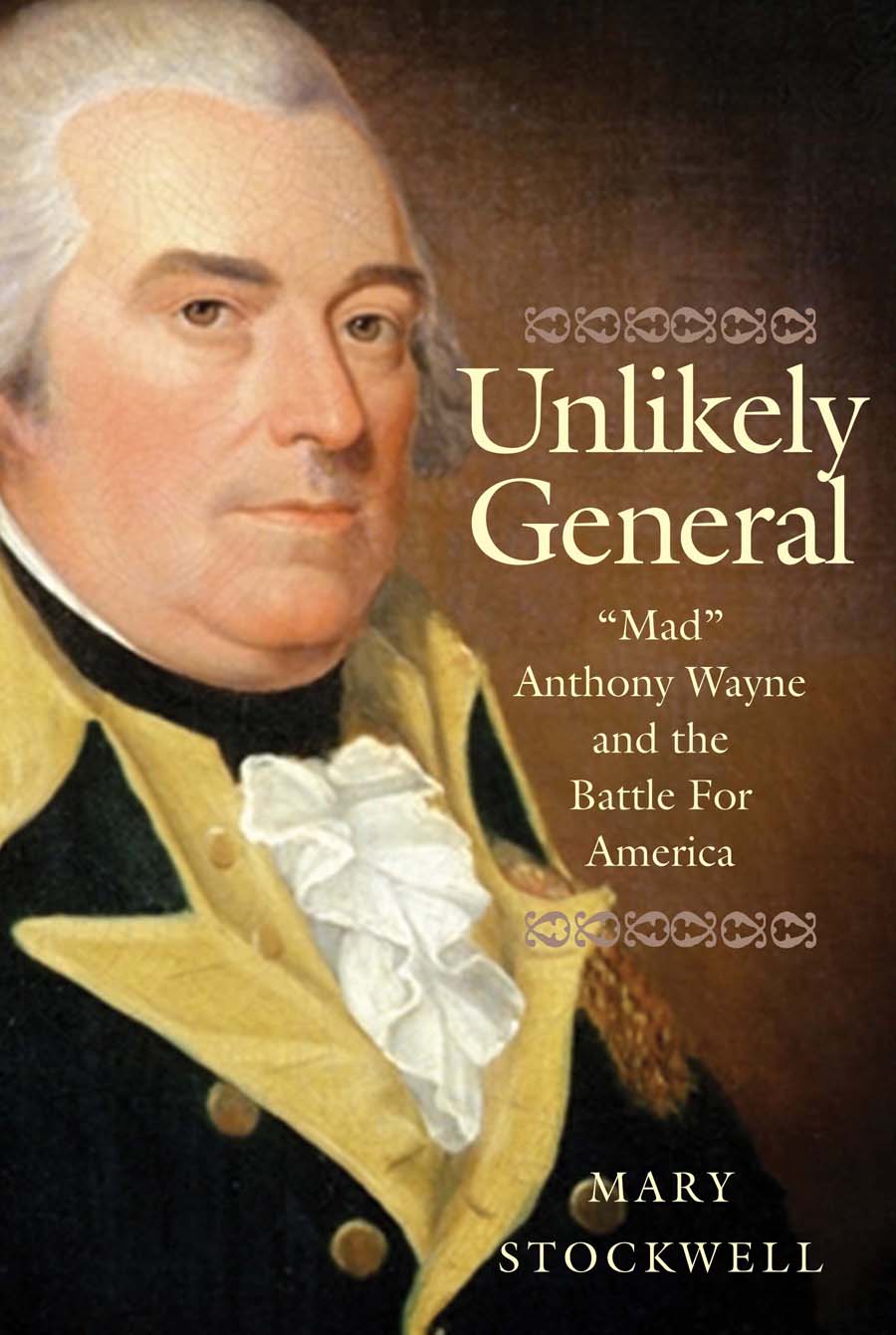
Unlikely General: "Mad" Anthony Wayne and the Battle for America
ARTHUR RIMBAUD
"I have stretched ropes from steeple to steeple; Garlands from window to window; Golden chains from star to star ... And I dance."
RUMI
"When you do things from your soul, you feel a river moving in you, a joy.”
Shunryu Suzuki, "Beginner's Mind"
"In the beginner's mind there are many possibilities, but in the expert's there are few."
JIM HARRISON
NEW ORDER
van EYCK, PORTRAIT of a MAN in a RED TURBAN, 1433
"The Poet is the Priest of The Invisible." Wallace Stevens
Atget, Notre-Dame de Paris, 1923
Technique.
"Technique is the proof of your seriousness." Wallace Stevens
TIGHT LINES!
W.B. Yeats
THE CAPTAIN
NICHOLAS HAWKSMOOR
THOMAS PAINE
"Whatever is my right as a man is also the right of another; and it becomes my duty to guarantee as well as to possess."
LIBERTY
"...the imprisoned lightning"
WILLIAM F. BUCKLEY JR.
"The best defense against a usurpatory government is an assertive citizenry."
SIR PHILIP PULLMAN
"We don’t need a list of rights and wrongs, tables of dos and don’ts: we need books, time, and silence."
TRUE-BORN
THOMAS MERTON
C.S. LEWIS
THOMAS PAINE