"I am not one who was born in the custody of wisdom. I am one who is fond of olden times and intense in quest of the sacred knowing of the ancients." Gustave Courbet
Showing posts with label smithsonian. Show all posts

05 December 2023

Jólabókaflóð


The origins and evolution of Iceland's Jólabókaflóð ...
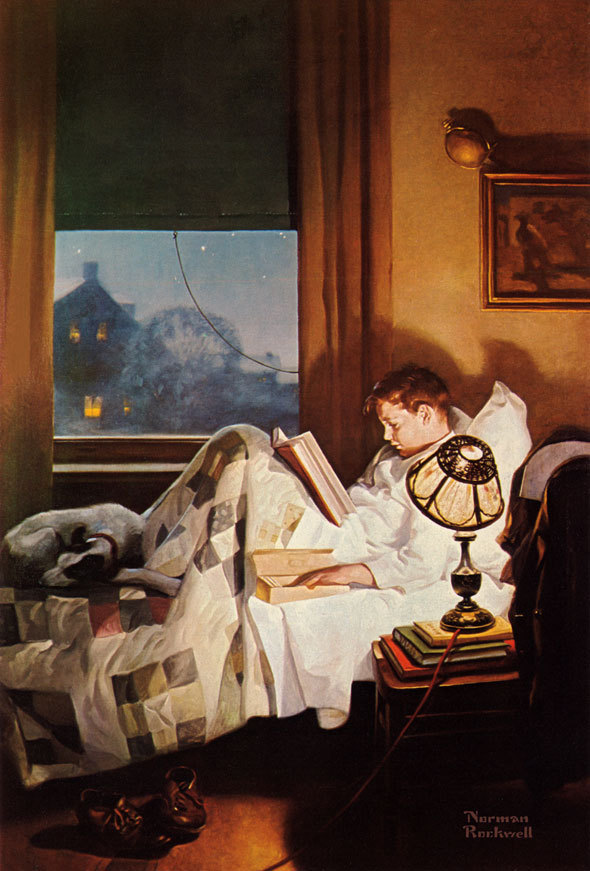
A healthy writing habit led to a culture of readers. Starting in the Middle Ages, Icelanders practiced something called the kvoldvaka (roughly, “night vigil”) in old farmsteads. During the long, dark, harsh winters, poor farmers huddled together in a single room in their turf houses to stay warm. “The kvoldvaka was the time between 6 and 10 p.m., roughly, when people would do their indoor work during the winter,” explains Alda Sigmundsdóttir, a writer and the founder of Little Books Publishing in Reykjavík. “They’d do their knitting, they’d make their tools, they’d work the wool—and during this session, there would be one person appointed to read to everyone else.”

In those evening hours, children learned to tell, recite and read stories (teaching children to read, in fact, was required by both the church and the government). As Tomasson noted in “The Literacy of the Icelanders,” by the end of the grueling 18th century—when a smallpox epidemic killed as much as a third of the population and a volcanic eruption that lasted for eight months killed another fifth of the population and most of the livestock—nearly every surviving Icelander could read.

Prior to the 20th century, “Christmas gifts used to be something useful, such as clothes or extra food,” says librarian Ingibjörg Steinunn Sverrisdóttir at the National and University Library of Iceland. Modern, international conflict would usher in new holiday traditions.

The Jólabókaflóð traces back to Iceland’s transformation in World War II. In 1944, Iceland was a newly independent nation with a beleaguered wartime economy and 15,000 occupying Allied troops. “Because of the bad economy and depression, there were quotas or very strict restrictions on many things you could import,” says Heiðar Ingi Svansson, president of the Icelandic Publishers Association, an organization founded in 1889 that oversees the industry, promotes literature and awards annual literary prizes (announced each December and presented by the president of Iceland each January). “And that limited very much the selection of commodity goods that you could choose as Christmas gifts. But paper was one of the few commodities not rationed during the war—so paper was imported to produce books that were written and then printed in Iceland.” That fortuitous supply—and an infusion of occupation-related money—dovetailed beautifully with Icelanders’ literary leanings.

Thank you, Heather. 

03 December 2023

12 August 2022

Evolved.

The interactive tool enables users to home in on a specific location and visualize how it has evolved between the Cryogenian Period and the present ..

14 September 2021

Announcing.


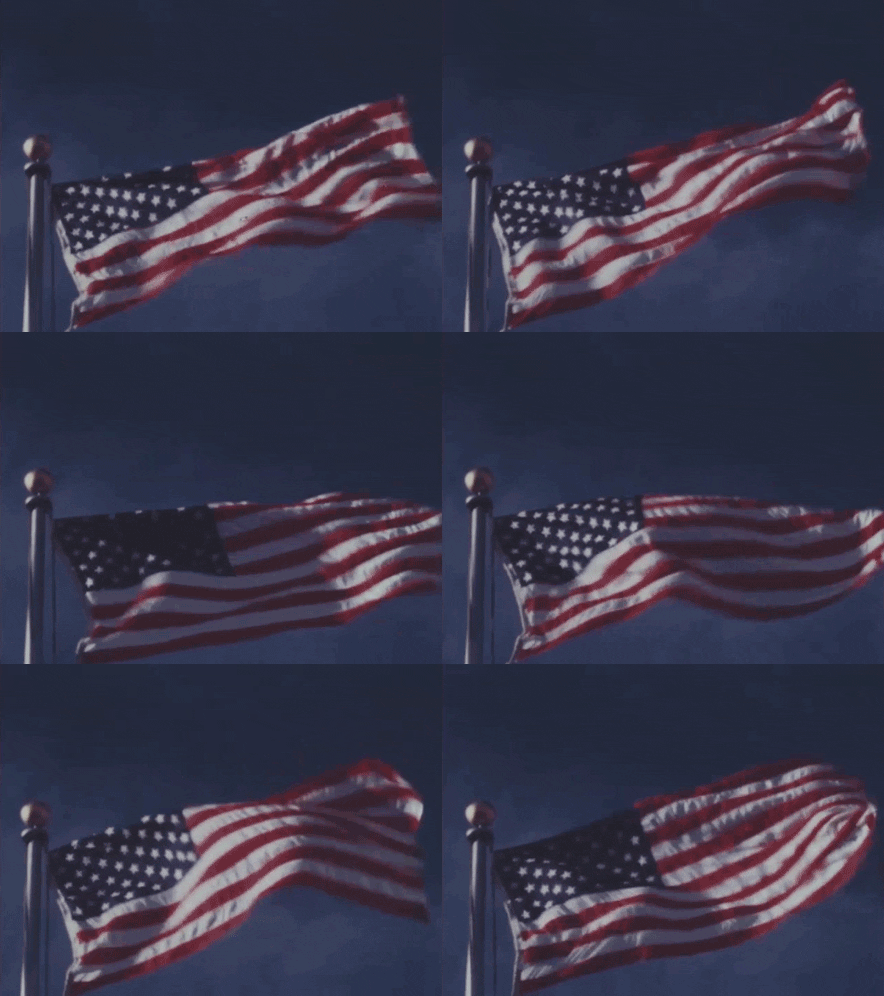
Smithsonian tells the story of how the flag that flew proudly over Fort McHenry inspired an anthem and made its way to the museum ...
On a rainy September 13, 1814, British warships sent a downpour of shells and rockets onto Fort McHenry in Baltimore Harbor, relentlessly pounding the American fort for 25 hours. The bombardment, known as the Battle of Baltimore, came only weeks after the British had attacked Washington, D.C., burning the Capitol, the Treasury and the President's house. It was another chapter in the ongoing War of 1812.

A week earlier, Francis Scott Key, a 35-year-old American lawyer, had boarded the flagship of the British fleet on the Chesapeake Bay in hopes of persuading the British to release a friend who had recently been arrested. Key's tactics were successful, but because he and his companions had gained knowledge of the impending attack on Baltimore, the British did not let them go. They allowed the Americans to return to their own vessel but continued guarding them. Under their scrutiny, Key watched on September 13 as the barrage of Fort McHenry began eight miles away.

"It seemed as though mother earth had opened and was vomiting shot and shell in a sheet of fire and brimstone," Key wrote later. But when darkness arrived, Key saw only red erupting in the night sky. Given the scale of the attack, he was certain the British would win. The hours passed slowly, but in the clearing smoke of "the dawn's early light" on September 14, he saw the American flag—not the British Union Jack—flying over the fort, announcing an American victory.

07 June 2020

Liberty.


The Polish Patriot Who Helped Americans Beat the British ...

Kosciuszko lived in a boarding house in the capital, Philadelphia, collecting back pay for the war from Congress, and seeing old friends. By then, Americans had splintered into their first partisan conflict, between the Federalists, who admired the British system of government and feared the French Revolution, and the Republicans, who initially admired the French Revolution and feared a Federalist-led government would come to resemble the British monarchy. Kosciuszko took the side of the Francophile Republicans, resenting England’s support of Russia and seeing the Federalists as Anglophile elitists. So he avoided President John Adams, but developed a close friendship with Vice-President Thomas Jefferson.

“General Kosciuszko, I see him often,” Jefferson wrote Gates. “He is as pure a son of liberty as I have ever known, and of that liberty which is to go to all, and not to the few or rich alone.”

Kosciuszko took liberty so seriously that he was disappointed to see friends like Jefferson and Washington own slaves. During the American and Polish revolutions, Kosciuszko had employed black men as his aides-de-camp: Agrippa Hull in America, Jean Lapierre in Poland. When he returned to Europe in May 1798, hoping to organize another war to liberate Poland, Kosciuszko scribbled out a will. It left his American assets – $18,912 in back pay and 500 acres of land in Ohio, his reward for his war service -- for Jefferson to use to purchase the freedom and provide education for enslaved Africans. Jefferson, revising the draft into better legal English, also rewrote the will so that it would allow Jefferson to free some of his slaves with the bequest. The final draft, which Kosciuszko signed, called on “my friend Thomas Jefferson” to use Kosciuszko’s assets “in purchasing negroes from among his own as [well as] any others,” “giving them liberty in my name,” and “giving them an education in trades and otherwise.”

CONNECT

25 July 2019

Astonishing.


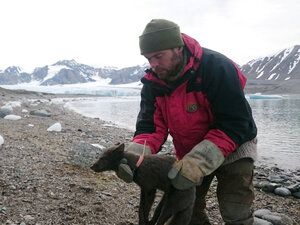
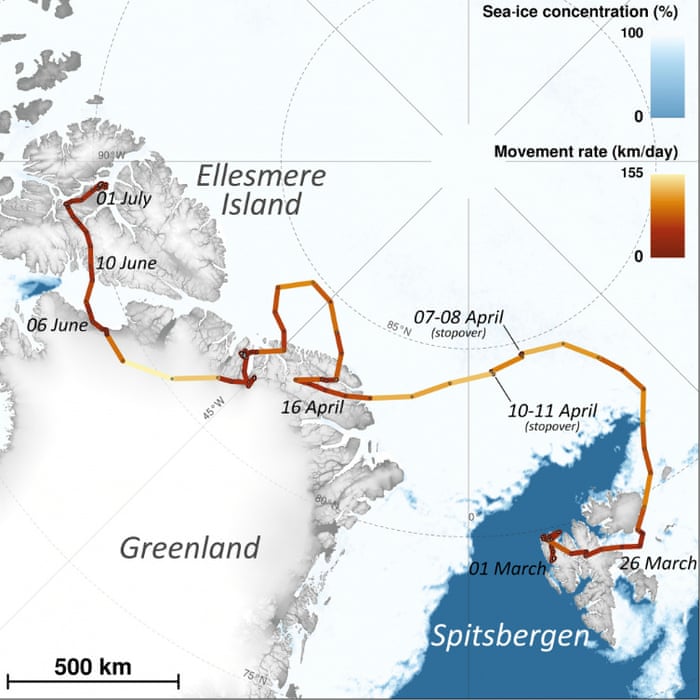
On March 26, 2018, a young Arctic fox left her birthplace of Spitsbergen, an island in Norway’s Svalbard Archipelago, and embarked on a harrowing westward journey. Seventy-six days and more than 2,175 miles later, the roughly one-year-old female arrived on Canada’s Ellesmere Island, astonishing researchers who say the animal, traveling at a maximum pace of 96 miles per day, exhibited the fastest movement rate recorded for her species to date.


CONNECT