"I am not one who was born in the custody of wisdom. I am one who is fond of olden times and intense in quest of the sacred knowing of the ancients." Gustave Courbet
Showing posts with label joy. Show all posts

24 July 2026

Infinite.


An infinite question is often destroyed by finite answers. To define everything is to annihilate much that gives us laughter and joy.

Madeleine L'Engle, from A Circle of Quiet
23 July 2026

Exultantly.


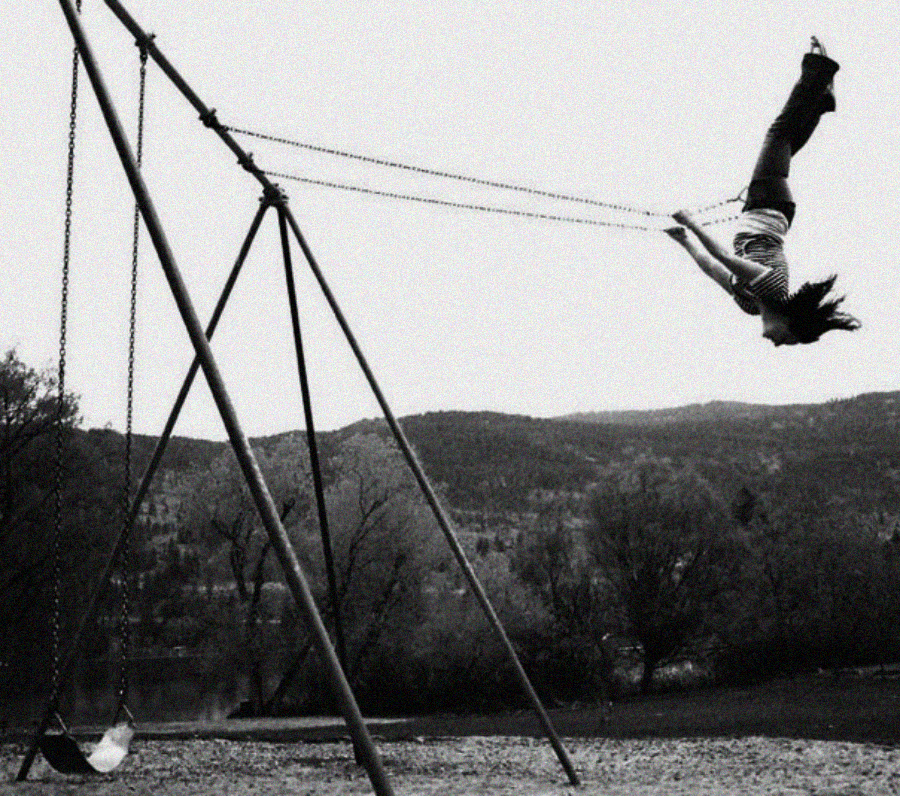
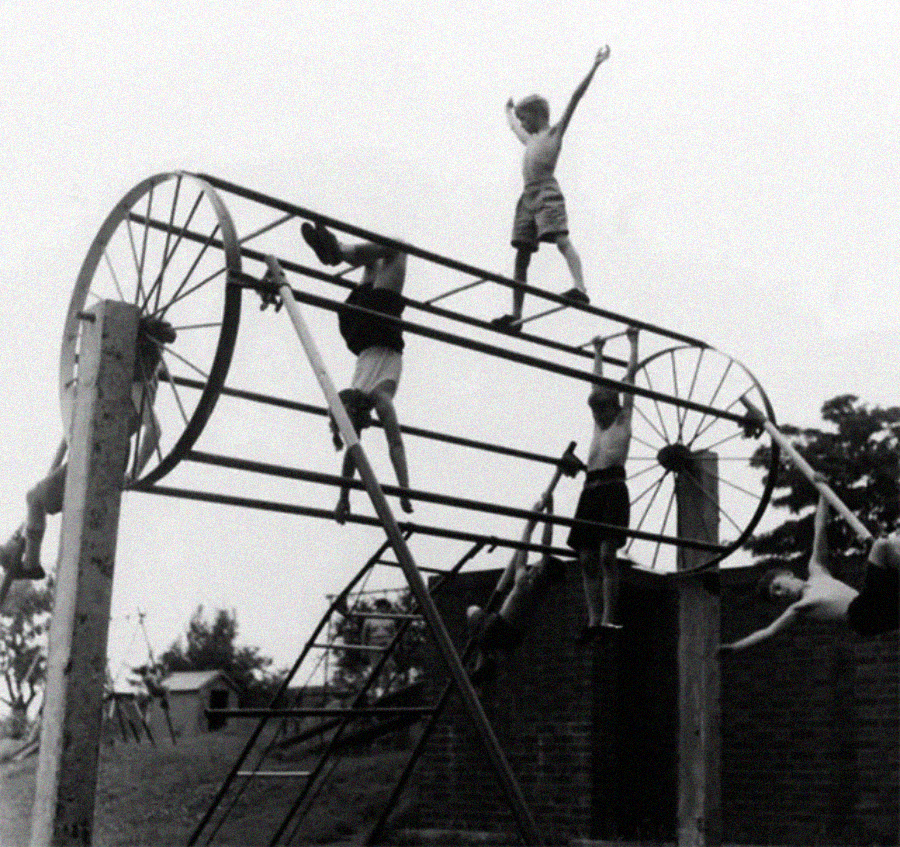
He was mastered by the sheer surging of life, the tidal wave of being, the perfect joy of each separate muscle, joint, and sinew in that it was everything that was not death, that it was aglow and rampant, expressing itself in movement, flying exultantly under the stars.

Jack London, from The Call of the Wild

20 July 2026

Eleven.


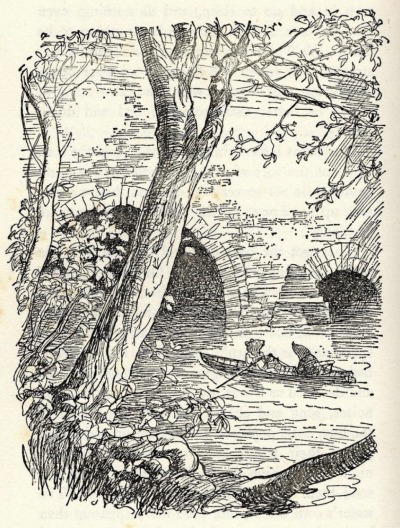
When late morning rolls around, and you’re feeling a bit out of sorts, don’t worry; you’re probably just a little eleven o’clockish.

A. A. Milne, from The House at Pooh Corner

30 November 2025

Choosing.


Ari Weinzweig on transformative joy ...
Sometimes, of course, joy comes in these beautifully upbeat and innocent moments. But it’s of equal import when we’re struggling with a serious issue and unsure of how to move forward. Nearly a century ago, Tristan Tzara gave some advice that our whole country—me included, of course—could take to heart. “Let us try for once not to be right.” Instead, we can listen with open hearts and remember that joy is a part of living a good life, even in stressful situations. We can, in that context, skip the lectures and instead lean in and then learn some more. If we’re paying attention, the odds are pretty high that some joy will ensue. Choosing joy, even in the face of adversity, is one of the best ways we can lead positive change.

10 June 2025

Jon Anderson, "Awaken"

Amidst disunity, riots, and people putting beans in chili, joy still exists.

It's been a month since I saw Jon Anderson perform this live -- in full voice, without electronic gimmicks, just human exuberance.  

The man is 80 years old.

It still gives me chills to remember the sound of his clear, clean voice.


Thanks to my buddy, Kurt, for bringing me along.

11 November 2024

Joy.


INTRODUCTION to the SONGS of INNOCENCE

Piping down the valleys wild 
Piping songs of pleasant glee 
On a cloud I saw a child. 
And he laughing said to me. 

Pipe a song about a Lamb; 
So I piped with merry chear, 
Piper pipe that song again— 
So I piped, he wept to hear.

Drop thy pipe thy happy pipe 
Sing thy songs of happy chear, 
So I sung the same again 
While he wept with joy to hear 

Piper sit thee down and write
In a book that all may read— 
So he vanish'd from my sight. 
And I pluck'd a hollow reed. 

And I made a rural pen,
And I stain'd the water clear,
And I wrote my happy songs
Every child may joy to hear

William Blake

12 October 2024

Joy.


There are two kinds of joy. There’s expressive joy, the joy you experience and communicate because that’s how you feel. But there’s also therapeutic joy, the joy you will yourself to feel in order to protect yourself against negative emotions ... 

We will not be intimidated. We will not be traumatized. We will not be defined by our enemies. We will live with the threats and even laugh at them because what we can laugh at, we cannot be held captive by ... It’s about surviving, and beyond that, thriving, even as we walk through the valley of the shadow of death.

Rabbi Lord Jonathan Sacks

28 July 2024

Joys.


GO NOT WITH RUINS IN YOUR MIND

Go not with ruins in your mind
Or beauty fails; Rome's sun is blind
And catacomb your cold hotel!
Where should-be heavens could-be hell.
Beware the temblors and the flood
That time hides fast in tourist's blood
And shambles forth from hidden home
At sight of lost-in-ruins Rome.
Think on your joyless blood, take care,
Rome's scattered bricks and bones lie there
In every chromosome and gene
Lie all that was, or might have been.
All architectural tombs and thrones
Are tossed to ruin in your bones.
Time earthquakes there all life that grows
And all your future darkness knows,
Take not these inner ruins to Rome,
A sad man wisely stays at home;
For if your melancholy goes
Where all is lost, then your loss grows
And all the dark that self employs
Will teem —so travel then with joys.
Or else in ruins consummate
A death that waited long and late,
And all the burning towns of blood
Will shake and fall from sane and good,
And you with ruined sight will see
A lost and ruined Rome. And thee?
Cracked statue mended by noon's light
Yet innerscaped with soul's midnight.
So go not traveling with mood
Or lack of sunlight in your blood,
Such traveling has double cost,
When you and empire both are lost.
When your mind storm-drains catacomb,
And all seems graveyard rock in Rome—
Tourist, go not.
Stay home.
Stay home!

Ray Bradbury

08 April 2024

Endlessly.


If your mind is expansive and unfettered, you will find yourself in a more accommodating world, a place that's endlessly interesting and alive. That quality isn't inherent in the place but in your state of mind.

Pema Chödrön

23 March 2024

Rush.

Firing Line from October 16, 1989 includes Buckley's "Walter Mitty Rush," playing the clanger with the Phoenix Symphony (beginning at 17:11) ...

07 October 2023

07 April 2023

Feeds.


I know that we laughers have a gross cousinship with the most high, and it is this contrast and perpetual quarrel which feeds a spring of merriment in the soul of a sane man.

Hilaire Belloc

27 March 2023

Jethro Tull, "Skating Away on the Thin Ice of the New Day"

One day you'll wake up, in the present day
A million generations, removed from expectations
Of being who you really want to be ...


Humming away
Throughout day
Without an ounce of care

Humming away
Throughout the day
Listen closely -- if you dare

Thanks for the reminder, Kurt.  

19 January 2023

Joy.


He was mastered by the sheer surging of life, the tidal wave of being, the perfect joy of each separate muscle, joint, and sinew in that it was everything that was not death, that it was aglow and rampant.

Jack London, from The Call of the Wild

06 September 2021

Cultivate.


Tricycle on joy as a radical act ...
Joy, as we typically understand it, is passive and reactive; it’s caused by something else. A new promotion, a “yes” to a marriage proposal, or a sudden fortune makes us feel joy. Then with time, that joy fades into a dull memory. That type of conditioned happiness is part of what the Buddha called dukkha, or suffering.

But there is another type of joy, a much subtler and more sustainable joy that we can uncover. This joy—which I will refer to here as innate or unconditional joy—cannot be exhausted because it resides within us at all times, though it is often hidden. No external stimulus can evoke it, but as we expand our awareness, our joy is revealed to be increasingly vast and exquisitely infectious. This innate joy is a radical act, because once we learn to recognize it, we can begin to toss aside the everyday understanding of happiness at the heart of our culture as well as any harmful systems that depend on or benefit from our underlying dissatisfaction.

As with many Buddhist notions, the subject of joy can be taken up philosophically, or it can be understood through direct experience. Here, I will do both. I’ll begin by discussing how conditioned and unconditioned joy look in the world, and then I’ll lay out a meditation practice that can allow us to uncover innate joy over time.

Sure, you may think, joy sounds great, but how, in a society founded upon the “pursuit of happiness,” is it radical? The term radical typically conjures up the image of a political extremist or a progressive revolutionary, but what really makes something radical is the extent to which it challenges  conventional paradigms. In order to make a radical change, we first have to return to the root of the problem: our fundamental understanding.

In this sense, supporting a political party or lobbying for a cause is not radical. That doesn’t mean that both sides are the same or that activism can’t be important, righteous, and noble, but when we fixate on our views and contract into our limiting beliefs, we are accepting the underlying framework of the conflict itself. A truly radical act, on the other hand, goes deeper, uprooting the whole system of how we perceive ourselves in the world in order to start anew. Innate joy does just that. It changes the game.

Finding unconditional joy is especially subversive in modern Western culture, where the dominant paradigm equates happiness with conditional joy, which often means material or social gain. I know that in my youth, the idea that inner contentment could be cultivated was totally foreign. I looked for happiness the way the people around me did—in things. Yet, no matter what delicious food I ate or video games I played, a sense of hollowness and disconnection seemed to follow me.

This experience is neither rare nor unique to our era. (During the Buddha’s time, the dharma wasn’t exactly common sense. Otherwise his enlightenment would have been no big deal.) But as our technology advances and makes the world smaller, our conditional view of happiness is accelerating toward its ultimate conclusion: if joy depends on consumption and the things we consume are limited, then there is a finite amount of joy in the world and we must take from others in order to have more for ourselves. Some systems try to redistribute this commodified joy evenly, while others give a disproportionate share of joy to a select few (who do or don’t deserve it, according to one’s worldview). What makes innate joy radical is that it denies the basic idea that happiness is a zero-sum game. Instead of joy being fleeting and dependent, it is revealed to be ever-present and unconditional. By cultivating innate joy, we can turn scarcity into abundance and undermine the whole economy of commodified happiness.

It is in this way that joy is also an act. We tend to only consider something to be an act when it exerts an external force. And while joy can effect change, even before it does, it is already an act—an internal motion that flips the proverbial chess board. We place a disproportionate emphasis on figuring out external solutions to the world’s problems, when it is just as important to consider how we approach life from within. That said, a joyful person will be almost incapable of keeping their compassion from overflowing, whether it is through charity or advocacy or through subtler and smaller kindnesses in everyday interactions (more on this in the practice portion). Joy is also an act in another sense: we need to cultivate it. For most, inner joy is developed over time through regular practice.

cultivate (v.)
... from Latin cultus "care, labor; cultivation," from past participle of colere "to cultivate, to till; to inhabit; to frequent, practice, respect; tend, guard," from PIE root *kwel- (1) "revolve, move round; sojourn, dwell."
24 June 2020

Joy.


Joy is a man's passage from a lesser to a greater perfection.

Baruch Spinoza

Joy.


As long as the ancient harmonies were sung, the universe would not entirely lose its joy.

Madeleine L'Engle

23 June 2020

Rejoice.


joy (n.)
c. 1200, "feeling of pleasure and delight;" c. 1300, "source of pleasure or happiness," from Old French joie "pleasure, delight, erotic pleasure, bliss, joyfulness" (11c.), from Latin gaudia "expressions of pleasure; sensual delight," plural of gaudium "joy, inward joy, gladness, delight; source of pleasure or delight," from gaudere "rejoice," from PIE root *gau- "to rejoice" (cognates: Greek gaio "I rejoice," Middle Irish guaire "noble").

14 June 2020

Rameau, Les Indes Galantes

HAPPY SUNDAY!

Les Arts Florissants performs "Peaceful Forests" ...


joy (n.)
c. 1200, "feeling of pleasure and delight;" c. 1300, "source of pleasure or happiness," from Old French joie "pleasure, delight, erotic pleasure, bliss, joyfulness" (11c.), from Latin gaudia "expressions of pleasure; sensual delight," plural of gaudium "joy, inward joy, gladness, delight; source of pleasure or delight," from gaudere "rejoice," from PIE root *gau- "to rejoice" (cognates: Greek gaio "I rejoice," Middle Irish guaire "noble").