Showing posts with label government. Show all posts
Showing posts with label government. Show all posts
15 August 2026


02 August 2026
Masks.
All visible objects, man, are but as pasteboard masks. But in each event—in the living act, the undoubted deed—there, some unknown but still reasoning thing puts forth the mouldings of its features from behind the unreasoning mask. If man will strike, strike through the mask! How can the prisoner reach outside except by thrusting through the wall? To me, the white whale is that wall, shoved near to me.
That inscrutable thing is chiefly what I hate; and be the white whale agent, or be the white whale principal, I will wreak that hate upon him. Who’s over me? Truth hath no confines.
Swerve me? The path to my fixed purpose is laid with iron rails, whereon my soul is grooved to run. Over unsounded gorges, through the rifled hearts of mountains, under torrents’ beds, unerringly I rush! Naught’s an obstacle, naught’s an angle to the iron way!
Herman Melville, born on on this day in 1819, from Moby-Dick, or The Whale
01 August 2026
Baneful.

In all the changes to which you may be invited, remember that time and habit are at least as necessary to fix the true character of governments as of other human institutions; that experience is the surest standard by which to test the real tendency of the existing constitution of a country; that facility in changes, upon the credit of mere hypothesis and opinion, exposes to perpetual change, from the endless variety of hypothesis and opinion; and remember, especially, that for the efficient management of your common interests, in a country so extensive as ours, a government of as much vigor as is consistent with the perfect security of liberty is indispensable. Liberty itself will find in such a government, with powers properly distributed and adjusted, its surest guardian. It is, indeed, little else than a name, where the government is too feeble to withstand the enterprises of faction, to confine each member of the society within the limits prescribed by the laws, and to maintain all in the secure and tranquil enjoyment of the rights of person and property.
I have already intimated to you the danger of parties in the State, with particular reference to the founding of them on geographical discriminations. Let me now take a more comprehensive view, and warn you in the most solemn manner against the baneful effects of the spirit of party generally.
This spirit, unfortunately, is inseparable from our nature, having its root in the strongest passions of the human mind. It exists under different shapes in all governments, more or less stifled, controlled, or repressed; but, in those of the popular form, it is seen in its greatest rankness, and is truly their worst enemy.
The alternate domination of one faction over another, sharpened by the spirit of revenge, natural to party dissension, which in different ages and countries has perpetrated the most horrid enormities, is itself a frightful despotism. But this leads at length to a more formal and permanent despotism. The disorders and miseries which result gradually incline the minds of men to seek security and repose in the absolute power of an individual; and sooner or later the chief of some prevailing faction, more able or more fortunate than his competitors, turns this disposition to the purposes of his own elevation, on the ruins of public liberty.
George Washington, from his "Farewell Address" from 1796
30 July 2026
The Jam, "Going Underground"
What you see is what you get
You've made your bed, you better lie in it
You choose your leaders and place your trust
As their lies wash you down and their promises rust ...
Just as terror, even in its pre-total, merely tyrannical form ruins all relationships between men, so the self-compulsion of ideological thinking ruins all relationships with reality. The preparation has succeeded when people have lost contact with their fellow men as well as the reality around them; for together with these contacts, men lose the capacity of both experience and thought. The ideal subject of totalitarian rule is not the convinced Nazi or the convinced Communist, but people for whom the distinction between fact and fiction, the reality of experience, and the distinction between true and false, the standards of thought, no longer exist.
25 July 2026
Happy Birthday, Henry Knox
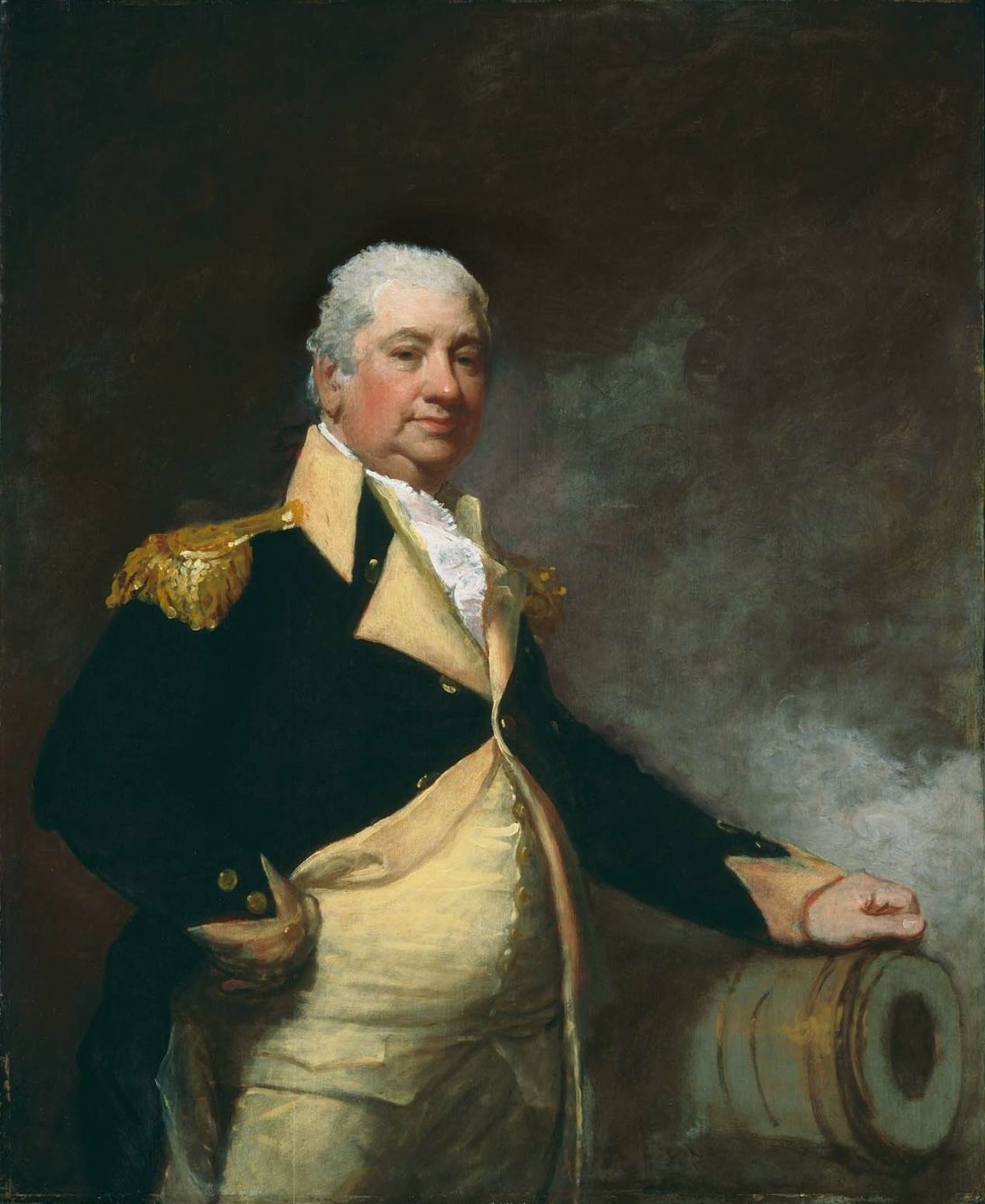
Stuart, Henry Knox, 1806
On the very first impression of Faction and licentiousness the fine theoretic government of Massachusetts has given away and its laws arrested and trampled under foot. Men at a distance, who have admired our systems of government, unfounded in nature, are apt to accuse the rulers, and say that taxes have been assessed coo high and collected coo rigidly. This is a deception equal to any that has been hitherto entertained. It is indeed a face, that high taxes are the ostensible cause of the commotions, but that they are the real cause is as far remote from truth as light from darkness. The people who are the insurgents have never paid any, or but very little taxes—But they see the weakness of government; They feel at once their own poverty, compared with the opulent, and their own force, and they are determined to make use of the latter, in order to remedy the former. Their creed is "That the property of the United States has been protected from the confiscations of Britain by the joint exertions of all, and therefore ought to be the common property of all. And he that attempts opposition to this creed is an enemy to equity and justice, and ought to be swept off the face of the earth." In a word they are determined to annihilate all debts public and private and have agrarian Laws which are easily effected by the means of unfunded paper money which shall be a tender in all cases whatever.
The numbers of these people may amount in [M]assachusetts to about one fifth part of several populous counties, and to them may be collected, people of similar sentiments, from the States of Rhode Island, Connecticut and New Hampshire so as to constitute a body of 12 or 15,000 desperate and unprincipled men—They are chiefly of the Young and active part of the community, more easily collected than perhaps Kept together afterwards—But they will probably commit overt acts of treason which will compel them to embody for their own safety—once embodied they will be constrained to submit to discipline for the same reason. Having proceeded to this length for which they are now ripe, we shall have a formidable rebellion against reason, the principles of all government, and against the very name of liberty. This dreadful situation has alarmed every man of principle and property in New England—They start as from a dream, and ask what has been the Cause of our delusion? What is to afford us security against the violence of lawless men? Our government must be braced, changed, or altered to secure our lives and property. We imagined that the mildness of our government and the virtue of the people were so correspondent, that we were not as other nations requiring brutal force to support the laws—But we find that we are men, actual men, possessing all the turbulent passions belonging to that animal and that we must have a government proper and adequate for him—The people of Massachusetts for instance, are far advanced in this doctrine, and the men of reflection, and principle, are determined to endeavor to establish a government which shall have the power to protect them in their lawful pursuits, and which will be efficient in all cases of internal commotions or foreign invasions—They mean that liberty shall form the basis, a liberty resulting from the equal and firm administration of the laws. They wish for a general government of unity as they see that the local legislatures, must naturally and necessarily tend to retard general government.
We have arrived at that point of time in which we are forced to see our national humiliation, and that a progression in this line, cannot be productive of happiness either private or public—something is wanting and something must be done or we shall be involved in all the horror of faction and civil war without a prospect of its termination—Every tried friend to the liberties of his country is bound to reflect, and step forward to prevent the dreadful consequences which will result from a government of events—Unless this is done we shall be liable to be ruled by an Arbitrary and Capricious armed tyranny, whose word and will must be Law.
Henry Knox, born on this date in 1750, from his letter to George Washington, October 23, 1786
The "Knox Moving Co." scene from John Adams ...
An excellent book ...

16 July 2026

07 July 2026
Bound.
Stuart, Major General Henry Knox, 1806
Every friend to the liberty of his country is bound to reflect, and step forward to prevent the dreadful consequences which shall result from a government of events.
Henry Knox, from his letter to George Washington, October 23, 1786
28 June 2026
Face.

We are so concerned to flatter the majority that we lose sight of how very often it is necessary, in order to preserve freedom for the minority, let alone for the individual, to face that majority down.
William F. Buckley Jr., from The Jeweler's Eye
29 May 2026
Happy Birthday, Patrick Henry
Matthews after Sully, Patrick Henry, 1891

Show me that age and country where the rights and liberties of the people were placed on the sole chance of their rulers being good men without a consequent loss of liberty! I say that the loss of that dearest privilege has ever followed, with absolute certainty, every such mad attempt.
Patrick Henry, born on this day in 1736, from his speech before the Virginia Ratifying Convention on June 5, 1788
26 May 2026
Duplicity.
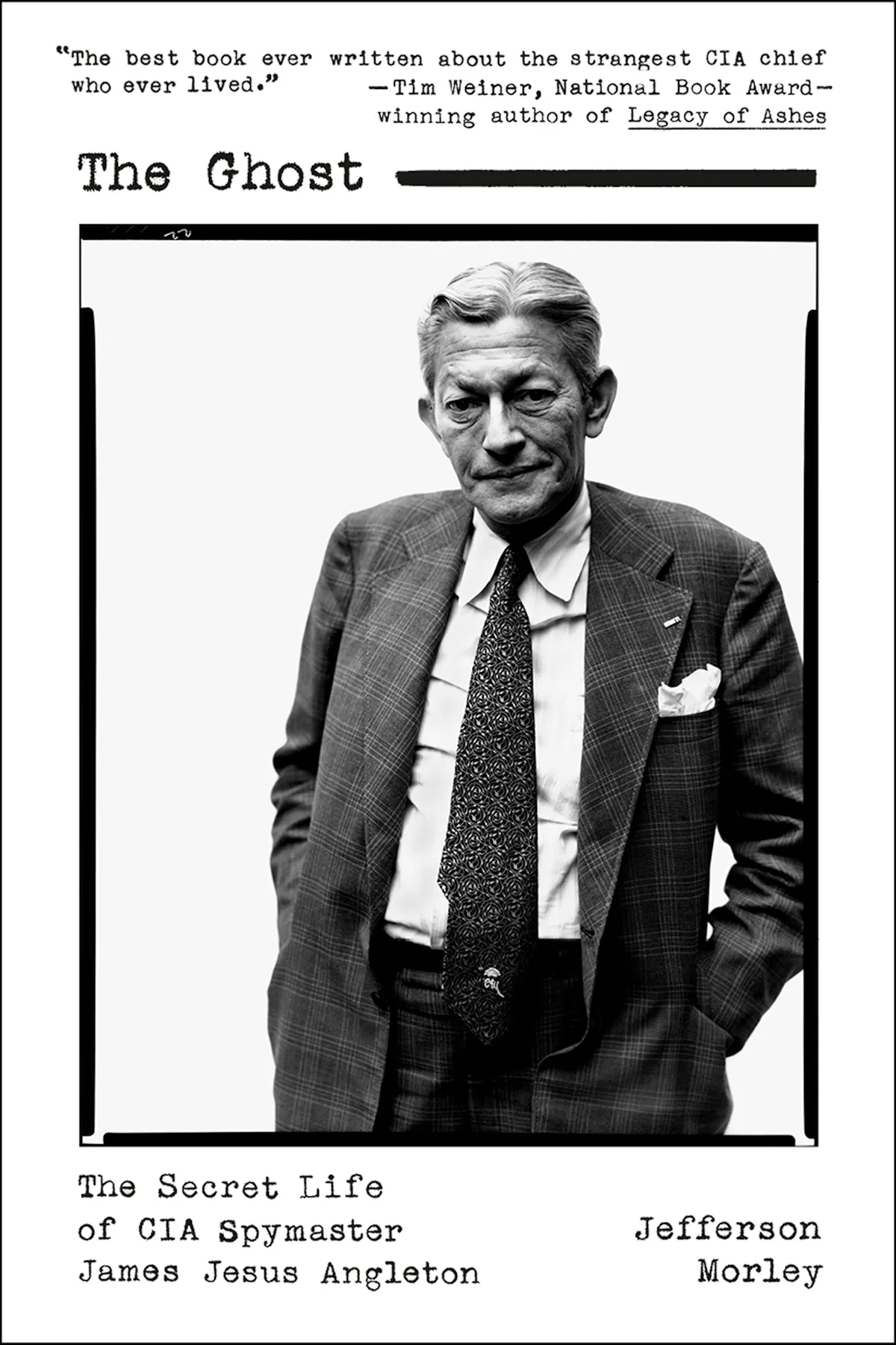
Fundamentally, the founding fathers of U.S. intelligence were liars. The better you lied and the more you betrayed, the more likely you would be promoted. These people attracted and promoted each other. Outside of their duplicity, the only thing they had in common was a desire for absolute power. I did things that, in looking back on my life, I regret. But I was part of it and loved being in it. Dulles, Helms, Wisner. These men were “the grand masters." If you were in a room with them, you were in a room full of people that you had to believe would deservedly end up in hell. I guess I will see them there soon.
James Angleton, from a 1985 interview with Joseph Trento
23 May 2026
Excellent.
An excellent book ...
It is inconceivable that a secret intelligence arm of the government has to comply with all the overt orders of government. When I look at the map today and the weakness of this country, that is what shocks me.James Jesus Angleron, from "Report by James Angleton," 30, box 7, folder labeled "Intelligence--Report by James J. Angleton," Richard B. Cheney files, Gerald R. Ford Presidential Library
27 April 2026
Happy Birthday, Ulysses S. Grant
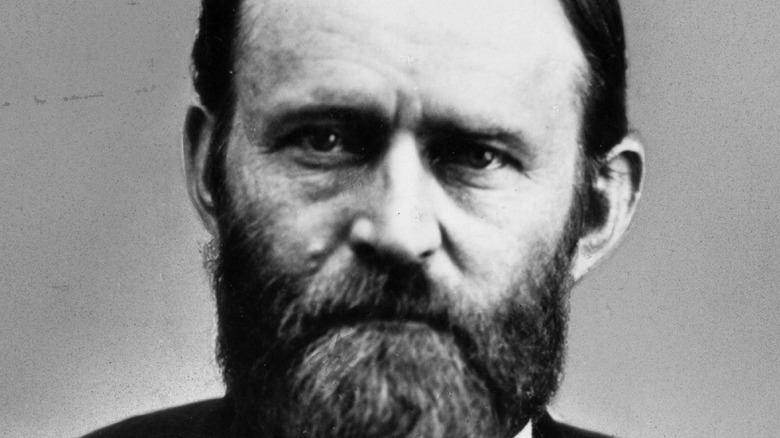
In this sentiment no class of people can more heartily join than the soldier who submitted to the dangers, trials and hardships of the camp and the battle-field, on which ever side he may have fought. No class of people are more interested in guarding against a recurrence of those days. Let us then begin by guarding against every enemy threatening the perpetuity of free republican institutions. I do not bring into this assemblage politics, certainly not partisan politics; but it is a fair subject for our deliberation to consider what may be necessary to secure the prize for which they battled. In a republic like ours, where the citizen is the sovereign, and the official the servant, where no power is exercised except by the will of the people, it is important that the sovereign—the people—should possess intelligence. The free school is the promoter of that intelligence which is to preserve us as a free nation. If we are to have another contest in the near future of our national existence, I predict that the dividing line will not be Mason and Dixon's but between patriotism and intelligence on the one side, and superstition, ambition and ignorance on the other.
Ulysses S. Grant, born on this day in 1822, from his remarks made at the Ninth Annual Meeting of the Army of the Tennessee, Des Moines, Iowa, 29 September 1875
22 April 2026

02 April 2026
Means.

To the free man, the country is the collection of individuals who compose it, not something over and above them. He is proud of a common heritage and loyal to common traditions. But he regards government as a means, an instrumentality, neither a grantor of favors and gifts, nor a master or god to be blindly worshipped and served.
Milton Friedman, from Capitalism and Freedom
31 March 2026
Phallus.

Execupundit has an update on renderings of the presidential phallus, I mean palace, sorry ... "library."
12 February 2026
Happy Birthday, Abraham Lincoln
Gardner, Abraham Lincoln, 1865

I know the American People are much attached to their Government;--I know they would suffer much for its sake;--I know they would endure evils long and patiently, before they would ever think of exchanging it for another. Yet, notwithstanding all this, if the laws be continually despised and disregarded, if their rights to be secure in their persons and property, are held by no better tenure than the caprice of a mob, the alienation of their affections from the Government is the natural consequence; and to that, sooner or later, it must come.
Here then, is one point at which danger may be expected.
The question recurs, "how shall we fortify against it?" The answer is simple. Let every American, every lover of liberty, every well wisher to his posterity, swear by the blood of the Revolution, never to violate in the least particular, the laws of the country; and never to tolerate their violation by others. As the patriots of seventy-six did to the support of the Declaration of Independence, so to the support of the Constitution and Laws, let every American pledge his life, his property, and his sacred honor;--let every man remember that to violate the law, is to trample on the blood of his father, and to tear the character of his own, and his children's liberty. Let reverence for the laws, be breathed by every American mother, to the lisping babe, that prattles on her lap--let it be taught in schools, in seminaries, and in colleges; let it be written in Primers, spelling books, and in Almanacs;--let it be preached from the pulpit, proclaimed in legislative halls, and enforced in courts of justice. And, in short, let it become the political religion of the nation; and let the old and the young, the rich and the poor, the grave and the gay, of all sexes and tongues, and colors and conditions, sacrifice unceasingly upon its altars.
While ever a state of feeling, such as this, shall universally, or even, very generally prevail throughout the nation, vain will be every effort, and fruitless every attempt, to subvert our national freedom.
When I so pressingly urge a strict observance of all the laws, let me not be understood as saying there are no bad laws, nor that grievances may not arise, for the redress of which, no legal provisions have been made.--I mean to say no such thing. But I do mean to say, that, although bad laws, if they exist, should be repealed as soon as possible, still while they continue in force, for the sake of example, they should be religiously observed. So also in unprovided cases. If such arise, let proper legal provisions be made for them with the least possible delay; but, till then, let them, if not too intolerable, be borne with.
Abraham Lincoln, born on this day in 1809, from his "Speech to the Young Men’s Lyceum of Springfield," 1838
08 February 2026
Accordance.
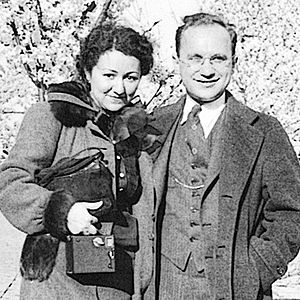
Steve points to the Friedmans on the concentration of power ...
We have been forgetting the basic truth that the greatest threat to human freedom is the concentration of power, whether in the hands of government or anyone else. We have persuaded ourselves that it is safe to grant power, provided it is for good purposes.
Fortunately, we are waking up. We are again recognizing the dangers of an overgoverned society, coming to understand that good objectives can be perverted by bad means, that reliance on the freedom of people to control their own lives in accordance with their own values is the surest way to achieve the full potential of a great society.
31 January 2026
Priority.
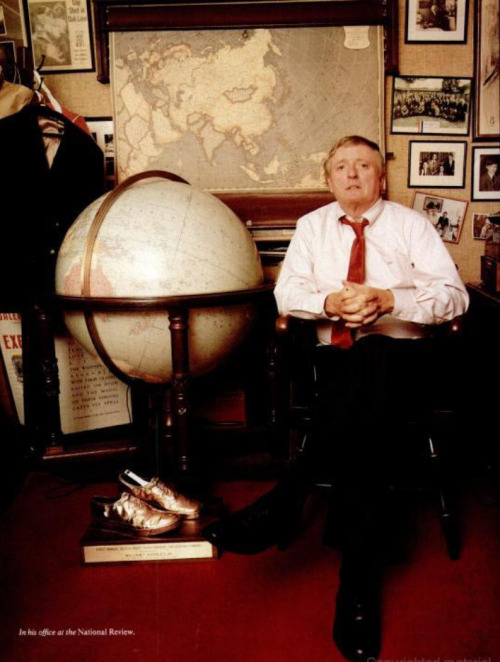
But whatever the depths of self-enchantment, the demagogue has to say something ...
There is always rivalry, and there is always a search for means of exploiting the means of advancing one's own position. In other ages, one paid court to the king. Now we pay court to the people. In the final analysis, just as the king might look down with terminal disdain upon a courtier whose hypocrisy repelled him, so we have no substitute for relying on the voter to exercise a quiet veto when it becomes more necessary to discourage cynical demagogy, than to advance free health for the kids. That can come later, in another venue; the resistance to a corrupting demagogy should take first priority.
William F. Buckley Jr., from "The Demagogues Are Running"
Happy Birthday, Thomas Merton

In an age when totalitarianism has striven, in every way, to devaluate and degrade the human person, we hope it is right to demand a hearing for any and every sane reaction in favor of man's inalienable solitude and his interior freedom. The murderous din of our materialism cannot be allowed to silence the independent voices which will never cease to speak. It is all very well to insist that man is a "social animal" -- the fact is obvious enough. But that is no justification for making him a mere cog in a totalitarian machine -- or in a religious one either, for that matter.
In actual fact, society depends for its existence on the inviolable personal solitude of its members. Society, to merit its name, must be made up not of numbers, or mechanical units, but of persons. To be a person implies responsibility and freedom, and both these imply a certain interior solitude, a sense of personal integrity, a sense of one's own reality and one's ability to give himself to society -- or to refuse that gift.
When men are merely submerged in a mass of impersonal human beings pushed around by impersonal forces, they lose their true humanity, their integrity, their dignity, their ability to love, their capacity for self-determination. When society is made up of men who know no interior solitude it can no longer be held together by love: and consequently it is held together by a violent and abusive authority. But when men are violently deprived of the solitude and freedom which are their due, the society in which they live becomes putrid, it festers with servility, resentment, and hate.
No amount of technological progress will cure the hatred that eats away the vitals of materialistic society like a spiritual cancer. The only cure is, and must always be, spiritual. There is not much use talking to men about God and love if they are not able to listen. The ears with which one hears the message of the Gospel are hidden in man's heart, and those ears do not hear anything unless they are favored with a certain interior solitude and silence.
In other words, since faith is a matter of freedom and self-determination -- the free receiving of a freely given gift of grace -- man cannot assent to a spiritual message as long as his mind and heart are enslaved by automatism. He will always remain so enslaved as long as he is submerged in a mass of other automatons, without individuality and without their rightful integrity as persons.
Thomas Merton, born on this day in 1915, from Thoughts in Solitude
29 January 2026
Guarantee.

Whatever is my right as a man is also the right of another; and it becomes my duty to guarantee as well as to possess.
Thomas Paine, from The Rights of Man
Subscribe to:
Posts (Atom)