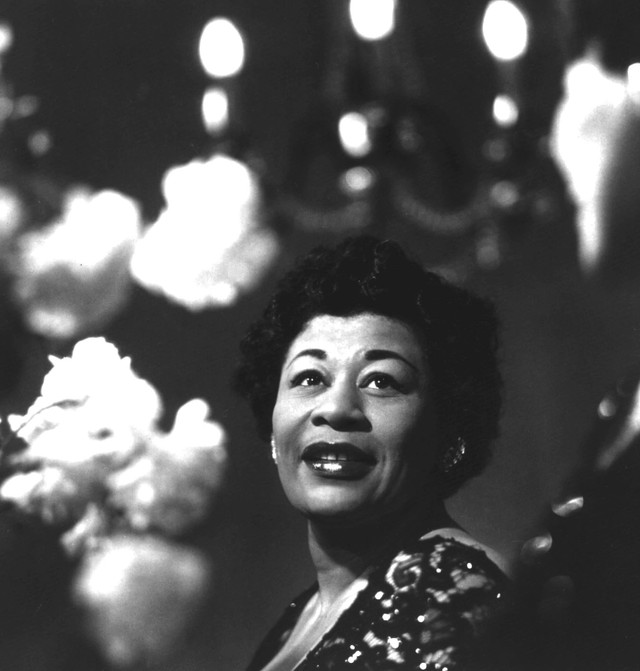
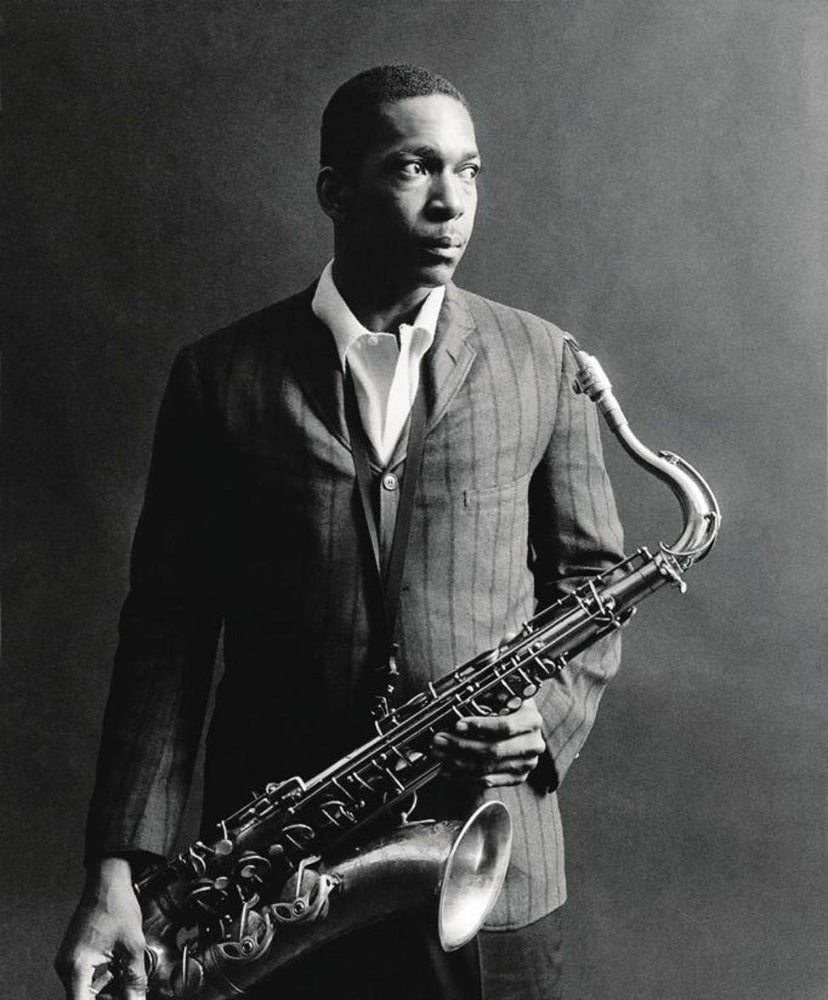
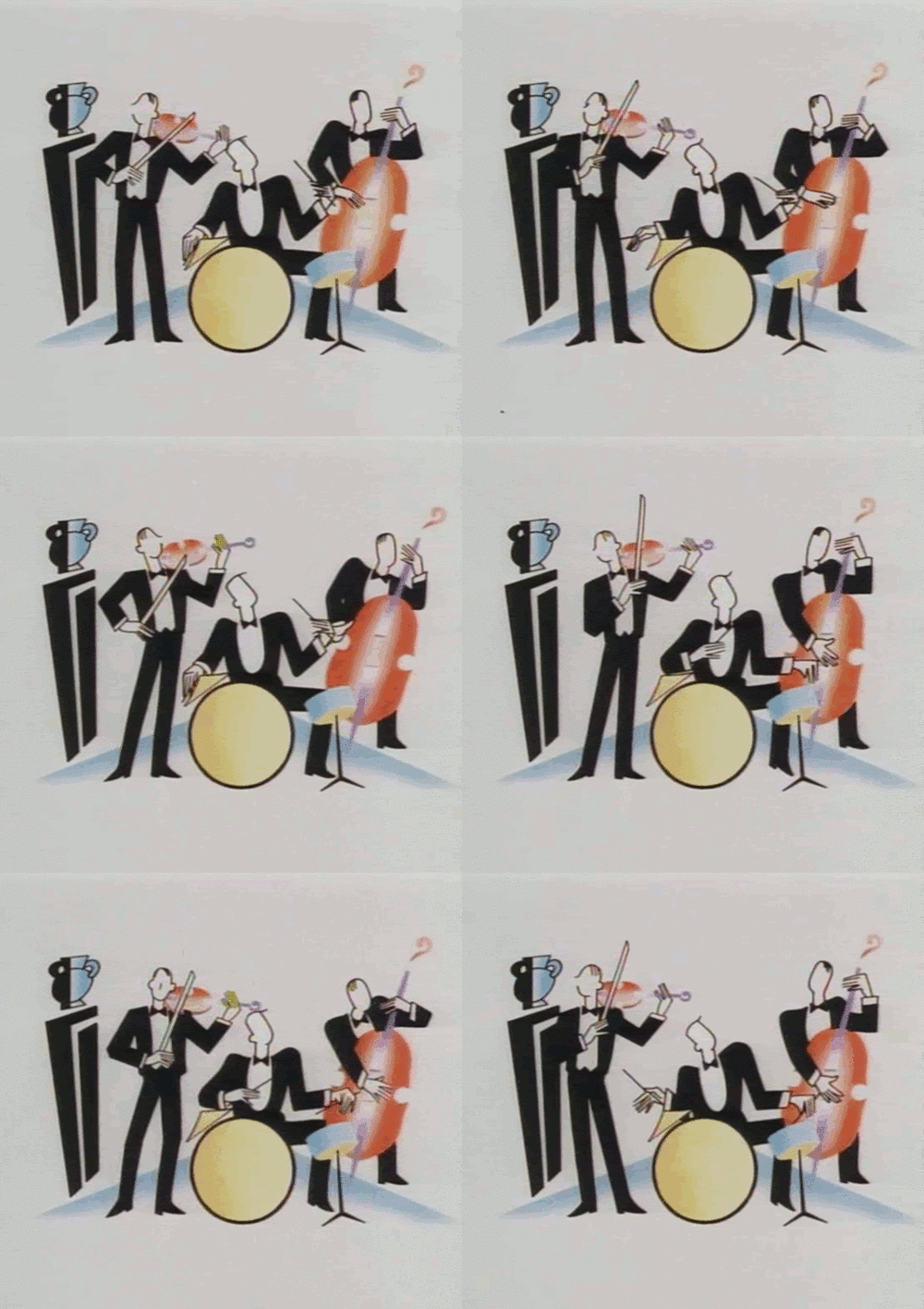
With Ray Brown and Ed Thigpen ...
09 January 2022


Surrounded.
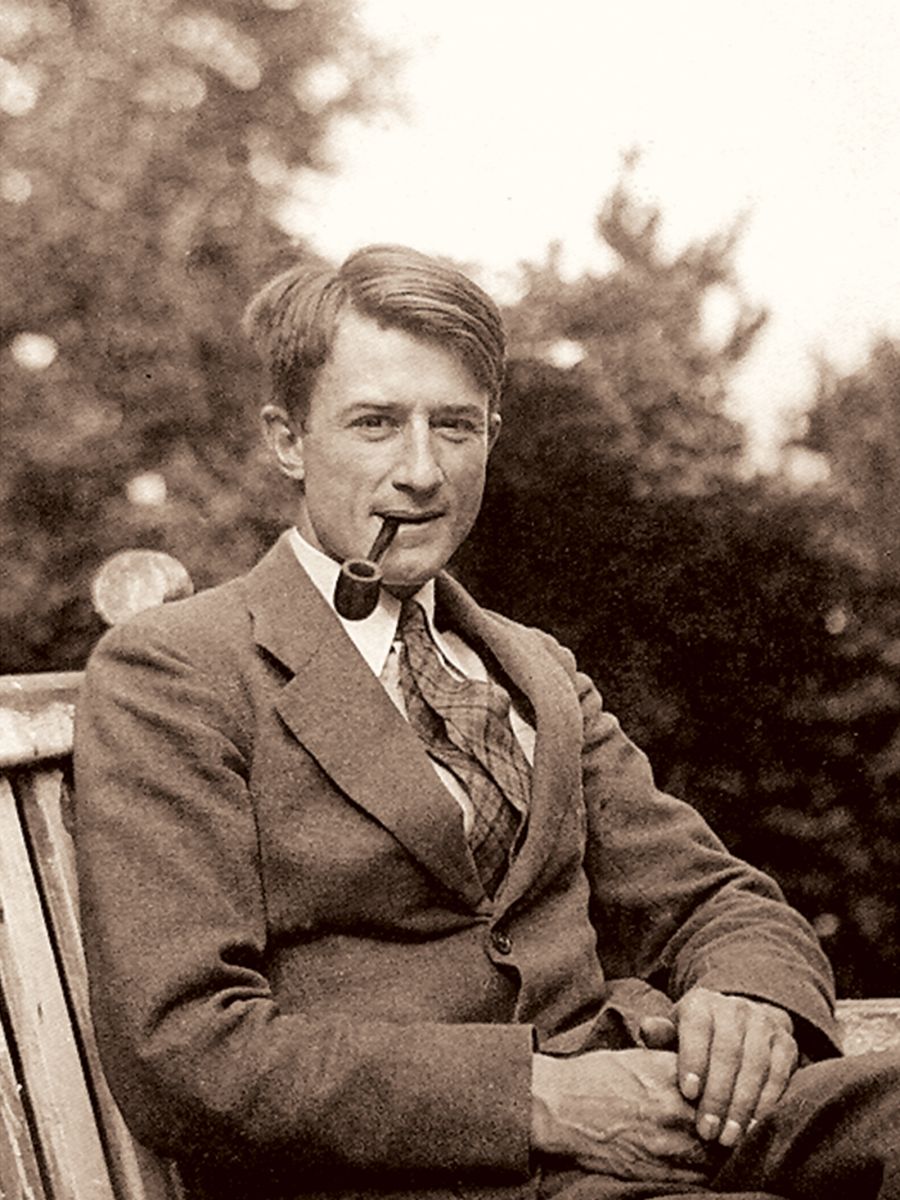
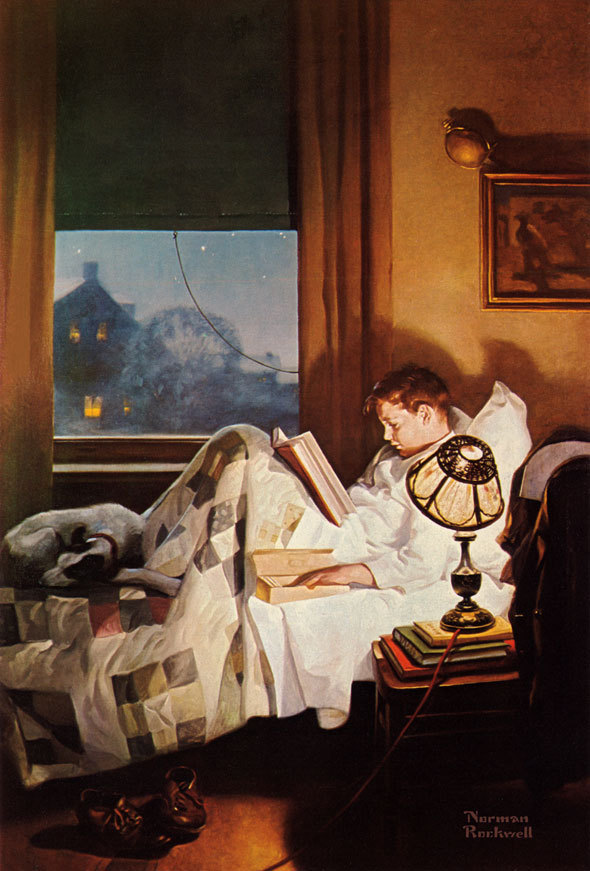
The characteristic gift of the university is the gift of an interval. Here is an opportunity to put aside the hot allegiances of youth without the necessity of at once acquiring new loyalties to take their place. Here is a break in the tyrannical course of irreparable events; a period in which to look round upon the world and upon oneself without the sense of an enemy at one’s back or the insistent pressure to make up one’s mind; a moment in which to taste the mystery without the necessity of at once seeking a solution. And all this, not in an intellectual vacuum, but surrounded by all the inherited learning and literature and experience of our civilization; not as a sole occupation, but combined with the discipline of studying a recognized branch of learning; and neither as a first step in education nor as a final education to fit a man for the day of judgment, but as a middle. This interval is nothing so commonplace as a pause to get one’s breath; no young man or woman, I take it, would say “Thank you” for an opportunity of that sort; it is not the cessation of activity, but the occasion of a unique kind of activity.One might, hazarding a misunderstanding, reduce this to a doctrine about the character of a university; one might call it the doctrine of the interim. But the doctrine would be no more than a brief expression of what it felt like to be an undergraduate on that first October morning. Almost overnight, a world of ungracious fact had melted into infinite possibility; we who belonged to no “leisured class” had been freed for a moment from the curse of Adam, the burdensome distinction between work and play. What opened before us was not a road but a boundless sea; it was enough to stretch one’s sails to the wind. The distracting urgency of an immediate destination was absent, duty no longer oppressed, boredom and disappointment were words without meaning; death was unthinkable. But it belongs to the character of an interim to come to an end; there is a time for everything and nothing should be prolonged beyond its time. There eternal undergraduate is a lost soul.And what of the harvest? Nobody could go down from such a university unmarked. Intellectually, he may be supposed to have acquired some knowledge, and, more important, a certain discipline of mind, a grasp of consequences, a greater command over his own powers. He will know, perhaps, that it is not good enough to have a “point of view,” that what we need is thoughts. He will not go down in possession of an armoury of arguments to prove the truth of what he believes; but he will have acquired something that puts him beyond the reach of the intellectual hooligan, and whatever has been the subject of his study he may be expected to be able to look for some meaning in the things that have greatly moved mankind. Perhaps he may even have found a centre for his intellectual affections. In short, this period at a university may not have equipped him very effectively to earn a living, but he will have learned something to help him lead a more significant life.
Uprose.
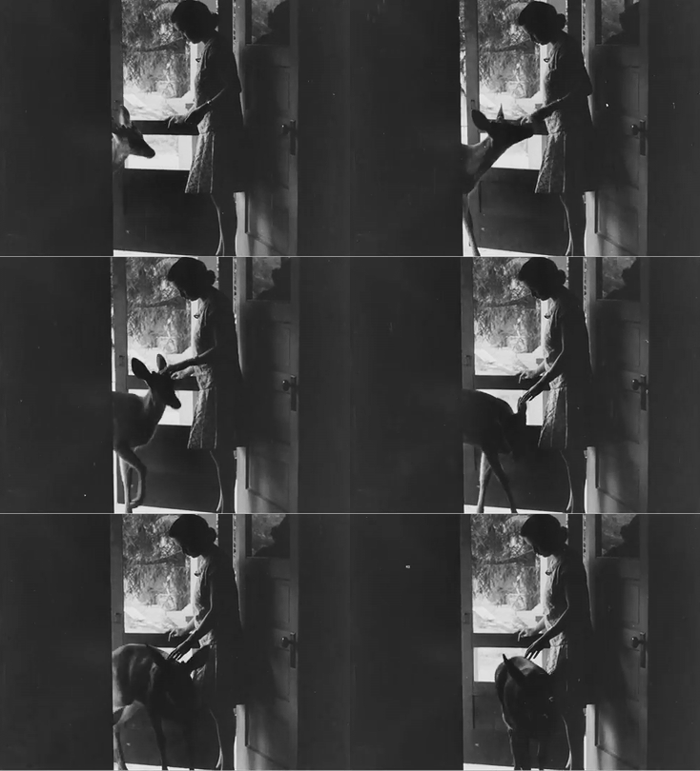
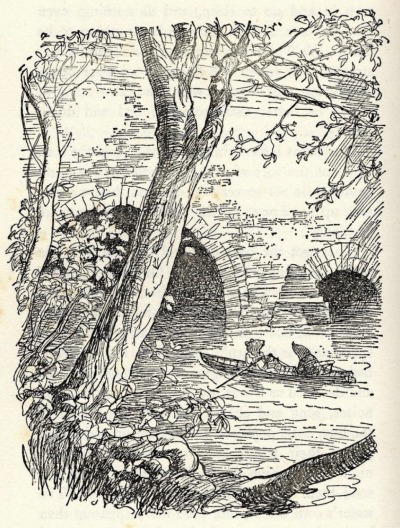
Moore, Carol of the Field Mice, 2009

It was a pretty sight, and a seasonable one, that met their eyes when they flung the door open. In the fore-court, lit by the dim rays of a horn lantern, some eight or ten little field-mice stood in a semicircle, red worsted comforters round their throats, their fore-paws thrust deep into their pockets, their feet jigging for warmth. With bright beady eyes they glanced shyly at each other, sniggering a little, sniffing and applying coat-sleeves a good deal. As the door opened, one of the elder ones that carried the lantern was just saying, “Now then, one, two, three!” and forthwith their shrill little voices uprose on the air, singing one of the old-time carols that their forefathers composed in fields that were fallow and held by frost, or when snow-bound in chimney corners, and handed down to be sung in the miry street to lamp-lit windows at Yule-time.
Kenneth Grahame, from The Wind in the Willows
Anyone care to chance the reward of some Lambswool and go wassailing?
Strength.
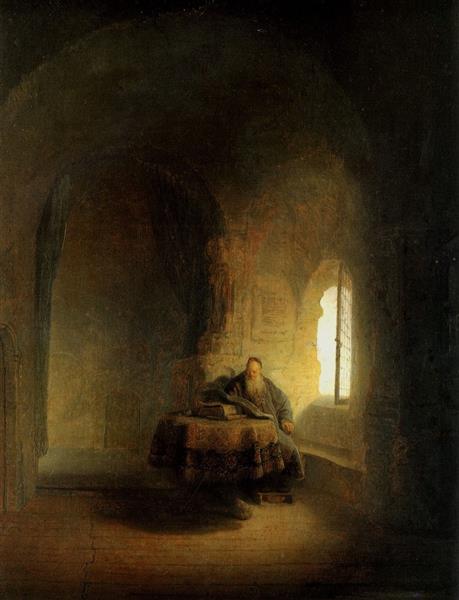
Rembrandt, Scholar Reading, 1631
The spiritual decline of the earth has progressed so far that peoples are in danger of losing their last spiritual strength, the strength that makes it possible even to see the decline and to appraise it as such. This simple observation has nothing to do with cultural pessimism — nor with any optimism either, of course; for the darkening of the world, the flight of the gods, the destruction of the earth, the reduction of human beings to a mass, the hatred and mistrust of everything creative and free has already reached such proportions throughout the whole earth that such childish categories as pessimism and optimism have long become laughable.
Martin Heidegger
Story.
Hesselbom, Winter Cottage, n/d

THE SHEPHERD'S CALENDAR: JANUARY WINTER'S DAY
Withering and keen the winter comes
While comfort flyes to close shut rooms
And sees the snow in feathers pass
Winnowing by the window glass
And unfelt tempests howl and beat
Above his head in corner seat
And musing oer the changing scene
Farmers behind the tavern screen
Sit-or wi elbow idly prest
On hob reclines the corners guest
Reading the news to mark again
The bankrupt lists or price of grain
Or old moores anual prophecys
That many a theme for talk supplys
Whose almanacks thumbd pages swarm
Wi frost and snow and many a storm
And wisdom gossipd from the stars
Of polities and bloody wars
He shakes his head and still proceeds
Neer doubting once of what he reads
All wonders are wi faith supplyd
Bible at once and weather guide
Puffing the while his red tipt pipe
Dreaming oer troubles nearly ripe
Yet not quite lost in profits way
He'll turn to next years harvest day
And winters leisure to regale
Hopes better times and sips his ale
While labour still pursues his way
And braves the tempest as he may
The thresher first thro darkness deep
Awakes the mornings winter sleep
Scaring the owlet from her prey
Long before she dreams of day
That blinks above head on the snow
Watching the mice that squeaks below
And foddering boys sojourn again
By ryhme hung hedge and frozen plain
Shuffling thro the sinking snows
Blowing his fingers as he goes
To where the stock in bellowings hoarse
Call for their meals in dreary close
And print full many a hungry track
Round circling hedge that guards the stack
Wi higgling tug he cuts the hay
And bares the forkfull loads away
And morn and evening daily throws
The little heaps upon the snows
The shepherd too in great coat wrapt
And straw bands round his stockings lapt
Wi plodding dog that sheltering steals
To shun the wind behind his heels
Takes rough and smooth the winter weather
And paces thro the snow together
While in the fields the lonly plough
Enjoys its frozen sabbath now
And horses too pass time away
In leisures hungry holiday
Rubbing and lunging round the yard
Dreaming no doubt of summer sward
As near wi idle pace they draw
To brouze the upheapd cribs of straw
While whining hogs wi hungry roar
Crowd around the kitchen door
Or when their scanty meal is done
Creep in the straw the cold to shun
And old hens scratting all the day
Seeks curnels chance may throw away
Pausing to pick the seed and grain
Then dusting up the chaff again
While in the barn holes hid from view
The cats their patient watch pursue
For birds which want in flocks will draw
From woods and fields to pick the straw
The soodling boy that saunters round
The yard on homward dutys bound
Now fills the troughs for noisy hogs
Oft asking aid from barking dogs
That tuggles at each flopping ear
Of such as scramble on too near
Or circld round wi thirsty stock
That for his swinging labours flock
At clanking pump his station takes
Half hid in mist their breathing makes
Or at the pond before the door
Which every night leaves frozen oer
Wi heavy beetle1 splinters round
The glossy ice wi jarring sound
While huddling geese as half asleep
Doth round the imprisond water creep
Silent and sad to wait his aid
And soon as ere a hole is made
They din his ears wi pleasures cry
And hiss at all that ventures nigh
Splashing wi jealous joys & vain
Their fill ere it be froze again
And woodstack climbs at maids desire
Throwing down faggots for the fire
Where stealing time he often stands
To warm his half froze tingling hands
The schoolboy still in dithering joys
Pastime in leisure hours employs
And be the weather as it may
Is never at a loss for play
Rolling up giant heaps of snow
As noontide frets its little thaw
Making rude things of various names
Snow men or aught their fancy frames
Till numbd wi cold they quake away
And join at hotter sports to play
Kicking wi many a flying bound
The football oer the frozen ground
Or seeking bright glib ice to play
To sailing slide the hours away
As smooth and quick as shadows run
When clouds in autumn pass the sun
Some hurrying rambles eager take
To skait upon the meadow lake
Scaring the snipe from her retreat
From shelving banks unfrozen seat
Or running brook where icy spars
Which the pale sunlight specks wi stars
Shoots crizzling oer the restless tide
To many a likness petrified
Where fancy often stoops to pore
And turns again to wonder more
The more hen too wi fear opprest
Starts from her reedy shelterd nest
Bustling to get from foes away
And scarcly flies more fast then they
Skaiting along wi curving springs
Wi arms spread out like herons wings
They race away for pleasures sake
A hunters speed along the lake
And oft neath trees where ice is thin
Meet narrow scapes from breaking in
Again the robin waxes tame
And ventures pitys crumbs to claim
Picking the trifles off the snow
Which dames on purpose daily throw
And perching on the window sill
Where memory recolecting still
Knows the last winters broken pane
And there he hops and peeps again
The clouds of starnels dailey fly
Blackening thro the evening sky
To whittleseas1 reed wooded mere
And ozier holts by rivers near
And many a mingld swathy crowd
Rook crow and jackdaw noising loud
Fly too and fro to dreary fen
Dull winters weary flight agen
Flopping on heavy wings away
As soon as morning wakens grey
And when the sun sets round and red
Returns to naked woods to bed
Wood pigeons too in flocks appear
By hunger tamd from timid fear
They mid the sheep unstartld steal
And share wi them a scanty meal
Picking the green leaves want bestows
Of turnips sprouting thro the snows
The ickles from the cottage eaves
Which cold nights freakish labour leaves
Fret in the sun a partial thaw
Pattring on the pitted snow
But soon as ere hes out of sight
They eke afresh their tails at night
The sun soon creepeth out of sight
Behind the woods-and running night
Makes haste to shut the days dull eye
And grizzles oer the chilly sky
Dark deep and thick by day forsook
As cottage chimneys sooty nook
While maidens fresh as summer roses
Joining from the distant closes
Haste home wi yokes and swinging pail
And thresher too sets by his flail
And leaves the mice at peace agen
To fill their holes wi stolen grain
And owlets glad his toils are oer
Swoops by him as he shuts the door
The shepherd seeks his cottage warm
And tucks his hook beneath his arm
And weary in the cold to roam
Scenting the track that leadeth home
His dog wi swifter pace proceeds
And barks to urge his masters speed
Then turns and looks him in the face
And trotts before Wi mending pace
Till out of whistle from the swain
He sits him down and barks again
Anxious to greet the opend door
And meet the cottage fire once more
The robin that wi nimble eye
Glegs round a danger to espy
Now pops from out the opend door
From crumbs half left upon the floor
Nor wipes his bill on perching chair
Nor stays to clean a feather there
Scard at the cat that sliveth in
A chance from evenings glooms to win
To jump on chairs or tables nigh
Seeking what plunder may supply
The childerns litterd scraps to thieve
Or aught that negligence may leave
Creeping when huswives cease to watch
Or dairey doors are off the latch
On cheese or butter to regale
Or new milk reeking in .the pale
The hedger now in leathern coat
From woodland wilds and fields remote
After a journey far and slow
Knocks from his shoes the caking snow
And opes the welcome creaking door
Throwing his faggot on the floor
And at his listening wifes desire
To eke afresh the blazing fire
Wi sharp bill cuts the hazel bands
Then sets him down to warm his hands
And tell in labours happy way
His story of the passing day
While as the warm blaze cracks and gleams
The supper reeks in savoury steams
Or keetle simmers merrily
And tinkling cups are set for tea
Thus doth the winters dreary day
From morn to evening wear away.
John Clare
08 January 2022


Beethoven, Ten Variations on Salieri's "La stessa, la stessissima", WoO 73
Vadim Chaimovich performs ...

Gods.
Curtis, Gán askĭdĭ, Zahadolzhá, Hasché̆ltĭ - Navaho, 1904
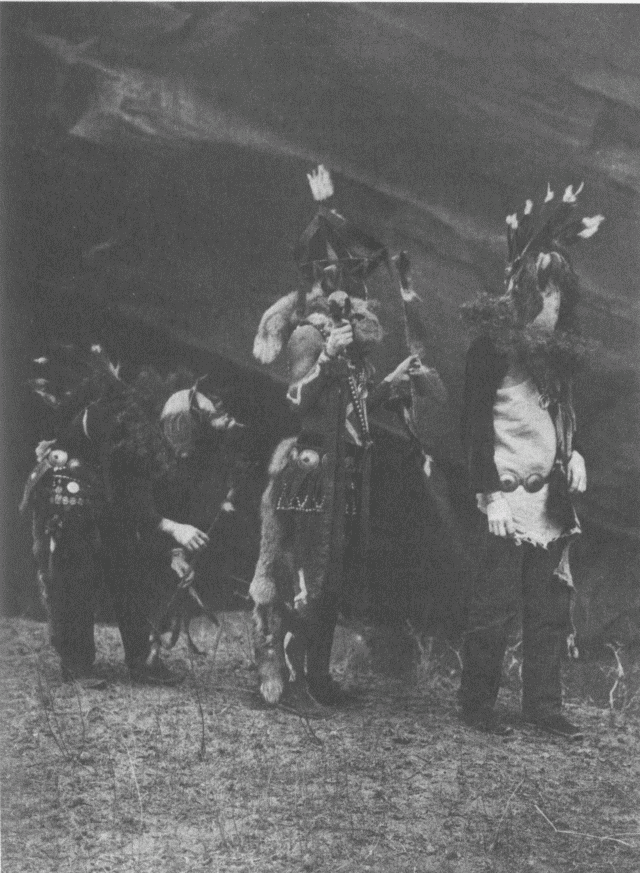
The LEGEND of the NIGHT CHANT
Long years ago three brothers—the eldest rich, the second a wayward, roving gambler, and the youngest a mere boy—lived together among their kind, the Dĭné̆ people. Their only sister was married, living apart with her husband. The gambler often took property belonging to his brothers, going to distant corners of the land to stake it on games of chance. On returning, he never failed to relate a story of wonders he had seen—the Holy People whom he had met, and who revealed many things to him. His brothers never believed him, calling him Bĭlh Ahatí̆nĭ, The Dreamer.
One day they wished to go hunting, but did not want The Dreamer to accompany them, so, going to the home of their brother-in-law, they told him of their purpose, and all three stole away. As the sun began its descent on the fourth day, it occurred to Bĭlh Ahatí̆nĭ that he had been tricked, so he started in search of the hunters, hoping to meet them returning, that he might help them carry their game and be rewarded with a pelt or two. He travelled far, but had not come upon them when the sun passed behind the distant hills. Near by was a deep, rock-walled cañon, from the depths of which many mingled voices could be heard. Bĭlh Ahatí̆nĭ walked to its edge and peered over. Back and forth from side to side flew countless crows, passing in and out of dark holes in opposite walls. From below, when darkness had shrouded all, Bĭlh Ahatí̆nĭ heard a human voice call in loud echoing tones, "They say, they say, they say, they say!"
From the far side came the answer: "Yes, yes! What's the matter now? What's the matter now?"
"Two people were killed to-day," continued the voice just below.
"Who were they? Who were they?"
To which the first voice answered, "Anahailí̆hĭ, killed at sunrise, and Igákĭzhĭ, killed at dusk, by the People of the Earth. They went in search of meat, and the hunters shot arrows into them. We are sorry, but they were told to be careful and did not heed. It is too late to help them now; let us go on with the chant."
It had grown very dark, and Bĭlh Ahatí̆nĭ became greatly frightened, but he stayed to listen and watch. Muffled strains of songs came from the deep recesses in each cañon wall,—the gods were singing—and just within the openings, discernible in the glow of a fire, could be seen many dancers performing in unison as they kept time with rattles. Throughout the night firelight flickered from wall to wall and singing and dancing continued. At daylight the participants departed in all directions, so Bĭlh Ahatí̆nĭ resumed the quest of the hunters.
He had travelled but a short time when he came upon his brothers, resting their heavy game packs on their journey homeward.
"Here comes The Dreamer," spoke his elder brother. "I will wager he has something marvellous to relate."
Bĭlh Ahatí̆nĭ was greeted first by his brother-in-law. "You must have slept near here last night, for you are too far out to have made this distance since daylight."
"I did," he replied, "near a cañon that is surely holy. A lot of people had gathered to dance, the gods sang, and—"
"There, I told you he would have some lie to tell," interrupted the eldest brother, and started on.
"Go ahead," urged the brother-in-law; "tell us the rest."
"It's no use; no one cares to listen to me," said Bĭlh Ahatí̆nĭ.
His younger brother, also incredulous, took up his burden and plodded off, whereat Bĭlh Ahatí̆nĭ related all that he had seen and heard.
"You men must have killed those people they spoke about," he accused.
"No, it was none of us," his brother-in-law protested; "we have killed no people. Yesterday morning one shot a crow, and last night we killed a magpie, but there was no harm in that."
"I fear there was; they were hunters like yourselves, in search of meat for the Holy People, for the time disguised as birds," Bĭlh Ahatí̆nĭ ventured. Then, dividing the pack, the two hurried on to overtake the others.
"Well," asked the youngest, "did you hear a fine story?"
"It is not a lie," his brother-in-law retorted; "we killed a crow and a magpie yesterday, and the Holy People talked about it in the cañon last night. Look! There come four mountain sheep! Hurry, Bĭlh Ahatí̆nĭ and head them off!" They had come upon the cañon where the strange voices had been heard. Four sheep, among large bowlders near the rim, were carefully threading their way out of it. The three dropped back, while Bĭlh Ahatí̆nĭ ran ahead and concealed himself near the ascending trail. As the sheep approached he drew his bow and aimed for the leader's heart, but his fingers could not loose their grip upon the arrow, and the sheep passed by unharmed. Bĭlh Ahatí̆nĭ scrambled up over the rim of the cañon and ran to get ahead of them again, but the bowstring would not leave his fingers as they passed. A third effort, and a fourth, to kill the game brought the same result. Bĭlh Ahatí̆nĭ cursed himself and the sheep, but ceased suddenly, for whom should he see but four gods, Yébĭchai, appear before him, who had transformed themselves into sheep! Hasché̆ltĭ, in the lead, ran up to him and dropped his balíl—a rectangular, four-piece, folding wand—over him, as he sat, and uttered a peculiar cry. Behind him came Zahadolzhá, Haschĕbaád, and Gánaskĭdĭ; all were masked.
"Whence came you?" Bĭlh Ahatí̆nĭ asked them.
"From Kĭnní̆nĭkai," Hasché̆ltĭ answered.
"Whither are you going?"
"To Tsé̆gyiĭ, to hold another hatál four days from now. You had better come along."
"No, I couldn't travel so far in four days."
But after a little parleying Bĭlh Ahatí̆nĭ assented. He was told to disrobe, and doing so Gánaskĭdĭ breathed upon him, and his raiment became the same as that of the gods. Then all took four steps eastward, changing into mountain sheep, and bounded away along the cañon's rim.
The hunters in hiding became restless as The Dreamer did not return, so ventured out where they could view the trail on which he was last seen. No one was in sight. One went to the rock where Bĭlh Ahatí̆nĭ first hid near the sheep and followed his tracks from hiding place to hiding place until the fourth one was reached, and there he found his brother's old clothes with his bow and arrows upon them. There he traced four human footsteps to the east that merged into the trail of five mountain sheep. The eldest brother cried in his remorse, for he saw that his brother was holy, and he had always treated him with scorn.
The gods and Bĭlh Ahatí̆nĭ, transformed to mountain sheep, travelled very far during their four days' journey, coming on the fourth day to a large hogán. Inside were numerous Holy People, both gods and men. When Bĭlh Ahatí̆nĭ entered with his four holy companions, a complaint at once arose from those inside against an earthly odor, whereat Hasché̆ltĭ had their charge taken out and washed with yucca-root suds.
Inside the hogán stood four large jewel posts upon which the gods hung their masks. The eastern post was of white shell, the southern of turquoise, the western of abalone, and the northern of jet. Two jewel pipes lay beside a god sitting on the western side of the hogán. These he filled with tobacco and lighted, passing one each to his right and his left. All assembled smoked, the last to receive the pipes being two large Owls sitting one on each side of the entrance way at the east. They drew in deep draughts of smoke and puffed them out violently. While the smoking continued, people came in from all directions. At midnight lightning flashed, followed by heavy thunder and rain, which Tónenĭlĭ, Water Sprinkler, sent in anger because he had not been apprised of the dance before it was time to begin it; but a smoke with the assembled Holy People appeased him. Soon after the chant began and continued until morning.
Some of the gods had beautiful paintings on deerskins, resembling those now made with colored sands. These they unfolded upon the floor of the hogán during the successive days of the hatál.
The last day of the dance was very largely attended, people coming from all holy quarters. Bĭlh Ahatí̆nĭ through it all paid close attention to the songs, prayers, paintings, and dance movements, and the forms of the various sacred paraphernalia, and when the hatál was over he had learned the rite of Kléjĕ Hatál. The gods permitted him to return to his people long enough to perform it over his younger brother and teach him how to conduct it for people afflicted with sickness or evil. This he did, consuming nine days in its performance, after which he again joined the gods at Tsé̆gyiĭ, where he now lives. His younger brother taught the ceremony to his earthly brothers, the Navaho, who yet conduct it under the name of Kléjĕ Hatál, Night Chant, or Yébĭchai Hatál, The Chant of Paternal Gods.

Couperin, Sonata in D minor, "La Sultane"
Christophe Rousset directs Les Talens Lyriques from the insidious clangy thing ...
Freezing.

The man sat in the snow for a moment and struggled for calmness. Then he pulled on his mittens, using his teeth, and then stood on his feet. He glanced down to assure himself that he was really standing, because lack of feeling in his feet gave him no relation to the earth. His position, however, removed the fear from the dog’s mind.When he commanded the dog with his usual voice, the dog obeyed and came to him. As it came within his reach, the man lost control. His arms stretched out to hold the dog and he experienced real surprise when he discovered that his hands could not grasp. There was neither bend nor feeling in the fingers. He had forgotten for the moment that they were frozen and that they were freezing more and more. All this happened quickly and before the animal could escape, he encircled its body with his arms. He sat down in the snow, and in this fashion held the dog, while it barked and struggled.But it was all he could do: hold its body encircled in his arms and sit there. He realized that he could not kill the dog. There was no way to do it. With his frozen hands he could neither draw nor hold his knife. Nor could he grasp the dog around the throat. He freed it and it dashed wildly away, still barking. It stopped 40 feet away and observed him curiously, with ears sharply bent forward.The man looked down at his hands to locate them and found them hanging on the ends of his arms. He thought it curious that it was necessary to use his eyes to discover where his hands were. He began waving his arms, beating the mittened hands against his sides. He did this for five minutes. His heart produced enough blood to stop his shaking. But no feeling was created in his hands.
Beware.
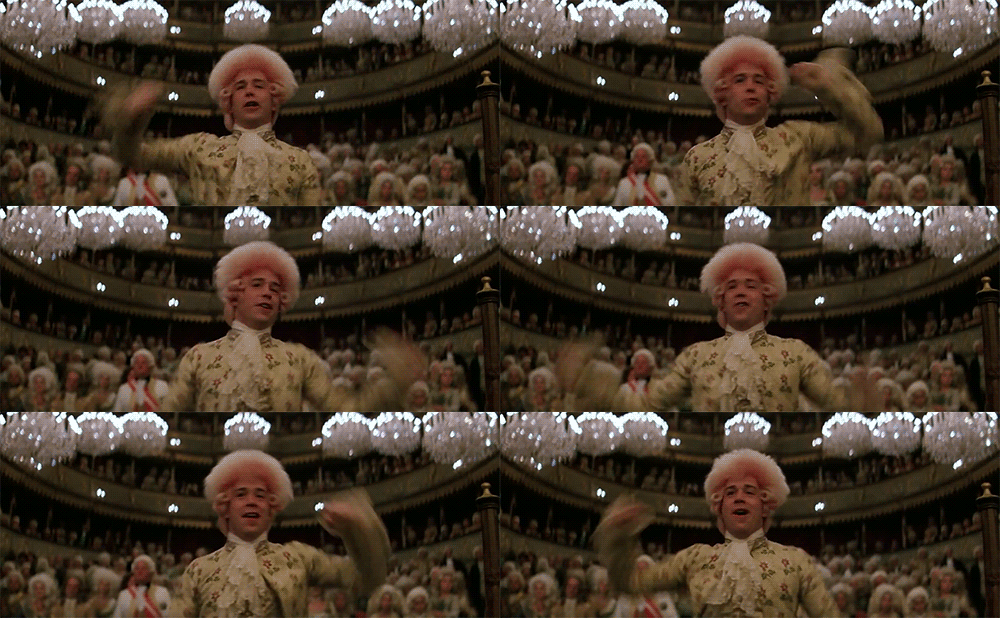
Restaurants have figured out how to recoup pandemic losses with a windfall. It's called the charcuterie board.
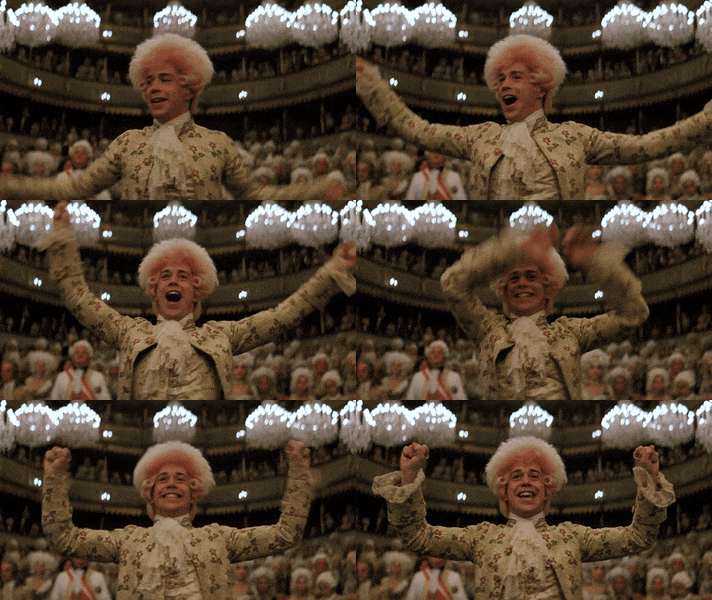
Beware. The house always wins.
06 January 2022
:format(jpeg):mode_rgb():quality(90)/discogs-images/R-2023259-1553548932-6342.jpeg.jpg)
Hang.
"Hang care!" exclaimed he. "This is a delicious evening; the wine has a finer relish here than in the house, and the song is more exciting and melodious under the tranquil sky than in the close room, where the sound is stifled. Come, let us have a bacchanalian chant—let us, with old Sir Toby, make the welkin dance and rouse the night-owl with a catch! I am right merry. Pass the bottle, and tune your voices—a catch, a catch! The lights will be here anon."
Charles Ollier, from "The Haunted Manor-House of Paddington"
For best results, listen to this ... Keith and the X-Pensive Winos, "You Will But You Won't" ...
The euphony transformed me and inundated my soul in a roguish countenance, the likes of which I had know well in younger days. Such impishness soon drove out the complaints of the day.
Umberto Limongiello
Means.
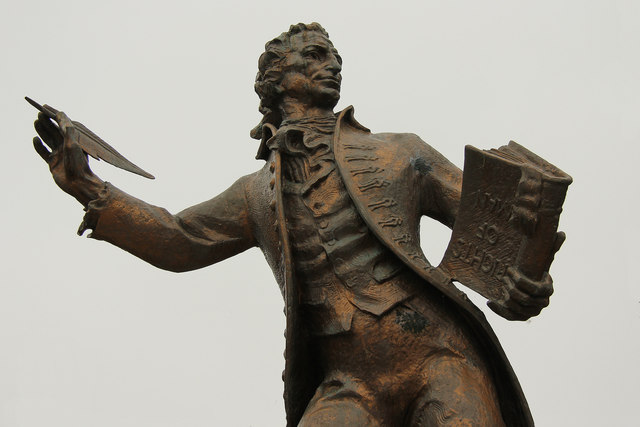
Society in every state is a blessing, but government, even in its best state, is but a necessary evil; in its worst state an intolerable one: for when we suffer, or are exposed to the same miseries by a government which we might expect in a country without government, our calamity is heightened by reflecting that we furnish the means by which we suffer.
Thomas Paine
Gift.

From the amazon.com listing ...
NOTE TO PEDANTS: The wax White House that appears on the surface of this candle is modeled to look like the pre-1814 White House rather than the White House as it exists today. This is our gift to you, pedants!

05 January 2022
Private.
Siberdt, Martin Luther Translating the Bible, Wartburg Castle, 1521

He who would preserve the supremacy of natural feelings in social life knows not what he asks. Ever at war with himself, hesitating between his wishes and his duties, he will be neither a man nor a citizen. He will be of no use to himself nor to others. He will be a man of our day, a Frenchman, an Englishman, one of the great middle class.
To be something, to be himself, and always at one with himself, a man must act as he speaks, must know what course he ought to take, and must follow that course with vigour and persistence. When I meet this miracle it will be time enough to decide whether he is a man or a citizen, or how he contrives to be both. Two conflicting types of educational systems spring from these conflicting aims. One is public and common to many, the other private and domestic.
Jean-Jacques Rousseau
Wind.
Wyeth, Jamie, Pine Study, 1960
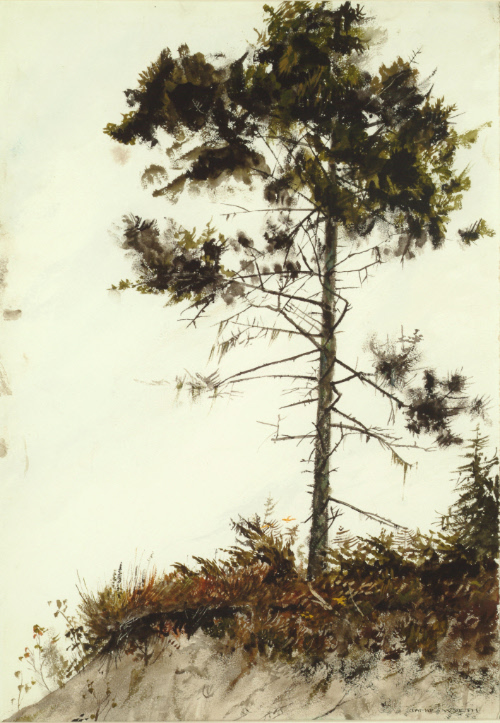
this ink painting of wind
blowing through pines
who hears it?
Ikkyu
Initiative.
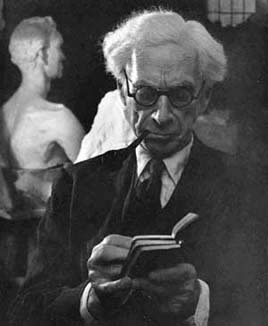
One obvious palliative of the evils of democracy in its present form would be to encourage much more publicity and initiative on the part of civil servants. They ought to have the right, and, on occasion, the duty, to frame bills in their own names, and set forth publicly the arguments in their favor.
Bertrand Russell
04 January 2022


Happy Birthday, Stipe

Michael Stipe was born on this date in 1960.
John Prine's "Hello In There" with Natalie Merchant ...

03 January 2022
Twilight.
Chatham, Twilight in The Badlands, 1999
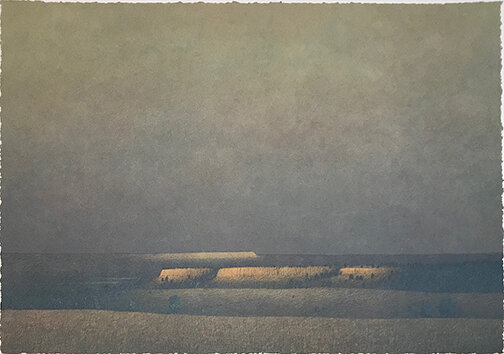
From the BBC series Words and Music ...
Twilight can gift us some of the most spectacular atmospheric displays, a riot of shifting colours that punctuate the end of a day, or announce the arrival of a new morning.The palate and quality of shadowless light has inspired artists, composers and authors from time immemorial and can induce feelings of awe, but also serenity.These dazzling displays are brought to us thanks to the conjunction of the Earth's orbital and atmospheric characteristics.Twilight is the time, at the end of a day, between the sun setting below the local horizon and before the beginning of the night.It is also the time between the end of the night and the sun rising above the local horizon, that marks the beginning of a new day.From a meteorological perspective, twilight is further subdivided into three categories: Civil twilight, Nautical twilight and Astronomical twilight. These are based on how far the sun is beneath the horizon, with light and colour draining from the skies as night approaches.
Happy Birthday, Stills

Stephen Stills was born on this date in 1945.
"Bluebird" with Buffalo Springfield Revisited ...
Clique.

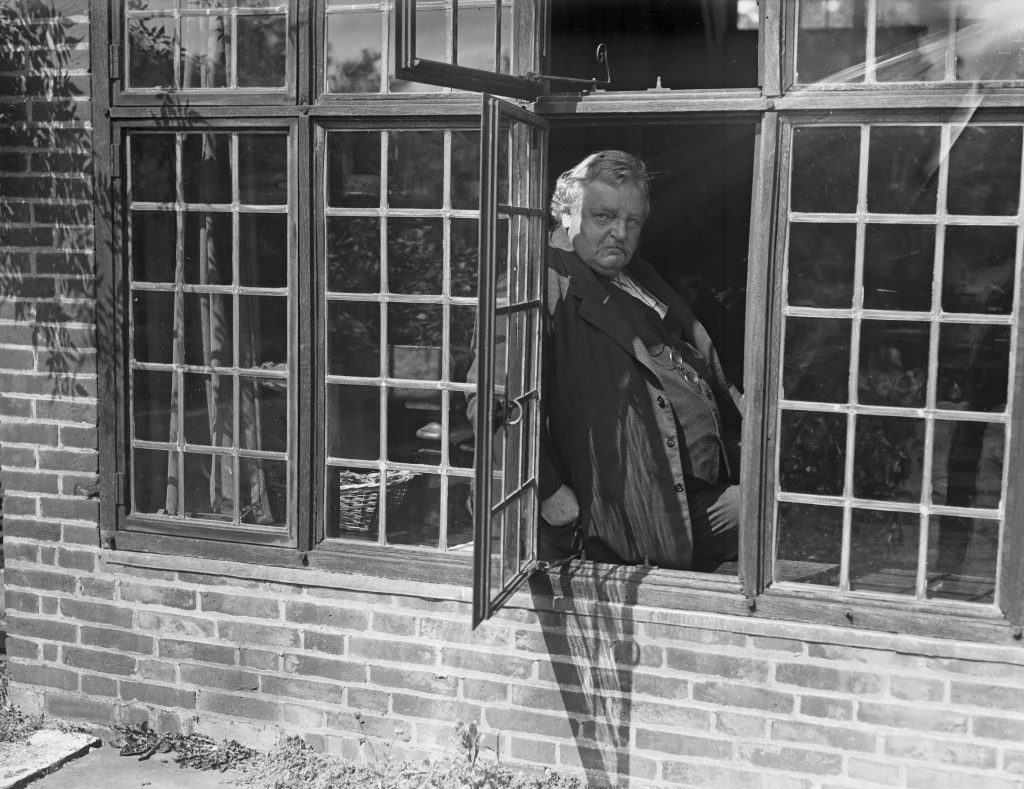
People say that specialists are inhuman; but that is unjust. People say an expert is not a man; but that is unkind and untrue. The real difficulty about the specialist or expert is much more singular and fascinating. The trouble with the expert is never that he is not a man; it is always that wherever he is not an expert he is too much of an ordinary man. Wherever he is not exceptionally learned he is quite casually ignorant. This is the great fallacy in the case of what is called the impartiality of men of science. If scientific men had no idea beyond their scientific work it might be all very well — that is to say, all very well for everybody except them. But the truth is that, beyond their scientific ideas, they have not the absence of ideas but the presence of the most vulgar and sentimental ideas that happen to be common to their social clique. If a biologist had no views on art and morals it might be all very well. The truth is that the biologist has all the wrong views of art and morals that happen to be going about in the smart set of his time.
G.K. Chesterton
Turned.
Monet, The Magpie, 1869
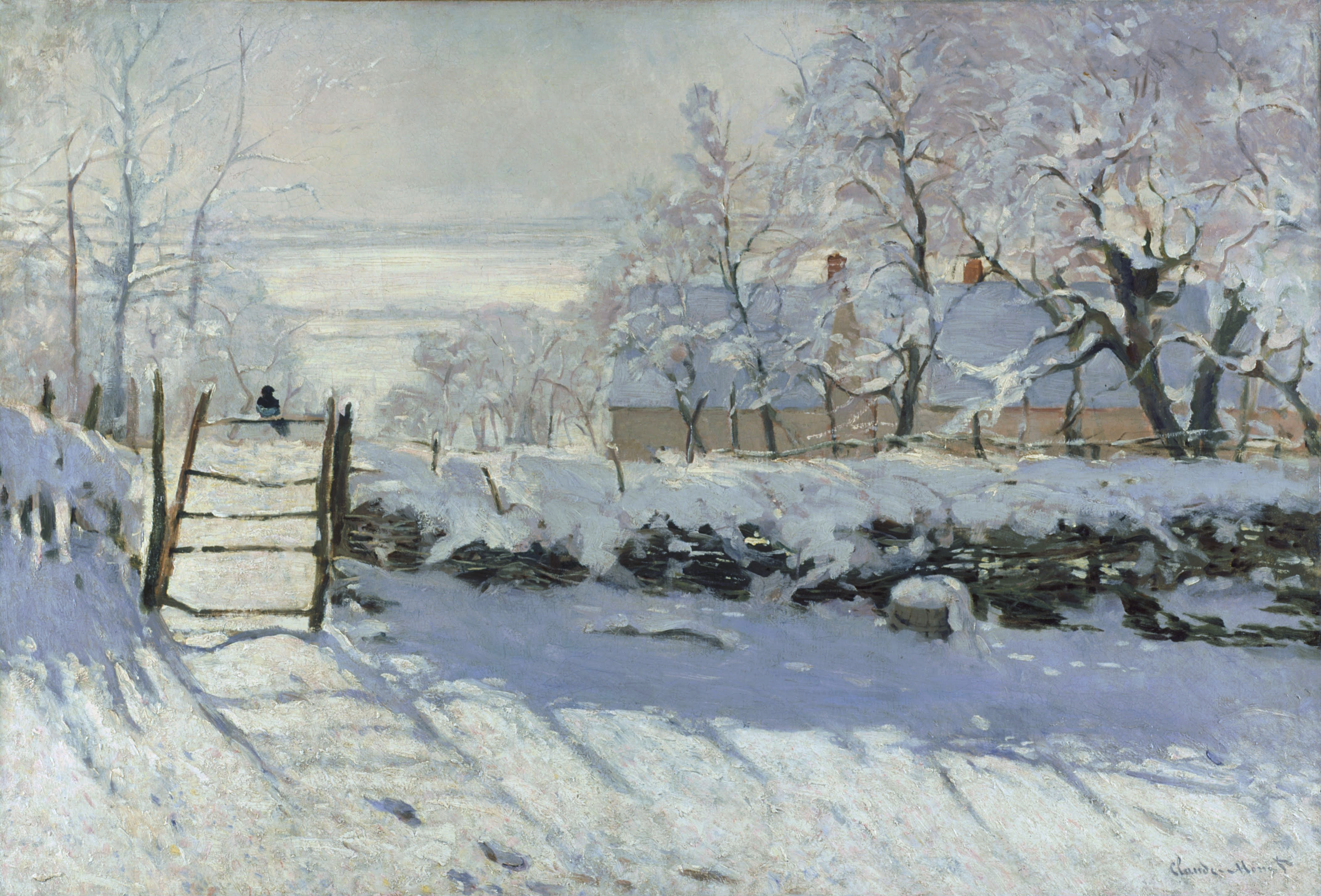
In winter
all the singing is in
the tops of the trees
where the wind-bird
with its white eyes
shoves and pushes
among the branches.
Like any of us
he wants to go to sleep,
but he's restless—
he has an idea,
and slowly it unfolds
from under his beating wings
as long as he stays awake.
But his big, round music, after all,
is too breathy to last.
So, it's over.
In the pine-crown
he makes his nest,
he's done all he can.
I don't know the name of this bird,
I only imagine his glittering beak
tucked in a white wing
while the clouds—
which he has summoned
from the north—
which he has taught
to be mild, and silent—
thicken, and begin to fall
into the world below
like stars, or the feathers
of some unimaginable bird
that loves us,
that is asleep now, and silent—
that has turned itself
into snow.
Mary Oliver
Happy Birthday, Tolkien
/cdn.vox-cdn.com/uploads/chorus_asset/file/19659451/3264291.jpg.jpg)
J.R.R. Tolkien was born on this day in 1892.
It is easy for the student to feel that with all his labour he is collecting only a few leaves, many of them now torn or decayed, from the countless foliage of the Tree of Tales, with which the Forest of Days is carpeted. It seems vain to add to the litter. Who can design a new leaf? The patterns from bud to unfolding, and the colours from spring to autumn were all discovered by men long ago. But that is not true. The seed of the tree can be replanted in almost any soil, even in one so smoke-ridden (as Lang said) as that of England. Spring is, of course, not really less beautiful because we have seen or heard of other like events: like events, never from world's beginning to world's end the same event. Each leaf, of oak and ash and thorn, is a unique embodiment of the pattern, and for some this very year may be the embodiment, the first ever seen and recognized, though oaks have put forth leaves for countless generations of men.
We do not, or need not, despair of drawing because all lines must be either curved or straight, nor of painting because there are only three "primary" colours. We may indeed be older now, in so far as we are heirs in enjoyment or in practice of many generations of ancestors in the arts. In this inheritance of wealth there may be a danger of boredom or of anxiety to be original, and that may lead to a distaste for fine drawing, delicate pattern, and "pretty" colours, or else to mere manipulation and over-elaboration of old material, clever and heartless. But the true road of escape from such weariness is not to be found in the willfully awkward, clumsy, or misshapen, not in making all things dark or unremittingly violent; nor in the mixing of colours on through subtlety to drabness, and the fantastical complication of shapes to the point of silliness and on towards delirium. Before we reach such states we need recovery. We should look at green again, and be startled anew (but not blinded) by blue and yellow and red. We should meet the centaur and the dragon, and then perhaps suddenly behold, like the ancient shepherds, sheep, and dogs, and horses – and wolves. This recovery fairy-stories help us to make. In that sense only a taste for them may make us, or keep us, childish.
J.R.R. Tolkien
02 January 2022

Compete.
Cook, Leaves of Grass, 1913
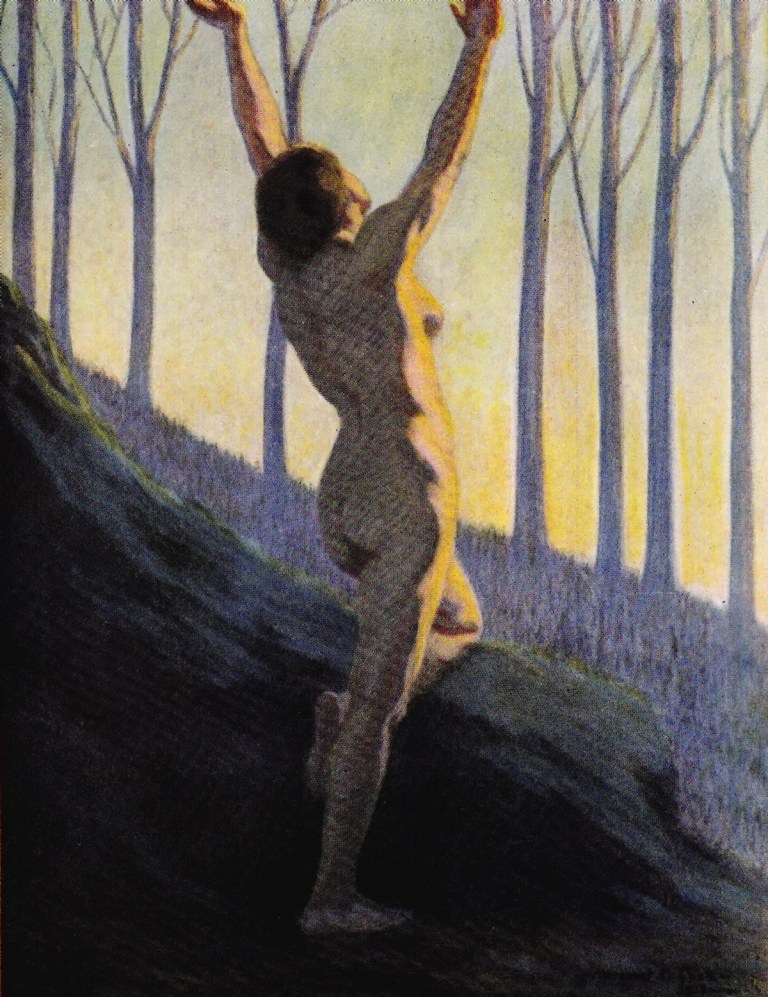
The known universe has one complete lover and that is the greatest poet. He consumes an eternal passion and is indifferent which chance happens and which possible contingency of fortune or misfortune and persuades daily and hourly his delicious pay. What balks or breaks others is fuel for his burning progress to contact and amorous joy.
Without effort and without exposing in the least how it is done, the greatest poet brings the spirit of any or all events and passions and scenes and persons some more and some less to bear on your individual character as you hear or read. To do this well is to compete with the laws that pursue and follow time.
Walt Whitman
Seeking.
Koppitz, Im Wiernerwald, 1910

SMELLING the SNOW
I’ve heard it said
there are those on such
close terms with night
they can smell the very light.
Not only does the moon,
they say, give off a scent
nothing like the sun’s,
but old moon smells
sweeter than slivered new.
Monks of old claimed sin
took the breath away, while
God was wild onion, lilac, pine.
I know a carpenter who
boasts he can sniff out a maple
in a woodlot of ash and oak.
A stalking cat knows
the unsinging sparrow
from the finch. This day
as it returns to Ohio, like
some feathery creature
seeking the very moon and tree
where it was born,
I can smell the snow,
which seems to me,
against the dark trees
moving in slow procession,
a few birds stark and silent,
an essence close to love.
But any old fool can smell love.
David Citino

Mind.
de Saedeleer, Winter Landscape in Etikhove, 1914
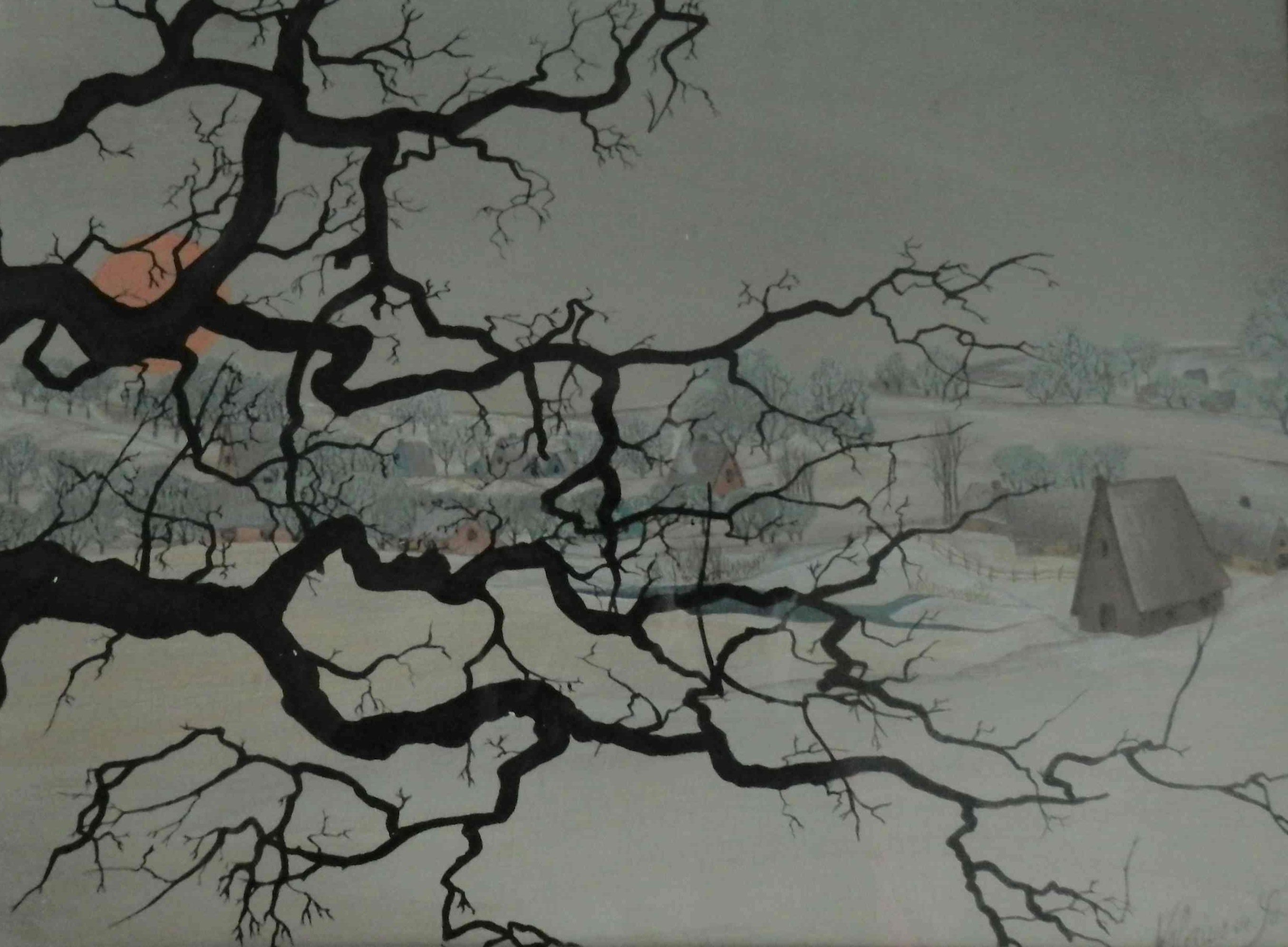
THE SNOW MAN
One must have a mind of winter
To regard the frost and the boughs
Of the pine-trees crusted with snow;
And have been cold a long time
To behold the junipers shagged with ice,
The spruces rough in the distant glitter
Of the January sun; and not to think
Of any misery in the sound of the wind,
In the sound of a few leaves,
Which is the sound of the land
Full of the same wind
That is blowing in the same bare place
For the listener, who listens in the snow,
And, nothing himself, beholds
Nothing that is not there and the nothing that is.
Wallace Stevens
01 January 2022
Benevolent.
Aldin, They Went Round the House, Playing Under the Windows, 1910

I was in a continual excitement from the varied scenes of whim and innocent gayety passing before me. It was inspiring to see wild-eyed frolic and warm-hearted hospitality breaking out from among the chills and glooms of winter, and old age throwing off his apathy and catching once more the freshness of youthful enjoyment. I felt also an interest in the scene from the consideration that these fleeting customs were posting fast into oblivion, and that this was perhaps the only family in England in which the whole of them was still punctiliously observed. There was a quaintness, too, mingled with all this revelry that gave it a peculiar zest: it was suited to the time and place; and as the old manor-house almost reeled with mirth and wassail, it seemed echoing back the joviality of long departed years.
Sir John Hawkins, speaking of the dance called the Pavon,from pavo, a peacock, says, “It is a grave and majesticdance; the method of dancing it anciently was by gentlemendressed with caps and swords, by those of the long robe intheir gowns, by the peers in their mantles, and by theladies in gowns with long trains, the motion whereof, indancing, resembled that of a peacock.”—History of Music.+ At the time of the first publication of this paper thepicture of an old-fashioned Christmas in the country waspronounced by some as out of date. The author had afterwardsan opportunity of witnessing almost all the customs abovedescribed, existing in unexpected vigor in the skirts ofDerbyshire and Yorkshire, where he passed the Christmasholidays. The reader will find some notice of them in theauthor’s account of his sojourn at Newstead Abbey.
But enough of Christmas and its gambols; it is time for me to pause in this garrulity. Methinks I hear the questions asked by my graver readers, “To what purpose is all this? how is the world to be made wiser by this talk?” Alas! is there not wisdom enough extant for the instruction of the world? And if not, are there not thousands of abler pens laboring for its improvement? It is so much pleasanter to please than to instruct—to play the companion rather than the preceptor.
What, after all, is the mite of wisdom that I could throw into the mass of knowledge! or how am I sure that my sagest deductions may be safe guides for the opinions of others? But in writing to amuse, if I fail the only evil is in my own disappointment. If, however, I can by any lucky chance, in these days of evil, rub out one wrinkle from the brow of care or beguile the heavy heart of one moment of sorrow; if I can now and then penetrate through the gathering film of misanthropy, prompt a benevolent view of human nature, and make my reader more in good-humor with his fellow-beings and himself—surely, surely, I shall not then have written entirely in vain.
From "Christmas Dinner", found in The Sketchbook of Geoffrey Crayon, by Washington Irving
Waltzes.
Herbert von Karajan conducts the Vienna Philharmonic's program of Strauss waltzes in its 1987 New Year Concert ...
Still.
Wyeth, N.C., Fox in Winter, 1935
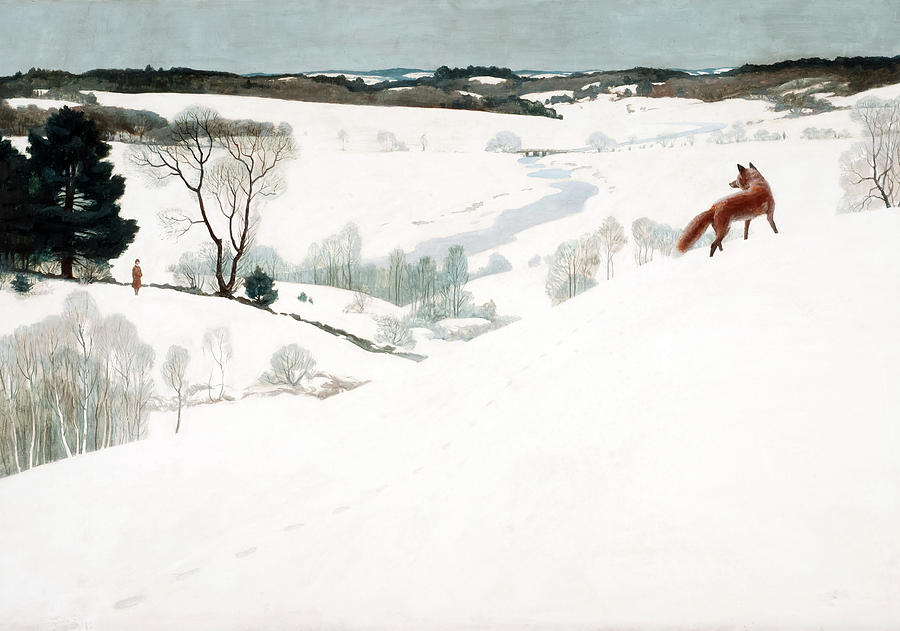
TO the NEW YEAR
With what stillness at last
you appear in the valley
your first sunlight reaching down
to touch the tips of a few
high leaves that do not stir
as though they had not noticed
and did not know you at all
then the voice of a dove calls
from far away in itself
to the hush of the morning
so this is the sound of you
here and now whether or not
anyone hears it this is
where we have come with our age
our knowledge such as it is
and our hopes such as they are
invisible before us
untouched and still possible
W.S. Merwin

Subscribe to:
Posts (Atom)