"I am not one who was born in the custody of wisdom. I am one who is fond of olden times and intense in quest of the sacred knowing of the ancients." Gustave Courbet
Showing posts with label military. Show all posts

17 September 2026

Happy Birthday, Major General Friedrich Wilhelm Augustus, Baron von Steuben

Earl, Major General Friedrich Wilhelm Augustus, Baron von Steuben, 1786
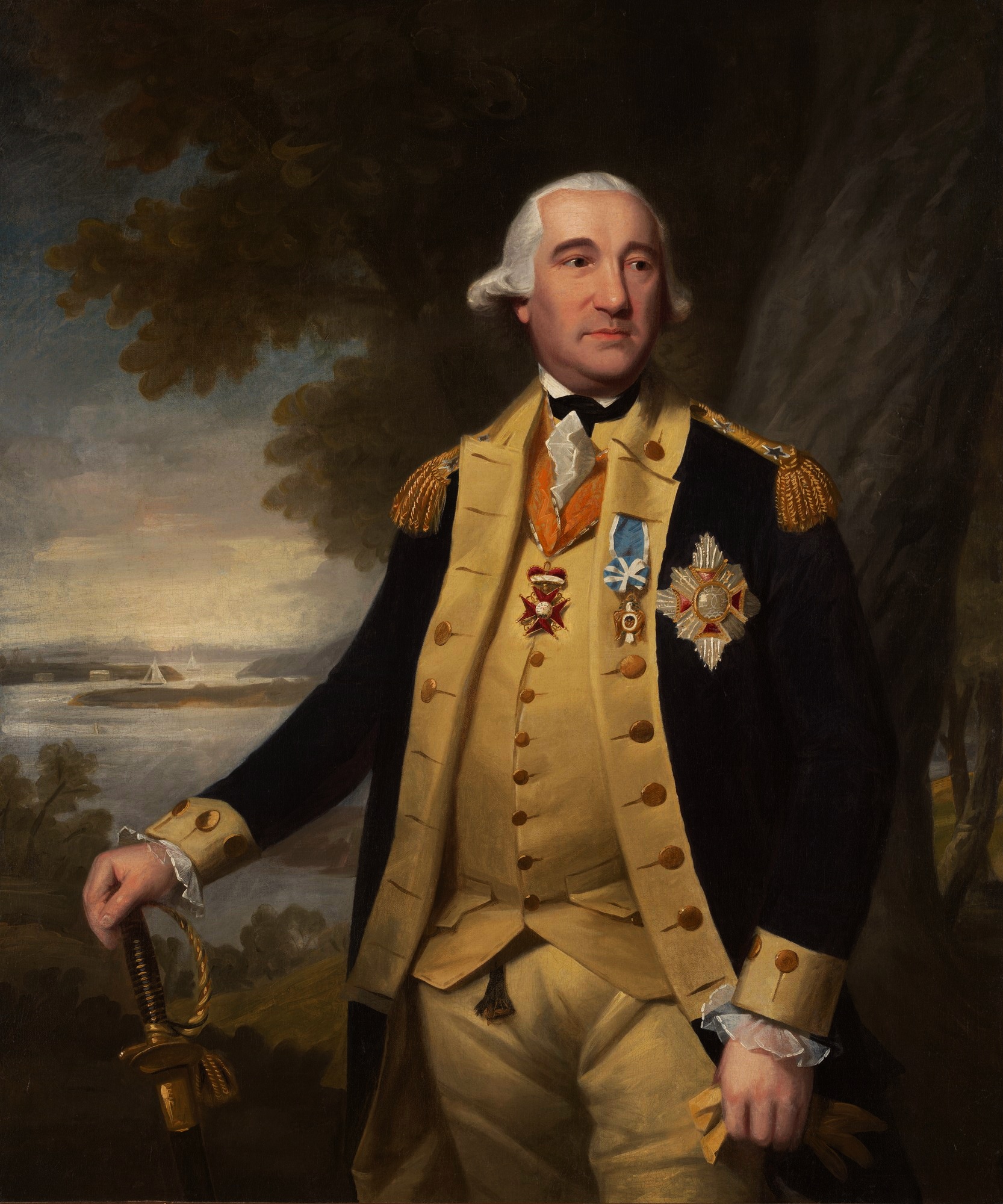

“Baron Steuben has arrived at camp,” Washington wrote soon after. “He appears to be much of a gentleman, and as far as I have had an opportunity of judging, a man of military knowledge and acquainted with the world.” Washington’s confidence in von Steuben grew quickly. Within two weeks, he made the baron acting inspector general and asked him to examine the Continental Army’s condition.

“What [Steuben] discovered was nothing less than appalling,” wrote Fleming in Washington’s Secret War. “He was confronting a wrecked army. A less courageous (or less bankrupt) man would have quit on the spot.” Unlike the American forces in New York, who had beaten the British at Saratoga in fall 1777, the army in Pennsylvania had suffered a series of defeats. When they lost the Battle of Brandywine in September 1777, the British had seized Philadelphia. Now—following common military practice of the era—they had camped for the winter. But Valley Forge, their winter quarters, was nearly as punishing as battle: hastily built huts, cruel temperatures, scarce food.

The baron found soldiers without uniforms, rusted muskets without bayonets, companies with men missing and unaccounted for. Short enlistments meant constant turnover and little order. Regiment sizes varied wildly. Different officers used different military drill manuals, leading to chaos when their units tried to work together. If the army had to fight on short notice, von Steuben warned Washington, he might find himself commanding one-third of the men he thought he had. The army had to get into better shape before fighting resumed in the spring.

So, von Steuben put the entire army through Prussian-style drills, starting with a model company of 100 men. He taught them how to reload their muskets quickly after firing, charge with a bayonet and march in compact columns instead of miles-long lines. Meanwhile, he wrote detailed lists of officers’ duties, giving them more responsibility than in English systems.

Soldiers gaped at the sight of a German nobleman, in a French-style black beaver hat, drilling poorly clothed troops. Though von Steuben raged and cursed in a garbled mixture of French, English, and German, his instructions and presence began to build morale. “If anything, the curses contributed to Steuben’s reputation as an exotic character who was good for a laugh now and then,” wrote Fleming.


"Building the Continental Army," HERE.

25 January 2026

Eternal.

Stuart, George Washington (The Constable-Hamilton Portrait), 1797

Thinking of civil-military relationships after the war, he urged his “virtuous fellow Citizens in the field” that they “should carry with them into civil Society the most conciliating dispositions; and that they should prove themselves not less virtuous and usefull as Citizens than they have been persevering and victorious as Soldiers.” The army began demobilizing, and British forces departed New York City at noon on 25 November. Washington was careful to let civilian authorities reclaim the city, not his army, although he rode in with the New York militia regiments alongside Governor Clinton.

After securing New York City, Washington focused on returning to civil life. On 19 December 1783, he arrived in Annapolis, where the Continental Congress was operating, and on 23 December 1783—eight years, six months, and five days after Congress granted him command of the army in Philadelphia—he surrendered his commission in front of Congress in Annapolis. In prepared remarks, Washington closed the loop on the civil-military relationship granted in his initial commission of June 1775. “The great events on which my resignation depended having at length taken place,” he remarked, “I have now the honor of offering my sincere Congratulations to Congress & of presenting myself before them to surrender into their hands the trust committed to me, and to claim the indulgence of retiring from the Service of my Country.” He then returned to Mount Vernon just in time for Christmas.

At that moment, he rejected becoming an American Caesar and instead chose to embody Cincinnatus. Educated like most of his generation on popularizations of ancient history, Washington had patterned his behavior on his understanding of Roman heroes. Joseph Addison’s 1713 play Cato: A Tragedy shaped Washington’s conception of himself as he took steps to model his behavior from the Roman leader who exemplified public virtue and liberty. Fabian served as his example for victory and Cincinnatus for his postwar life. Cincinnatus is famous for having picked up the sword when called to save his country in 458 BCE and laying it down again to return to the plough and the life of a yeoman farmer. He embodied the citizen-soldier ideal that influenced Enlightenment thinking on the matter.

Washington’s experience provides ample material for students of civil-military relations. His experience, on the one hand, suggests that civilians and citizen-soldiers are effective, that expertise in arms was unnecessary in a republic, and that the need for a professional officer corps was moot. Despite Washington’s argument for the contrary, his experience fueled advocates for a small military establishment ...

The “myth of Cincinnatus,” that valiant citizens will defend the country when called has informed how Americans have mobilized and prepared for war since the revolution.  Washington understood that citizen-soldier militias were limited, which informed his desire to develop a well-paid, professional standing army. This tension, however, lay at the base of contemporary notions of civilian control of the military and was something with which Washington struggled throughout the conflict.
Mackubin Thomas Owens at Hillsdale on civilian-military relations ...
All service members learn early in their training that they have an affirmative obligation to refuse unlawful orders. But service members do not get to refuse orders because they disagree with the administration’s policies. And this video, at the very least, carelessly blurs the line between these things in a way to undermine trust between civilian policymakers and the military and between seniors and subordinates within the military.

The video was clearly political in nature and is likely to foster confusion within the military ranks. The lawmakers failed to identify any specifics regarding unlawful orders. Nor did they offer examples of the kinds of orders soldiers should refuse to obey. Without context, the phrase “refuse illegal orders” blurs the line between legitimate legal instruction and political signaling. For a system that depends on discipline, clarity, and stability, ambiguity is a real problem.

The civil–military implications are serious. Civilian control of the military rests on a clear hierarchy. Congress passes laws, the executive directs operations, and the military follows lawful commands. By addressing the troops directly about which orders to follow, the participants in the video disrupt that structure. Military leaders, not legislators, are responsible for issuing guidance to troops on how to evaluate or report questionable orders. 
Governors have no right to seek and take what they please; by this, instead of being content with the station assigned them, that of honorable servants of the society, they would soon become absolute masters, despots, and tyrants. Hence, as a private man has a right to say what wages he will give in his private affairs, so has a community to determine what they will give and grant of their substance for the administration of public affairs. And, in both cases, more are ready to offer their service at the proposed and stipulated price than are able and willing to perform their duty.

In short, it is the greatest absurdity to suppose it in the power of one, or any number of men, at the entering into society, to renounce their essential natural rights, or the means of preserving those rights; when the grand end of civil government, from the very nature of its institution, is for the support, protection, and defence of those very rights; the principal of which, as is before observed, are Life, Liberty, and Property. If men, through fear, fraud, or mistake, should in terms renounce or give up any essential natural right, the eternal law of reason and the grand end of society would absolutely vacate such renunciation. The right to freedom being the gift of God Almighty, it is not in the power of man to alienate this gift and voluntarily become a slave.

02 July 2023

Ponder.


In great deeds, something abides. On great fields, something stays. Forms change and pass; bodies disappear; but spirits linger, to consecrate ground for the vision-place of souls  Generations that know us not and that we know not of, heart-drawn to see where and by whom great things were suffered and done for them, shall come to this deathless field, to ponder and dream; and lo! the shadow of a mighty presence shall wrap them in its bosom, and the power of the vision pass into their souls.

Joshua Lawrence Chamberlain, who directed the defense of Little Round Top during the battle of Gettysburg on this day in 1863

06 June 2023

Assured.


By the end of the day, the Allies had suffered major casualties and had failed to achieve many objectives, including seizing Caen. By the end of June 6, the Allies had suffered an estimated 10,000 casualties, including more than 4,400 dead.

That figure was roughly the same number of dead the U.S. military would suffer decades later during more than eight years of war in Iraq.


But the Germans had failed to push them off the beaches.


Nearly a year of bloody fighting lay ahead. But the Allied victory in Europe was assured.


CONNECT

Profoundly.

Capa, American forces arrive on Omaha Beach, 1944


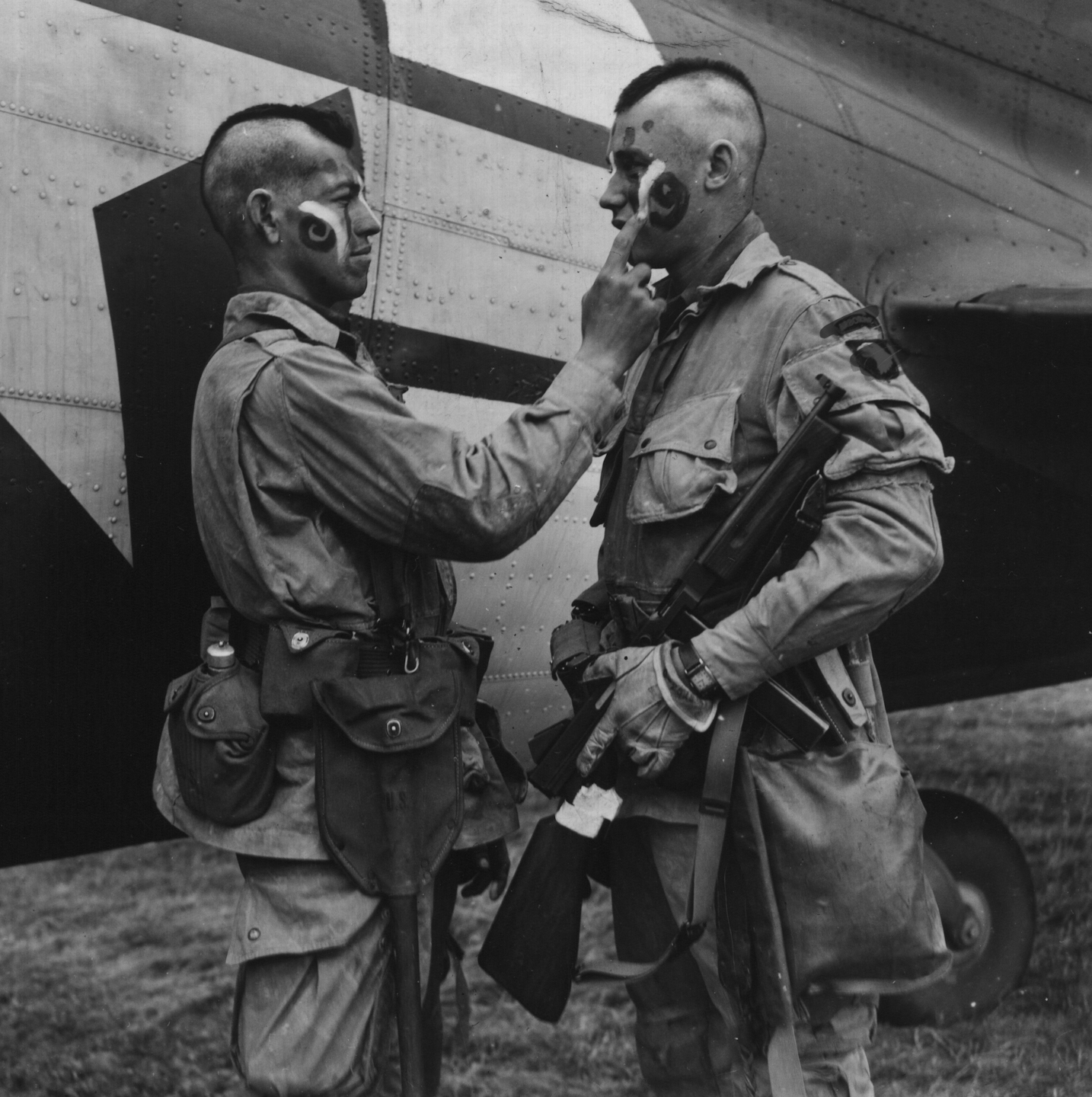
On this day in 1944, the D-Day invasion of Europe took place as Allied forces stormed the beaches of Normandy, France.
At the core, the American citizen soldiers knew the difference between right and wrong, and they didn't want to live in a world in which wrong prevailed. So they fought, and won, and we all of us, living and yet to be born, must be forever profoundly grateful.

Stephen Ambrose, from Citizen Soldiers: The U. S. Army from the Normandy Beaches to the Bulge to the Surrender of Germany

"D-Day Greatest Combined Operation In World's History" (1944) ...

05 June 2023

Great.


On this evening in 1944, General Dwight D. Eisenhower issued the following order ...
SUPREME HEADQUARTERS
ALLIED EXPEDITIONARY FORCE

Soldiers, Sailors, and Airmen of the Allied Expeditionary Force!

You are about to embark upon the Great Crusade, toward which we have striven these many months. The eyes of the world are upon you. The hope and prayers of liberty-loving people everywhere march with you. In company with our brave Allies and brothers-in-arms on other Fronts, you will bring about the destruction of the German war machine, the elimination of Nazi tyranny over the oppressed peoples of Europe, and security for ourselves in a free world.

Your task will not be an easy one. Your enemy is well trained, well equipped and battle-hardened. He will fight savagely.

But this is the year 1944! Much has happened since the Nazi triumphs of 1940-41. The United Nations have inflicted upon the Germans great defeats, in open battle, man-to-man. Our air offensive has seriously reduced their strength in the air and their capacity to wage war on the ground. Our Home Fronts have given us an overwhelming superiority in weapons and munitions of war, and placed at our disposal great reserves of trained fighting men. The tide has turned! The free men of the world are marching together to Victory!

I have full confidence in your courage, devotion to duty and skill in battle. We will accept nothing less than full Victory!

Good luck! And let us beseech the blessing of Almighty God upon this great and noble undertaking.

Dwight D. Eisenhower

29 May 2023

Keep.

Memory.


DECORATION DAY

Sleep, comrades, sleep and rest
  On this Field of the Grounded Arms,
Where foes no more molest,
  Nor sentry's shot alarms! 

Ye have slept on the ground before,
  And started to your feet
At the cannon's sudden roar,
  Or the drum's redoubling beat. 

But in this camp of Death
  No sound your slumber breaks;
Here is no fevered breath,
  No wound that bleeds and aches. 

All is repose and peace,
  Untrampled lies the sod;
The shouts of battle cease,
  It is the Truce of God! 

Rest, comrades, rest and sleep!
  The thoughts of men shall be
As sentinels to keep
  Your rest from danger free. 

Your silent tents of green
  We deck with fragrant flowers;
Yours has the suffering been,
  The memory shall be ours. 

Henry Wadsworth Longfellow

Honor.

06 May 2023

Salute.

Four thousand British military personnel perform the Royal Salute for the newly-crowned King and Queen ...

04 March 2023

Representative.


Headquarters 
Seventh United States Cavalry
Fort A. Lincoln, D. T.

April 10th, 1878
General Orders No. 7
  1. The horse known as "Comanche," being the only living representative of the bloody tragedy of the Little Bighorn, June 25th, 1876, his kind treatment and comfort shall be a matter of special pride and solicitude on the part of every member of the Seventh Cavalry to the end that his life be preserved to the utmost limit. Wounded and scarred as he is, his very existence speaks in terms more eloquent than words, of the desperate struggle against overwhelming numbers of the hopeless conflict and the heroic manner in which all went down on that fatal day.
  2. The commanding officer of Company I will see that a special and comfortable stable is fitted up for him, and he will not be ridden by any person whatsoever, under any circumstances, nor will he be put to any kind of work.
  3. Hereafter, upon all occasions of ceremony of mounted regimental formation, saddled, bridled, and draped in mourning, and led by a mounted trooper of Company I, will be paraded with the regiment.
By command of Col. Sturgis, E. A. Garlington
First Lieutenant and Adjutant
Seventh Cavalry

08 February 2023

Happy Birthday, Sherman


I confess, without shame, that I am sick and tired of fighting — its glory is all moonshine; even success the most brilliant is over dead and mangled bodies, with the anguish and lamentations of distant families, appealing to me for sons, husbands, and fathers.  It is only those who have never heard a shot, never heard the shriek and groans of the wounded and lacerated that cry aloud for more blood, more vengeance, more desolation.
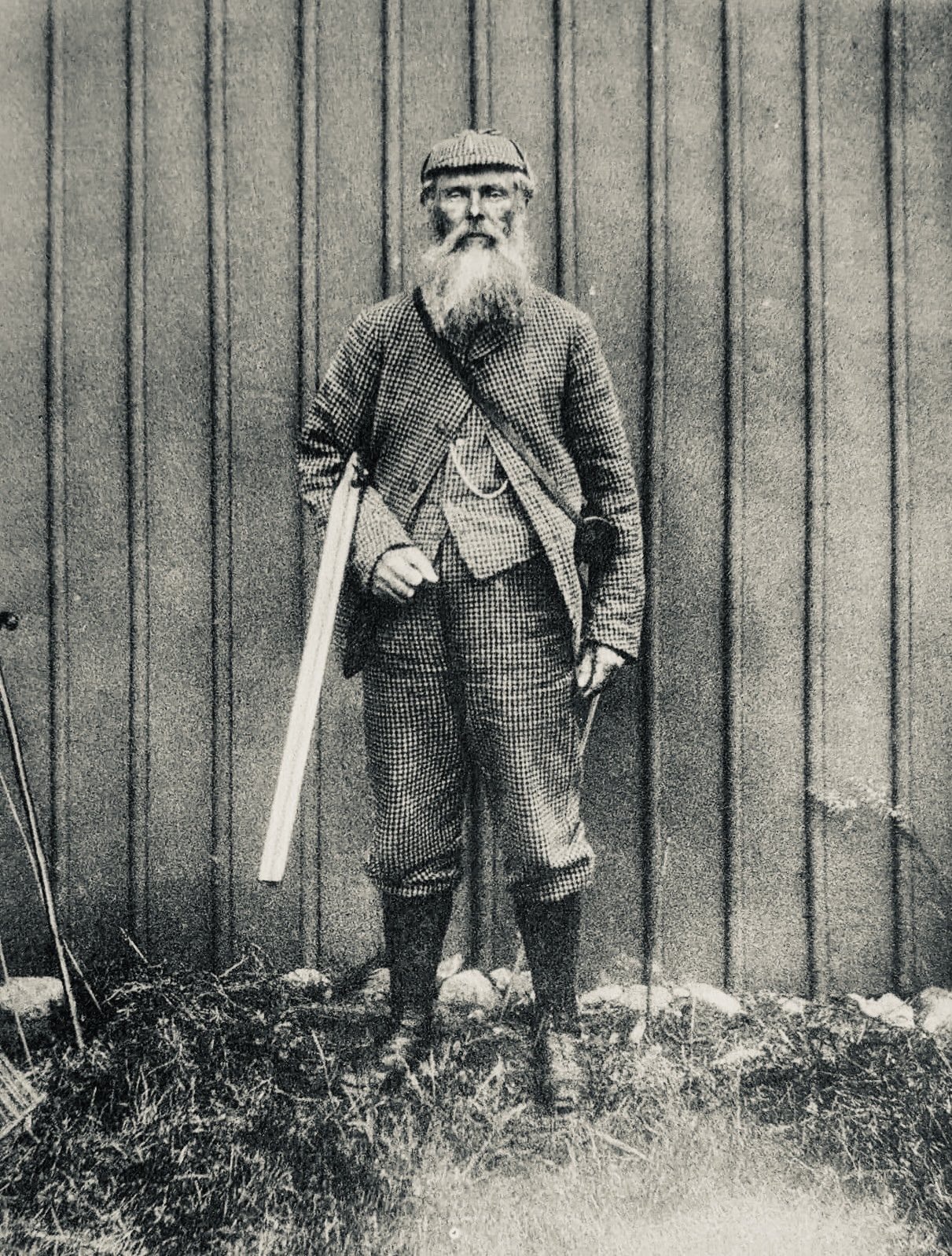
William Tecumseh Sherman, born on this day in 1820

04 December 2022

Happy Birthday, Boyington


Colonel Gregory "Pappy" Boyington was born on this day in 1912.

From Arlington National Cemetery ...
A World War II fighter ace and Medal of Honor recipient, Col. "Pappy" Boyington (1912-1988) shot down a total of 28 Japanese aircraft during his wartime service. Initially in Army ROTC, he joined the Marine Corps in 1935. In August 1941, however, he resigned his Marine commission in order to join the Flying Tigers (1st American Volunteer Group), organized by Gen. Claire Chennault to assist the Chinese Air Force. Boyington rejoined the Marines in 1942 and commanded the "Black Sheep" squadron (Marine Fighting Squadron 214) in the South Pacific. On January 3, 1944, he was shot down, captured and then held in a Japanese prison camp for 20 months. Boyington's 1958 memoir, "Baa Baa Black Sheep," inspired the 1970s television series of the same name. 

Medal of Honor citation:
"For extraordinary heroism and valiant devotion to duty as commanding officer of Marine Fighting Squadron 214 in action against enemy Japanese forces in the Central Solomons area from 12 September 1943 to 3 January 1944. Consistently outnumbered throughout successive hazardous flights over heavily defended hostile territory, Maj. Boyington struck at the enemy with daring and courageous persistence, leading his squadron into combat with devastating results to Japanese shipping, shore installations, and aerial forces. Resolute in his efforts to inflict crippling damage on the enemy, Maj. Boyington led a formation of 24 fighters over Kahili on 17 October and, persistently circling the airdrome where 60 hostile aircraft were grounded, boldly challenged the Japanese to send up planes. Under his brilliant command, our fighters shot down 20 enemy craft in the ensuing action without the loss of a single ship. A superb airman and determined fighter against overwhelming odds, Maj. Boyington personally destroyed 26 of the many Japanese planes shot down by his squadron and, by his forceful leadership, developed the combat readiness in his command which was a distinctive factor in the Allied aerial achievements in this vitally strategic area."

06 June 2022

Crusade.


On this date in 1944, the D-Day invasion of Europe took place during World War II as Allied forces stormed the beaches of Normandy, France.
SUPREME HEADQUARTERS
ALLIED EXPEDITIONARY FORCE

Soldiers, Sailors, and Airmen of the Allied Expeditionary Force!

You are about to embark upon the Great Crusade, toward which we have striven these many months. The eyes of the world are upon you. The hope and prayers of liberty-loving people everywhere march with you. In company with our brave Allies and brothers-in-arms on other Fronts, you will bring about the destruction of the German war machine, the elimination of Nazi tyranny over the oppressed peoples of Europe, and security for ourselves in a free world.

Your task will not be an easy one. Your enemy is will trained, well equipped and battle-hardened. He will fight savagely.

But this is the year 1944! Much has happened since the Nazi triumphs of 1940-41. The United Nations have inflicted upon the Germans great defeats, in open battle, man-to-man. Our air offensive has seriously reduced their strength in the air and their capacity to wage war on the ground. Our Home Fronts have given us an overwhelming superiority in weapons and munitions of war, and placed at our disposal great reserves of trained fighting men. The tide has turned! The free men of the world are marching together to Victory!

I have full confidence in your courage, devotion to duty and skill in battle. We will accept nothing less than full Victory!

Good luck! And let us beseech the blessing of Almighty God upon this great and noble undertaking.

General Dwight D. Eisenhower, Order of the Day

30 May 2022

Remind.


To remind all Americans of the importance of remembering those who sacrificed for 
their freedom and what it means to be an American.

To provide Americans throughout the world the opportunity to join this expression of gratitude, in an act of unity.

To make Memorial Day relevant, especially to younger Americans.

Still.


Winston Churchill said of those he knew in World War II they seemed to be the only young men who could laugh and fight at the same time. A great general in that war called them our secret weapon, "just the best darn kids in the world." Each died for a cause he considered more important than his own life. Well, they didn't volunteer to die; they volunteered to defend values for which men have always been willing to die if need be, the values which make up what we call civilization. And how they must have wished, in all the ugliness that war brings, that no other generation of young men to follow would have to undergo that same experience.

As we honor their memory today, let us pledge that their lives, their sacrifices, their valor shall be justified and remembered for as long as God gives life to this nation. And let us also pledge to do our utmost to carry out what must have been their wish: that no other generation of young men will every have to share their experiences and repeat their sacrifice.

Earlier today, with the music that we have heard and that of our National Anthem -- I can't claim to know the words of all the national anthems in the world, but I don't know of any other that ends with a question and a challenge as ours does: Does that flag still wave o'er the land of the free and the home of the brave?

President Ronald Reagan, from his Memorial Day address at Arlington National Cemetery, 31 May 1982

Honor.


I have no illusions about what little I can add now to the silent testimony of those who gave their lives willingly for their country. Words are even more feeble on this Memorial Day, for the sight before us is that of a strong and good nation that stands in silence and remembers those who were loved and who, in return, loved their countrymen enough to die for them.

Yet, we must try to honor them -- not for their sake alone, but for our own. And if words cannot repay the debt we owe these men, surely with our actions we must strive to keep faith with them and with the vision that led them to battle and to final sacrifice.

Our first obligation to them and ourselves is plain enough: the United States and the freedom for which it stands, the freedom for which they died, must endure and prosper. Their lives remind us that freedom is not bought cheaply. It has a cost; it imposes a burden. And just as they whom we commemorate were willing to sacrifice, so too must we -- in a less final, less heroic way -- be willing to give of ourselves ...

The willingness of some to give their lives so that others might live never fails to evoke in us a sense of wonder and mystery. One gets that feeling here on this hallowed ground, and I have known that same poignant feeling as I looked out across the rows of white crosses and Stars of David in Europe, in the Philippines, and the military cemeteries here in our own land. Each one marks the resting place of an American hero and, in my lifetime, the heroes of World War I, the Doughboys, the GI's of World War II or Korea or Vietnam. They span several generations of young Americans, all different and yet all alike, like the markers above their resting places, all alike in a truly meaningful way.

Winston Churchill said of those he knew in World War II they seemed to be the only young men who could laugh and fight at the same time. A great general in that war called them our secret weapon, "just the best darn kids in the world." Each died for a cause he considered more important than his own life. Well, they didn't volunteer to die; they volunteered to defend values for which men have always been willing to die if need be, the values which make up what we call civilization. And how they must have wished, in all the ugliness that war brings, that no other generation of young men to follow would have to undergo that same experience.

As we honor their memory, let us pledge that their lives, their sacrifices, their valor shall be justified and remembered for as long as God gives life to this nation. And let us also pledge to do our utmost to carry out what must have been their wish: that no other generation of young men will every have to share their experiences and repeat their sacrifice.

President Ronald Reagan, from his Memorial Day address at Arlington National Cemetery, 31 May 1982