Happy Friday!
13 May 2016


Happy birthday, Braque.
Braque, Houses at Estaque, 1908

To explain away the mystery of a great painting -- if such a
feat were possible -- would do irreparable harm. If there is no mystery, then
there is no poetry, the quality I value above all else in art.
Georges Braque

Behold.

This lost country composers do not actually remember, but
each of them remains all his life somehow attuned to it; he is wild with joy
when he is singing the airs of his native land, betrays it at times in his
thirst for fame, but then, in seeking fame, turns his back upon it, and it is
only when he despises it that he finds it when he utters, whatever the subject
with which he is dealing, that peculiar strain the monotony of which—for
whatever its subject it remains identical in itself—proves the permanence of
the elements that compose his soul. But is it not the fact then that from those
elements, all the real residuum which we are obliged to keep to ourselves,
which cannot be transmitted in talk, even by friend to friend, by master to
disciple, by lover to mistress, that ineffable something which makes a
difference in quality between what each of us has felt and what he is obliged
to leave behind at the threshold of the phrases in which he can communicate
with his fellows only by limiting himself to external points common to us all
and of no interest, art, the art of a Vinteuil like that of an Elstir, makes
the man himself apparent, rendering externally visible in the colours of the
spectrum that intimate composition of those worlds which we call individual
persons and which, without the aid of art, we should never know? A pair of
wings, a different mode of breathing, which would enable us to traverse
infinite space, would in no way help us, for, if we visited Mars or Venus
keeping the same senses, they would clothe in the same aspect as the things of
the earth everything that we should be capable of seeing. The only true
voyage of discovery, the only fountain of Eternal Youth, would be not to visit
strange lands but to possess other eyes, to behold the universe through the
eyes of another, of a hundred others, to behold the hundred universes that each
of them beholds, that each of them is; and this we can contrive with an Elstir,
with a Vinteuil; with men like these we do really fly from star to star.
Marcel Proust
12 May 2016
Intersecting.

Oh what a crush of People
Invisible, reborn
Make their way to into this garden
For their eternal rest
Invisible, reborn
Make their way to into this garden
For their eternal rest
Every step we take on earth
Brings us to a new world
Every foot supported
On a floating bridge
Brings us to a new world
Every foot supported
On a floating bridge
I know there is no straight road
No straight road in this world
Only a giant labyrinth
Of intersecting crossroads
No straight road in this world
Only a giant labyrinth
Of intersecting crossroads
And steadily our feet
Keep walking and creating
Like enormous fans
These roads in embryo
Keep walking and creating
Like enormous fans
These roads in embryo
Oh garden of white
Oh garden of all I am not
All I could
And should have been
I know there is no straight road
Oh garden of all I am not
All I could
And should have been
I know there is no straight road
No straight road in this world
Only a giant labyrinth
Of intersecting
Federico García Lorca
Only a giant labyrinth
Of intersecting
Federico García Lorca
Happy birthday, Rosetti.
Rosetti, Study for The Daydream, 1878


Dante Gabriel Rossetti was born on this day in 1828.
Conception, my boy, fundamental brain work, is what makes
all the difference in art.
Dante Gabriel Rossetti
Higher.

Dogen
11 May 2016
Bruce Molsky, "The Wreck of the Dandenong"
I dream of you
I dream of sleep
I dream of being warm
But through the night I have to sail
To brave this raging storm
To brave this raging storm
Happy birthday, Gérôme.
Gérôme, Pygmalion and Galatea, 1890

Jean-Léon Gérôme was born on this day in 1824.
Thank you, Dr. Richardson.
Ever.

You find yourself by losing yourself. By not thinking about
yourself all of the time. When I am in a slump with my writing, I'll go and
walk for a week. Walk and not see a human being. Something happens after four
or five days which is quite wonderful. It is an ancient thing. Your sense of
smell. Your hearing. They come back.
To live really a full life, you need to follow where it leads, in
defiance of all things conventional perhaps. And of course it has its price.
You have to know that going in. But the price you pay, in my opinion, is not
worth the time of day to think about. It is so important not to kneepad around
the world. You should never bow down to anything but those you love and
respect. Ever, for anything.
Doug Peacock
Thanks for pointing the way, Poetessa.
Doug Peacock
Thanks for pointing the way, Poetessa.
Away.
Alexander, Sailor's Prayer, 1923

THE STOLEN CHILD

THE STOLEN CHILD
Where dips the rocky highland
Of Sleuth Wood in the lake,
There lies a leafy island
Where flapping herons wake
The drowsy water rats;
There we've hid our faery vats,
Full of berrys
And of reddest stolen cherries.
Come away, O human child!
To the waters and the wild
With a faery, hand in hand,
For the world's more full of weeping than you can understand.
Where the wave of moonlight glosses
The dim gray sands with light,
Far off by furthest Rosses
We foot it all the night,
Weaving olden dances
Mingling hands and mingling glances
Till the moon has taken flight;
To and fro we leap
And chase the frothy bubbles,
While the world is full of troubles
And anxious in its sleep.
Come away, O human child!
To the waters and the wild
With a faery, hand in hand,
For the world's more full of weeping than you can understand.
Where the wandering water gushes
From the hills above Glen-Car,
In pools among the rushes
That scarce could bathe a star,
We seek for slumbering trout
And whispering in their ears
Give them unquiet dreams;
Leaning softly out
From ferns that drop their tears
Over the young streams.
Come away, O human child!
To the waters and the wild
With a faery, hand in hand,
For the world's more full of weeping than you can understand.
Away with us he's going,
The solemn-eyed:
He'll hear no more the lowing
Of the calves on the warm hillside
Or the kettle on the hob
Sing peace into his breast,
Or see the brown mice bob
Round and round the oatmeal chest.
For he comes, the human child,
To the waters and the wild
With a faery, hand in hand,
For the world's more full of weeping than he can understand.
W.B. Yeats
Understand.
If you read a poem and feel moved by it, but then find out
it was actually written by a computer, would you feel differently about the
experience? Would you think that the computer had expressed itself and been
creative, or would you feel like you had fallen for a cheap trick? In this
talk, writer Oscar Schwartz examines why we react so strongly to the idea of a
computer writing poetry — and how this reaction helps us understand what it
means to be human.
Seek.

The answer — and, in a sense, the tragedy of life — is that
we seek to understand the goal and not the man. We set up a goal which demands
of us certain things: and we do these things. We adjust to the demands of a
concept which CANNOT be valid. When you were young, let us say that you wanted
to be a fireman. I feel reasonably safe in saying that you no longer want to be
a fireman. Why? Because your perspective has changed. It’s not the fireman who
has changed, but you.
Hunter S. Thompson
Hunter S. Thompson
Connects.
Leonardo, Flora, 1506
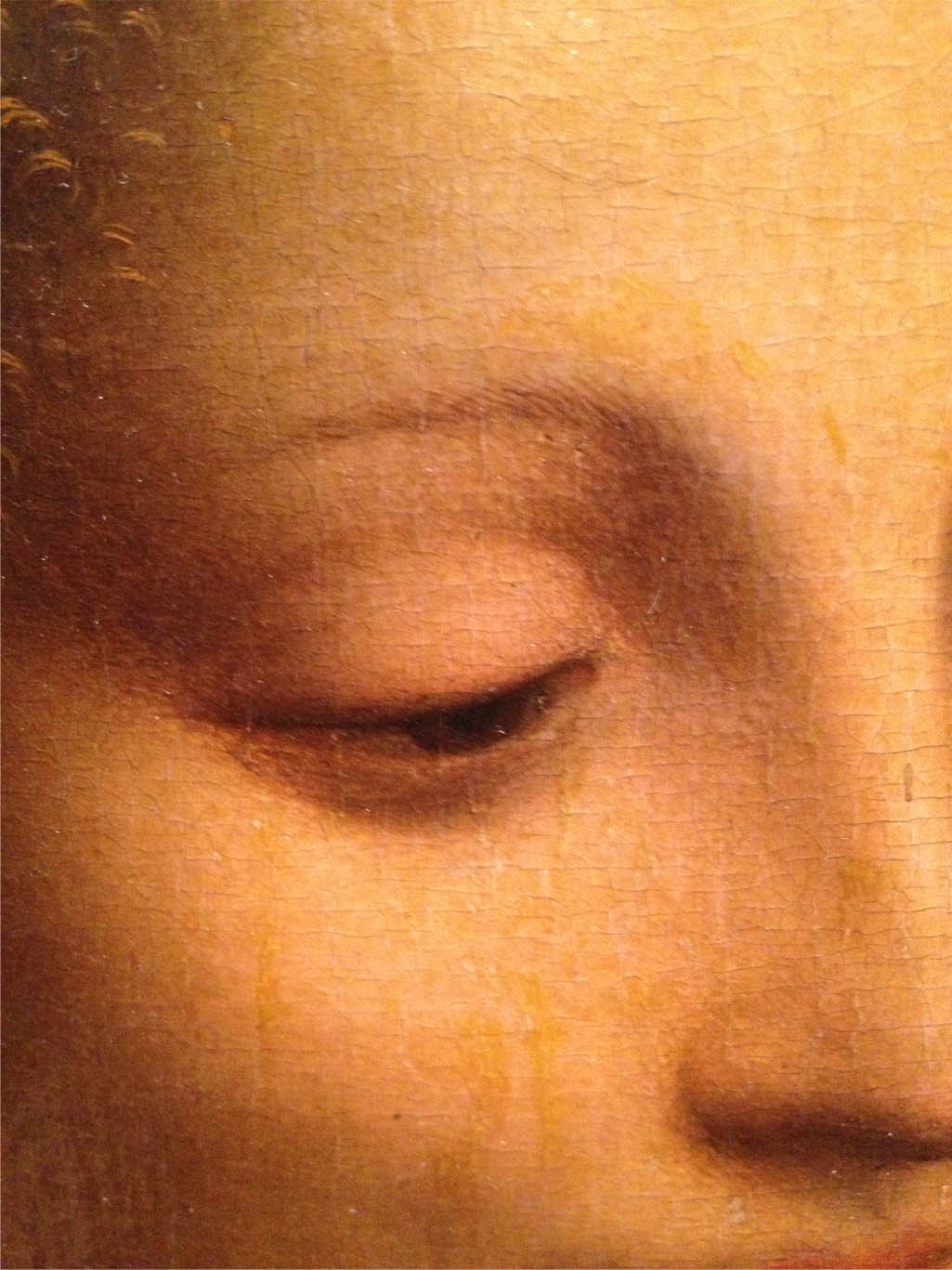
Learn how to see. Realize that everything connects to everything else.
Leonardo da Vinci

Kith.

Imagine time as a landscape: long hills of open afternoons, unfenced horizons of hours, the vast and immaculate freedom of time which, until so very recently, all of humanity knew. But foreshorten the horizons, fence the days, restrict the hours, erect deadline, add punctuality, alarm clocks and speed -- enclose the commons of time, in other word -- and people will feel pressured, even if they know how to live in a clock-driven world.
Every generation of children instinctively nests itself in
nature, no matter matter how tiny a scrap of it they can grasp. In a tale of
one city child, the poet Audre Lord remembers picking tufts of grass which
crept up through the paving stones in New York City and giving them as bouquets
to her mother. It is a tale of two necessities. The grass must grow, no matter
the concrete suppressing it. The child must find her way to the green, no
matter the edifice which would crush it.
The Maori word for placenta is the same word for land, so at birth the placenta is buried, put back in the mothering earth. A Hindu baby may receive the sun-showing rite surya-darsana when, with conch shells ringing to the skies, the child is introduced to the sun. A newborn child of the Tonga people 'meets' the moon, dipped in the ocean of Kosi Bay in KwaZulu-Natal. Among some of the tribes of India, the qualities of different aspects of nature are invoked to bless the child, so he or she may have the characteristics of earth, sky and wind, of birds and animals, right down to the earthworm. Nothing is unbelonging to the child.
"My oldest memories have the flavor of earth," wrote Frederico García Lorca. In the traditions of the Australian deserts, even from its time in the womb, the baby is catscradled in kinship with the world. Born into a sandy hollow, it is cleaned with sand and "smoked" by fire, and everything -- insects, birds, plants, and animals -- is named to the child, who is told not only what everything is called but also the relationship between the child and each creature. Story and song weave the child into the subtle world of the Dreaming, the nested knowledge of how the child belongs.
The threads which tie the child to the land include its conception site and the significant places of the Dreaming inherited through its parents. Introduced to creatures and land features as to relations, the child is folded into the land, wrapped into country, and the stories press on the child's mind like the making of felt -- soft and often -- storytelling until the feeling of the story of the country is impressed into the landscape of the child's mind.
That the juggernaut of ants belongs to a child, belligerently following its own trail. That the twitch of an animal's tail is part of a child's own tale or storyline, once and now again. That on the papery bark of a tree may be written the songline of a child's name. That the prickles of a thornbush may have dynamic relevance to conscience. That a damp hollow by the riverbank is not an occasional place to visit but a permanent part of who you are. This is the beginning of belonging, the beginning of love.
In the art and myth of Indigenous Australia, the Ancestors seeded the country with its children, so the shimmering, pouring, circling, wheeling, spinning land is lit up with them, cartwheeling into life.
Land can make someone who they are, can create their psyche, giving them fragments of themselves. On losing this, Indigenous Tasmanian Errol West writes: "There is no one to teach me the songs that bring the Moon bird, the fish or any other thing that makes me what I am." Shatter the relation to land and you shatter personalities like a smashed wing-mirror kicked into the dust.
From song, from dream, from elements of earth and water,
spirit-children are immanent in the land. They are left there by the Ancestors
of the Dreaming, who sang their way across the land, leaving an imprint of
music like an aural footstep. And sometimes a woman who has already physically
conceived a child chances to step in that same footstep, and, if she does, part
of the song and the spirit-child leap up into her so she feels a quickening,
sharp as an intake of breath at a kick within, sweet as a night surprised by
song. Sometimes it is the father who, seeing something unusual – a particularly
large fish or an animal behaving strangely – may know it as an indication of a
spirit-child. Or a man walking by a lake may find a spirit-child jumping into
his mind, which he will send in a dream to his wife, inseminating the
spirit-child within her. Then the Lawmen, the knowers of the songline which the
father or mother was on, can tell which stanzas of the song belong to that
child, its conception totem and, in that sinuous reflexivity of belonging, its
quintessential home.
To be born is, in Latin, nasci, and the word is related
to natura, so birth, nature, the laws of nature and the idea of an essence
are related. It is as if language itself has embedded birth in the natural
world. In the Amazon, people say childbirth should always take place in the
forest-gardens so the condensed energy of the plants can nourish the child. In New
Guinea, future generations are called "our children who are still in the soil" and when I was in West Papua, the western half of the island, I was told that
in the Dani language the expression for digging potatoes is the same as that
for giving birth to a child. Women say they can sometimes hear the unearthed
potatoes, which are always handled gently, calling out to them, the land
singing things into being to be mothered into the world.
Legends of childhood across the world suggest whole
landscapes lit with incipience. Everywhere is potential, beginningness. It may
be the inheld energy of an acorn or the liquid and endless possibilities of
water; it may be the fattening of a potato in the secret earth or the leaping
of a salmon which is the child Taliesin – in whatever form it takes, the land
itself is kindling children. In Indigenous Australian culture, there is a
common idea that the land is mentor, teacher and parent to a child. People talk
of being "grown up by" their land; their country as kin.
So do English-speakers – without quite realizing it. A child
may be looked after by its "kith and kin," we say, as if both terms meant
family or relations. Not so. "Kith" is from the Old English cydˉdˉ, which
can mean kinship but which in this phrase means native country – one’s home
outside the house – but no one I have yet met has known that meaning. This
sense of belonging has nothing whatsoever to do with a nation state or
political homeland, but rather with one’s immediate locale, one’s square mile,
the first landscape which we know as children. W. H. Auden wrote of this as "Amor Loci," the love of his childhood landscape. Kith kindles the kinship
which children so easily feel for the natural world and without that kinship,
nature also loses out, bereft of the children who grow up to protect it.
Jay Griffiths, from A Country Called Childhood: Children and the Exuberant World
Equal.
Leonardo, Tree Branching, 1515

Leonardo da Vinci
CONNECT
10 May 2016
Dare.

From one of the draws, out of a mountain
across plains heavy with grass or dry
bleached and cracked by sun
He came
rifle easy in his hand, a hunting dogtrot
in his heart, brain singing with the hunt
the need for a kill
Old mountain men, born
and raised for the power of their backs and arms
valuing themselves little past those physical
strengths, and what survival finally cost them
when the necessities, time disappeared
with the game
Old men sitting on porches or scratching out
gardens, their blue black brown green eyes
cutting out a trail that now only hawks
dare follow
Out of the North come the snows
falling on storebought windows. Old men get
laid into frozen earth, their big hands
holding scars like lilies the coming Springs
may never bear again . . . . . . .
Keith Wilson
Beyond.
Weston, The Ascent of Attic Angles, 1921

Rainer Maria Rilke
To let each impression and each embryo of a feeling come to
completion, entirely in itself, in the dark, in the unsayable, the unconscious,
beyond the reach of one's own understanding, and with deep humility and
patience to wait for the hour when a new clarity is born: this alone is what it
means to live as an artist.
Rainer Maria Rilke
Landscapes.
Grant, Casa Blanca, Canyon de Chelly National Monument, 1940


Landscapes for the People shares the story of George
Alexander Grant, first staff, and later first chief, photographer of the
National Park Service. During his 25 year career (1922, 1929-54), Grant
traveled over 140,000 miles and produced more than 30,000 images for the Park
Service. Millions of people saw his photographs in magazines, newspaper
articles, museum exhibits, and park materials, but few outside the agency ever
knew his name as nearly all of his photographs were credited, simply,
"National Park Service."
"Johnny's Garden"
There's a place I can get to
Where I'm safe from the city blues
Where I'm safe from the city blues
Crosby, Stills, Nash, & Young, 1974 ...
Dreaming.

My soul is impatient with itself, as with a bothersome child; its restlessness keeps growing and is forever the same. Everything interests me, but nothing holds me. I attend to everything, dreaming all the while.
Fernando Pessoa
Boundless.

ON HOUSES
Build of your imaginings a bower in the wilderness ere you
build a house within the city walls.
For even as you have home-comings in your twilight, so has the wanderer in you, the ever distant and alone.
Your house is your larger body.
It grows in the sun and sleeps in the stillness of the night; and it is not dreamless. Does not your house dream? and dreaming, leave the city for grove or hill-top?
Would that I could gather your houses into my hand, and like a sower scatter them in forest and meadow.
Would the valleys were your streets, and the green paths your alleys, that you might seek one another through vineyards, and come with the fragrance of the earth in your garments.
But these things are not yet to be.
In their fear your forefathers gathered you too near together. And that fear shall endure a little longer. A little longer shall your city walls separate your hearths from your fields.
And tell me, people of OrphaIese, what have you in these houses? And what is it you guard with fastened doors?
Have you peace, the quiet urge that reveals your power?
Have you remembrances, the glimmering arches that span the summits of the mind?
Have you beauty, that leads the heart from things fashioned of wood and stone to the holy mountain?
Tell me, have you these in your houses?
Or have you only comfort, and the lust for comfort, that stealthy thing that enters the house a guest, and then becomes a host and then a master?
Ay, and it becomes a tamer, and with hook and scourge makes puppets of your
larger desires.
Though its hands are silken, its heart is of iron.
It lulls you to sleep only to stand by your bed and jeer at the dignity of the flesh.
It makes mock of your sound senses, and lays them in thistledown like fragile vessels.
Verily the lust for comfort murders the passion of the soul, and then walks grinning in the funeral.
But you, children of space, you restless in rest, you shall not be trapped nor tamed.
Your house shall be not an anchor but a mast.
It shall not be a glistening film that covers a wound, but an eyelid that guards the eye.
You shall not fold your wings that you may pass through doors, nor bend your heads that they strike not against a ceiling, nor fear to breathe lest walls should crack and fall down.
You shall not dwell in tombs made by the dead for the living.
And though of magnificence and splendour, your house shall not hold your secret nor shelter your longing.
For that which is boundless in you abides in the mansion of the sky, whose door is the morning mist, and whose windows are the songs and the silences of night.
Kahlil Gibran
Baseball.
The one constant through all the years, Ray, has been
baseball. America has rolled by like an army of steamrollers. It's been erased
like a blackboard, rebuilt, and erased again. But baseball has marked the time.
This field, this game, is a part of our past, Ray. It reminds us of all that
once was good, and it could be again. Oh, people will come, Ray. People will
most definitely come.
Spaces.
Fiske, Couple on Overhanging Rock at Glacier Point, Yosemite, 1893

Let there be spaces in your togetherness.
And let the wind of the heavens dance between you.
Kahlil Gibran
Listen.
we come and go by the flares
of campfires, full
of ghosts with huge wounded hearts
John Haines
The snow here is
not deep, yet I imagine,
below the surface, that
generations of tiny foxes
are frozen to their
delicate skeletons.
Their fine bones have
partially turned to emeralds.
Their silver teeth glisten
in the arctic night. On
the wind come the
old voices, warning whales
of the dead. I too
stop and listen. My fingers
are cracked and almost
numb. Then the old ghosts
rise from the ice
like the great gray birds.
Their eyes empty,
they carry their cold tales
to the frightened cities
of the south.
Alan Soldofsky
Spirit.

Why are so many children in Euro-American cultures
unhappy? Why is it that children
in many traditional cultures seem happier, fluent in their child-nature? Nature is at the core of the riddle: I
began to look for the nature of childhood, whose quintessence is inextricable
from nature itself. I was
interested in how children belong, needing their kith, their local acre, as
they need their kin. An entire
history of childhood is in that one word “kith,” which is now used as if it
means only an extended family, whereas in the phrase “kith and kin,” “kith”
originally meant country, home, one’s land. Childhood has not only lost it’s country but the word for it
too: a country called childhood.
How has childhood become so unnatural? Why does the dominant culture treat
young humans in ways which would be illegal if applied to young dogs? Born to burrow and nest in nature,
children are now exiled from it.
They are enclosed indoors, caged and shut out of the green and vivid
world, in ways unthinkable a generation ago. Bit by bit a pattern came clear – children’s lives have been
subject to intolerable enclosure for the profit of others.
The riddle took me to that other natural world: human
nature, a term so complex, so simple and so wise. Human nature in childhood asks for freedom and
closeness. A child’s mind is
constellated with animals as the nightsky is with stars. Child-nature salutes the gods of play
and pays homage to wild time. It
needs autonomy and self-will. The
riddle asked: who owns a child, anyway?
Do children naturally create their own tribes? It is in the nature of the child to want to learn, yet
society has historically contrived a school system that is half factory, half
prison, and too easily ignores the very education which children crave.
Then the riddle took me further in, to the spirit of
childhood, its sense of quest; the importance of woodlands for the psyche; the
faerie realm of metaphor; the secret world of a child’s soul where the stories
of childhood are whistled with the deft and fragile panache of poetry. Throughout, I had a hunch that
Romanticism reflected the nature of childhood not as a period in cultural
history but as a perennial truth, because children are themselves the first
Romantics.
This book draws on my experience of children’s lives among indigenous cultures of the Arctic, West Papua, Australia, North and South America and Northern Europe, and touches on the history of childhood in mainland Europe and Scandinavia, as well as the intriguing psychodrama of childhood played out when the Native American philosophy of childhood met Settler philosophy. Behind all of these, though, is the spirit of childhood itself, whose imagination knows no borders.
Jay Griffiths, from “The Riddle,” the introduction to ACountry Called Childhood: Children and the Exuberant World
Transcontinental.
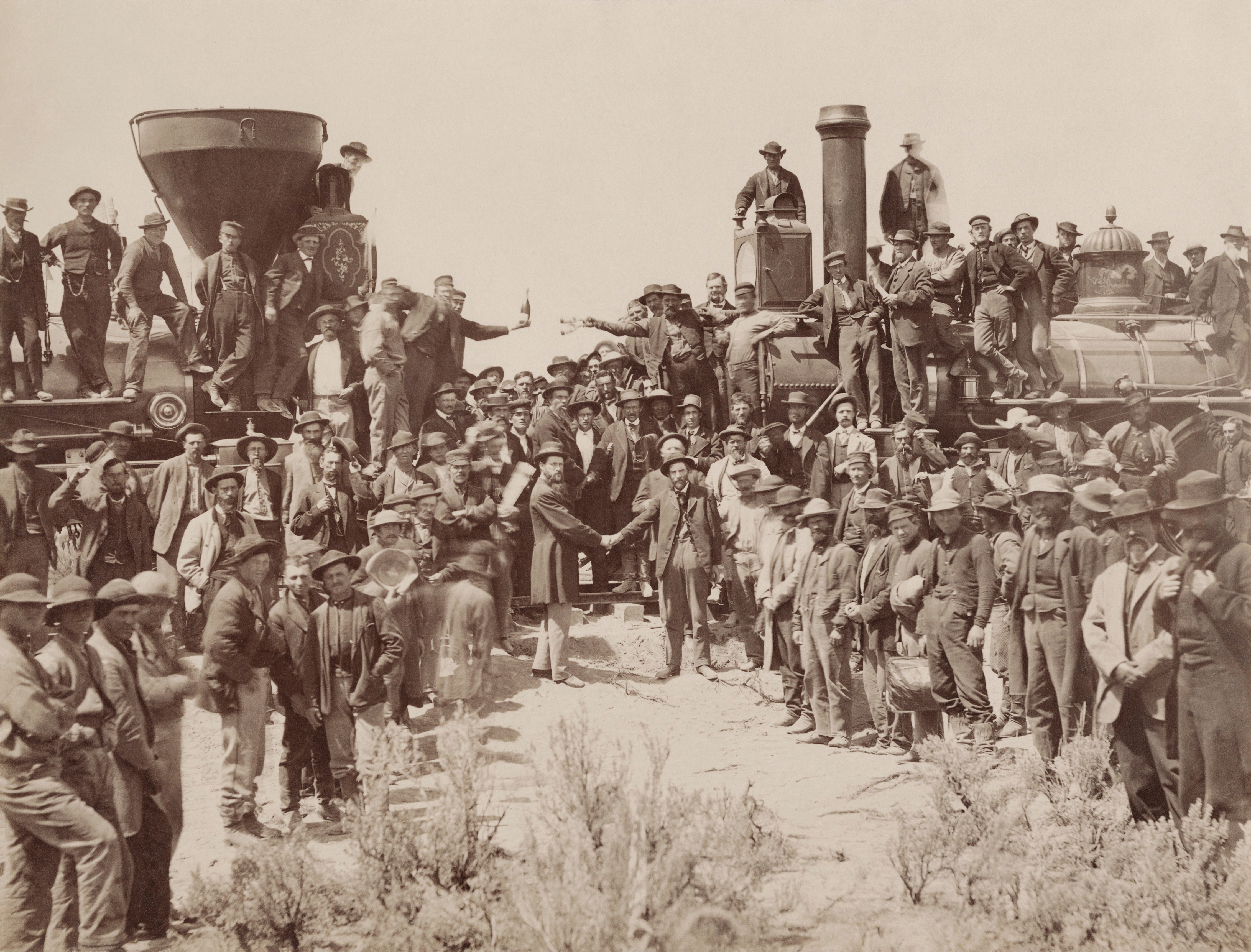
American Experience: The Transcontinental Railroad ...

09 May 2016
Happy birthday, Barrie.
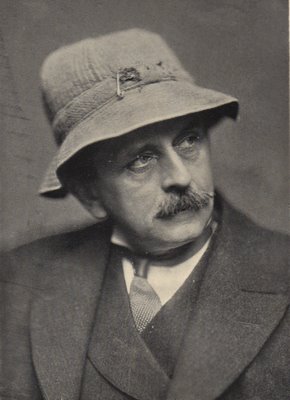
J.M. Barrie was born on this day in 1860.
The life of every man is a diary in which he means to write one story, and writes another; his humblest hour is when he compares the volume as it is with what he vowed to make it.
J.M. Barrie

02 May 2016
Longing.
Remington, Indians around Camp Fire, 1908

That night the secret societies held meetings, the Foxes, the Warclubs, the Big-dogs, the Muddy-hands, the Fighting-bulls, and others. Bright fires blazed and crackled among the pines, and drums were going all night long. I wished with all my heart that I might belong to one of these secret societies. I thought most of the Foxes, and I looked with longing eyes at their firelit lodge, where men spoke of things I did not know. But I was yet only a boy.
Colonel Richard Irving Dodge, Our Wild Indians: Thirty-Three Years Personal Experience

Epiphanies.
Botticelli, The Birth of Venus (detail), 1485

The beauty of chaos is that beyond a certain point we cannot
predict things for the pure and lovely reason that they cannot be predicted. Chaos gives us mystery, and mystery gives us wonder – those little epiphanies
when people find what they didn’t even know they were looking for. Don’t tell
me where the next good camping spot is and I won’t sing for you the song of the
hermit thrush.
Kim Heacox
01 May 2016
Happy birthday, Addison.
Kneller, Joseph Addison, 1712

DIVINE ODE.
I.
The spacious firmament on high,
With all the blue æthereal sky,
And spangled heavens, a shining frame,
Their great Original proclaim:
Th' unwearied sun from day to day,
Does his Creator's pow'r display,
And publishes to every land
The work of an Almighty hand.
The spacious firmament on high,
With all the blue æthereal sky,
And spangled heavens, a shining frame,
Their great Original proclaim:
Th' unwearied sun from day to day,
Does his Creator's pow'r display,
And publishes to every land
The work of an Almighty hand.
II.
Soon as the ev'ning shades prevail,
The moon takes up the wond'rous tale,
And nightly to the list'ning earth,
Repeats the story of her birth:
Whilst all the stars that round her burn,
And all the planets in their turn,
Confirm the tidings as they roll,
And spread the truth from pole to pole.
Soon as the ev'ning shades prevail,
The moon takes up the wond'rous tale,
And nightly to the list'ning earth,
Repeats the story of her birth:
Whilst all the stars that round her burn,
And all the planets in their turn,
Confirm the tidings as they roll,
And spread the truth from pole to pole.
III.
What though in solemn silence, all
Move round the dark terrestrial ball?
What though, nor real voice nor sound
Amid their radiant orbs be found?
In reason's ear they all rejoice,
And utter forth a glorious voice,
For ever singing as they shine,
The hand that made us is divine.
What though in solemn silence, all
Move round the dark terrestrial ball?
What though, nor real voice nor sound
Amid their radiant orbs be found?
In reason's ear they all rejoice,
And utter forth a glorious voice,
For ever singing as they shine,
The hand that made us is divine.
Joseph Addison
Songlines.

Robert MacFarlane
Inside.

Go inside a stone
That would be my way.
Let somebody else become a dove
Or gnash with a tiger's tooth.
I am happy to be a stone
From the outside the stone is a riddle:
No one knows how to answer it.
Yet within, it must be cool and quiet
Even though a cow steps on it full weight,
Even though a child throws it in the river;
The stone sinks, slow, unperturbed
To the river bottom
Where the fishes come to knock on it
And listen.
I have seen sparks fly out
When two stones are rubbed,
So perhaps it is not dark inside after all;
Perhaps there is a moon shining
From somewhere, as though behind a hill -
Just enough light to make out
The strange writings, the star-charts
On the inner walls.
On the inner walls.
Charles Simic
Conscientiousness.

Research is pointing to conscientiousness as the
one-trait-to-rule-them-all in terms of future success, both career-wise and
personal.
“It would actually be nice if there were some negative
things that went along with conscientiousness,” Roberts told me. “But at this point
it’s emerging as one of the primary dimensions of successful functioning across
the lifespan. It really goes cradle to grave in terms of how people do."
What is it? Basically, it’s being “efficient,
organized, neat, and systematic”: Conscientiousness is the state of being
thorough, careful, or vigilant; it implies a desire to do a task well.
Grit.

Compared with what we ought to be, we are only half awake. Our
fires are damped, our drafts are checked. We are making use of only
a small part of our possible mental resources. . .men the world over
possess amounts of resource, which only exceptional individuals push
to their extremes of use.
William James
Leaving a high-flying job in consulting, Angela Lee
Duckworth took a job teaching math to seventh graders in a New York public
school. She quickly realized that IQ wasn't the only thing separating the
successful students from those who struggled. Here, she explains her theory of
"grit" as a predictor of success.
Subscribe to:
Posts (Atom)


































































































































