Showing posts with label Peacock. Show all posts
Showing posts with label Peacock. Show all posts
06 December 2025


11 April 2022
Readiest.
Wyeth, April Wind, 1954

The SONG of the FOUR WINDS
Wind from the north: the young spring day
Is pleasant on the sunny mead;
Tho' merry harps at evening play;
The dance gay youths and maidens lead:
The thrush makes chorus from the thorn:
The mighty drinker fills his horn.
Wind from the east: the shore is still;
The mountain-clouds fly tow'rds the sea;
The ice is on the winter-rill;
The great hall fire is blazing free:
The prince's circling feast is spread:
Drink fills with fumes the brainless head.
Wind from the south: in summer shade
'Tis sweet to hear the loud harp ring;
Sweet is the step of comely maid,
Who to the bard a cup doth bring:
The black crow flies where carrion lies:
Where pignuts lurk, the swine will work.
Wind from the west: the autumnal deep
Rolls on the shore its billowy pride:
He, who the rampart's watch must keep,
Will mark with awe the rising tide:
The high springtide, that bursts its mound,
May roll o'er miles of level ground.
Wind from the west: the mighty wave
Of ocean bounds o'er rock and sand;
The foaming surges roar and rave
Against the bulwarks of the land:
When waves are rough, and winds are high,
Good is the land that's high and dry.
Wind from the west: the storm-clouds rise;
The breakers rave; the whirlblasts roar;
The mingled rage of the seas and skies
Bursts on the low and lonely shore:
When safety's far, and danger nigh,
Swift feet the readiest aid supply.
Wind from the west---
Thomas Love Peacock
25 June 2019
Grace.
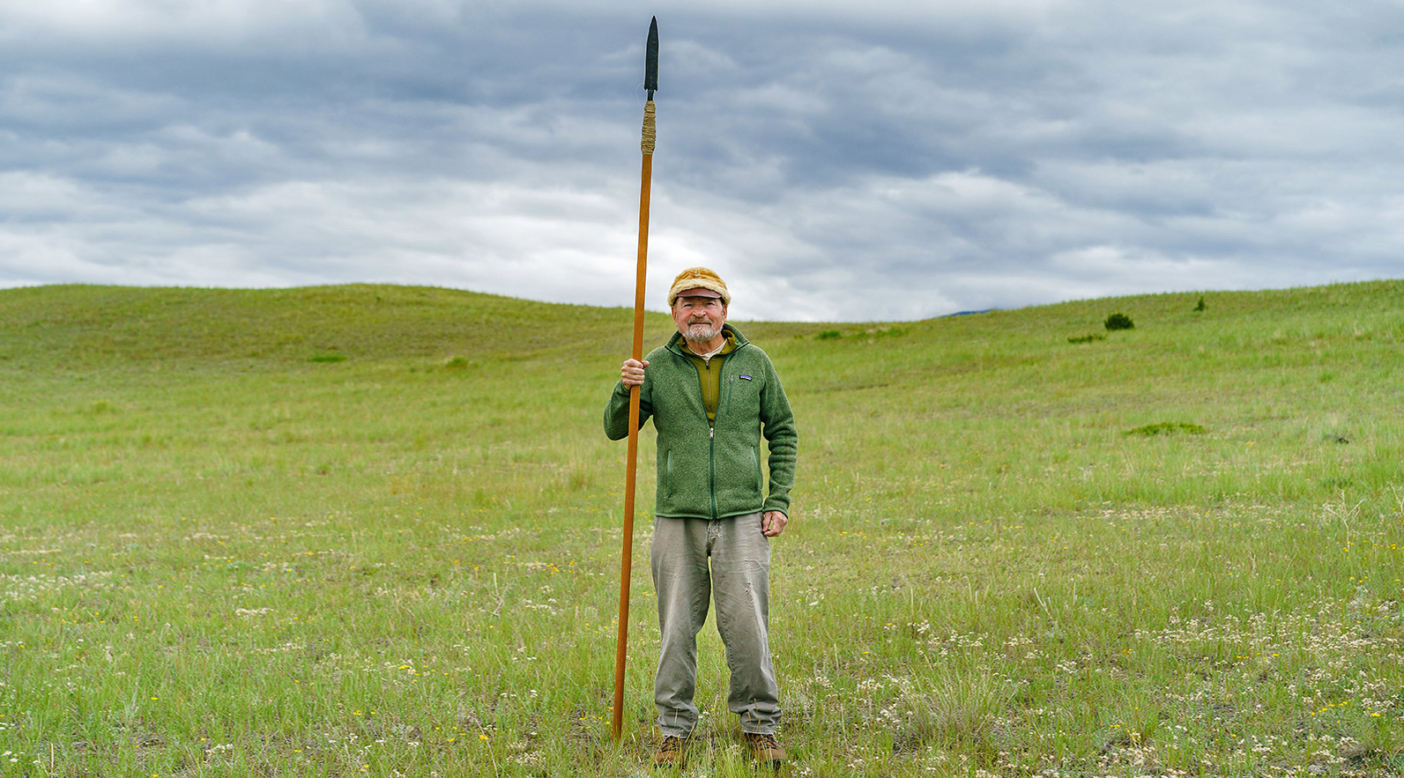
Remaining as close to wild as possible, Peacock lives out in the big empty of Montana and has been observing, tracking, and documenting brown bears in their natural habitat for 50 years. After serving as a Green Beret medic in the Vietnam War, he returned to the States struggling with post-traumatic stress disorder, and the wilderness became his haven. “I was naïve and stupid and the bears gave me grace and tolerance. They didn’t chew my ass off which is what they should have done,” he says. “Instead, they saved my life.”
CONNECT
The trailer for Grizzly Country ...
Humility.

In grizzly country, humans are put in their proper place—you are not the dominant creature on the landscape. It’s a matter of getting yourself outside yourself. Your senses are forced outward. You see better. You smell better. It’s not yourself which is the center of the universe. It’s an enforced humility.
Doug Peacock
CONNECT
Stir.

I think we need not to be so pedantic and academic and strict about what we consider wilderness. It’s whatever in undisturbed nature that can stir the innate wild in men and women. Wildness lives in all of us; wilderness is whatever it takes to wake it up. And some people can get it watching birds and squirrels in their backyard, and other people are like me, they need endless hunks of tundra with big bears and jaguars, tigers, polar bears.
Doug Peacock
19 November 2018
Seeking.
Hiking routes for humans range from game trails to the so-called high-volume industrial recreation super trails like the much touted and travelled Appalachian, Continental Divide and Pacific Crest hiking super highways, which are collectively called the “triple crown of long distance hiking.” They all have their place and uses. What may be practical for one popular region might be an abomination in a more remote area.
I’ve bushwhacked all my life, though as a writer, I can see the attractiveness of bagging one of those triple crowns: it’s a ready-to-go memoir with the mileage signs delineating the book’s structure. You could do it for a speed record or have mid-life crises along the way—making for a solid read.
The faint trials I bushwhack are less suitable for linear story telling and more a metaphor for tripping and exploring your way into the unknown, maybe during periods of seeking in your own life. All kinds of backcountry travel are appropriate at different stages of your life’s journey.
Doug Peacock
CONNECT
30 July 2017
Out.

I think we need not to be so pedantic and academic and strict about what we consider wilderness. It’s whatever in undisturbed nature that can stir the innate wild in men and women. Wildness lives in all of us; wilderness is whatever it takes to wake it up. And some people can get it watching birds and squirrels in their backyard, and other people are like me, they need endless hunks of tundra with big bears and jaguars, tigers, polar bears. That whole formula of going back into the wilderness to heal your wounds, it works. It’s amazing. Hemingway in his Nick Adams stories…after the war, Nick fishes his way towards the swamps of the Big Two Hearted River to save his sanity — it’s the same story. The wilderness is a great place to go to do your healing.
I went out to Rockford, Illinois to give a talk. They have a 369 acre — not very big by Western standards — nature preserve along a river, called Severson Dells. Man, does that magical place transform not just the character of that country, but it’s an inspiration to countless people who go there, canoe, walk around and connect with nature. That kind of experience can be had in Europe where civilization has been marching along with whatever Pleistocene remnants, even if the areas are not very big, and animals like wolves and brown bears that live there are few, people draw inspiration from their survival. That’s a source of hope.
Beware of the corporate lawyer, inside approach; paper monkeywrenching is not going to affect real change. The system is now the enemy and all that’s a sideshow. Am I saying: Go out and make yourself a spear and sharpen it over the fire? Possibly. I think activists need to know the wild, get out into it as much as feasible. Much of our job is still to go out and save a bear or a prairie dog or a bird or a goddamn forest.
Doug Peacock
29 July 2017
Relatives.

The whole concept of ¨wild¨ was decidedly European, one not shared by the original inhabitants of this continent. What we called ¨wilderness¨ was to the Indian a homeland, ¨abiding loveliness¨ in Salish or Piegan. The land was not something to be feared or conquered, and ¨wildlife¨ were neither wild nor alien; they were relatives.
Doug Peacock
29 June 2017
New.

Nearly a half century ago, when I returned from Vietnam, I was lost and wandered the Western American wilderness seeking palliation from war sickness. As the snows melted, I moved north into Yellowstone National Park. Though I wasn’t looking for them, there were grizzly bears, and they commanded my attention. I found great beauty married to danger and, seeing through their eyes, discovered a new way of looking at the world.
Years later, I wrote: “These bears saved my life.”
So I am beyond alarmed that state and federal governments have teamed up to deliver a potentially deadly blow to Yellowstone’s grizzly population. Last week, the Interior Department announced that after more than four decades of enjoying strict federal protections, the bears would no longer be considered a threatened species under the Endangered Species Act. Management of the animals will be handed over to the states of Wyoming, Montana, and Idaho this summer — all of which intend to open a trophy hunt as early as this fall.
Doug Peacock
CONNECT
14 May 2017
Humility.
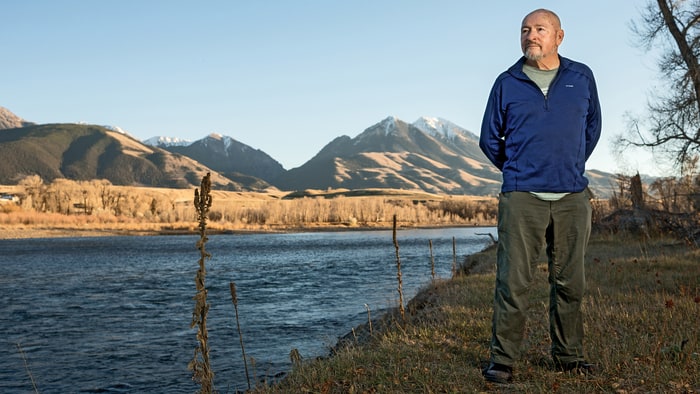
We've been walking slowly through the dark for a long time, the old soldier and I, beneath a thumbnail silver moon, the coyotes chattering like roosters. He makes his way using a wooden flagpole for a cane, a rifle and a tripod strapped to his back. Here, some 30 miles north of Yellowstone, at the edge of Montana's Crazy Mountains, on this cold morning in November, the mind feels clean and clear, focused on this one moment. We're hoping to kill an elk at daylight.
Doug Peacock has barely hunted, or even fired a gun, since his days in Vietnam. He experienced enough killing there, he says, to last several lifetimes. He was 27 when he came home, racked with PTSD, back before there was a name for it — his Army medical papers described his condition as: "Occupational and social impairment . . . due to such symptoms as: depressed mood, anxiety, suspiciousness, panic attacks, sleep impairment . . ."
Peacock thought he was alone back then; he didn't know that every soldier experienced some version of this. Once home, he wandered the West — Utah, Arizona, Wyoming — in solitude for weeks at a time. Eventually, he found his way into Yellowstone country, just a day's walk from the sagebrush prairie we're traversing this morning. In the small number of grizzly bears that were holding on there, Peacock found something worth living for. He began to follow those bears — tracking them year after year, getting to know them, filming them. Over the years, he came to understand them in ways few others, if any, had before. Now no one knows wild grizzlies better. Other researchers fly over them in airplanes, and many good scientists sit in front of computers doing the important work of spatial modeling and scat analysis. But for nearly his entire adult life, Peacock has been out with the bears — in their country, watching and learning. "It's the one animal out there that can kill and eat you anytime it chooses to — even though it seldom does," he says. "It stands as an instant lesson in humility."
15 January 2017
Humility.

As the night wore on we talked about various things until, at one point, I asked, “Why grizzlies?”
He explained that after returning from the war he began doing a lot of camping in wild places. One of those places was the backcountry of Yellowstone and it was there that he started finding himself in the company of bears. During one of his very first encounters he had been soaking in a thermal pool when he was startled by a sow and her cub. The bear had treed him and Peacock had ended up naked and shivering up in the tree for over an hour.
Gradually, grizzlies became not the natural byproduct of his trips into the backcountry but the goal. Though he didn’t like the word, it was hard to say there wasn’t a spiritual aspect to his trips into grizzly country. He came to believe that many of our basic religious archetypes grew out of observing bears. After all, what better animal to embody resurrection, the death of a winter’s hibernation followed by the rebirth of spring’s emergence from the den?
Peacock loved guns and owned many but he refused to bring them along when he knew he would encounter the bears.
“That would defeat the purpose,” he said.
CONNECT
14 December 2016
Something.
You find yourself by losing yourself. By not thinking about
yourself all of the time. When I am in a slump with my writing, I'll go and
walk for a week. Walk and not see a human being. Something happens after four
or five days which is quite wonderful. It is an ancient thing. Your sense of
smell. Your hearing. They come back.
Doug Peacock
26 October 2016
Origin.

Doug Peacock on the origins of the first Americans ...
We finally have a definitive answer to the timeless mystery of where the First Americans came from: They walked across the Bering Straits from Asia (and not from southwest Europe paddling kayaks across the frigid Atlantic sea, as some have claimed).
The first people to successfully colonize North America are called “Clovis,” and they made their appearance in the lower United States just prior to 13,000 years ago. The only known Clovis burial is in Montana, about forty miles north of my house on the Yellowstone River (also known as the Anzick site). Here prehistoric people buried a one and a half year old boy with about 115 stone and bone funeral offerings, all covered with sacred red ocher. The burial objects, discovered by construction workers in 1968, constitute the largest and most spectacular assemblage of Clovis artifacts ever found.
A recent analysis of the child’s DNA (Nature 2-13-2014) reveals a genome sequence showing the Montana Clovis people are direct ancestors to some 80 percent of all Native North and South Americans living today. The child’s ancestors came over in a single migration from Northeastern Asia. This data is a very big deal.
Archeologists call this report “the final shovelful of dirt” on the European hypothesis. And, yes, previous to the release of this information, a popular alternative theory argued that the sophisticated Clovis stone-flaking technology came from Southwestern Europe, from Solutrean people living in Spain and France who paddled across the ocean 18,000 years ago. That meant the Clovis child should be of European ancestry. The iconic Clovis projectile point, many of which have been found imbedded in the bones of huge animals who became extinct around 12,900 years ago, appeared suddenly and is a large, extremely well-crafted weapon. A troubling insinuation of the “Solutrean” theory is that Native Americans weren’t somehow able to invent the distinctive Clovis point on their own.
One might think that the Out-of-Europe hypothesis was, at its worst, a harmless crackpot theory--that this very terrestrial-adapted culture of the Iberian Peninsula, with no evidence of maritime technology, overcame a frigid Atlantic ocean during a time span of 5,000 years by iceberg-hopping in skin boats in order to deliver the distinctive Clovis weapon system to the Southeastern United States. But this scholarly squabble quickly grew ugly with the discovery of Kennewick Man in 1996.
Civility evaporated during the nasty eight-year legal squabble over Kennewick Man (a 9,000-year-old skeleton found in the Columbia River), and we were reminded that archaeology lingers yet as a barely disguised insult to many Native Americans. The central issue of Kennewick Man was his ancestry: Was he of European origin?
20 October 2016
Do.

Abbey is gone.
Harrison is gone.
Peacock is now my living spirit-animal ...
He emerges from the wild with stories, and then he writes them down.
His intent is to have the experience—to get the hands dirty
in the raw wild, to smell wood smoke and earth in the clothes, to feel the
warmth of the sun and the cold of the wind on the face, and to hear the warning
growl of a grizzly bear into whose territory he has ventured.
He struggles to protect that experience because that
experience helped him survive the savagery of war, and his reputation as a
writer and a staunch activist for all things wild, particularly grizzlies, sits
on him incidentally, he says.
Doug Peacock has spent most of his adult life giving voice
to wilderness in America and across the globe, and he will be at the weeklong
Northern Arizona Book Festival on Fri, Oct. 14, to tell some stories he’s come
across along the way—including some about his friend, literary icon Jim
Harrison.
“I have limited social skills,” Peacock says. “But when the work of the world needs to be done, and when I see something needs doing, I’ll do it.”
CONNECT
Treat.
"Not a bad way to treat a stranger."
Doug Peacock's tribute to his friend, Jim Harrison ...
*** Do not miss his comments on ceremony at 22:10.
19 May 2016
Honored.
When famed Arizona author and naturalist Edward Abbey died
in 1989 his friends honored his last wishes and packed him in dry ice, drove
him into the desert and buried him. Doug Peacock was there and shares his
experience.
17 May 2016
Immediately.

AMY GOODMAN: Why
did you find comfort in grizzlies, coming back from Vietnam?
DOUG PEACOCK: Mainly
because they got you out of your own mind. You know, if you put on a Kelty pack
and you hike in Colorado or California, you’re top dog. You know, you walk down
a trail, you think about your girlfriend or your portfolio or I don’t know
what. In grizzly country, you can’t do that, because there’s something out
there that, if it chose, could kill and eat you at anytime it wanted to. And
just having to take that into stock, you know, totally and fundamentally just
changes the ambiance of a place.
All of a sudden, you’re not top dog. And you look a little
more closely. You walk like an animal. You scent the wind. You listen to the
brush. And it really accelerates your inner — much more ancient finished system
than our modern industrial culture provides. I mean, getting back into the
wilderness like that, having a grizzly bear in there, just within three or four
days, something happens to me. You know, I’m really like another animal almost.
And it’s a wonderful thing, because everything is externalized, and, you know,
you live immediately in the present.
11 May 2016
Ever.

You find yourself by losing yourself. By not thinking about
yourself all of the time. When I am in a slump with my writing, I'll go and
walk for a week. Walk and not see a human being. Something happens after four
or five days which is quite wonderful. It is an ancient thing. Your sense of
smell. Your hearing. They come back.
To live really a full life, you need to follow where it leads, in
defiance of all things conventional perhaps. And of course it has its price.
You have to know that going in. But the price you pay, in my opinion, is not
worth the time of day to think about. It is so important not to kneepad around
the world. You should never bow down to anything but those you love and
respect. Ever, for anything.
Doug Peacock
Thanks for pointing the way, Poetessa.
19 August 2015
Legend.

For most people, Doug Peacock is best known as the
character, or caricature, that the writer Edward Abbey created out of the raw
materials of the man’s life. Peacock grew up in Alma, Michigan, but during his
three tours as a Green Beret medic in Vietnam he dreamed of the American West,
clinging to a map of Montana like a secret and a promise. When he finally got
home, he headed out into the western backcountry to try to make something out
of the remains of his life. Shaken by all he had seen, numb but at the same
time full of unnamed rage, he turned to a new hobby, to monkey-wrenching, or
environmental sabotage, cutting down billboards, putting sugar in the tanks of
bulldozers, and using more explosive means to disarm the machines that were
despoiling the land he loved. It was a hobby that he shared with a new friend
named Ed Abbey, who would eventually transform Peacock into a fictional
character, the heroic but primitive George Washington Hayduke, the central
figure and driving force in Abbey’s novel “The Monkey Wrench Gang."
But Peacock’s own life would take a turn that Hayduke’s did not. He would come to spend time deep in the Wyoming and Montana wildernesses, passing months living with grizzly bears. A gun-lover, he refused to carry firearms when among the bears. At first he didn’t study the animals so much as get to know them, learning their ways. Meanwhile, his fictional alter ego was growing into a legend around the West. That legend still grows. Earlier in our trip, looking out at Monument Valley from the Muley Point overlook in Utah, I had seen, painted in big black letters on the concrete barrier, the words “Hayduke Lives!"
I was nervous about meeting Peacock. All I had to go on at that point was a curt email that read: “If you’re around come on by.” Well, I would be around, I’d make sure of it, even if it required driving 800 miles out of my way. That morning he had given me directions to his house in Emigrant, along the Yellowstone River about an hour north of the park, and we had agreed to meet at 5. I looked at the map and figured the mileage, but what I hadn’t counted on was winding our way through Yellowstone and stopping every mile or two for an elk or buffalo. There was an irony, of course, in bombing through one of America’s most beautiful parks to go and meet a wild man.
CONNECT
Subscribe to:
Posts (Atom)


































































































































