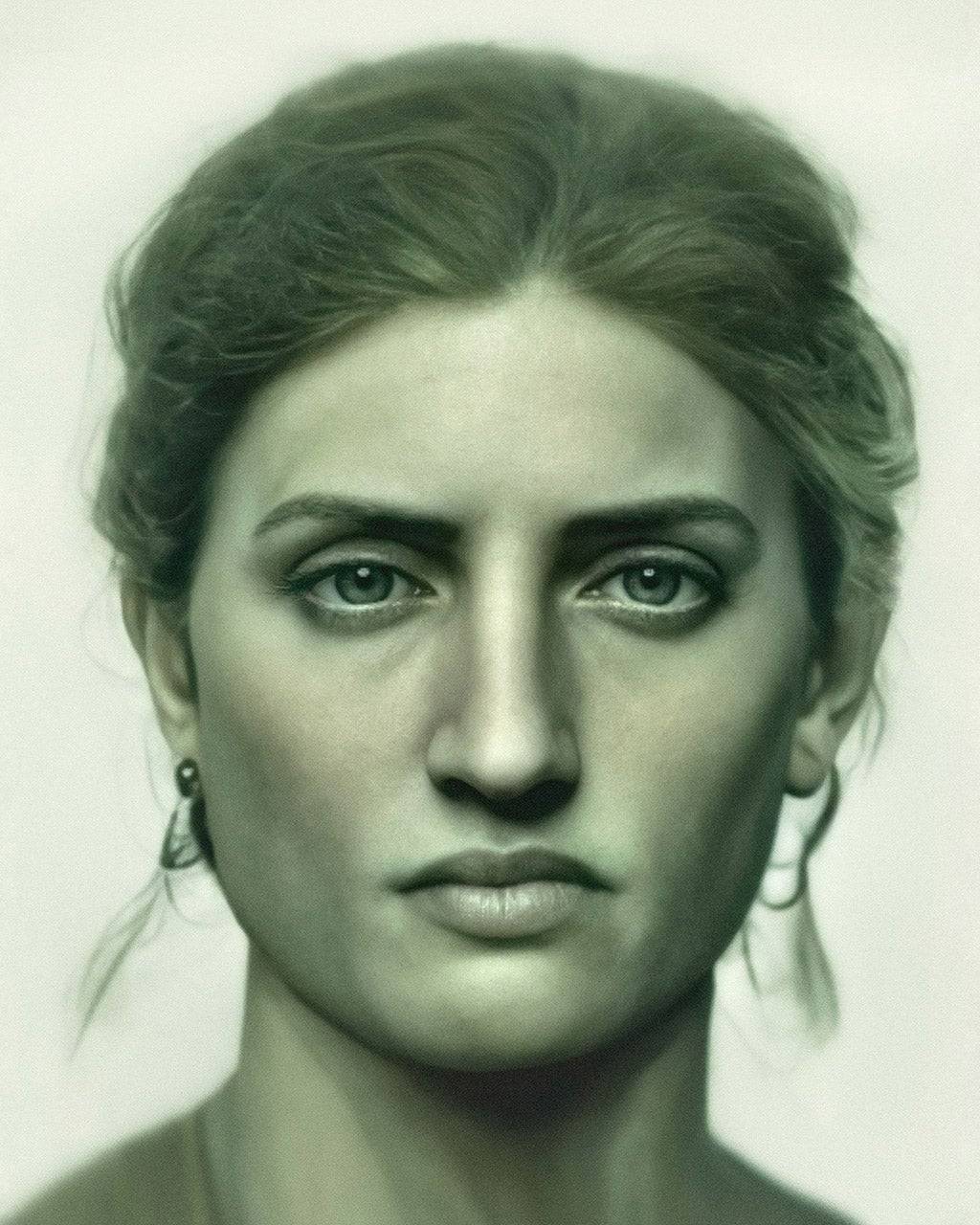
"I am not one who was born in the custody of wisdom. I am one who is fond of olden times and intense in quest of the sacred knowing of the ancients." Gustave Courbet
Showing posts with label math. Show all posts

20 October 2024

Happy Birthday, Wren

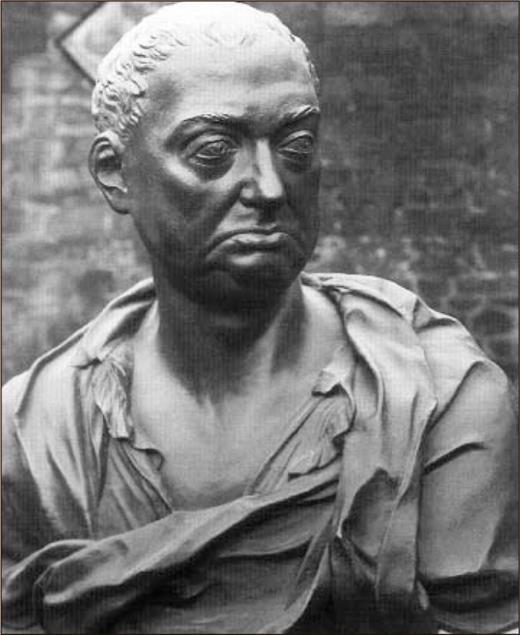
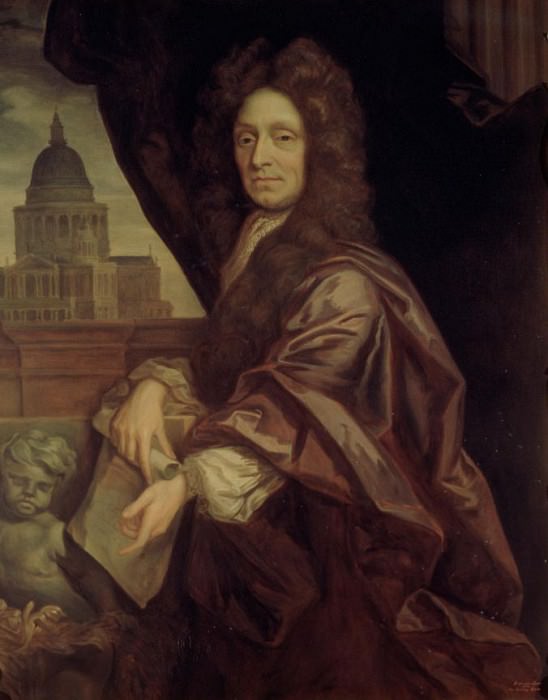
Kneller, Sir Christopher Wren, 1711


We need need not fear diminishing a miracle by explaining it.

Sir Christopher Wren, born on this day in 1632.

Gresham College professor, Sarah Hart, presents a lecture titled "The Mathematical Life of Sir Christopher Wren ...


In 2010, The Hammock Papers celebrated Wren's birthday.

23 September 2016

04 August 2016

Continuous.

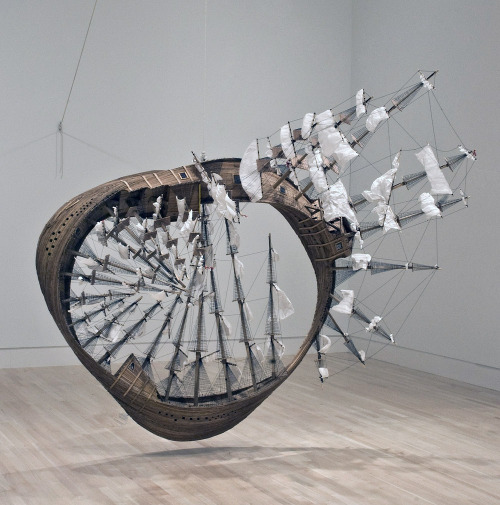
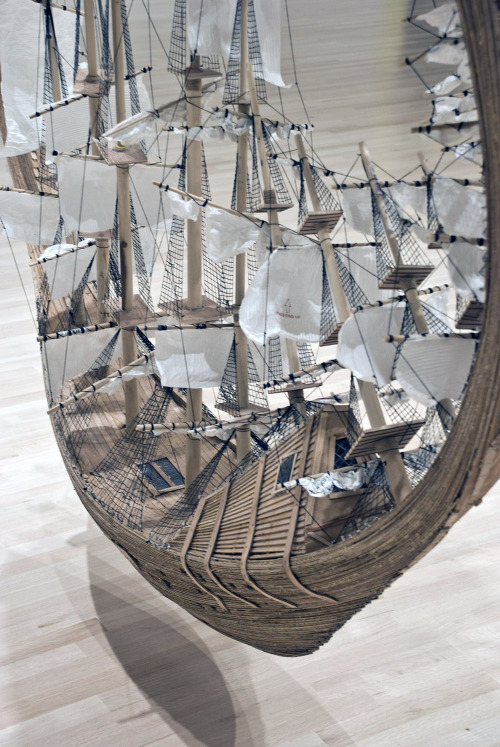
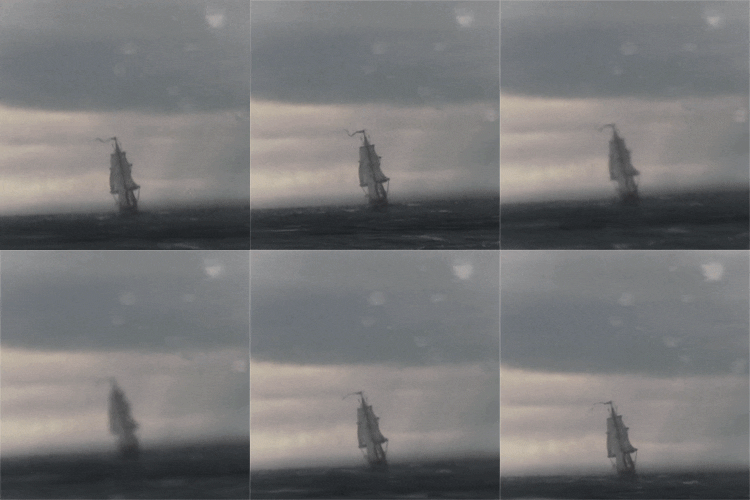
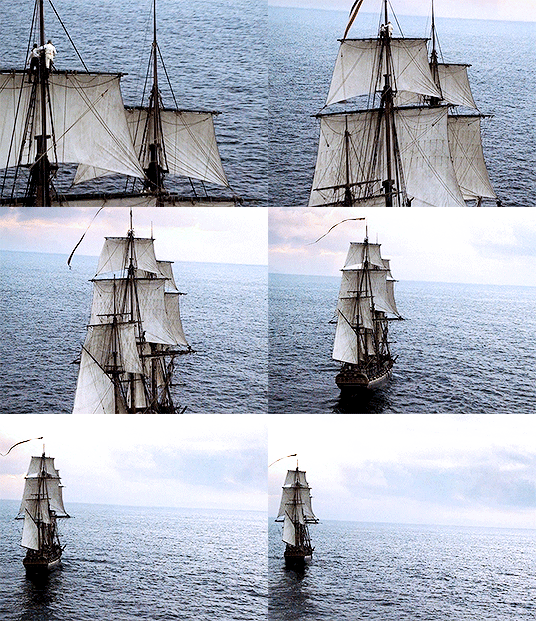
Hawkinson, Möbius Ship, 2011


California-based artist Tim Hawkinson is known for taking everyday materials and altering them in imaginative ways, creating works that address broad issues about the intersection of human consciousness, nature and technology. Here, he employed a mix of found objects and common household materials—including twist ties, craft wood, staples, and packing material—which he transformed almost alchemically into a complex and awe-inspiring sculpture.

Echoing the working methods of ship-in-a-bottle hobbyists, Hawkinson created a painstakingly detailed model ship that twists in upon itself, presenting the viewer with a thought-provoking visual conundrum. The title is a witty play on Herman Melville’s novel Moby Dick, which famously relates the tale of a ship captain’s all-consuming obsession with an elusive white whale. The ambitious and imaginative structure of Hawkinson’s sculpture offers an uncanny visual metaphor for Melville’s epic tale, which is often considered the ultimate American novel.

Möbius Ship also humorously refers to the mathematical concept of the Möbius Strip. Named after a nineteenth-century astronomer and mathematician, the Möbius Strip is a surface that has only one side, and exists as a continuous curve. Its simple yet complex spatial configuration presents a visual puzzle that parallels Hawkinson’s transformation of the mundane materials into something unexpected.

11 May 2016

Equal.

Leonardo, Tree Branching, 1515


All the branches of a tree at every stage of its height when put together are equal in thickness to the trunk below them. All the branches of a watercourse at every stage of its course, if they are of equal rapidity, are equal to the body of the main stream.

Leonardo da Vinci

CONNECT

24 March 2016

Deliver.


52. You shall likewise know that according to Law, the nature of this universe flows through all things alike,

53. So that you shall not hope for what you ought not to hope; and nothing in this world shall be hidden from you.

54. You will likewise know that human beings bring on their own misfortunes, voluntarily and of their own free choice.

55. Unhappy that they are! They neither see nor understand that what is best for them is within them.

56. Few know how to deliver themselves out of their misfortunes.

57. Such is the fate that blinds humanity, and takes away their senses.

58. Like huge barrels they roll to and fro, always oppressed with innumerable problems.

59. For fatal strife, seemingly innate, pursues them everywhere, tossing them up and down; nor do they perceive this.

60. Instead of provoking and stirring up strife, they ought, by yielding, to avoid it.
30 November 2015

Simple.


Everything must be made as simple as possible. But not simpler.

Albert Einstein

God's Fingerprint: The Fibonacci Sequence ...


Fractals: Hunting the Hidden Dimension ...

06 August 2015

Archimedes.

Fetti, Archimedes in Thought, 1620


How do you read a two-thousand-year-old manuscript that has been erased, cut up, written on and painted over? With a powerful particle accelerator, of course! Ancient books curator William Noel tells the fascinating story behind the Archimedes palimpsest, a Byzantine prayer book containing previously-unknown original writings from ancient Greek mathematician Archimedes and others.


NOVA's production of The Infinite Secrets of Archimedes is here.

29 July 2015

Meticulously.

Squier & Davis, Newark Works, 1847


When the Hopewell culture of the Scioto River valley constructed their complex of earthworks in what is now the city of Newark, Ohio, they included two parallel walls of clay marking a 200-foot wide path leading from the Octagon Earthwork in a straight line some two miles south where they intersect Ramp Creek, a minor tributary of the Licking River. The walls form the boundaries of a meticulously graded road, crowned in the middle and constructed of clay differing from the neighboring soil. The destination of the road is a matter of debate, although that it actually extended for many miles beyond the small creek is a fact that has been discovered many times in the field only to languish from academic neglect. Thus the road's curious fate is to be periodically re-discovered, and then, for some odd reason, be pooh-poohed by the referees of archaeological correctness. The current champion of the road is Dr. Bradley T. Lepper, whose interest in the road was sparked by his discovery of a forgotten manuscript gathering dust at the American Antiquarian Society in Worcester, Massachusetts, detailing an 1862 survey of the road. Lepper has followed up this discovery by finding traces of the road which still exist today despite nearly two centuries of agriculture and other improvements to the Ohio landscape. With his evidence, coupled with aerial surveys done back in the 1930s that found traces of the road extending straight as an atlatl throw for at least twelve miles towards the great Hopewellian center of what is now Chillicothe, 55 miles distant, Lepper concludes that there are sound reasons to believe that this ancient Hopewell sacra via did exist.

10 April 2015

Good.
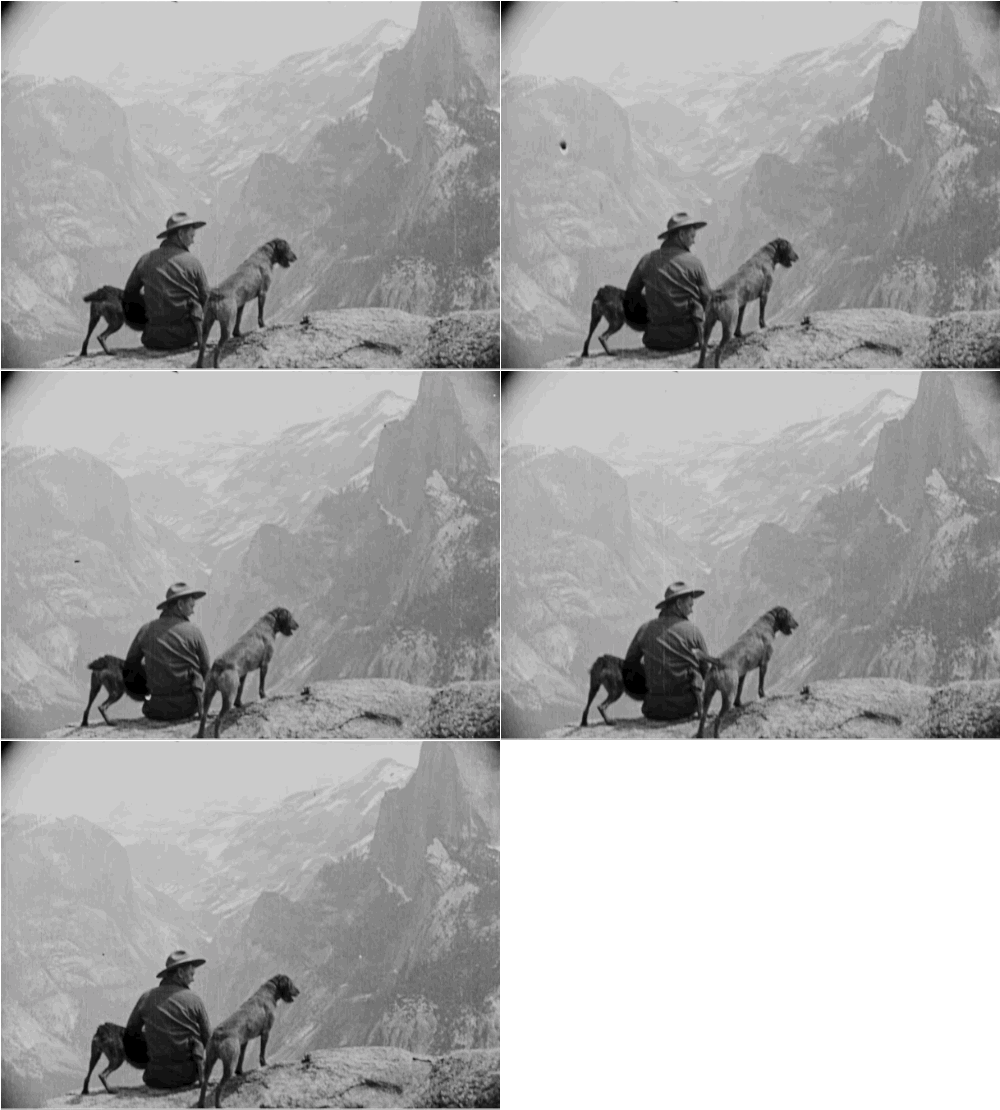

There’s just so much science, nature, music, art, technology, storytelling and assorted good stuff out there that my kids (and maybe your kids) haven’t seen. It’s most likely not stuff that was made for them…

But we don’t underestimate kids around here.

CONNECT

Thanks, Casey.

21 December 2014

Connections.

Ching, Untitled, Undated


A Puritan twist in our nature makes us think that anything good for us must be twice as good if it's hard to swallow. Learning Greek and Latin used to play the role of character builder, since they were considered to be as exhausting and unrewarding as digging a trench in the morning and filling it up in the afternoon. It was what made a man, or a woman -- or more likely a robot -- of you. Now math serves that purpose in many schools: your task is to try to follow rules that make sense, perhaps, to some higher beings; and in the end to accept your failure with humbled pride. As you limp off with your aching mind and bruised soul, you know that nothing in later life will ever be as difficult.

What a perverse fate for one of our kind's greatest triumphs! Think how absurd it would be were music treated this way (for math and music are both excursions into sensuous structure): suffer through playing your scales, and when you're an adult you'll never have to listen to music again. And this is mathematics we're talking about, the language in which, Galileo said, the Book of the World is written. This is mathematics, which reaches down into our deepest intuitions and outward toward the nature of the universe -- mathematics, which explains the atoms as well as the stars in their courses, and lets us see into the ways that rivers and arteries branch. For mathematics itself is the study of connections: how things ideally must and, in fact, do sort together -- beyond, around, and within us. It doesn't just help us to balance our checkbooks; it leads us to see the balances hidden in the tumble of events, and the shapes of those quiet symmetries behind the random clatter of things. At the same time, we come to savor it, like music, wholly for itself. Applied or pure, mathematics gives whoever enjoys it a matchless self-confidence, along with a sense of partaking in truths that follow neither from persuasion nor faith but stand foursquare on their own. This is why it appeals to what we will come back to again and again: our architectural instinct -- as deep in us as any of our urges.

Ellen Kaplan

07 July 2014

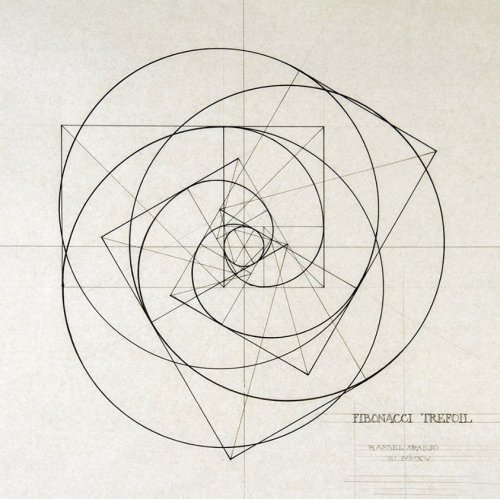
Fibonacci.

Math is logical, functional and just ... awesome. Mathemagician Arthur Benjamin explores hidden properties of that weird and wonderful set of numbers, the Fibonacci series.

28 June 2014

Visualization.

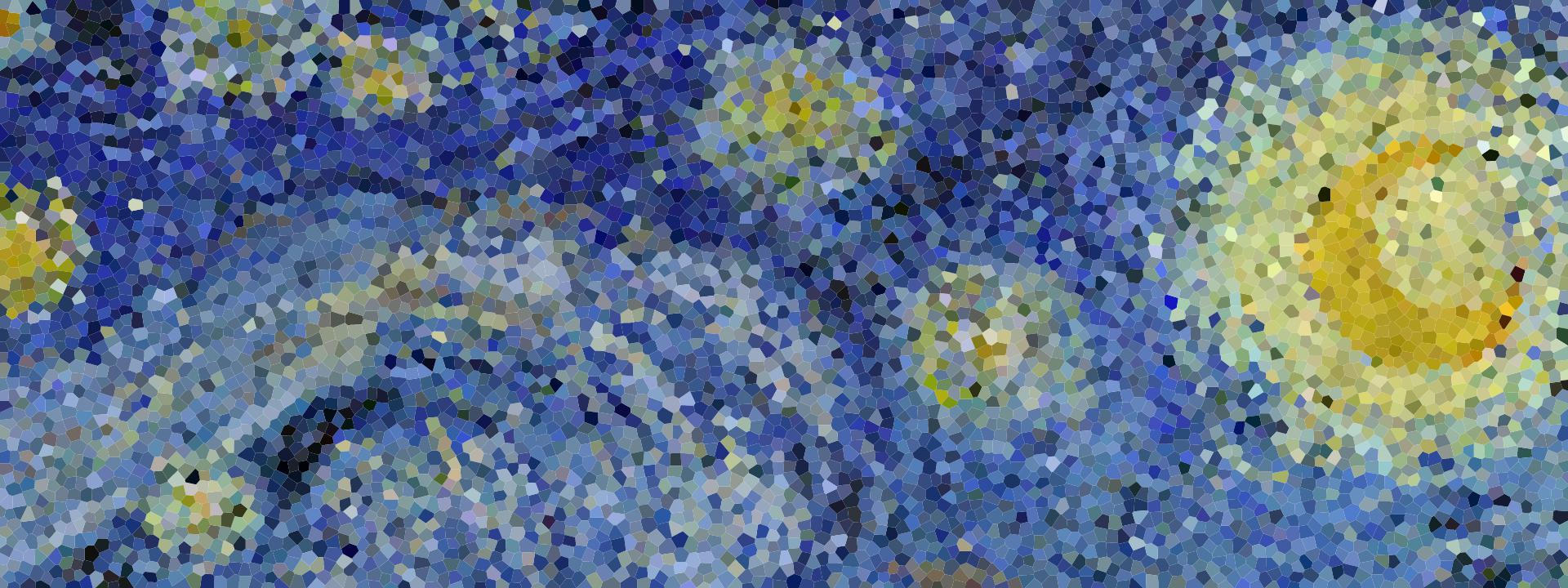
Mitchell, Best-Candidate IV Sampling of van Gogh's A Starry Night, undated


Algorithms are a fascinating use case for visualization. To visualize an algorithm, we don’t merely fit data to a chart; there is no primary dataset. Instead there are logical rules that describe behavior. This may be why algorithm visualizations are so unusual, as designers experiment with novel forms to better communicate. This is reason enough to study them.


But algorithms are also a reminder that visualization is more than a tool for finding patterns in data. Visualization leverages the human visual system to augment human intellect: we can use it to better understand these important abstract processes, and perhaps other things, too.

27 June 2014

Laws.

Physicist Geoffrey West has found that simple, mathematical laws govern the properties of cities -- that wealth, crime rate, walking speed and many other aspects of a city can be deduced from a single number: the city's population. In this talk he shows how it works and how similar laws hold for organisms and corporations.


West's site, here.

Scaling and fractals, here.

Power laws here, here, and here .

25 June 2014

Fractals.


Look at the honeycomb pattern in a beehive, say, and the hexagonal structure is only visible if you're not too close or too far away. But look at some kinds of plants and you'll see their fronds are made up of ever-smaller versions of the overall leaf. This is known as scale invariance, and is a feature of fractals. Richardson noticed that coastlines have a similar property, their jagged outlines appearing just as jagged as one zooms in to ever-smaller scales.

CONNECT

More here.

18 January 2014

Tricky.


Math can be a bit tricky sometimes.

OK, stop your uproarious laughter. I know, most normal people cringe in fear when math pops up in their lives. Of course it can be a bit tricky. But I’m not talking about word problems, or algebra, or trying to figure out compound interest (or balancing a checkbook, my own personal unscalable mountain).
I mean math itself. You can sit down and write out a few simple things and wind up with an answer so bizarre, so counterintuitive, that you figure it must be wrong.

CONNECT

05 January 2014

Routes.


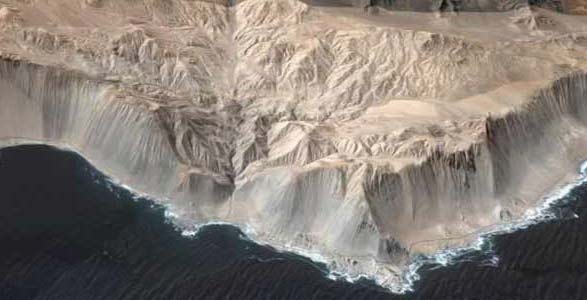
Ben Schmidt, assistant professor of history at Northeastern University, has visualized the routes of 19th Century ships using publicly available dataset from the National Oceanic and Atmospheric Administration. The resulting image is a hauntingly beautiful image that outlines the continents and highlights the trade winds.

CONNECT