"I am not one who was born in the custody of wisdom. I am one who is fond of olden times and intense in quest of the sacred knowing of the ancients." Gustave Courbet
Showing posts with label Speeches. Show all posts

01 August 2026

Baneful.


In all the changes to which you may be invited, remember that time and habit are at least as necessary to fix the true character of governments as of other human institutions; that experience is the surest standard by which to test the real tendency of the existing constitution of a country; that facility in changes, upon the credit of mere hypothesis and opinion, exposes to perpetual change, from the endless variety of hypothesis and opinion; and remember, especially, that for the efficient management of your common interests, in a country so extensive as ours, a government of as much vigor as is consistent with the perfect security of liberty is indispensable. Liberty itself will find in such a government, with powers properly distributed and adjusted, its surest guardian. It is, indeed, little else than a name, where the government is too feeble to withstand the enterprises of faction, to confine each member of the society within the limits prescribed by the laws, and to maintain all in the secure and tranquil enjoyment of the rights of person and property.

I have already intimated to you the danger of parties in the State, with particular reference to the founding of them on geographical discriminations. Let me now take a more comprehensive view, and warn you in the most solemn manner against the baneful effects of the spirit of party generally.

This spirit, unfortunately, is inseparable from our nature, having its root in the strongest passions of the human mind. It exists under different shapes in all governments, more or less stifled, controlled, or repressed; but, in those of the popular form, it is seen in its greatest rankness, and is truly their worst enemy.

The alternate domination of one faction over another, sharpened by the spirit of revenge, natural to party dissension, which in different ages and countries has perpetrated the most horrid enormities, is itself a frightful despotism. But this leads at length to a more formal and permanent despotism. The disorders and miseries which result gradually incline the minds of men to seek security and repose in the absolute power of an individual; and sooner or later the chief of some prevailing faction, more able or more fortunate than his competitors, turns this disposition to the purposes of his own elevation, on the ruins of public liberty.

George Washington, from his "Farewell Address" from 1796 

29 May 2026

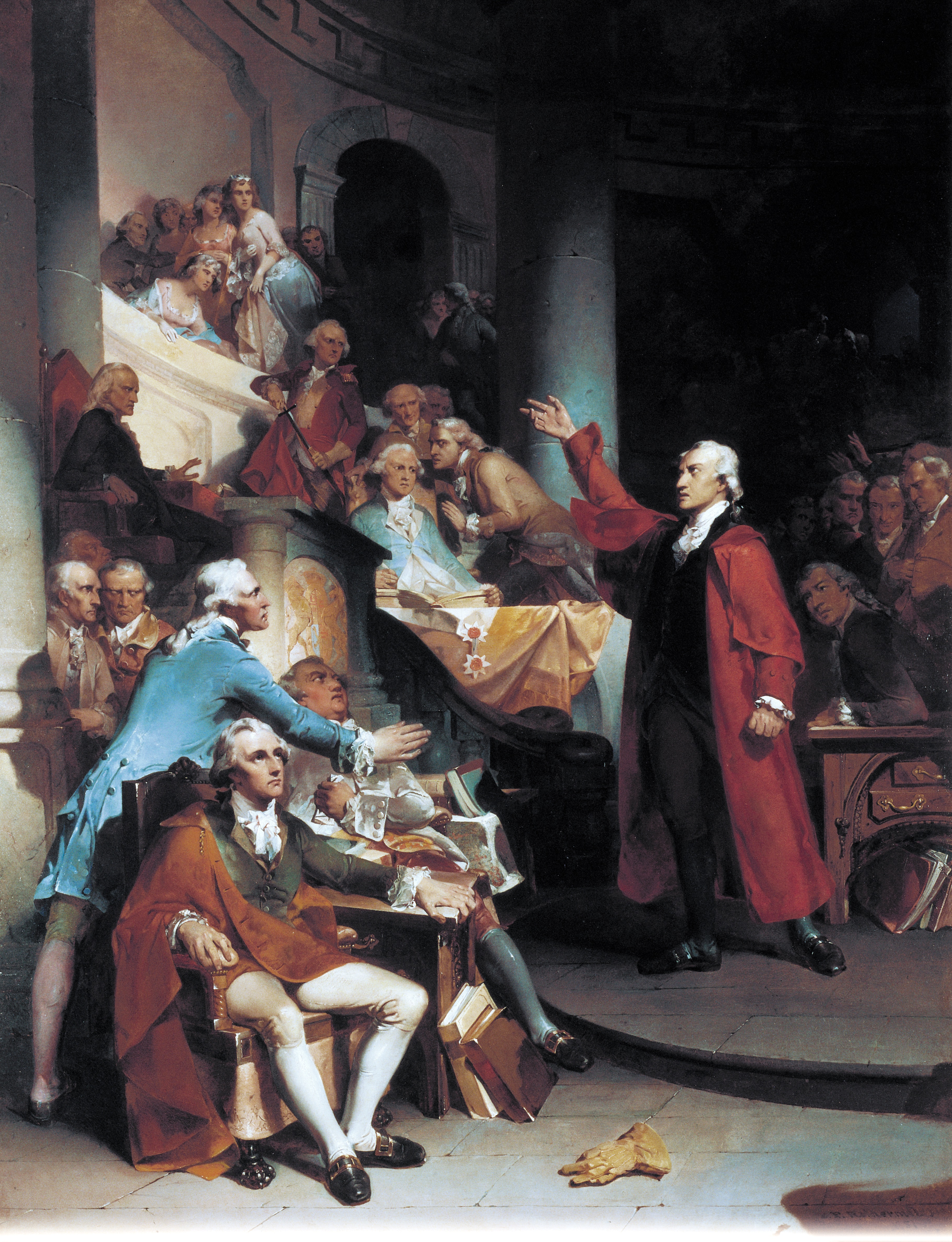
Happy Birthday, Patrick Henry

Matthews after Sully, Patrick Henry, 1891


Show me that age and country where the rights and liberties of the people were placed on the sole chance of their rulers being good men without a consequent loss of liberty! I say that the loss of that dearest privilege has ever followed, with absolute certainty, every such mad attempt.

Patrick Henry, born on this day in 1736, from his speech before the Virginia Ratifying Convention on June 5, 1788

28 April 2026

Roses.


God gave us memory so that we might have roses in December.

J.M. Barrie, from "Courage: The Rectorial Address" at St. Andrew's University, May 3, 1922

04 January 2026

Happy Birthday, Benjamin Rush

Peale, C.W., Benjamin Rush, 1783


There is nothing more common than to confound the terms of the American revolution with those of the late American war. The American war is over: but this is far from being the case with the American revolution. On the contrary, nothing but the first act of the great drama is closed. It remains yet to establish and perfect our new forms of government; and to prepare the principles, morals, and manners of our citizens, for these forms of government, after they are established and brought to perfection.

Dr. Benjamin Rush, born on this day in 1746, from his Address to the People of the United States, American Museum, January 1787 

23 March 2025

Guided.


I have but one lamp by which my feet are guided, and that is the lamp of experience. I know of no way of judging of the future but by the past. 

Patrick Henry, from his speech given before the Virginia Provincial Convention on this day in 1775.

17 February 2025

Limited.


It's Presidents' Day ...
When I was first honored with a call into the service of my country, then on the eve of an arduous struggle for its liberties, the light in which I contemplated my duty required that I should renounce every pecuniary compensation. From this resolution I have in no instance departed; and being still under the impressions which produced it, I must decline as inapplicable to myself any share in the personal emoluments which may be indispensably included in a permanent provision for the executive department, and must accordingly pray that the pecuniary estimates for the station in which I am placed may during my continuance in it be limited to such actual expenditures as the public good may be thought to require.

George Washington, from his first inaugural speech in 1789 

01 December 2024

Fully-Lived.

Sir Winston on the arts, imagination, and other things related to a life fully-lived ...


The arts are essential to any complete national life. The State owes it to itself to sustain and encourage them. The country possesses in the Royal Academy an institution of wealth and power for the purpose of encouraging the arts of painting and sculpture….

The Prime Minister, who spoke with so much feeling and thought on this subject, has reminded us of the old saying that it is by art man gets nearest to the angels and farthest from the animals. Indeed it is a pregnant thought. Here you have a man with a brush and palette. With a dozen blobs of pigment he makes a certain pattern on one or two square yards of canvas, and something is created which carries its shining message of inspiration not only to all who are living with him on the world, but across hundreds of years to generations unborn. It lights the path and links the thought of one generation with another, and in the realm of price holds its own in intrinsic value with an ingot of gold. Evidently we are in the presence of a mystery which strikes down to the deepest foundations of human genius and of human glory. Ill fares the race which fails to salute the arts with the reverence and delight which are their due.

Winston Churchill, born on this day in 1874, from a speech given at The Royal Academy of Arts, 30 April 1938


If you are inclined - late in life though it be - to reconnoitre a foreign sphere of limitless extent, be persuaded that the first quality that is needed is Audacity. There really is no time for the deliberate approach. Two years of drawing-lessons, three years of copying woodcuts, five years of plaster casts - these are for the young. They have enough to bear. And this thorough grounding is for those who, hearing the call in the morning of their days, are able to make painting their paramount lifelong vocation. The truth and beauty of line and form which by the slightest touch or twist of the brush a real artist imparts to every feature of his design must be founded on long, hard, persevering apprenticeship and a practice so habitual that it has become instinctive. We must not be too ambitious. We cannot aspire to masterpieces. We may content ourselves with a joy ride in a paint-box. And for this Audacity is the only ticket.

Sir Winston Churchill, from Painting as a Pastime


Armed with a paint-box, one cannot be bored, one cannot be left at a loose end, one cannot "have several days on one's hands." One must not be too ambitious. One cannot aspire to masterpieces. We may content ourselves with a joy ride in a paint box. And, for this, audacity is the only ticket.  Just to paint is great fun. The colors are lovely to look at and delicious to squeeze out. Matching them, however crudely, with what you see is fascinating and absolutely absorbing. 

Sir Winston Churchill, from Painting as a Pastime


You cannot tell from appearances how things will go. Sometimes imagination makes things out far worse than they are; yet without imagination not much can be done. Those people who are imaginative see many more dangers than perhaps exist; certainly many more than will happen; but then they must also pray to be given that extra courage to carry this far-reaching imagination. But for everyone, surely, what we have gone through in this period - I am addressing myself to the School - surely from this period of ten months this is the lesson: never give in, never give in, never, never, never-in nothing, great or small, large or petty - never give in except to convictions of honour and good sense. Never yield to force; never yield to the apparently overwhelming might of the enemy. We stood all alone a year ago, and to many countries it seemed that our account was closed, we were finished. All this tradition of ours, our songs, our School history, this part of the history of this country, were gone and finished and liquidated.

Winston Churchill, from his speech at the Harrow School, October 29, 1941

28 August 2024

Faith.


Let us not wallow in the valley of despair. I say to you, my friends, we have the difficulties of today and tomorrow.

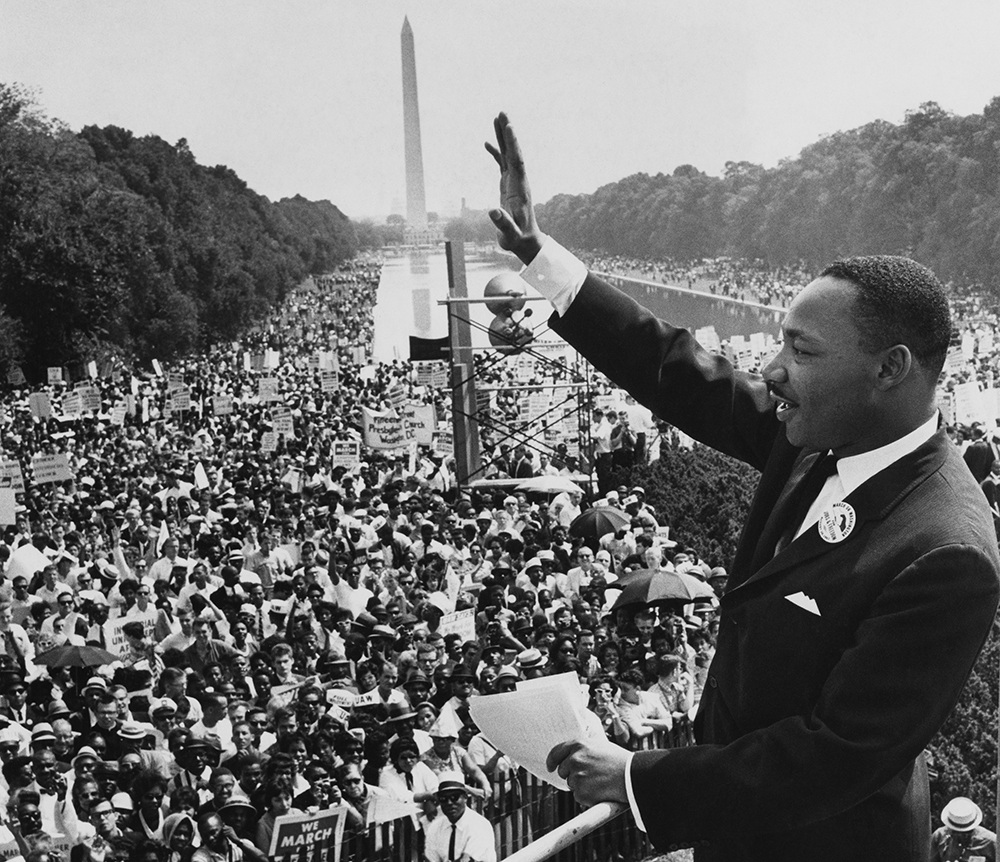
I still have a dream. It is a dream deeply rooted in the American dream.

I have a dream that one day this nation will rise up and live out the true meaning of its creed. We hold these truths to be self-evident that all men are created equal.

I have a dream that one day out in the red hills of Georgia the sons of former slaves and the sons of former slaveowners will be able to sit down together at the table of brotherhood.

I have a dream that one day even the state of Mississippi, a state sweltering with the heat of oppression, will be transformed into an oasis of freedom and justice.

I have a dream that my four little children will one day live in a nation where they will not be judged by the color of their skin but by the content of their character.

I have a dream today.

I have a dream that one day down in Alabama, with its vicious racists, with its governor having his lips dripping with the words of interposition and nullification; that one day right down in Alabama little black boys and black girls will be able to join hands with little white boys and white girls as sisters and brothers.

I have a dream today.

I have a dream that one day every valley shall be engulfed, every hill shall be exalted and every mountain shall be made low, the rough places will be made plains and the crooked places will be made straight and the glory of the Lord shall be revealed and all flesh shall see it together.

This is our hope. This is the faith that I will go back to the South with. With this faith we will be able to hew out of the mountain of despair a stone of hope.

With this faith we will be able to transform the jangling discords of our nation into a beautiful symphony of brotherhood.

With this faith we will be able to work together, to pray together, to struggle together, to go to jail together, to climb up for freedom together, knowing that we will be free one day.

This will be the day when all of God’s children will be able to sing with new meaning “My country ’tis of thee, sweet land of liberty, of thee I sing. Land where my father’s died, land of the Pilgrim’s pride, from every mountainside, let freedom ring!

Reverend Dr. Martin Luther King, Jr., from his speech given on this day in 1963

19 February 2024

Study.

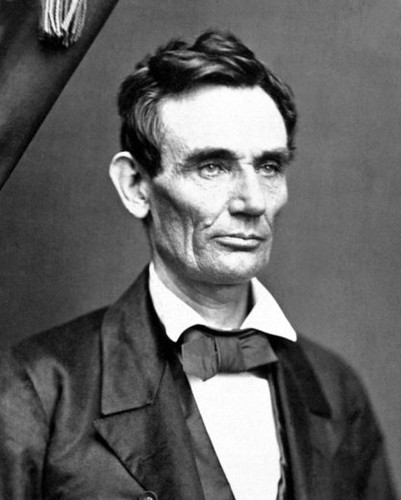
Brady, Abraham Lincoln, 1864


We can not have free government without elections; and if the rebellion could force us to forego, or postpone a national election, it might fairly claim to have already conquered and ruined us. The strife of the election is but human-nature practically applied to the facts of the case. What has occurred in this case, must ever recur in similar cases. Human-nature will not change. In any future great national trial, compared with the men of this, we shall have as weak, and as strong; as silly and as wise; as bad and good. Let us, therefore, study the incidents of this, as philosophy to learn wisdom from, and none of them as wrongs to be revenged.

Abraham Lincoln, from his speech given November 10, 1864

Entrusted.


I dwell on this prospect with every satisfaction which an ardent love for my Country can inspire: since there is no truth more thoroughly established, than that there exists in the economy and course of nature, an indissoluble union between virtue and happiness, between duty and advantage, between the genuine maxims of an honest and magnanimous policy, and the solid rewards of public prosperity and felicity: Since we ought to be no less persuaded that the propitious smiles of Heaven, can never be expected on a nation that disregards the eternal rules of order and right, which Heaven itself has ordained: And since the preservation of the sacred fire of liberty, and the destiny of the Republican model of Government, are justly considered as deeply, perhaps as finally staked, on the experiment entrusted to the hands of the American people.

George Washington, from his first Inaugural Speech, April 30, 1789

19 November 2023

Consecrated.

Brady, Lincoln at Gettysburg, 1863


Justin Lee on the need for the constant refounding of America ...
President Lincoln delivered the Gettysburg Address on November 19, 1863 at the consecration ceremony for the Soldiers’ National Cemetery, nearly five months after the bloodiest episode of the Civil War. The Battle of Gettysburg had halted General Lee’s second and final push into the North—at the cost of as many as 51,000 casualties, roughly 8,000 of which were deaths.  
The war was not yet won, but General Lee’s army was scattered and demoralized, and the Union’s victory seemed imminent. Already Lincoln was looking ahead to the impossible task of knitting together the nation’s wounds. The war—and the barbaric institution of chattel slavery that necessitated it—had called into question the very possibility of republican government. 

Lincoln was convinced that the future of popular sovereignty the world over rested on not just the outcome of the war, but on what must follow it: the repair of those “mystic chords of memory,” and the restoration of faith in the Declaration of Independence. Lincoln knew he must refound the republic. 

Blaise Pascal understood that all regimes are founded on violence: the strong establish themselves over the weak, and in time the usurpation is forgotten. “The truth about the usurpation must not be made apparent,” wrote Pascal: “it came about organically without reason and has become reasonable.” What was arbitrary in origin may be developed along rational lines—just as monarchic Rome matured into a republic. 

Harry V. Jaffa, riffing on Pascal in A New Birth of Freedom (2000), observes that Lincoln refused to arrogate to himself unconstitutional power during the war because doing so would undermine his authority to refound the nation. This is why Lincoln delayed so long in issuing the Emancipation Proclamation, which freed the slaves and allowed them to fight in the Union army. 

“Military necessity had enabled the federal government to do lawfully what the Constitution hitherto had prevented it from doing,” writes Jaffa. “For that government to have acted against slavery in the states except under the exigencies of the war would … have meant usurping powers to which the people of the United States had not given their consent. It would thus, [Lincoln] thought, have defeated the very ends of human freedom.” The Gettysburg Address served as an apologia for the Proclamation and paved the way for the Thirteenth Amendment by recalling the nation to its founding ideals in the only context in which such a refounding was possible. 

In his remarkable study The Dominion of the Dead (2003), Robert Pogue Harrison argues that all human habitation and culture—the home, the city, even the nation—are founded upon the marked grave. “It is not for nothing that the Greek word for ‘sign,’ sema, is also the word for ‘grave,” writes Harrison: the memorial to the dead is the wellspring and focal point of all meaning. Lincoln’s genius at Gettysburg was his recognition that the living are incapable of founding anything on their own. “We cannot consecrate—we cannot hallow—this ground,” he proclaimed. “The brave men, living and dead, who struggled here have consecrated it, far above our poor power to add or detract.”

29 May 2023

Sacrifice.

President Reagan's Memorial Day remarks during ceremonies at Arlington Cemetery, May 31, 1982 ...
The willingness of some to give their lives so that others might live never fails to evoke in us a sense of wonder and mystery. One gets that feeling here on this hallowed ground, and I have known that same poignant feeling as I looked out across the rows of white crosses and Stars of David in Europe, in the Philippines, and the military cemeteries here in our own land. Each one marks the resting place of an American hero and, in my lifetime, the heroes of World War I, the Doughboys, the GI's of World War II or Korea or Vietnam. They span several generations of young Americans, all different and yet all alike, like the markers above their resting places, all alike in a truly meaningful way.

Winston Churchill said of those he knew in World War II they seemed to be the only young men who could laugh and fight at the same time. A great general in that war called them our secret weapon, "just the best darn kids in the world." Each died for a cause he considered more important than his own life. Well, they didn't volunteer to die; they volunteered to defend values for which men have always been willing to die if need be, the values which make up what we call civilization. And how they must have wished, in all the ugliness that war brings, that no other generation of young men to follow would have to undergo that same experience.

As we honor their memory today, let us pledge that their lives, their sacrifices, their valor shall be justified and remembered for as long as God gives life to this nation. And let us also pledge to do our utmost to carry out what must have been their wish: that no other generation of young men will every have to share their experiences and repeat their sacrifice.

26 November 2022

Team.

We’re gonna win the championship again because we’re gonna play as team, better than anybody else in this conference, we’re gonna play together as a team. We’re gonna believe in each other, we’re not gonna criticize each other, we’re not gonna talk about each other, we’re gonna encourage each other. And when we play as a team, when the old season is over, you and I know, it’s gonna be Michigan again ... Michigan.

16 April 2022

Inaccessible.


Alla Gutnikova and three other editors of the student magazine DOXA were tried in court in Moscow on Friday 8th April and on 12th April were sentenced two years of "correctional labour" and a 3-year ban on administering any websites

This is her speech before the court ...
I won’t talk about the case, the searches, the interrogations, the tomes, the trials. It’s boring and pointless. Recently I’ve joined the school of tiredness and frustration. But even before the arrest, I managed to join the school of being able to talk about truly important things.

I am not going to speak of the case, the search, the interrogations, the volumes, the trials. That is boring and pointless. These days I attend the school of fatigue and frustration. But before my arrest, I had time to enroll in the school of learning how to speak about truly important things.

I would like to talk about philosophy and literature. About Benjamin, Derrida, Kafka, Arendt, Sontag, Barthes, Foucault, Agamben, about Audre Lorde and bell hooks. About Timofeeva, Tlostanova and Rachmaninova. 

I would like to speak about poetry, about how to read contemporary poetry. About Gronas, Dashevsky and Borodin. 

But now is not the time nor the place. I will hide my small tender words on the tip of my tongue, in the back of my throat, between my stomach and my heart. I will say just a little.

I often feel like a little fish, a birdling, a schoolgirl, a baby. But recently, I discovered with surprise that Brodsky, too, was put on trial at 23. And, since I have also been counted among the human race, I will say this: In the Kabbala there is the concept of tikkun olam - repairing the world. I see that the world is imperfect. I believe, as wrote Yehuda Amichai, that the world was created beautiful for goodness and for peace, like a bench in a courtyard (in a courtyard, not a court!). I believe that the world was created for tenderness, hope, love, solidarity, passion, joy. 

But the world is atrociously, unbearably full of violence. And I don’t want violence. In any form. No teacher’s hands in schoolgirls’ underwear, no drunken father’s fists on the bodies of wives and children. If I decided to list all the violence around us, a day wouldn’t be enough, nor a week, nor a year. My eyes are wide open. I see violence, and I don’t want violence. The more violence there is, the stronger I don’t want it. And more than anything, I don’t want the biggest and the most frightening violence.

I really love reading. I will now speak with the voices of others.

At school, in history class, I learned the phrases “You crucify freedom, but the soul of man knows no bounds” and “For your, and for our, freedom”. 

In high school, I read “Requiem” by Anna Andreyevna Akhmatova, “The Steep Path” by Evgeniya Solomonovna Ginzburg, “The Closed Theater” by Bulat Shalvovich Okudzhava, “The Children of Arbat” by Anatoliy Naumovich Rybakov. Of Okudzhava’s poems I loved most of all:
Conscience, honor and dignity,
There’s our spiritual army.
Hold out your palm to it, 
For this, one fears no fire. 
Its face is lofty and wonderful. 
Dedicate to it your short century. 
Maybe, you will never be victorious, 
But you'll die as a human.
At MGIMO [Moscow State Institute of International Relations] I learned French and memorized a line from Édith Piaf: “Ça ne pouvait pas durer toujours” [“It could not last forever”]. And from Marc Robine: “Ça ne peut pas durer comme ça” [“It cannot go on like this”].

At nineteen, I traveled to Majdanek and Treblinka and learned to say “never again” in seven languages: never again, jamais plus, nie wieder, קיינמאל מער, nigdy więcej, לא עוד. 

I studied Jewish sages and fell in love with two proverbs. Rabbi Hillel said: “If I am not for myself, who will be for me? If I am only for myself, what am I? And if not now, when?” And Rabbi Nachman said: “The whole world is a narrow bridge, and the main thing is to have no fear at all.” 

Later, I enrolled at the School of Cultural Studies and learned several more important lessons. First of all, words have meaning. Second, we must call things by their names. And finally, sapere aude, have the courage to use your own mind.

It’s ridiculous that our case has to do with schoolchildren. I taught children the humanities in English, worked as a nanny and dreamed of going with the program “Teacher for Russia” to a small town for two years to sow intelligent, kind, eternal seeds. But Russia - in the words of the state prosecuting attorney, Prosecutor Tryakin - believes that I involved underage children in life-threatening actions. If I ever have children (and I will, because I remember the greatest commandment), I will hang a picture of the Judaean governor Pontius Pilate on their wall, so they grow up in cleanliness. The governor Pontius Pilate standing and washing his hands - such will be the portrait. Yes, if thinking and feeling is now life-threatening, I don’t know what to say about the charges. I wash my hands.

And now is the moment of truth. The hour of transparency. 

My friends and I don’t know what to do with ourselves from the horror and the pain, but when I descend into the metro, I don’t see tear-stained faces. I don’t see tear-stained faces.

Not a single of my favorite books - for children or adults - taught indifference, apathy, cowardice. Nowhere have I been taught the words:
we are small people 
i am a simple person 
it’s not so black and white 
you can’t believe anyone 
i am not interested in all that 
i am far from politics 
it’s none of my business 
nothing depends on me
competent authorities will figure it out 
what could i have done alone
No, I know and love very different words.

John Donne says through Hemingway:
No man is an island, all by himself. Every person is part of the Mainland, part of Land; and if a wave sweeps away a coastal cliff into the sea, Europe will become smaller. And likewise if it washes away the edge of the cape or destroys your castle or your friends. The death of every person diminishes me as well, for I am one with all of humanity. And so, don’t ask for whom the bell tolls, it tolls for you.
Mahmoud Darwich says:
As you prepare your breakfast — think of others
(don’t forget to feed the pigeons). 
As you conduct your wars — think of others 
(don’t forget those who want peace). 
As you pay your water bill — think of others 
(think of those who have only the clouds to drink from).
As you go home, your own home — think of others
(don’t forget those who live in tents). 
As you sleep and count the stars, think of others 
(there are people who have no place to sleep). 
As you liberate yourself with metaphors think of others 
(those who have lost their right to speak). 
And as you think of distant others — think of yourself 
(and say, I wish I were a candle in the darkness).
Gennady Golovaty says:
The blind cannot look with wrath, 
The mute cannot yell with fury, 
The armless cannot take up arms, 
The legless cannot march forward. 
But, the mute can look wrathfully, 
But, the blind can yell furiously, 
But, the legless can take up arms. 
But, the armless can march forward.
I know some are terrified. They choose silence. But Audre Lorde says:
Your silence will not protect you. 
In the Moscow metro, they announce: Passengers are forbidden on the train heading to a dead end. 

And the St. Petersburg [band] Aquarium adds: This train is on fire. 

Lao Tzu, through Tarkovsky, says: 
And most important, let them believe in themselves, let them be helpless like children. Because weakness is a great thing, and strength is nothing. When a man is just born, he is weak and flexible. When he dies, he is hard and insensitive. When a tree is growing, it’s tender and pliant. But when it’s dry and hard, it dies. Hardness and strength are death’s companions. Pliancy and weakness are expressions of the freshness of being. Because what has hardened will never win.
Remember that fear eats the soul. Remember the Kafka character who sees “a gallows being erected in the prison yard, mistakenly thinks it is the one intended for him, breaks out of his cell in the night, and goes down and hangs himself”.

Be like children. Don’t be afraid to ask (yourselves and others), what is good and what is bad. Don’t be afraid to say that the emperor has no clothes. Don’t be afraid to yell, to cry. Repeat (to yourselves and others): 2+2=4. Black is black. White is white. I am a person, strong and brave. A strong and brave woman. A strong and brave people. 

Freedom is a process by which you develop the habit of being inaccessible to slavery.
Thank you, Veerle.

19 November 2020

Consecrated.


Abraham Lincoln delivered his Gettysburg Address on this day in 1863 ...
We cannot dedicate, we cannot consecrate, we cannot hallow this ground. The brave men, living and dead who struggled here have consecrated it far above our poor power to add or detract. The world will little note nor long remember what we say here, but it can never forget what they did here. It is for us the living rather to be dedicated here to the unfinished work which they who fought here have thus far so nobly advanced. It is rather for us to be here dedicated to the great task remaining before us — that from these honored dead we take increased devotion to that cause for which they gave the last full measure of devotion — that we here highly resolve that these dead shall not have died in vain, that this nation under God shall have a new birth of freedom, and that government of the people, by the people, for the people shall not perish from the Earth.

Abraham Lincoln

From Ken Burns' The Civil War ... 

08 August 2020

Sacrifice.


When men take it in their heads to day, to hang gamblers, or burn murderers, they should recollect, that, in the confusion usually attending such transactions, they will be as likely to hang or burn some one who is neither a gambler nor a murderer as one who is; and that, acting upon the example they set, the mob of to-morrow, may, and probably will, hang or burn some of them by the very same mistake. And not only so; the innocent, those who have ever set their faces against violations of law in every shape, alike with the guilty, fall victims to the ravages of mob law; and thus it goes on, step by step, till all the walls erected for the defense of the persons and property of individuals, are trodden down, and disregarded. But all this even, is not the full extent of the evil.--By such examples, by instances of the perpetrators of such acts going unpunished, the lawless in spirit, are encouraged to become lawless in practice; and having been used to no restraint, but dread of punishment, they thus become, absolutely unrestrained.--Having ever regarded Government as their deadliest bane, they make a jubilee of the suspension of its operations; and pray for nothing so much, as its total annihilation. While, on the other hand, good men, men who love tranquility, who desire to abide by the laws, and enjoy their benefits, who would gladly spill their blood in the defense of their country; seeing their property destroyed; their families insulted, and their lives endangered; their persons injured; and seeing nothing in prospect that forebodes a change for the better; become tired of, and disgusted with, a Government that offers them no protection; and are not much averse to a change in which they imagine they have nothing to lose. Thus, then, by the operation of this mobocractic spirit, which all must admit, is now abroad in the land, the strongest bulwark of any Government, and particularly of those constituted like ours, may effectually be broken down and destroyed--I mean the attachment of the People. Whenever this effect shall be produced among us; whenever the vicious portion of population shall be permitted to gather in bands of hundreds and thousands, and burn churches, ravage and rob provision-stores, throw printing presses into rivers, shoot editors, and hang and burn obnoxious persons at pleasure, and with impunity; depend on it, this Government cannot last. By such things, the feelings of the best citizens will become more or less alienated from it; and thus it will be left without friends, or with too few, and those few too weak, to make their friendship effectual. At such a time and under such circumstances, men of sufficient talent and ambition will not be wanting to seize the opportunity, strike the blow, and overturn that fair fabric, which for the last half century, has been the fondest hope, of the lovers of freedom, throughout the world.

I know the American People are much attached to their Government;--I know they would suffer much for its sake;--I know they would endure evils long and patiently, before they would ever think of exchanging it for another. Yet, notwithstanding all this, if the laws be continually despised and disregarded, if their rights to be secure in their persons and property, are held by no better tenure than the caprice of a mob, the alienation of their affections from the Government is the natural consequence; and to that, sooner or later, it must come.

Here then, is one point at which danger may be expected.

The question recurs, "how shall we fortify against it?" The answer is simple. Let every American, every lover of liberty, every well wisher to his posterity, swear by the blood of the Revolution, never to violate in the least particular, the laws of the country; and never to tolerate their violation by others. As the patriots of seventy-six did to the support of the Declaration of Independence, so to the support of the Constitution and Laws, let every American pledge his life, his property, and his sacred honor;--let every man remember that to violate the law, is to trample on the blood of his father, and to tear the character of his own, and his children's liberty. Let reverence for the laws, be breathed by every American mother, to the lisping babe, that prattles on her lap--let it be taught in schools, in seminaries, and in colleges; let it be written in Primers, spelling books, and in Almanacs;--let it be preached from the pulpit, proclaimed in legislative halls, and enforced in courts of justice. And, in short, let it become the political religion of the nation; and let the old and the young, the rich and the poor, the grave and the gay, of all sexes and tongues, and colors and conditions, sacrifice unceasingly upon its altars.

While ever a state of feeling, such as this, shall universally, or even, very generally prevail throughout the nation, vain will be every effort, and fruitless every attempt, to subvert our national freedom.

When I so pressingly urge a strict observance of all the laws, let me not be understood as saying there are no bad laws, nor that grievances may not arise, for the redress of which, no legal provisions have been made.--I mean to say no such thing. But I do mean to say, that, although bad laws, if they exist, should be repealed as soon as possible, still while they continue in force, for the sake of example, they should be religiously observed. So also in unprovided cases. If such arise, let proper legal provisions be made for them with the least possible delay; but, till then, let them, if not too intolerable, be borne with.

Abraham Lincoln, from "The Perpetuation of Our Political Institutions," an address by Abraham Lincoln before the Young Men's Lyceum of Springfield, January 27, 1838

10 July 2020

Finest.


Upon this battle depends the survival of Christian civilization. Upon it depends our own British life, and the long continuity of our institutions and our Empire. The whole fury and might of the enemy must very soon be turned on us. Hitler knows that he will have to break us in this Island or lose the war. If we can stand up to him, all Europe may be free and the life of the world may move forward into broad, sunlit uplands. But if we fail, then the whole world, including the United States, including all that we have known and cared for, will sink into the abyss of a new Dark Age made more sinister, and perhaps more protracted, by the lights of perverted science. Let us therefore brace ourselves to our duties, and so bear ourselves that, if the British Empire and its Commonwealth last for a thousand years, men will still say, “This was their finest hour.”

Winston Churchill, speech delivered 18 June 1040

08 July 2020

Worthy.

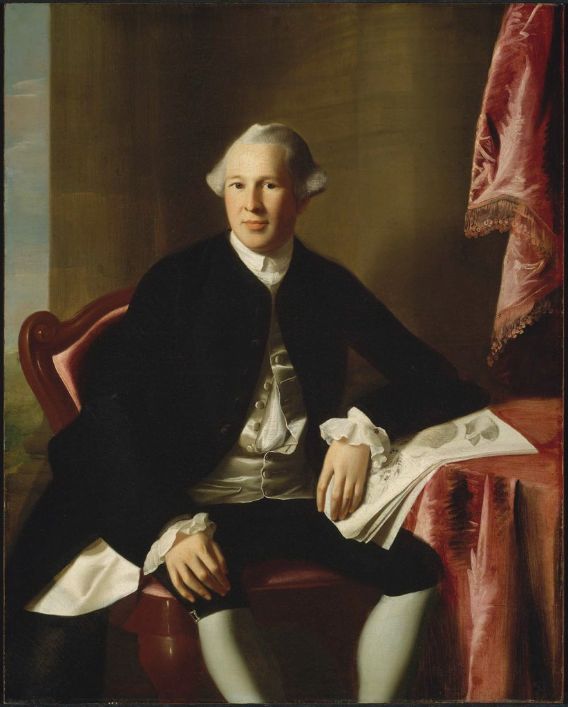
Copley, Dr. Joseph Warren, 1765


Our country is in danger, but not to be despaired of. Our enemies are numerous and powerful; but we have many friends, determining to be free, and heaven and earth will aid the resolution. On you depend the fortunes of America. You are to decide the important question, on which rest the happiness and liberty of millions yet unborn. Act worthy of yourselves. The faltering tongue of hoary age calls on you to support your country. The lisping infant raises its suppliant hands, imploring defence against the monster slavery. Your fathers look from their celestial seats with smiling approbation on their sons, who boldly stand forth in the cause of virtue; but sternly frown upon the inhuman miscreant, who, to secure the loaves and fishes to himself, would breed a serpent to destroy his children.

But, pardon me, my fellow citizens, I know you want not zeal or fortitude. You will maintain your rights or perish in the generous struggle. However, difficult the combat, you never will decline it when freedom is the prize.

Dr. Joseph Warren, from his speech given March 6, 1775

CONNECT

04 July 2020

Choosing.

From Ronald Reagan's "A Time for Choosing" speech, given October 27, 1964 ...

Alexander Hamilton said, "A nation which can prefer disgrace to danger is prepared for a master, and deserves one." Now let's set the record straight. There's no argument over the choice between peace and war, but there's only one guaranteed way you can have peace -- and you can have it in the next second -- surrender.

Admittedly, there's a risk in any course we follow other than this, but every lesson of history tells us that the greater risk lies in appeasement, and this is the specter our well-meaning liberal friends refuse to face -- that their policy of accommodation is appeasement, and it gives no choice between peace and war, only between fight or surrender. If we continue to accommodate, continue to back and retreat, eventually we have to face the final demand -- the ultimatum.


The time for choosing, indeed.  But what choice?  The political landscape has been devoid of true leadership for nearly a generation, leaving the dilemma of choosing the leaper with the most fingers.
Leadership is a potent combination of strategy and character. But if you must be without one, be without the strategy. 
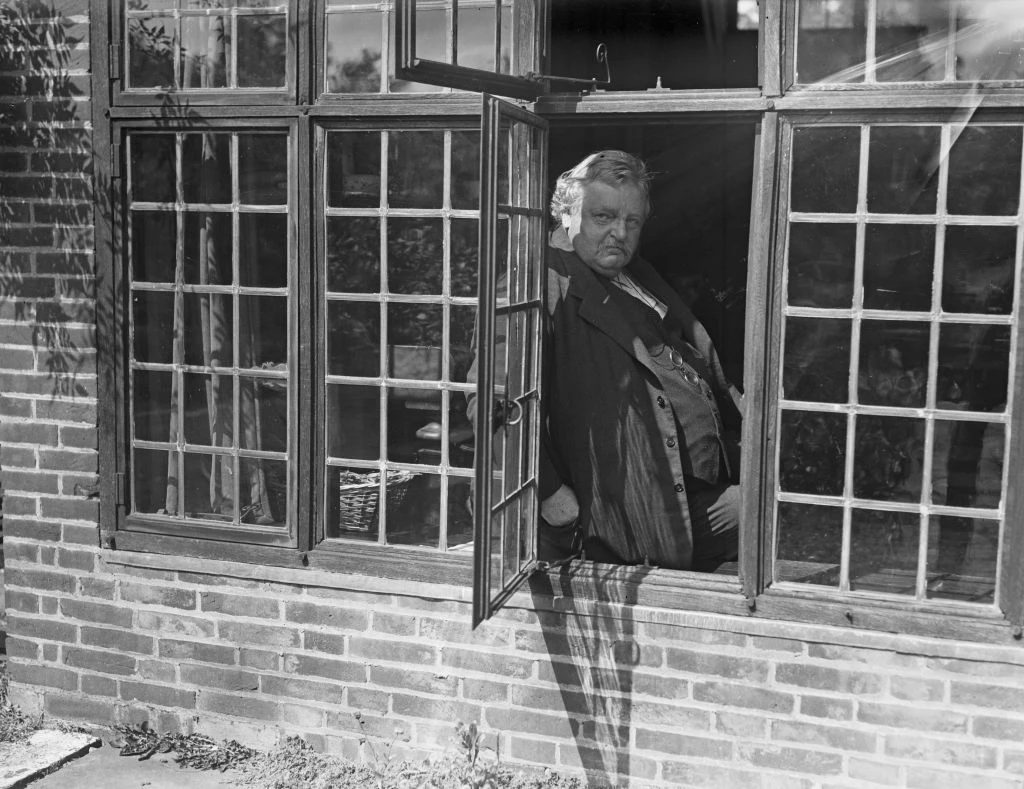
Norman Schwarzkopf
David McCullough reminds us of our responsibility to the plan for "The Glorious Cause of America" ...


... and our stomach-turning, symbolism-over-substance "softness" in meeting the challenge ...
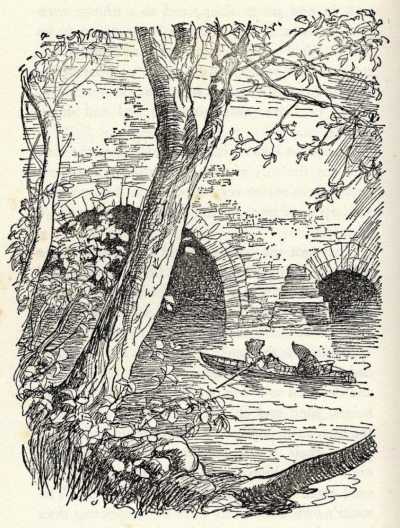


Solution?  Learn, teach, act, and never settle.

Thank you, Kurt.

16 June 2020

One.

Unknown, Abraham Lincoln, 1858


On this date in 1858, Abraham Licoln gave his acceptance speech as candidate for the U.S. Senate ...

If we could first know where we are, and whither we are tending, we could then better judge what to do, and how to do it.

We are now far into the fifth year, since a policy was initiated, with the avowed object, and confident promise, of putting an end to slavery agitation.

Under the operation of that policy, that agitation has not only, not ceased, but has constantly augmented.

In my opinion, it will not cease, until a crisis shall have been reached, and passed.

"A house divided against itself cannot stand."

I believe this government cannot endure, permanently half slave and half free.

I do not expect the Union to be dissolved -- I do not expect the house to fall -- but I do expect it will cease to be divided.

It will become all one thing or all the other.

CONNECT