"I am not one who was born in the custody of wisdom. I am one who is fond of olden times and intense in quest of the sacred knowing of the ancients." Gustave Courbet

13 July 2021

Shaking.


If people don't occasionally walk away from you shaking their heads, you're doing something wrong.

John Gierach
12 July 2021

Excellent.

An excellent album ...


These days you won't find much better.

JIMMIE DALE RULES!

Education.


It's an universal law-- intolerance is the first sign of an inadequate education. An ill-educated person behaves with arrogant impatience, whereas truly profound education breeds humility.

Aleksandr Solzhenitsyn

Tune-swept.


I want to be a tune-swept fiddle string that feels the master melody, and snaps. 

Amedeo Modigliani

Happy Birthday, Modigliani

Modigliani, Jeanne Hébuterne with Hat and Necklace, 1917


Amedeo Modigliani was born on this day in 1884.

Happy Birthday, Thoreau


Henry David Thoreau was born on this day in 1817.

There is a season for everything, and we do not notice a given phenomenon except at that season, if, indeed, it can be called the same phenomenon at any other season. There is a time to watch the ripples on Ripple Lake, to look for arrowheads, to study the rocks and lichens, a time to walk on sandy deserts; and the observer of nature must improve these seasons as much as the farmer his. So boys fly kites and play ball or hawkie at particular times all over the State. A wise man will know what game to play to-day, and play it. We must not be governed by rigid rules, as by the almanac, but let the season rule us. The moods and thoughts of man are revolving just as steadily and incessantly as nature’s. Nothing must be postponed. Take time by the forelock. Now or never! You must live in the present, launch yourself on every wave, find your eternity in each moment. Fools stand on their island opportunities and look toward another land. There is no other land; there is no other life but this, or the like of this. Where the good husbandman is, there is the good soil. Take any other course, and life will be a succession of regrets. Let us see vessels sailing prosperously before the wind, and not simply stranded barks. There is no world for the penitent and regretful.

Henry David Thoreau

Invested.


To make walking into an investigation, a ritual, a meditation, is a special subset of walking, physiologically like and philosophically unlike the way the mail carrier brings the mail and the office worker reaches the train. Which is to say that the subject of walking is, in some sense, about how we invest universal acts with particular meanings. Like eating or breathing, it can be invested with wildly different cultural meanings, from the erotic to the spiritual, from the revolutionary to the artistic. Here this history becomes part of the history of the imagination and the culture, of what kind of pleasure, freedom and meaning are pursued at different times by different kinds of walks and walkers. That imagination has both shaped and been shaped by the spaces it passes through on two feet. Walking has created paths, roads, trade routes; generated local and cross-continental senses of place; shaped cities, parks; generated maps, guidebooks, gear, and, further afield, a vast library of walking stories and poems, of pilgrimages, mountaineering expeditions, meanders, and summer picnics. The landscapes, urban and rural, gestate the stories, and the stories bring us back to the sites of this history.

Rebecca Solnit, from Wanderlust: A History of Walking

Effort.

Shelby Foote on the misidentification of the Confederate flag ...


Dean Knight of the Museum of the Confederacy explains some relics of the Civil War on C-SPAN's American Artifacts ...


If you have free speech but you don't [make] any effort to be sensitive and respect people, then free speech becomes associated with just a weapon to hit people upside the head [with].  When you enter the public square, you're going to have such a distrust and suspicion that somebody can use their free speech and say something that appears to you to be disrespectful. And you think it's a direct attack on you. Because now there's no trust.

Reverend Dr. Cornell West, in dialogue with Dr. Robert George from "Honesty and Courage, Humility and Hope"

He who is unaware of his ignorance will only be misled by his knowledge.

Richard Whately

Properly.


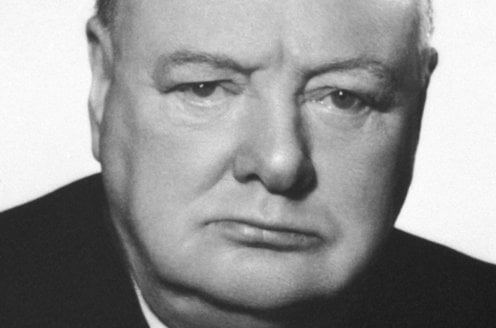
I object on principle to doing by legislation what properly belongs to human good feeling and charity.

Sir Winston Churchill

Informed.


You are not entitled to your opinion. You are entitled to your informed opinion. No one is entitled to be ignorant.

Harlan Ellison

Mullova.

Viktoria Mullova joins countertenor James Hall, director Richard Egarr and the Academy of Ancient Music for a program of Bach, Haydn and Grimani ...

09 July 2021

Aaron Lewis, "Am I the Only One"

WOO-HOO!

HAPPY FRIDAY!

If you don't like it, there's the f@#&ing door ...

Cruelty.

... besides cruelty to animals.

Happy Birthday, Scott


Bon Scott was born on this day in 1946.

AC⚡DC, "Let There Be Rock" ...

Wonderful.


The beer was very cold and wonderful to drink.  After the first heavy draft of beer I drank and ate very slowly.

Ernest Hemingway, from A Moveable Feast

It's sandwich time.

Weller.

Paul Weller recorded live at the Barbican with the BBC Symphony Orchestra on May 15, 2021 ...

Part One ...


Part Two ...


Now that Fat Pop has gone to the top, Weller has had a number one record in each of the past five decades.

But.


To talk in public, to think in solitude, to read and to hear, to inquire and answer inquiries, is the business of a scholar. He wanders about the world without pomp or terror, and is neither known nor valued but by men like himself.

Samuel Johnson

Bleed.


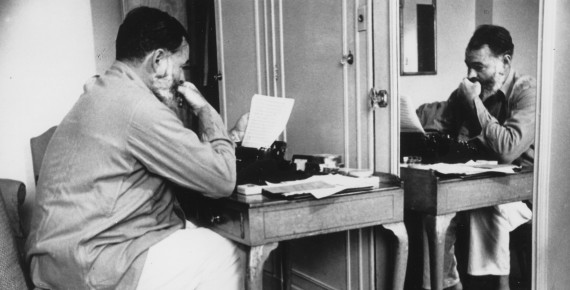
“That’s not how he wrote,” the 51-year-old Manhattan actress says of
The Old Man and the Sea author. “He never wrote drunk, he never wrote beyond early, early morning.”

She says he is often used to glamourise addiction. “So many writers glorify my grandfather’s way of living as much as they glorify his work. And so they try and mirror that,” she tells Interview. “I think it’s the misperception of addiction and living life on the edge, as if it’s cool."

Mariel Hemingway

His phrase, if he said it, "Write drunk, edit sober," is a metaphor, kids; not far off from "There is nothing to writing. All you do is sit down at a typewriter and bleed."  

Make.


Mountains like these and travelers in the mountains and events that happen to them here are found not only in Zen literature but in the tales of every major religion. This allegory of a physical mountain for the spiritual one that stands between each soul and its goal is an easy and natural one to make. Like those in the valley behind us, most people stand in sight of the spiritual mountains all their lives and never enter them, being content to listen to others who have been there and thus avoid the hardships. Some travel into the mountains accompanied by experienced guides who know the best and least dangerous routes by which they arrive at their destination. Still others, inexperienced and untrusting, attempt to make their own routes. Few of these are successful, but occasionally some, by sheer will and luck and grace, do make it. Once there they become more aware than any of the others that there's no single or fixed number of routes. There are as many routes as there are individual souls.

Robert M. Pirsig, from Zen and the Art of Motorcycle Maintenance: An Inquiry into Values

Happy Birthday, Respighi


Ottorino Respighi was born on this day in 1879.

Arturo Toscanini conducts the NBC Symphony in a performance of The Pines of Rome ...

08 July 2021

Track.


He keeps track of his daily progress—“so as not to kid myself”—on a large chart made out of the side of a cardboard packing case and set up against the wall under the nose of a mounted gazelle head. The numbers on the chart showing the daily output of words differ from 450, 575, 462, 1250, back to 512, the higher figures on days Hemingway puts in extra work so he won’t feel guilty spending the following day fishing on the Gulf Stream.

You.

Hang.

"Hang care!" exclaimed he. "This is a delicious evening; the wine has a finer relish here than in the house, and the song is more exciting and melodious under the tranquil sky than in the close room, where the sound is stifled. Come, let us have a bacchanalian chant—let us, with old Sir Toby, make the welkin dance and rouse the night-owl with a catch! I am right merry. Pass the bottle, and tune your voices—a catch, a catch! The lights will be here anon."

Charles Ollier, from "The Haunted Manor-House of Paddington"

Priest, "Desert Plains"


The euphony transformed me and inundated my soul in a roguish countenance, the likes of which I had know well in younger days. Such impishness soon drove out the complaints of the day. 

Umberto Limongiello

07 July 2021

Imagination.


It's later on a Wednesday, the sun is going down
I'm standing naked by a swimming pool, there's no one around
My imagination wanders back, red dust is always there
We lay together in the jungle, and love was in the air

As I dive into the water, both time and motion freeze
I'm hanging there suspended like a feather in the breeze
Below is your reflection, like an image from the past
But I can't be sure if it's really you, because you're wearing a tribal mask

Roger Glover, from "The Mask"

Atlanta Rhythm Section, "I'm Not Gonna Let it Bother Me Tonight"

Another side of ranch, please.


If the lead guitar player's wearing a vest, you know it's recorded live at Casa Lupita.

Permanent.


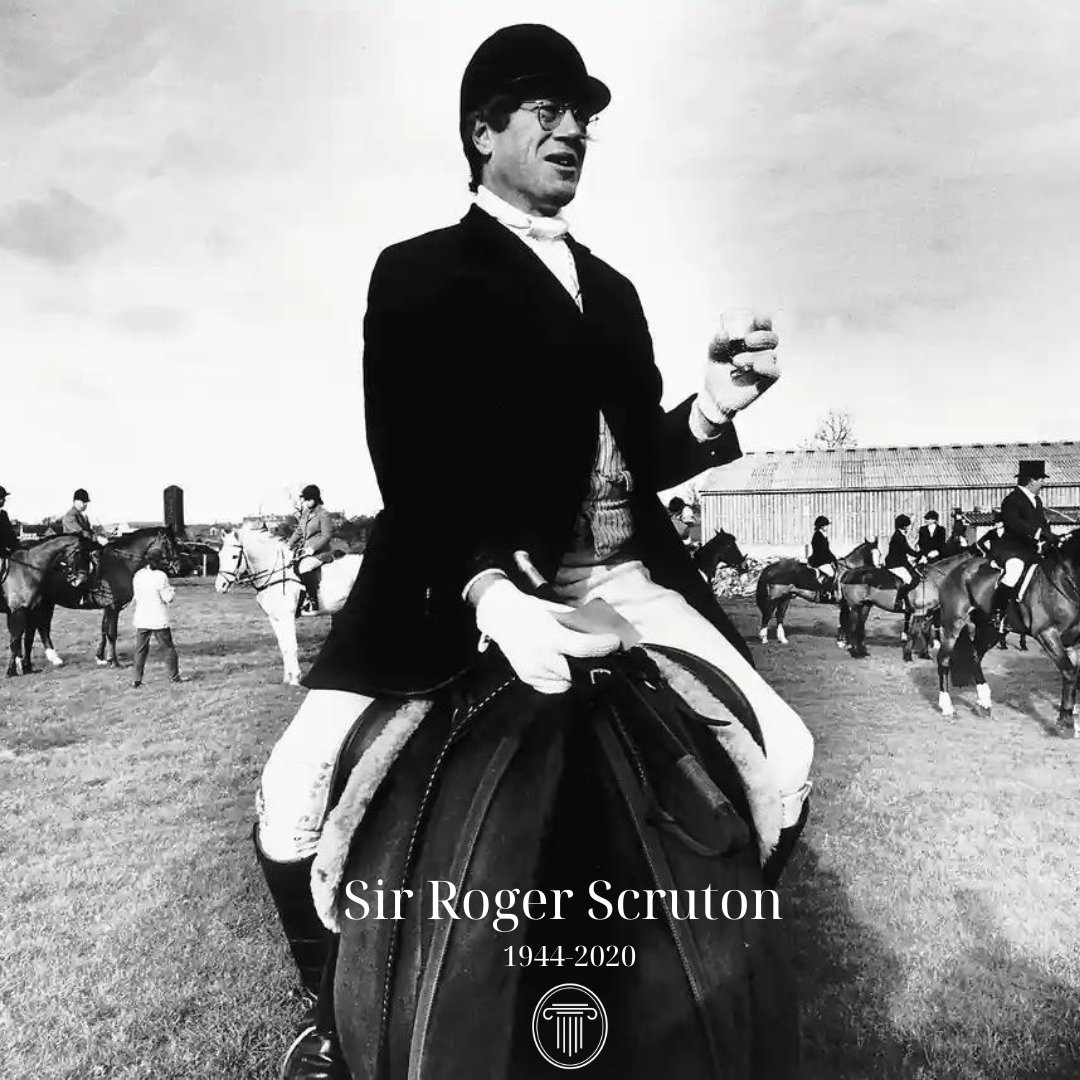
I understood conservatism not as a political credo only, but as a lasting vision of human society, one whose truth would always be hard to perceive, harder still to communicate, and hardest of all to act upon. And especially hard is it now, when religious sentiments follow the whims of fashion, when the global economy throws our local loyalties into disarray, and when materialism and luxury deflect the spirit from the proper business of living. But I do not despair, since experience has taught me that men and women can flee from the truth only for so long, that they will always, in the end, be reminded of the permanent values, and that the dreams of liberty, equality, and fraternity will excite them only in the short-term.

Sir Roger Scruton

Secret.

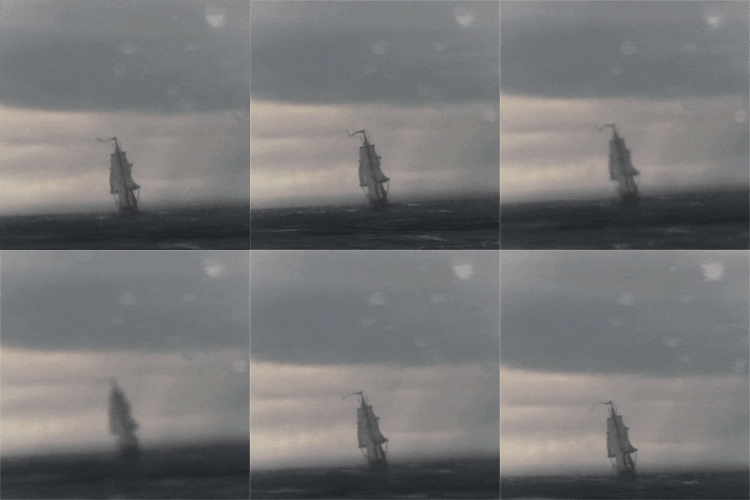
Ryder, Misty Moonlight, 1885


Who hath seen the Phantom Ship,
Her lordly rise and lowly dip,
Careering o'er the lonesome main,
No port shall know her keel again...
Ah, woe is in the awful sight,
The sailor finds there eternal night,
'Neath the waters he shall ever sleep,
And Ocean will the secret keep

Albert Pinkham Ryder

Quiet.


I am lost to the world
with which I used to waste so much time,
It has heard nothing from me for so long
that it may very well believe that I am dead!

It is of no consequence to me
Whether it thinks me dead;
I cannot deny it,
for I really am dead to the world.

I am dead to the world's tumult,
And I rest in a quiet realm!
I live alone in my heaven,
In my love and in my song.

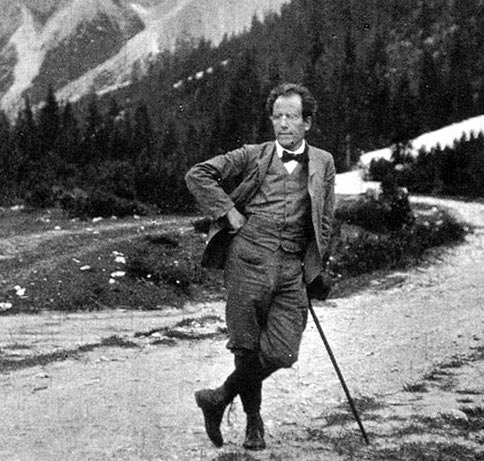
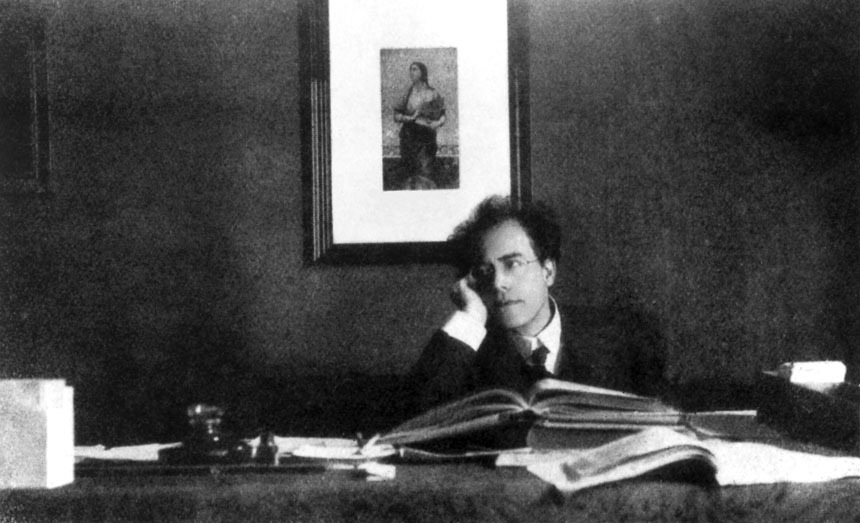
Gustav Mahler

Happy Birthday, Mahler


Gustav Mahler was born on this day in 1860.

Yannick Nézet-Séguin conducts the Rotterdam Philharmonic in a performance of the Symphony No. 10 in F-sharp minor ...

Excellent.

An excellent book ...

Schubert, Four Impromptus, D. 935, Op. posth. 142

Alfred Brendel performs Number 1 in F minor, Number 2 in A-flat major, Number 3 in B-flat major and Number 4 in F minor ...

06 July 2021

True.


It is the first vision that counts. The artist has only to remain true to his dream and it will possess his work in such a manner that it will resemble the work of no other or no two visions are alike, and those who reach the heights have all toiled up steep mountains by a different route. To each has been revealed a different panorama.

Albert Pinkham Ryder

Critical.


“Our clear finding is that citizens should be confident the results represent the true results of the ballots cast by the people of Michigan,” McBroom wrote in the report. “There is no evidence presented at this time to prove either significant acts of fraud or that an organized, wide-scale effort to commit fraudulent activity was perpetrated in order to subvert the will of Michigan voters.”

For good measure, McBroom added: “The Committee strongly recommends citizens use a critical eye and ear toward those who have pushed demonstrably false theories for their own personal gain.”

This reflected a pattern throughout the report—a clear and clinical statement of facts, accompanied by more animated language that expressed disgust with the grifters selling deception to the masses and disappointment with the voters who were buying it. Sitting at his dinner table, I told the senator that his writing occasionally took a tone of anger. He smirked. “I don’t know that I ever wrote angry,” McBroom replied. “But I tried to leave no room for doubt.”

So much for that. Soon after the report was released, Trump issued a thundering statement calling McBroom’s investigation “a cover up, and a method of getting out of a Forensic Audit for the examination of the Presidential contest.” The former president then published the office phone numbers for McBroom and Michigan’s GOP Senate majoCrity leader, Mike Shirkey, urging his followers to “call those two Senators now and get them to do the right thing, or vote them the hell out of office!”

McBroom had grown up a “history nerd.” He idolized the revolutionary Founders. He inhaled biographies of George Washington and Thomas Jefferson and Teddy Roosevelt. He revered the institution of the American presidency. And here was the 45th president, calling him out by name, accusing him of unthinkable treachery.


Thank you, Jessica.

Awash.

Haulin' the mail, beam awash ...

Out.


When sacrifice is present and respected, life redeems itself; it becomes an object of contemplation, something that "bears looking at", and which attracts our admiration and our love. This connection between sacrifice and love is presented in the rituals and stories of religion. It is also the recurring theme of art. When, in the carnage of the Great War, poets tried to make sense of the destruction that lay all around, it was in full consciousness that kitsch merely compounded the fault. Their effort was not to deny the horror, but to find a way of seeing it in sacrificial terms. From this effort were born the war poems of Wilfred Owen and, later, the War Requiem of Benjamin Britten.

So there, if we can find our way to it, is the remedy. It is a remedy that cannot be achieved through art alone. In the words of Rilke's "Archaic Torso of Apollo": "you must change your life". Beauty is vanishing from our world because we live as though it did not matter; and we live that way because we have lost the habit of sacrifice and are striving always to avoid it. The false art of our time, mired in kitsch and desecration, is one sign of this.

To point to this feature of our condition is not to issue an invitation to despair. It is one mark of rational beings that they do not live only -- or even at all -- in the present. They have the freedom to despise the world that surrounds them and to live in another way. The art, literature and music of our civilisation remind them of this, and also point to the path that lies always before them: the path out of desecration towards the sacred and the sacrificial. And that, in a nutshell, is what beauty teaches us.

Sir Roger Scruton, from Beauty

Gon'.


After some prolonged exposure to pop culture, I thought I'd pass along some lines from this week's inescapable number one hit ...
Smooth like butter, cool shade stunner
And you know we don't stop
Hot like summer, ain't no bummer
You be like, "Oh my God"
We gon' make you rock, and you say yeah
We gon' make you bounce, and you say yeah
Hotter? Sweeter! Cooler? Butter!
Get it, let it roll

 God, how I hate the 21st century.
Learn.

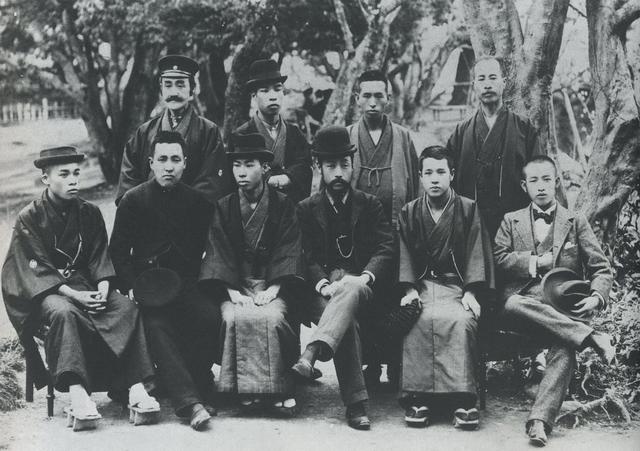
Unknown, A Gathering of Junior High School Teachers in Ishikawa Prefecture, 1899


I never heard that it had been anybody’s business to find out what his natural bent was, or where his failings lay, or to adapt any kind of knowledge to him. He had been adapted to the verses and had learnt the art of making them to such perfection. I did doubt whether Richard would not have profited by some one studying him a little, instead of his studying them quite so much.

Charles Dickens, from Bleak House

Ah, to sit and learn from this group.

Messages.


Deep silence fell about the little camp, planted there so audaciously in the jaws of the wilderness. The lake gleamed like a sheet of black glass beneath the stars. The cold air pricked. In the draughts of night that poured their silent tide from the depths of the forest, with messages from distant ridges and from lakes just beginning to freeze, there lay already the faint, bleak odors of coming winter.

Algernon Blackwood, from "The Wendigo"

C'MON SNOW!

Pat Metheny Group, "Above the Treetops"

04 July 2021

Accountable.


Our rights are also freedoms, and freedom makes sense only among people who are accountable to their neighbours for its misuse.

Rowdy.

Sign.

Trumbull, Signing the Declaration of Independence, 1818


An Independence Day classic from Mr. Wade ...
The document is on the table. Although some of your colleagues are making jokes, each one knows that the signature places the signer's head in a hangman's noose. To sign means you will be regarded as a traitor by the nation that has held your loyalty since birth. Your livelihood may be destroyed and your family doomed to a life of isolation and poverty. Many of your friends and associates will be under suspicion. Others will shun you. Your side, which has feeble and poorly-trained forces, will be fighting the greatest military power in the world. Despite all of the grand talk, the odds of success are small. Even if your side is successful, your new nation will be vulnerable to internal disputes and attacks from predatory powers. This theory of self-government, however attractive, might not work. It's your turn. Will you sign? 
 Thanks, Execupundit.

03 July 2021

Quickly.


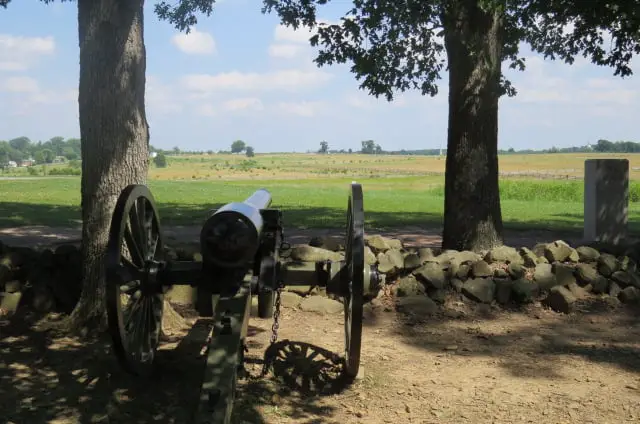
JULY 3, 1863
Lee rose by starlight, as he had done the previous morning, with equally fervent hopes of bringing this bloodiest of all his battles to a victorious conclusion before sunset. Two months ago today, Chancellorsville had thundered to its climax, fulfilling just such hopes against longer odds, and one month ago today, hard on the heels of a top-to-bottom reorganization occasioned by the death of Stonewall Jackson, the Army of Northern Virginia had begun its movement from the Rappahannock, northward to where an even greater triumph had seemed to be within its reach throughout the past 40-odd hours of savage fighting. Today would settle the outcome, he believed, not only of the battle — that went without saying; flesh and blood, bone and sinew and nerve could only stand so much — but also, perhaps, of the war; which, after all, was why he had come up here to Pennsylvania in the first place.

Lee's reply to this was an order for Pickett to be summoned... The objective was clearly defined against the skyline: a little clump of umbrella shaped trees, four-fifths of a mile away on Cemetery Ridge, just opposite the Confederate command post... By way of softening up the objective, the assault would be preceded by a brief but furious bombardment from than 140 guns of various calibers — this would be the greatest concentration of artillery ever assembled for a single purpose on the continent, and Lee appeared to have no doubt that it would pave the way for the infantry by pulverizing or driving off the batteries posted in support of the Union center.

Pickett's men were unaware of what awaited them beyond the screening ridge... The sun had burned the early morning clouds away, and though the lack of breeze gave promise of a sultry afternoon, the impression here in this unscarred valley behind Seminary Ridge was of an ideal summer day, no different from any other except in its perfection. "Never was sky or earth more serene, more harmonious, more aglow with light and life," one among the marchers afterwards wrote.

By now it was noon, and a great stillness came down over the field and over the two armies on their ridges. Between them, the burning house and barn loosed a long plume of smoke that stood upright in the hot and windless air. From time to time some itchy-fingered picket would fire a shot, distinct as a single hand-clap, but for the most part the silence was profound. For the 11,000 Confederates maintaining their mile-wide formation along the wooded slope and in the swale, the heat was oppressive. They sweated and waited, knowing that they were about to be launched on a desperate undertaking from which many of them would not be coming back, and since it had to be, they were of one accord in wanting to get it over with as soon as possible. "It is said, that to the condemned, in going to execution, the moments fly," a member of Pickett's staff wrote some years later, recalling the strain of the long wait. "To the good soldier, about to go into action, I am sure the moments linger.  It is the nervous anxiety to solve the great issue as speedily as possible, without stopping to count the cost. The Macbeth principle — 'Twere well it were done quickly — holds quite as good in heroic action as in crime."

Shelby Foote, from "Stars in Their Courses: The Gettysburg Campaign"

The Maestro of Memphis details Gettysburg ...

Preserve.


On this day in 1863, the three-day battle ended in a major victory for the North as Confederate troops retreated the town of Gettysburg.

For every Southern boy fourteen years old, not once but whenever he wants it, there is the instant when it's still not yet two o'clock on that July afternoon in 1863, the brigades are in position behind the rail fence, the guns are laid and ready in the woods and the furled flags are already loosened to break out and Pickett himself with his long oiled ringlets and his hat in one hand probably and his sword in the other looking up the hill waiting for Longstreet to give the word and it's all in the balance, it hasn't happened yet, it hasn't even begun yet, it not only hasn't begun yet but there is still time for it not to begin against that position and those circumstances which made more men than Garnett and Kemper and Armistead and Wilcox look grave yet it's going to begin, we all know that, we have come too far with too much at stake and that moment doesn't need even a fourteen-year-old boy to think This time. Maybe this time with all this much to lose than all this much to gain: Pennsylvania, Maryland, the world, the golden dome of Washington itself to crown with desperate and unbelievable victory the desperate gamble, the cast made two years ago; or to anyone who ever sailed a skiff under a quilt sail, the moment in 1492 when somebody thought This is it: the absolute edge of no return, to turn back now and make home or sail irrevocably on and either find land or plunge over the world's roaring rim. 

William Faulkner, from Intruder in the Dust

The description of Pickett's Charge from Ken Burns', The Civil War ...


From Smithsonian ...

A little over ten years after the start of the Civil War, in July 1871, Gen. George Meade spoke to a reunion of Union Army veterans in Boston.

“Comrades of the Army of the Potomac,” he began, “The first thing I shall do, which we ought to do, is to return our thanks to the Great Being who, in His infinite mercy, has allowed us to be here, to enjoy the pleasures of this meeting, who has blessed us and spared us through all the dangers of the war.”

Reconciliation; unification; a re-examination of the whys and wherefores of the greatest conflict in American history: All of these would be themes of later Civil War reunions and observances, leading up to the current 150th commemoration. What those veterans celebrated in the first major anniversary of the war was the simple fact that they had made it through alive.

“There was a desire among soldiers on both sides to bring moral clarity and purpose to what they had just experienced,” says Peter Carmichael, director of the Civil War Institute at Gettysburg College. “We cannot forget that especially for Northern soldiers their celebration of Union meant something deep to them. They went to war to preserve the Union.”

CONNECT

Command.


From David McCullough's J
ohn Adams ... 
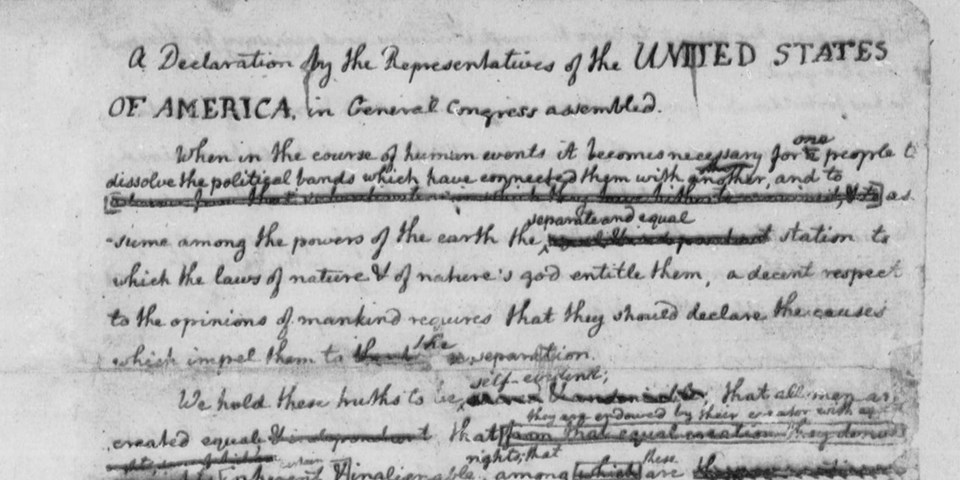
Alone in his upstairs parlor at Seventh and Market, Jefferson went to work, seated in an unusual revolving Windsor chair and holding on his lap a portable writing box, a small folding desk of his own design which, like the chair, he had especially made for him by a Philadelphia cabinetmaker. Traffic rattled by below the open windows. The June days and nights turned increasingly warm. He worked rapidly and, to judge by surviving drafts, with a sure command of his material. He had none of his books with him, nor needed any, he later claimed. It was not his objective to be original, he would explain, only “to place before mankind the common sense of the subject.” 
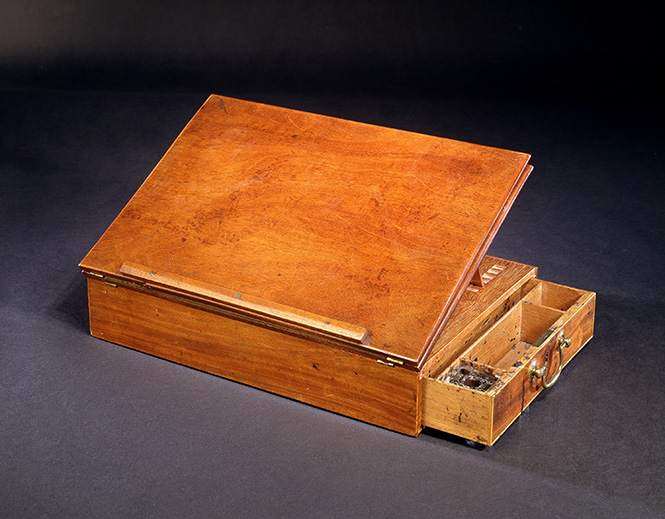
The desk on which a new nation announced itself to the world in 1776—in Jefferson’s script of marvelous clarity and straight-line precision—had a long career of service. Indeed, Jefferson used it for almost 50 years, through all his subsequent life as politician, ambassador, statesman, inventor, architect, educator, President and private citizen. And as the United States grew and prospered with each passing year, the significance of the writing box grew too. 

Read the rest here

Three annotated texts of The Declaration of Independence are here.

Refresh.

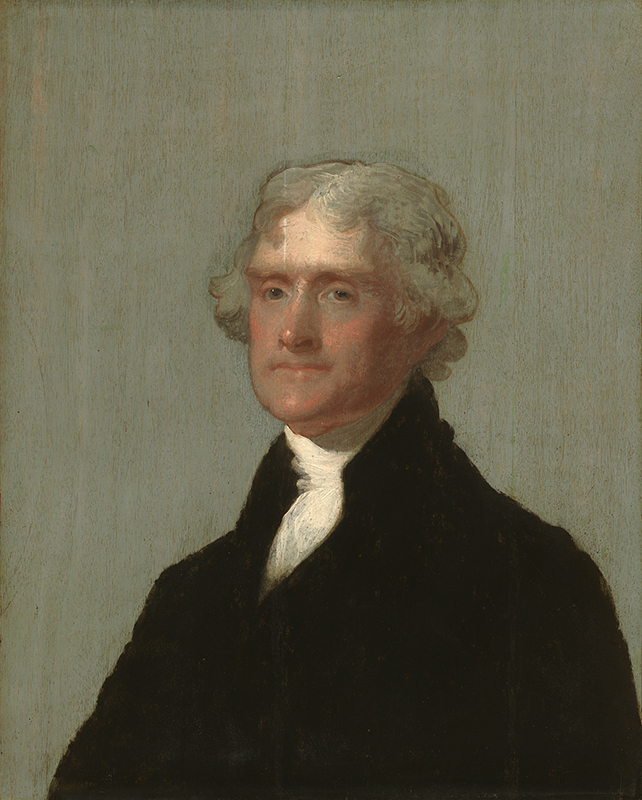
Stuart, Thomas Jefferson, 1805


June 24, 1826

Respected Sir:

The kind invitation I receive from you, on the part of the citizens of the city of Washington, to be present with them at their celebration on the fiftieth anniversary of American Independence, as one of the surviving signers of an instrument pregnant with our own, and the fate of the world, is most flattering to myself, and heightened by the honorable accompaniment proposed for the comfort of such a journey. It adds sensibly to the sufferings of sickness, to be deprived by it of a personal participation in the rejoicings of that day.  But acquiescence is a duty, under circumstances not placed among those we are permitted to control.

I should, indeed, with peculiar delight, have met and exchanged there congratulations personally with the small band, the remnant of that host of worthies, who joined with us on that day, in the bold and doubtful election we were to make for our country, between submission or the sword; and to have enjoyed with them the consolatory fact, that our fellow citizens, after half a century of experience and prosperity, continue to approve the choice we made. May it be to the world, what I believe it will be, (to some parts sooner, to others later, but finally to all,) the signal of arousing men to burst the chains under which monkish ignorance and superstition had persuaded them to bind themselves, and to assume the blessings and security of self-government.That form which we have substituted, restores the free right to the unbounded exercise of reason and freedom of opinion. All eyes are opened, or opening, to the rights of man. The general spread of the light of science has already laid open to every view the palpable truth, that the mass of mankind has not been born with saddles on their backs, nor a favored few booted and spurred, ready to ride them legitimately, by the grace of God. These are grounds of hope for others. For ourselves, let the annual return of this day forever refresh our recollections of these rights, and an undiminished devotion to them.

I will ask permission here to express the pleasure with which I should have met my ancient neighbors of the city of Washington and of its vicinities, with whom I passed so many years of a pleasing social intercourse; an intercourse which so much relieved the anxieties of the public cares, and left impressions so deeply engraved in my affections, as never to be forgotten. With my regret that ill health forbids me the gratification of an acceptance, be pleased to receive for yourself, and those for whom you write, the assurance of my highest respect and friendly attachments.

Thomas Jefferson, from a letter to Roger C. Weightman

Save.


A reminder from Cultural Offering points to our comeuppance ...
[W]e’re sitting here like programmed robots ready to repeat the same mistakes. Again. And again. We insist on the same entities, the same leaders, the same approach. Why? Because we’re deeply unserious. We are the definition of fools.

If we are really serious about winning (which I question), the movement and party need to look in the mirror. Quite frankly, the majority of the donors(not the self-interested corporatists and vulture capitalists, but the genuinely concerned citizens), need to have a conversation with their mirrors, too. It’s time for them to realize they’ve been taken for fools. While the Left has been fully focused on winning, we haven’t even been in the real game. We need to be really focused now on the things it will actually take to save the republic. And it’s not another white paper or tax cut.
Thanks, Kurt.
02 July 2021

Independent.


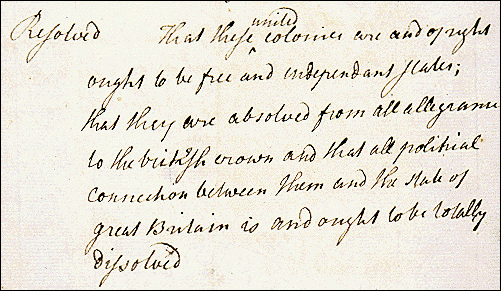
On this day in 1776, the Continental Congress passed the Lee Resolution, stating that "these United Colonies are, and of right, ought to be, Free and Independent States."

The Second Day of July 1776 will be the most memorable Epocha, in the History of America. It ought to be solemnized with Pomp and Parade, with Shews, Games, Sports, Guns, Bells, Bonfires, and Illuminations from one End of this Continent to the other from this Time forward forever more.

John Adams to Abigail Adams, July 3, 1776

CONNECT

01 July 2021

Hang.

"Hang care!" exclaimed he. "This is a delicious evening; the wine has a finer relish here than in the house, and the song is more exciting and melodious under the tranquil sky than in the close room, where the sound is stifled. Come, let us have a bacchanalian chant—let us, with old Sir Toby, make the welkin dance and rouse the night-owl with a catch! I am right merry. Pass the bottle, and tune your voices—a catch, a catch! The lights will be here anon."

Charles Ollier, from "The Haunted Manor-House of Paddington"

Led Zeppelin, "Nobody's Fault but Mine" ...


The euphony transformed me and inundated my soul in a roguish countenance, the likes of which I had know well in younger days. Such impishness soon drove out the complaints of the day. 

Umberto Limongiello