"I am not one who was born in the custody of wisdom. I am one who is fond of olden times and intense in quest of the sacred knowing of the ancients." Gustave Courbet
Showing posts with label dancing. Show all posts

28 February 2022

Happy Birthday, Montaigne


Michel de Montaigne was born on this day in 1533.

There is nothing more notable in Socrates than that he found time, when he was an old man, to learn music and dancing, and thought it time well spent.

Michel de Montaigne,

09 January 2021

03 October 2019

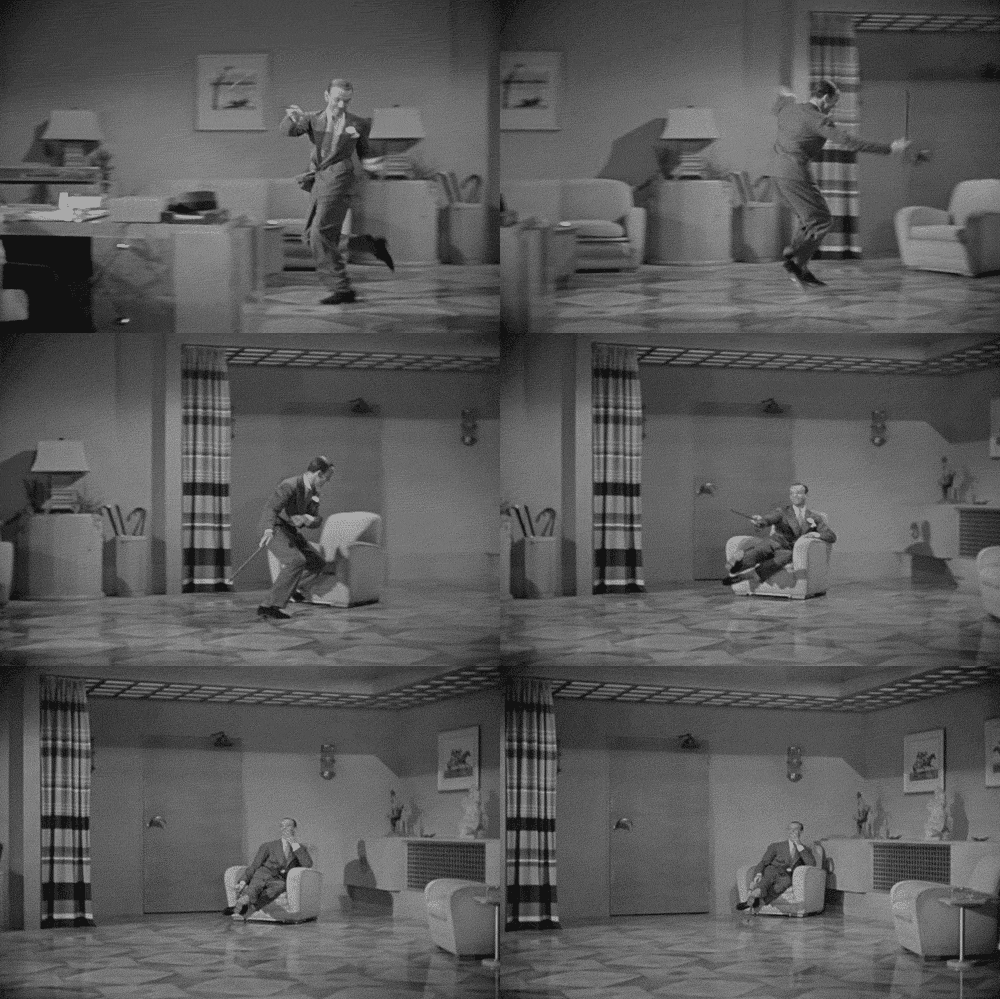
Dancing.


Nordstrom had taken to dancing alone.  He considered his sanity unblemished and his nightly dances an alternative to the torpor of calisthenics.  He had chided himself of late for so perfectly living out all of his mediocre assumptions about life.  The dancing was something new and owned an almost metaphysical edginess to it.  At forty-three he was in fine but not spectacular shape, though of late he felt a certain softness, a blurring in the perimeters of his body.  After cleaning up the dishes from a late dinner, he would dim the lights in the den and put an hour’s worth of music on the stereo though recently he often increased it to two hours: the selection was eclectic depending on his mood and might, on any evening, include music as varied as Merle Haggard, Joplin’s “Pearl”, The Beach Boys, Stravinsky’s The Rite of Spring, Otis Redding, and the Grateful Dead.  The point was to keep moving, to work up a dense sweat and to feel the reluctant body become fluid and graceful.  The fact of the matter is that Nordstrom wasn’t a very good dancer, but when you’re dancing alone, who cares?

Beginning with his childhood in Michigan he had been an excellent swimmer, a fair flycaster and bird hunter, and a fair basketball player, a fair linebacker, a fair golfer, and a fair tennis player.  Only the swimming haunted his dreams, all other sports had been discarded.  Perhaps swimming was dancing in the water, he thought.  To swim under lily pads seeing their green slender stalks wavering as you passed, to swim under upraised logs, past schools of sunfish and bluegills, to swim through reed beds past wriggling water snakes and miniature turtles, to swim in small lakes, big lakes, Lake Michigan, to swim in small farm ponds, creeks, giant rivers where one was easily swept along easily by the current …

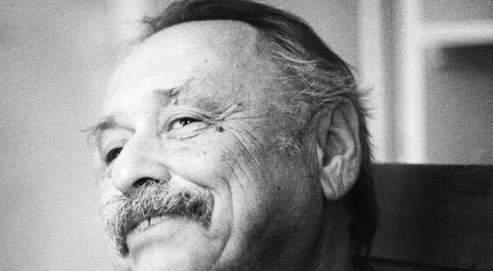
Jim Harrison, from "The Man Who Gave Up His Name"

27 April 2017

Romping.

Beard, Bears in the Watermelon Patch, 1871


Is that dance slowing in the mind of man
That made him think the universe could hum?
The great wheel turns its axle when it can;
I need a place to sing, and dancing-room,
And I have made a promise to my ears
I’ll sing and whistle romping with the bears.

Theodore Roethke

13 December 2016

Dancer.


AMONG SCHOOL CHILDREN


I walk through the long schoolroom questioning; 
A kind old nun in a white hood replies; 
The children learn to cipher and to sing, 
To study reading-books and history, 
To cut and sew, be neat in everything 
In the best modern way—the children's eyes 
In momentary wonder stare upon 
A sixty-year-old smiling public man. 

II 

I dream of a Ledaean body, bent 
Above a sinking fire, a tale that she 
Told of a harsh reproof, or trivial event 
That changed some childish day to tragedy— 
Told, and it seemed that our two natures blent 
Into a sphere from youthful sympathy, 
Or else, to alter Plato's parable, 
Into the yolk and white of the one shell. 

III 

And thinking of that fit of grief or rage 
I look upon one child or t'other there 
And wonder if she stood so at that age— 
For even daughters of the swan can share 
Something of every paddler's heritage— 
And had that colour upon cheek or hair, 
And thereupon my heart is driven wild: 
She stands before me as a living child. 

IV 

Her present image floats into the mind— 
Did Quattrocento finger fashion it 
Hollow of cheek as though it drank the wind 
And took a mess of shadows for its meat? 
And I though never of Ledaean kind 
Had pretty plumage once—enough of that, 
Better to smile on all that smile, and show 
There is a comfortable kind of old scarecrow. 


What youthful mother, a shape upon her lap 
Honey of generation had betrayed, 
And that must sleep, shriek, struggle to escape 
As recollection or the drug decide, 
Would think her son, did she but see that shape 
With sixty or more winters on its head, 
A compensation for the pang of his birth, 
Or the uncertainty of his setting forth? 

VI 

Plato thought nature but a spume that plays 
Upon a ghostly paradigm of things; 
Solider Aristotle played the taws 
Upon the bottom of a king of kings; 
World-famous golden-thighed Pythagoras 
Fingered upon a fiddle-stick or strings 
What a star sang and careless Muses heard: 
Old clothes upon old sticks to scare a bird. 

VII 

Both nuns and mothers worship images, 
But those the candles light are not as those 
That animate a mother's reveries, 
But keep a marble or a bronze repose. 
And yet they too break hearts—O Presences 
That passion, piety or affection knows, 
And that all heavenly glory symbolise— 
O self-born mockers of man's enterprise; 

VIII 

Labour is blossoming or dancing where 
The body is not bruised to pleasure soul, 
Nor beauty born out of its own despair, 
Nor blear-eyed wisdom out of midnight oil. 
O chestnut tree, great rooted blossomer, 
Are you the leaf, the blossom or the bole? 
O body swayed to music, O brightening glance,
How can we know the dancer from the dance?

William Butler Yeats

09 June 2016

Dancing.


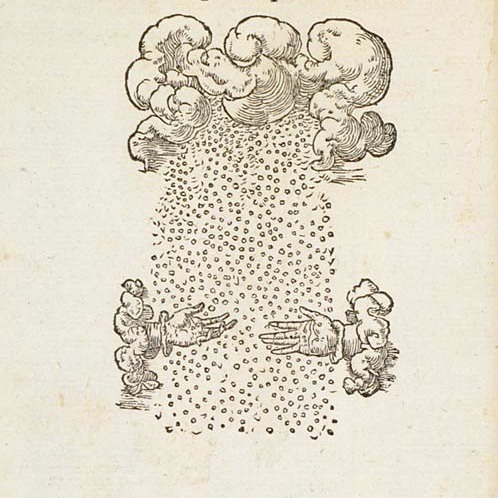
Both angels and imaginative thoughts, being phenomena not reliably repeatable under laboratory conditions, are equally outside the province of empirical science.

Consciousness, immune to scientific standards, is forever, then, the impossible phantom in the predictable biological machine, and your every thought a genuine supernatural event.

Your every thought is a ghost, dancing. 

Mikhail Lermontov