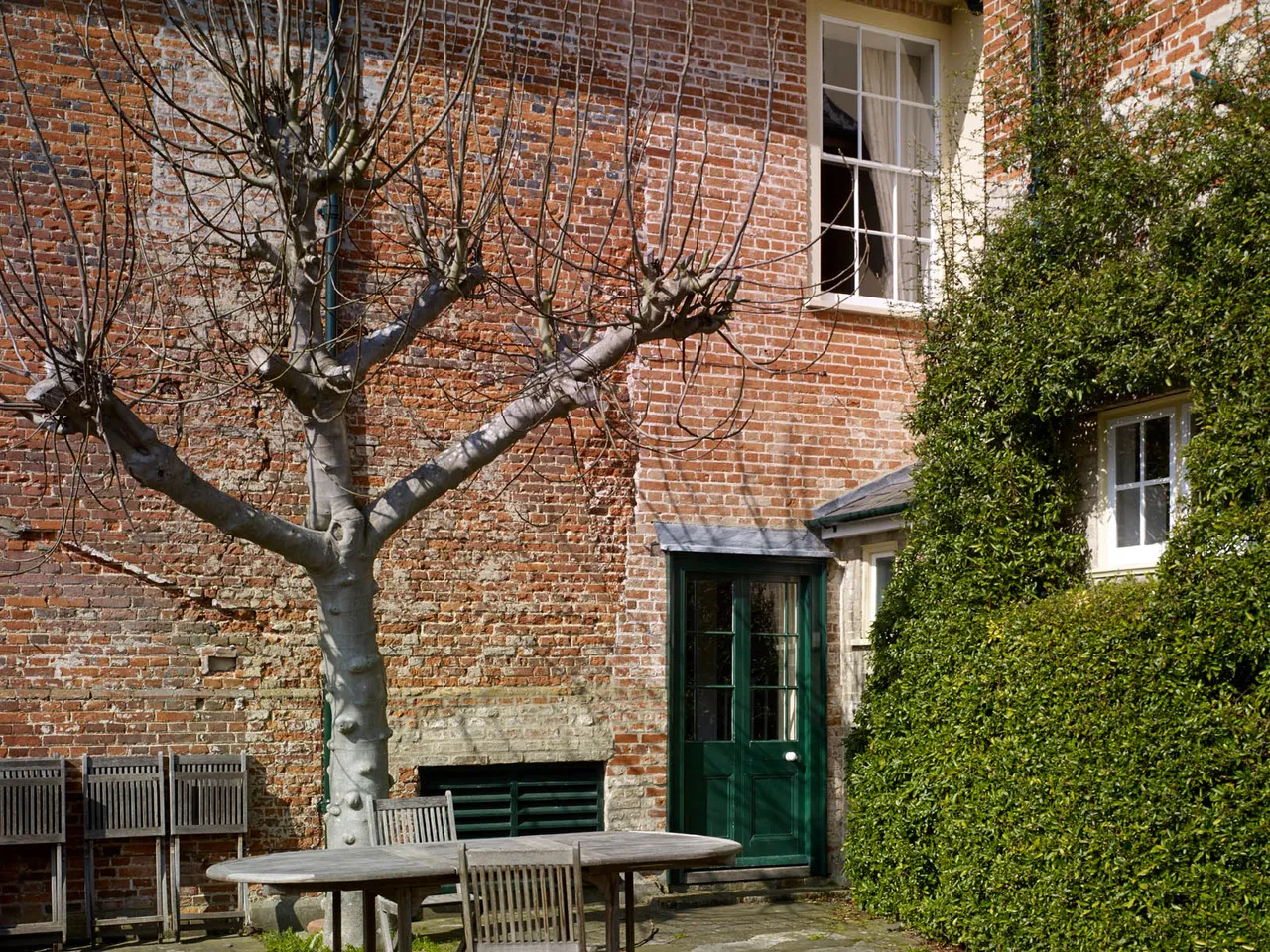
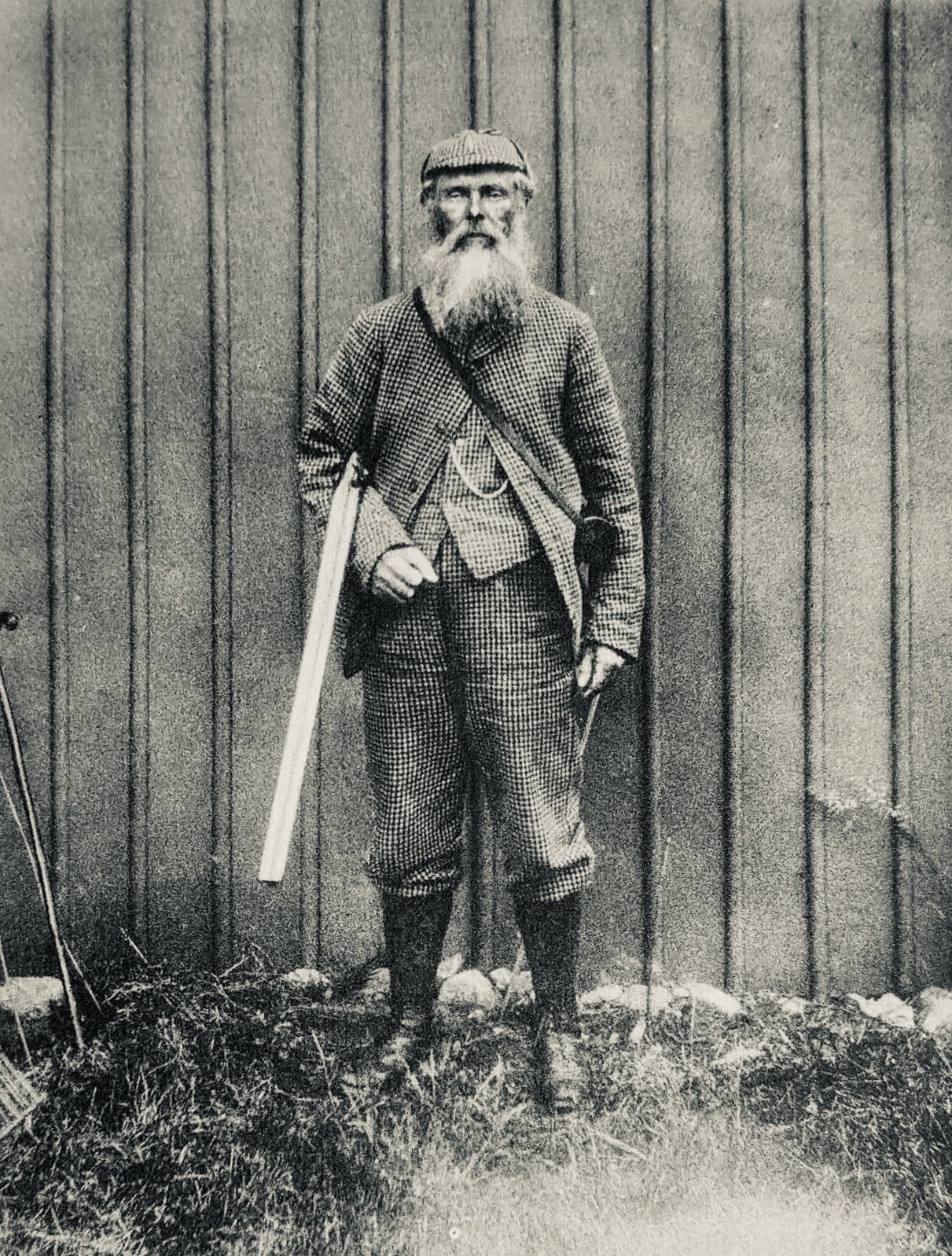
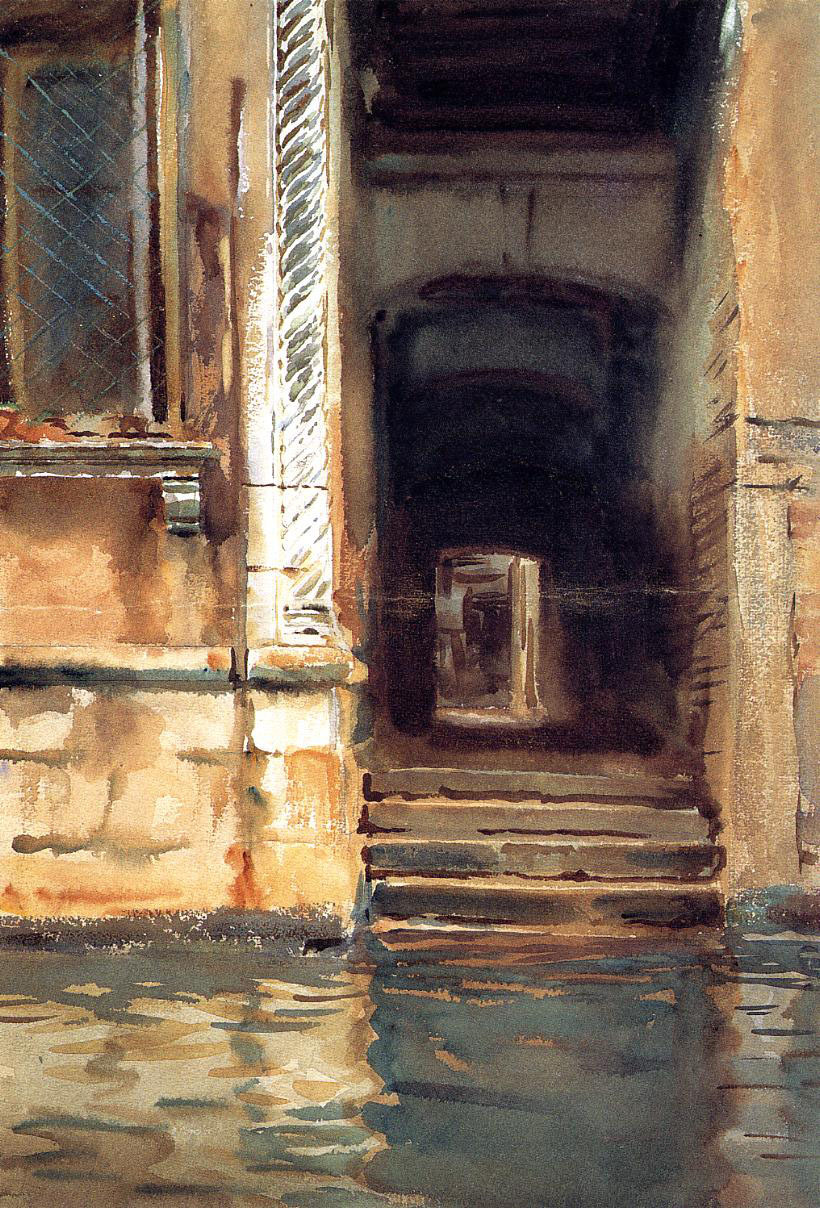
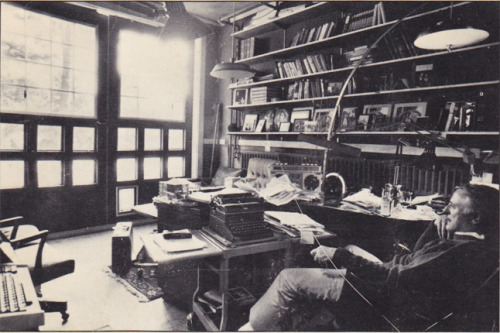
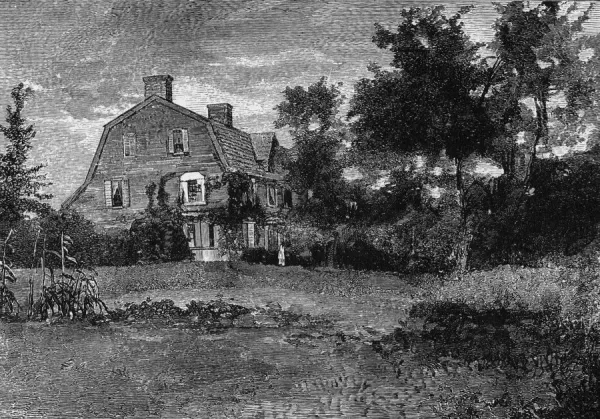
Keen, The Old Manse, Concord, Massachusetts, 1900
Happy the man who in a rainy day can betake himself to a huge garret, stored, like that of the Manse, with lumber that each generation has left behind it from a period before the Revolution. Our garret was an arched hall, dimly illuminated through small and dusty windows; it was but a twilight at the best; and there were nooks, or rather caverns, of deep obscurity, the secrets of which I never learned, being too reverent of their dust and cobwebs. The beams and rafters, roughly hewn and with strips of bark still on them, and the rude masonry of the chimneys, made the garret look wild and uncivilized, an aspect unlike what was seen elsewhere in the quiet and decorous old house. But on one side there was a little whitewashed apartment, which bore the traditionary title of the Saint’s Chamber, because holy men in their youth had slept, and studied, and prayed there. With its elevated retirement, its one window, its small fireplace, and its closet convenient for an oratory, it was the very spot where a young man might inspire himself with solemn enthusiasm and cherish saintly dreams. The occupants, at various epochs, had left brief records and ejaculations inscribed upon the walls. There, too, hung a tattered and shrivelled roll of canvas, which on inspection proved to be the forcibly wrought picture of a clergyman, in wig, band, and gown, holding a Bible in his hand. As I turned his face towards the light, he eyed me with an air of authority such as men of his profession seldom assume in our days. The original had been pastor of the parish more than a century ago, a friend of Whitefield, and almost his equal in fervid eloquence. I bowed before the effigy of the dignified divine, and felt as if I had now met face to face with the ghost by whom, as there was reason to apprehend, the Manse was haunted.
Houses of any antiquity in New England are so invariably possessed with spirits that the matter seems hardly worth alluding to. Our ghost used to heave deep sighs in a particular corner of the parlor, and sometimes rustled paper, as if he were turning over a sermon in the long upper entry,—where nevertheless he was invisible, in spite of the bright moonshine that fell through the eastern window. Not improbably he wished me to edit and publish a selection from a chest full of manuscript discourses that stood in the garret. Once, while Hillard and other friends sat talking with us in the twilight, there came a rustling noise as of a minister’s silk gown, sweeping through the very midst of the company, so closely as almost to brush against the chairs. Still there was nothing visible. A yet stranger business was that of a ghostly servant-maid, who used to be heard in the kitchen at deepest midnight, grinding coffee, cooking, ironing,—performing, in short, all kinds of domestic labor,—although no traces of anything accomplished could be detected the next morning. Some neglected duty of her servitude, some ill-starched ministerial band, disturbed the poor damsel in her grave and kept her at work without any wages.
But to return from this digression. A part of my predecessor’s library was stored in the garret,—no unfit receptacle indeed for such dreary trash as comprised the greater number of volumes. The old books would have been worth nothing at an auction. In this venerable garret, however, they possessed an interest, quite apart from their literary value, as heirlooms, many of which had been transmitted down through a series of consecrated hands from the days of the mighty Puritan divines. Autographs of famous names were to be seen in faded ink on some of their fly-leaves; and there were marginal observations or interpolated pages closely covered with manuscript in illegible shorthand, perhaps concealing matter of profound truth and wisdom. The world will never be the better for it. A few of the books were Latin folios, written by Catholic authors; others demolished Papistry, as with a sledge-hammer, in plain English. A dissertation on the Book of Job—which only Job himself could have had patience to read—filled at least a score of small, thick-set quartos, at the rate of two or three volumes to a chapter. Then there was a vast folio body of divinity,—too corpulent a body, it might be feared, to comprehend the spiritual element of religion. Volumes of this form dated back two hundred years or more, and were generally bound in black leather, exhibiting precisely such an appearance as we should attribute to books of enchantment. Others equally antique were of a size proper to be carried in the large waistcoat pockets of old times,—diminutive, but as black as their bulkier brethren, and abundantly interfused with Greek and Latin quotations. These little old volumes impressed me as if they had been intended for very large ones, but had been unfortunately blighted at an early stage of their growth.
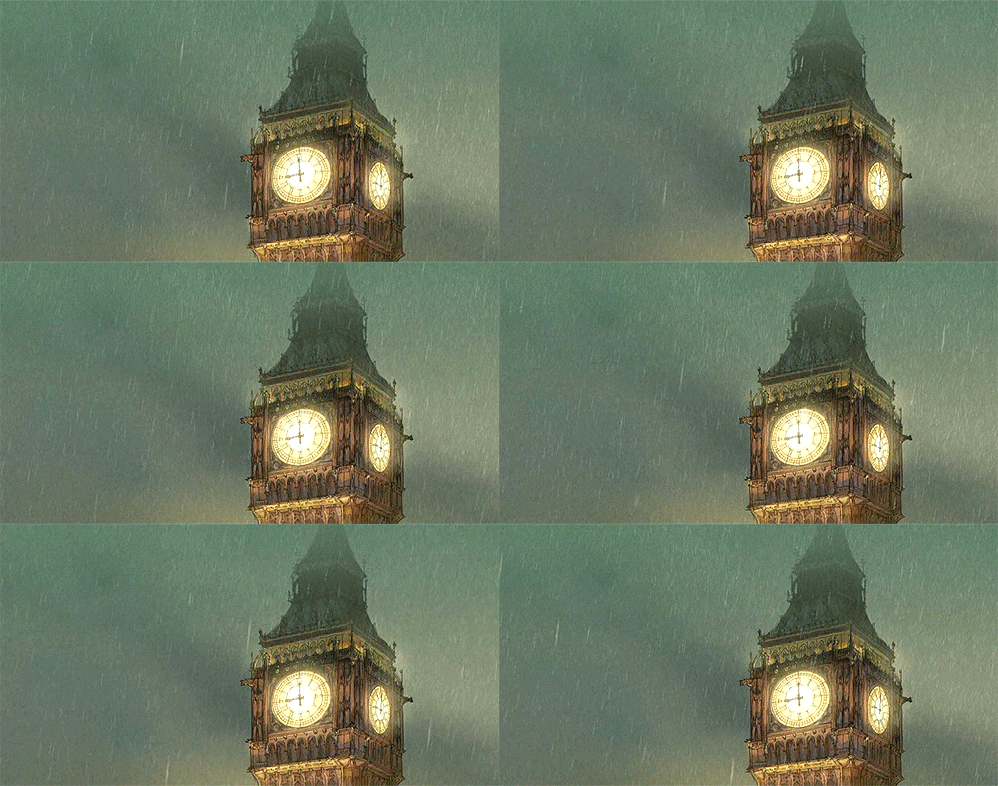
The rain pattered upon the roof and the sky gloomed through the dusty garret-windows while I burrowed among these venerable books in search of any living thought which should burn like a coal of fire or glow like an inextinguishable gem beneath the dead trumpery that had long hidden it. But I found no such treasure; all was dead alike; and I could not but muse deeply and wonderingly upon the humiliating fact that the works of man’s intellect decay like those of his hands. Thought grows mouldy. What was good and nourishing food for the spirits of one generation affords no sustenance for the next. Books of religion, however, cannot be considered a fair test of the enduring and vivacious properties of human thought, because such books so seldom really touch upon their ostensible subject, and have, therefore, so little business to be written at all. So long as an unlettered soul can attain to saving grace there would seem to be no deadly error in holding theological libraries to be accumulations of, for the most part, stupendous impertinence.
Many of the books had accrued in the latter years of the last clergyman’s lifetime. These threatened to be of even less interest than the elder works a century hence to any curious inquirer who should then rummage then as I was doing now. Volumes of the Liberal Preacher and Christian Examiner, occasional sermons, controversial pamphlets, tracts, and other productions of a like fugitive nature, took the place of the thick and heavy volumes of past time. In a physical point of view, there was much the same difference as between a feather and a lump of lead; but, intellectually regarded, the specific gravity of old and new was about upon a par. Both also were alike frigid. The elder books nevertheless seemed to have been earnestly written, and might be conceived to have possessed warmth at some former period; although, with the lapse of time, the heated masses had cooled down even to the freezing-point. The frigidity of the modern productions, on the other hand, was characteristic and inherent, and evidently had little to do with the writer’s qualities of mind and heart. In fine, of this whole dusty heap of literature I tossed aside all the sacred part, and felt myself none the less a Christian for eschewing it. There appeared no hope of either mounting to the better world on a Gothic staircase of ancient folios or of flying thither on the wings of a modern tract.
Nothing, strange to say, retained any sap except what had been written for the passing day and year, without the remotest pretension or idea of permanence. There were a few old newspapers, and still older almanacs, which reproduced to my mental eye the epochs when they had issued from the press with a distinctness that was altogether unaccountable. It was as if I had found bits of magic looking-glass among the books with the images of a vanished century in them. I turned my eyes towards the tattered picture above mentioned, and asked of the austere divine wherefore it was that he and his brethren, after the most painful rummaging and groping into their minds, had been able to produce nothing half so real as these newspaper scribblers and almanac-makers had thrown off in the effervescence of a moment. The portrait responded not; so I sought an answer for myself. It is the age itself that writes newspapers and almanacs, which therefore have a distinct purpose and meaning at the time, and a kind of intelligible truth for all times; whereas most other works—being written by men who, in the very act, set themselves apart from their age—are likely to possess little significance when new, and none at all when old. Genius, indeed, melts many ages into one, and thus effects something permanent, yet still with a similarity of office to that of the more ephemeral writer. A work of genius is but the newspaper of a century, or perchance of a hundred centuries.
Lightly as I have spoken of these old books, there yet lingers with me a superstitious reverence for literature of all kinds. A bound volume has a charm in my eyes similar to what scraps of manuscript possess for the good Mussulman. He imagines that those wind-wafted records are perhaps hallowed by some sacred verse; and I, that every new book or antique one may contain the “open sesame,”—the spell to disclose treasures hidden in some unsuspected cave of Truth. Thus it was not without sadness that I turned away from the library of the Old Manse.
Nathaniel Hawthorne, from "The Old Manse"