"I am not one who was born in the custody of wisdom. I am one who is fond of olden times and intense in quest of the sacred knowing of the ancients." Gustave Courbet
Showing posts with label Blackwood. Show all posts

13 November 2024

Trembingly.

Thomson, Dawn on Round Lake, 1915


The grey light of dawn that dropped, cold and glimmering, between the trees revealed the scene tolerably well. There stood the tent behind him, soaked with dew; the dark ashes of the fire, still warm; the lake, white beneath a coating of mist, the islands rising darkly out of it like objects packed in wool; and patches of snow beyond among the clearer spaces of the Bush—everything cold, still, waiting for the sun. But nowhere a sign of the vanished guide—still, doubtless, flying at frantic speed through the frozen woods. There was not even the sound of disappearing footsteps, nor the echoes of the dying voice. He had gone—utterly.

There was nothing; nothing but the sense of his recent presence, so strongly left behind about the camp; and—this penetrating, all-pervading odor.

And even this was now rapidly disappearing in its turn. In spite of his exceeding mental perturbation, Simpson struggled hard to detect its nature, and define it, but the ascertaining of an elusive scent, not recognized subconsciously and at once, is a very subtle operation of the mind. And he failed. It was gone before he could properly seize or name it. Approximate description, even, seems to have been difficult, for it was unlike any smell he knew. Acrid rather, not unlike the odor of a lion, he thinks, yet softer and not wholly unpleasing, with something almost sweet in it that reminded him of the scent of decaying garden leaves, earth, and the myriad, nameless perfumes that make up the odor of a big forest. Yet the "odor of lions" is the phrase with which he usually sums it all up.

Then—it was wholly gone, and he found himself standing by the ashes of the fire in a state of amazement and stupid terror that left him the helpless prey of anything that chose to happen. Had a muskrat poked its pointed muzzle over a rock, or a squirrel scuttled in that instant down the bark of a tree, he would most likely have collapsed without more ado and fainted. For he felt about the whole affair the touch somewhere of a great Outer Horror ... and his scattered powers had not as yet had time to collect themselves into a definite attitude of fighting self-control.

Nothing did happen, however. A great kiss of wind ran softly through the awakening forest, and a few maple leaves here and there rustled tremblingly to earth. The sky seemed to grow suddenly much lighter. Simpson felt the cool air upon his cheek and uncovered head; realized that he was shivering with the cold; and, making a great effort, realized next that he was alone in the bush—and that he was called upon to take immediate steps to find and succor his vanished companion.

Algernon Blackwood, from "The Wendigo"

09 November 2024

Warning.

Thomson, Northern Lake, Spring, 1912


CHAPTER TWO
In the morning the camp was astir before the sun. There had been a light fall of snow during the night and the air was sharp. Punk had done his duty betimes, for the odors of coffee and fried bacon reached every tent. All were in good spirits.

"Wind's shifted!" cried Hank vigorously, watching Simpson and his guide already loading the small canoe. "It's across the lake—dead right for you fellers. And the snow'll make bully trails! If there's any moose mussing around up thar, they'll not get so much as a tail-end scent of you with the wind as it is. Good luck, Monsieur Défago!" he added, facetiously giving the name its French pronunciation for once, "bonne chance!"

Défago returned the good wishes, apparently in the best of spirits, the silent mood gone. Before eight o'clock old Punk had the camp to himself, Cathcart and Hank were far along the trail that led westwards, while the canoe that carried Défago and Simpson, with silk tent and grub for two days, was already a dark speck bobbing on the bosom of the lake, going due east.

The wintry sharpness of the air was tempered now by a sun that topped the wooded ridges and blazed with a luxurious warmth upon the world of lake and forest below; loons flew skimming through the sparkling spray that the wind lifted; divers shook their dripping heads to the sun and popped smartly out of sight again; and as far as eye could reach rose the leagues of endless, crowding Bush, desolate in its lonely sweep and grandeur, untrodden by foot of man, and stretching its mighty and unbroken carpet right up to the frozen shores of Hudson Bay.

Simpson, who saw it all for the first time as he paddled hard in the bows of the dancing canoe, was enchanted by its austere beauty. His heart drank in the sense of freedom and great spaces just as his lungs drank in the cool and perfumed wind. Behind him in the stern seat, singing fragments of his native chanties, Défago steered the craft of birch bark like a thing of life, answering cheerfully all his companion's questions. Both were gay and light-hearted. On such occasions men lose the superficial, worldly distinctions; they become human beings working together for a common end. Simpson, the employer, and Défago the employed, among these primitive forces, were simply—two men, the "guider" and the "guided." Superior knowledge, of course, assumed control, and the younger man fell without a second thought into the quasi-subordinate position. He never dreamed of objecting when Défago dropped the "Mr.," and addressed him as "Say, Simpson," or "Simpson, boss," which was invariably the case before they reached the farther shore after a stiff paddle of twelve miles against a head wind. He only laughed, and liked it; then ceased to notice it at all.

For this "divinity student" was a young man of parts and character, though as yet, of course, untraveled; and on this trip—the first time he had seen any country but his own and little Switzerland—the huge scale of things somewhat bewildered him. It was one thing, he realized, to hear about primeval forests, but quite another to see them. While to dwell in them and seek acquaintance with their wild life was, again, an initiation that no intelligent man could undergo without a certain shifting of personal values hitherto held for permanent and sacred.

Simpson knew the first faint indication of this emotion when he held the new .303 rifle in his hands and looked along its pair of faultless, gleaming barrels. The three days' journey to their headquarters, by lake and portage, had carried the process a stage farther. And now that he was about to plunge beyond even the fringe of wilderness where they were camped into the virgin heart of uninhabited regions as vast as Europe itself, the true nature of the situation stole upon him with an effect of delight and awe that his imagination was fully capable of appreciating. It was himself and Défago against a multitude—at least, against a Titan!

The bleak splendors of these remote and lonely forests rather overwhelmed him with the sense of his own littleness. That stern quality of the tangled backwoods which can only be described as merciless and terrible, rose out of these far blue woods swimming upon the horizon, and revealed itself. He understood the silent warning.

Algernon Blackwood, from "The Wendigo"

07 November 2024

Murmur.

Thomson, Moonlight, Winter, 1916


Deep silence fell about the little camp, planted there so audaciously in the jaws of the wilderness. The lake gleamed like a sheet of black glass beneath the stars. The cold air pricked. In the draughts of night that poured their silent tide from the depths of the forest, with messages from distant ridges and from lakes just beginning to freeze, there lay already the faint, bleak odors of coming winter. White men, with their dull scent, might never have divined them; the fragrance of the wood fire would have concealed from them these almost electrical hints of moss and bark and hardening swamp a hundred miles away. Even Hank and Défago, subtly in league with the soul of the woods as they were, would probably have spread their delicate nostrils in vain....

But an hour later, when all slept like the dead, old Punk crept from his blankets and went down to the shore of the lake like a shadow—silently, as only Indian blood can move. He raised his head and looked about him. The thick darkness rendered sight of small avail, but, like the animals, he possessed other senses that darkness could not mute. He listened—then sniffed the air. Motionless as a hemlock stem he stood there. After five minutes again he lifted his head and sniffed, and yet once again. A tingling of the wonderful nerves that betrayed itself by no outer sign, ran through him as he tasted the keen air. Then, merging his figure into the surrounding blackness in a way that only wild men and animals understand, he turned, still moving like a shadow, and went stealthily back to his lean-to and his bed.

And soon after he slept, the change of wind he had divined stirred gently the reflection of the stars within the lake. Rising among the far ridges of the country beyond Fifty Island Water, it came from the direction in which he had stared, and it passed over the sleeping camp with a faint and sighing murmur through the tops of the big trees that was almost too delicate to be audible. With it, down the desert paths of night, though too faint, too high even for the Indian's hair-like nerves, there passed a curious, thin odor, strangely disquieting, an odor of something that seemed unfamiliar—utterly unknown.

The French Canadian and the man of Indian blood each stirred uneasily in his sleep just about this time, though neither of them woke. Then the ghost of that unforgettably strange odor passed away and was lost among the leagues of tenantless forest beyond.

Algernon Blackwood, from "The Wendigo"
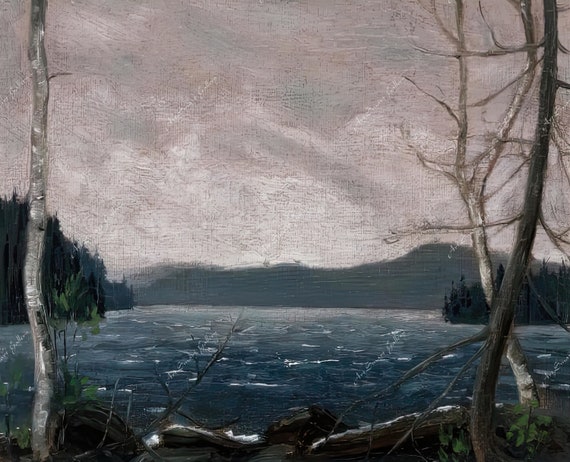
07 November 2023

Unknown.


Deep silence fell about the little camp, planted there so audaciously in the jaws of the wilderness. The lake gleamed like a sheet of black glass beneath the stars. The cold air pricked. In the draughts of night that poured their silent tide from the depths of the forest, with messages from distant ridges and from lakes just beginning to freeze, there lay already the faint, bleak odors of coming winter. White men, with their dull scent, might never have divined them; the fragrance of the wood fire would have concealed from them these almost electrical hints of moss and bark and hardening swamp a hundred miles away. Even Hank and Défago, subtly in league with the soul of the woods as they were, would probably have spread their delicate nostrils in vain....

But an hour later, when all slept like the dead, old Punk crept from his blankets and went down to the shore of the lake like a shadow—silently, as only Indian blood can move. He raised his head and looked about him. The thick darkness rendered sight of small avail, but, like the animals, he possessed other senses that darkness could not mute. He listened—then sniffed the air. Motionless as a hemlock stem he stood there. After five minutes again he lifted his head and sniffed, and yet once again. A tingling of the wonderful nerves that betrayed itself by no outer sign, ran through him as he tasted the keen air. Then, merging his figure into the surrounding blackness in a way that only wild men and animals understand, he turned, still moving like a shadow, and went stealthily back to his lean-to and his bed.

And soon after he slept, the change of wind he had divined stirred gently the reflection of the stars within the lake. Rising among the far ridges of the country beyond Fifty Island Water, it came from the direction in which he had stared, and it passed over the sleeping camp with a faint and sighing murmur through the tops of the big trees that was almost too delicate to be audible. With it, down the desert paths of night, though too faint, too high even for the Indian's hair-like nerves, there passed a curious, thin odor, strangely disquieting, an odor of something that seemed unfamiliar—utterly unknown.

Algernon Blackwood, from The Wendigo

04 March 2023

Coming.


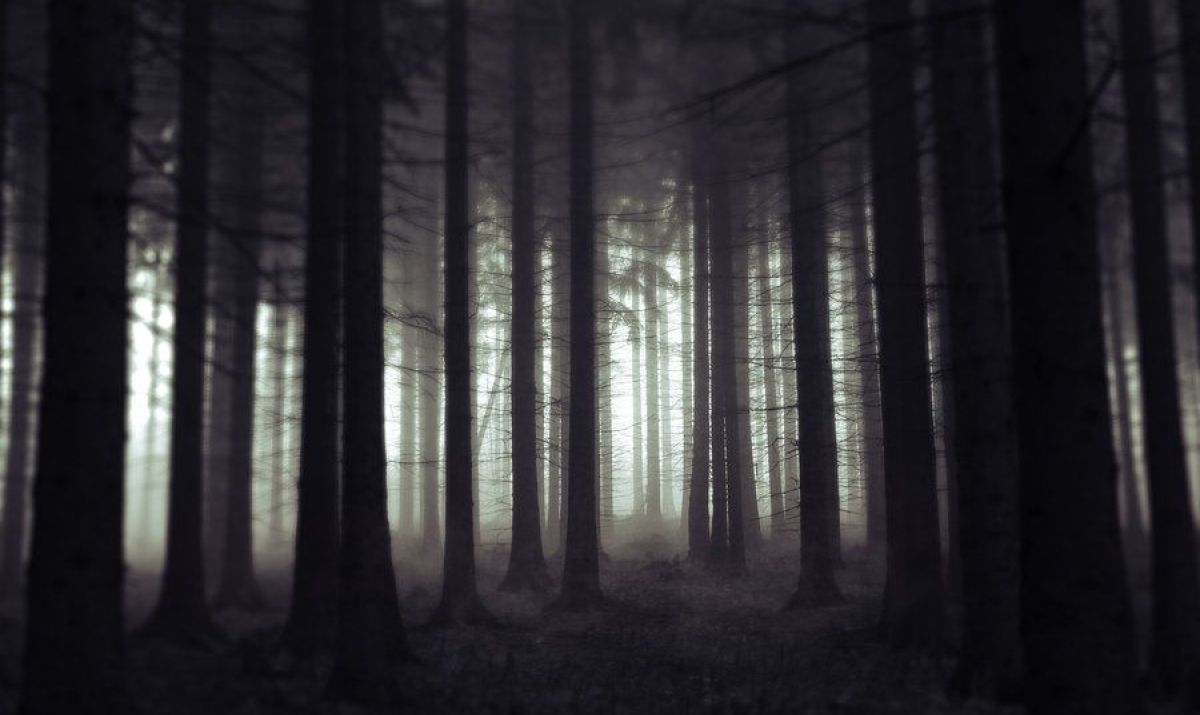
Deep silence fell about the little camp, planted there so audaciously in the jaws of the wilderness. The lake gleamed like a sheet of black glass beneath the stars. The cold air pricked. In the draughts of night that poured their silent tide from the depths of the forest, with messages from distant ridges and from lakes just beginning to freeze, there lay already the faint, bleak odors of coming winter.

Algernon Blackwood, from "The Wendigo"

07 November 2021

Navigate.


Maria Popova on the importance of being scared ...
Fairy tales — the proper kind, those original Brothers Grimm and Hans Christian Andersen tales I recall from my Eastern European childhood, unsanitized by censorship and unsweetened by American retellings — affirm what children intuitively know to be true but are gradually taught to forget, then to dread: that the terrible and the terrific spring from the same source, and that what grants life its beauty and magic is not the absence of terror and tumult but the grace and elegance with which we navigate the gauntlet.

CONNECT 

Neil Gaiman continues ...
The things that haunt us can be tiny things: a Web page; a voicemail message; an article in a newspaper, perhaps, by an English writer, remembering Halloweens long gone and skeletal trees and winding lanes and darkness. An article containing fragments of ghost stories, and which, nonsensical although the idea has to be, nobody ever remembers reading but you, and which simply isn’t there the next time you go and look for it.

From Algernon Blackwood's 1910 tale, "The Wendigo" ...
His piteous and beseeching voice was interrupted by a sound that was like the roar of wind coming across the lake. The trees overhead shook their tangled branches. The blazing fire bent its flames as before a blast. And something swept with a terrific, rushing noise about the little camp and seemed to surround it entirely in a single moment of time. Défago shook the clinging blankets from his body, turned towards the woods behind, and with the same stumbling motion that had brought him—was gone: gone, before anyone could move muscle to prevent him, gone with an amazing, blundering swiftness that left no time to act. The darkness positively swallowed him; and less than a dozen seconds later, above the roar of the swaying trees and the shout of the sudden wind, all three men, watching and listening with stricken hearts, heard a cry that seemed to drop down upon them from a great height of sky and distance—

06 July 2021

Messages.


Deep silence fell about the little camp, planted there so audaciously in the jaws of the wilderness. The lake gleamed like a sheet of black glass beneath the stars. The cold air pricked. In the draughts of night that poured their silent tide from the depths of the forest, with messages from distant ridges and from lakes just beginning to freeze, there lay already the faint, bleak odors of coming winter.

Algernon Blackwood, from "The Wendigo"

C'MON SNOW!

01 December 2020

Stretch.


The dusk rapidly deepened; the glades grew dark; the crackling of the fire and the wash of little waves along the rocky lake shore were the only sounds audible. The wind had dropped with the sun, and in all that vast world of branches nothing stirred. Any moment, it seemed, the woodland gods, who are to be worshipped in silence and loneliness, might stretch their mighty and terrific outlines among the trees.

Algernon Blackwood, from The Wendigo

14 March 2019

Happy Birthday, Blackwood


Algernon Blackwood was born on this day in 1869.

No place worth knowing yields itself at sight, and those the least inviting on first view may leave the most haunting pictures upon the walls of memory. Great revelations of nature, of course, never fail to impress in one way or another, and I am no stranger to moods of the kind. Mountains overawe and oceans terrify, while the mystery of great forests exercises a spell peculiarly its own. But all these, at one point or another, somewhere link on intimately with human life and human experience. They stir comprehensible, even if alarming, emotions. They tend on the whole to exalt.

Algernon Blackwood

11 February 2019

Worshiped.


The dusk rapidly deepened; the glades grew dark; the crackling of the fire and the wash of little waves along the rocky lake shore were the only sounds audible. The wind had dropped with the sun, and in all that vast world of branches nothing stirred. Any moment, it seemed, the woodland gods, who are to be worshiped in silence and loneliness, might stretch their mighty and terrific outlines among the trees.

Algernon Blackwood, from The Wendigo

10 February 2019

Watch.


No place worth knowing yields itself at sight, and those the least inviting on first view may leave the most haunting pictures upon the walls of memory. Adventures come to the adventurous, and mysterious things fall in the way of those who, with wonder and imagination, are on the watch for them; but the majority of people go past the doors that are half ajar, thinking them closed, and fail to notice the faint stirrings of the great curtain that hangs ever in the form of appearances between them and the world of causes behind.

Algernon Blackwood

29 December 2017

Notice.


Adventures come to the adventurous, and mysterious things fall in the way of those who, with wonder and imagination, are on the watch for them; but the majority of people go past the doors that are half ajar, thinking them closed, and fail to notice the faint stirrings of the great curtain that hangs ever in the form of appearances between them and the world of causes behind.

Algernon Blackwood