"I am not one who was born in the custody of wisdom. I am one who is fond of olden times and intense in quest of the sacred knowing of the ancients." Gustave Courbet

07 December 2017

Arise.


The CLOUD

I bring fresh showers for the thirsting flowers,
From the seas and the streams;
I bear light shade for the leaves when laid
In their noonday dreams.
From my wings are shaken the dews that waken
The sweet buds every one,
When rocked to rest on their mother's breast,
As she dances about the sun.
I wield the flail of the lashing hail,
And whiten the green plains under,
And then again I dissolve it in rain,
And laugh as I pass in thunder.

I sift the snow on the mountains below,
And their great pines groan aghast;
And all the night 'tis my pillow white,
While I sleep in the arms of the blast.
Sublime on the towers of my skiey bowers,
Lightning my pilot sits;
In a cavern under is fettered the thunder,
It struggles and howls at fits;
Over earth and ocean, with gentle motion,
This pilot is guiding me,
Lured by the love of the genii that move
In the depths of the purple sea;
Over the rills, and the crags, and the hills,
Over the lakes and the plains,
Wherever he dream, under mountain or stream,
The Spirit he loves remains;
And I all the while bask in Heaven's blue smile,
Whilst he is dissolving in rains.

The sanguine Sunrise, with his meteor eyes,
And his burning plumes outspread,
Leaps on the back of my sailing rack,
When the morning star shines dead;
As on the jag of a mountain crag,
Which an earthquake rocks and swings,
An eagle alit one moment may sit
In the light of its golden wings.
And when Sunset may breathe, from the lit sea beneath,
Its ardours of rest and of love,
And the crimson pall of eve may fall
From the depth of Heaven above,
With wings folded I rest, on mine aëry nest,
As still as a brooding dove.

That orbèd maiden with white fire laden,
Whom mortals call the Moon,
Glides glimmering o'er my fleece-like floor,
By the midnight breezes strewn;
And wherever the beat of her unseen feet,
Which only the angels hear,
May have broken the woof of my tent's thin roof,
The stars peep behind her and peer;
And I laugh to see them whirl and flee,
Like a swarm of golden bees,
When I widen the rent in my wind-built tent,
Till calm the rivers, lakes, and seas,
Like strips of the sky fallen through me on high,
Are each paved with the moon and these.

I bind the Sun's throne with a burning zone,
And the Moon's with a girdle of pearl;
The volcanoes are dim, and the stars reel and swim,
When the whirlwinds my banner unfurl.
From cape to cape, with a bridge-like shape,
Over a torrent sea,
Sunbeam-proof, I hang like a roof,
The mountains its columns be.
The triumphal arch through which I march
With hurricane, fire, and snow,
When the Powers of the air are chained to my chair,
Is the million-coloured bow;
The sphere-fire above its soft colours wove,
While the moist Earth was laughing below.

I am the daughter of Earth and Water,
And the nursling of the Sky;
I pass through the pores of the ocean and shores;
I change, but I cannot die.
For after the rain when with never a stain
The pavilion of Heaven is bare,
And the winds and sunbeams with their convex gleams
Build up the blue dome of air,
I silently laugh at my own cenotaph,
And out of the caverns of rain,
Like a child from the womb, like a ghost from the tomb,
I arise and unbuild it again.

Percy Bysshe Shelley

06 December 2017

Excludes.


Thank you, Wrath of Gnon.

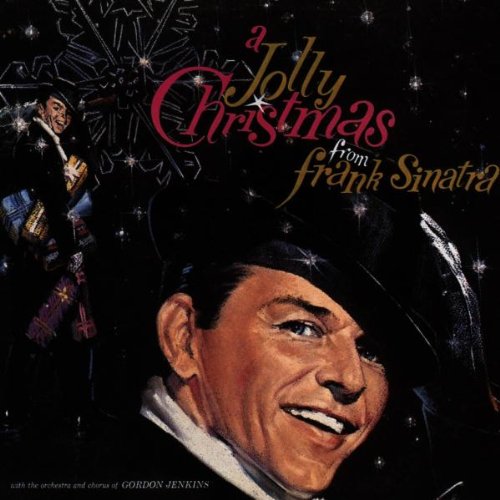
Frank Sinatra, "I Could Write a Book"

Songs about Language Arts class are rare ...

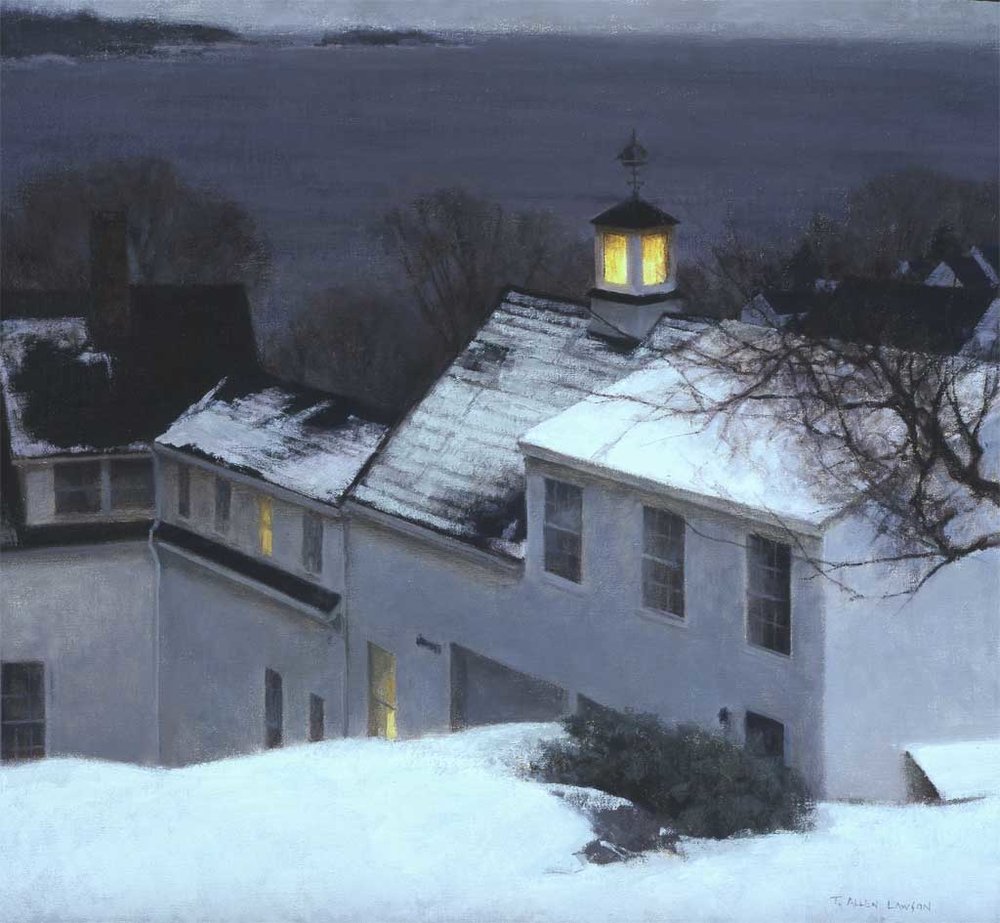
Roofline.

Lawson, Rockport Roofline, 2004


Thank you, Tail Feathers.

Life.

Showtime has unveiled the first trailer for Eric Clapton: Life in 12 Bars which will premier February 10, 2018 ...

Content.

Wyeth, N.C., Great Blue Heron, 1941


No one grumbles among the oyster clans,
And lobsters play their bone guitars all summer.
Only we, with our opposable thumbs, want
Heaven to be, and God to come, again.
There is no end to our grumbling; we want
Comfortable earth and sumptuous Heaven.
But the heron standing on one leg in the bog
Drinks his dark rum all day, and is content.

Robert Bly

Group.


Thank you, Wrath of Gnon.

Excellent.

An excellent album (and it's endorsed by fifth graders) ...

05 December 2017

Nóirín Ní Riain & the Monks of Glenstal Abbey, "The Darkest Midnight in December"

The darkest midnight in December,
No snow, no hail, nor winter storm,
Shall hinder us for to remember,
The Babe that on this night was born.
With shepherds we are come to see,
This lovely Infants glorious charms,
Born of a maid as prophets said,
The God of love in Mary's arms.

Have you not heard the sacred story,
How man was made those seats to fill,
Which the fallen angels lost in glory
By their presumption, pride and will?
They thought us mean for to obtain
Such glorious seats and crowns in heaven,
So through a cheat they got Eve to eat
The fruit, to be avenged on man.

Ye blessed angels join our voices
Let your gilded wings beat fluttering over,
Whilst every st~til set free rejoices,
And every devil must adore.
We'll sing and pray that He always may
Our Church and clergyman defend,
God grant us grace in all our days,
A merry Christmas and a happy end.


Listening.


The riverbed, dried-up, half-full of leaves.
Us, listening to a river in the trees.

Seamus Heaney

Except.

Thomas à Kempis, 1460


Everywhere I have sought peace and not found it, except in a corner with a book.

Thomas à Kempis

Inspiring.


mosaic (n.)
c. 1400, from Old French mosaicq "mosaic work," from Italian mosaico, from Medieval Latin musaicum "mosaic work, work of the Muses," noun use of neuter of musaicus "of the Muses," from Latin Musa (see muse). Medieval mosaics were often dedicated to the Muses. The word formed in Medieval Latin as though from Greek, but the (late) Greek word for "mosaic work" was mouseion (Klein says this sense was borrowed from Latin). Figurative use is from 1640s. As an adjective in English from 1580s. Related: Mosaicist.

muse (n.)
late 14c., protectors of the arts, from Old French Muse and directly from Latin Musa, from Greek Mousa, "the Muse," also "music, song," from PIE root *men- (1) "to think." Meaning "inspiring goddess of a particular poet" is from late 14c.

Excellent.

Three excellent albums ...


Jethro Tull, ""Cat's Squirrel"

Flag.

Against.


When I first encountered the name of the city of Stockholm, I little thought that I would ever visit it, never mind end up being welcomed to it as a guest of the Swedish Academy and the Nobel Foundation. At that particular time, such an outcome was not just beyond expectation: it was simply beyond conception. In the 1940s, when I was the eldest child of an ever-growing family in rural Co. Derry, we crowded together in the three rooms of a traditional thatched farmstead and lived a kind of den-life which was more or less emotionally and intellectually proofed against the outside world. It was an intimate, physical, creaturely existence in which the night sounds of the horse in the stable beyond one bedroom wall mingled with the sounds of adult conversation from the kitchen beyond the other. We took in everything that was going on, of course—rain in the trees, mice on the ceiling, a steam train rumbling along the railway line one field back from the house—but we took it in as if we were in the doze of hibernation. A historical, pre-sexual, in suspension between the archaic and the modern, we were as susceptible and impressionable as the drinking water that stood in a bucket in our scullery: every time a passing train made the earth shake, the surface of that water used to ripple delicately, concentrically, and in utter silence.

But it was not only the earth that shook for us: the air around and above us was alive and signalling also. When a wind stirred in the beeches, it stirred too an aerial wire attached to the topmost branch of the chestnut tree. Down it swept, in through a hole bored in the corner of the kitchen window, right on into the innards of our wireless set, where a little pandemonium of burbles and squeaks would suddenly give way to the voice of a BBC newsreader speaking out of the unexpected like a deus ex machina. And that voice too we could hear in our bedroom, transmitting from beyond and behind the voices of the adults in the kitchen; just as we could often hear, behind and beyond every voice, the frantic, piercing signalling of morse code.

We could pick up the names of neighbours being spoken in the local accents of our parents, and in the resonant English tones of the newsreader the names of bombers and of cities bombed, of war fronts and army divisions, the numbers of planes lost and of prisoners taken, of casualties suffered and advances made; and always, of course, we would pick up too those other, solemn and oddly bracing words, “the enemy” and “the allies.” But even so, none of the news of these world-spasms entered me as terror. If there was something ominous in the newscaster’s tones, there was something torpid about our understanding of what was at stake; and if there was something culpable about such political ignorance in that time and place, there was something positive about the security I inhabited as a result of it.

The wartime, in other words, was pre-reflective time for me. Preliterate too. Prehistorical in its way. Then as the years went on and my listening became more deliberate, I would climb up on an arm of our big sofa to get my ear closer to the wireless speaker. But it was still not the news that interested me; what I was after was the thrill of story, such as a detective serial about a British special agent called Dick Barton or perhaps a radio adaptation of one of Capt. W.E. Johns’s adventure tales about an RAF flying ace called Biggles. Now that the other children were older and there was so much going on in the kitchen, I had to get close to the actual radio set in order to concentrate my hearing, and in that intent proximity to the dial I grew familiar with the tones of foreign stations, with Leipzig and Oslo and Stuttgart and Warsaw and, of course, with Stockholm.

I also got used to hearing short bursts of foreign languages as the dial hand swept round from BBC to Radio Eireann, from the intonations of London to those of Dublin, and even though I did not understand what was being said in those first encounters with the gutturals and sibilants of European speech, I had already begun a journey into the wideness of the world. This in turn became a journey into the wideness of language, a journey where each point of arrival—whether in one's poetry or one's life—turned out to be a stepping stone rather than a destination, and it is that journey which has brought me now to this honoured spot. And yet the platform here feels more like a space station than a stepping stone, so that is why, for once in my life, I am permitting myself the luxury of walking on air.

I credit poetry for making this space-walk possible. I credit it immediately because of a line I wrote fairly recently encouraging myself (and whoever else might be listening) to “walk on air against your better judgment.” But I credit it ultimately because poetry can make an order as true to the impact of external reality and as sensitive to the inner laws of the poet's being as the ripples that rippled in and rippled out across the water in that scullery bucket fifty years ago. An order where we can at last grow up to that which we stored up as we grew. An order which satisfies all that is appetitive in the intelligence and prehensile in the affections. I credit poetry, in other words, both for being itself and for being a help, for making possible a fluid and restorative relationship between the mind's centre and its circumference, between the child gazing at the word “Stockholm” on the face of the radio dial and the man facing the faces that he meets in Stockholm at this most privileged moment. I credit it because credit is due to it, in our time and in all time, for its truth to life, in every sense of that phrase.

Seamus Heaney, from "Crediting Poetry," his 1995 Nobel Prize for Literature Acceptance Speech 

Inmost.


The INWARD MORNING

Packed in my mind lie all the clothes
Which outward nature wears,
And in its fashion's hourly change
It all things else repairs.
In vain I look for change abroad,
And can no difference find,
Till some new ray of peace uncalled
Illumes my inmost mind.

What is it gilds the trees and clouds,
And paints the heavens so gay,
But yonder fast-abiding light
With its unchanging ray?

Lo, when the sun streams through the wood,
Upon a winter's morn,
Where'er his silent beams intrude,
The murky night is gone.

How could the patient pine have known
The morning breeze would come,
Or humble flowers anticipate
The insect's noonday hum--

Till the new light with morning cheer
From far streamed through the aisles,
And nimbly told the forest trees
For many stretching miles?

I've heard within my inmost soul
Such cheerful morning news,
In the horizon of my mind
Have seen such orient hues,

As in the twilight of the dawn,
When the first birds awake,
Are heard within some silent wood,
Where they the small twigs break,

Or in the eastern skies are seen,
Before the sun appears,
The harbingers of summer heats
Which from afar he bears.

Henry David Thoreau

Rest in Peace, Mozart.

Wolfgang Amadeus Mozart passed on this day in 1791.

Karl Bohm conducts the Vienna Philharmonic in a performance of the Requiem in D Minor, K. 626 ...

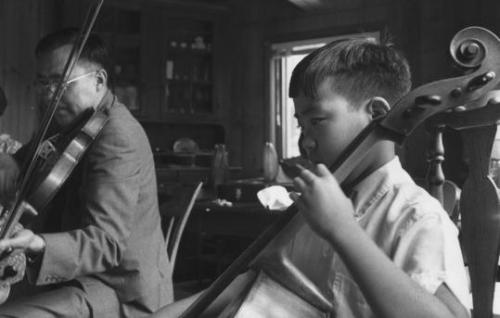
Practicing.


I actually enjoy practicing more and more … as a child, I practiced because I had to practice and you didn’t want to mess up. But that’s not a good thing. You want to please your teacher, you want to please your parents, you want to please your peers. And now I practice because I’ve experienced so much love that you practice out of loving a phrase, loving motivic change, loving a structure or harmony change or the way a sound can get to something.

Yo-Yo Ma

Thank you, Cultural Offering.

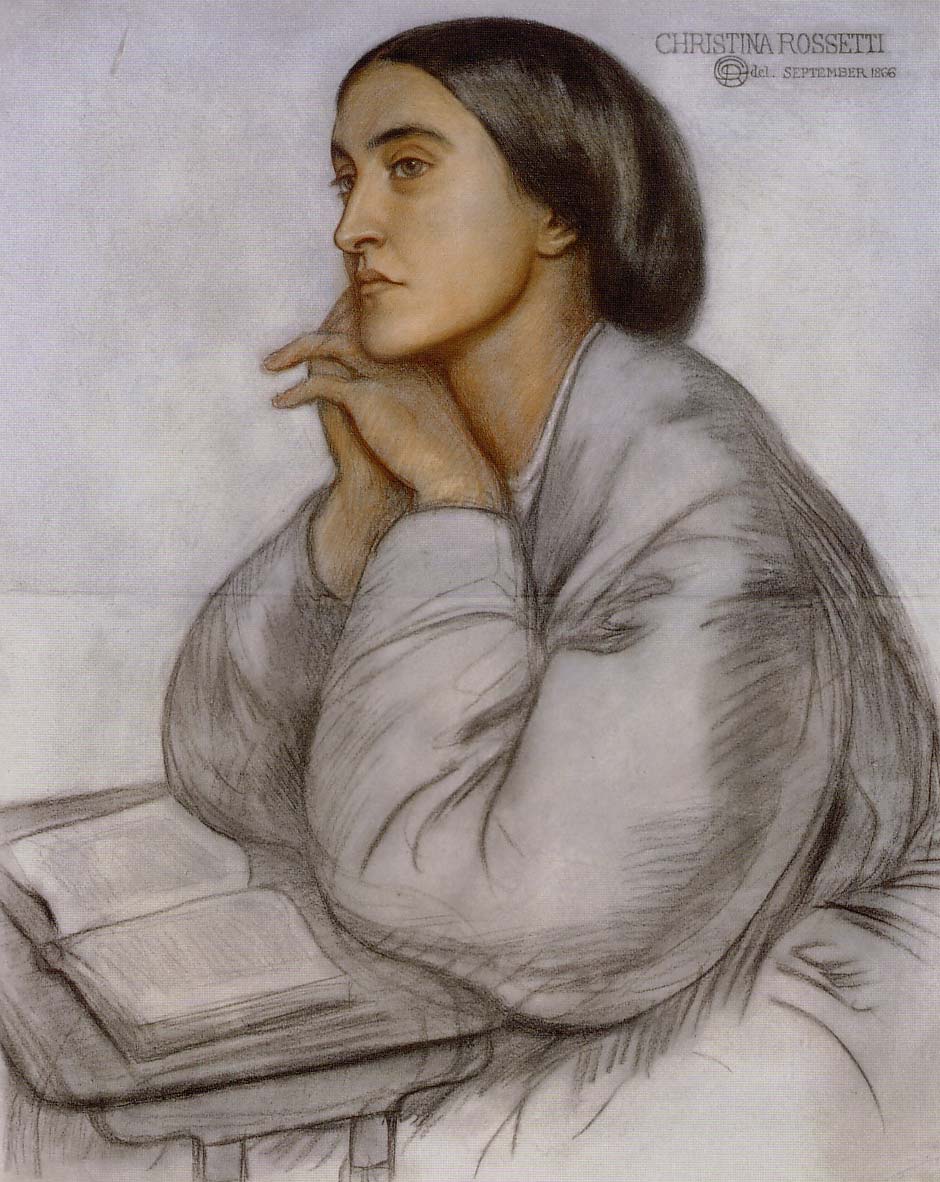
Happy birthday, Rossetti.

Rossetti, Christina Rossetti, 1866


Christina Rossetti was born on this day in 1830.

DE PROFUNDIS

Oh why is heaven built so far,
Oh why is earth set so remote?
I cannot reach the nearest star
That hangs afloat.

I would not care to reach the moon,
One round monotonous of change;
Yet even she repeats her tune
Beyond my range.

I never watch the scatter'd fire
Of stars, or sun's far-trailing train,
But all my heart is one desire,
And all in vain:

For I am bound with fleshly bands,
Joy, beauty, lie beyond my scope;
I strain my heart, I stretch my hands,
And catch at hope.

Christina Rossetti

Think.


Think of this too: while you are hanging back, they never hesitate; while you stay at home, they are always abroad…If they win a victory, they follow it up at once, and if they suffer a defeat, they scarcely fall back at all.

Thucydides, from The History of the Peloponnesian War

Thank you, Kurt.

04 December 2017

Tradition.

Sir Roger Scruton on "The Classical Tradition Today" ...


Schubert, Arpeggione Sonata. D. 821

Mischa Maisky performs with the Weinberger Chamber Orchestra, directed by Gábor Takács-Nagy ...

Ave.


Meanwhile, over roughly 50 years, I wrote and had many books published.  They were published by prime American houses; many of them had multiple editions; most of them were translated and then published in perhaps more than a dozen languages and countries around the world.  Highly respected historians praised them.  I had chosen a country life, separate and independent from most professional intellectuals.  Still, my own library grew.  At first it contained perhaps a thousand books in a small study in our house.  I bought more and more.  Then we added a large hexagonal library to our house, which I could afford, along with travel, because of the royalties advanced against my books from publishers.  North of our house, I had a few acres of wilderness.  In 1981, I convinced Stephanie to sell our house and build another one on the northern edge of the wilderness, along a small river, the Pickering Creek.  So we did, in three years.  Perhaps this was my most precious achievement: a handsome house, near perfect, at the end of a long driveway, for months surrounded by green and gold, flowers, and books—a large library on its western side, on two floors.  More than saturated with a rich silence, this library is.  It exudes an atmosphere.  In this house and in its library, I have now lived a third of a century, from my early 60’s on.  Each morning, trying to catch my breath, I stumble down from my bedroom to the library.  There shuffling, I sit now at a narrow desk tapping at keys with my trembling fingers.  Sometimes on late afternoons I go out to sit on my terrace, breathing in the view of a greensward; and yes, thanking God for having allowed me this.  Then, soused with a stiff drink, I return to my surroundings until dinner.

The “Blessings of Old Age”?  Oh, not at all.  How very soon I shall be dead.  In a year?  In a few months?  In a few weeks?  I hope that I will not be constrained to move from here to a communal nursing home.  I hope; but I cannot know.  What I know is that, after my death, this library, this house, will instantly be changed.  They are my inheritance for my children and my stepson.  My house will be sold at once.  My books will go to the library of the University of Notre Dame, thanks to the excellent Rev. Wilson D. (Bill) Miscamble, C.S.C.  My furniture and the decorations, chests, vitrines, armoires, antique clocks, paintings, and etchings on the walls will be dispersed among my children or sold.  They are still my surroundings, which in this country I assembled from an older America, England, France, Austria, and even one or two pieces from my family in Hungary, miraculously regained almost 70 years ago.  Perhaps I have been not much more than an ephemeral owner of an outdated museum.  I am not a survivor.  I am a crumbling remnant.  A remnant of the very end of the Bourgeois Age and a remnant of the Age of Books.  Ave atque vale.

John Lukacs

Experience.


Thank you, Cultural Offering.

Real.


Of course it is happening inside your head, Harry, but why on Earth should that mean that it is not real?

Albus Dumbledore

Excellent.

An excellent album ...

Choir of King's College, "The Holly and The Ivy"

Procedure.


Show not what has been done, but what can be. How beautiful the world would be if there were a procedure for moving through labyrinths.

Umberto Eco, from The Name of the Rose

03 December 2017

Security.


CHRISTMAS

There is nothing in England that exercises a more delightful spell over my imagination than the lingerings of the holiday customs and rural games of former times. They recall the pictures my fancy used to draw in the May morning of life, when as yet I only knew the world through books, and believed it to be all that poets had painted it; and they bring with them the flavour of those honest days of yore, in which, perhaps with equal fallacy, I am apt to think the world was more home-bred, social, and joyous than at present. I regret to say that they are daily growing more and more faint, being gradually worn away by time, but still more obliterated by modern fashion. They resemble those picturesque morsels of Gothic architecture which we see crumbling in various parts of the country, partly dilapidated by the waste of ages, and partly lost in the additions and alterations of latter days. Poetry, however, clings with cherishing fondness about the rural game and holiday revel, from which it has derived so many of its themes,—as the ivy winds its rich foliage about the Gothic arch and mouldering tower, gratefully repaying their support by clasping together their tottering remains, and, as it were, embalming them in verdure.

Of all the old festivals, however, that of Christmas awakens the strongest and most heartfelt associations. There is a tone of solemn and sacred feeling that blends with our conviviality, and lifts the spirit to a state of hallowed and elevated enjoyment. The services of the church about this season are extremely tender and inspiring. They dwell on the beautiful story of the origin of our faith, and the pastoral scenes that accompanied its announcement. They gradually increase in fervour and pathos during the season of Advent, until they break forth in full jubilee on the morning that brought peace and good-will to men. I do not know a grander effect of music on the moral feelings than to hear the full choir and the pealing organ performing a Christmas anthem in a cathedral, and filling every part of the vast pile with triumphant harmony.

It is a beautiful arrangement, also derived from days of yore, that this festival, which commemorates the announcement of the religion of peace and love, has been made the season for gathering together of family connections, and drawing closer again those bands of kindred hearts which the cares and pleasures and sorrows of the world are continually operating to cast loose; of calling back the children of a family who have launched forth in life, and wandered widely asunder, once more to assemble about the paternal hearth, that rallying-place of the affections, there to grow young and loving again among the endearing mementoes of childhood.

There is something in the very season of the year that gives a charm to the festivity of Christmas. At other times we derive a great portion of our pleasures from the mere beauties of nature. Our feelings sally forth and dissipate themselves over the sunny landscape, and we "live abroad and everywhere." The song of the bird, the murmur of the stream, the breathing fragrance of spring, the soft voluptuousness of summer, the golden pomp of autumn; earth with its mantle of refreshing green, and heaven with its deep delicious blue and its cloudy magnificence, all fill us with mute but exquisite delight, and we revel in the luxury of mere sensation. But in the depth of winter, when nature lies despoiled of every charm, and wrapped in her shroud of sheeted snow, we turn for our gratifications to moral sources. The dreariness and desolation of the landscape, the short gloomy days and darksome nights, while they circumscribe our wanderings, shut in our feelings also from rambling abroad, and make us more keenly disposed for the pleasures of the social circle. Our thoughts are more concentrated; our friendly sympathies more aroused, we feel more sensibly the charm of each other's society, and are brought more closely together by dependence on each other for enjoyment. Heart calleth unto heart; and we draw our pleasures from the deep wells of living kindness, which lie in the quiet recesses of our bosoms: and which when resorted to, furnish forth the pure element of domestic felicity.

The pitchy gloom without makes the heart dilate on entering the room filled with the glow and warmth of the evening fire. The ruddy blaze diffuses an artificial summer and sunshine through the room, and lights up each countenance into a kindlier welcome. Where does the honest face of hospitality expand into a broader and more cordial smile—where is the shy glance of love more sweetly eloquent—than by the winter fireside? and as the hollow blast of wintry wind rushes through the hall, claps the distant door, whistles about the casement, and rumbles down the chimney, what can be more grateful than that feeling of sober and sheltered security with which we look around upon the comfortable chamber and the scene of domestic hilarity?

Washington Irving, from Old Christmas

Excellent.

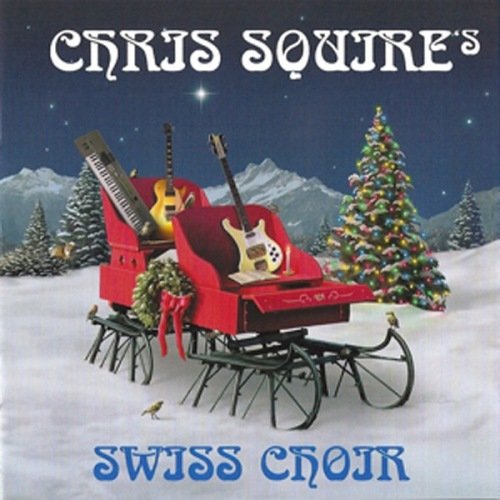
An excellent album ...

02 December 2017

Peace.


Merry Christmas and Peace on Earth.

Cheers.

Fouettard.


Le Père Fouettard.

Is.


SNOW MAN

One must have a mind of winter
To regard the frost and the boughs
Of the pine-trees crusted with snow;

And have been cold a long time
To behold the junipers shagged with ice,
The spruces rough in the distant glitter

Of the January sun; and not to think
Of any misery in the sound of the wind,
In the sound of a few leaves,

Which is the sound of the land
Full of the same wind
That is blowing in the same bare place

For the listener, who listens in the snow,
And, nothing himself, beholds
Nothing that is not there and the nothing that is.

Wallace Stevens

01 December 2017

1st.

Now.

Idle.


I have often wondered whether especially those days when we are forced to remain idle are not precisely the days spend in the most profound activity. Whether our actions themselves, even if they do not take place until later, are nothing more than the last reverberations of a vast movement that occurs within us during idle days.

In any case, it is very important to be idle with confidence, with devotion, possibly even with joy. The days when even our hands do not stir are so exceptionally quiet that it is hardly possible to raise them without hearing a whole lot.

Rainer Maria Rilke

Aaron Lewis, "That Ain't Country"

HAPPY FRIDAY!

So tell me, whatever happened to the country songs
Full of truth and consequences, all the things gone wrong
Someone came and changed it up, made it all a lie
I'd like to spit a little beach-nut right in that dude's eye

Sings.

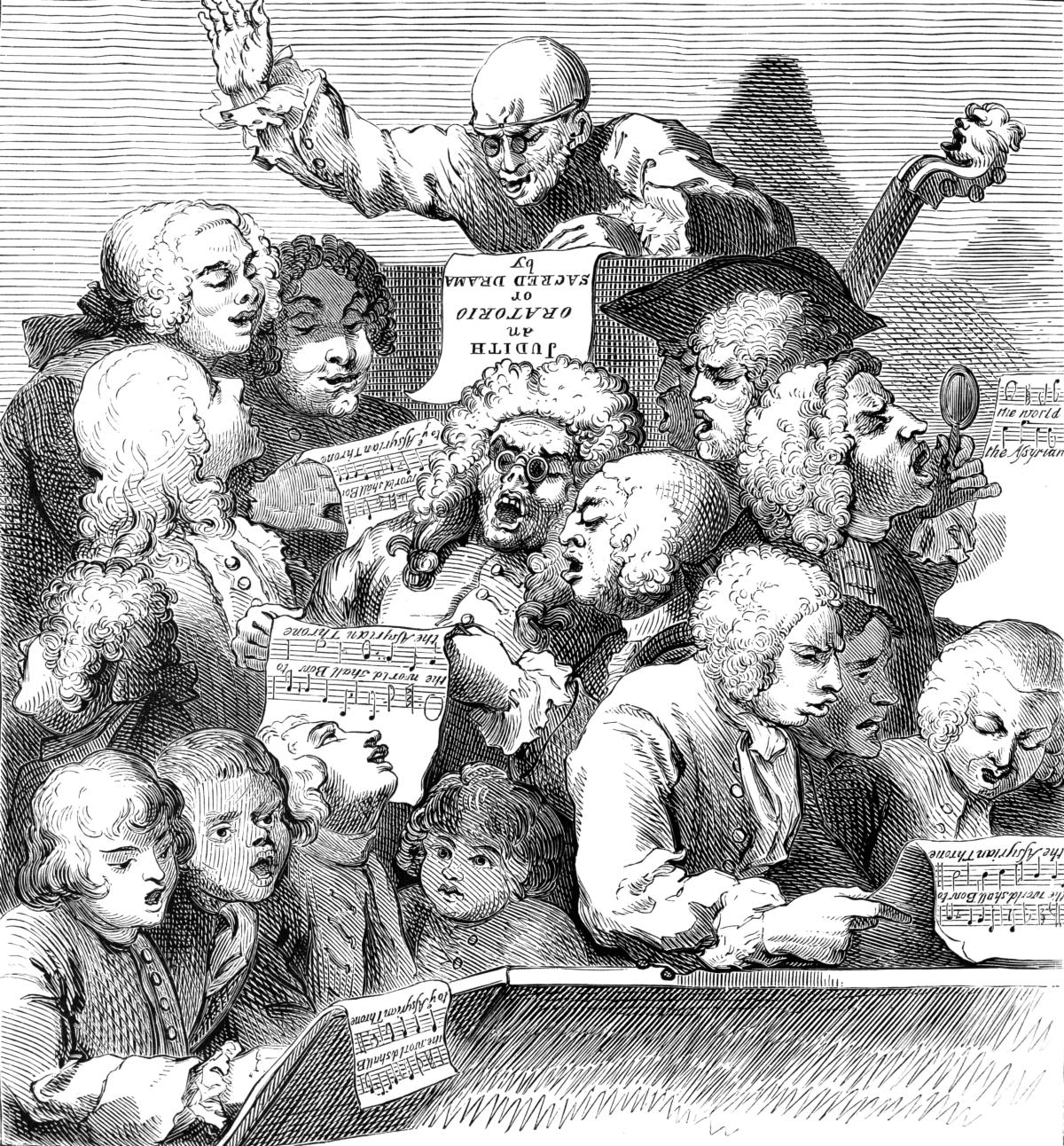
Hogarth, The Oratorio, 1732


He who sings scares away his woes.

Miguel Cervantes