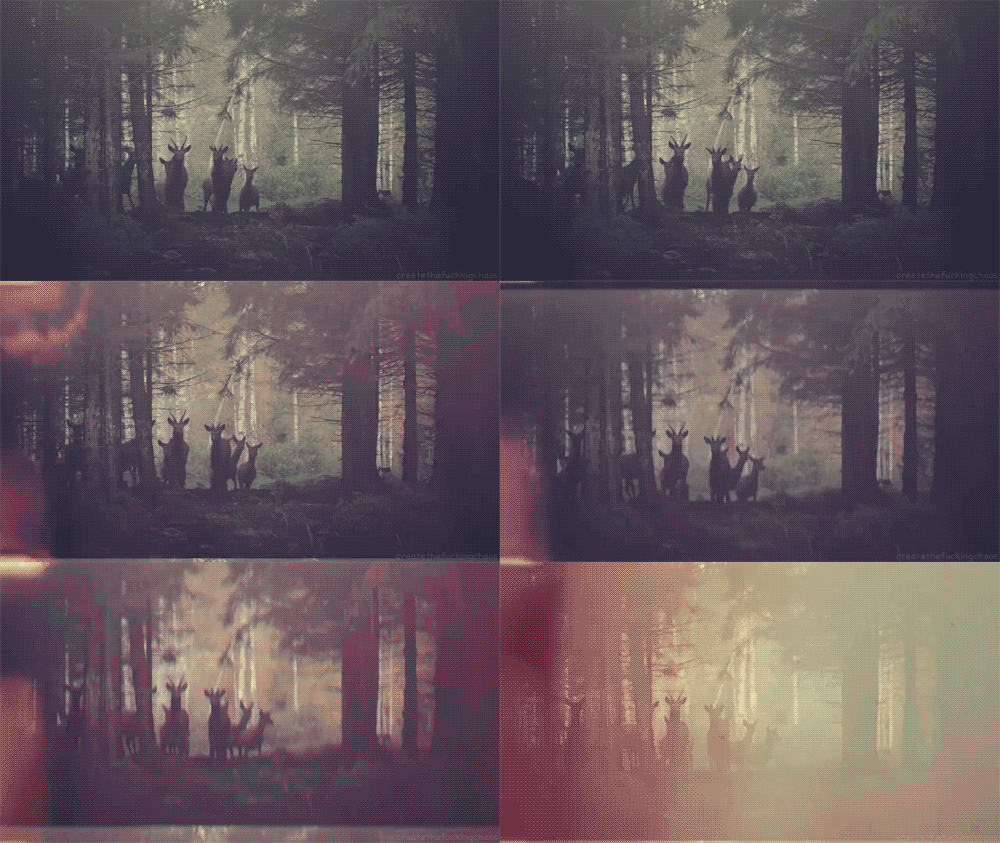
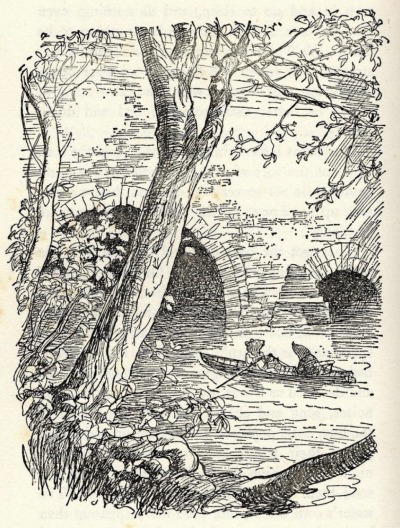
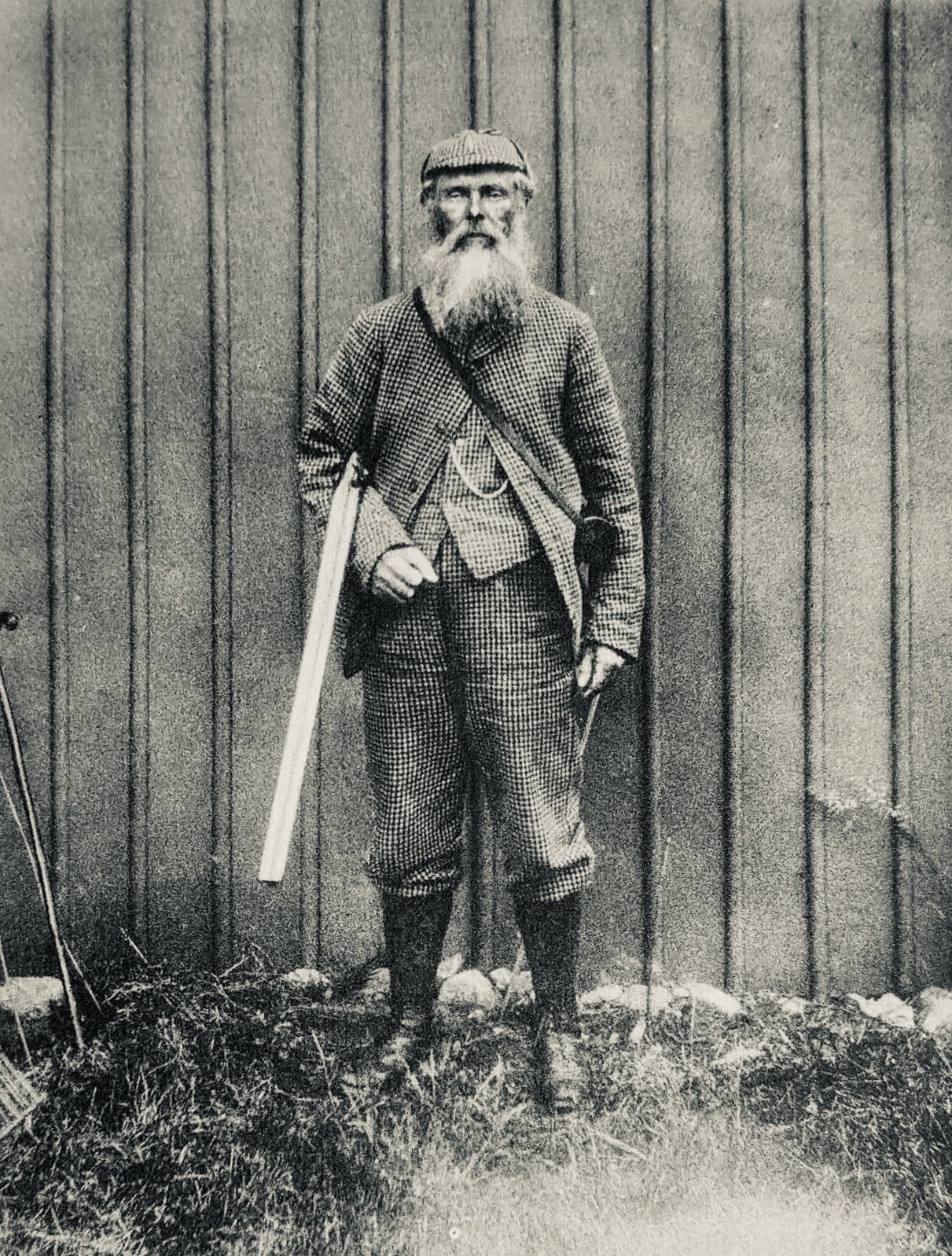
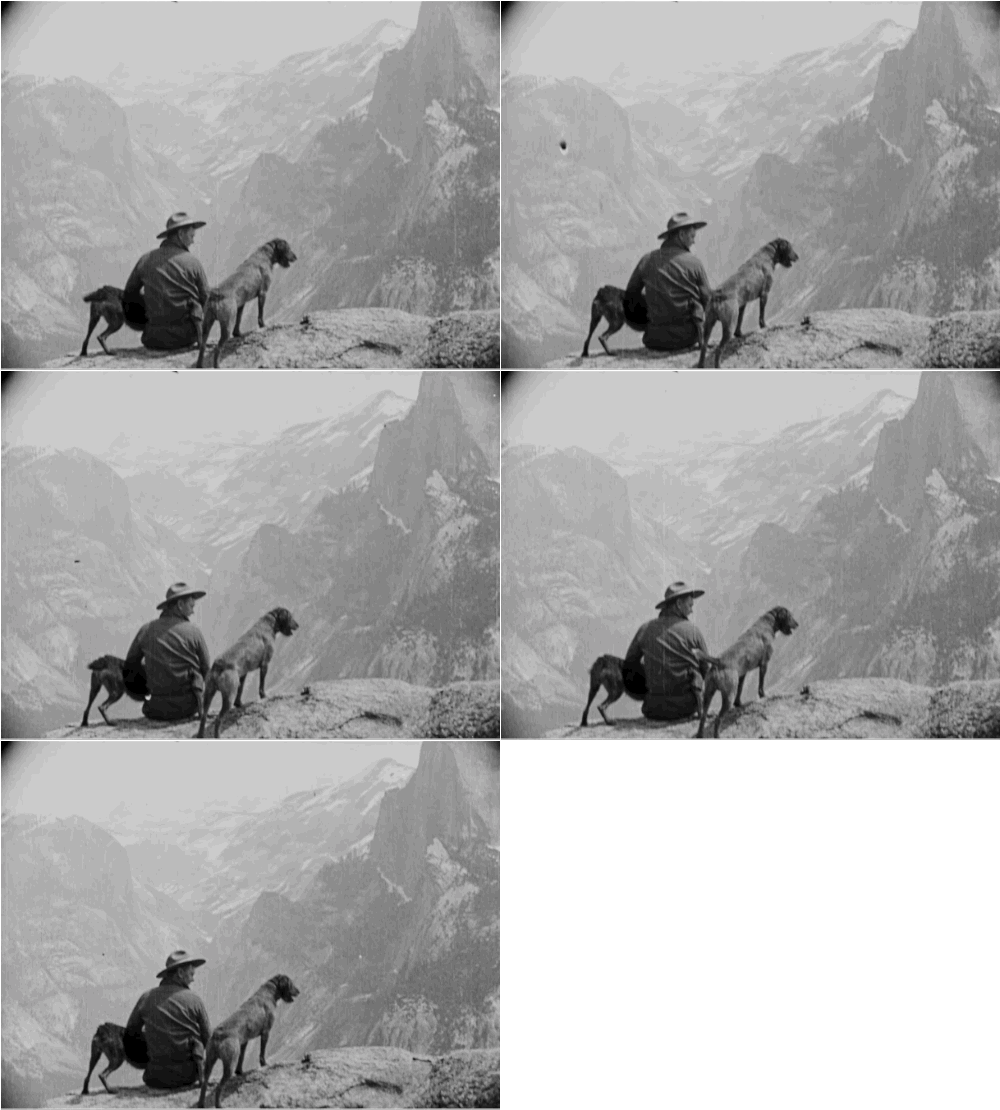
"I am not one who was born in the custody of wisdom. I am one who is fond of olden times and intense in quest of the sacred knowing of the ancients." Gustave Courbet
Showing posts with label seasons. Show all posts

03 September 2026

Tinge.

Spenser, The Shepheardes Calender: September, 1579


The SHEPHERD'S CALENDAR: SEPTEMBER

Harvest awakes the morning still
And toils rude groups the valleys fill
Deserted is each cottage hearth
To all life save the crickets mirth
Each burring wheel their sabbath meets
Nor walks a gossip in the streets
The bench beneath its eldern bough
Lined oer with grass is empty now
Where blackbirds caged from out the sun
Could whistle while their mistress spun.
All haunt the thronged fields still to share
The harvests lingering bounty there
As yet no meddling boys resort
About the streets in idle sport
The butterflye enjoys his hour
And flirts unchaced from flower to flower
And humming bees that morning calls
From out the low huts mortar walls
Which passing boy no more controuls
Flye undisturbed about their holes
And sparrows in glad chirpings meet
Unpelted in the quiet street

None but imprison'd childern now
Are seen where dames with angry brow
Threaten each younker to his seat
That thro' the school door eyes the street
Or from his horn book turns away
To mourn for liberty and play
Loud are the mornings early sounds
That farm and cottage yard surrounds
The creaking noise of opening gate
And clanking pumps where boys await
With idle motion to supply
The thirst of cattle crowding bye
The low of cows and bark of dogs
And cackling hens and wineing hogs
Swell high-while at the noise awoke
Old goody seeks her milking cloak
And hastens out to milk the cow
And fill the troughs to feed the sow
Or seeking old hens laid astray
Or from young chickens drives away
The circling kite that round them flyes
Waiting the chance to seize the prize
Hogs trye thro gates the street to gain
And steal into the fields of grain
From nights dull prison comes the duck
Waddling eager thro the muck
Squeezing thro the orchard pales
Where mornings bounty rarely fails
Eager gobbling as they pass
Dew worms thro the padded grass
Where blushing apples round and red
Load down the boughs and pat the head
Of longing maid that hither goes
To hang on lines the drying cloaths
Who views them oft with tempted eye
And steals one as she passes bye
Where the holly oak so tall
Far oer tops the garden wall
That latest blooms for bees provide
Hived on stone benches close beside
The bees their teazing music hum
And threaten war to all that come
Save the old dame whose jealous care
Places a trapping bottle there
Filled with mock sweets in whose disguise
The honey loving hornet dies

Upon the dovecoats mossy slates
The piegons coo around their mates
Where morns sunbeams early fall
By the barn or stable wall
Basking hens in playfull rout
Flap the smoaking dust about
In the barn hole sits the cat
Watching within the thirsty rat
Who oft at morn its dwelling leaves
To drink the moisture from the eves
The redbreast with his nimble eye
Dare scarcely stop to catch the flye
That tangled in the spiders snare
Mourns in vain for freedom there
The dog beside the threshold lyes
Mocking sleep with half shut eyes
With head crouched down upon his feet
Till strangers pass his sunny seat
Then quick he pricks his ears to hark
And bustles up to growl and bark
While boys in fear stop short their song
And sneak on hurrys fears along
And beggar creeping like a snail
To make his hungry hopes prevail
Oer the warm heart of charity
Leaves his lame halt and hastens bye

The maid afield now leaves the farm
With brimming bottles on her arm
Loitering unseen in narrow lane
To be oertook by following swain
Who happy thus her truth to prove
Carrys the load and talks of love
Full soon the harvest waggons sound
Rumbling like thunder all around
In ceasless speed the corn to load
Hurrying down the dusty road
While driving boy with eager eye
Watches the church clock passing bye
Whose gilt hands glitter in the sun
To see how far the hours have run
Right happly in the breathless day
To see it wearing fast away
Yet now and then a sudden shower
Will bring to toil a resting hour
When under sheltering shocks a crowd
Of merry voices mingle loud
Wearing the short lived boon along
With vulgar tale and merry song
Draining with leisures laughing eye
Each welcome bubbling bottle drye
Till peeping suns dry up the rain
Then off they start to toil again

Anon the fields are wearing clear
And glad sounds hum in labours ear
When childern halo 'here they come
And run to meet the harvest home
Stuck thick with boughs and thronged with boys
Who mingle loud a merry noise
Glad that the harvests end is nigh
And weary labour nearly bye
Where when they meet the stack thronged yard
Cross bunns or pence their shouts reward

Then comes the harvest supper night
Which rustics welcome with delight
When merry game and tiresome tale
And songs increasing with the ale
Their mingled uproar interpose
To crown the harvests happy close
While rural mirth that there abides
Laughs till she almost cracks her sides

Now harvests busy hum declines
And labour half its help resigns
Boys glad at heart to play return
The shepherds to their peace sojourn
Rush-bosomed solitudes among
Which busy toil disturbed so long
The gossip happy all is oer
Visits again her neighbours door
For scandals idle tales to dwell
Which harvest had no time to tell
And on each bench at even tide
Which trailing vine leaves nearly hide
And free from all its sultry strife
Enjoy once more their idle life
A few whom waning toil reprieves
Thread the forests sea of leaves
Where the pheasant loves to hide
And the darkest glooms abide
Beneath the old oaks mossd and grey
Whose shadows seem as old as they
Where time hath many seasons won
Since aught beneath them saw the sun.
Within these brambly solitudes
The ragged noisy boy intrudes
To gather nuts that ripe and brown
As soon as shook will patter down
Thus harvest ends its busy reign
And leaves the fields their peace again
Where autumns shadows idly muse
And tinge the trees with many hues
Amid whose scenes I'm feign to dwell
And sing of what I love so well
But hollow winds and tumbling floods
And humming showers and moaning woods
All startle into sudden strife
And wake a mighty lay to life
Making amid their strains divine
All songs in vain so mean as mine

John Clare

01 August 2026

Quiet.

Spenser, Month of August, 1579


SHEPHERD's CALENDAR: August

Harvest approaches with its bustling day
The wheat tans brown and barley bleaches grey
In yellow garb the oat land intervenes
And tawney glooms the valley thronged with beans
Silent the village grows, wood wandering dreams
Seem not so lovely as its quiet seems
Doors are shut up as on a winters day
And not a child about them lies at play
The dust that winnows neath the breezes feet
Is all that stirs about the silent street
Fancy might think that desert spreading fear
Had whisperd terrors into quiets ear
Or plundering armys past the place had come
And drove the lost inhabitants from home
The fields now claim them where a motley crew
Of old and young their daily tasks pursue
The barleys beard is grey and wheat is brown
And wakens toil betimes to leave the town
The reapers leave their beds before the sun
And gleaners follow when home toils are done
To pick the littered ear the reaper leaves
And glean in open fields among the sheaves
The ruddy child nursed in the lap of care
In toils rude ways to do its little share
Beside its mother poddles oer the land
Sun burnt and stooping with a weary hand
Picking its tiney glean of corn or wheat
While crackling stubbles wound its legs and feet
Full glad it often is to sit awhile
Upon a smooth green baulk to ease its toil
And feign would spend an idle hour to play
With insects strangers to the moiling day
Creeping about each rush and grassy stem
And often wishes it was one of them
In weariness of heart that it might lye
Hid in the grass from the days burning eye
That raises tender blisters on his skin
Thro holes or openings that have lost a pin
Free from the crackling stubs to toil and glean
And smiles to think how happy it had been
Whilst its expecting mother stops to tye
Her handful up and waiting his supply
Misses the resting younker from her side
And shouts of rods and morts of threats beside
Pointing to the grey willows while she tells
His fears shall fetch one if he still rebells
Picturing harsh truths in its unpracticed eye
How they who idle in the harvest lye
Shall well deserving in the winter pine
Or hunt the hedges with the birds and swine
In vain he wishes that the rushes height
Were tall as trees to hide him from her sight
Leaving his pleasant seat he sighs and rubs
His legs and shows scratchd wounds from piercing stubs
To make excuse for play but she disdains
His little wounds and smiles while he complains
And as he stoops adown in troubles sore
She sees his grief and bids him sob no more
As bye and bye on the next sabbath day
She'll give him well earned pence as well as play
When he may buy almost with out a stint
Sweet candied horehound cakes and pepper mint
Or streaking sticks of lusious lolipop
What ere he chuses from the tempting shop
Wi in whose diamond winder shining lye
Things of all sorts to tempt his eager eye
Rich sugar plumbs in phials shining bright
In every hue young fancys to delight
Coaches and ladys of gilt ginger bread
And downy plumbs and apples streaked with red
Such promises all sorrows soon displace
And smiles are instant kindled in his face
Scorning all troubles which he felt before
He picks the trailing ears and mourns no more
The fields are all alive with busy noise
Of labours sounds and insects humming joys
Some oer the glittering sickle sweating stoop
Startling full oft the partridge coveys up
Some oer the rustling scythe go bending on
And shockers follow where their toils have gone
First turning swaths to wither in the sun
Where mice from terrors dangers nimbly run
Leaving their tender young in fears alarm
Lapt up in nests of chimbled grasses warm
And oft themselves for safty search in vain
From the rude boy or churlish hearted swain
Who beat their stone chinkd forks about the groun(
And spread an instant murder all around
Tho oft the anxious maidens tender prayer
Urges the clown their little lives to spare
Who sighs while trailing the long rake along
At scenes so cruel and forgets her song
And stays wi love his murder aiming hand
Some ted the puffing winnow down the land
And others following roll them up in heaps
While cleanly as a barn door beesome sweeps
The hawling drag wi gathering weeds entwind
And singing rakers end the toils behind

When the sun stoops to meet the western sky
And noons hot hours have wanderd weary bye
They seek an awthorn bush or willow tree
Or stouk or shock where coolest shadows be
Where baskets heapd and unbroachd bottles lye
Which dogs in absence watchd with wary eye
To catch their breath awhile and share the boon
Which beavering time alows their toil at noon
All gathering sit on stubbs or sheaves the hour
Where scarlet poppys linger still in flower
Stript in his shirt the hot swain drops adown
And close beside him in her unpind gown
Next to her favoured swain the maiden steals
Blushing at kindness which her love reveals
Who makes a seat for her of things around
And drops beside her on the naked ground
Wearied wi brambles catching at her gown
And pulling nutts from branches pulld adown
By friendly swain the maid Wi heaving breast
Upon her lovers shoulder leans at rest
Then from its cool retreat the beer they bring
And hand the stout hooped bottle round the ring
Each swain soaks hard-the maiden ere she sips
Shrieks at the bold whasp settling on her lips
That seems determined only hers to greet
As if it fancied they were cherrys sweet
So dog forgoes his sleep awhile or play
Springing at frogs that rustling jump away
To watch each morsel that the boon bestows
And wait the bone or crumb the shepherd throws
For shepherds are no more of ease possest
But share the harvests labours with the rest

When day declines and labour meets repose
The bawling boy his evening journey goes
At toils unwearied call the first and last
He drives his horses to their nights repast
In dewey close or meadow to sojourn
And often ventures on his still return
Oer garden pales or orchard walls to hie
When sleeps safe key hath locked up dangers eye
All but the mastiff watching in the dark
Who snufts and knows him and forbears to bark
With fearful haste he climbs each loaded tree
And picks for prizes which the ripest be
Pears plumbs or filberts covered oer in leams
While the pale moon creeps high in peaceful dreams
And oer his harvest theft in jealous light
Fills empty shadows with the power to fright
And owlet screaming as it bounces nigh
That from some barn hole pops and hurries bye
Scard at the cat upon her nightly watch
For rats that come for dew upon the thatch
He hears the noise and trembling to escape
While every object grows a dismal shape
Drops from the tree in fancys swiftest dread
By ghosts pursued and scampers home to bed
Quick tumbling oer the mossy mouldering wall
And looses half his booty in the fall
Where soon as ere the morning opes its eyes
The restless hogs will happen on the prize
And crump adown the mellow and the green
And makes all seem as nothing ne'er had been
Amid the broils of harvests weary reign
How sweet the sabbath wakes its rest again
For each weary mind what rapture dwells
To hear once more its pleasant chiming bells
That from each steeple peeping here and there
Murmur a soothing lullaby to care
The shepherd journying on his morning rounds
Pauses awhile to hear their pleasing sounds
While the glad childern free from toils employ
Mimic the ding dong sounds and laugh for joy
The fields themselves seem happy to be free
Where insects chatter with unusual glee
While solitude the stubbs and grass among
Apears to muse and listen to the song

In quiet peace awakes the welcomed morn
Men tired and childern with their gleaning worn
Weary and stiff lye round their doors the day
To rest themselves with little heart for play
No more keck horns in homestead close resounds
As in their school boy days at hare and hounds
Nor running oer the street from wall to wall
With eager shouts at 'cuck and catch the ball'
In calm delight the sabbath wears along
Yet round the cross at noon a tempted throng
Of little younkers with their pence repair
To buy the downy plumb and lucious pear
That melt i' th mouth-which gardners never fail
For gains strong impulse to expose for sale
And on the circling cross steps in the sun
Sit when the parson has his sermon done
When grandams that against his rules rebell
Come wi their baskets heapd wi fruit to sell
That thither all the season did pursue
Wi mellow goosberrys of every hue
Green ruffs and raspberry reds and drops of gold
That makes mouths water often to behold
Sold out to clowns in totts oft deemd too small
Who grudging much the price eat husks and all
Nor leaves a fragment round to cheer the eye
Of searching swine that murmurs hungry bye
And currans red and white on cabbage leaves
While childerns fingers itches to be thieves
And black red cherrys shining to the sight
As rich as brandy held before the light
Now these are past he still as sunday comes
Sits on the cross wi baskets heapd wi plumbs
And Jenitens streakd apples suggar sweet
Others spice scented ripening wi the wheat
And pears that melt ith' mouth like honey which
He oft declares to make their spirits itch
They are so juicy ripe and better still
So rich they een might suck em thro a quill
Here at their leisure gather many a clown
To talk of grain and news about the town
And here the boy wi toils earnd penny comes
In hurrying speed to purchase pears or plumbs
And oer the basket hangs wi many a smile
Wi hat in hand to hold his prize the while

Not so the boys that begs for pence in vain
Of deaf eard dames that threat while they complain
Who talk of the good dinners they have eat
And wanting more as nothing but consiet
Vowing they ne'er shall throw good pence away
So bids them off and be content wi play
Reaching her rod that hangs the chimney oer
And scaring their rude whinings to the door
Who sob aloud and hang their hats adown
To hide their tears and sawn along the town
Venturing wi sullen step his basket nigh
And often dipping a desiring eye
Stone hearted dames thrifts errors to believe
Who make their little bellys yearn to thieve
But strong temptation must to fears resign
For close beside the stocks in terror shine
So choaking substitutes for loss of pelf
He keeps his hungry fingers to himself
And mopes and sits the sabbath hours away
Wi heart too weary and too sad for play
So Sunday's scenes and leisure passes bye
In rests soft peace and home tranquillity
Till Monday morning doth its cares pursue
And wakes the harvests busy toils anew

John Clare

Thirty-one days until The Oyster Months.

24 June 2026

Exceed.

Scott, Pixies Dancing in a Ring by the Firelight, 1885


The National Trust has the traditions of Midsummer ...
A time when the normal laws of nature or divinity could be suspended, when spirits and fairies could contact humans, when humans could exceed the usual limitations of their world.

21 June 2026

Summer.


As Summer is beginning right about ... now, here's the introduction to Dandelion Wine, by Ray Bradbury ...
JUST THIS SIDE OF BYZANTIUM: an introduction

This book, like most of my books and stories, was a surprise. I began to learn the nature of such surprises, thank God, when I was fairly young as a writer. Before that, like every beginner, I thought you could beat, pummel, and thrash an idea into existence. Under such treatment, of course, any decent idea folds up its paws, turns on its back, fixes its eyes on eternity, and dies.

It was with great relief, then, that in my early twenties I floundered into a word-association process in which I simply got out of bed each morning, walked to my desk, and put down any word or series of words that happened along in my head.

I would then take arms against the word, or for it, and bring on an assortment of characters to weigh the word and show me its meaning in my own life. An hour or two hours later, to my amazement, a new story would be finished and done. The surprise was total and lovely. I soon found that I would have to work this way for the rest of my life.

First I rummaged my mind for words that could describe my personal nightmares, fears of night and time from my childhood, and shaped stories from these.

Then I took a long look at the green apple trees and the old house I was born in and the house next door where lived my grandparents, and all the lawns of the summers I grew up in, and I began to try words for all that.

What you have here in this book then is a gathering of dandelions from all those years. The wine metaphor which appears again and again in these pages is wonderfully apt. I was gathering images all of my life, storing them away, and forgetting them. Somehow I had to send myself back, with words as catalysts, to open the memories out and see what they had to offer.

So from the age of twenty-four to thirty-six hardly a day passed when I didn’t stroll myself across a recollection of my grandparents’ northern Illinois grass, hoping to come across some old half-burnt firecracker, a rusted toy, or a fragment of letter written to myself in some young year hoping to contact the older person I became to remind him of his past, his life, his people, his joys, and his drenching sorrows.

It became a game that I took to with immense gusto: to see how much I could remember about dandelions themselves, or picking wild grapes with my father and brother, rediscovering the mosquito-breeding ground rain barrel by the side bay window, or searching out the smell of the gold-fuzzed bees that hung around our back porch grape arbor. Bees do have a smell, you know, and if they don’t they should, for their feet are dusted with spices from a million flowers.

An then I wanted to call back what the ravine was like, especially on those nights when walking home late across town, after seeing Lon Chaney’s delicious fright The Phantom of the Opera, my brother Skip would run ahead and hide under the ravine-creek bridge like the Lonely One and leap out and grab me, shrieking, so I ran, fell, and ran again, gibbering all the way home. That was great stuff.

Along the way I came upon and collided, through word-association, with old and true friendships. I borrowed my friend John Huff from my childhood in Arizona and shipped him East to Green Town so that I could say good-bye to him properly.

Along the way I sat me down to breakfasts, lunches, and dinners with the long dead and much loved. For I was a boy who did indeed love his parents and grandparents and his brother, even when that brother “ditched” him.

Along the way, I found myself in the basement working the wine-press for my father, or on the front porch Independence night helping my Uncle Bion load and fire his home-made brass cannon.

Thus I fell into surprise. No one told me to surprise myself, I might add. I came on the old and best ways of writing through ignorance and experiment and was startled when truths leaped out of bushes like quail before gunshot. I blunwas somehow true.

So I turned myself into a boy running to bring a dipper of clear rainwater out of that barrel by the side of the house. And, of course, the more water you dip out the more flows in. The flow has never ceased. Once I learned to keep going back and back again to those times, I had plenty of memories and sense impressions to play with, not work with, no, play with. Dandelion Wine is nothing if it is not the boy-hid-in-the-man playing in the fields of the Lord on the green grass of other Augusts in the midst of starting to grow up, grow old, and sense darkness waiting under the trees to seed the blood.

I was amused and somewhat astonished at a critic a few years back who wrote an article analyzing Dandelion Wine plus the more realistic work of Sinclair Lewis, wondering how I could have been born and raised in Waukegan, which I renamed Green Town for my novel, and not noticed how ugly the harbor was and how depressing the coal docks and railyards down below the town.

But, of course, I had noticed them and, genetic enchanter that I was, was fascinated by their beauty. Trains and boxcars and the smell of coal and fire are not ugly to children. Ugliness is a concept that we happen on later and become self-conscious about. Counting boxcars is a prime activity of boys. Their elders fret and fume and jeer at the train that holds them up, but boys happily count and cry the names of the cars as they pass from far places.

And again, that supposedly ugly railyard was where carnivals and circuses arrived with elephants who washed the brick pavements with mighty streaming acid waters at five in the dark morning.

As for the coal from the docks, I went down in my basement every autumn to await the arrival of the truck and its metal chute, which clanged down and released a ton of beauteous meteors that fell out of far space into my cellar and threatened to bury me beneath dark treasures.

In other words, if your boy is a poet, horse manure can only mean flowers to him; which is, of course, what horse manure has always been about.

Perhaps a new poem of mine will explain more than this introduction about the germination of all the summers of my life into one book.

Here’s the start of the poem:
Byzantium, I come not from,
But from another time and place
Whose race was simple, tried and true;
As boy
I dropped me forth in Illinois.
A name with neither love nor grace
Was Waukegan, there I came from
And not, good friends, Byzantium.
The poem continues, describing my lifelong relationship to my birthplace:
And yet in looking back I see
From topmost part of farthest tree
A land as bright, beloved and blue
As any Yeats found to be true.
Waukegan, visited by me often since, is neither homelier nor more beautiful than any other small Midwestern town. Much of it is green. The trees do touch in the middle of streets. The street in front of my old home is still paved with red bricks. In what way then was the town special? Why, I was born there. It was my life. I had to write of it as I saw fit:
So we grew up with mythic dead
To spoon upon midwestern bread
And spread old gods’ bright marmalade
To slake in peanut-butter shade,
Pretending there beneath our sky
That it was Aphrodite’s thigh…
While by the porch-rail calm and bold
His words pure wisdom, stare pure gold
My grandfather, a myth indeed,
Did all of Plato supercede
While Grandmama in rockingchair
Sewed up the raveled sleeve of care
Crocheted cool snowflakes rare and bright
To winter us on summer night.
And uncles, gathered with their smokes
Emitted wisdoms masked as jokes,
And aunts as wise as Delphic maids
Dispensed prophetic lemonades
To boys knelt there as acolytes
To Grecian porch on summer nights;
Then went to bed, there to repent
The evils of the innocent;
The gnat-sins sizzling in their ears
Said, through the nights and through the years
Not Illinois nor Waukegan
But blither sky and blither sun.
Though mediocre all our Fates
And Mayor not as bright as Yeats
Yet still we knew ourselves. The sum?
Byzantium.
Byzantuim.
Waukegan/ Green Town/ Byzantium.
Green Town did exist, then?
Yes, and again, yes.

Was there a real boy named John Huff? There was. And that was truly his name. But he didn’t go away from me, I went away from him. But, happy ending, he is still alive, forty-two years later, and remembers our love.

Was there a Lonely One? There was, and that was his name. And he moved around at night in my home town when I was six years old and he frightened everyone and was never captured.

Most importantly, did the big house itself, with Grandpa and Grandma and the boarders and uncles and aunts in it exist? I have answered that.

Is the ravine real and deep and dark at night? It was, it is. I took my daughters there a few years back, fearful that the ravine might have gone shallow with time. I am relieved and happy to report that the ravine is deeper, darker, and more mysterious than ever. I would not, even now, go home through there after seeing The Phantom of the Opera.

So there you have it. Waukegan was Green Town was Byzantium, with all the happiness that that means, with all the sadness that these names imply. The people there were gods and midgets and knew themselves mortal and so the midgets walked tall so as not to embarrass the gods and the gods crouched so as to make the small ones feel at home. And, after all, isn’t that what life is all about, the ability to go around back and come up inside other people’s heads to look out at the damned fool miracle and say: oh, so that’s how you see it!? Well, now, I must remember that.

Here is my celebration, then, of death as well as life, dark as well as light, old as well as young, smart and dumb combined, sheer joy as well as complete terror written by a boy who once hung upside down in trees, dressed in his bat costume with candy fangs in his mouth, who finally fell out of the trees when he was twelve and went and found a toy-dial typewriter and wrote his first “novel.”

A final memory.

Fire balloons.

You rarely see them these days, though in some countries, I hear, they are still filled with warm breath from a small straw fire hung beneath.

But in 1925 Illinois, we still had them, and one of the last memories I have of my grandfather is the last hour of a Fourth of July night forty-eight years ago when Grandpa and I walked out on the lawn and lit a small fire and filled the pear-shaped red-white-and-blue-striped paper balloon with hot air, and held the flickering bright-angel presence in our hands a final moment in front of a porch lined with uncles and aunts and cousins and mothers and fathers, and then, very softly, let the thing that was life and light and mystery go out of our fingers up on the summer night air and away over the beginning-to-sleep houses, among the stars, as fragile, as wondrous, as vulnerable, as lovely as life itself.

I see my grandfather there looking up at that strange drifting light, thinking his own still thoughts. I see me, my eyes filled with tears, because it was all over, the night was done, I knew there would never be another night like this.

No one said anything. We all just looked up at the sky and we breathed out and in and we all thought the same things, but nobody said. Someone finally had to say, though, didn’t they? And that one is me.

The wine still waits in the cellars below.

My beloved family still sits on the porch in the dark.

The fire balloon still drifts and burns in the night sky of an as yet unburied summer.

Why and how?

Because I say it is so.


Ray Bradbury
Summer, 1974
Your hymnal is here.

Fire balloons afloft in Thailand ...


Basic fire balloon how-to is here.

01 May 2026

Whistles.


THE SHEPHERD'S CALENDAR: MAY

Come queen of months in company
Wi all thy merry minstrelsy
The restless cuckoo absent long
And twittering swallows chimney song
And hedge row crickets notes that run
From every bank that fronts the sun
And swathy bees about the grass
That stops wi every bloom they pass
And every minute every hour
Keep teazing weeds that wear a flower
And toil and childhoods humming joys
For there is music in the noise
The village childern mad for sport
In school times leisure ever short
That crick and catch the bouncing ball
And run along the church yard wall
Capt wi rude figured slabs whose claims
In times bad memory hath no names
Oft racing round the nookey church
Or calling ecchos in the porch
And jilting oer the weather cock
Viewing wi jealous eyes the clock
Oft leaping grave stones leaning hights
Uncheckt wi mellancholy sights
The green grass swelld in many a heap
Where kin and friends and parents sleep
Unthinking in their jovial cry
That time shall come when they shall lye
As lowly and as still as they
While other boys above them play
Heedless as they do now to know
The unconcious dust that lies below
The shepherd goes wi happy stride
Wi moms long shadow by his side
Down the dryd lanes neath blooming may
That once was over shoes in clay
While martins twitter neath his eves
Which he at early morning leaves
The driving boy beside his team
Will oer the may month beauty dream
And cock his hat and turn his eye
On flower and tree and deepning skye
And oft bursts loud in fits of song
And whistles as he reels along
Crack[ing] his whip in starts of joy
A happy dirty driving boy
The youth who leaves his corner stool
Betimes for neighbouring village school
While as a mark to urge him right
The church spires all the way in sight
Wi cheerings from his parents given
Starts neath the joyous smiles of heaven
And sawns wi many an idle stand
Wi bookbag swinging in his hand
And gazes as he passes bye
On every thing that meets his eye
Young lambs seem tempting him to play
Dancing and bleating in his way
Wi trembling tails and pointed ears
They follow him and loose their fears
He smiles upon their sunny faces
And feign woud join their happy races
The birds that sing on bush and tree
Seem chirping for his company
And all in fancys idle whim
Seem keeping holiday but him
He lolls upon each resting stile
To see the fields so sweetly smile
To see the wheat grow green and long
And list the weeders toiling song
Or short not[e] of the changing thrush
Above him in the white thorn bush
That oer the leaning stile bends low
Loaded wi mockery of snow
Mozzld wi many a lushing thread
Of crab tree blossoms delicate red
He often bends wi many a wish
Oer the brig rail to view the fish
Go sturting by in sunny gleams
And chucks in the eye dazzld streams
Crumbs from his pocket oft to watch
The swarming struttle come to catch
Them where they to the bottom sile
Sighing in fancys joy the while
Hes cautiond not to stand so nigh
By rosey milkmaid tripping bye
Where he admires wi fond delight
And longs to be there mute till night
He often ventures thro the day
At truant now and then to play
Rambling about the field and plain
Seeking larks nests in the grain
And picking flowers and boughs of may
To hurd awhile and throw away
Lurking neath bushes from the sight
Of tell tale eyes till schools noon night
Listing each hour for church clocks hum
To know the hour to wander home
That parents may not think him long
Nor dream of his rude doing wrong
Dreading thro the night wi dreaming pain
To meet his masters wand again
Each hedge is loaded thick wi green
And where the hedger late hath been
Tender shoots begin to grow
From the mossy stumps below
While sheep and cow that teaze the grain
will nip them to the root again
They lay their bill and mittens bye
And on to other labours hie
While wood men still on spring intrudes
And thins the shadow solitudes
Wi sharpend axes felling down
The oak trees budding into brown
Where as they crash upon the ground
A crowd of labourers gather round
And mix among the shadows dark
To rip the crackling staining bark
From off the tree and lay when done
The rolls in lares to meet the sun
Depriving yearly where they come
The green wood pecker of its home
That early in the spring began
Far from the sight of troubling man
And bord their round holes in each tree
In fancys sweet security
Till startld wi the woodmans noise
It wakes from all its dreaming joys
The blue bells too that thickly bloom
Where man was never feared to come
And smell smocks that from view retires
Mong rustling leaves and bowing briars
And stooping lilys of the valley
That comes wi shades and dews to dally
White beady drops on slender threads
Wi broad hood leaves above their heads
Like white robd maids in summer hours
Neath umberellas shunning showers
These neath the barkmens crushing treads
Oft perish in their blooming beds
Thus stript of boughs and bark in white
Their trunks shine in the mellow light
Beneath the green surviving trees
That wave above them in the breeze
And waking whispers slowly bends
As if they mournd their fallen friends
Each morning now the weeders meet
To cut the thistle from the wheat
And ruin in the sunny hours
Full many wild weeds of their flowers
Corn poppys that in crimson dwell
Calld 'head achs' from their sickly smell
And carlock yellow as the sun
That oer the may fields thickly run
And 'iron weed' content to share
The meanest spot that spring can spare
Een roads where danger hourly comes
Is not wi out its purple blooms
And leaves wi points like thistles round
Thickset that have no strength to wound
That shrink to childhoods eager hold
Like hair-and with its eye of gold
And scarlet starry points of flowers
Pimpernel dreading nights and showers
Oft calld 'the shepherds weather glass'
That sleep till suns have dyd the grass
Then wakes and spreads its creeping bloom
Till clouds or threatning shadows come
Then close it shuts to sleep again
Which weeders see and talk of rain
And boys that mark them shut so soon
will call them 'John go bed at noon
And fumitory too a name
That superstition holds to fame
Whose red and purple mottled flowers
Are cropt by maids in weeding hours
To boil in water milk and way1
For washes on an holiday
To make their beauty fair and sleak
And scour the tan from summers cheek
And simple small forget me not
Eyd wi a pinshead yellow spot
I'th'2 middle of its tender blue
That gains from poets notice due
These flowers the toil by crowds destroys
And robs them of their lowly joys
That met the may wi hopes as sweet
As those her suns in gardens meet
And oft the dame will feel inclind
As childhoods memory comes to mind
To turn her hook away and spare
The blooms it lovd to gather there
My wild field catalogue of flowers
Grows in my ryhmes as thick as showers
Tedious and long as they may be
To some, they never weary me
The wood and mead and field of grain
I coud hunt oer and oer again
And talk to every blossom wild
Fond as a parent to a child
And cull them in my childish joy
By swarms and swarms and never cloy
When their lank shades oer morning pearls
Shrink from their lengths to little girls
And like the clock hand pointing one
Is turnd and tells the morning gone
They leave their toils for dinners hour
Beneath some hedges bramble bower
And season sweet their savory meals
Wi joke and tale and merry peals
Of ancient tunes from happy tongues
While linnets join their fitful songs
Perchd oer their heads in frolic play
Among the tufts of motling may
The young girls whisper things of love
And from the old dames hearing move
Oft making 'love knotts' in the shade
Of blue green oat or wheaten blade
And trying simple charms and spells
That rural superstition tells
They pull the little blossom threads
From out the knapweeds button heads
And put the husk wi many a smile
In their white bosoms for awhile
Who if they guess aright the swain
That loves sweet fancys trys to gain
Tis said that ere its lain an hour
Twill blossom wi a second flower
And from her white breasts hankerchief
Bloom as they ne'er had lost a leaf
When signs appear that token wet
As they are neath the bushes met
The girls are glad wi hopes of play
And harping of the holiday
A hugh blue bird will often swim
Along the wheat when skys grow dim
Wi clouds-slow as the gales of spring
In motion wi dark shadowd wing
Beneath the coming storm it sails
And lonly chirps the wheat hid quails
That came to live wi spring again
And start when summer browns the grain
They start the young girls joys afloat
Wi 'wet my foot' its yearly note
So fancy doth the sound explain
And proves it oft a sign of rain
About the moor 'mong sheep and cow
The boy or old man wanders now
Hunting all day wi hopful pace
Each thick sown rushy thistly place
For plover eggs while oer them flye
The fearful birds wi teazing cry
Trying to lead their steps astray
And coying him another way
And be the weather chill or warm
Wi brown hats truckd beneath his arm
Holding each prize their search has won
They plod bare headed to the sun
Now dames oft bustle from their wheels
Wi childern scampering at their heels
To watch the bees that hang and swive
In clumps about each thronging hive
And flit and thicken in the light
While the old dame enjoys the sight
And raps the while their warming pans
A spell that superstition plans
To coax them in the garden bounds
As if they lovd the tinkling sounds
And oft one hears the dinning noise
Which dames believe each swarm decoys
Around each village day by day
Mingling in the warmth of may
Sweet scented herbs her skill contrives
To rub the bramble platted hives
Fennels thread leaves and crimpld balm
To scent the new house of the swarm
The thresher dull as winter days
And lost to all that spring displays
Still mid his barn dust forcd to stand
Swings his frail round wi weary hand
While oer his head shades thickly creep
And hides the blinking owl asleep
And bats in cobweb corners bred
Sharing till night their murky bed
The sunshine trickles on the floor
Thro every crevice of the door
And makes his barn where shadows dwell
As irksome as a prisoners cell
And as he seeks his daily meal
As schoolboys from their tasks will steal
ile often stands in fond delay
To see the daisy in his way
And wild weeds flowering on the wall
That will his childish sports recall
Of all the joys that came wi spring
The twirling top the marble ring
The gingling halfpence hussld up
At pitch and toss the eager stoop
To pick up heads, the smuggeld plays
Neath hovels upon sabbath days
When parson he is safe from view
And clerk sings amen in his pew
The sitting down when school was oer
Upon the threshold by his door
Picking from mallows sport to please
Each crumpld seed he calld a cheese
And hunting from the stackyard sod
The stinking hen banes belted pod
By youths vain fancys sweetly fed
Christning them his loaves of bread
He sees while rocking down the street
Wi weary hands and crimpling feet
Young childern at the self same games
And hears the self same simple names
Still floating on each happy tongue
Touchd wi the simple scene so strong
Tears almost start and many a sigh
Regrets the happiness gone bye
And in sweet natures holiday
His heart is sad while all is gay
How lovly now are lanes and balks
For toils and lovers sunday walks
The daisey and the buttercup
For which the laughing childern stoop
A hundred times throughout the day
In their rude ramping summer play
So thickly now the pasture crowds
In gold and silver sheeted clouds
As if the drops in april showers
Had woo'd the sun and swoond to flowers
The brook resumes its summer dresses
Purling neath grass and water cresses
And mint and flag leaf swording high
Their blooms to the unheeding eye
And taper bowbent hanging rushes
And horse tail childerns bottle brushes
And summer tracks about its brink
Is fresh again where cattle drink
And on its sunny bank the swain
Stretches his idle length again
Soon as the sun forgets the day
The moon looks down on the lovly may
And the little star his friend and guide
Travelling together side by side
And the seven stars and charleses wain1
Hangs smiling oer green woods agen
The heaven rekindles all alive
Wi light the may bees round the hive
Swarm not so thick in mornings eye
As stars do in the evening skye
All all are nestling in their joys
The flowers and birds and pasture boys
The firetail, long a stranger, comes
To his last summer haunts and homes
To hollow tree and crevisd wall
And in the grass the rails odd call
That featherd spirit stops the swain
To listen to his note again
And school boy still in vain retraces
The secrets of his hiding places
In the black thorns crowded cops~e1
Thro its varied turns and stops
The nightingale its ditty weaves
Hid in a multitude of leaves
The boy stops short to hear the strain
And 'sweet jug jug' he mocks again
The yellow hammer builds its nest
By banks where sun beams earliest rest
That drys the dews from off the grass
Shading it from all that pass
Save the rude boy wi ferret gaze
That hunts thro evry secret maze
He finds its pencild eggs agen
All streakd wi lines as if a pen
By natures freakish hand was took
To scrawl them over like a book
And from these many mozzling marks
The school boy names them 'writing larks'
Bum barrels twit on bush and tree
Scarse bigger then a bumble bee
And in a white thorns leafy rest
It builds its curious pudding-nest
Wi hole beside as if a mouse
Had built the little barrel house
Toiling full many a lining feather
And bits of grey tree moss together
Amid the noisey rooky park
Beneath the firdales branches dark
The little golden crested wren
Hangs up his glowing nest agen
And sticks it to the furry leaves
As martins theirs beneath the eaves
The old hens leave the roost betimes
And oer the garden pailing climbs
To scrat the gardens fresh turnd soil
And if unwatchd his crops to spoil
Oft cackling from the prison yard
To peck about the houseclose sward
Catching at butterflys and things
Ere they have time to try their wings
The cattle feels the breath of may
And kick and toss their heads in play
The ass beneath his bags of sand
Oft jerks the string from leaders hand
And on the road will eager stoop
To pick the sprouting thistle up
Oft answering on his weary way
Some distant neighbours sobbing bray
Dining the ears of driving boy
As if he felt a fit of joy
Wi in its pinfold circle left
Of all its company bereft
Starvd stock no longer noising round
Lone in the nooks of foddering ground
Each skeleton of lingering stack
By winters tempests beaten black
Nodds upon props or bolt upright
Stands swarthy in the summer light
And oer the green grass seems to lower
Like stump of old time wasted tower
All that in winter lookd for hay
Spread from their batterd haunts away
To pick the grass or lye at lare
Beneath the mild hedge shadows there
Sweet month that gives a welcome call
To toil and nature and to all
Yet one day mid thy many joys
Is dead to all its sport and noise
Old may day where's thy glorys gone
All fled and left thee every one
Thou comst to thy old haunts and homes
Unnoticd as a stranger comes
No flowers are pluckt to hail the now
Nor cotter seeks a single bough
The maids no more on thy sweet morn
Awake their thresholds to adorn
Wi dewey flowers-May locks new come
And princifeathers cluttering bloom
And blue bells from the woodland moss
And cowslip cucking balls to toss
Above the garlands swinging hight
Hang in the soft eves sober light
These maid and child did yearly pull
By many a folded apron full
But all is past the merry song
Of maidens hurrying along
To crown at eve the earliest cow
Is gone and dead and silent now
The laugh raisd at the mocking thorn
Tyd to the cows tail last that morn
The kerchief at arms length displayd
Held up by pairs of swain and maid
While others bolted underneath
Bawling loud wi panting breath
'Duck under water' as they ran
Alls ended as they ne'er began
While the new thing that took thy place
Wears faded smiles upon its face
And where enclosure has its birth
It spreads a mildew oer her mirth
The herd no longer one by one
Goes plodding on her morning way
And garlands lost and sports nigh gone
Leaves her like thee a common day
Yet summer smiles upon thee still
Wi natures sweet unalterd will
And at thy births unworshipd hours
Fills her green lap wi swarms of flowers
To crown thee still as thou hast been
Of spring and summer months the queen.

John Clare

01 April 2026

Delightful.


APRIL SHOWERS

Delightful weather for all sorts of moods
& most for him – grey morn and swarthy eye
Found rambling up the little narrow lane
Where primrose banks amid the hazly woods
Peep most delightfully on passers bye
While Aprils little clouds about the sky
Mottle & freak unto fancy lie
Idling and ending travel for the day
Till darker clouds sail up with cumberous heave
South oer the woods & scares them all away
Then comes the rain pelting with pearly drops
The primrose crowds until they stoop & lie
All fragrance to his mind that musing stops
Beneath the hawthorn till the shower is bye

John Clare

Emboldened.

 Böcklin, Spring Evening, 1879


And now that the year wearily turns and stretches herself before the perfect waking, the god emboldened begins to blow a clearer note.

Kenneth Grahame, from "The Rural Pan (An April Essay)"

20 March 2026

Telemann, Violin Concerto in A, TWV 51:A4, “The Frogs”

Orchestre à Cordes de l'Uliège performs under the guidance of Loïc Duchêne with Émilie Herwats, violon ...

Now.

Shepard, Ratty's Picnic, 1908


Spring is upon us right about ... now.

EARLY SPRING

The Spring is come, and Spring flowers coming too,
    The crocus, patty kay, the rich hearts' ease;
The polyanthus peeps with blebs of dew,
    And daisy flowers; the buds swell on the trees;
    While oer the odd flowers swim grandfather bees
In the old homestead rests the cottage cow;
    The dogs sit on their haunches near the pail,
The least one to the stranger growls "bow wow,"
    Then hurries to the door and cocks his tail,
To knaw the unfinished bone; the placid cow
    Looks o’er the gate; the thresher's lumping flail
Is all the noise the spring encounters now.

John Clare

17 November 2025

Bone-Fires.

Kasamatsu, Bonfire, 1959


To the early Anglo-Saxons, November was “wint-monath”, or wind month, the start of the storm season. It was sacred to the weather god Thunor, the Anglo-Saxon name for Thor, whose hammering made the thunder – Thunor is Old English for thunder. His popularity was reflected in the widespread presence of hammer-shaped ornaments in Anglo-Saxon graves.

Thunor was honoured in November with huge fires to drive away evil spirits. These bone-fires or bonfires also had a practical function: animals had been slaughtered to provide food for winter, and the fires turned the bones into fertiliser. German pagans sometimes put a straw effigy of Thor on top of their bonfires, and Anglo-Saxons may have done the same with Thunor.

28 October 2025

Scourings.

Rockwell, Ichabod Crane, 1937


The schoolmaster is generally a man of some importance in the female circle of a rural neighborhood; being considered a kind of idle, gentlemanlike personage, of vastly superior taste and accomplishments to the rough country swains, and, indeed, inferior in learning only to the parson. His appearance, therefore, is apt to occasion some little stir at the tea-table of a farmhouse, and the addition of a supernumerary dish of cakes or sweetmeats, or, peradventure, the parade of a silver teapot. Our man of letters, therefore, was peculiarly happy in the smiles of all the country damsels. How he would figure among them in the churchyard, between services on Sundays; gathering grapes for them from the wild vines that overran the surrounding trees; reciting for their amusement all the epitaphs on the tombstones; or sauntering, with a whole bevy of them, along the banks of the adjacent millpond; while the more bashful country bumpkins hung sheepishly back, envying his superior elegance and address.

From his half-itinerant life, also, he was a kind of travelling gazette, carrying the whole budget of local gossip from house to house, so that his appearance was always greeted with satisfaction. He was, moreover, esteemed by the women as a man of great erudition, for he had read several books quite through, and was a perfect master of Cotton Mather’s History of New England Witchcraft, in which, by the way, he most firmly and potently believed.

He was, in fact, an odd mixture of small shrewdness and simple credulity. His appetite for the marvellous, and his powers of digesting it, were equally extraordinary; and both had been increased by his residence in this spell-bound region. No tale was too gross or monstrous for his capacious swallow. It was often his delight, after his school was dismissed in the afternoon, to stretch himself on the rich bed of clover bordering the little brook that whimpered by his schoolhouse, and there con over old Mather’s direful tales, until the gathering dusk of evening made the printed page a mere mist before his eyes. Then, as he wended his way by swamp and stream and awful woodland, to the farmhouse where he happened to be quartered, every sound of nature, at that witching hour, fluttered his excited imagination,—the moan of the whip-poor-will from the hillside, the boding cry of the tree toad, that harbinger of storm, the dreary hooting of the screech owl, or the sudden rustling in the thicket of birds frightened from their roost. The fireflies, too, which sparkled most vividly in the darkest places, now and then startled him, as one of uncommon brightness would stream across his path; and if, by chance, a huge blockhead of a beetle came winging his blundering flight against him, the poor varlet was ready to give up the ghost, with the idea that he was struck with a witch’s token. His only resource on such occasions, either to drown thought or drive away evil spirits, was to sing psalm tunes and the good people of Sleepy Hollow, as they sat by their doors of an evening, were often filled with awe at hearing his nasal melody, “in linked sweetness long drawn out,” floating from the distant hill, or along the dusky road.

Another of his sources of fearful pleasure was to pass long winter evenings with the old Dutch wives, as they sat spinning by the fire, with a row of apples roasting and spluttering along the hearth, and listen to their marvellous tales of ghosts and goblins, and haunted fields, and haunted brooks, and haunted bridges, and haunted houses, and particularly of the headless horseman, or Galloping Hessian of the Hollow, as they sometimes called him. He would delight them equally by his anecdotes of witchcraft, and of the direful omens and portentous sights and sounds in the air, which prevailed in the earlier times of Connecticut; and would frighten them woefully with speculations upon comets and shooting stars; and with the alarming fact that the world did absolutely turn round, and that they were half the time topsy-turvy!

But if there was a pleasure in all this, while snugly cuddling in the chimney corner of a chamber that was all of a ruddy glow from the crackling wood fire, and where, of course, no spectre dared to show its face, it was dearly purchased by the terrors of his subsequent walk homewards. What fearful shapes and shadows beset his path, amidst the dim and ghastly glare of a snowy night! With what wistful look did he eye every trembling ray of light streaming across the waste fields from some distant window! How often was he appalled by some shrub covered with snow, which, like a sheeted spectre, beset his very path! How often did he shrink with curdling awe at the sound of his own steps on the frosty crust beneath his feet; and dread to look over his shoulder, lest he should behold some uncouth being tramping close behind him! And how often was he thrown into complete dismay by some rushing blast, howling among the trees, in the idea that it was the Galloping Hessian on one of his nightly scourings!

Washington Irving, from "The Legend of Sleepy Hollow", found among the papers of the late Dietrich Knickerbocker in Geoffrey Crayon's Sketchbook

29 September 2025

Stir.


Feel wind stir the greenwood, 
Or turn pages of a book made from his flesh -- 
Lean close, then, and hear, 
Green Man's voice.

Lauren Raine

Praise.

Wood, Autumn Oaks, 1933


The crickets felt it was their duty to warn everybody that summertime cannot last for ever. Even on the most beautiful days in the whole year – the days when summer is changing into autumn – the crickets spread the rumor of sadness and change.

E.B. White, from Charlotte’s Web

What if the cricket's song is one praising Autumn's joy and glorious transformation?

Subsides.

Parrish, The Lantern Bearers, 1908


Nature’s first green is gold,
Her hardest hue to hold.
Her early leaf’s a flower;
But only so an hour.
Then leaf subsides to leaf.
So Eden sank to grief,
So dawn goes down to day.
Nothing gold can stay.

Robert Frost

13 September 2025

Tang.


LATE SEPTEMBER

Tang of fruitage in the air;
Red boughs bursting everywhere;
Shimmering of seeded grass;
Hooded gentians all a'mass.
Warmth of earth, and cloudless wind
Tearing off the husky rind,
Blowing feathered seeds to fall
By the sun-baked, sheltering wall.
Beech trees in a golden haze;
Hardy sumachs all ablaze,
Glowing through the silver birches.
How that pine tree shouts and lurches!
From the sunny door-jamb high,
Swings the shell of a butterfly.
Scrape of insect violins
Through the stubble shrilly dins.
Every blade's a minaret
Where a small muezzin's set,
Loudly calling us to pray
At the miracle of day.
Then the purple-lidded night
Westering comes, her footsteps light
Guided by the radiant boon
Of a sickle-shaped new moon.

Amy Lowell

31 August 2025

Dream.

Whittredge, The Brook in the Woods, 1886


TOWARD the END of AUGUST

Toward the end of August I begin to dream about fall, how
this place will empty of people, the air will get cold and
leaves begin to turn. Everything will quiet down, everything
will become a skeleton of its summer self. Toward

the end of August I get nostalgic for what’s to come, for
that quiet time, time alone, peace and stillness, calm, all
those things the summer doesn’t have. The woodshed is
already full, the kindling’s in, the last of the garden soon

will be harvested, and then there will be nothing left to do
but watch fall play itself out, the earth freeze, winter come.

David Budbill