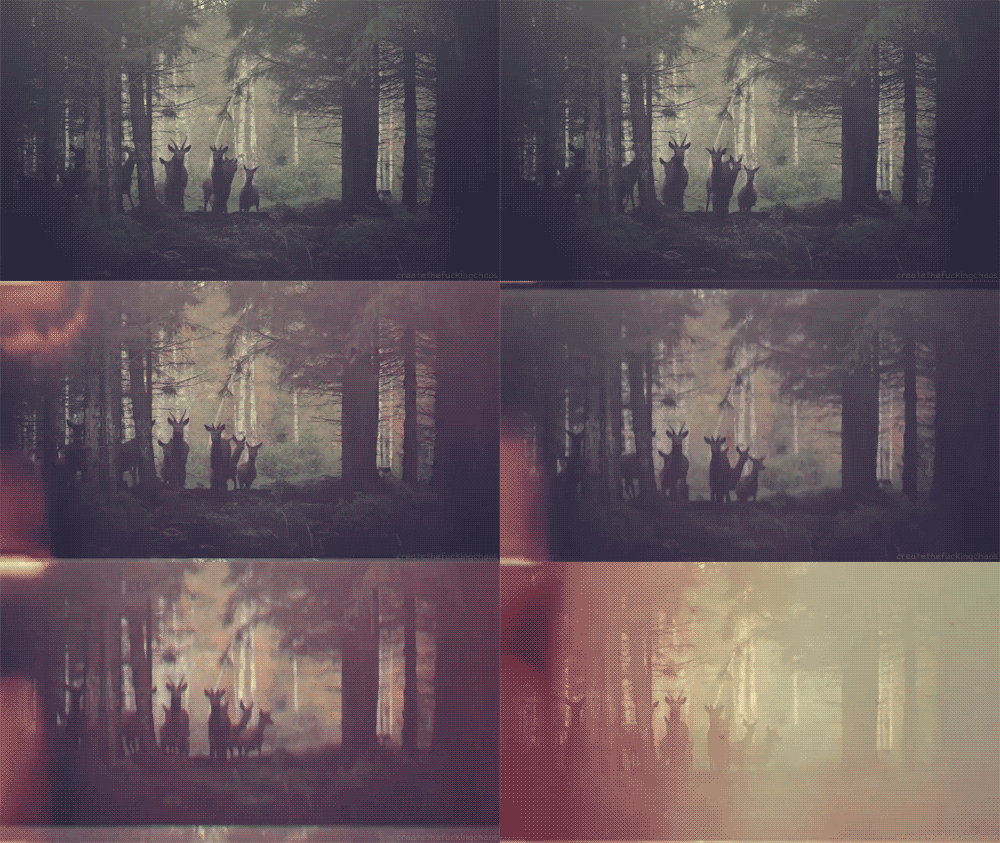
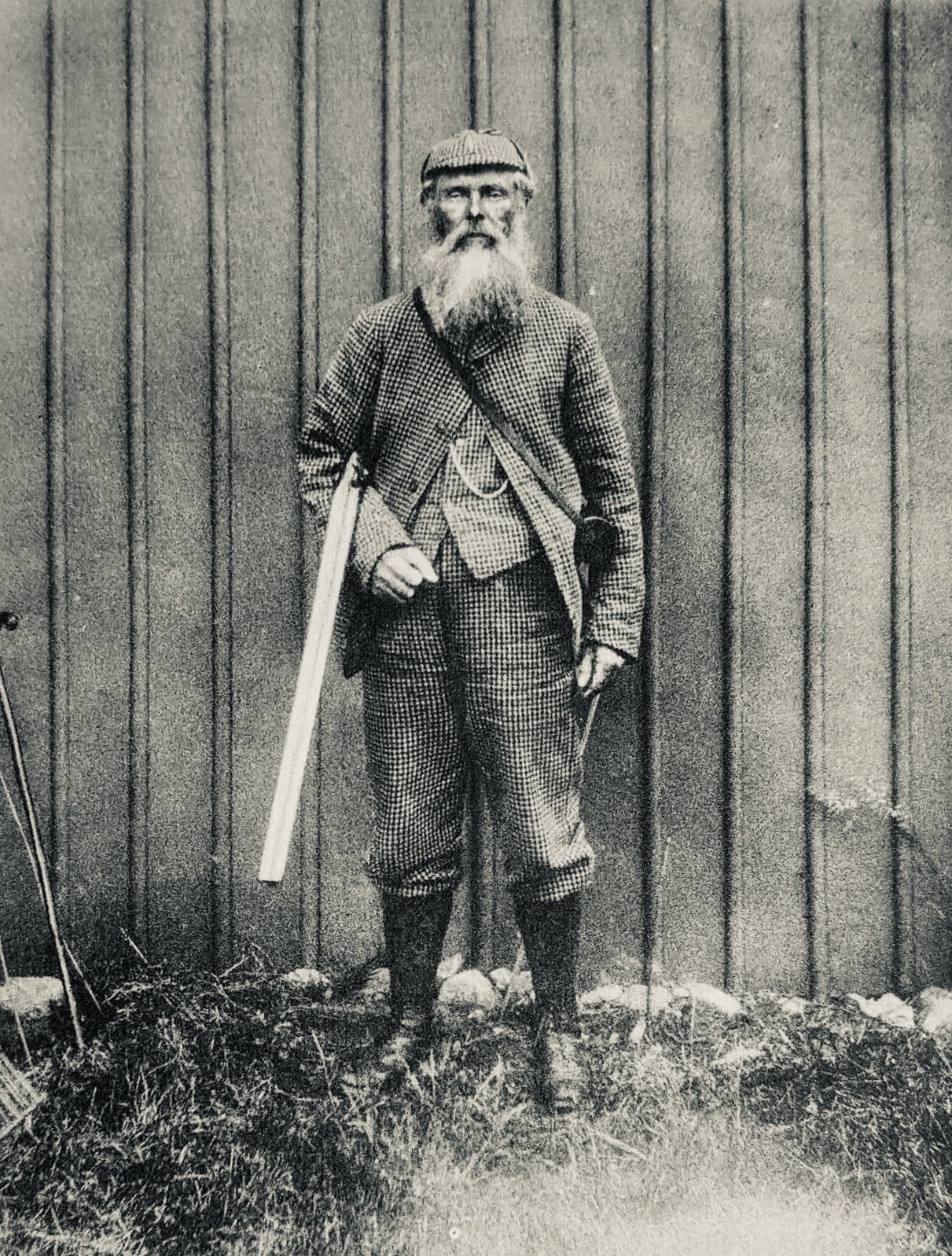
"I am not one who was born in the custody of wisdom. I am one who is fond of olden times and intense in quest of the sacred knowing of the ancients." Gustave Courbet
Showing posts with label place. Show all posts

09 December 2020

Maintain.


Adam Nicolson has written of the "powerful absence[s]" that remembered landscapes exert upon us, but they exist as powerful presences too, with which we maintain deep and abiding attachments. These, perhaps, are the landscapes in which we live the longest, warped though they are by time and abraded though they are by distance.

Robert Macfarlane, from The Old Ways: A Journey on Foot    

28 July 2019

Remote.


Point Nemo is so remote that it is doubtful whether anyone has ever consciously visited it yet. The participants in the 2015 Volvo Ocean Race, on the leg from Auckland, New Zealand to Itajai, Brazil, came closer than most. As they passed by Point Nemo, it was noted that the ships were closer to the occupants of the ISS, circling overhead at an altitude of around 250 miles (app. 400 km) on one of its 15 daily orbits around the globe, than to the rest of humanity.

21 July 2019

Exclusion.


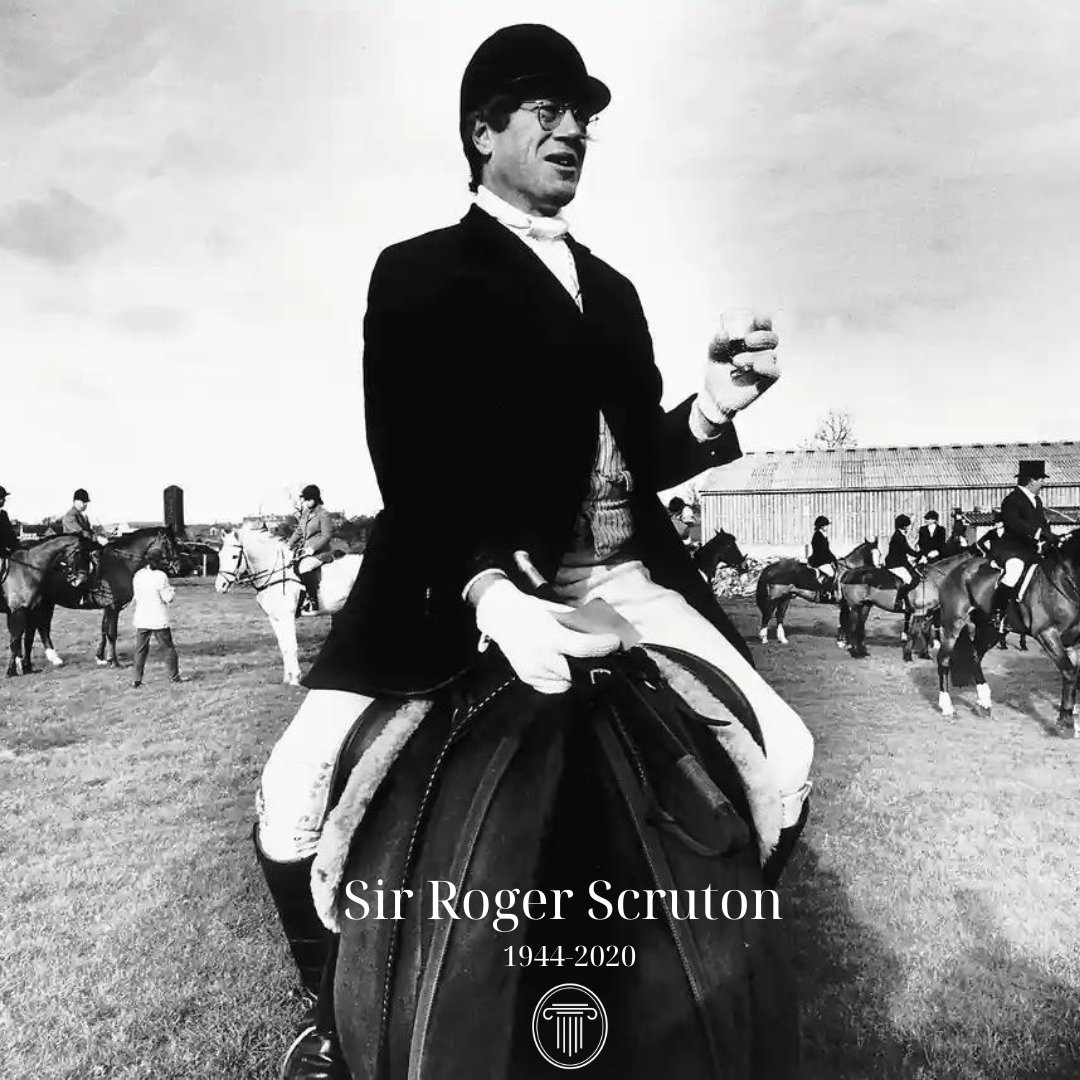
What is a sense of place unless it is a sense of exclusion?

Sir Roger Scruton

13 July 2019

Matter.


In 2013 Tom Mayes, deputy general counsel at the National Trust for Historic Preservation, was selected as a winner of the Rome Prize, which is awarded to about 30 emerging artists and scholars who represent the highest standard of excellence. A lifelong preservationist, Mayes is the principal lawyer for legal matters relating to the National Trust’s 27 historic sites and for historic property real estate transactions, and has expertise in architectural and technical preservation issues, collections management, preservation easements, the Americans with Disabilities Act and historic shipwrecks.

When he isn’t working on legal complexities, Mayes considers the role historic places play in everyday life. This prestigious award sent Mayes to Rome on a six-month tour of discovery where he sought to answer the question: Why Do Old Places Matter? This photo essay presents Mayes’ answers along with links to longer posts on the Preservation Leadership Forum blog that explore the answers in more depth.

14 March 2019

Happy Birthday, Blackwood


Algernon Blackwood was born on this day in 1869.

No place worth knowing yields itself at sight, and those the least inviting on first view may leave the most haunting pictures upon the walls of memory. Great revelations of nature, of course, never fail to impress in one way or another, and I am no stranger to moods of the kind. Mountains overawe and oceans terrify, while the mystery of great forests exercises a spell peculiarly its own. But all these, at one point or another, somewhere link on intimately with human life and human experience. They stir comprehensible, even if alarming, emotions. They tend on the whole to exalt.

Algernon Blackwood

10 February 2019

Watch.


No place worth knowing yields itself at sight, and those the least inviting on first view may leave the most haunting pictures upon the walls of memory. Adventures come to the adventurous, and mysterious things fall in the way of those who, with wonder and imagination, are on the watch for them; but the majority of people go past the doors that are half ajar, thinking them closed, and fail to notice the faint stirrings of the great curtain that hangs ever in the form of appearances between them and the world of causes behind.

Algernon Blackwood

02 October 2017

Home.

A bird's-eye view of Roger Scuton's Scrutopia ...


According to Sir Roger, traditions and attachments to place and home are precious as they give order and meaning to life. They fill a basic human need. Once destroyed, they cannot be brought back. The English countryside with its rolling hills, lush hedges, and vividly green pastures dotted by sheep and other livestock and ancient local traditions is a splendid reflection of the human endeavor of making a home in the world, a taming of and harmony with nature. Its cultural traditions, albeit under threat, attest to a community in harmony. Yet America is a country with only a few traditions and fleeting local attachments. Its landscapes, with its industrialized agriculture on the one hand and its sublime natural wilderness on the other, are no match for the bucolic and inviting landscape of Gloucestershire. “Home” in America carries a different sort of meaning.

America was founded on an ideal, not the concrete reality of a shared history or local attachment. It is, therefore, no wonder that the identification with abstract ideals continues to play such a crucial role in American society.

17 May 2016

Heart.


AMOR LOCI

I could draw its map by heart
showing its contours
strata and vegetation
name every height,
small burn and lonely shieling

W.H. Auden

27 February 2016

Place.


In ancient and medieval thought place was often center stage; the ground and context for everything else.  Aristotle thought place should take precedence of all other things because place gives order to the world.  Casey tells us that Aristotle claimed that place "gives bountiful aegis -- active protective support -- to what locates."  But the universalist pretensions of first, monotheistic religion and then The Enlightenment conspired to represent place as parochial, as a prosaic footnote when compared to their grand but abstract visions of global oneness.  Most modern intellectuals and scientists have hardly any interest in place for they consider their theories to be applicable everywhere.  Place was demoted and displaced, a process that was helped on its way by the rise of its slightly pompous and suitably abstract geographical rival, the idea of "space."  Space sounds modern in a way place doesn't: it evokes mobility and the absence of restrictions; it promises empty landscapes filled with promise.  When confronted with the filled-in business and oddity of place the reaction of modern societies has been to straighten and rationalise, to prioritize connections and erase obstacles, to overcome place with space.

In his philosophical history The Fate of Place, Casey charts a growing "disdain for the genus loci: indifference to the specialness of place."  We all live with the results. Most of us can see them outside the window.  In a hyper-mobile world, a love of place can easily be cast as passe, even reactionary.  When human fulfillment is measured out in air miles and even geographers subscribe to the idea, as expressed by Professor William J. Mitchell of MIT, that "communities increasingly find their common ground in cyberspace rather than terra firma," wanting to think about place can seem a little perverse.  Yet placelessness is neither intellectually nor emotionally satisfying.  Sir Thomas Moore's Greek neologism "utopia" may translate as "no place" but a placeless world is a dystopian prospect.

Place is a protean and fundamental aspect of what it is to be human.  We are a place-making and place-loving species.  The renowned and evolutionary biologist Edward O. Wilson talks about the innate and biologically necessary human love of living things as "biophilia."  He suggests that biophilia both connects us together as a species and bonds us to the rest of nature.  I would argue that there is an unjustly ignored and equally important geographical equivalent: "topophilia," or love of place.  The word was coined by the Chinese-American geographer Yi-Fu Tuan about the same time as Wilson introduced biophilia and its pursuit is at the heart of this book.

There is another theme that threads its way throughout the places corralled here -- the need to escape.  This urge is more widespread today than at any point in the past: since fantastic vacation destinations and lifestyles are constantly dangled before us, it's no surprise so many feel dissatisfied with their daily routine.  The rise of placelessness, on top of sense that the whole planet is now minutely known and surveilled, has given this dissatisfaction a radical edge, creating an appetite to find places that are off the map and that are somehow secret or at least have the power to surprise us.  

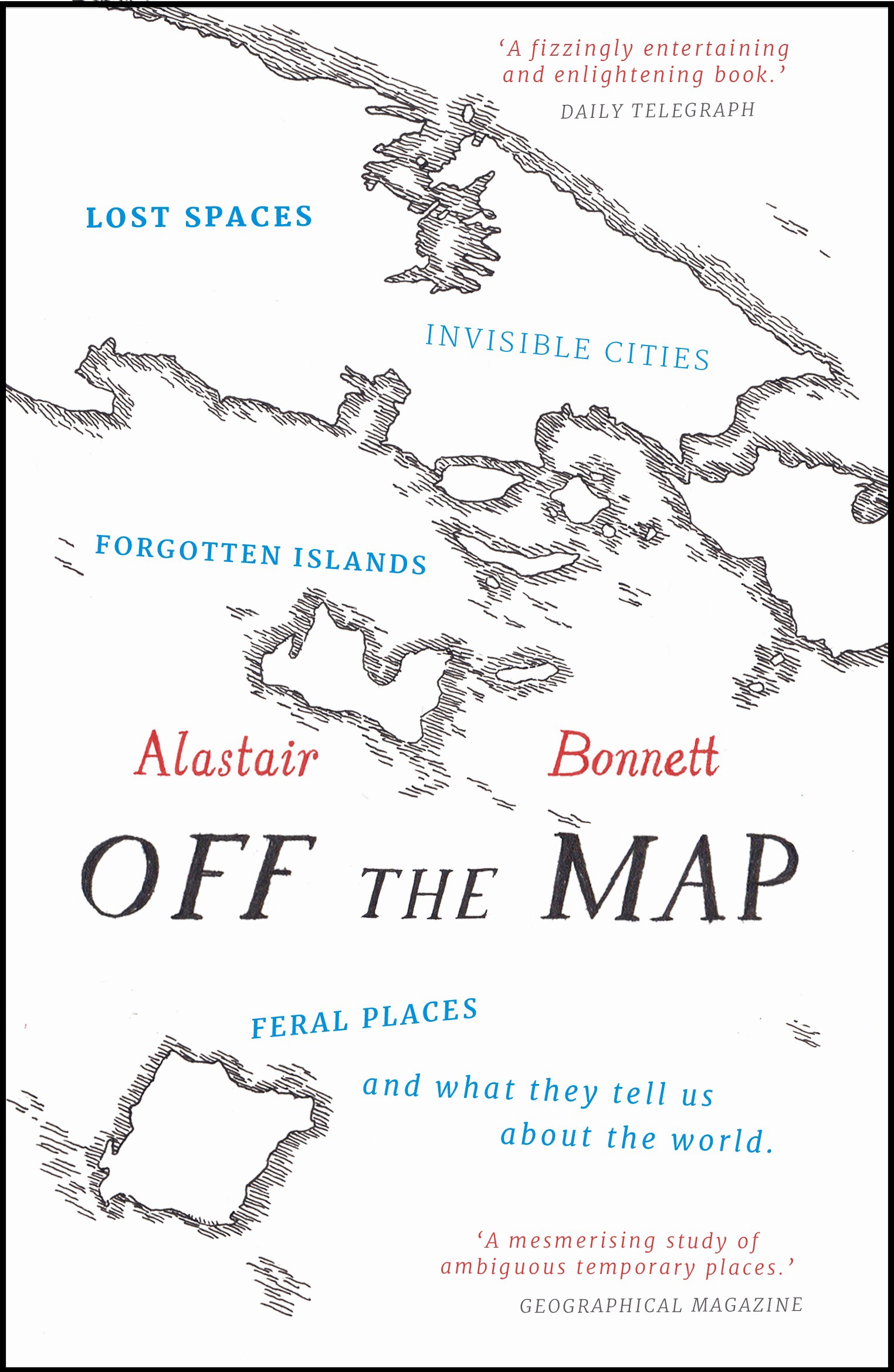
When describing the village of Ishmael's native ally and friend, Queequeg, in Moby-Dick, Herman Melville wrote: "It is not down on any map; true places never are."  It's an odd thing to say but i think it makes immediate, instinctual sense.  It touches on a suspicion that lies just beneath the rational surface of civilization.  When the world has been fully codified and collated, when ambivalences and ambiguities have been so sponged away that we know exactly and objectively where everything is and what it is called, a sense of loss arises.  The claim to completeness causes us to mourn the possibility of exploration and muse endlessly on the hope of both novelty and escape.  It is within this context that the unnamed and discarded places -- both far away and those that we pass every day -- take on a romantic aura.  In a fully discovered world exploration does not stop; it just has to be reinvented.

CONNECT

21 February 2016

Enduring.


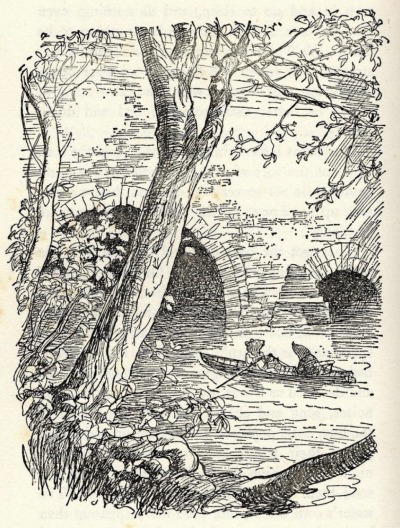
I see you don't understand, and I must explain it to you. Well, very long ago, on the spot where the Wild Wood waves now, before ever it had planted itself and grown up to what it now is, there was a city--a city of people, you know. Here, where we are standing, they lived, and walked, and talked, and slept, and carried on their business. Here they stabled their horses and feasted, from here they rode out to fight or drove out to trade. They were a powerful people, and rich, and great builders. They built to last, for they thought their city would last forever.

People come--they stay for a while, they flourish, they build--and they go. It is their way. But we remain. There were badgers here, I've been told, long before that same city ever came to be. And now there are badgers here again. We are an enduring lot, and we may move out for a time, but we wait, and are patient, and back we come. And so it will ever be.

Kenneth Grahame, from The Wind in the Willows

Attached.


For me, "home" is powerful concept, attached to the land I live on as much as to the family and community I live within, and much of my creative work is nurtured by the specifics of place: flora, fauna, geology, weather, and the folklore attached to all these things. It is shaped by the person I am in this landscape and not another one.

27 July 2015

Happy birthday, Belloc.


Hilaire Belloc was born on this date in 1870.

The South Country

When I am living in the Midlands
That are sodden and unkind,
I light my lamp in the evening:
My work is left behind;
And the great hills of the South Country
Come back into my mind.

The great hills of the South Country
They stand along the sea;
And it's there walking in the high woods
That I could wish to be,
And the men that were boys when I was a boy
Walking along with me.

The men that live in North England
I saw them for a day:
Their hearts are set upon the waste fells,
Their skies are fast and grey;
From their castle-walls a man may see
The mountains far away.

The men that live in West England
They see the Severn strong,
A-rolling on rough water brown
Light aspen leaves along.
They have the secret of the Rocks,
And the oldest kind of song.

But the men that live in the South Country
Are the kindest and most wise,
They get their laughter from the loud surf,
And the faith in their happy eyes
Comes surely from our Sister the Spring
When over the sea she flies;
The violets suddenly bloom at her feet,
She blesses us with surprise.

I never get between the pines
But I smell the Sussex air;
Nor I never come on a belt of sand
But my home is there.
And along the sky the line of the Downs
So noble and so bare.

A lost thing could I never find,
Nor a broken thing mend:
And I fear I shall be all alone
When I get towards the end.
Who will there be to comfort me
Or who will be my friend?

I will gather and carefully make my friends
Of the men of the Sussex Weald;
They watch the stars from silent folds,
They stiffly plough the field.
By them and the God of the South Country
My poor soul shall be healed.

If I ever become a rich man,
Or if ever I grow to be old,
I will build a house with deep thatch
To shelter me from the cold,
And there shall the Sussex songs be sung
And the story of Sussex told.

I will hold my house in the high wood
Within a walk of the sea,
And the men that were boys when I was a boy
Shall sit and drink with me.

Hilaire Belloc
19 June 2015

07 January 2015

Celebrated.


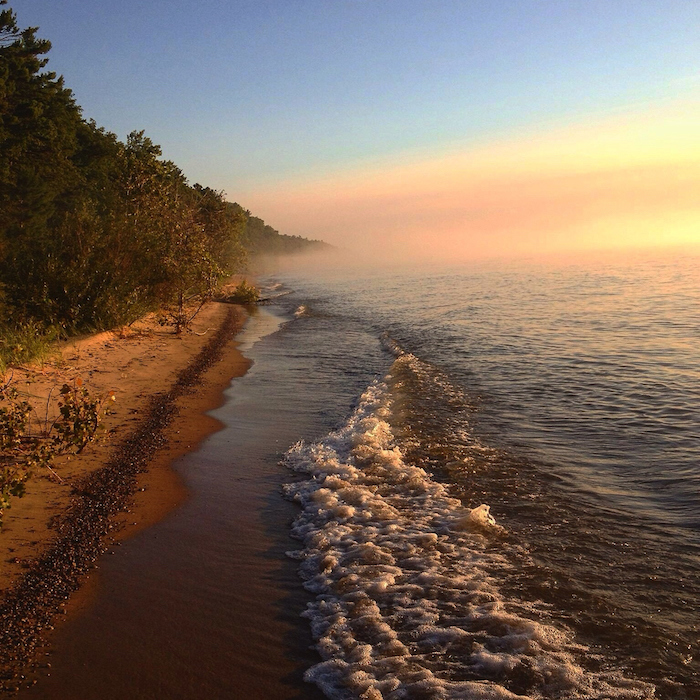
I found a patch of bare, sandy ground, unlikely cover for rattlesnakes, and smoothed out a spot for my bedroll. I wanted a campfire, but I was already trespassing and feared a grass fire like those used to drive the buffalo hither and yon. I was cold and damp all night and got up several times to exercise my way back into warmth. There was a lovely half-moon that was strong enough to make the landscape glow. That and the sound of the running Platte were enough to allay my discomfort. The moon buried itself in the river as it does in Chinese poems.

I was fine as long as I didn’t think about the future and my unrealistic ambition to become a poet and novelist. When the moon set in the predawn hours, it became truly dark and I was at first frightened by the sound of heavy breathing. But then, as an ex-farm boy, I recognized the odor of cattle. It was O.K. as long as it wasn’t an unruly bull, who would have been snorting immediately. In the first dim light from the east I could see a circle of curious calves surrounding me. I muttered good morning and several ran for it.

That was the night I fell in love with the Sand Hills. I celebrated by carving the mold off a piece of Cheddar and opened a can of 19-cent Boothbay sardines, a standby in my youthful hikes. There were severe thundershowers early but that helped get me a long day’s ride all the way to Brainerd, Minn., where I spent the night trying to sleep on a picnic table in a park while a number of stray dogs growled at me. Finally, a spaniel with a good heart jumped up on the table and cuddled with me, helping to raise the frigid temperature. I had been accepted and the growling dogs departed.
19 December 2014

Thinking.


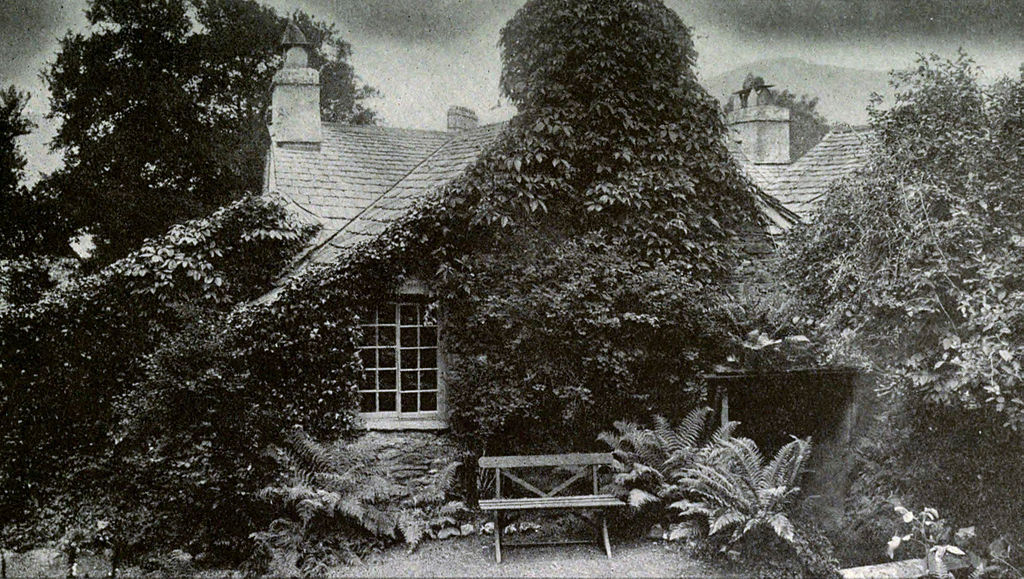
On this date in 1799, William Wordsworth moved into Dove Cottage, the home where, through "plain living and high thinking," he was to write his greatest works.

If from the public way you turn your steps
Up the tumultuous brook of Greenhead Ghyll
You will suppose that with an upright path
Your feet must struggle; in such bold ascent
The pastoral mountains front you, face to face.
But, courage! for around that boisterous brook
The mountains have all opened out themselves
And made a hidden valley of their own
No habitation can be seen; but they
Who journey thither find themselves alone
With a few sheep, with rocks and stones, and kites
That overhead are sailing in the sky
It is in truth an utter solitude;
Nor should I have made mention of this Dell
But for one object which you might pass by, 
Might see and notice not. Beside the brook
Appears a struggling heap of unhewn stones!
And to that simple object appertains
A story—unenriched with strange events
Yet not unfit, I deem, for the fireside,
Or for the summer shade.

William Wordsworth, from "Michael, A Pastoral Poem"

18 November 2014

Beyond.


The rest, with very little exaggeration, was books. Meant-to-be-picked-up books. Permanently-left-behind books. Uncertain-what-to-do-with books. But books, books. Tall cases lined three walls of the room, filled to and beyond capacity. The overflow had been piled in stacks on the floor. There was little space left for walking, and none whatever for pacing.

J.D. Salinger