"I am not one who was born in the custody of wisdom. I am one who is fond of olden times and intense in quest of the sacred knowing of the ancients." Gustave Courbet
Showing posts with label knowledge. Show all posts

02 July 2024

Happy Birthday, Hesse


When in the next morning the time had come to start the day’s journey, Govinda said, not without hesitation, these words: “Before I’ll continue on my path, Siddhartha, permit me to ask one more question. Do you have a teaching? Do you have a faith or a knowledge you follow, which helps you to live and to do right?”

Quoth Siddhartha: “You know, my dear, that I already as a young man, in those days when we lived with the penitents in the forest, started to distrust teachers and teachings and to turn my back to them. I have stuck with this. Nevertheless, I have had many teachers since then. A beautiful courtesan has been my teacher for a long time, and a rich merchant was my teacher, and some gamblers with dice. Once, even a follower of Buddha, travelling on foot, has been my teacher; he sat with me when I had fallen asleep in the forest, on the pilgrimage. I’ve also learned from him, I’m also grateful to him, very grateful. But most of all, I have learned here from this river and from my predecessor, the ferryman Vasudeva. He was a very simple person, Vasudeva, he was no thinker, but he knew what is necessary just as well as Gotama, he was a perfect man, a saint.”

Govinda said: “Still, oh Siddhartha, you love a bit to mock people, as it seems to me. I believe in you and know that you haven’t followed a teacher. But haven’t you found something by yourself, though you’ve found no teachings, you still found certain thoughts, certain insights, which are your own and which help you to live? If you would like to tell me some of these, you would delight my heart.”

Quoth Siddhartha: “I’ve had thoughts, yes, and insight, again and again. Sometimes, for an hour or for an entire day, I have felt knowledge in me, as one would feel life in one’s heart. There have been many thoughts, but it would be hard for me to convey them to you. Look, my dear Govinda, this is one of my thoughts, which I have found: wisdom cannot be passed on. Wisdom which a wise man tries to pass on to someone always sounds like foolishness.”

“Are you kidding?” asked Govinda.

“I’m not kidding. I’m telling you what I’ve found. Knowledge can be conveyed, but not wisdom. It can be found, it can be lived, it is possible to be carried by it, miracles can be performed with it, but it cannot be expressed in words and taught. This was what I, even as a young man, sometimes suspected, what has driven me away from the teachers. I have found a thought, Govinda, which you’ll again regard as a joke or foolishness, but which is my best thought. It says: The opposite of every truth is just as true! That’s like this: any truth can only be expressed and put into words when it is one-sided. Everything is one-sided which can be thought with thoughts and said with words, it’s all one-sided, all just one half, all lacks completeness, roundness, oneness. When the exalted Gotama spoke in his teachings of the world, he had to divide it into Sansara and Nirvana, into deception and truth, into suffering and salvation. It cannot be done differently, there is no other way for him who wants to teach. But the world itself, what exists around us and inside of us, is never one-sided. A person or an act is never entirely Sansara or entirely Nirvana, a person is never entirely holy or entirely sinful. It does really seem like this, because we are subject to deception, as if time was something real. Time is not real, Govinda, I have experienced this often and often again. And if time is not real, then the gap which seems to be between the world and the eternity, between suffering and blissfulness, between evil and good, is also a deception.”

Hermann Hesse, born on this day in 1877, from Siddhartha

06 July 2023

Share.


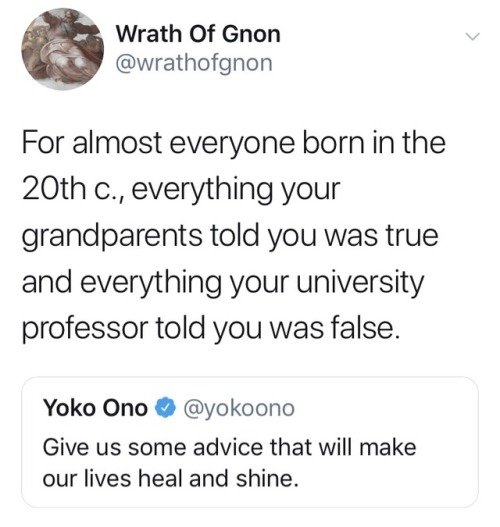
Knowledge isn't like a cheeseburger. If I have a cheeseburger and I want to share it with someone, I'll have less for myself. Knowledge doesn't work that way. You can share knowledge as much as you want, and you won't lose any of it.  There's no good reason to be selfish with knowledge -- that's exactly why everyone should be teaching in some capacity. Share what you know.
Dr. Tae

27 March 2023

Changed.


Trying to figure out when problems can be solved using current knowledge—and when they have to chart a new path instead ...
When problems are so far off the map that mathematicians can’t even imagine how to reach them, the challenge is more than coming up with a better boat — it’s coming up with a better map. If you don’t know where an island is located, no amount of ingenuity will get you there. But once you’ve located it, you might find a surprising route that will bring you to its shores.

This was the case with the most celebrated mathematical result of the 21st century — Grigori Perelman’s 2003 proof of the PoincarĂ© conjecture, a problem about determining when a three-dimensional shape is equivalent to the three-dimensional sphere. The problem had stymied mathematicians for a century. Then in the early 1980s, William Thurston placed the PoincarĂ© conjecture in a broader theoretical landscape — and from there, mathematicians began to discover new ways to approach it.

“I think one of the reasons we were stonewalled was not because we didn’t have the right techniques, but because the problem wasn’t put in the right conceptual framework,” McMullen said. “The changed question suggested the changed techniques.”

In other words, if a new map reveals a surprising sea route to your destination, it might occur to you to build a ship.

Yet there’s also no guarantee that a problem can be solved at all. For example, a certain conjecture suggests that the digits of pi are uniformly distributed, so the numbers 0-9 each appear with the same frequency overall. Experimental computations back up the conjecture, but mathematicians have no idea how to prove it — and they may never.

“There’s a very high probability that the conjecture is true, but its truth might be an accident that’s very hard to access by pure logic,” McMullen said.

26 March 2023

Pursuit.

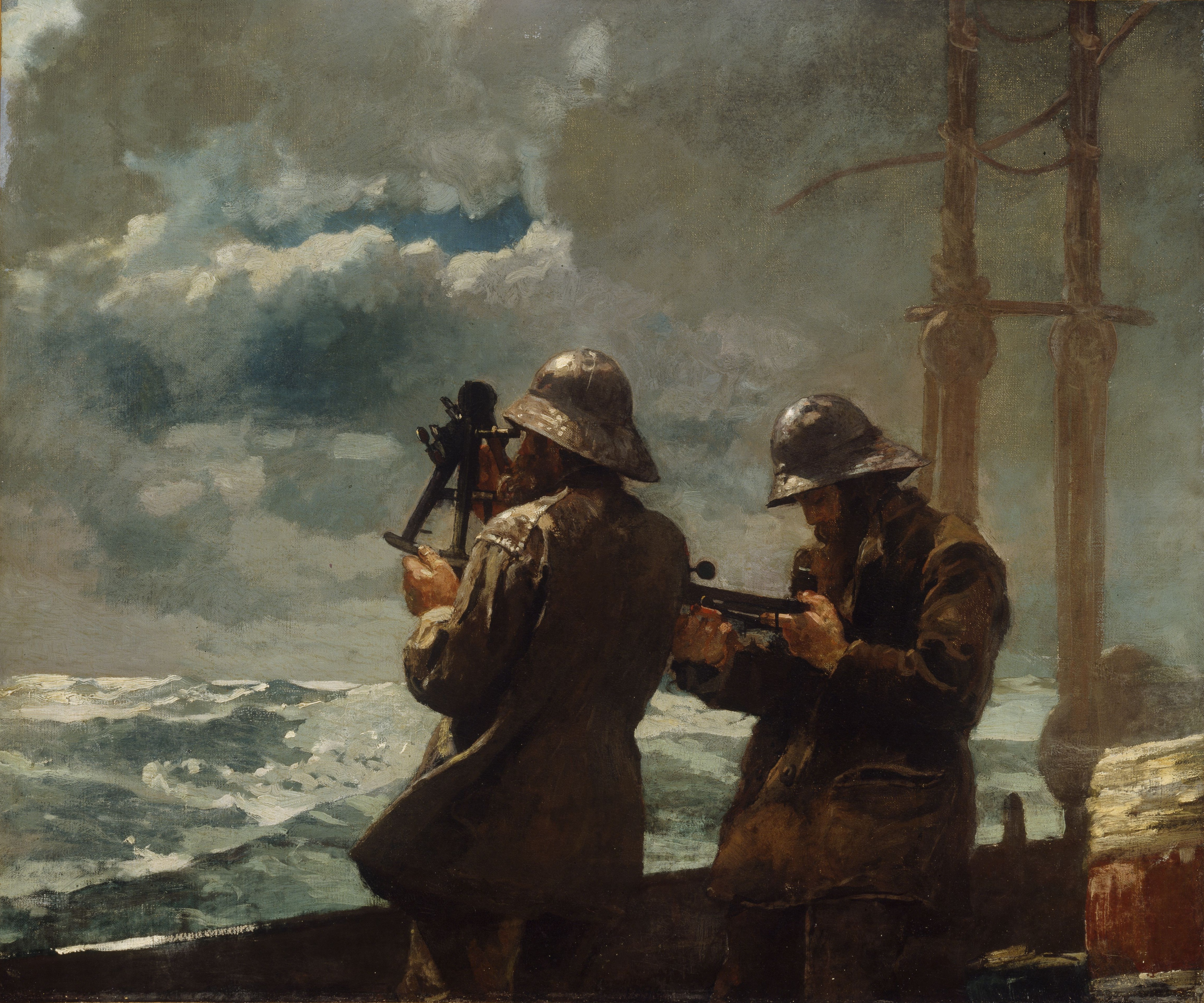
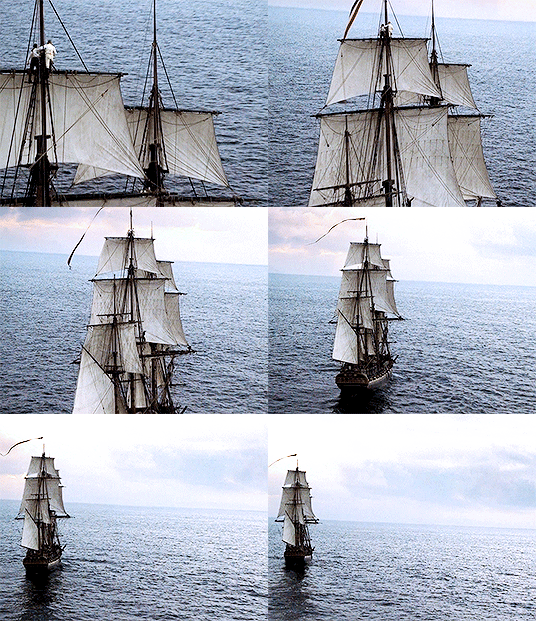
Homer, Eight Bells, 1886


Lawrence Yeo's Framework for Knowledge ...If you learn something for the first time, does that make you knowledgeable?
When we treat knowledge as a verb, it creates a process that separates what we know from the ever-changing quality of how we know it ...

The sharp division in our political systems, the inability to determine what is truthful in our news cycles, the animus toward dialogue amongst opposing viewpoints, the failure in aligning our ethical norms — these are all the illegitimate children of misplaced certainty. Our obsession with knowledge has gotten us here, but we’ve discarded the quality of its pursuit in the process.
Further ...
This is what education is all about. When you take the time to spread your findings to people, you simultaneously create the opportunity for a revision in your thought process as well. This is the root behind the adage of “teaching being the best form of learning.”

04 August 2021

Profoundly.

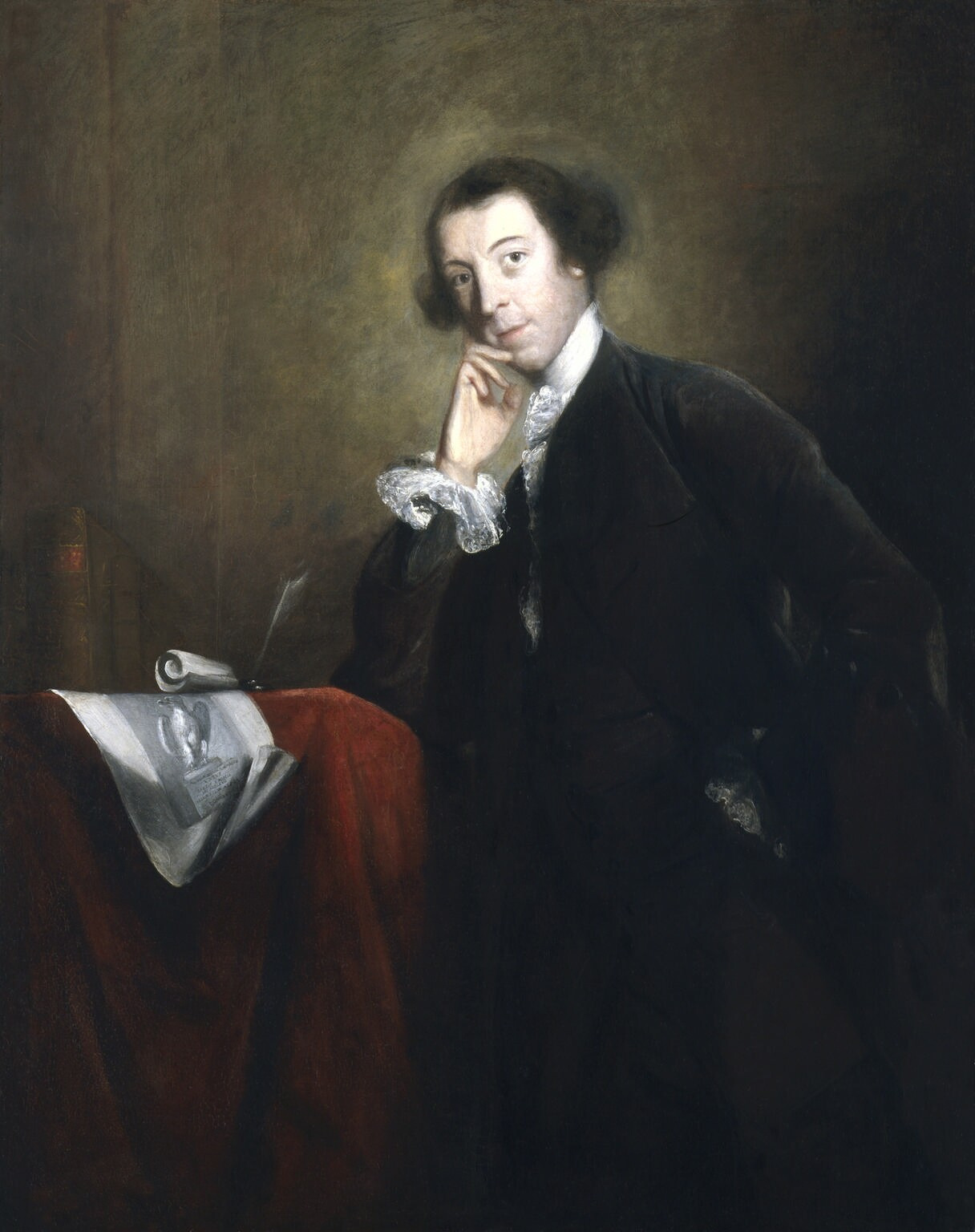
Reynolds, Horace Walpole, 1756


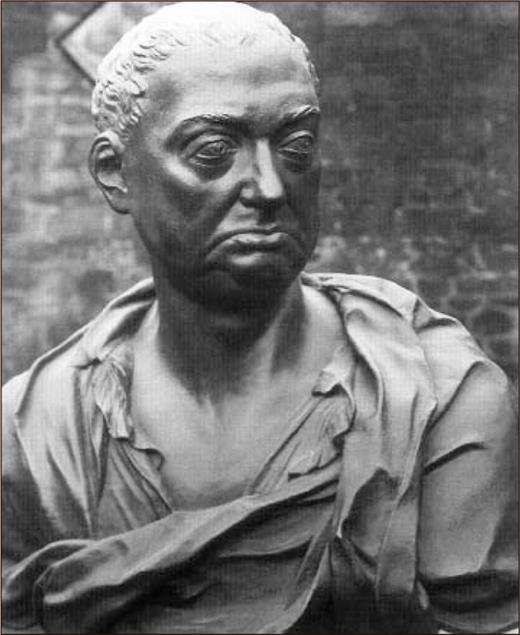
The whole secret of life is to be interested in one thing profoundly and in a thousand things well.

Horace Walpole

30 December 2020

Knowledge.


Knowledge of what is does not open the door directly to what should be.

Albert Einstein

02 April 2020

Try.


Some of the sensible substances are generally admitted to be substances, so that we must look first among these. For it is an advantage to advance to that which is more knowable. For learning proceeds for all in this way -- through that which is less knowable by nature to that which is more knowable; and just as in conduct our task is to start from what is good for each and make what is without qualification good good for each, so it is our task to start from what is more knowable to oneself and make what is knowable by nature knowable to oneself. Now what is knowable and primary for particular sets of people is often knowable to a very small extent, and has little or nothing of reality. But yet one must start from that which is barely knowable but knowable to oneself, and try to know what is knowable without qualification, passing, as has been said, by way of those very things which one does know.

Aristotle

15 January 2020

Safeguard.


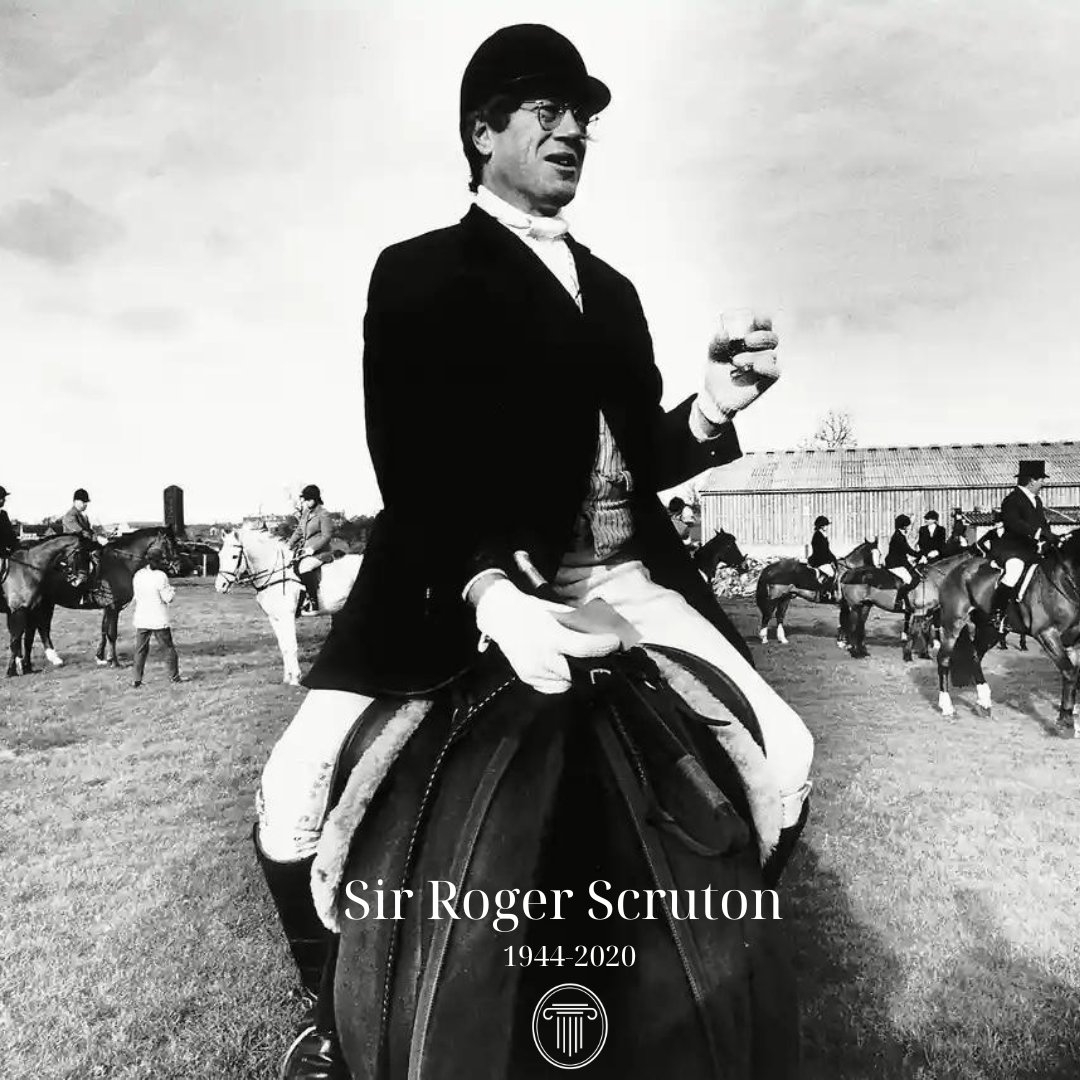
The state, they have told us, has a duty towards each child, and no child must be made to feel inferior to any other. Although that is true, the state has another and greater duty which is a duty towards us all — namely, the duty to conserve the knowledge that we need, which can be passed on only with the help of the children able to acquire it.

To put the matter simply, knowledge benefits the child, but not as much as the clever child benefits knowledge. Hence the state has an interest in selection, so that those with an aptitude for knowledge can be given the chance to acquire it — to acquire it without the many distractions that come from being surrounded by others who have no interest in the life of the mind.

I was fortunate to attend a grammar school, which made available to me the kind of knowledge that people of my parents’ class did not easily have the chance to acquire. Hence I have played my own special part in absorbing, processing and passing on the knowledge that is still enshrined in our curriculum. I take this as a justification for my existence, that I have passed on to others something that, but for the kind of education I enjoyed, might have died.

Critics tell us that selection divides children into successes and failures, and that the failures are ‘marked for life’. I see no reason to believe that. Future generations need knowledge; but they also need skills, strengths and technical know-how. Schools that provide those benefits — like the German Technische Hochschulen — are as important as grammar schools: and if children have the possibility of freely passing between schools in the process of discovering their aptitude, then selection need in any case never be final.

In the world of education those thoughts are heresies. After years of ‘child-centred’ indoctrination the educational establishment has become lost in a kind of fairyland, believing that education is really a form of social engineering, and that its primary purpose is to boost the pupil’s ‘self-esteem’. Once we see that the primary purpose of education is to safeguard knowledge, all the fairy castles of the educationists tumble in ruins. Hence they are up in arms, and, as so often, in arms against the truth.

Sir Roger Scruton

26 September 2018

Happy birthday, Eliot.


T.S. Eliot was born on this day in 1888.

The vast accumulations of knowledge—or at least of information—deposited by the nineteenth century have been responsible for an equally vast ignorance. When there is so much to be known, when there are so many fields of knowledge in which the same words are used with different meanings, when every one knows a little about a great many things, it becomes increasingly difficult for anyone to know whether he knows what he is talking about or not. And when we do not know, or when we do not know enough, we tend always to substitute emotions for thoughts.

T.S. Eliot

26 April 2018

Humility.


There are those who maintain that you can’t demand anything of the reader. They say the reader knows nothing about art, and that if you are going to reach him, you have to be humble enough to descend to his level. This supposes either that the aim of art is to teach, which it is not, or that to create anything which is simply a good-in-itself is a waste of time. Art never responds to the wish to make it democratic; it is not for everybody; it is only for those who are willing to undergo the effort needed to understand it. We hear a great deal about humility being required to lower oneself, but it requires an equal humility and a real love of the truth to raise oneself and by hard labor to acquire higher standards. Ignorance is excusable when it is borne like a cross, but when it is wielded like an ax, and with moral indignation, then it becomes something else indeed.

Flannery O'Connor

29 December 2017

Higher.


The task of understanding is not to replicate in conceptual form something that already exists, but rather to create a wholly new realm, that together with the world given to our senses constitutes the fullness of reality. If we do not believe within ourselves this deeply rooted feeling that there is something higher than ourselves, we shall never find the strength to evolve into something higher.  The higher worlds are around us. These worlds are not only heavenly worlds, not only worlds of happiness, though paradise and happiness are in them, but they are also worlds that could be terrible for the people, by dangerous facts and creatures.  If man wants to obtain knowledge of the greatness and happiness of these worlds, then is nothing else possible than that he also will be introduced to the dangerous, with the fearfulness that they contain. One is not possible without the other.

Rudolf Steiner

27 November 2017

23 November 2017

Pursuing.


We should reject the view that high culture, as the possession of an elite, is of no use to those who don’t possess it. This is as false as the view that science or higher mathematics are useless to those who don’t understand them. Scientific knowledge exists because a few talented people are prepared to devote their energy to pursuing it. That is what a university is for: and since you cannot pass on difficult knowledge without discriminating between the students who can absorb it and those who cannot, discrimination is a social good. The same is true of high culture. Those able to acquire it will be a minority and the process of cultural transmission will be critically impeded if that teacher must teach Mozart and Lady Gaga side by side to satisfy some egalitarian agenda.

Sir Roger Scruton

27 July 2017

Mystical.


The most beautiful and most profound experience is the sensation of the mystical. It is the sower of all true science. He to whom this emotion is a stranger, who can no longer wonder and stand rapt in awe, is as good as dead. To know that what is impenetrable to us really exists, manifesting itself as the highest wisdom and the most radiant beauty which our dull faculties can comprehend only in their primitive forms – this knowledge, this feeling is at the center of true religiousness.

Albert Einstein

25 February 2017

Thinking.


By thinking about what a thing or event is, you will find things like it or related to it that you never considered or simply did not know existed.

Thanks to Kurt at Cultural Offering.