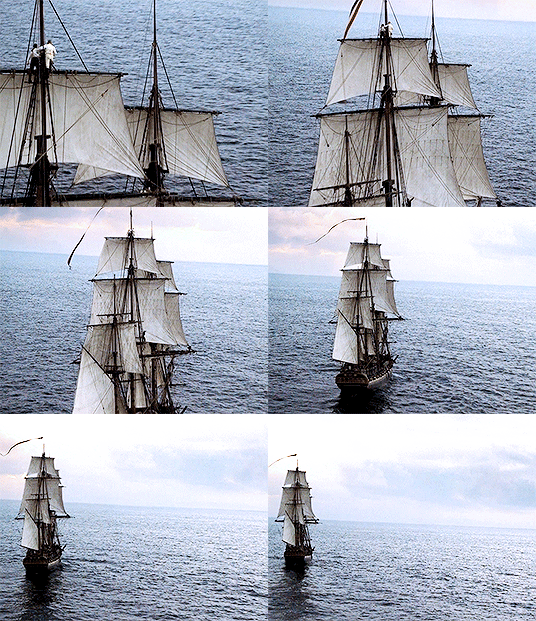
"I am not one who was born in the custody of wisdom. I am one who is fond of olden times and intense in quest of the sacred knowing of the ancients." Gustave Courbet

05 June 2017

Actively.


The existence of any library, even mine, allows readers a sense of what their craft is truly about, a craft that struggles against the stringencies of time by bringing fragments of the past into their present. It grants them a glimpse, however secret or distant, into the minds of other human beings, and allows them a certain knowledge of their own condition through the stories stored here for their perusal. Above all, it tells readers that their craft consist of the power to remember, actively, through the prompt of the page, selected moments of the human experience. 

Alberto Manguel

Typography.

Troll.


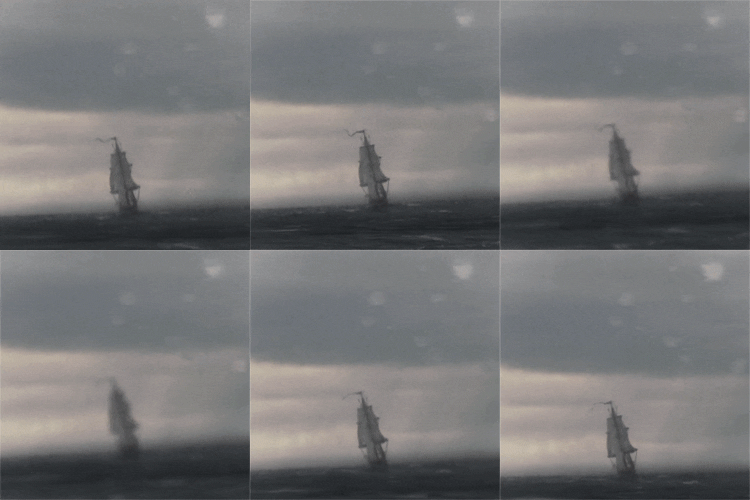
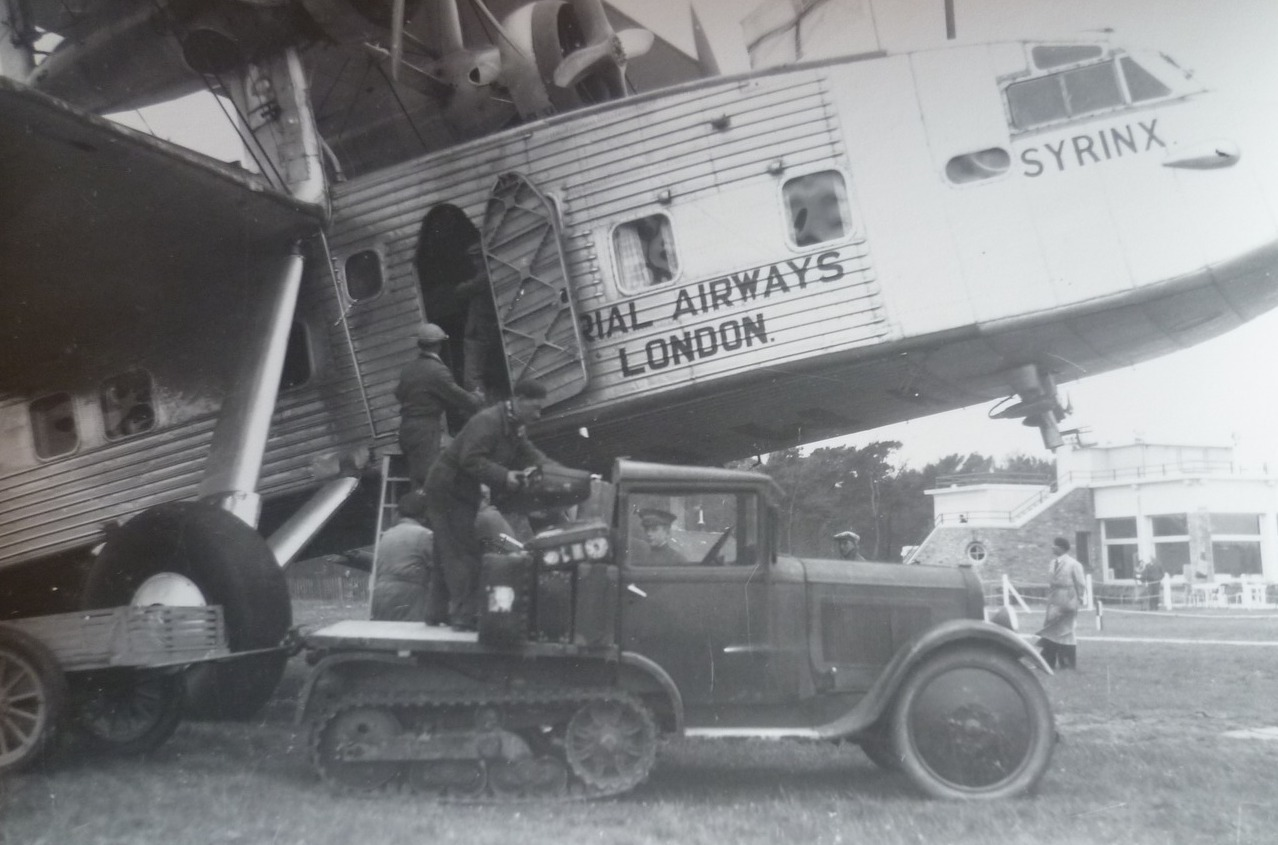
Great Norwegian Mountain Troll allegedly photographed in December 1942 by the crew of an RAF recon flight 300 miles North of Berge.

Technique.


Technique is the proof of your seriousness.

Wallace Stevens

04 June 2017

Resolute.


Something can be done by good laws; more can be done by honest administration of the laws; but most of all can be done by frowning resolutely upon the preachers of vague discontent; and by upholding the true doctrine of self-reliance, self-help, and self-mastery. This doctrine sets forth many things. Among them is the fact that though a man can occasionally be helped when he stumbles, yet that it is useless to try to carry him when he will not or cannot walk; and worse than useless to try to bring down the work and reward of the thrifty and intelligent to the level of the capacity of the weak, the shiftless, and the idle. It further shows that the maudlin philanthropist and the maudlin sentimentalist are almost as noxious as the demagogue, and that it is even more necessary to temper mercy with justice than justice with mercy.

The worst lesson that can be taught a man is to rely upon others and to whine over his sufferings. If an American is to amount to anything he must rely upon himself, and not upon the State; he must take pride in his own work, instead of sitting idle to envy the luck of others; he must face life with resolute courage, win victory if he can and accept defeat if he must, without seeking to place on his fellow-men a responsibility which is not theirs.

Theodore Roosevelt

CONNECT

RUSH, "Vital Signs"

Unstable condition:
A symptom of life,
In mental,
And environmental change

Atmospheric disturbance -
The feverish flux,
Of human interface
And interchange

   The impulse is pure -
   Sometimes our circuits get shorted,
   By external interference

   Signals get crossed -
   And the balance distorted
   By internal incoherence

A tired mind become a shape-shifter
Everybody need a mood lifter
Everybody need reverse polarity

Everybody got mixed feelings
About the function and the form.
Everybody got to deviate
From the norm

An ounce of perception -
A pound of obscure
Process information
At half speed

Pause:
Rewind - replay -
Warm memory chip
Random-sample -
Hold the one you need

   Leave out the fiction
   The fact is;
   This friction
   Will only be worn by persistence

   Leave out conditions
   Courageous convictions
   Will drag the dream into existence

A tired mind become a shape-shifter
Everybody need a soft filter
Everybody need reverse polarity

Everybody got mixed feelings
About the function and the form
Everybody got to elevate
From the norm...

It's Sausage Time ...

Baptized.


Nearer to the earth's heart,
Deeper within its silence:
Animals know this world
In a way we never will.

We who are ever
Distanced and distracted
By the parade of bright
Windows thought opens:
Their seamless presence
Is not fractured thus.

Stranded between time
Gone and time emerging,
We manage seldom
To be where we are:
Whereas they are always
Looking out from
The here and now.

May we learn to return
And rest in the beauty
Of animal being,
Learn to lean low,
Leave our locked minds,
And with freed senses
Feel the earth
Breathing with us.

May we enter
Into lightness of spirit,
And slip frequently into
The feel of the wild.

Let the clear silence
Of our animal being
Cleanse our hearts
Of corrosive words.

May we learn to walk
Upon the earth
With all their confidence
And clear-eyed stillness
So that our minds
Might be baptized
In the name of the wind
And light and the rain.

John O'Donohue

Memory.

Homer, Hurricane, Bahamas, 1898


RIVERS of REPOSE

The willows carried a slow sound, 
A sarabande the wind mowed on the mead. 
I could never remember 
That seething, steady leveling of the marshes 
Till age had brought me to the sea. 

Flags, weeds. And remembrance of steep alcoves 
Where cypresses shared the noon’s 
Tyranny; they drew me into hades almost. 
And mammoth turtles climbing sulphur dreams 
Yielded, while sun-silt rippled them 
Asunder ... 

How much I would have bartered! the black gorge 
And all the singular nestings in the hills 
Where beavers learn stitch and tooth. 
The pond I entered once and quickly fled— 
I remember now its singing willow rim. 

And finally, in that memory all things nurse; 
After the city that I finally passed 
With scalding unguents spread and smoking darts 
The monsoon cut across the delta 
At gulf gates ... There, beyond the dykes 

I heard wind flaking sapphire, like this summer, 
And willows could not hold more steady sound. 

Hart Crane

Freighted.


Ocean is more ancient than the mountains, and freighted with the memories and the dreams of Time.

H. P. Lovecraft

02 June 2017

Courage.


Have the courage to use your own understanding! The energy of courage needed to overcome the obstacles to learning thrown up by both the intolerance of nature and the cowardice of the heart. Not for nothing does the ancient myth have the goddess of wisdom emerging fully armed from Jupiter’s head; for her very first action is that of a warrior. Even at her birth she must enter a bitter struggle with senses that do not wish to be torn from sweet repose.

Friedrich Schiller

Robert Plant, "The Lemon Song"

Happy Friday!

Free.


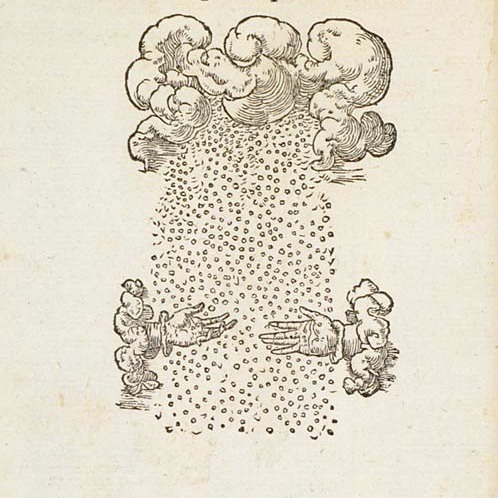
The cloud is free only to go with the wind. The rain is free only in falling.

Wendell Berry

High.


Write it on your heart
that every day is the best day in the year.
He is rich who owns the day, and no one owns the day
who allows it to be invaded with fret and anxiety.

Finish every day and be done with it.
You have done what you could.
Some blunders and absurdities, no doubt crept in.
Forget them as soon as you can, tomorrow is a new day;
begin it well and serenely, with too high a spirit
to be cumbered with your old nonsense.

This new day is too dear,
with its hopes and invitations,
to waste a moment on the yesterdays

Ralph Waldo Emerson

01 June 2017

Cream, "I Feel Free"

New Order, "The Perfect Kiss"

Chet Baker, "Bye, Bye Blackbird"

Pinnacle.


Abraham Maslow is the leading figure in the tradition of humanistic psychology and the modern Positive Psychology movement owes a huge debt to his theories. His "Hierarchy of Needs" remains widely recognized and used.

Nonetheless, the layperson knows surprisingly little about the pinnacle Maslow wants us to aspire to- Self-Actualization. Who is this Self-Actualized person, and what characteristics does s/he have? Maslow’s portrait is detailed and complex.

Self-Actualization
Maslow describes the good life as one directed towards self-actualization, the pinnacle need. Self-actualization occurs when you maximize your potential, doing the best that you are capable of doing. Maslow studied individuals whom he believed to be self-actualized, including Abraham Lincoln, Thomas Jefferson, and Albert Einstein, to derive the common characteristics of the self-actualized person. Here are a selection of the most important characteristics, from his book Motivation and Personality:

1.  Self-actualized people embrace the unknown and the ambiguous.
2.  They accept themselves, together with all their flaws.
3.  They prioritize and enjoy the journey, not just the destination.
4.  While they are inherently unconventional, they do not seek to shock or disturb.
5.  They are motivated by growth, not by the satisfaction of needs.
6.  Self-actualized people have purpose.
7.  They are not troubled by the small things.
8.  Self-actualized people are grateful.
9.  They share deep relationships with a few, but also feel identification and affection towards the entire human race.
10. Self-actualized people are humble.
11. Self-actualized people resist enculturation.
12. Despite all this, self-actualized people are not perfect.

CONNECT

Will.


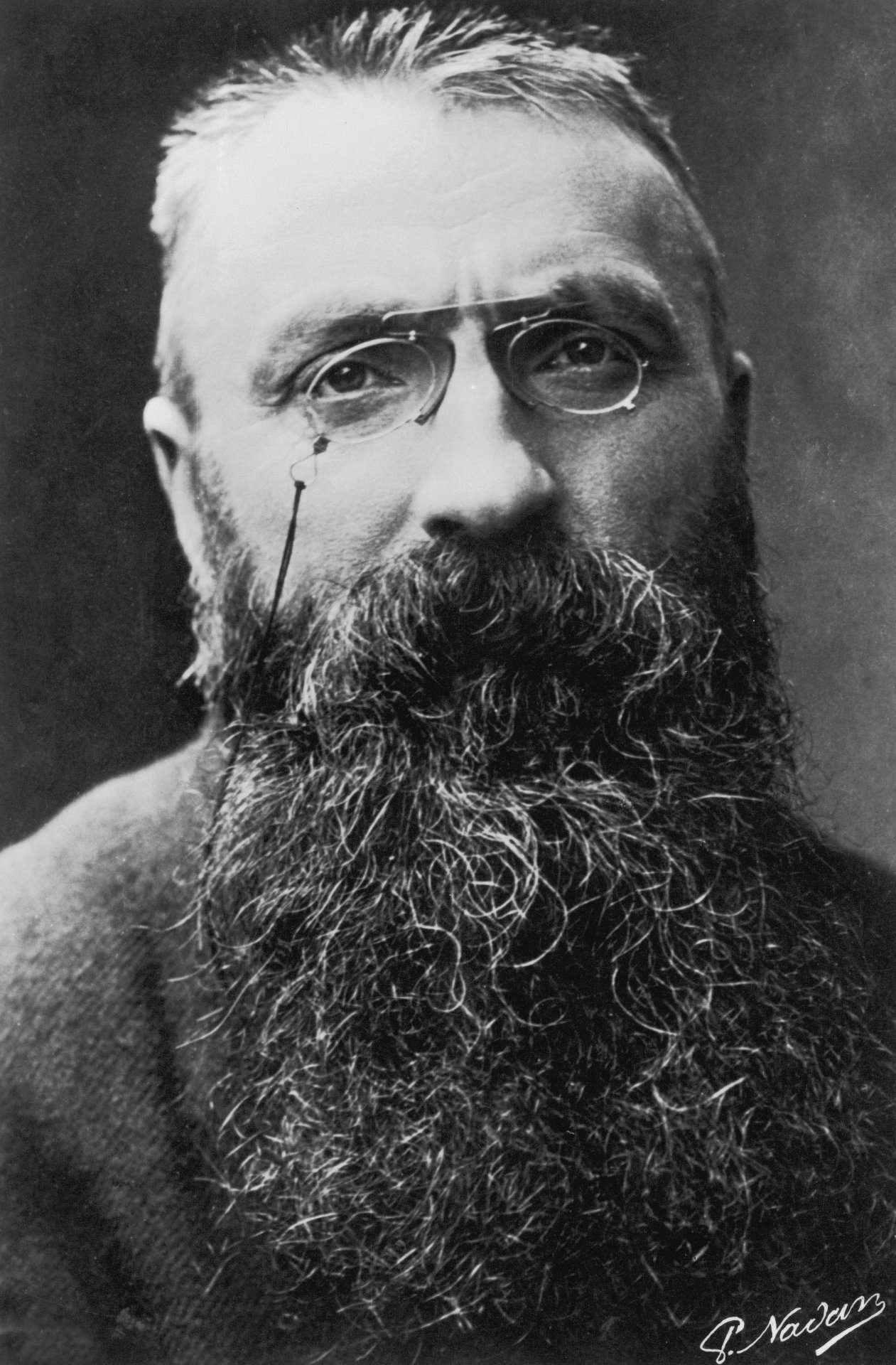
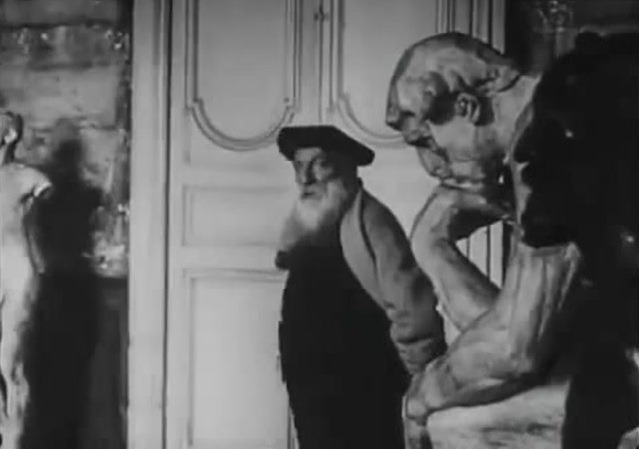
The art of the sculptor is made of strength, exactitude and will. In order to express life, to render nature, one must will and will with all strength of heart and brain; nature exceeds — and greatly — human genius; she is superior in everything. We know only parcels of truth. There are unknown forces within nature; when we give ourselves wholly to her, without reserve, she lends them to us; she shows us these forms that our watching eyes do not see, which our intelligence does not understand or suspect.

Auguste Rodin

Bill Evans, "My Foolish Heart"

More.


I think some young people want a deeper experience. Some people just wanna be hit over the head and, you know, if then they [get] hit hard enough maybe they’ll feel something. You know? But some people want to get inside of something and discover, maybe, more richness. And I think it will always be the same; they’re not going to be the great percentage of the people. A great percentage of the people don’t want a challenge. They want something to be done to them – they don’t want to participate. But there’ll always be maybe 15 percent maybe, 15 percent, that desire something more, and they’ll search it out - and maybe that’s where art is, I think.

Bill Evans

Thanks, Diary of a Radical Conformist

Doing.


Determine never to be idle. No person will have occasion to complain of the want of time, who never loses any. It is wonderful how much may be done, if we are always doing. 

Thomas Jefferson

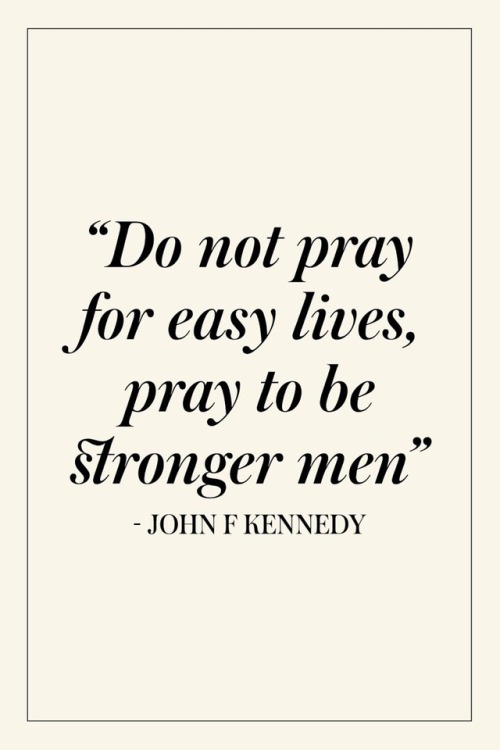
Pray.

Listen.


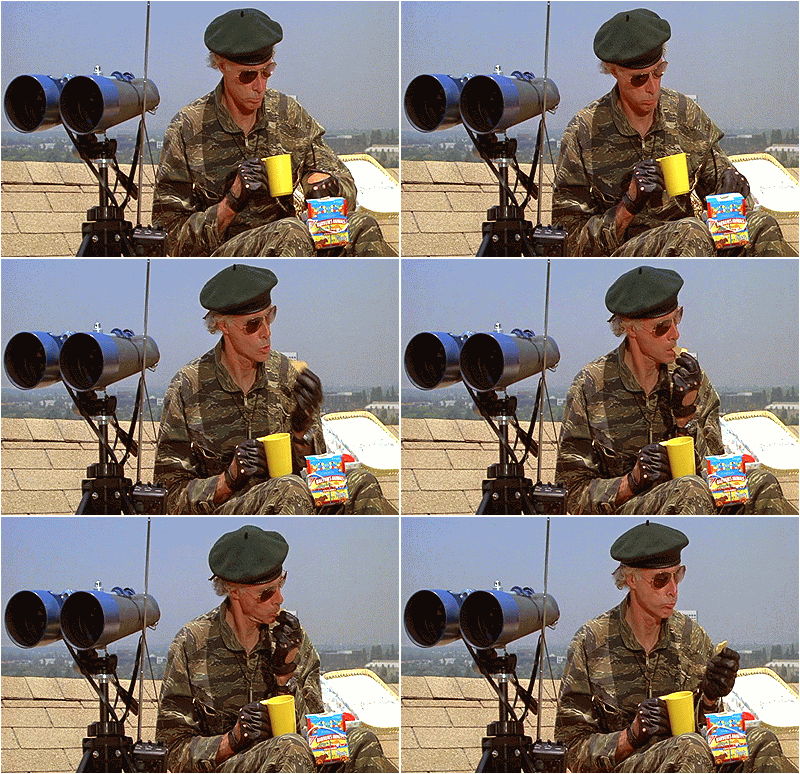
Listen to a recitation of the menu, HERE.

31 May 2017

Searches.


Art is contemplation. It is the pleasure of the mind which searches into nature and which there divines the spirit of which nature herself is animated. In short, Beauty is everywhere. It is not that she is lacking to our eye, but our eyes which fail to perceive her. Beauty is character and expression. Well, there is nothing in nature which has more character than the human body. In its strength and its grace it evokes the most varied images. One moment it resembles a flower: the bending torso is the stalk; the breasts, the head, and the splendor of the hair answer to the blossoming of the corolla. The next moment it recalls the pliant creeper, or the proud and upright sapling.

Auguste Rodin

Potential.

My brothers and I spent weeks with our grandparents by the sea where we learned so much more than it may have seemed. Not because we saw an actual shipwreck but because we saw the potential for it. Not because we actually found treasure but because we could feel the immanence of treasure at every seashore. We fished for wishes and caught them; we swam to find mermaids and became them; and we dived for pearls and returned with a stick, a bit of litter, a coin or the makings of a joke. Pearls, in other words. We learned about tides and chance, storms and sun, the vicissitudes of what is lost and found, flotsam and jetsam, castaway luck, islands, sea-songs, rings, riddles and pledges.

Jay Griffiths, from Kith

Take 20 minutes and rekindle your childhood.  More importantly, consider your intentions and motives toward the squibbers around you ...

Jay Griffiths, Kith ...


CONNECT

Process.


In the age of print we have been held sway to what books can do and forgotten what they cannot do. To the extent that information from texts equates to knowledge, it is only knowledge-that, not knowledge-how or knowledge-of-what-it-is-like. For information to unfold as these ways of knowing, to lead to understanding, we must think of information as a process rather than a thing, and certainly not a process that is bound up in any particular object.

John Fahey, "When Springtime Comes Again"

Blessed.


The SWIRLS

The swirls of my dreamlife
destabilize the politics of the schoolyard,
the power of the gang.
They interrupt the endless
boredom of my compulsory
education.

They ease
the pain
of the split tongues,
iced shoulders,
the pinches from disdaining eyes.
In those dreamscapes
the bullies were never born,
nor are they borne.

The swirls provide
a viewing tube,
a one way mirror of safety
an electrical shock
helping to carry the weight of my reality.

The swirls of my dreamlife
are portals to pleasures
conduits of knowing
escapes from pained puzzling
into
fluid awareness,
flowing continuums,
whole pictures
and beyond.

They keep trying
to pull me back
into the screaming glare
of their mindless banter.
God but they’re loud!

Blah, ba blah, blah they say.
Just vacant noise
filling the warm silences
and corners of my mind
with their feral screeching,
and meaningless words.

“Daydreaming again are we?
Pay attention.
I am talking to you!”

They don’t seem to realize
the swirls of my dreamlife
help me answer questions,
offer visions
show me the way
to fantastic worlds of wonder
and
into possibilities, probabilities, preferabilities.

For daydreams are portals
to my self-worth.
music to my eyes.
The swirls are threaded directly
into my soul
with sacred beauty
and promises of good things to come.

Blessed be the swirls …

Leslie Owen Wilson

Brahms, Horn Trio, Op. 40

Clevenger, Perlman, Barenboim ...

27 May 2017

Technique.


Technique is the proof of your seriousness.

Wallace Stevens

Rhiannon Giddens, "Pretty Little Girl with the Blue Dress On"

Recollections.

Stuart, Thomas Jefferson, 1805


Your letter has kindled all the fond recollections of ancient times; recollections much dearer to me than anything I have known since. There are minds which can be pleased by honors and preferments; but I see nothing in them but envy and enmity. It is only necessary to possess them, to know how little they contribute to happiness, or rather how hostile they are to it. No attachments soothe the mind so much as those contracted in early life; nor do I recollect any societies which have given me more pleasure, than those of which you have partaken with me. I had rather be shut up in a very modest cottage, with my books, my family and a few old friends, dining on simple bacon, and letting the world roll on as it liked, than to occupy the most splendid post, which any human power can give. 

Thomas Jefferson

26 May 2017

Volume.

ZZ TOP, "Party on the Patio"

HAPPY FRIDAY!

Memory.

Wood, Spring Turning, 1936


The FAR FIELD

I
I dream of journeys repeatedly:
Of flying like a bat deep into a narrowing tunnel
Of driving alone, without luggage, out a long peninsula,
The road lined with snow-laden second growth,
A fine dry snow ticking the windshield,
Alternate snow and sleet, no on-coming traffic,
And no lights behind, in the blurred side-mirror,
The road changing from glazed tarface to a rubble of stone,
Ending at last in a hopeless sand-rut,
Where the car stalls,
Churning in a snowdrift
Until the headlights darken.

II
At the field's end, in the corner missed by the mower,
Where the turf drops off into a grass-hidden culvert,
Haunt of the cat-bird, nesting-place of the field-mouse,
Not too far away from the ever-changing flower-dump,
Among the tin cans, tires, rusted pipes, broken machinery, --
One learned of the eternal;
And in the shrunken face of a dead rat, eaten by rain and ground-beetles
(I found in lying among the rubble of an old coal bin)
And the tom-cat, caught near the pheasant-run,
Its entrails strewn over the half-grown flowers,
Blasted to death by the night watchman.
I suffered for young birds, for young rabbits caught in the mower,
My grief was not excessive.
For to come upon warblers in early May
Was to forget time and death:
How they filled the oriole's elm, a twittering restless cloud, all one morning,
And I watched and watched till my eyes blurred from the bird shapes, --
Cape May, Blackburnian, Cerulean, --
Moving, elusive as fish, fearless,
Hanging, bunched like young fruit, bending the end branches,
Still for a moment,
Then pitching away in half-flight,
Lighter than finches,
While the wrens bickered and sang in the half-green hedgerows,
And the flicker drummed from his dead tree in the chicken-yard.
-- Or to lie naked in sand,
In the silted shallows of a slow river,
Fingering a shell,
Thinking:
Once I was something like this, mindless,
Or perhaps with another mind, less peculiar;
Or to sink down to the hips in a mossy quagmire;
Or, with skinny knees, to sit astride a wet log,
Believing:
I'll return again,
As a snake or a raucous bird,
Or, with luck, as a lion.
I learned not to fear infinity,
The far field, the windy cliffs of forever,
The dying of time in the white light of tomorrow,
The wheel turning away from itself,
The sprawl of the wave,
The on-coming water.

III
The river turns on itself,
The tree retreats into its own shadow.
I feel a weightless change, a moving forward
As of water quickening before a narrowing channel
When banks converge, and the wide river whitens;
Or when two rivers combine, the blue glacial torrent
And the yellowish-green from the mountainy upland, --
At first a swift rippling between rocks,
Then a long running over flat stones
Before descending to the alluvial plane,
To the clay banks, and the wild grapes hanging from the elmtrees.
The slightly trembling water
Dropping a fine yellow silt where the sun stays;
And the crabs bask near the edge,
The weedy edge, alive with small snakes and bloodsuckers, --
I have come to a still, but not a deep center,
A point outside the glittering current;
My eyes stare at the bottom of a river,
At the irregular stones, iridescent sandgrains,
My mind moves in more than one place,
In a country half-land, half-water.
I am renewed by death, thought of my death,
The dry scent of a dying garden in September,
The wind fanning the ash of a low fire.
What I love is near at hand,
Always, in earth and air.

IV
The lost self changes,
Turning toward the sea,
A sea-shape turning around, --
An old man with his feet before the fire,
In robes of green, in garments of adieu.
A man faced with his own immensity
Wakes all the waves, all their loose wandering fire.
The murmur of the absolute, the why
Of being born falls on his naked ears.
His spirit moves like monumental wind
That gentles on a sunny blue plateau.
He is the end of things, the final man.
All finite things reveal infinitude:
The mountain with its singular bright shade
Like the blue shine on freshly frozen snow,
The after-light upon ice-burdened pines;
Odor of basswood on a mountain-slope,
A scent beloved of bees;
Silence of water above a sunken tree :
The pure serene of memory in one man, --
A ripple widening from a single stone
Winding around the waters of the world.

Theodore Roethke

Mozart, Divertimento in D Major, K. 136

Yehudi Menuhin conducts the Moscow Virtuosi ...

Dog.

Integrated.


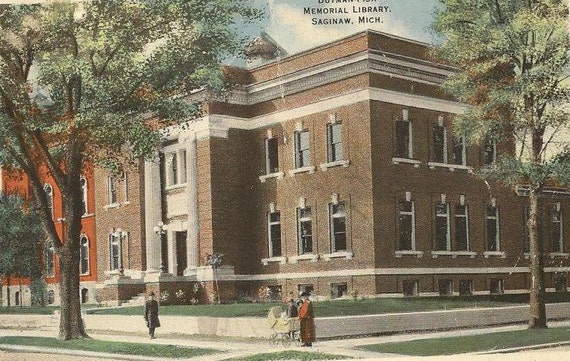
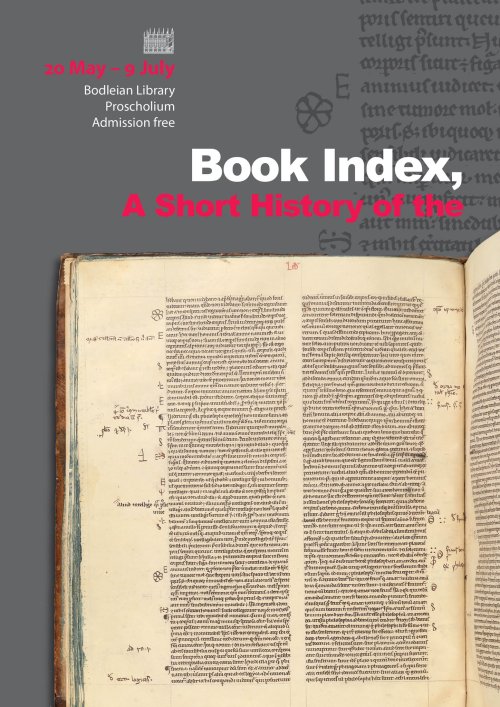
The back-of-book index is an invention that is so integrated into our everyday reading practices as to be almost invisible. It is hard to imagine scholarly life without it, and indeed the index has its origins in the same historical moment as the arrival of the universities around the turn of the thirteenth century.

CONNECT

Townes Van Zandt, "If I Needed You"

25 May 2017

Nanci Griffith, "Boots of Spanish Leather"


Thank You, Jessica.

Different.


From Neil Gaiman's essay, "Why Our Future Depends on Libraries, Reading, and Daydreaming" ...

I believe we have an obligation to read for pleasure, in private and in public places. If we read for pleasure, if others see us reading, then we learn, we exercise our imaginations. We show others that reading is a good thing.

We have an obligation to support libraries. To use libraries, to encourage others to use libraries, to protest the closure of libraries. If you do not value libraries then you do not value information or culture or wisdom. You are silencing the voices of the past and you are damaging the future.

We have an obligation to read aloud to our children. To read them things they enjoy. To read to them stories we are already tired of. To do the voices, to make it interesting, and not to stop reading to them just because they learn to read to themselves. Use reading aloud time as bonding time, as time when no phones are being checked, when the distractions of the world are put aside.

We have an obligation to use the language. To push ourselves: to find out what words mean and how to deploy them, to communicate clearly, to say what we mean. We must not to attempt to freeze language, or to pretend it is a dead thing that must be revered, but we should use it as a living thing, that flows, that borrows words, that allows meanings and pronunciations to change with time.

We writers - and especially writers for children, but all writers - have an obligation to our readers: it's the obligation to write true things, especially important when we are creating tales of people who do not exist in places that never were - to understand that truth is not in what happens but what it tells us about who we are. Fiction is the lie that tells the truth, after all. We have an obligation not to bore our readers, but to make them need to turn the pages. One of the best cures for a reluctant reader, after all, is a tale they cannot stop themselves from reading. And while we must tell our readers true things and give them weapons and give them armour and pass on whatever wisdom we have gleaned from our short stay on this green world, we have an obligation not to preach, not to lecture, not to force predigested morals and messages down our readers' throats like adult birds feeding their babies pre-masticated maggots; and we have an obligation never, ever, under any circumstances, to write anything for children to read that we would not want to read ourselves.

We have an obligation to understand and to acknowledge that as writers for children we are doing important work, because if we mess it up and write dull books that turn children away from reading and from books, we've lessened our own future and diminished theirs.

We all - adults and children, writers and readers - have an obligation to daydream. We have an obligation to imagine. It is easy to pretend that nobody can change anything, that we are in a world in which society is huge and the individual is less than nothing: an atom in a wall, a grain of rice in a rice field. But the truth is, individuals change their world over and over, individuals make the future, and they do it by imagining that things can be different.

Neil Gaiman

CONNECT

Sinéad Lohan, "To Ramona"

Led Zeppelin, "Trampled Under Foot"

Strangeness.


In the antigarden represented by the desert, the question accompanying the poet like her shadow under the sun is: Who am I to be so alone? Who am I if I am not with another? The demand for another is always mute but piercing. All these texts ask for another and all the poets ask for another language, even for a foreign language perhaps, because the essence of poetry is to find strangeness in language.

Hélène Cixous

Rhiannon Giddens.

"Real Old Mountain Dew"


"Wayfaring Stranger," with Phil Cunningham, accordion ...


"La Vie en Rose"

Done.

Believe.

Happy birthday, Davis.


Miles Davis was born on this day in 1926.

"All Blues"