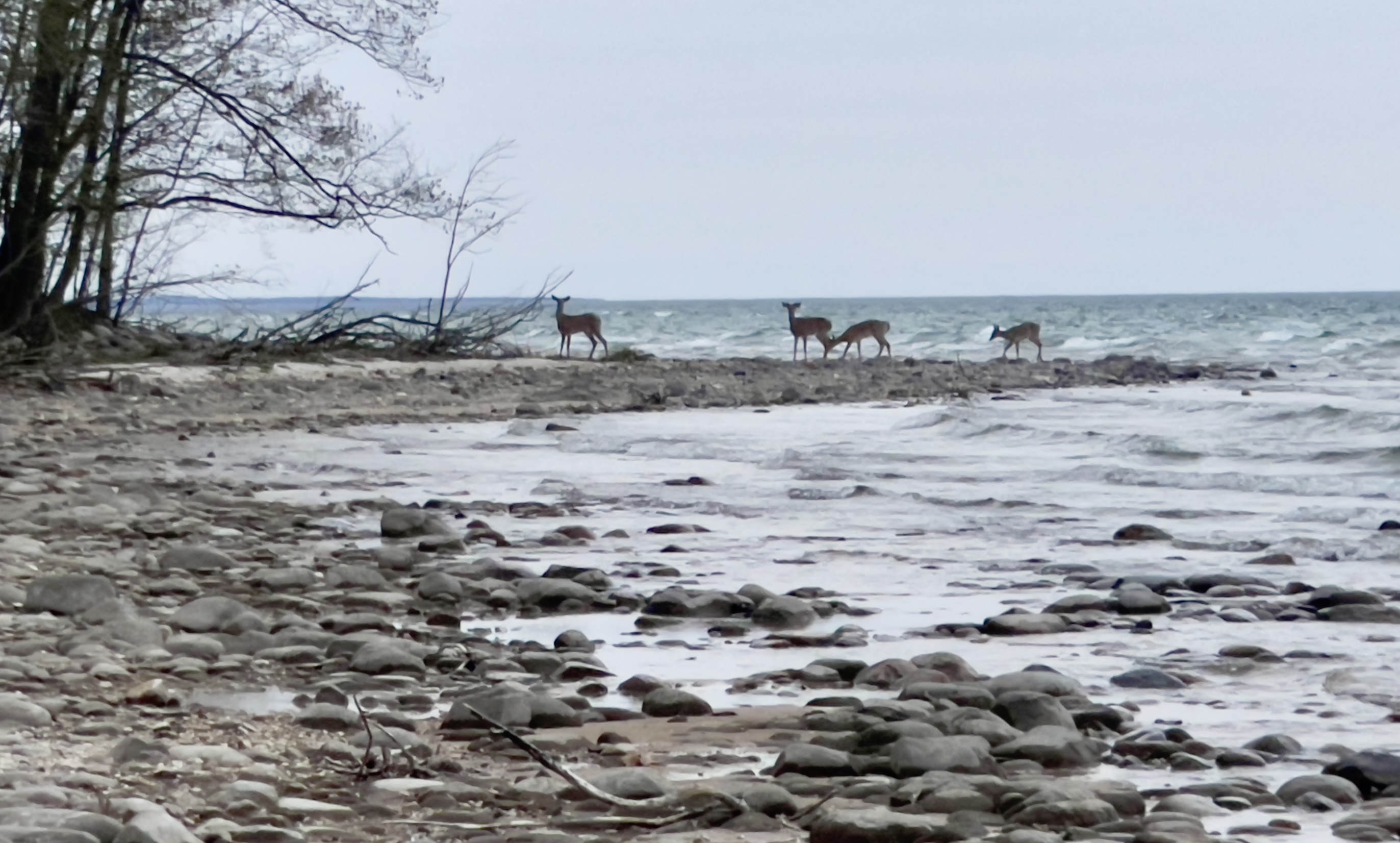
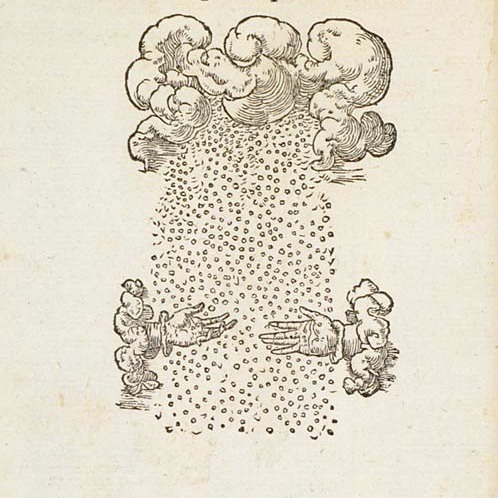
[A]ll living things – including humans – could literally glow with health, until we don't.
Showing posts with label research. Show all posts
Showing posts with label research. Show all posts
11 January 2026


17 December 2024
Beware.
BostonReview asks, "To whom does the world belong?"...
AI developers will doubtless argue that they need to be able to exploit the products of their models in order to incentivize innovation; licensors will argue that they need to be financially rewarded for all their efforts in fine-tuning AI models to produce the kind of outputs they seek. Hollywood studios will ask: How can we put AI to use in generating marvelous images for the whole family to enjoy if any Tom, Dick, or Harry can “steal” the characters, plots, and graphics it generates for us? How can we devote our expertise in fine-tuning AIs to design drugs, pharmaceutical companies will crow, if we can’t recoup our investment by controlling the market with intellectual property protections? These industries are extremely skilled in influencing the legal frameworks under which they operate; their efforts to strengthen and extend their intellectual property rights have resulted in a staggering and unequivocal series of victories. How can we expect the public domain, which has no financial heft, no army of lawyers, no investors and no lobbyists, to compete with that?
Innovation lacking logic has given us front-loading washing machines, smart refrigerators, and LED lighbulbs. Make yourself familiar with its odor and beware of its stain on intellectual property.
09 November 2024

07 January 2023
Something.
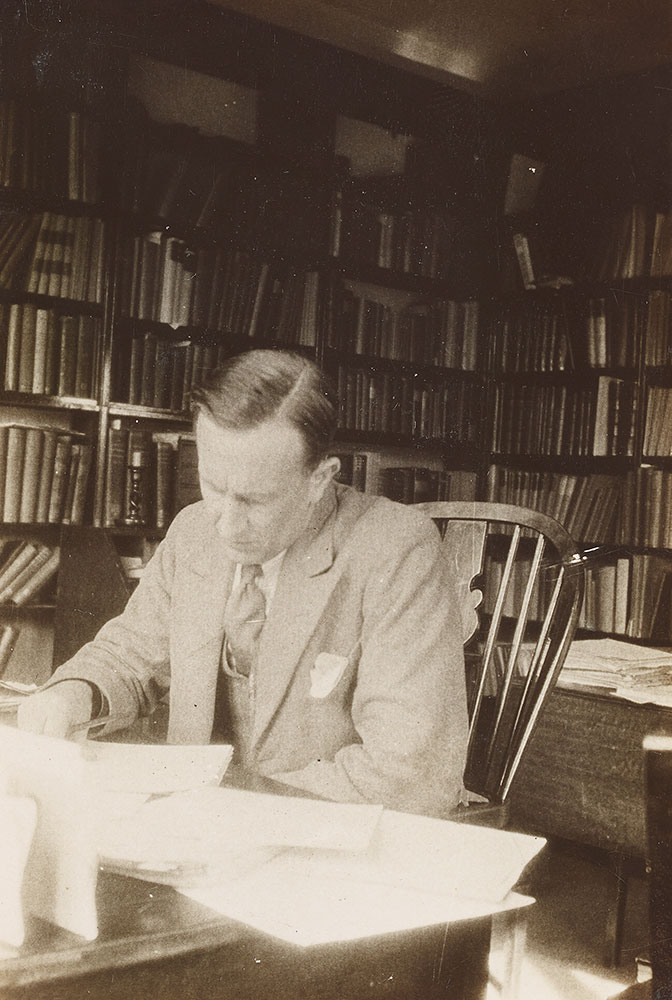
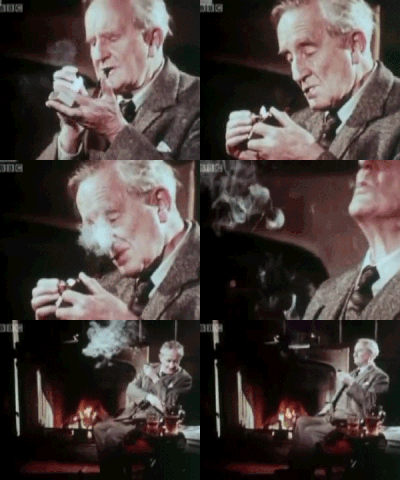
There is nothing like looking, if you want to find something. You certainly usually find something, if you look, but it is not always quite the something you were after.
J.R.R. Tolkien, from The Hobbit
29 July 2022
Amplitude.
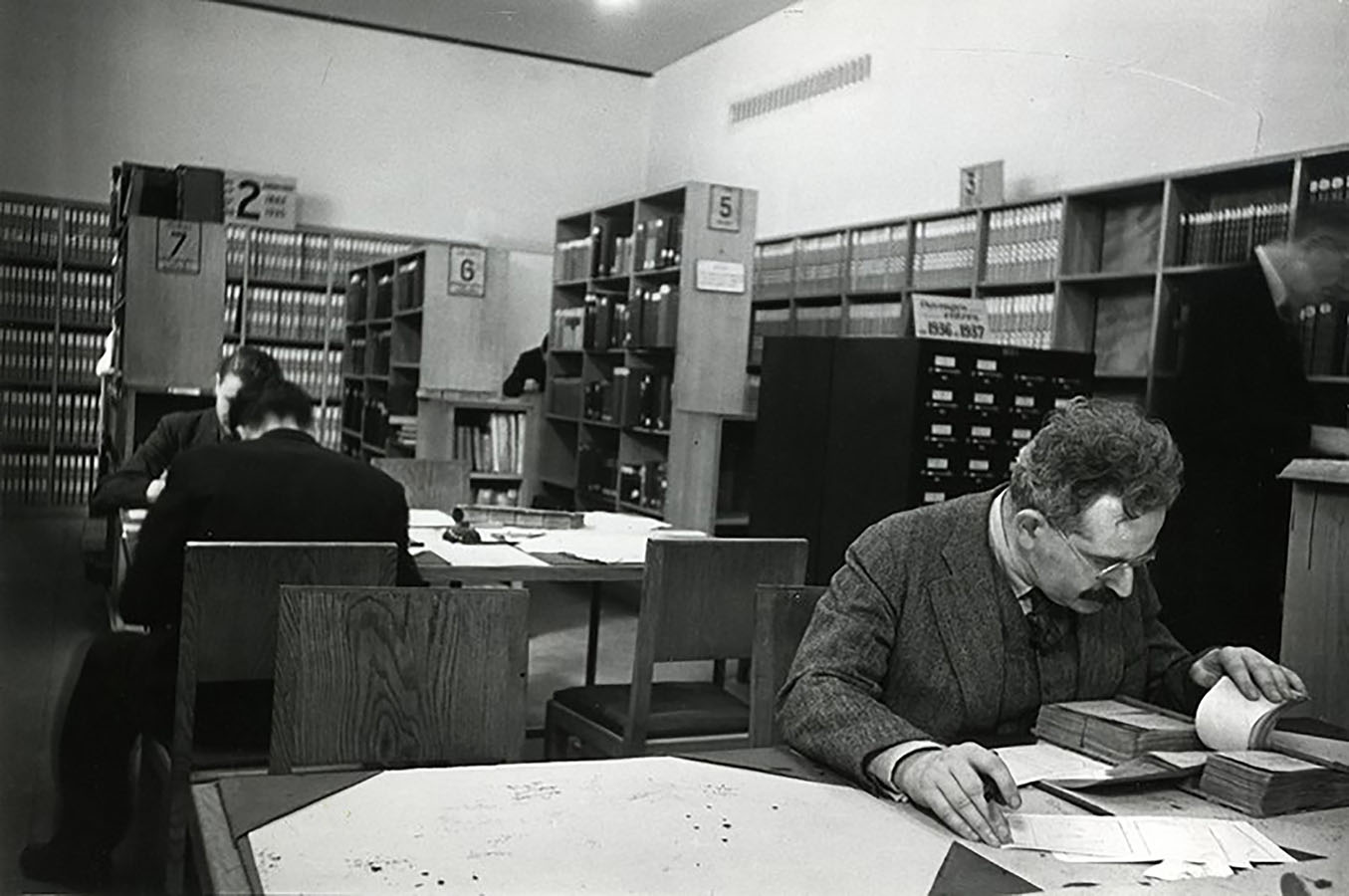


The most extraordinary things, marvelous things, are related with the greatest accuracy, but the psychological connection of the event is not forced on the reader. It is left up to him to interpret things the way he understands them, and thus the narrative achieves an amplitude that information lacks.
Walter Benjamin
13 July 2020
Authenticity.

What a wonderful website.
24 April 2020
Revolution.

In her 2018 book, Reader, Come Home, Wolf uses cognitive neuroscience and developmental psycholinguistics to study the reading brain and literacy development, and in doing so, helps identify what is being lost. According to Wolf, we are losing what she calls "deep literacy" or "deep reading." This does not include decoding written symbols, writing one's name, or making lists. Deep literacy is what happens when a reader engages with an extended piece of writing in such a way as to anticipate an author's direction and meaning, and engages what one already knows in a dialectical process with the text. The result, with any luck, is a fusion of writer and reader, with the potential to bear original insight.
Deep literacy has wondrous effects, nurturing our capacity for abstract thought, enabling us to pose and answer difficult questions, empowering our creativity and imagination, and refining our capacity for empathy. It is also generative of successive new insight, as the brain's circuitry for reading recursively builds itself forward. It is and does all these things in part because it touches off a "revolution in the brain," meaning that it has distinctive and describable neurophysiological consequences. Understanding deep literacy as a revolution in the brain has potential payoffs for understanding aspects of history and contemporary politics alike.
Deep reading has in large part informed our development as humans, in ways both physiological and cultural. And it is what ultimately allowed Americans to become "We the People," capable of self-government. If we are losing the capacity for deep reading, we must also be prepared to lose other, perhaps even more precious parts of what deep reading has helped to build.
CONNECT
17 July 2019
26 May 2017
Integrated.
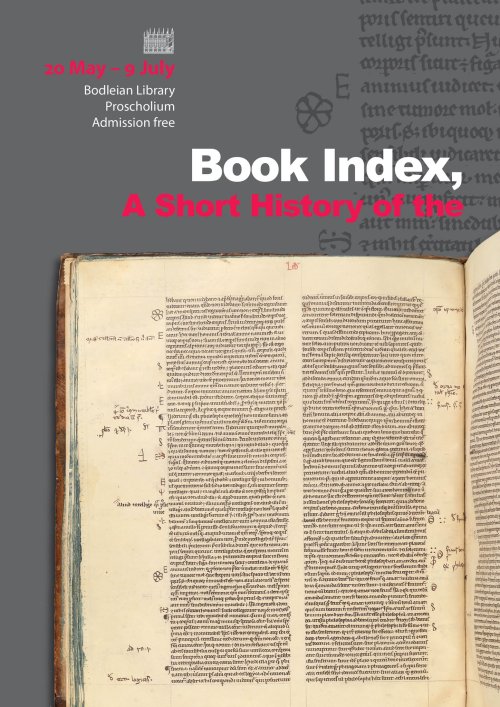
The back-of-book index is an invention that is so integrated
into our everyday reading practices as to be almost invisible. It is hard to
imagine scholarly life without it, and indeed the index has its origins in the
same historical moment as the arrival of the universities around the turn of
the thirteenth century.
CONNECT
CONNECT
20 October 2016
Muse.

Is inspiration contagious? Do inspired works of art inspire the
audience? There is a long tradition in the humanities that
suggests it does. Plato once argued that inspiration is
transmitted to the audience through the Muse. Remarkably, however, this
has only just been tested scientifically.
In a recent study, Todd Thrash and colleagues conducted the first ever test of "inspiration contagion," using poetry as the vehicle. They looked at specific qualities of a text and the qualities of the reader. It's a rich study, with 36,020 interactions between all of the variables!
In a recent study, Todd Thrash and colleagues conducted the first ever test of "inspiration contagion," using poetry as the vehicle. They looked at specific qualities of a text and the qualities of the reader. It's a rich study, with 36,020 interactions between all of the variables!
Here are the essential findings ...
07 September 2016
Secured.

Those who cultivate letters must be supplied with the books
necessary for their purpose; and until this supply is secured I shall not rest.
Aldus Manutius
How Aldus Manutius Saved Civilization ...
How Aldus Manutius Saved Civilization ...
Interview.
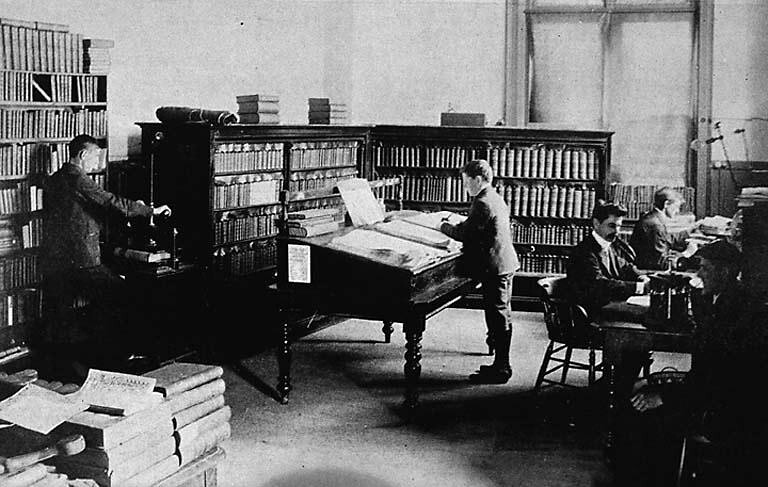
Patron Misconceptions, or Why the Reference Interview is
Necessary
1. My question
is stupid.
2. The
librarian does not really want to help me.
3. I should
know how to find this myself.
4. I don't
really know what I need, but the librarian will.
Thanks, Jess!
06 April 2016
Anticipate.

According to Wayne Potts, a zoologist who published in the
journal Nature in 1984, birds in flocks are able to change direction quickly
not just because they are following a leader, or their neighbors, but
because they see a movement far down the line and anticipate what to do next.
CONNECT
19 June 2015
Possible.

On a December morning, two somewhat hesitant people stood on
the sidewalk of the Boulevard Haussmann, looking for a pop-up gallery we had
opened for a period of six months next to the Musée Jacquemart André.
They had traveled over 800 kilometers, inquiring with
different people who discouraged them and said their search seemed impossible.
Perhaps the most difficult part was finding me, but thanks to their
perseverance, and the kindness of a neighbor, Frédéric, the meeting happened.
The photograph they had brought to show me was small, dark
and rather difficult to see. Six characters were around a table. The light was
pale, perhaps it was a winter afternoon.
They told me, still hesitant, that they thought they recognized the people in it, artists in whom they had long been interested. They were collectors and liked the painters of the late 19th century, in particular the neo-impressionists. They also said it was possible that one of the figures around the table was someone whose true face had never been seen.
They told me, still hesitant, that they thought they recognized the people in it, artists in whom they had long been interested. They were collectors and liked the painters of the late 19th century, in particular the neo-impressionists. They also said it was possible that one of the figures around the table was someone whose true face had never been seen.
24 February 2015
Coordinate.

Here I stand before a big question mark. Here I stand like
Hercules, but not at the crossroads — no, here there are a good many more roads
to take and thus it is much more difficult to choose the right one. It is
perhaps my misfortune that I am interested in far too much and not decisively
in any one thing; my interests are not subordinated to one but instead all
stand coordinate.
Søren Kierkegaard
23 February 2015
Mystery.

In 1984, archaeologist Douglas Scott, now retired from the
National Park Service, used metal detectors in a large-scale survey of the site
of the 1876 Battle of Little Bighorn in eastern Montana. The conflict was a
historic showdown between General George Custer’s 7th Calvary Regiment and
members of the Lakota, Northern Cheyenne and Arapaho tribes, with the Native
American warriors emerging victorious. An estimated 268 U.S. soldiers were
killed in the conflict, including General Custer.
With help from more than 30 machine-swinging volunteers,
Scott and his partner, Richard Fox, were able to locate more than 5,000
artifacts and accurately map the action of Custer’s Last Stand for the first
time ever. Their work at the battleground was one of the first archaeological
surveys to employ metal detectors in an organized, systematic way.
I chatted with Scott about the survey, the use of metal
detectors as an archaeological tool, and the mystery of the battlefield's Deep
Ravine.
02 February 2015
Brain-to-brain.
One day, in a few decades, when our grandchildren surf the
Net just by thinking, or a mother donates her eyesight to an autistic kid
who cannot see, or somebody speaks because of a brain-to-brain bypass, some
of you will remember that it all started on a winter afternoon in a
Brazilian soccer field with an impossible kick.
17 December 2014
Footsteps.
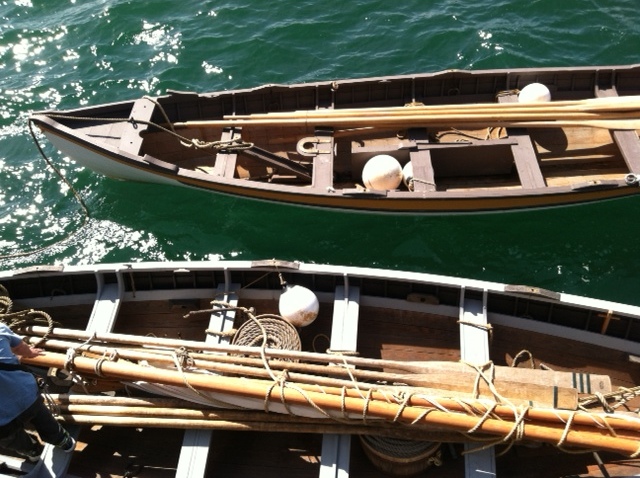
When Herman Melville was twenty-one, he embarked on the
whaleship Acushnet, out of New Bedford. We all know what that led to. This
past summer, Mystic Seaport finished their five-year, 7.5-million-dollar
restoration of the 1841 whaleship Charles W. Morgan, the sister ship to the Acushnet.
The Morgan is in many ways identical to Melville’s fictional Pequod, save
that sperm whale jawbone tiller and a few other sinister touches. Mystic
Seaport celebrated the completion by sailing the Morgan around New
England for a couple months. I went aboard for a night and a day, intent on
following in Ishmael’s footsteps, hoping to breathe a little life into my idea
of the distant, literary ship.
01 October 2014
Find.

CONNECT
18 September 2014
Care.

CONNECT
Factum Arte is commissioned to produce facsimiles of three paintings by Caravagio which originally are at the church of San Luigi dei Francesi in Rome.
Subscribe to:
Posts (Atom)