"I am not one who was born in the custody of wisdom. I am one who is fond of olden times and intense in quest of the sacred knowing of the ancients." Gustave Courbet
Showing posts with label Kennedy. Show all posts

07 October 2025

Welcome.

Shikler, John F. Kennedy, 1970


Can a nation organized and governed such as ours endure? That is the real question. Have we the nerve and the will? Can we carry through in an age where we will witness not only new breakthroughs in weapons of destruction – but also a race for mastery of the sky and the rain, the ocean and the tides, the far side of space and the inside of men’s minds? We and the Russians now have the power to destroy with one blow one-quarter of the earth’s population – a feat not accomplished since Cain slew Abel.

For the Russian peasant has looked up from his hoe to fling Sputnik into outer space – opening not a new frontier of hope for all mankind, but a new and somber frontier of fear. We cannot hope to escape a prolonged and powerful competition with Soviet power – a competition which demands that we act from enlightened impulses but never act impulsively.

Can we meet this test of survival and still maintain our traditions of literary freedom and dissent? I think we can. For it is the enduring faith of the American tradition that there is no real conflict between freedom and security – between liberty and abundance. Through centuries of crises, the American tradition has demonstrated, on the contrary, that freedom is the ally of security – and that liberty is the architect of abundance.

So let the debate go on – and may the best ideas prevail.

For only in this way can we as a self-governing people choose wisely and thoughtfully in our task of self-government. And it is only in this way that we can demonstrate once again that freedom is the handmaiden of security – and that the truth will make us free.

The Communists, on the other hand, have no such inner strength – and this is one of our advantages. When a Russian novelist questions some of the basic tenets of Soviet society, his name is reviled and his book is banned. Foreign ideas and books are resisted like a plague, not considered on their merits. The world as it is reported in Soviet books must correspond with the world as it is viewed through the eyes of the party. No critic of the regime, no independent thinker, is given a passport to travel. No citizen advances in the Communist community without rigid adherence to party dogma. All this, in the long run, can only lead to weakness.

I want to make sure that never happens in this country. I want to make sure we know all the facts and hear all the alternatives and listen to all the criticisms. Let us welcome controversial books and controversial authors. For the "Bill of Rights" is the guardian of our security as well as our liberty. Let us not be afraid of debate or dissent – let us not avoid criticism or non-conformity – let us encourage it. For if we should ever abandon these basic American traditions in the name of fighting Communism, what would it profit us to win the whole world when we would have lost our own soul?

But to keep that faith alive – to keep that message meaningful at a time of doubt and despair and disunity – will require more thought and more effort on your part in the press – and on our part in government – than ever before. It will require leadership better equipped than any since Lincoln’s Day to make clear to our people the vast spectrum of our challenges.

John F. Kennedy, from his remarks made at the Cleveland Press Book and Author Luncheon, Cleveland, Ohio, April 16, 1959

Whither leadership?

22 March 2025

Judgment.


John F. Kennedy's remarks at Amherst College, October 26, 1963 ...
A nation reveals itself not only by the men it produces but also by the men it honors, the men it remembers.

In America, our heroes have customarily run to men of large accomplishments. But today this college and country honors a man whose contribution was not to our size but to our spirit, not to our political beliefs but to our insight, not to our self-esteem, but to our self-comprehension. In honoring Robert Frost, we therefore can pay honor to the deepest sources of our national strength. That strength takes many forms, and the most obvious forms are not always the most significant. The men who create power make an indispensable contribution to the Nation's greatness, but the men who question power make a contribution just as dispensable, especially when that questioning is disinterested, for they determine whether we use power or power uses us.

Our national strength matters, but the spirit which informs and controls our strength matters just as much. This was the special significance of Robert Frost. He brought an unsparing instinct for reality to bear on the platitudes and pieties of society. His sense of the human tragedy fortified him against self-deception and easy consolation. "I have been," he wrote, "one acquainted with the night." And because he knew the midnight as well as the high noon, because he understood the ordeal as well as the triumph of the human spirit, he gave his age strength with which to overcome despair. At bottom, he held a deep faith in the spirit of man, and it is hardly an accident that Robert Frost coupled poetry and power, for he saw poetry as the means of saving power from itself. When power leads man towards arrogance, poetry reminds him of his limitations. When power narrows the areas of man's concern, poetry reminds him of the richness and diversity of his existence. When power corrupts, poetry cleanses. For art establishes the basic human truth which must serve as the touchstone of our judgment.

Whither leadership? 

26 September 2021

Guardian.


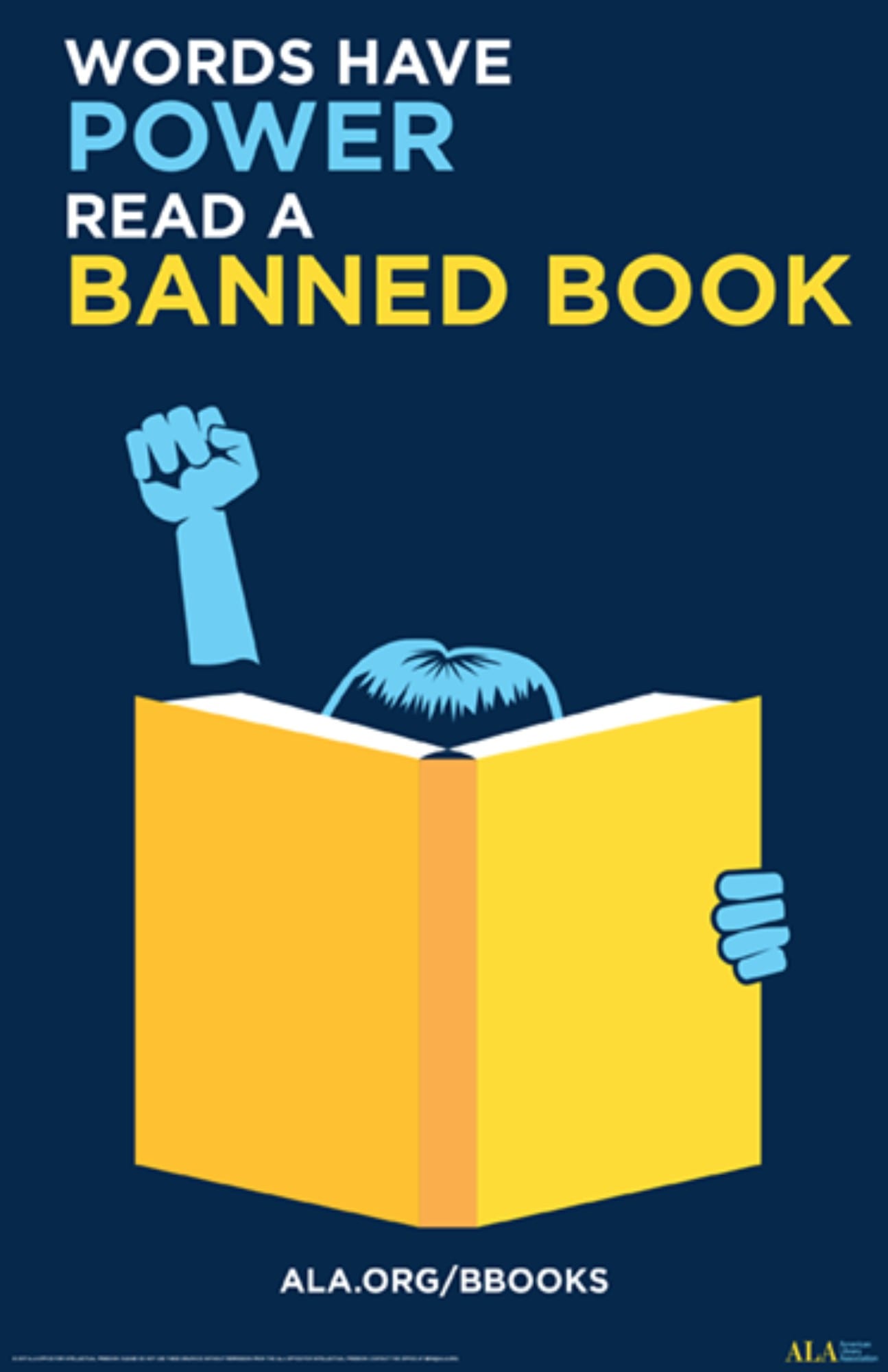
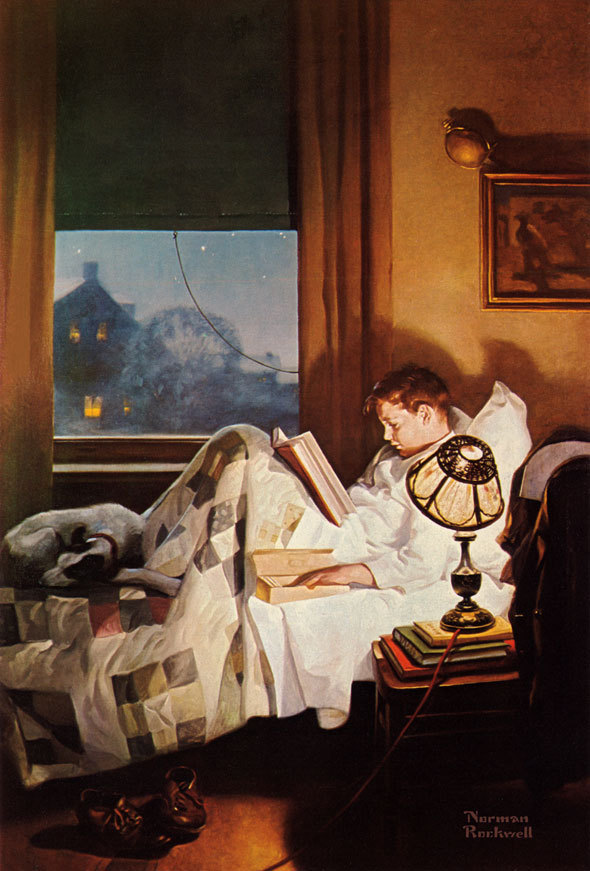
September 26 through October 2 is Banned Book Week.
If this nation is to be wise as well as strong, if we are to achieve our destiny, then we need more new ideas for more wise men reading more good books in more public libraries. These libraries should be open to all—except the censor. We must know all the facts and hear all the alternatives and listen to all the criticisms. Let us welcome controversial books and controversial authors. For the Bill of Rights is the guardian of our security as well as our liberty.

John F. Kennedy

23 August 2020

Aliveness.


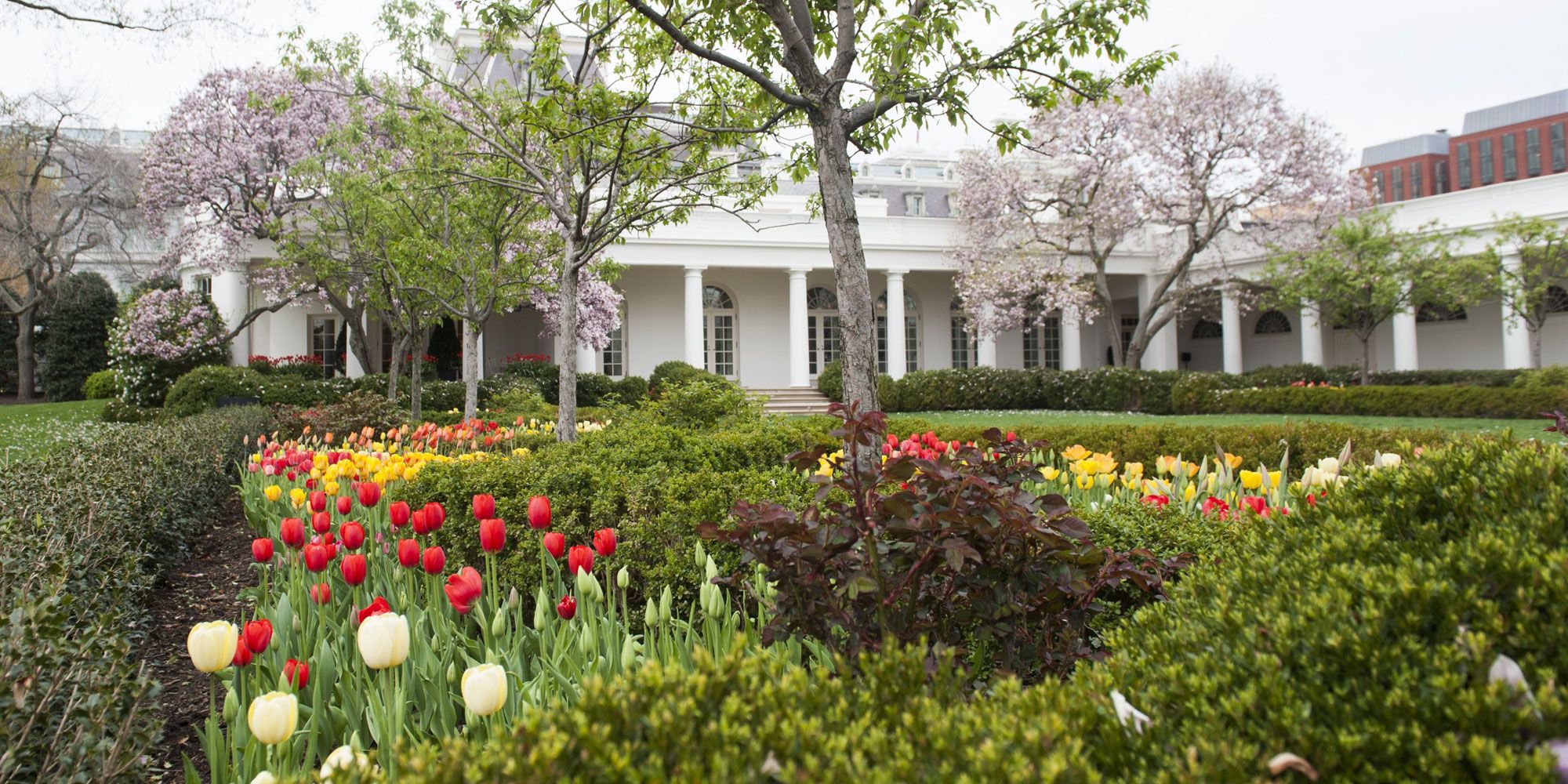
Rachel Lambert Mellon gives her account of designing the iconic Kennedy Rose Garden ...
We continued to dig. The garden area was filled with rubble and relics and yielded many curiosities, such as Civil War horseshoes and bits of pots from the old greenhouses. We dug out the whole area to a depth of four feet and filled it with fertile soil. With new soil in place and Mr. Williams at work, my thoughts turned to finding available plant material. The magnolias I imagined planting there would be hard to find.
There were, however, seemingly forgotten groves of interesting trees in the vast public land of the federal city, where old plant material had been allowed to grow in a state of apparent abandon. Near the Tidal Basin and behind the rambling wartime Navy buildings (since torn down) I finally found the four magnolias. Forgotten for many years, these trees had survived both men and war. They were balled and burlapped and moved by a crane from obscurity to the White House, where they took root in President Kennedy’s Rose Garden.
Their presence changed the entire character of this empty space. Their natural untended growth filled the four bare corners. The tree whose trunk reached higher than the others was planted in the northeast corner by the White House. Crowded by other trees in its previous planting ground, this magnolia had reached toward the light; it had gained a height not often found in Magnolia soulangeana, which tend to spread after a certain period of upward growth. 
When the planting was completed, the trees were pruned to give them strength and to create the shape each corner demanded. The special pruning was done by Everett Hicks, an exceptional man in his field. He had been trained by, and spent most of this life with, the Davey Tree Company. He combined a knowledge of pruning large trees with the eye and talent of a sculptor. These magnolias, my original inspiration, were not disappointing when they were in place. They gave life to what had been a cold, bleak space.
There is often unspoken encouragement when trees or shrubs are planted and you review the original plan to see how the reality of three dimensions measures up. Now in the Rose Garden shadows gave a quality of aliveness that could be repeated by the smaller trees I hoped to plant in the two flanking twelve-foot borders. The length of the borders would allow for five trees on each side. The force of the summer sun that bakes the city of Washington would be broken by the height and width of these trees.
CONNECT