"I am not one who was born in the custody of wisdom. I am one who is fond of olden times and intense in quest of the sacred knowing of the ancients." Gustave Courbet
Showing posts with label Manguel. Show all posts

24 January 2026

Know.

Hollis/Buckler, Bodleian Library, Oxford, n/d


It hardly matters why a library is destroyed: every banning, curtailment, shredding, plunder or loot gives rise (at least as a ghostly presence) to a louder, clearer, more durable library of the banned, looted, plundered, shredded or curtailed.

Readers, censors know, are defined by the books they read.

Alberto Manguel, from The Library at Night

17 January 2026

Lives.

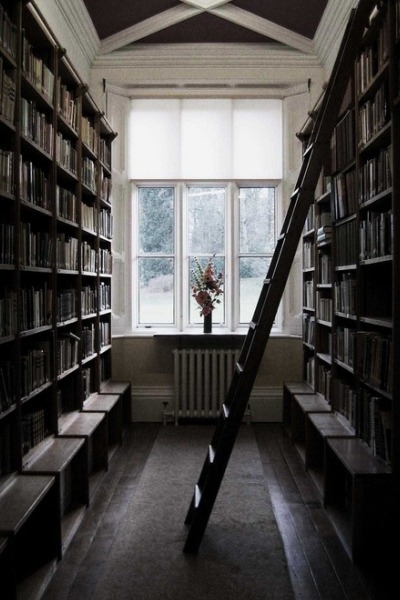
Trottestam, Books, Ladders, 2025


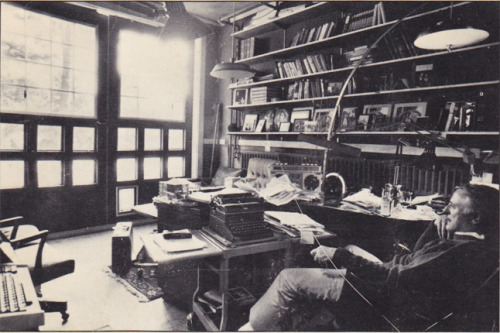
The stories that unfold in the space of a writer's study, the objects chosen to watch over a desk, the books selected to sit on the shelves, all weave a web of echoes and reflections of meanings and affections, that lend a visitor the illusion that something of the owner of this space lives on between these walls, even if the owner is no more ...

In the dark, with the windows lit and the rows of books glittering, the library is a closed space, a universe of self-serving rules that pretend to replace or translate those of the shapeless universe beyond.

Alberto Manguel, from The Library at Night

18 October 2025

On.


The stories that unfold in the space of a writer's study, the objects chosen to watch over a desk, the books selected to sit on the shelves, all weave a web of echoes and reflections of meanings and affections, that lend a visitor the illusion that something of the owner of this space lives on between these walls, even if the owner is no more.

Alberto Manguel, from The Library at Night

30 May 2024

Beyond.

Alberto Manguel on Borges and the impossibility of writing ...
It is a fact that the fundamental paradox of language is apparent in almost every culture.  In Islamic thought, the letters of the alphabet have an independent, divinely decreed will effected before pen is put to paper and over which the scribe has no control.  In the 16th century, Tulsidas, the greatest of Hindu poets, argued that the reality of fiction is always other than the reality of the material world world and overrides it.  In Zen Buddhism, the instantaneous illumination, or Sartori, is always both within and beyond the grasp of words. So, in all these cases, as of course in the Judeo-Christian tradition, the rightest impossibilities appear to be essentially two: to conceive properly and to put properly the concept into words.  The writer's craft is therefore twice constrained by the limits of imagination, which require faith to provide the evidence of things not seen, as St. Paul had it, and by the limits of language which require writers to rely on, what Coleridge called the willing suspension of disbelief, of their readers and listeners ...

05 November 2023

On.

Bone, Gavin in His Study at St. John’s, 1923


The stories that unfold in the space of a writer's study, the objects chosen to watch over a desk, the books selected to sit on the shelves, all weave a web of echoes and reflections of meanings and affections, that lend a visitor the illusion that something of the owner of this space lives on between these walls, even if the owner is no more.

Alberto Manguel, from The Library at Night

12 June 2023

Cartography.


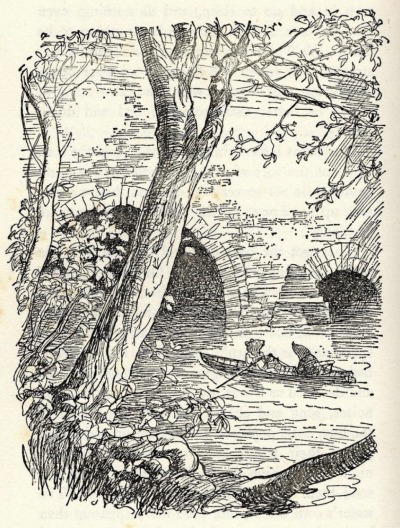
I can’t remember when I first read The Wind in the Willows, since it is one of those books that seem to have been with me always, but it must have been very early on, when my room was in a cool, dark basement and the garden I played in boasted four tall palm trees and an old tortoise as their tutelary spirit. The geography of our books blends with the geography of our lives, and so, from the very beginning, Mole’s meadows and Rat’s river bank and Badger’s woods seeped into my private landscapes, imbuing the cities I lived in and the places I visited with the same feelings of delight and comfort and adventure that sprang from those much-turned pages. In this sense, the books we love become our cartography.

17 September 2022

Became.


At one magical instant in your early childhood, the page of a book—that string of confused, alien ciphers—shivered into meaning. Words spoke to you, gave up their secrets; at that moment, whole universes opened. You became, irrevocably, a reader.

Alberto Manguel

05 June 2022

Excellent.

An excellent book ...


Accompanying the frontispiece ...
While it lasted, Block 31 housed up to five hundred children together with several prisoners appointed “counselors,” and in spite of the severe surveillance it possessed, against all expectations, a clandestine children’s library. The library was minuscule; it consisted of eight books, which included H.G. Wells’s A Short History of the World, a Russian school textbook and an analytical geometry text. Once or twice an inmate from another camp managed to smuggle in a new book, so that the number of holdings rose to nine or ten. At the end of each day, the books, together with other valuables such as medicines and bits of food, would be entrusted to one of the older girls, whose responsibility it was to hide them in a different place every night.

From The Library at Night by Alberto Manguel
Thank you, Nora.

28 February 2021

Endlessness.


The world that is a book is devoured by a reader who is a letter in the world's text; thus a circular metaphor is created for the endlessness of reading. We are what we read. The process by which the circle is completed is not, Whitman argued, merely an intellectual one; we read intellectually on a superficial level, grasping certain meanings and conscious of certain facts, but at the same time, invisibly, unconsciously, text and reader become intertwined, creating new levels of meaning, so that every time we cause the text to yield something by ingesting it, simultaneously something else is born beneath it that we haven't yet grasped. That is why - as Whitman believed, rewriting and re-editing his poems over and over again - no reading can ever be definitive.

Alberto Manguel, from A History of Reading

29 November 2020

Atmosphere.

von Alt, The Library in the Apartment of Count Lanckoronski in Vienna, 1881


Night which Pagan Theology could make the daughter of Chaos, affords no advantage to the description of order. The library in which I have at long last collected my books began life as a barn sometime in the fifteenth century, perched on a small hill south of the Loire. Here, in the last years before the Christian era, the Romans erected a temple to Dionysus to honour the god of this wine--producing area; twelve centuries later, a Christian church replaced the god of drunken ecstasy with the god who turned his blood into wine. (I have a picture of a stained--glass window showing a Dionysian grapevine growing out of the wound in Christ's right side.) Still later, the villagers attached to the church a house to lodge their priest, and eventually added to this presbytery a couple of pigeon towers, a small orchard and a barn. In the fall of 2000, when I first saw these buildings which are now my home, all that was left of the barn was a single stone wall that separated my property from a chicken run and the neighbour's field. According to village legend, before belonging to the barn, the wall was part of one of the two castles that Tristan L'Hermite, minister of Louis xi of France and notorious for his cruelty, built for his sons around 1433. The first of these castles still stands, much altered during the eighteenth century. The second burnt down three or four centuries ago, and the only wall left standing, with a pigeon tower attached to its far end, became the property of the church, bordering one side of the presbytery garden. In 1693, after a new cemetery was opened to house the increasing number of dead, the inhabitants of the village ("gathered outside the church doors," says the deed) granted the incumbent priest permission to incorporate the old cemetery and to plant fruit trees over the emptied tombs. At the same time, the castle wall was used to enclose a new barn. After the French Revolution, war, storms and neglect caused the barn to crumble, and even after services resumed in the church in 1837 and a new priest came to live in the presbytery, the barn was not rebuilt. The ancient wall continued to serve as a property divider, looking onto a farmer's field on one side and shading the presbytery's magnolia tree and bushes of hydrangea on the other. 

As soon as I saw the wall and the scattered stones around it, I knew that here was where I would build the room to house my books. I had in mind a distinct picture of a library, something of a cross between the long hall at Sissinghurst (Vita Sackville-West's house in Kent, which I had recently visited) and the library of my old high school, the Colegio Nacional de Buenos Aires. I wanted a room panelled in dark wood, with soft pools of light and comfortable chairs, and an adjacent, smaller space in which I'd set up my writing desk and reference books. I imagined shelves that began at my waist and went up only as high as the fingertips of my stretched--out arm, since, in my experience, the books condemned to heights that require ladders, or to depths that force the reader to crawl on his stomach on the floor, receive far less attention than their middle--ground fellows, no matter their subject or merit. But these ideal arrangements would have required a library three or four times the size of the vanished barn and, as Stevenson so mournfully put it, "that is the bitterness of art: you see a good effect, and some nonsense about sense continually intervenes." Out of necessity, my library has shelves that begin just above the baseboards and end an octavo away from the beams of the watershed ceiling. 

While the library was being built, the masons discovered two windows in the old wall that had been bricked up long ago. One is a slim embrasure from which archers perhaps defended Tristan l'Hermite's son when his angry peasants revolted; the other is a low square window protected by medieval iron bars cut roughly into stems with drooping leaves. From these windows, during the day, I can see my neighbour's chickens hurry from one corner of the compound to another, pecking at this spot and at that, driven frantic by too many offerings, like demented scholars in a library; from the windows on the new wall opposite, I look out onto the presbytery itself and the two ancient sophora trees in my garden. But at night, when the library lamps are lit, the outside world disappears and nothing but this space of books remains in existence. To someone standing outside, in the garden, the library at night appears like a vast vessel of some sort, like that strange Chinese villa that, in 1888, the capricious Empress Cixi caused to be built in the shape of a ship marooned in the garden lake of her Summer Palace. In the dark, with the windows lit and the rows of books glittering, the library is a closed space, a universe of self--serving rules that pretend to replace or translate those of the shapeless universe beyond. During the day, the library is a realm of order. Down and across the lettered passages I move with visible purpose, in search of a name or a voice, summoning books to my attention according to their allotted rank and file. The structure of the place is visible: a maze of straight lines, not to become lost in but for finding; a divided room that follows an apparently logical sequence of classification; a geography obedient to a predetermined table of contents and a memorable hierarchy of alphabets and numbers. But at night the atmosphere changes. Sounds become muffled, thoughts grow louder. "Only when it is dark does the owl of Minerva take flight," noted Walter Benjamin, quoting Hegel. Time seems closer to that moment halfway between wakefulness and sleep in which the world can be comfortably reimagined. My movements feel unwittingly furtive, my activity secret. I turn into something of a ghost. The books are now the real presence and it is I, their reader, who, through cabbalistic rituals of half-glimpsed letters, am summoned up and lured to a certain volume and a certain page. The order decreed by library catalogues is, at night, merely conventional; it holds no prestige in the shadows.

Alberto Manguel, from The Library at Night

29 December 2019

Aspire.


If you aspire to a collection like Manguel's, and have the shelf real estate, here are some tips to kick you off.

Step one? Don't lend books.

"I never lend a book. To lend a book is to tempt the reader with theft. Books are seldom returned," Manguel says.

"If I want somebody to read a book I would buy the book for that person and give it to that person.

"I believe in Polonius's advice to his son — I've got [Shakespeare's Hamlet] in my library: 'Neither borrower nor lender be'.

Step two: follow your nose.

Manguel says his collection reflects his "cornucopia of interests".

He has thousands of detective novels, but very few spy stories, more Plato than Aristotle, the complete works of Zola, hardly any Maupassant, all of John Hawkes and Cynthia Ozick, but few authors on the New York Times bestseller list.

"I don't feel forced to own any book. I don't feel forced to read something because I'm told it's a classic or because I hear that it's on the bestseller list," he says.

And he rubbishes the notion that you shouldn't judge a book on its cover.

"I let myself be guided by my taste. I'm interested in the title or the cover of a book, or something I've heard about the author," he says.

"I bought a book that I loved that has this irresistible title: Dostoevsky Reads Hegel in Siberia and Bursts into Tears.

"How can you not read a book with that title?"

CONNECT

27 September 2019

Magical.


At one magical instant in your early childhood, the page of a book—that string of confused, alien ciphers—shivered into meaning. Words spoke to you, gave up their secrets; at that moment, whole universes opened. You became, irrevocably, a reader.

Alberto Manguel

23 May 2018

Labyrinthine.

Taylor, Birmingham Reference Library, The Reading Room, 1881


Libraries, whether my own or shared with a greater reading public, have always seemed to me pleasantly mad places, and for as long as I can remember I've been seduced by their labyrinthine logic, which suggests that reason (if not art) rules over a cacophonous arrangement of books.

Alberto Manguel

01 August 2017

Intertwined.


However readers make a book theirs, the end is that book and reader become one. The world that is a book is devoured by a reader who is a letter in the world's text; thus a circular metaphor is created for the endlessness of reading. We are what we read. The process by which the circle is completed is not, Whitman argued, merely an intellectual one; we read intellectually on a superficial level, grasping certain meanings and conscious of certain facts, but at the same time, invisibly, unconsciously, text and reader become intertwined, creating new levels of meaning, so that every time we cause the text to yield something by ingesting it, simultaneously something else is born beneath it that we haven't yet grasped. That is why - as Whitman believed, rewriting and re-editing his poems over and over again - no reading can ever be definitive.

Alberto Manguel

06 July 2017

Possibilities.

Spitzweg, The Poor Poet, 1839


It is likely that libraries will carry on and survive, as long as we persist in lending words to the world that surrounds us, and storing them for future readers. So much has been named, so much will continue to be named, that in spite of our foolishness we will not give up this small miracle that allows us the ghost of an understanding. Books may not change our suffering, books may not protect us from evil, books may not tell us what is good or what is beautiful, and they will certainly not shield us from the common fate of the grave. But books grant us myriad possibilities: the possibility of change, the possibility of illumination.

Alberto Manguel, from The Library at Night

01 July 2017

Work-in-progress.


¨There is nothing,” Naudé wrote, “that renders a Library more recommendable, than when every man finds in it that which he is looking for and cannot find anywhere else; therefore the perfect motto is, that there exists no book, however bad or badly reviewed, that may not be sought after in some future time by a certain reader.” These remarks demand from us an impossibility, since every library is, by needs, an incomplete creation, a work-in-progress, and every empty shelf announces the books to come.¨

Alberto Manguel, from The Library at Night

05 June 2017

Actively.


The existence of any library, even mine, allows readers a sense of what their craft is truly about, a craft that struggles against the stringencies of time by bringing fragments of the past into their present. It grants them a glimpse, however secret or distant, into the minds of other human beings, and allows them a certain knowledge of their own condition through the stories stored here for their perusal. Above all, it tells readers that their craft consist of the power to remember, actively, through the prompt of the page, selected moments of the human experience. 

Alberto Manguel