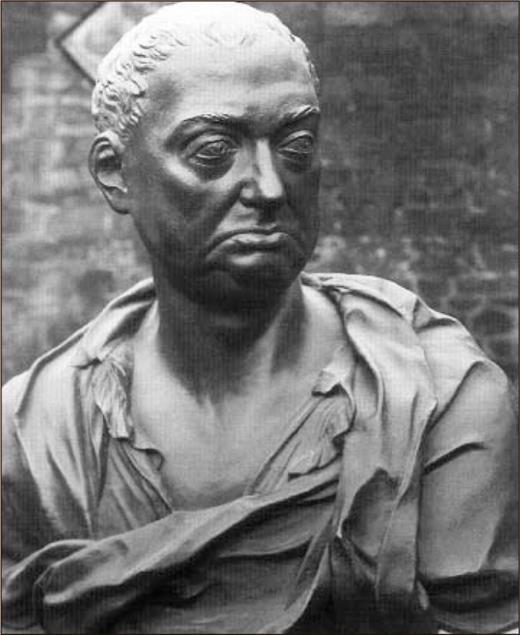
"I am not one who was born in the custody of wisdom. I am one who is fond of olden times and intense in quest of the sacred knowing of the ancients." Gustave Courbet
Showing posts with label deep reading. Show all posts

18 June 2025

Rings.

Your marching orders.  Every thought and word from one of the most exuberant human beings who ever lived. 

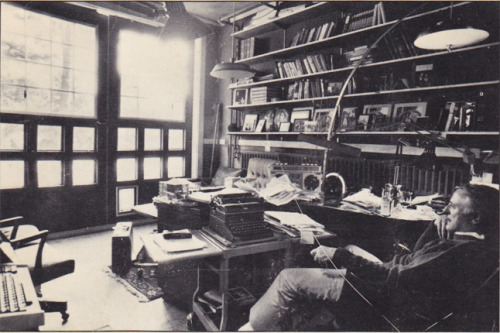
Ray Bradbury interviewed in 1974 ...
RAY BRADBURY: [I]t's very dangerous, I think too many professors are too opinionated and too snobbish, and too intellectual and the intellect is a great danger to creativity.

JAMES DAY: The intellect is a danger.

RAY BRADBURY: Terrible danger because you begin to rationalize and make up reasons for things, instead of staying with your own basic truth. Who you are, what you are, what you want to be. And I've had a sign over my typewriter for 25 years now which reads don't think, you must never think at the type writer you must feel and then your intellect is always buried in that feeling anyway. You collect up a lot of things there, you do a lot of thinking away from your typewriter. But at the typewriter you should be living. It should be a living experience, just as when I'm here with you, speaking to you, your popping all sorts of questions at me, I don't have time to think about them, I can react to them. I try to say things that are meaningful in a reaction to them, if I stopped and thought too long both of us would fall asleep. And that can happen at the typewriter too. The worst thing you do when you think is lie.  You can make up reasons that are not true for the things that you did and what your trying to do as a creative person is surprise yourself, find out who you really are and try not to lie, try to tell the truth, all the time. And the only way to do this is by being very active, and very emotional, and get it out of yourself, making lists of things that you hate and things that you love, you write about these then, intensely. And when its over, then you can think about it, then you can look at whether it works or doesn't work or something's missing here, and then if something's missing you go back and re-emotionalize that so its all of a piece. But thinking is to be a corrective in our life, its not supposed to be the center of our lives. Living is supposed to be the center of our lives. Being is supposed to be the center, with correctives around which hold us, like the skin holds our blood and our flesh in. But our skin is not aware of life living is the blood pumping through our veins.  The ability to sense and to feel and to know, and the intellect doesn't really help your brain much there, you should get on with the business of living.

JAMES DAY: You rely heavily upon intuitions?

RAY BRADBURY: Oh completely, everything of mine is intuitive, all the poetry I've written. I couldn't possibly tell you how I did it, I don't know anything about the rhythms or the schemes or the inner rhymes or any of this sort of thing.  It comes from 40 years of reading poetry and having heroes that I loved, feeling again. I love Shakespeare, I don't intellectualize upon him.  I love Gerard Manley Hopkins, I don't intellectualize upon him. I love Dylan Thomas, I don't know what in the hell he's writing about half the time, but he sounds good, he rings well.

10 July 2024

Happy Birthday, Proust


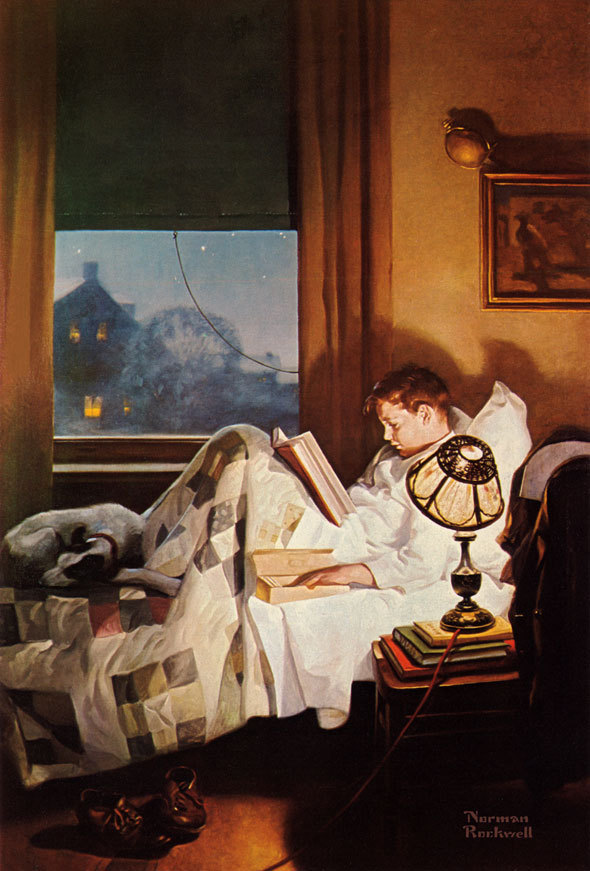
Every reader, as he reads, is actually the reader of himself. The writer's work is only a kind of optical instrument he provides the reader so he can discern what he might never have seen in himself without this book. The reader's recognition in himself of what the book says is the proof of the book's truth.

Marcel Proust, born on this day in 1871, from Time Regained

  1. The principal aspect of my personality:
  2. The quality that I desire in a man:
  3. The quality that I desire in a woman:
  4. Your chief characteristic:
  5. What I appreciate most about my friends:
  6. My main fault:
  7. My favorite occupation:
  8. My dream of happiness:
  9. What would be my greatest misfortune?
  10. What I should like to be:
  11. The country where I should like to live:
  12. My favorite color:
  13. My favorite bird:
  14. My favorite prose authors:
  15. My favorite poets:
  16. My heroes in fiction:
  17. My favorite heroines in fiction.
  18. My favorite composers:
  19. My favorite painters:
  20. My heroes in real life:
  21. My heroines in history:
  22. My favorite names:
  23. What I hate most of all:
  24. Historical figures that I despise the most:
  25. The military event that I admire most:
  26. The gift of nature that I would like to have:
  27. How I want to die:
  28. My present state of mind:
  29. Faults for which I have the most indulgence:
  30. My motto:

24 April 2020

Engagement.


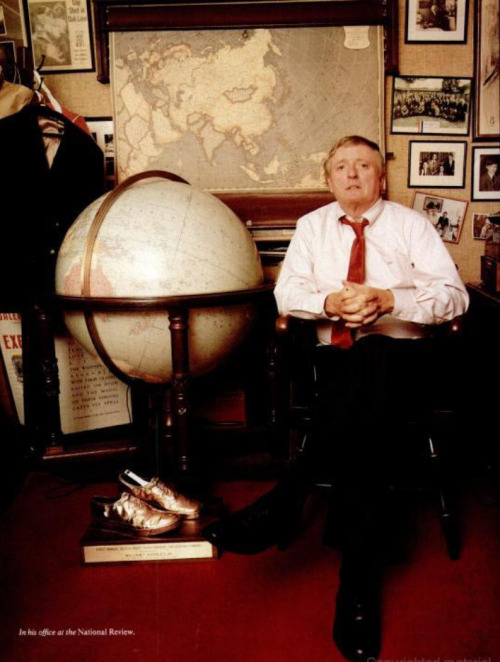
George Will on what we lost when we stopped reading ...

Modernity’s greatest blessing — individualism: the celebration of individual agency — depends on a sense of one’s interior, of self-consciousness. This is facilitated by deep literacy that, unlike the oral communication of premodern groups, requires solitude for the reader’s private repose. Modernity, and eventually democracy, advanced through Protestantism’s emphasis of individual engagement with writing — the Bible made accessible to personal reading in various languages.

Integral to liberal-democratic politics are, Garfinkle says, abstract ideas — “representation; the virtues of doubt, dissent, and humility; and the concept of a depersonalized constitutional order.” A society that loses the ballast of deep literacy is apt to become less thoughtful, more emotional and volatile. It will become impatient with the pace of refined, impersonal governance through institutions. It will seek “a less abstract, re-personalized form of social and political authority concentrated in a ‘great’ authoritarian leader.”

Deep literacy has always been a minority taste and attainment, but is always necessary, especially among elites, to leaven majoritarian politics. But because of today’s social media technologies, Garfinkle believes, there is increased, if superficial and emotive, participation in political discourse.

CONNECT

Revolution.


In her 2018 book, Reader, Come Home, Wolf uses cognitive neuroscience and developmental psycholinguistics to study the reading brain and literacy development, and in doing so, helps identify what is being lost. According to Wolf, we are losing what she calls "deep literacy" or "deep reading." This does not include decoding written symbols, writing one's name, or making lists. Deep literacy is what happens when a reader engages with an extended piece of writing in such a way as to anticipate an author's direction and meaning, and engages what one already knows in a dialectical process with the text. The result, with any luck, is a fusion of writer and reader, with the potential to bear original insight.

Deep literacy has wondrous effects, nurturing our capacity for abstract thought, enabling us to pose and answer difficult questions, empowering our creativity and imagination, and refining our capacity for empathy. It is also generative of successive new insight, as the brain's circuitry for reading recursively builds itself forward. It is and does all these things in part because it touches off a "revolution in the brain," meaning that it has distinctive and describable neurophysiological consequences. Understanding deep literacy as a revolution in the brain has potential payoffs for understanding aspects of history and contemporary politics alike.

Deep reading has in large part informed our development as humans, in ways both physiological and cultural. And it is what ultimately allowed Americans to become "We the People," capable of self-government. If we are losing the capacity for deep reading, we must also be prepared to lose other, perhaps even more precious parts of what deep reading has helped to build.

CONNECT