"I am not one who was born in the custody of wisdom. I am one who is fond of olden times and intense in quest of the sacred knowing of the ancients." Gustave Courbet
Showing posts with label Manutius. Show all posts

23 September 2016

Punchcutter.

Manutius, De Aetna, 1496.


Francesco Griffo, son of the goldsmith and engraver Cesare, was probably born in Bologna or in the countryside surrounding the city in the mid-fifteenth century. During the nineteenth century it was established that the printer Francesco da Bologna and the goldsmith, engraver, coiner and painter Francesco Raibolini, called ‘Francia’, who had been considered the same person, were as a matter of fact two different persons.

Today few documents are left to recreate the life and the activity of one the protagonists of book history.  It is highly likely that Griffo undertook the career of engraver of printing types (‘punchcutter’) and typefounder for the printers of Bologna, famous for the typographical elegance of their books. 

CONNECT

07 September 2016

Secured.


Those who cultivate letters must be supplied with the books necessary for their purpose; and until this supply is secured I shall not rest.

Aldus Manutius

How Aldus Manutius Saved Civilization ...

09 August 2016

Lente.


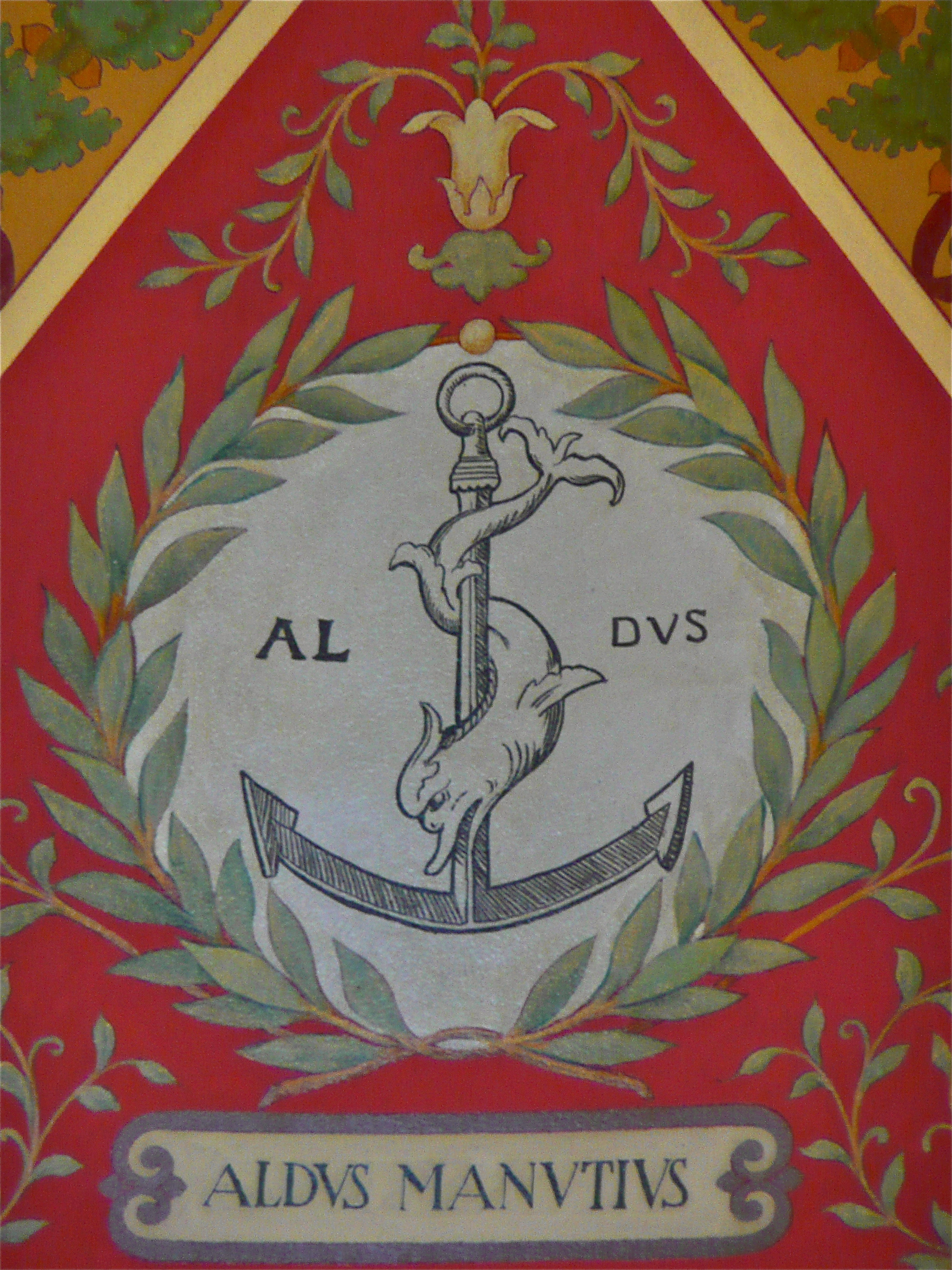
If the Renaissance had a trademark, it would be the dolphin-and-anchor device of Aldus Manutius. The famed Venetian printer and humanist scholar produced a series of elegant and convenient editions of the classics in the late-fifteenth and early-sixteenth centuries, and the Aldine press was so successful and renowned that the device was imitated by printers throughout Europe. By using an anchor device, printers could capitalize on the existing authority and prestige of the Aldine press -- an act of appropriation and allusion that would be reenacted by numerous publishing firms over the following centuries.

The emblem of the dolphin and anchor was used to illustrate the proverb festina lente, or "make haste slowly." Erasmus composed a lengthy essay on this proverb in his Adagiorum collectanea, a collection of  "adages," or classical proverbs, which he kept revising throughout his career.

Erasmus seems to have this image in mind, explaining the proverb by recourse to "ancient texts relating to hieroglyphics": "the circle as having neither beginning nor end represents eternity. The anchor, which holds back and ties down the ship and binds it fast, indicates slowness. The dolphin, as the fastest and in its motions most agile of living creatures, expresses speed. If then you skilfully connect these three, they will make up some such principle as 'Ever hasten slowly.'"

CONNECT

More ... here.

07 March 2016

Curious.


Curious strollers in early-16th-century Venice might have paused by the shop of the great printer Aldus Manutius only to be scared off by a stern warning posted over the door.

“Whoever you are, Aldus asks you again and again what it is you want from him,” it read. “State your business briefly, and then immediately go away.”