"I am not one who was born in the custody of wisdom. I am one who is fond of olden times and intense in quest of the sacred knowing of the ancients." Gustave Courbet
Showing posts with label Bell. Show all posts

08 December 2024

Maintain.


A DIALOGUE BETWEEN THE HUSBANDMAN AND THE SERVINGMAN
[This traditional version of the preceding ancient dialogue has long been popular at country festivals. At a harvest-home feast at Selborne, in Hampshire, in 1836, we heard it recited by two countrymen, who gave it with considerable humour, and dramatic effect. It was delivered in a sort of chant, or recitative.  Davies Gilbert published a very similar copy in his ANCIENT CHRISTMAS CAROLS. In the modern printed editions, which are almost identical with ours, the term "servantman" has been substituted for the more ancient designation.]
SERVINGMAN.
Well met, my brother friend, all at this highway end,
So simple all alone, as you can,
I pray you tell to me, what may your calling be,
Are you not a servingman?

HUSBANDMAN.
No, no, my brother dear, what makes you to inquire
Of any such a thing at my hand?
Indeed I shall not feign, but I will tell you plain,
I am a downright husbandman.

SERVINGMAN.
If a husbandman you be, then go along with me,
And quickly you shall see out of hand,
How in a little space I will help you to a place,
Where you may be a servingman.

HUSBANDMAN.
Kind sir! I 'turn you thanks for your intelligence,
These things I receive at your hand;
But something pray now show, that first I may plainly know
The pleasures of a servingman.

SERVINGMAN.
Why a servingman has pleasure beyond all sort of measure,
With his hawk on his fist, as he does stand;
For the game that he does kill, and the meat that does him fill,
Are pleasures for the servingman.

HUSBANDMAN.
And my pleasure's more than that, to see my oxen fat,
And a good stock of hay by them stand;
My plowing and my sowing, my reaping and my mowing,
Are pleasures for the husbandman.

SERVINGMAN.
Why it is a gallant thing to ride out with a king,
With a lord, duke, or any such man;
To hear the horns to blow, and see the hounds all in a row,
That is pleasure for the servingman.

HUSBANDMAN.
But my pleasure's more I know, to see my corn to grow,
So thriving all over my land;
And, therefore, I do mean, with my plowing with my team,
To keep myself a husbandman.

SERVINGMAN.
Why the diet that we eat is the choicest of all meat,
Such as pig, goose, capon, and swan;
Our pastry is so fine, we drink sugar in our wine,
That is living for the servingman.

HUSBANDMAN.
Talk not of goose nor capon, give me good beef or bacon,
And good bread and cheese, now at hand;
With pudding, brawn, and souse, all in a farmer's house,
That is living for the husbandman.

SERVINGMAN.
Why the clothing that we wear is delicate and rare,
With our coat, lace, buckles, and band;
Our shirts are white as milk, and our stockings they are silk,
That is clothing for a servingman.

HUSBANDMAN.
But I value not a hair your delicate fine wear,
Such as gold is laced upon;
Give me a good grey coat, and in my purse a groat,
That is clothing for the husbandman.

SERVINGMAN.
Kind sir! it would be bad if none could be had
Those tables for to wait upon;
There is no lord, duke, nor squire, nor member for the shire,
Can do without a servingman.

HUSBANDMAN.
But, Jack! it would be worse if there was none of us
To follow the plowing of the land;
There is neither king, lord, nor squire, nor member for the shire,
Can do without the husbandman.

SERVINGMAN.
Kind sir! I must confess't, and I humbly protest
I will give you the uppermost hand;
Although your labour's painful, and mine it is so very gainful,
I wish I were a husbandman.

HUSBANDMAN.
So come now, let us all, both great as well as small,
Pray for the grain of our land;
And let us, whatsoever, do all our best endeavour,
For to maintain the good husbandman.

Robert Bell

30 June 2024

Practising.


To those who busy themselves about bringing art into the lives of the people, I would also say—Do not dabble in revivals. The very word smacks of the vault. Revivals look back; art is concerned with the present. People will not be tempted to create by being taught to imitate. Except that they are charming, revivals of morris-dancing and folk-singing are little better than Arts and Crafts in the open. The dust of the museum is upon them. They may turn boys and girls into nimble virtuosi; they will not make them artists. Because no two ages express their sense of form in precisely the same way all attempts to recreate the forms of another age must sacrifice emotional expression to imitative address. Old-world merry-making can no more satisfy sharp spiritual hunger than careful craftsmanship or half hours with our "Art Treasures." Passionate creation and ecstatic contemplation, these alone will satisfy men in search of a religion.

I believe it is possible, though extremely difficult, to give people both—if they really want them. Only, I am sure that, for most, creation must precede contemplation. In Monsieur Poiret's Ecole Martine scores of young French girls, picked up from the gutter or thereabouts, are at this moment creating forms of surprising charm and originality. That they find delight in their work is not disputed. They copy no master, they follow no tradition; what they owe to the past—and it is much—they have borrowed quite unconsciously with the quality of their bodies and their minds from the history and traditional culture of their race. Their art differs from savage art as a French midinette differs from a squaw, but it is as original and vital as the work of savages. It is not great art, it is not profoundly significant, it is often frankly third-rate, but it is genuine; and therefore I rate the artisans of the Ecole Martine with the best contemporary painters, not as artists, but as manifestations of the movement.

I am no devout lover of rag-time and turkey-trotting, but they too are manifestations. In those queer exasperated rhythms I find greater promise of a popular art than in revivals of folk-song and morris-dancing. At least they bear some relationship to the emotions of those who sing and dance them. In so far as they are significant they are good, but they are of no great significance. It is not in the souls of bunny-huggers that the new ferment is potent; they will not dance and sing the world out of its lethargy; not to them will the future owe that debt which I trust it will be quick to forget. There is nothing very wonderful or very novel about rag-time or tango, but to overlook any live form of expression is a mistake, and to attack it is sheer silliness. Tango and rag-time are kites sped by the breeze that fills the great sails of visual art. Not every man can keep a cutter, but every boy can buy a kite. In an age that is seeking new forms in which to express that emotion which can be expressed satisfactorily in form alone, the wise will look hopefully at any kind of dancing or singing that is at once unconventional and popular.

So, let the people try to create form for themselves. Probably they will make a mess of it; that will not matter. The important thing is to have lived art and lived sensibility; the copious production of bad art is a waste of time, but, so long as it is not encouraged to the detriment of good, nothing worse. Let everyone make himself an amateur, and lose the notion that art is something that lives in the museums understood by the learned alone. By practising an art it is possible that people will acquire sensibility; if they acquire the sensibility to appreciate, even to some extent, the greatest art they will have found the new religion for which they have been looking. I do not dream of anything that would burden or lighten the catalogues of ecclesiastical historians. But if it be true that modern men can find little comfort in dogmatic religion, and if it be true that this age, in reaction from the materialism of the nineteenth century, is becoming conscious of its spiritual need and longs for satisfaction, then it seems reasonable to advise them to seek in art what they want and art can give. Art will not fail them; but it may be that the majority must always lack the sensibility that can take from art what art offers.

Clive Bell, from Art

25 November 2021

Determined.


I had made up my mind to find that for which I was searching even if it required the remainder of my life. After innumerable failures I finally uncovered the principle for which I was searching, and I was astounded at its simplicity. I was still more astounded to discover the principle I had revealed not only beneficial in the construction of a mechanical hearing aid but it served as well as means of sending the sound of the voice over a wire. Another discovery which came out of my investigation was the fact that when a man gives his order to produce a definite result and stands by that order it seems to have the effect of giving him what might be termed a second sight which enables him to see right through ordinary problems. What this power is I cannot say; all I know is that it exists and it becomes available only when a man is in that state of mind in which he knows exactly what he wants and is fully determined not to quit until he finds it.

Alexander Graham Bell

13 July 2020

Authenticity.


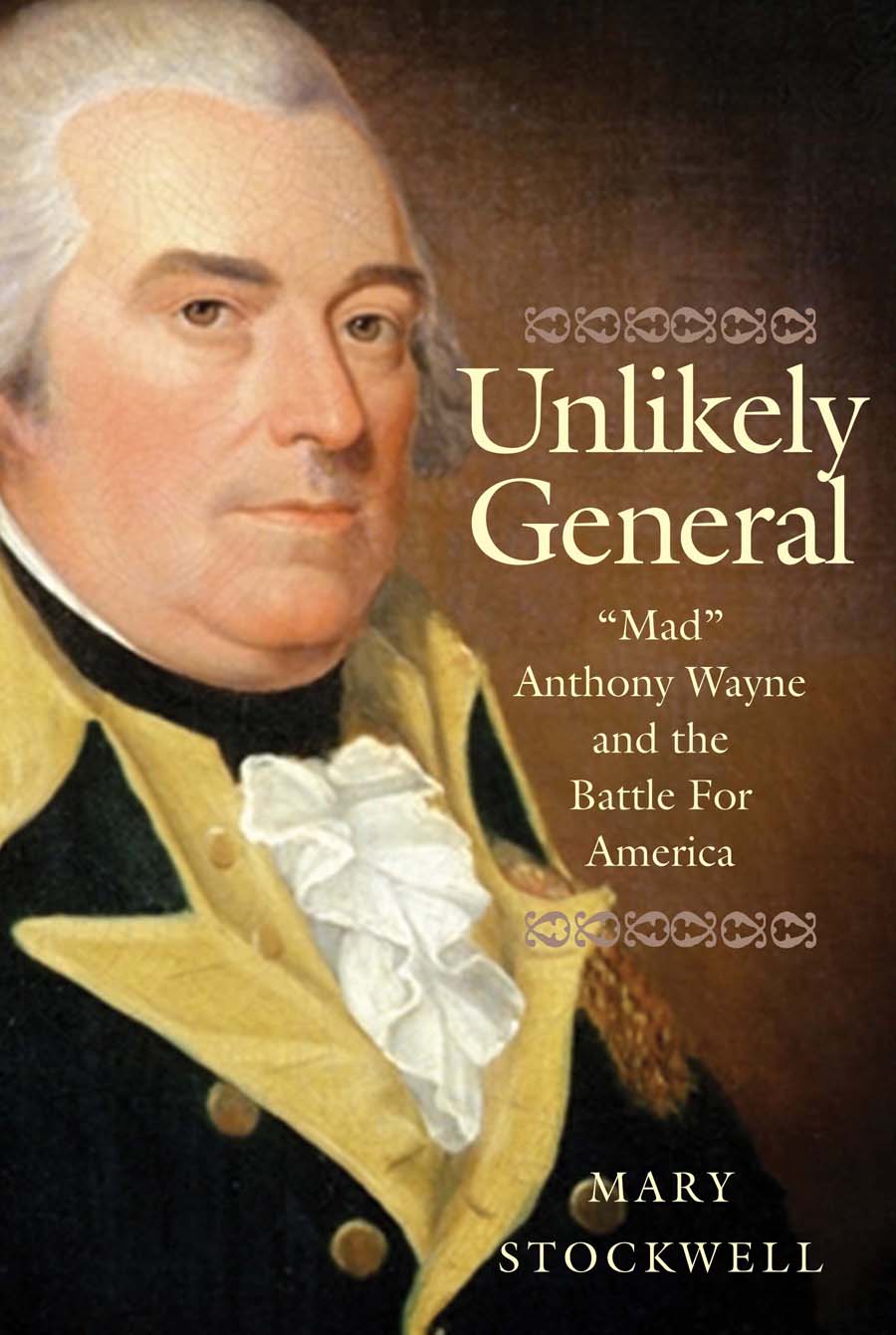
J.L. Bell, author of The Road to Concord: How Four Stolen Cannon Ignited the Revolutionary War, provides guidance on how to assess the authenticity of quotes made by the Founding Fathers (or any quote, for that matter).

What a wonderful website.

11 July 2020

Excellent.

An excellent book ...


C-SPAN features J.L. Bell's talk about his book, The Road to Concord: How Four Stolen Cannon Ignited the Revolutionary War, and events dating back to September 1774, including the Patriot plot to steal four British cannons and the British plan to get them back.

Bell's blog, Boston 1773, is HERE.

21 March 2018

Thought.

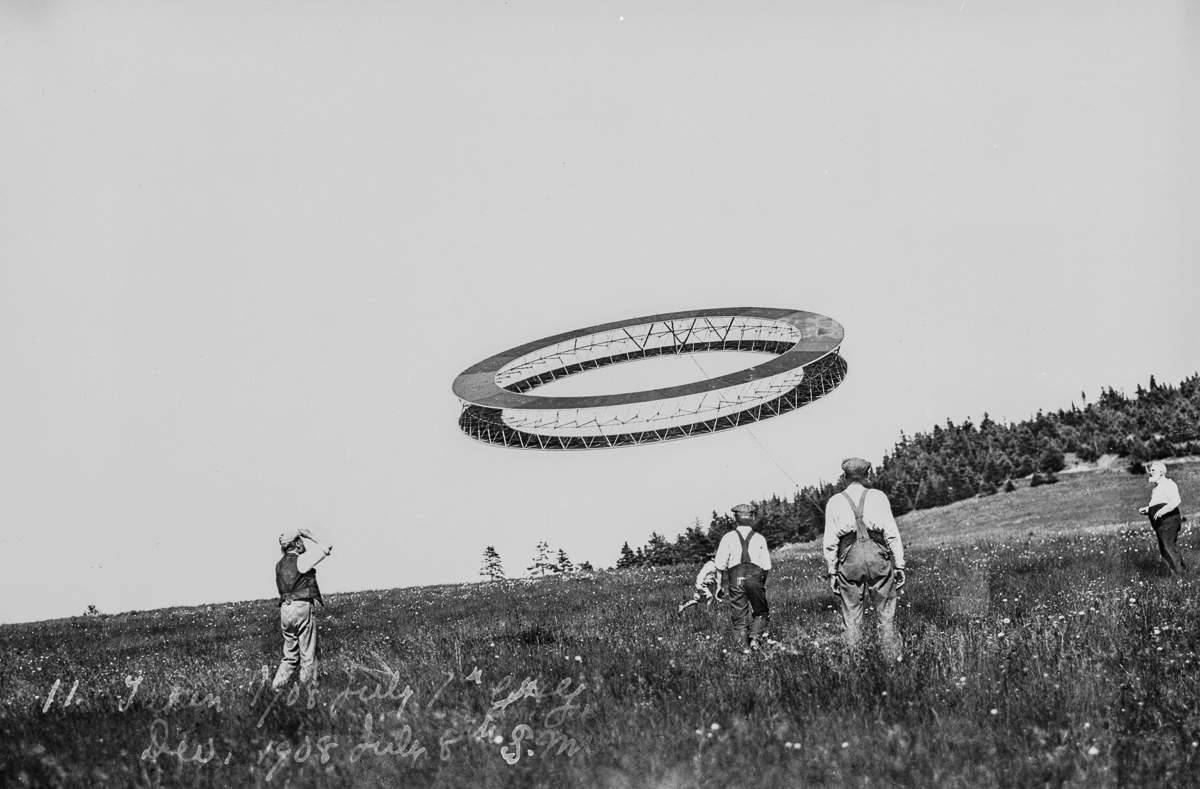
Bell, Circular Tetrahedral Kite, 1908


Don't keep forever on the public road,going only where others have gone, and following one after the other like a flock of sheep. Leave the beaten track occasionally and dive into the woods.  Every time you do so you will be certain to find something that you have never seen before. Of course it will be a little thing, but do not ignore it. Follow it up, explore all around it; one discovery will lead to another, and before you know it you will have something worth thinking about to occupy your mind. All really big discoveries are the results of thought.
Alexander Graham Bell