"I am not one who was born in the custody of wisdom. I am one who is fond of olden times and intense in quest of the sacred knowing of the ancients." Gustave Courbet
Showing posts with label Moby-Dick. Show all posts

01 August 2026

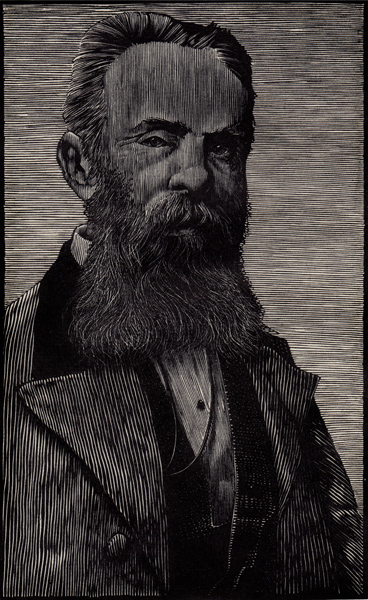
Happy Birthday, Herman Melville

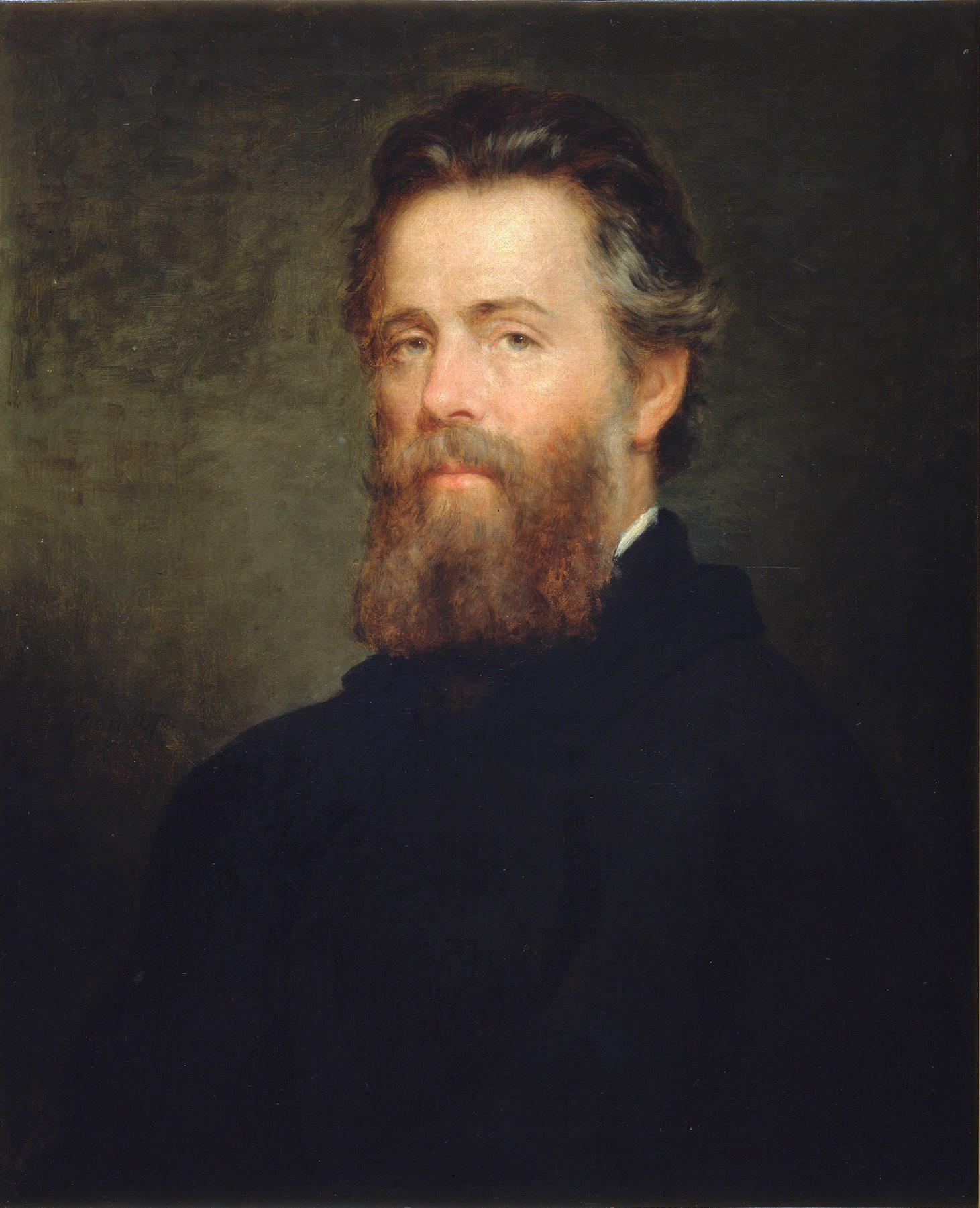
Eaton, Herman Melville, 1870


Know ye now, Bulkington? Glimpses do ye seem to see of that mortally intolerable truth; that all deep, earnest thinking is but the intrepid effort of the soul to keep the open independence of her sea; while the wildest winds of heaven and earth conspire to cast her on the treacherous, slavish shore?

But as in landlessness alone resides the highest truth, shoreless, indefinite as God—so, better is it to perish in that howling infinite, than be ingloriously dashed upon the lee, even if that were safety! For worm-like, then, oh! who would craven crawl to land!

Herman Melville, born on on this day in 1819, from Moby-Dick, or The Whale

18 July 2026

Back.

Think of artificial intelligence as the "clear fire" as Professor Bloom reads from Chapter 119 of Moby-Dick, "The Candles" ...
Oh! thou clear spirit of clear fire, whom on these seas I as Persian once did worship, till in the sacramental act so burned by thee, that to this hour I bear the scar; I now know thee, thou clear spirit, and I now know that thy right worship is defiance. To neither love nor reverence wilt thou be kind; and e'en for hate thou canst but kill; and all are killed. No fearless fool now fronts thee. I own thy speechless, placeless power; but to the last gasp of my earthquake life will dispute its unconditional, unintegral mastery in me. In the midst of the personified impersonal, a personality stands here. Though but a point at best; whencesoe'er I came; wheresoe'er I go; yet while I earthly live, the queenly personality lives in me, and feels her royal rights. But war is pain, and hate is woe. Come in thy lowest form of love, and I will kneel and kiss thee; but at thy highest, come as mere supernal power; and though thou launchest navies of full-freighted worlds, there's that in here that still remains indifferent. Oh, thou clear spirit, of thy fire thou madest me, and like a true child of fire, I breathe it back to thee.

AI will never be skeptical, it's programmed job is to satisfy you, validate you, make you feel "smart" (whatever that means) for ultimately doing nothing -- more symbolism over substance.  

YOU must be the skeptic and breathe the clear fire back into the mouth of its fakery.

14 November 2025

Arises.


“I will have no man in my boat," said Starbuck, "who is not afraid of a whale."


By this, he seemed to mean, not only that the most reliable and useful courage was that which arises from the fair estimation of the encountered peril, ...


 ... but that an utterly fearless man is a far more dangerous comrade than a coward.

Hrman Melville, from Moby-Dick

01 August 2024

Happy Birthday, Melville

Eaton, Herman Melville, 1870


There is a wisdom that is woe; but there is a woe that is madness. And there is a Catskill eagle in some souls that can alike dive down into the blackest gorges, and soar out of them again and become invisible in the sunny spaces. And even if he for ever flies within the gorge, that gorge is in the mountains; so that even in his lowest swoop the mountain eagle is still higher than other birds upon the plain, even though they soar.

Herman Melville, born on this day in 1819, from Moby-Dick, or The Whale

21 June 2024

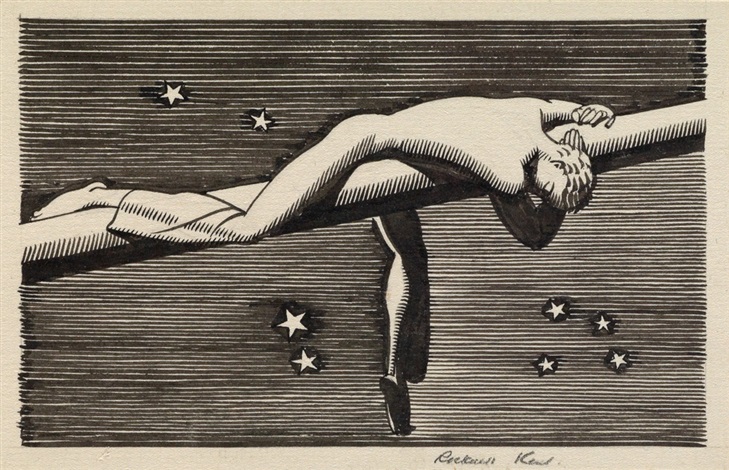
Happy Birthday, Kent

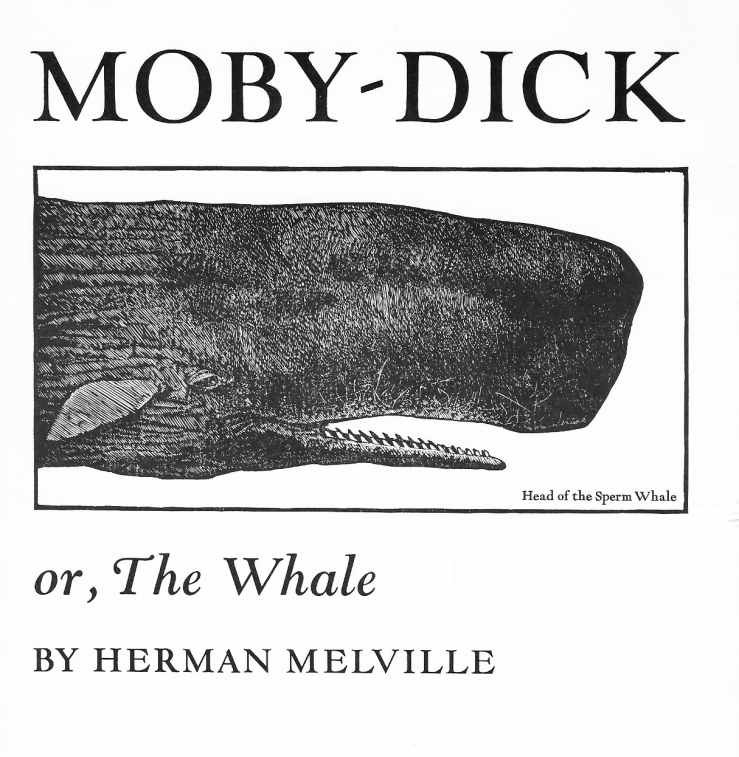
Kent, Frontispiece from the Lakeside Press publication on Moby-Dick, 1930


All things look good from far away and it is man's eternally persistent childlike faith in the reality of that illusion that has made him the triumphant restless being he is.

Rockwell Kent, born on this day in 1882, from Voyaging: Southward from the Strait of Magellan

07 June 2024

Transition.

Kent, Queequeg, 1930


But Queequeg, do you see, was a creature in the transition stage—neither caterpillar nor butterfly. He was just enough civilized to show off his outlandishness in the strangest possible manners. His education was not yet completed. He was an undergraduate. If he had not been a small degree civilized, he very probably would not have troubled himself with boots at all; but then, if he had not been still a savage, he never would have dreamt of getting under the bed to put them on. At last, he emerged with his hat very much dented and crushed down over his eyes, and began creaking and limping about the room, as if, not being much accustomed to boots, his pair of damp, wrinkled cowhide ones—probably not made to order either—rather pinched and tormented him at the first go off of a bitter cold morning.

Herman Melville, from Moby-Dick, or The Whale

24 January 2024

Enriched.


 A 24-hour marathon reading of Moby-Dick at the New Bedford Whaling Museum ...
“The marathon is a way to read the book with more structure and purpose,” said Dotson, who was taking the opportunity to explore Moby-Dick for the first time since he left school.
“To really get immersed in it.”

You heard that refrain in every corner of the New Bedford Whaling Museum: Moby-Dick is spectacular, hilarious, misunderstood, sonorous, and psychedelic. You will be enriched as a person by experiencing it, and you must ignore those who gripe about its quirks. This is where I must admit that I, too, have never read Moby-Dick, so I can say with confidence that if you are the least bit curious about the book, and require a gentle push to take the dive, then nothing will convince you more of its majesty than to sit on the deck of the Lagoda—amid a panorama of oceanic bric-a-brac and reclaimed nautical artifacts—watching the Nation of Melville burst into hysterics.

01 August 2023

Happy Birthday, Melville

Eaton, Herman Melville, 1870


Whenever I find myself growing grim about the mouth; whenever it is a damp, drizzly November in my soul; whenever I find myself involuntarily pausing before coffin warehouses, and bringing up the rear of every funeral I meet; and especially whenever my hypos get such an upper hand of me, that it requires a strong moral principle to prevent me from deliberately stepping into the street, and methodically knocking people's hats off - then, I account it high time to get to sea as soon as I can.

Herman Melville, born on this day in 1819, from Moby-Dick, or The Whale

14 November 2022

Published.


Herman Melville's Moby-Dick, or The Whale was published on this day in 1851.

It is not down on any map; true places never are.

Herman Melville, from Moby-Dick, or The Whale

12 November 2022

Deliciousness.


To enjoy bodily warmth, some small part of you must be cold, for there is no quality in this world that is not what it is merely by contrast. Nothing exists in itself. If you flatter yourself that you are all over comfortable, and have been so a long time, then you cannot be said to be comfortable any more. For this reason a sleeping apartment should never be furnished with a fire, which is one of the luxurious discomforts of the rich. For the height of this sort of deliciousness is to have nothing but the blanket between you and your snugness and the cold of the outer air. Then there you lie like the one warm spark in the heart of an arctic crystal.

Herman Melville, from Moby-Dick or, the Whale

20 October 2022

Making.


Systemic processes tend to reward people for making decisions that turn out to be right—creating great resentment among the anointed, who feel themselves entitled to rewards for being articulate, politically active, and morally fervent.

Thomas Sowell

03 August 2022

Back.


At the base of the mainmast, full beneath the doubloon and the flame, the Parsee was kneeling in Ahab's front, but with his head bowed away from him; while near by, from the arched and overhanging rigging, where they had just been engaged securing a spar, a number of the seamen, arrested by the glare, now cohered together, and hung pendulous, like a knot of numbed wasps from a drooping, orchard twig. In various enchanted attitudes, like the standing, or stepping, or running skeletons in Herculaneum, others remained rooted to the deck; but all their eyes upcast.

"Aye, aye, men!" cried Ahab. "Look up at it; mark it well; the white flame but lights the way to the White Whale! Hand me those mainmast links there; I would fain feel this pulse, and let mine beat against it; blood against fire! So."

Then turning--the last link held fast in his left hand, he put his foot upon the Parsee; and with fixed upward eye, and high-flung right arm, he stood erect before the lofty tri-pointed trinity of flames.

"Oh! thou clear spirit of clear fire, whom on these seas I as Persian once did worship, till in the sacramental act so burned by thee, that to this hour I bear the scar; I now know thee, thou clear spirit, and I now know that thy right worship is defiance. To neither love nor reverence wilt thou be kind; and e'en for hate thou canst but kill; and all are killed. No fearless fool now fronts thee. I own thy speechless, placeless power; but to the last gasp of my earthquake life will dispute its unconditional, unintegral mastery in me. In the midst of the personified impersonal, a personality stands here. Though but a point at best; whencesoe'er I came; wheresoe'er I go; yet while I earthly live, the queenly personality lives in me, and feels her royal rights. But war is pain, and hate is woe. Come in thy lowest form of love, and I will kneel and kiss thee; but at thy highest, come as mere supernal power; and though thou launchest navies of full-freighted worlds, there's that in here that still remains indifferent. Oh, thou clear spirit, of thy fire thou madest me, and like a true child of fire, I breathe it back to thee."

26 March 2022

Sail.


I love to sail forbidden seas, and land on barbarous coasts.

Herman Melville, from Moby-Dick or, the Whale

14 November 2021

Published.


Herman Melville published Moby-Dick on this day in 1851.

Dr. Jamie Jones presents an outstanding talk entitled, Nostalgia for the Wooden World:  Rockwell Kent's Moby-Dick ...

01 August 2021

Harpooned.

Turner, A Harpooned Whale, 1845

Immortal.


It is a thing well known to both American and English whale-ships, and as well a thing placed upon authoritative record years ago by Scoresby, that some whales have been captured far north in the Pacific, in whose bodies have been found the barbs of harpoons darted in the Greenland seas. Nor is it to be gainsaid, that in some of these instances it has been declared that the interval of time between the two assaults could not have exceeded very many days. Hence, by inference, it has been believed by some whalemen, that the Nor’ West Passage, so long a problem to man, was never a problem to the whale. So that here, in the real living experience of living men, the prodigies related in old times of the inland Strello mountain in Portugal (near whose top there was said to be a lake in which the wrecks of ships floated up to the surface); and that still more wonderful story of the Arethusa fountain near Syracuse (whose waters were believed to have come from the Holy Land by an underground passage); these fabulous narrations are almost fully equalled by the realities of the whalemen.

Forced into familiarity, then, with such prodigies as these; and knowing that after repeated, intrepid assaults, the White Whale had escaped alive; it cannot be much matter of surprise that some whalemen should go still further in their superstitions; declaring Moby Dick not only ubiquitous, but immortal (for immortality is but ubiquity in time); that though groves of spears should be planted in his flanks, he would still swim away unharmed; or if indeed he should ever be made to spout thick blood, such a sight would be but a ghastly deception; for again in unensanguined billows hundreds of leagues away, his unsullied jet would once more be seen.

But even stripped of these supernatural surmisings, there was enough in the earthly make and incontestable character of the monster to strike the imagination with unwonted power. For, it was not so much his uncommon bulk that so much distinguished him from other sperm whales, but, as was elsewhere thrown out—a peculiar snow-white wrinkled forehead, and a high, pyramidical white hump. These were his prominent features; the tokens whereby, even in the limitless, uncharted seas, he revealed his identity, at a long distance, to those who knew him.

The rest of his body was so streaked, and spotted, and marbled with the same shrouded hue, that, in the end, he had gained his distinctive appellation of the White Whale; a name, indeed, literally justified by his vivid aspect, when seen gliding at high noon through a dark blue sea, leaving a milky-way wake of creamy foam, all spangled with golden gleamings.

Nor was it his unwonted magnitude, nor his remarkable hue, nor yet his deformed lower jaw, that so much invested the whale with natural terror, as that unexampled, intelligent malignity which, according to specific accounts, he had over and over again evinced in his assaults. More than all, his treacherous retreats struck more of dismay than perhaps aught else. For, when swimming before his exulting pursuers, with every apparent symptom of alarm, he had several times been known to turn round suddenly, and, bearing down upon them, either stave their boats to splinters, or drive them back in consternation to their ship.

Already several fatalities had attended his chase. But though similar disasters, however little bruited ashore, were by no means unusual in the fishery; yet, in most instances, such seemed the White Whale’s infernal aforethought of ferocity, that every dismembering or death that he caused, was not wholly regarded as having been inflicted by an unintelligent agent.

Judge, then, to what pitches of inflamed, distracted fury the minds of his more desperate hunters were impelled, when amid the chips of chewed boats, and the sinking limbs of torn comrades, they swam out of the white curds of the whale’s direful wrath into the serene, exasperating sunlight, that smiled on, as if at a birth or a bridal.

His three boats stove around him, and oars and men both whirling in the eddies; one captain, seizing the line-knife from his broken prow, had dashed at the whale, as an Arkansas duellist at his foe, blindly seeking with a six inch blade to reach the fathom-deep life of the whale. That captain was Ahab. And then it was, that suddenly sweeping his sickle-shaped lower jaw beneath him, Moby Dick had reaped away Ahab’s leg, as a mower a blade of grass in the field. No turbaned Turk, no hired Venetian or Malay, could have smote him with more seeming malice. Small reason was there to doubt, then, that ever since that almost fatal encounter, Ahab had cherished a wild vindictiveness against the whale, all the more fell for that in his frantic morbidness he at last came to identify with him, not only all his bodily woes, but all his intellectual and spiritual exasperations. The White Whale swam before him as the monomaniac incarnation of all those malicious agencies which some deep men feel eating in them, till they are left living on with half a heart and half a lung. That intangible malignity which has been from the beginning; to whose dominion even the modern Christians ascribe one-half of the worlds; which the ancient Ophites of the east reverenced in their statue devil;—Ahab did not fall down and worship it like them; but deliriously transferring its idea to the abhorred white whale, he pitted himself, all mutilated, against it. All that most maddens and torments; all that stirs up the lees of things; all truth with malice in it; all that cracks the sinews and cakes the brain; all the subtle demonisms of life and thought; all evil, to crazy Ahab, were visibly personified, and made practically assailable in Moby Dick. He piled upon the whale’s white hump the sum of all the general rage and hate felt by his whole race from Adam down; and then, as if his chest had been a mortar, he burst his hot heart’s shell upon it.

Herman Melville, from Moby-Dick
01 August 2020

Happy Birthday, Melville


Herman Melville was born on this date in 1819.

Take almost any path you please, and ten to one it carries you down in a dale, and leaves you there by a pool in the stream. There is magic in it. Let the most absent-minded of men be plunged in his deepest reveries--stand that man on his legs, set his feet a-going, and he will infallibly lead you to water, if water there be in all that region. Should you ever be athirst in the great American desert, try this experiment, if your caravan happen to be supplied with a metaphysical professor. Yes, as every one knows, meditation and water are wedded for ever.

Herman Melville, from Moby Dick

Nathaniel Philbrick speaks at the Melville on Nantucket symposium at the Quaker Meeting House, August 14, 2019 ...


Fonts In Use tribute to Moby Dick is HERE.

24 August 2019

Storehouse.


Herman Melville’s epic Moby-Dick was first published as The Whale on October 18, 1851 – the book was “expurgated to avoid offending delicate political and moral sensibilities”. In November of that year, the uncensored version, featuring the Epilogue telling of how Ishmael survived to tell his tale, was published in the USA. Now called Moby-Dick, the long book, with its educational, insightful, obsessive and not a little prolix chapters on whaling and the whale, was not an instant hit. The book that most of us with a desire to write wish they had written was far from universally enjoyed. It still isn’t. Clive James wrote in 2007: “It’s not so much that I find language contortedly and even wilfully archaic: more than that I find it makes a meal of itself, as if foretelling a modern critical age in which it is fated more to be taught than enjoyed.”

Nowadays the book’s a ‘classic’, but how many of us have read all the words – 135 chapters – and finished it? Not many. Not enough. Garrison Keillor noted in 2016: “With the time I’ve wasted over the past 40 years looking for my reading glasses, I could have written Moby-Dick and written it better. Not all that yik-yak about melancholy and breakfast and the nature of evil, but cut to the chase and harpoon the dang whale and bring a couple of dames aboard the Pequod for the general interest.” He was only half joking. He’d never read the thing.

Moby Dick is a “storehouse of language, incident and strange wisdom”, the story of the heroic whale who endures a persistent effort to exterminate it. The book is worth the effort. But it takes time. We need help. We need a way to let us move through the book. Step forward artist and librarian Matt Kish, who took on the mammoth task of illustrating the book’s 552 pages of what he calls “the greatest novel ever written”.

CONNECT

Matt Kish on Moby-Dick ...