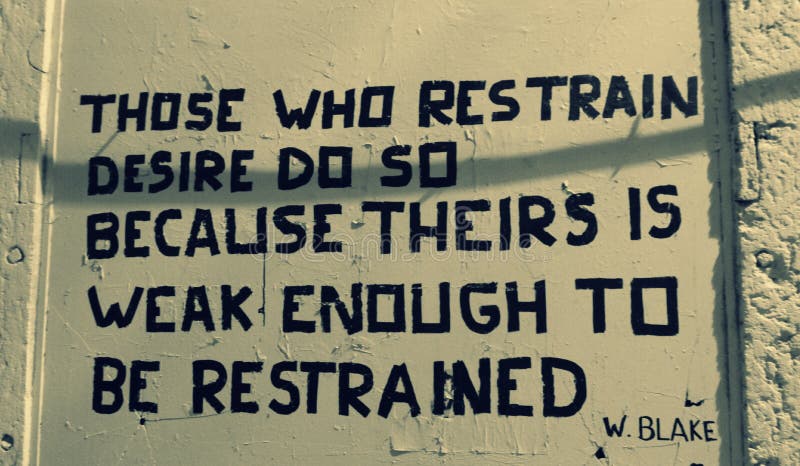
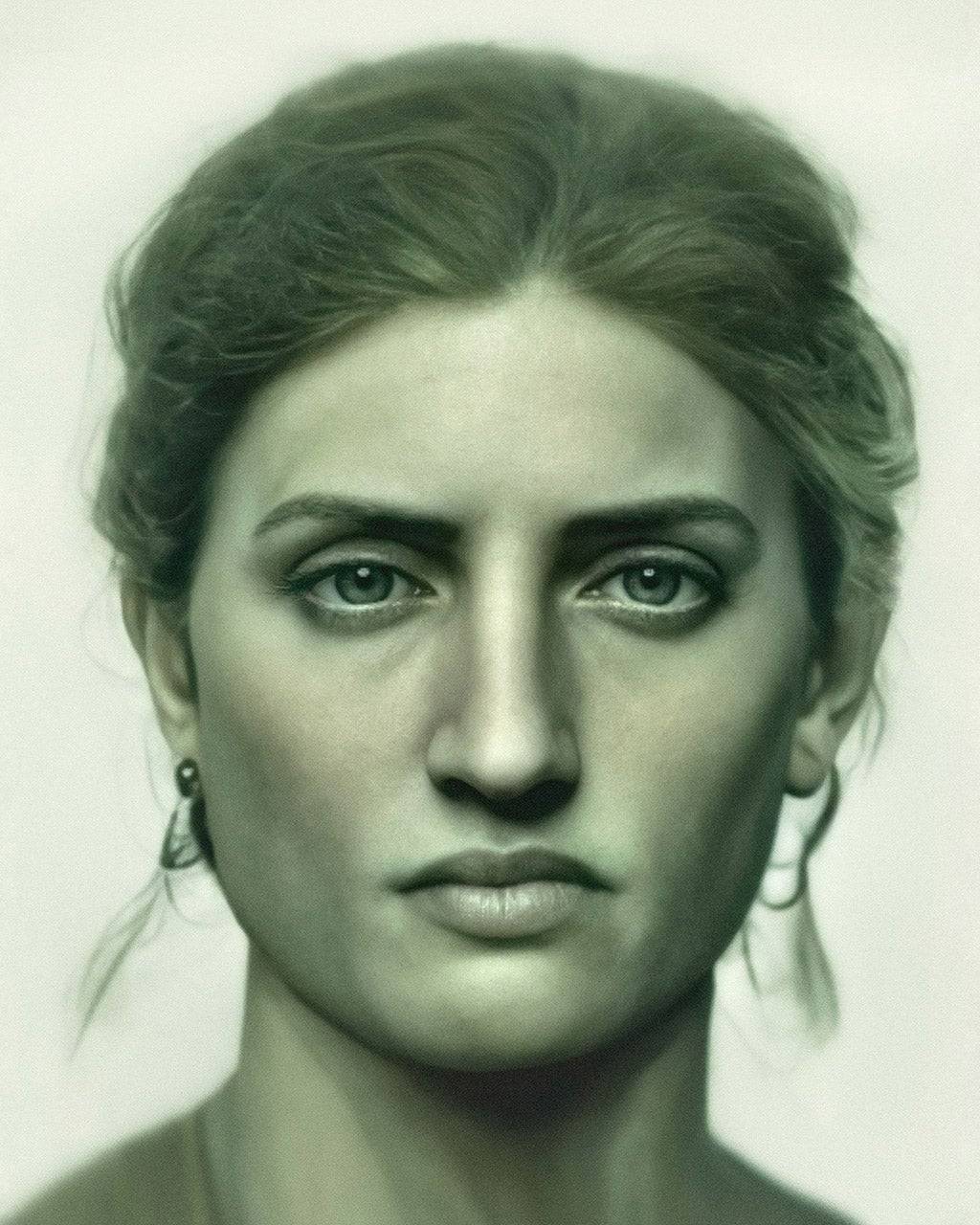
"I am not one who was born in the custody of wisdom. I am one who is fond of olden times and intense in quest of the sacred knowing of the ancients." Gustave Courbet
Showing posts with label individuality. Show all posts

30 July 2026

Himself.


It is easy to establish a society upon the foundation of rigid rules. It is easy to shape the kind of man who submits blindly and without protest to a master.  The real task is to succeed in setting man free by making him master of himself.

In place of affirming the rights of Man through individuals, we have begun to speak of the rights of the collectivity. This morality will explain clearly why the individual should sacrifice himself for the community. It will no longer explain, without verbal tricks, why a community should sacrifice itself for a single man.

 Antoine de Saint-Exupéry, from Flight to Arras

11 July 2026

Mind-Forg'd.

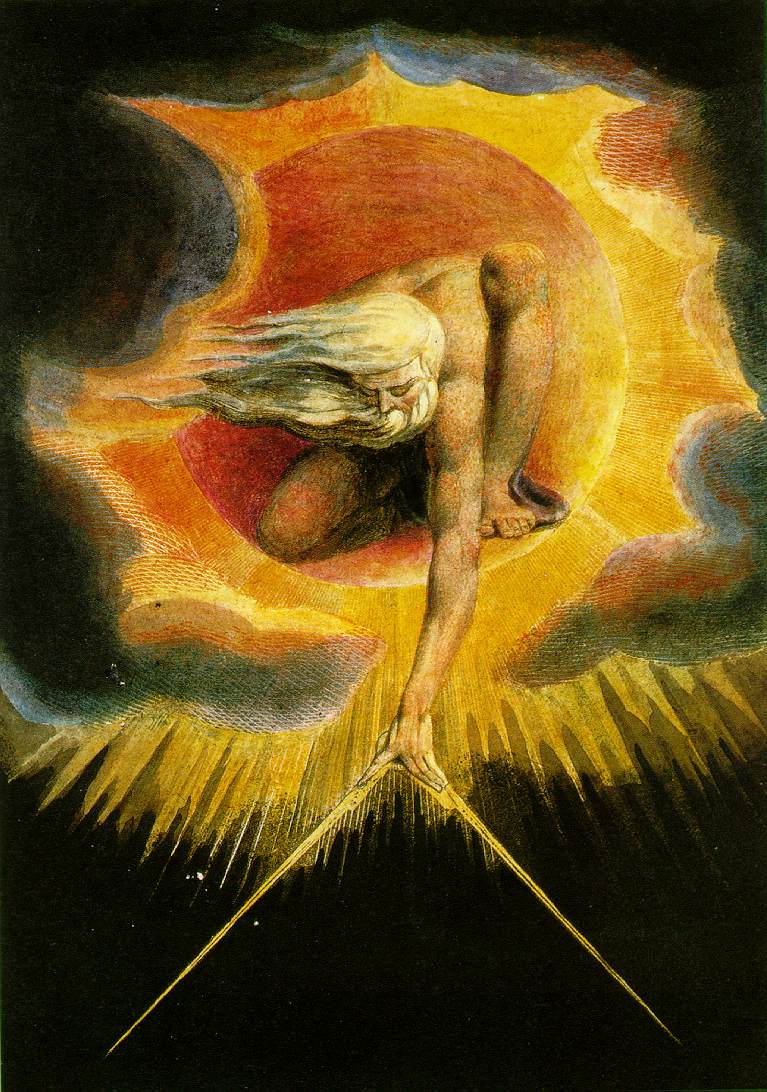
Blake, The Ancient of Days, 1794


LONDON

I wander thro' each charter'd street,
Near where the charter'd Thames does flow. 
And mark in every face I meet
Marks of weakness, marks of woe.

In every cry of every Man,
In every Infants cry of fear,
In every voice: in every ban,
The mind-forg'd manacles I hear 

How the Chimney-sweepers cry
Every blackning Church appalls, 
And the hapless Soldiers sigh
Runs in blood down Palace walls 

But most thro' midnight streets I hear
How the youthful Harlots curse
Blasts the new-born Infants tear 
And blights with plagues the Marriage hearse 

William Blake

09 May 2026

Happy Birthday, J.M. Barrie


How comely a thing is affliction borne cheerfully, which is not beyond the reach of the humblest of us. What is beauty? It is these hard-bitten men singing courage to you from their tent; it is the waves of their island home crooning of their deeds to you who are to follow them. Sometimes beauty boils over and them spirits are abroad. Ages may pass as we look or listen, for time is annihilated. There is a very old legend told to me by Nansen the explorer--I like well to be in the company of explorers--the legend of a monk who had wandered into the fields and a lark began to sing. He had never heard a lark before, and he stood there entranced until the bird and its song had become part of the heavens. Then he went back to the monastery and found there a doorkeeper whom he did not know and who did not know him. Other monks came, and they were all strangers to him. He told them he was Father Anselm, but that was no help. Finally they looked through the books of the monastery, and these revealed that there had been a Father Anselm there a hundred or more years before. Time had been blotted out while he listened to the lark.

That, I suppose, was a case of beauty boiling over, or a soul boiling over; perhaps the same thing. Then spirits walk.

J.M. Barrie, born on this day in 1860, from "Courage," the rectorial address delivered at St. Andrew's University, May 3, 1922.

04 January 2026

Free.


Steve points to an essential sentence ...
The recognition of the insuperable limits to his knowledge ought indeed to teach the student of society a lesson of humility which should guard him against becoming an accomplice in men's fatal striving to control society—a striving which makes him not only a tyrant over his fellows, but which may well make him the destroyer of a civilization which no brain has designed but which has grown from the free efforts of millions of individuals.

F. A. Hayek, from "The Pretense of Knowledge"

04 July 2025

Constantly.

Willard, Yankee Doodle, 1876


It did not really matter what we expected from life, but rather what life expected from us. We needed to stop asking about the meaning of life, and instead to think of ourselves as those who were being questioned by life—daily and hourly. Our answer must consist, not in talk and meditation, but in right action and in right conduct. Life ultimately means taking the responsibility to find the right answer to its problems and to fulfill the tasks which it constantly sets for each individual.

Viktor E. Frankl, from Man's Search for Meaning

15 June 2025

Alive.


Alive.  The opposite of artificial ...
Any form of art can only develop by means of single mutations by individual creators. If only traditional conventions are used an art will die, and the widening of an art form is bound to seem strange at first, and awkward. Any growing thing must go through awkward stages. The creator who is misunderstood because of his breach of convention may say to himself, "I seem strange to you, but anyway I am alive."

Carson McCullers

02 February 2025

Unborrowed.


Throughout the centuries there were men who took first steps down new roads armed with nothing but their own vision. Their goals differed, but they all had this in common: that the step was first, the road new, the vision unborrowed, and the response they received—hatred. The great creators—the thinkers, the artists, the scientists, the inventors—stood alone against the men of their time. Every great new thought was opposed. Every great new invention was denounced. The first motor was considered foolish. The airplane was considered impossible. The power loom was considered vicious. Anesthesia was considered sinful. But the men of unborrowed vision went ahead. They fought, they suffered and they paid. But they won.

Ayn Rand, born on this day in 1905, from The Fountainhead

22 July 2024

Something.


Read, every day, something no one else is reading. Think, every day, something no one else is thinking. Do, every day, something no one else would be silly enough to do. It is bad for the mind to continually be part of unanimity.

Christopher Morley

05 July 2024

Not-Understanding.

Sloane, Low Tide, 1979


What is necessary, after all, is only this: solitude, vast inner solitude. To walk inside yourself and meet no one for hours — that is what you must be able to attain. To be solitary as you were when you were a child, when the grown-ups walked around involved with matters that seemed large and important because they looked so busy and because you didn’t understand a thing about what they were doing.

And when you realize that their activities are shabby, that their vocations are petrified and no longer connected with life, why not then continue to look upon it all as a child would, as if you were looking at something unfamiliar, out of the depths of your own solitude, which is itself work and status and vocation? Why should you want to give up a child’s wise not-understanding in exchange for defensiveness and scorn, since not understanding is, after all, a way of being alone, whereas defensiveness and scorn are participation in precisely what, by these means, you want to separate yourself from.

Rainer Maria Rilke, from Letters to a Young Poet

Thanks to Walker's Arms for the image.

07 June 2024

Willing.


The path to true individuality is to be willing to be "in conflict with the world" and in collaboration with others - past and present - and the world.  Not accepting abstractions or representations but taking the world as it is - warts and all. 

06 March 2024

Unique.

Whatever an education is, it should make you a unique individual, not a conformist; it should furnish you with an original spirit with which to tackle the big challenges of life; it should allow you to find values which will be your road map through life; it should make you spiritually rich, a person who loves whatever you are doing, wherever you are, whomever you are with; it should teach you what is important, how to live and how to die.

John Taylor Gatto, from Dumbing us Down: The Hidden Curriculum of Compulsory Schooling

27 July 2022

Adjustment.


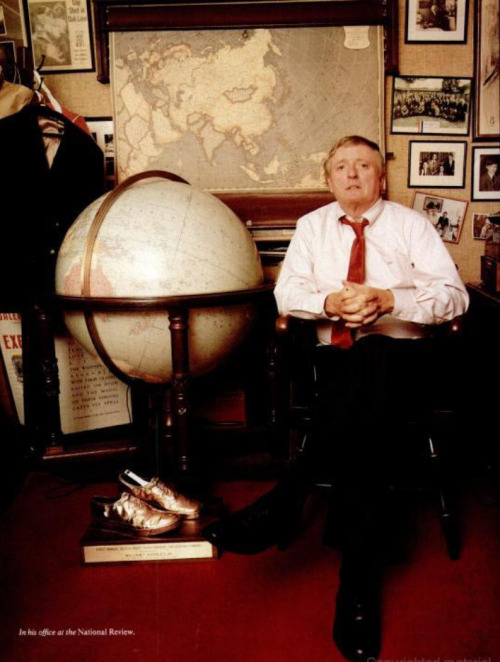
From John Dos Passos' essay, "A Question of Elbow Room," from the January 25, 1958 edition of National Review ...
When all the discussions of the position of man in the framework of government that had obsessed so many of the best minds of the century came to a focus in 1776, the chief preoccupation of the state-builders in America was to establish institutions in their new country which would allow each citizen enough elbow room to grow into in­dividuality. They differed greatly on how best to bring about that state of affairs but there was no disagreement on fundamental aims. Protection of the individual’s happiness — the assurance of the elbow room he needed to reach his full stature — was the reason for the state’s existence.

Thomas Jefferson and Gouverneur Morris held very differing views on the problems of government. Jefferson was an agrarian democrat who believed that every man was capable of taking some part in the government of the community; Morris was a city-bred aristocrat who believed that only men to whom wealth and position had given the advantage of a special education were capable of dealing with public affairs; but when Morris wrote George Washington his definition of statesmanship — “I mean politics in the great Sense, or that sublime Science which embraces for its Object the Happiness of Man­kind” — he meant the same thing by the word happiness as Jefferson did when he wrote it into the Declaration of Independence. To both men it meant elbow room. Elbow room is positive freedom.

Consult any sociologist today as to the meaning of happiness in the social context and he’ll be pretty sure to tell you it means adjustment. Adjustment, if it is freedom at all, is freedom of a very negative sort. It certainly is the opposite of elbow room.

The outstanding fact you learn from reading the letters of the men of 1776 was that none of them had any illusions about how men behaved in the political scheme. A radical idealist like Jefferson allowed for the self-interest (real or imagined) of the average voter, or for the vanity and ambition and greed of the officeholder, as much as a cynical con­servative like Gouverneur Morris.

Both parties understood the common man as well as any of the more desperate demagogues we have with us today. They allowed for his self-seeking, for his shortsightedness, his timidity, his abominable apathy, his only intermittent public spirit. The difference was that the statesmen of the early republic used that “sublime Science” in the service of their great statebuilding aims. Using men as they found them, they managed to set up the system of balanced self-government which made possible the exuberant growth of the United States.

In Jefferson’s day the average citizen had a fair understanding of most of the workings of the society he lived in. The years that stretch between us and the day of his death have seen the shape of industry transformed in rapid succession by steam power, electric power, the internal combustion engine, and now, by jet propulsion and the incredibly proliferating possibilities of power derived from nuclear fission and fusion. Any social system of necessity molds itself into shapes laid down by the daily occupations of the individual men who form its component parts. The mass-production methods of assembly-line industry have caused a society made up of individuals grouped in families to give way to a society made up of individuals grouped in factories and office buildings, for whom family life has been relegated to the leisure hours.

25 September 2021

Worlds.


I've never met anyone who was what he or she seemed;


or at least, ...


... was only what he or she seemed.


People carry worlds within them. 

Neil Gaiman

12 July 2020

Happy Birthday, Thoreau


Henry David Thoreau was born on this date in 1817.

Must the citizen ever for a moment, or in the least degree, resign his conscience to the legislator? Why has every man a conscience, then? I think that we should be men first, and subjects afterward. It is not desirable to cultivate a respect for the law, so much as for the right. The only obligation which I have a right to assume is to do at any time what I think right ...

Unjust laws exist; shall we be content to obey them, or shall we endeavor to amend them, and obey them until we have succeeded, or shall we transgress them at once? Men generally, under such a government as this, think that they ought to wait until they have persuaded the majority to alter them. They think that, if they should resist, the remedy would be worse than the evil. But it is the fault of the government itself that the remedy is worse than the evil. It makes it worse. Why is it not more apt to anticipate and provide for reform? Why does it not cherish its wise minority? Why does it cry and resist before it is hurt? Why does it not encourage its citizens to be on the alert to point out its faults, and do better than it would have them?

Henry David Thoreau, from Civil Disobedience and Other Essays

07 July 2020

Individuals.


Leave this hypocritical prating about the masses. Masses are rude, lame, unmade, pernicious in their demands and influence, and need not to be flattered but to be schooled. I wish not to concede anything to them, but to tame, drill, divide and break them up, and draw individuals out of them. The worst of charity is that the lives you are asked to preserve are not worth preserving. Masses! the calamity is the masses. I do not wish any mass at all, but honest men only, lovely, sweet, accomplished women only, and no shovel-handed, narrow-brained, gin-drinking million stockingers or lazzaroni at all. If government knew how, I should like to see it check, not multiply the population. When it reaches its true law of action, every man that is born will be hailed as essential. Away with this hurrah of masses, and let us have the considerate vote of single men spoken on their honor and their conscience.  In old Egypt it was established law that the vote of a prophet be reckoned equal to a hundred hands. I think it was much underestimated. “Clay and clay differ in dignity,” as we discover by our preferences every day.
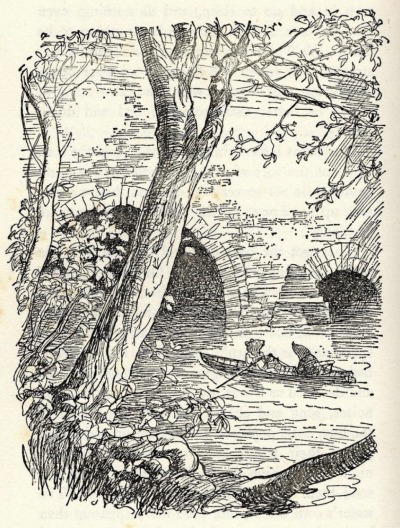
Ralph Waldo Emerson, from Considerations by the Way

02 May 2020

Aude.


Enlightenment is man's emergence from his self-imposed nonage. Nonage is the inability to use one's own understanding without another's guidance. This nonage is self-imposed if its cause lies not in lack of understanding but in indecision and lack of courage to use one's own mind without another's guidance. Dare to know! Sapere aude.  "Have the courage to use your own understanding," is therefore the motto of the enlightenment.

Laziness and cowardice are the reasons why such a large part of mankind gladly remain minors all their lives, long after nature has freed them from external guidance. They are the reasons why it is so easy for others to set themselves up as guardians. It is so comfortable to be a minor. If I have a book that thinks for me, a pastor who acts as my conscience, a physician who prescribes my diet, and so on--then I have no need to exert myself. I have no need to think, if only I can pay; others will take care of that disagreeable business for me. Those guardians who have kindly taken supervision upon themselves see to it that the overwhelming majority of mankind--among them the entire fair sex--should consider the step to maturity, not only as hard, but as extremely dangerous. First, these guardians make their domestic cattle stupid and carefully prevent the docile creatures from taking a single step without the leading-strings to which they have fastened them. Then they show them the danger that would threaten them if they should try to walk by themselves. Now this danger is really not very great; after stumbling a few times they would, at last, learn to walk. However, examples of such failures intimidate and generally discourage all further attempts.

Thus it is very difficult for the individual to work himself out of the nonage which has become almost second nature to him. He has even grown to like it, and is at first really incapable of using his own understanding because he has never been permitted to try it. Dogmas and formulas, these mechanical tools designed for reasonable use--or rather abuse--of his natural gifts, are the fetters of an everlasting nonage. The man who casts them off would make an uncertain leap over the narrowest ditch, because he is not used to such free movement. That is why there are only a few men who walk firmly, and who have emerged from nonage by cultivating their own minds.

It is more nearly possible, however, for the public to enlighten itself; indeed, if it is only given freedom, enlightenment is almost inevitable. There will always be a few independent thinkers, even among the self-appointed guardians of the multitude. Once such men have thrown off the yoke of nonage, they will spread about them the spirit of a reasonable appreciation of man's value and of his duty to think for himself. It is especially to be noted that the public which was earlier brought under the yoke by these men afterwards forces these very guardians to remain in submission, if it is so incited by some of its guardians who are themselves incapable of any enlightenment. That shows how pernicious it is to implant prejudices: they will eventually revenge themselves upon their authors or their authors' descendants. Therefore, a public can achieve enlightenment only slowly. A revolution may bring about the end of a personal despotism or of avaricious tyrannical oppression, but never a true reform of modes of thought. New prejudices will serve, in place of the old, as guide lines for the unthinking multitude.

Immanuel Kant

CONNECT

28 March 2020

Interest.


We are becoming a nation of thieves by trying to live at everyone else’s expense. We have lost our moral mooring and the Church is partially responsible by failing to uphold its beliefs. One of the 10 Commandments says, “Thou shall not steal.” Now I am fairly confident that God did not mean, “Thou shall not steal–unless you get a majority vote” ...

Do-gooders fail to realize that most good is not done in the name of good but done in the name of self-interest.  It is not from the benevolence of the butcher, the brewer, or the baker that we expect our dinner, but from their regard to their own interest.

Dr. Walter E. Williams, from American Contempt for Liberty

Dr. Tawni Hunt Ferrarini and Dr. Walter Williams discuss the United States Constitution and defending liberty in America ...


C-SPAN's In Depth with Dr. Williams ... HERE.