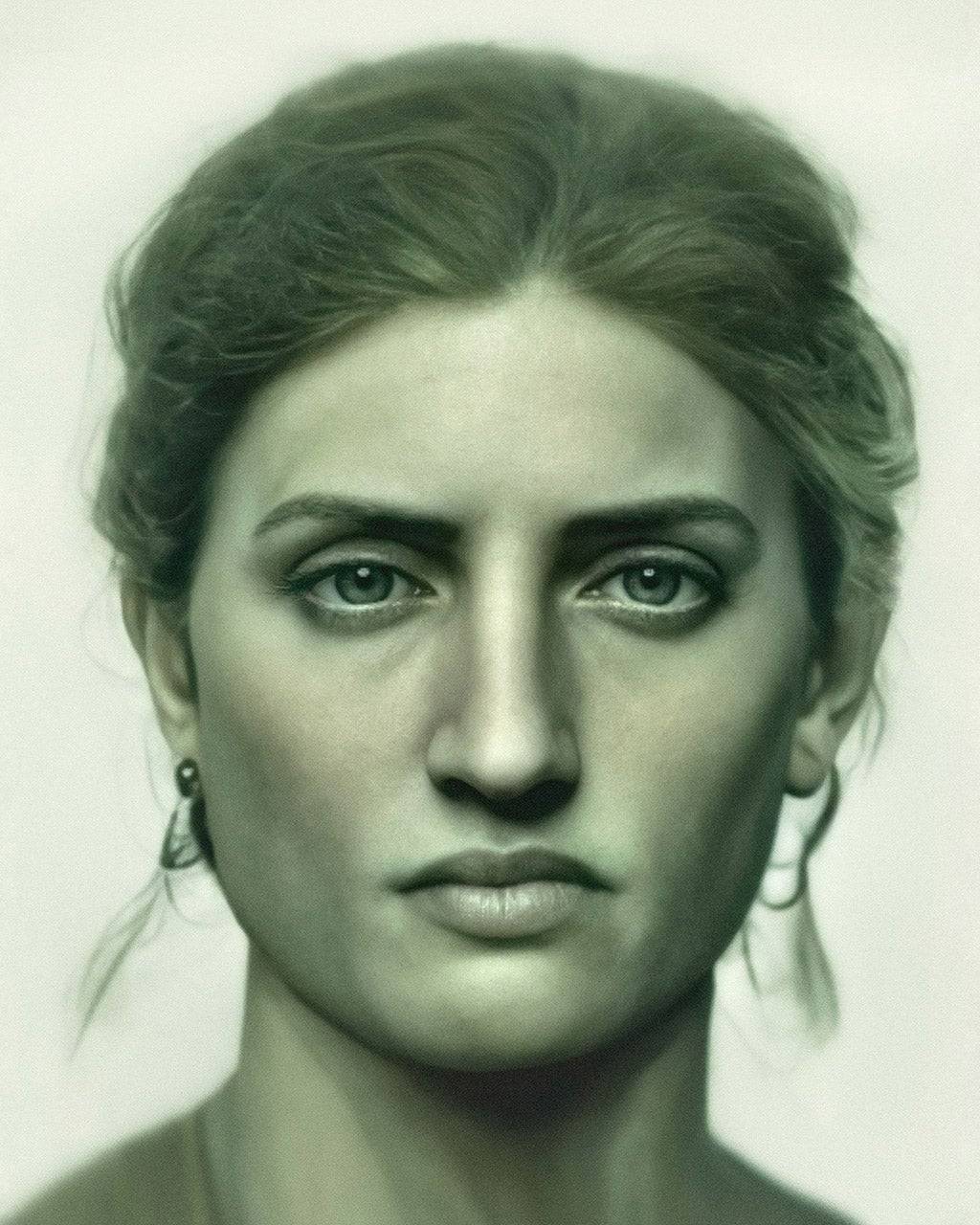
"I am not one who was born in the custody of wisdom. I am one who is fond of olden times and intense in quest of the sacred knowing of the ancients." Gustave Courbet
Showing posts with label Gatto. Show all posts

08 December 2024

Quirky.


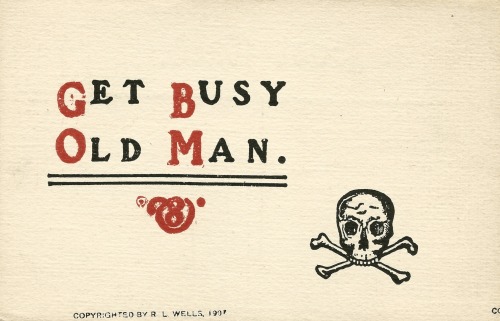
People who read too many books get quirky. We can't have too much eccentricity or it would bankrupt us. Market research [as well as curriculum and corporate standardized assessments - Ed.] depends on people behaving as if they were all alike.

05 May 2024

Own.


You either learn your way towards writing your own script in life, or you unwittingly become an actor in someone else’s script.

06 March 2024

Unique.

Whatever an education is, it should make you a unique individual, not a conformist; it should furnish you with an original spirit with which to tackle the big challenges of life; it should allow you to find values which will be your road map through life; it should make you spiritually rich, a person who loves whatever you are doing, wherever you are, whomever you are with; it should teach you what is important, how to live and how to die.

John Taylor Gatto, from Dumbing us Down: The Hidden Curriculum of Compulsory Schooling

21 December 2023

Quirky.

 Laurens, Faust, n/d


People who read too many books get quirky. We can't have too much eccentricity or it would bankrupt us. Market research depends on people behaving as if they were all alike.

John Taylor Gatto, from The Underground History of American Education: An Intimate Investigation Into the Prison of Modern Schooling

13 February 2023

Important.


On this day in 1635, Boston Public Latin School, the first public school in what is now the United States, was founded.

John Taylor Gatto, from Dumbing Us Down: The Hidden Curriculum of Compulsory Schooling ...
I've noticed a fascinating phenomenon in my thirty years of teaching: schools and schooling are increasingly irrelevant to the great enterprises of the planet. No one believes anymore that scientists are trained in science classes or politicians in civics classes or poets in English classes. The truth is that schools don't really teach anything except how to obey orders. This is a great mystery to me because thousands of humane, caring people work in schools as teachers and aides and administrators, but the abstract logic of the institution overwhelms their individual contributions. Although teachers to care and do work very, very hard, the institution is psychopathic -- it has no conscience. It rings a bell and the young man in the middle of writing a poem must close his notebook and move to a different cell where he must memorize that humans and monkeys derive from a common ancestor.

Whatever an education is, it should make you a unique individual, not a conformist; it should furnish you with an original spirit with which to tackle the big challenges; it should allow you to find values which will be your roadmap through life; it should make you spiritually rich, a person who loves whatever you are doing, wherever you are, whomever you are with; it should teach you what is important, how to live and how to die.

Independent study, community service, adventures and experience, large doses of privacy and solitude, a thousand different apprenticeships — the one-day variety or longer — these are all powerful, cheap, and effective ways to start a real reform of schooling. But no large-scale reform is ever going to work to repair our damaged children and our damaged society until we force open the idea of “school” to include family as the main engine of education. If we use schooling to break children away from parents — and make no mistake, that has been the central function of schools since John Cotton announced it as the purpose of the Bay Colony schools in 1650 and Horace Mann announced it as the purpose of Massachusetts schools in 1850 — we’re going to continue to have the horror show we have right now.

11 August 2021

Excellence.

Doisneau, Shy Kid with Glasses, 1956


I’ve come to believe that genius is an exceedingly common human quality, probably natural to most of us. I didn’t want to accept that notion — far from it: my own training in two elite universities taught me that intelligence and talent distributed themselves economically over a bell curve and that human destiny, because of those mathematical, seemingly irrefutable scientific facts, was as rigorously determined as John Calvin contended.

The trouble was that the unlikeliest kids kept demonstrating to me at random moments so many of the hallmarks of human excellence--insight, wisdom, justice, resourcefulness, courage, originality--that I became confused. They didn't do this often enough to make my teaching easy, but they did it often enough that I began to wonder, reluctantly, whether it was possible that being in school itself was what was dumbing them down. Was it possible I had been hired not to enlarge children's power, but to diminish it? That seemed crazy on the face of it, but slowly I began to realize that the bells and the confinement, the crazy sequences, the age-segregation, the lack of privacy, the constant surveillance, and all the rest of the national curriculum of schooling were designed exactly as if someone had set out to prevent children from learning how to think and act, to coax them into addiction and dependent behavior.

John Gatto, from Dumbing Us Down: The Hidden Curriculum of Compulsory Schooling

Crooked trees rule! -Ed.

21 July 2020

Trust.


The lesson of report cards, grades, and tests is that children should not trust themselves or their parents but should instead rely on the evaluation of certified officials. People need to be told what they are worth.

John Taylor Gatto, from Dumbing Us Down: The Hidden Curriculum of Compulsory Schooling

03 September 2019

Believe.


Call me Mr. Gatto, please. Twenty-six years ago, having nothing better to do at the time, I tried my hand at schoolteaching. The license I hold certifies that I am an instructor of English language and English literature, but that isn't what I do at all. I don't teach English, I teach school -- and I win awards doing it.

Teaching means different things in different places, but seven lessons are universally taught from Harlem to Hollywood Hills. They constitute a national curriculum you pay for in more ways than you can imagine, so you might as well know what it is. You are at liberty, of course, to regard these lessons any way you like, but believe me when I say I intend no irony in this presentation. These are the things I teach, these are the things you pay me to teach. Make of them what you will.

John Taylor Gatto

CONNECT

01 September 2019

Original.


I've noticed a fascinating phenomenon in my thirty years of teaching: schools and schooling are increasingly irrelevant to the great enterprises of the planet. No one believes anymore that scientists are trained in science classes or politicians in civics classes or poets in English classes. The truth is that schools don't really teach anything except how to obey orders. This is a great mystery to me because thousands of humane, caring people work in schools as teachers and aides and administrators, but the abstract logic of the institution overwhelms their individual contributions. Although teachers to care and do work very, very hard, the institution is psychopathic -- it has no conscience. It rings a bell and the young man in the middle of writing a poem must close his notebook and move to a different cell where he must memorize that humans and monkeys derive from a common ancestor.

Children learn what they live. Put kids in a class and they will live out their lives in an invisible cage, isolated from their chance at community; interrupt kids with bells and horns all the time and they will learn that nothing is important or worth finishing; ridicule them and they will retreat from human association; shame them and they will find a hundred ways to get even. The habits taught in large-scale organizations are deadly.

Whatever an education is, it should make you a unique individual, not a conformist; it should furnish you with an original spirit with which to tackle the big challenges; it should allow you to find values which will be your roadmap through life; it should make you spiritually rich, a person who loves whatever you are doing, wherever you are, whomever you are with; it should teach you what is important, how to live and how to die.

John Taylor Gatto, from Dumbing us Down: The Hidden Curriculum of Compulsory Schooling

30 August 2019

Obligation.


The obligation to amuse and instruct myself was entirely my own, and people who didn't know that were childish people, to be avoided if possible. Certainly not to be trusted.

John Taylor Gatto, from Dumbing Us Down: The Hidden Curriculum of Compulsory Schooling

14 July 2019

Individual.

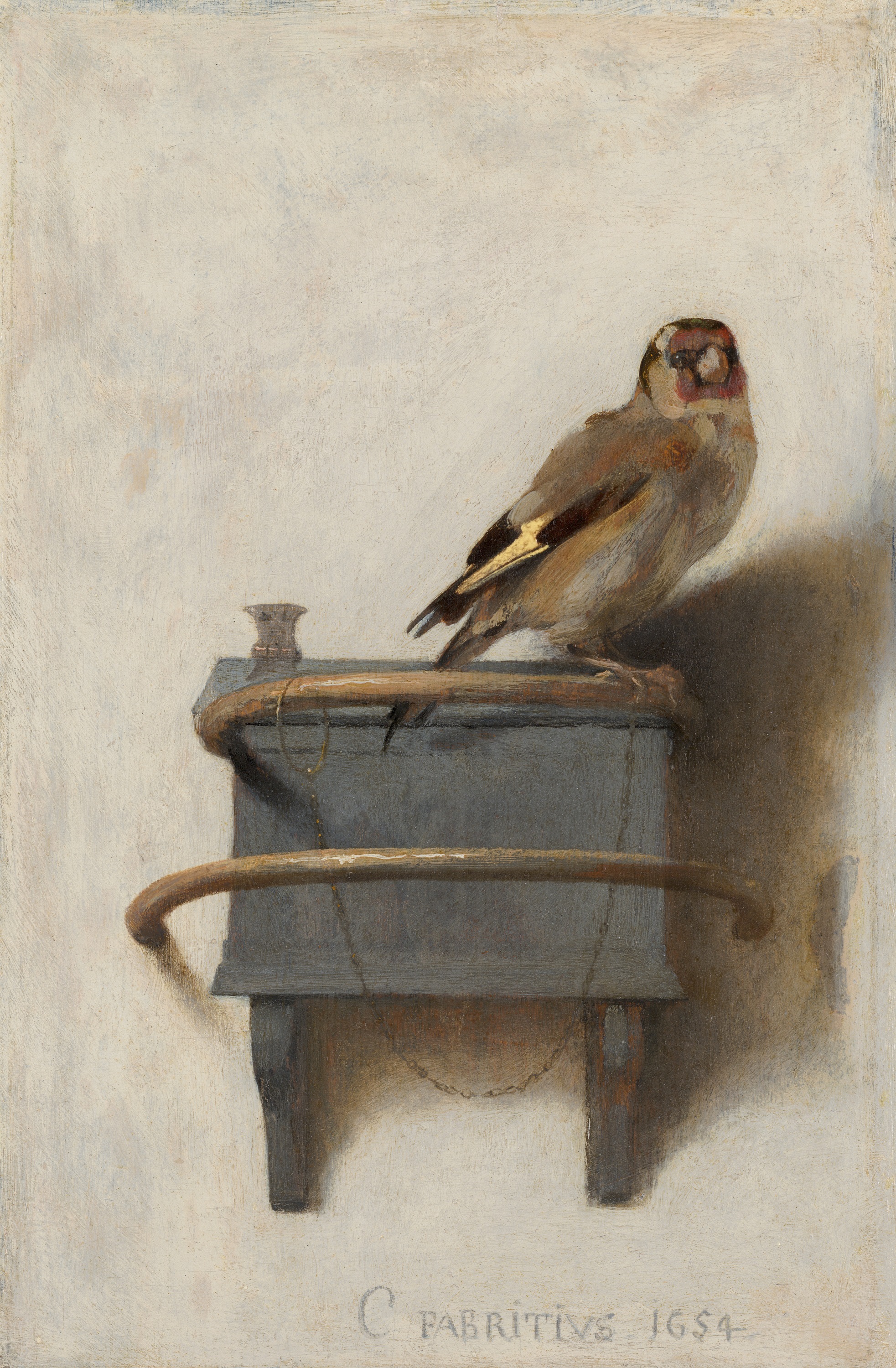
Fabritius, The Goldfinch, 1654


I've noticed a fascinating phenomenon in my thirty years of teaching: schools and schooling are increasingly irrelevant to the great enterprises of the planet. No one believes anymore that scientists are trained in science classes or politicians in civics classes or poets in English classes. The truth is that schools don't really teach anything except how to obey orders. This is a great mystery to me because thousands of humane, caring people work in schools as teachers and aides and administrators, but the abstract logic of the institution overwhelms their individual contributions. Although teachers to care and do work very, very hard, the institution is psychopathic -- it has no conscience. It rings a bell and the young man in the middle of writing a poem must close his notebook and move to a different cell where he must memorize that humans and monkeys derive from a common ancestor.

Mass schooling damages children. We don’t need any more of it. And under the guise that it is the same thing as education, it has been picking our pockets just as Socrates predicted it would thousands of years ago. One of the surest ways to recognize real education is by the fact that it doesn’t cost very much, doesn’t depend on expensive toys or gadgets. The experiences that produce it and the self-awareness that propels it are nearly free. It is hard to turn a dollar on education. But schooling is a wonderful hustle, getting sharper all the time.

Children learn what they live. Put kids in a class and they will live out their lives in an invisible cage, isolated from their chance at community; interrupt kids with bells and horns all the time and they will learn that nothing is important or worth finishing; ridicule them and they will retreat from human association; shame them and they will find a hundred ways to get even. The habits taught in large-scale organizations are deadly.  Good students wait for a teacher to tell them what to do. This is the most important lesson of them all: we must wait for other people, better trained than ourselves, to make the meanings of our lives. The expert makes all the important choices; only I, the teacher, can determine what my kids must study, or rather, only the people who pay me can make those decisions, which I then enforce.  When you take the free will out of education, that turns it into schooling.  That seemed crazy on the face of it, but slowly I began to realize that the bells and the confinement, the crazy sequences, the age-segregation, the lack of privacy, the constant surveillance, and all the rest of the national curriculum of schooling were designed exactly as if someone had set out to prevent children from learning how to think and act, to coax them into addiction and dependent behavior.

What, after all this time, is the purpose of mass schooling supposed to be? Reading, writing, and arithmetic can’t be the answer, because properly approached those things take less than a hundred hours to transmit — and we have abundant evidence that each is readily self-taught in the right setting and time. Why, then, are we locking kids up in an involuntary network with strangers for twelve years? Surely not so a few of them can get rich? Even if it worked that way, and I doubt that it does, why wouldn’t any sane community look on such an education as positively wrong? It divides and classifies people, demanding that they compulsively compete with each other, and publicly labels the losers by literally de-grading them, identifying them as “low-class” material. And the bottom line for the winners is that they can buy more stuff! I don’t believe that anyone who thinks about that feels comfortable with such a silly conclusion. I can’t help feeling that if we could only answer the question of what it is that we want from these kids we lock up, we would suddenly see where we took a wrong turn. I have enough faith in American imagination and resourcefulness to believe that at that point we’d come up with a better way — in fact, a whole supermarket of better ways.  

Regimentation, methodization, systematization, standardization, organization, coordination, disciplined arrangements, conformity -- these things are at the very heart of our national state policies, and are the poison that has killed our families and left individual survivors in a numbed, angry, nearly hysterical condition.  Private time is absolutely essential if a private identity is going to develop, and private time is equally essential to the development of a code of private values, without which we aren’t really individuals at all.  Trust in families and in neighborhoods and individuals to make sense of the important question, "What is education for?" If some of them answer differently from what you might prefer, that's really not your business, and it shouldn't be your problem. Our type of schooling has deliberately concealed the fact that such a question must be framed and not taken for granted if anything beyond a mockery of democracy is to be nurtured. It is illegitimate to have an expert answer that question for you.

All global ambitions are based on a definition of productivity and the good life so alienated from common human reality that I am convinced it is wrong and that most people would agree with me if they could perceive an alternative. We might be able to see that if we regained a hold on a philosophy that locates meaning where meaning is genuinely to be found — in families, in friends, in the passage of seasons, in nature, in simple ceremonies and rituals, in curiosity, generosity, compassion, and service to others, in a decent independence and privacy, in all the free and inexpensive things out of which real families, real friends, and real communities are built — then we would be so self-sufficient we would not even need the material “sufficiency” which our global “experts” are so insistent we be concerned about.

Whatever an education is, it should make you a unique individual, not a conformist; it should furnish you with an original spirit with which to tackle the big challenges; it should allow you to find values which will be your road map through life; it should make you spiritually rich, a person who loves whatever you are doing, wherever you are, whomever you are with; it should teach you what is important, how to live and how to die.  I've concluded that genius is as common as dirt. We suppress genius because we haven't yet figured out how to manage a population of educated men and women.  I urge you to examine in your own mind the assumptions which must lay behind using the police power to insist that once-sovereign spirits have no choice but to submit to being schooled by strangers.  The solution, I think, is simple and glorious. Let them manage themselves.  People are less than whole unless they gather themselves voluntarily into groups of souls in harmony. Gathering themselves to pursue individual, family, and community dreams consistent with their private humanity is what makes them whole; only slaves are gathered by others.  Free will allows infinite numbers of human stories to be written in which a personal you is the main character. The sciences, on the other hand, hard or soft, assume that purpose and free will are hogwash; given enough data, everything will be seen as explainable, predetermined, and predictable.

I don’t think we’ll get rid of schools any time soon, certainly not in my lifetime, but if we’re going to change what’s rapidly becoming a disaster of ignorance, we need to realize that the institution “schools” very well, but it does not “educate”; that’s inherent in the design of the thing. It’s not the fault of bad teachers or too little money spent.  People who read too many books get quirky. We can't have too much eccentricity or it would bankrupt us. Market research depends on people behaving as if they were all alike.  It's like a malicious person lifting a photograph from the developing chemicals too early, and then pronouncing the photographer incompetent.  

I feel ashamed that so many of us cannot imagine a better way to do things than locking children up all day in cells instead of letting them grow up knowing their families, mingling with the world, assuming real obligations, striving to be independent and self-reliant and free.

John Taylor Gatto, from Dumbing Us Down: The Hidden Curriculum of Compulsory Schooling

22 October 2018

Themselves.


I've concluded that genius is as common as dirt. We suppress genius because we haven't yet figured out how to manage a population of educated men and women. The solution, I think, is simple and glorious. Let them manage themselves.

John Taylor Gatto

CONNECT

05 January 2018

Free.

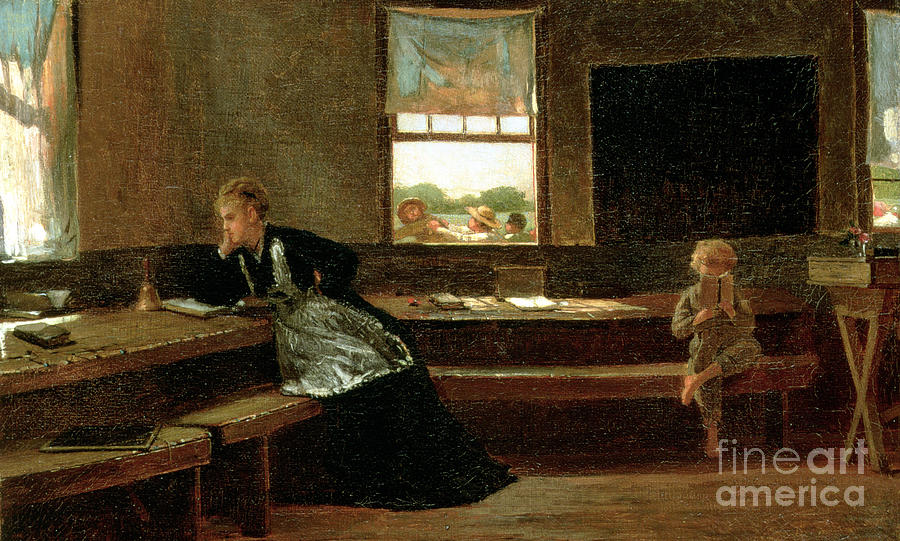
Homer, Noon Recess, 1873


I've noticed a fascinating phenomenon in my thirty years of teaching: schools and schooling are increasingly irrelevant to the great enterprises of the planet. No one believes anymore that scientists are trained in science classes or politicians in civics classes or poets in English classes. The truth is that schools don't really teach anything except how to obey orders. This is a great mystery to me because thousands of humane, caring people work in schools as teachers and aides and administrators, but the abstract logic of the institution overwhelms their individual contributions. Although teachers to care and do work very, very hard, the institution is psychopathic -- it has no conscience. It rings a bell and the young man in the middle of writing a poem must close his notebook and move to a different cell where he must memorize that humans and monkeys derive from a common ancestor.

Whatever an education is, it should make you a unique individual, not a conformist; it should furnish you with an original spirit with which to tackle the big challenges; it should allow you to find values which will be your roadmap through life; it should make you spiritually rich, a person who loves whatever you are doing, wherever you are, whomever you are with; it should teach you what is important, how to live and how to die.

Children learn what they live. Put kids in a class and they will live out their lives in an invisible cage, isolated from their chance at community; interrupt kids with bells and horns all the time and they will learn that nothing is important or worth finishing; ridicule them and they will retreat from human association; shame them and they will find a hundred ways to get even. The habits taught in large-scale organizations are deadly.

I feel ashamed that so many of us cannot imagine a better way to do things than locking children up all day in cells instead of letting them grow up knowing their families, mingling with the world, assuming real obligations, striving to be independent and self-reliant and free.

John Taylor Gatto, from Dumbing Us Down

10 February 2017

Experiences.


Modern schooling is virtually experience-free. Its victims are widely known for their inability to do anything practical, or to possess even fundamental useful knowledge such as food production skills, or distances between major population centers, or the relation of principal nations to one another, or the history and nature of important institutions.

Experience-light individuals have been avoided throughout history for dangerous innocence and awful lack of self-insight; it appears impossible to comprehend large abstractions like “democracy” and “justice” without the feedback of actual experience with their counterparts in operation.

What we are as individuals – and the fascination we hold for other people as friends and even as employees – depends upon our stock of experiences. When you reflect on how much of our learning comes from emulation, from imitating people we watch, it’s easy to see how popular wisdom like “you are known by the company you keep” has developed. It also isn’t hard to see how limited opportunities for emulation are for the inexperienced.

Jahn Taylor Gatto

26 June 2016

Now.


Only one nation refused to accept the psychology of submission. The Chechens never sought to please, to ingratiate themselves with the bosses; their attitude was always haughty and indeed openly hostile.... And here is the extraordinary thing—everyone was afraid of them. No one could stop them from living as they did. The regime which had ruled the land for thirty years could not force them to respect its laws. 
Aleksandr Solzhenitsyn, The Gulag Archipelago
The history of the Hmong yields several lessons that anyone who deals with them might do well to remember. Among the most obvious are that the Hmong do not like to take orders; that they do not like to lose; that they would rather flee, fight, or die than surrender; that they are not intimidated by being outnumbered, that they are rarely persuaded that the customs of other cultures, even those more powerful than their own are superior; that they are capable of getting very angry....Those who have tried to defeat, deceive, govern, regulate, constrain, assimilate, or patronize the Hmong have, as a rule, disliked them intensely.  
Anne Fadiman, The Spirit Catches You and You Fall Down

If they mean to have a war, let it begin here — Captain John Parker, commanding the American militia against the British. Said at first light, Lexington, Massachusetts, April 19, 1775

I see two ghosts appear out of the mist on the morning river that runs into our green future, each wraith beckons me follow him down a different path. One I recognize by his arrogant bearing as the imperial spirit of Major General Edward Braddock calling all of us to follow him to the end of history just across the river.

Braddock is a bold man, proud, indifferent to fear. He scorns danger because to him, all answers are already known; he demands to be our shepherd on this last regression to the royal destiny we escaped three lifetimes ago. If we go with him, the whole world will follow, and the British empire reconnected will be invincible. Come home, says Braddock, you are children who cannot care for yourselves properly. We shall give you a secure place in the bell-curve pyramid of State. Together we shall witness the final evolution of the favored races, though many will be unable to participate in the triumph. Still, there will be for them the satisfaction of serving the fortunate who have inherited the earth at the end of history.

The other ghost is a familiar one, too. A tall, muscular Virginian, just as compelling as Braddock but without his haughtiness, a man dressed in the browns and greens of nature, a brace of pistols at his waist, on a horse he calls Blueskin. He stands straight as an arrow. His powerful presence, in combination with the delicate feet of a dancer, mark him unmistakably as Major George Washington. As a boy he learned the hard things: duty, piety, courage, self-reliance, to have a mind of his own, to refuse to accept the psychology of submission. His head was stocked with Cato, Fielding, Euclid, Newton, surveying, Caesar, Tacitus, the Testaments, horsemanship, dancing, how to tell a bawdy joke, how to comfort the weak, how to brace the strong, how to endure hardship, how to give men a reason to die, or one to live.
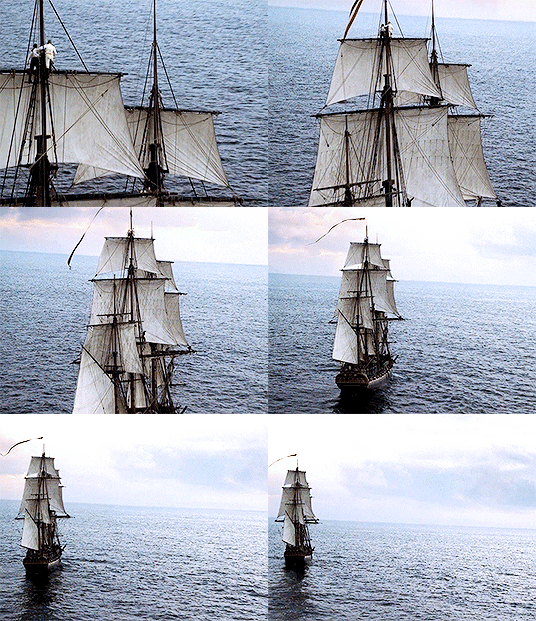
Once this same colonial frontiersman rode in a dream together with the English general, across an angry green river they rode into the deeps of the further forest. Braddock and his army died on the Monongahela that day, but this American lived because he had learned to think for himself. The men who followed Washington lived, too, because the leader they chose was not a function of some greater abstraction. The loyalty they gave him was freely given, not imposed by intimidation or trickery.

Washington’s greatest mistake in judgment, I think, was remembering Braddock’s army as the most brilliant thing his eyes had ever seen, for surely that must have been his own reflection in the mirror. In that first moment after he refused to become King George I of America, brilliance never lived inside a more brilliant human vehicle. Behind the heroic persona of Washington a real hero reposed. America is his legacy to us. Because of Washington we owe nothing to empires, not even to the one building in America today which seeks a reunion with Great Britain in order to dominate world affairs. The American people owe empires the same rude salute we gave Britain’s at Bunker Hill, Saratoga, and Yorktown.
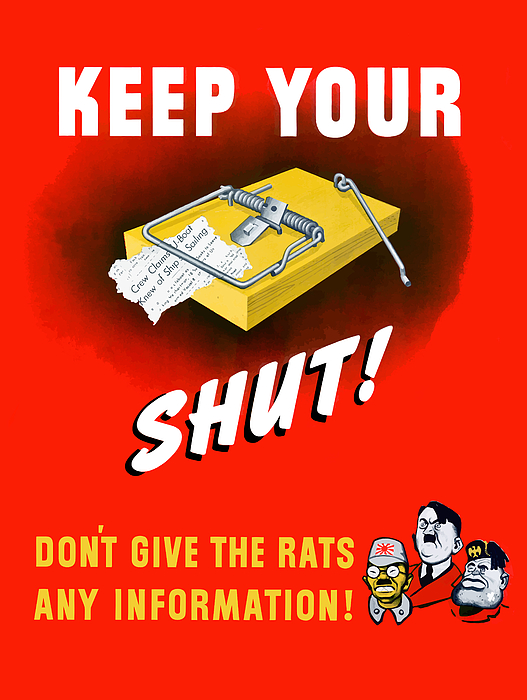
John Pike, a defense analyst with globalsecurity.org, a policy think tank based in Alexandria, Virginia was quoted on this maker of empires in the Los Angeles Times. After noting the Pentagon’s new expansions into Central Asia and Eastern Europe, he remarked that the United States military now spans the planet in a way unprecedented in history. "If you want to talk about suns never setting on empires, you know, the Brits had nothing compared to this," said Pike.

Time to take our schools back. If they mean to have a war, let it begin now.

John Taylor Gatto, from the Epilogue to An Underground History of American Education

CONNECT

Thank You, Jessica.