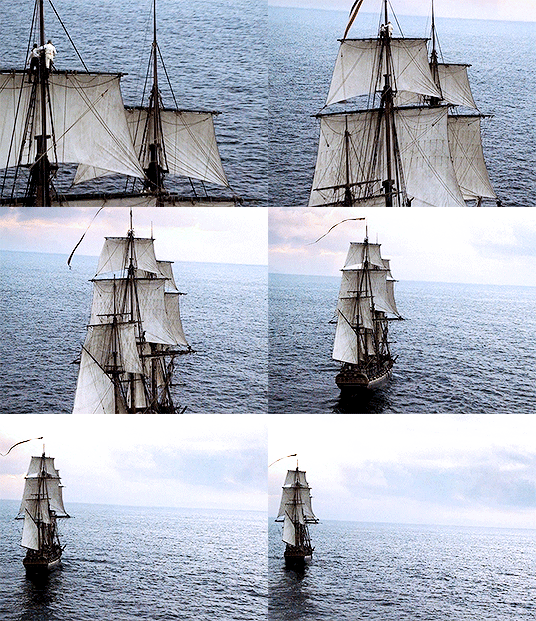
"I am not one who was born in the custody of wisdom. I am one who is fond of olden times and intense in quest of the sacred knowing of the ancients." Gustave Courbet
Showing posts with label free will. Show all posts

27 July 2026

Learned.


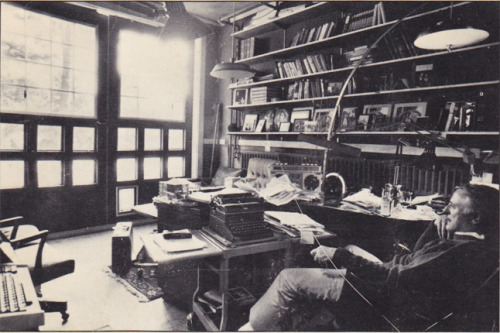
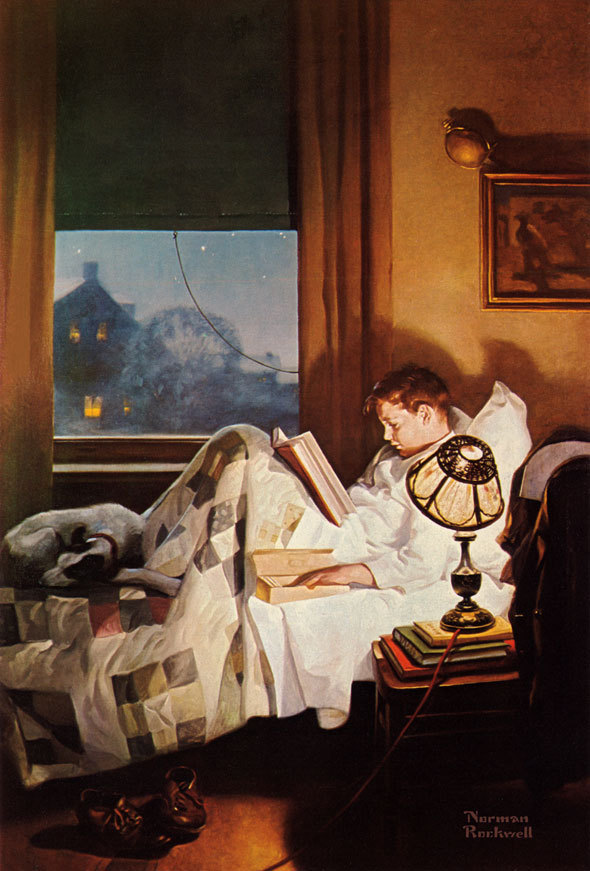
When I was three my mother snuck me in and out of movies two or three times a week. My first film was Lon Chaney in The Hunchback of Notre Dame. I suffered permanent curvature of the spine and of my imagination that day a long time ago in 1923. From that hour on, I knew a kindred and wonderfully grotesque compatriot of the dark when I saw one. I ran off to see all the Chaney films again and again to be deliciously frightened. The Phantom of the Opera stood astride my life with his scarlet cape. And when it wasn't the Phantom it was the terrible hand that gestured from behind the bookcase in The Cat and the Canary, bidding me to come find more darkness hid in books. 

I was in love, then, with monsters and skeletons and circuses and carnivals and dinosaurs and, at last, the red planet, Mars. 

From these primitive bricks I have built a life and a career. By my staying in love with all of these amazing things, all of the good things in my existence have come about. 

In other words, I was not embarrassed at circuses. Some people are. Circuses are loud, vulgar, and smell in the sun. By the time many people are fourteen or fifteen, they have been divested of their loves, their ancient and intuitive tastes, one by one, until when they reach maturity there is no fun left, no zest, no gusto, no flavor. Others have criticized, and they have criticized themselves, into embarrassment. When the circus pulls in at five of a dark cold summer morn, and the calliope sounds, they do not rise and run, they turn in their sleep, and life passes by.

I did rise and run. I learned that I was right and everyone else wrong when I was nine. Buck Rogers arrived on scene that year, and it was instant love. I collected the daily strips, and was madness maddened by them. Friends criticized. Friends made fun. I tore up the Buck Rogers strips. For a month I walked through my fourth-grade classes, stunned and empty. One day I burst into tears, wondering what devastation had happened to me. The answer was: Buck Rogers. He was gone, and life simply wasn't worth living. The next thought was: Those are not my friends, the ones who got me to tear the strips apart and so tear my own life down the middle; they are my enemies.

Happy Birthday, Hilaire Belloc


Now there is discoverable in man, freewill. His actions are of moral value to him if they are undertaken upon his own initiative; not if they are undertaken under compulsion. Therefore the use of choice is necessary to human dignity. A man deprived of choice is by that the less a man, and this we all show through the repugnance excited in us by unauthorized restraint and subjection, through coercion rather than authority, to another’s will. We cannot do good, or even evil, unless we do it freely; and if we admit the idea of good at all in human society, freedom must be its accompaniment.

Hilaire Belloc, born on this day in 1870, from "An Essay on the Restoration of Property"

11 July 2026

Mind-Forg'd.

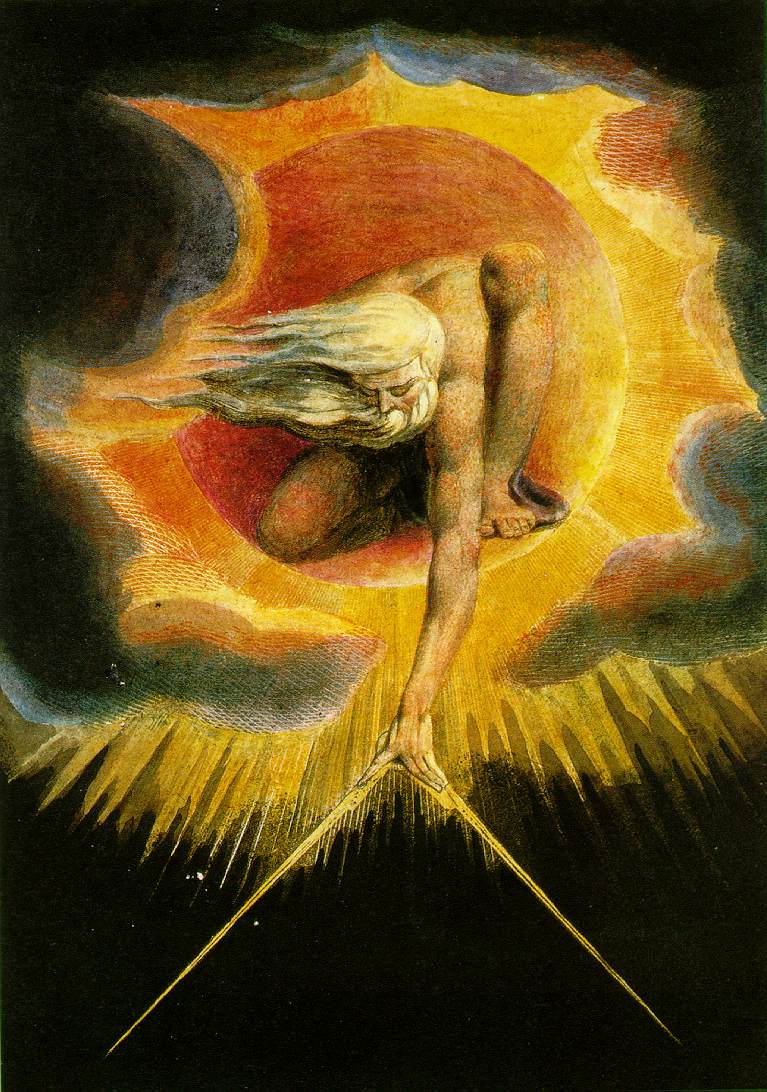
Blake, The Ancient of Days, 1794


LONDON

I wander thro' each charter'd street,
Near where the charter'd Thames does flow. 
And mark in every face I meet
Marks of weakness, marks of woe.

In every cry of every Man,
In every Infants cry of fear,
In every voice: in every ban,
The mind-forg'd manacles I hear 

How the Chimney-sweepers cry
Every blackning Church appalls, 
And the hapless Soldiers sigh
Runs in blood down Palace walls 

But most thro' midnight streets I hear
How the youthful Harlots curse
Blasts the new-born Infants tear 
And blights with plagues the Marriage hearse 

William Blake

12 December 2024

Aspires.

Schlesinger, Portrait of Hegel (detail), 1831


A will which resolves on nothing is not an actual will; the characterless man can never resolve on anything. The reason for such indecision may also lie in an over-refined sensibility which knows that, in determining something, it enters the realm of finitude, imposing a limit on itself and relinquishing infinity; yet it does not wish to renounce the totality to which it intends. Such a disposition is dead, even if its aspiration is to be beautiful. “Whoever aspires to great things,” says Goethe, “must be able to limit himself.” Only by making resolutions can the human being enter actuality, however painful the process may be; for inertia would rather not emerge from that inward brooding in which it reserves a universal possibility for itself. But possibility is not yet actuality. The will which is sure of itself does not therefore lose itself in what it determines.

Georg Wilhelm Friederich Hegel from Elements of the Philosophy of Right

17 July 2023

Freewill.


Now there is discoverable in man, freewill. His actions are of moral value to him if they are undertaken upon his own initiative; not if they are undertaken under compulsion. Therefore the use of choice is necessary to human dignity. A man deprived of choice is by that the less a man, and this we all show through the repugnance excited in us by unauthorized restraint and subjection, through coercion rather than authority, to another’s will. We cannot do good, or even evil, unless we do it freely; and if we admit the idea of good at all in human society, freedom must be its accompaniment.

06 June 2021

Stability.


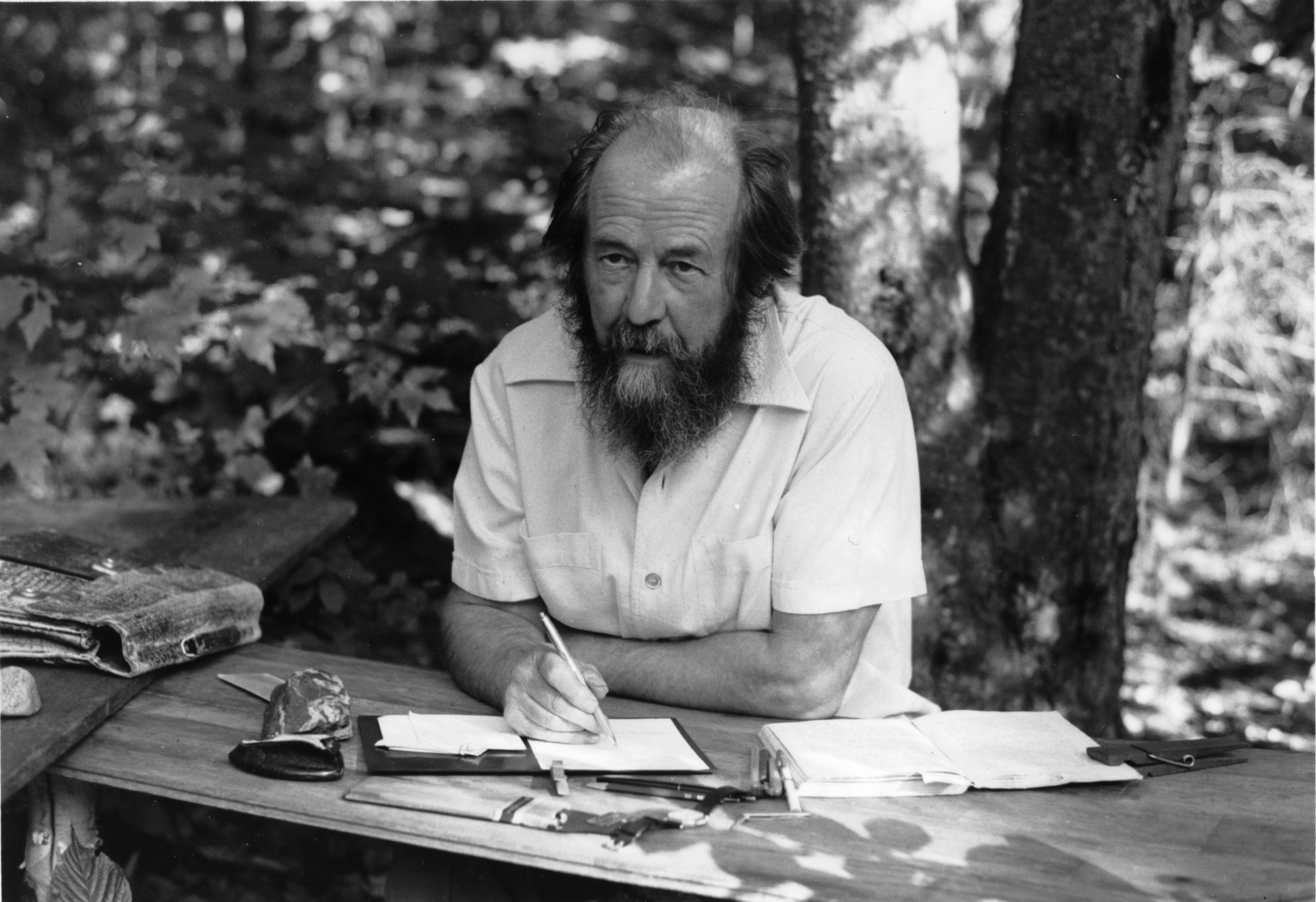
No, all hope cannot be pinned on science, technology, or economic growth. The victory of technological civilization has also instilled in us a spiritual insecurity. Its gifts enrich, but enslave us as well. All is interests, we must not neglect our interests, all is a struggle for material things; but an inner voice tells us that we have lost something pure, elevated, and fragile. We have ceased to see the purpose.

It is up to us to stop seeing Progress (which cannot be stopped by anyone or anything) as a stream of unlimited blessings, and to view it rather as a gift from on high, sent down for an extremely intricate trial of our free will.

A complex balancing act thus arises before the West. While maintaining full respect for the entire precious pluralism of world cultures and for their search for distinct social solutions, the West cannot at the same time lose sight of its own values, its historically unique stability of civic life under the rule of law—a hard-won stability which grants independence and space to every private citizen.

Aleksandr Solzhenitsyn, from his address to the International Academy of Philosophy, Liechtenstein, 1993

04 June 2021

Exluded.


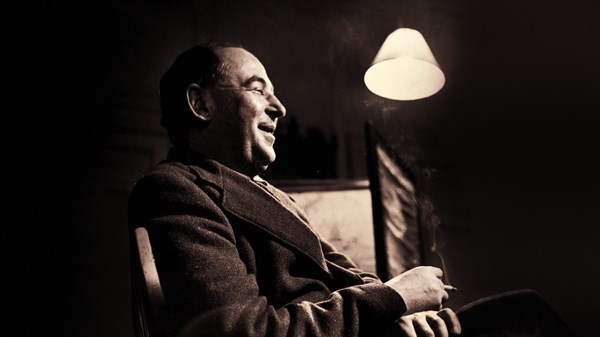
Try to exclude the possibility of suffering which the order of nature and the existence of free-wills involve, and you find that you have excluded life itself.

C.S. Lewis, from The Problem of Pain

Worth.


God created things which had free will. That means creatures which can go wrong or right. Some people think they can imagine a creature which was free but had no possibility of going wrong, but I can't. If a thing is free to be good it's also free to be bad. And free will is what has made evil possible. Why, then, did God give them free will? Because free will, though it makes evil possible, is also the only thing that makes possible any love or goodness or joy worth having. A world of automata -- of creatures that worked like machines -- would hardly be worth creating. The happiness which God designs for His higher creatures is the happiness of being freely, voluntarily united to Him and to each other in an ecstasy of love and delight compared with which the most rapturous love between a man and a woman on this earth is mere milk and water. And for that they've got to be free.

Of course God knew what would happen if they used their freedom the wrong way: apparently, He thought it worth the risk. If God thinks this state of war in the universe a price worth paying for free will -- that is, for making a real world in which creatures can do real good or harm and something of real importance can happen, instead of a toy world which only moves when He pulls the strings -- then we may take it it is worth paying.

C.S. Lewis, from The Case for Christianity

Many.


Free will does not mean one will, but many wills conflicting in one man. Freedom cannot be conceived simply.

Flannery O'Connor, from Wise Blood

Since.


According to most philosophers, God in making the world enslaved it. According to Christianity, in making it, He set it free. God had written, not so much a poem, but rather a play; a play he had planned as perfect, but which had necessarily been left to human actors and stage-managers, who had since made a great mess of it.

G.K. Chesterton, from Orthodoxy

Figures.


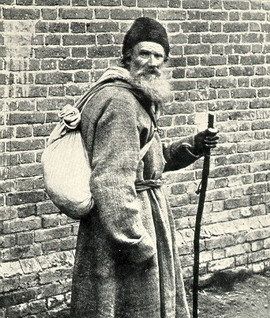
What does it mean that thirty thousand men, not athletes but rather weak and ordinary people, have subdued two hundred million vigorous, clever, capable, and freedom-loving people? Do not the figures make it clear that it is not the English who have enslaved the Indians, but the Indians who have enslaved themselves?

Leo Tolstoy

Construe.


No wonder, then, if the entrenched, secretly smoldering emotions of revenge and hatred put this belief to their own use and, in fact, do not defend any belief more passionately than that the strong are free to be weak, and the birds of prey are free to be lambs: – in this way, they gain the right to make the birds of prey responsible for being birds of prey.  When the oppressed, the downtrodden, the violated say to each other with the vindictive cunning of powerlessness: "Let us be different from evil people, let us be good! And a good person is anyone who does not rape, does not harm anyone, who does not attack, does not retaliate, who leaves the taking of revenge to God, who keeps hidden as we do, avoids all evil and asks little from life in general, like us who are patient, humble and upright" – this means, if heard coolly and impartially, nothing more than: "We weak people are just weak; it is good to do nothing for which we are not strong enough" – but this grim state of affairs, this cleverness of the lowest rank which even insects possess (which play dead, in order not to "do too much" when in great danger), has, thanks to the counterfeiting and self- deception of powerlessness, clothed itself in the finery of self-denying, quiet, patient virtue, as though the weakness of the weak were itself – I mean its essence, its effect, its whole unique, unavoidable, irredeemable reality – a voluntary achievement, something wanted, chosen, a deed, an accomplishment. This type of man needs to believe in an unbiased "subject" with freedom of choice, because he has an instinct of self-preservation and self-affirmation in which every lie is sanctified. The reason the subject (or, as we more colloquially say, the soul) has been, until now, the best doctrine on earth, is perhaps because it facilitated that sublime self- deception whereby the majority of the dying, the weak and the oppressed of every kind could construe weakness itself as freedom, and their particular mode of existence as an accomplishment.

Friedrich Nietzsche

01 June 2021

Accompaniment.


Now there is discoverable in man, freewill. His actions are of moral value to him if they are undertaken upon his own initiative; not if they are undertaken under compulsion. Therefore the use of choice is necessary to human dignity. A man deprived of choice is by that the less a man, and this we all show through the repugnance excited in us by unauthorized restraint and subjection, through coercion rather than authority, to another’s will. We cannot do good, or even evil, unless we do it freely; and if we admit the idea of good at all in human society, freedom must be its accompaniment.

Hilaire Belloc, "An Essay on the Restoration of Property"

30 May 2021

Worth.


If a thing is free to be good it is also free to be bad. And free will is what has made evil possible. Why, then, did God give them free will? Because free will, though it makes evil possible, is also the only thing that makes possible any love or goodness or joy worth having. A world of automata--of creatures that worked like machines--would hardly be worth creating. The happiness which God designs for His higher creatures is the happiness of being freely, voluntarily united to Him and to each other in an ecstasy of love and delight compared with which the most rapturous love between a man and a woman on this earth is mere milk and water. And for that they must be free.

C.S. Lewis, from Mere Christianity

Freedom.


Where the mind is without fear and the head is held high;
Where knowledge is free;
Where the world has not been broken up into fragments by narrow domestic walls;
Where words come out from the depth of truth;
Where tireless striving stretches its arms towards perfection;
Where the clear stream of reason has not lost its way into the dreary desert sand of dead habit;
Where the mind is led forward by thee into ever-widening thought and action–
Into that heaven of freedom, my Father, let my country awake.

Rabindranath Tagore

Self-choice.


There are only two kinds of people in the end: those who say to God, "Thy will be done," and those to whom God says, in the end, "Thy will be done." All that are in Hell, choose it. Without that self-choice there could be no Hell. No soul that seriously and constantly desires joy will ever miss it. Those who seek find. To those who knock, it is opened.

C.S. Lewis, from The Great Divorce

29 May 2021

Pilgrimage.


I believe that the State will soon be able to take all my work of this sort out of my hands, and then I shall be no better a patriot than my fellow-countrymen. Seen from a lower point of view, the Constitution, with all its faults, is very good; the law and the courts are very respectable; even this State and this American government are, in many respects, very admirable, and rare things, to be thankful for, such as a great many have described them; but seen from a point of view a little higher, they are what I have described them; seen from a higher still, and the highest, who shall say what they are, or that they are worth looking at or thinking of at all?

However, the government does not concern me much, and I shall bestow the fewest possible thoughts on it. It is not many moments that I live under a government, even in this world. If a man is thought-free, fancy-free, imagination-free, that which is not never for a long time appearing to be to him, unwise rulers or reformers cannot fatally interrupt him.

I know that most men think differently from myself; but those whose lives are by profession devoted to the study of these or kindred subjects content me as little as any. Statesmen and legislators, standing so completely within the institution, never distinctly and nakedly behold it. They speak of moving society, but have no resting-place without it. They may be men of a certain experience and discrimination, and have no doubt invented ingenious and even useful systems, for which we sincerely thank them; but all their wit and usefulness lie within certain not very wide limits. They are wont to forget that the world is not governed by policy and expediency. Webster never goes behind government, and so cannot speak with authority about it. His words are wisdom to those legislators who contemplate no essential reform in the existing government; but for thinkers, and those who legislate for all time, he never once glances at the subject. I know of those whose serene and wise speculations on this theme would soon reveal the limits of his mind's range and hospitality. Yet, compared with the cheap professions of most reformers, and the still cheaper wisdom and eloquence of politicians in general, his are almost the only sensible and valuable words, and we thank Heaven for him. Comparatively, he is always strong, original, and, above all, practical. Still, his quality is not wisdom, but prudence. The lawyer's truth is not Truth, but consistency or a consistent expediency. Truth is always in harmony with herself, and is not concerned chiefly to reveal the justice that may consist with wrong-doing. He well deserves to be called, as he has been called, the Defender of the Constitution. There are really no blows to be given by him but defensive ones. He is not a leader, but a follower. His leaders are the men of '87- "I have never made an effort," he says, "and never propose to make an effort; I have never countenanced an effort, and never mean to countenance an effort, to disturb the arrangement as originally made, by which the various States came into the Union." Still thinking of the sanction which the Constitution gives to slavery, he says, "Because it was a part of the original compact- let it stand." Notwithstanding his special acuteness and ability, he is unable to take a fact out of its merely political relations, and behold it as it lies absolutely to be disposed of by the intellect- what, for instance, it behooves a man to do here in America today with regard to slavery- but ventures, or is driven, to make some such desperate answer as the following, while professing to speak absolutely, and as a private man- from which what new and singular code of social duties might be inferred? "The manner," says he, "in which the governments of those States where slavery exists are to regulate it is for their own consideration, under their responsibility to their constituents, to the general laws of propriety, humanity, and justice, and to God. Associations formed elsewhere, springing from a feeling of humanity, or any other cause, have nothing whatever to do with it. They have never received any encouragement from me, and they never will."

They who know of no purer sources of truth, who have traced up its stream no higher, stand, and wisely stand, by the Bible and the Constitution, and drink at it there with reverence and humility; but they who behold where it comes trickling into this lake or that pool, gird up their loins once more, and continue their pilgrimage toward its fountain-head ...

Can there not be a government in which majorities do not virtually decide right and wrong, but conscience?- in which majorities decide only those questions to which the rule of expediency is applicable? Must the citizen ever for a moment, or in the least degree, resign his conscience to the legislation? Why has every man a conscience, then? I think that we should be men first, and subjects afterward. It is not desirable to cultivate a respect for the law, so much as for the right. The only obligation which I have a right to assume is to do at any time what I think right.

Henry David Thoreau, from "Civil Disobedience"

13 October 2020

Essential.


Freethinkers are those who are willing to use their minds without prejudice and without fearing to understand things that clash with their own customs, privileges, or beliefs. This state of mind is not common, but it is essential for right thinking.
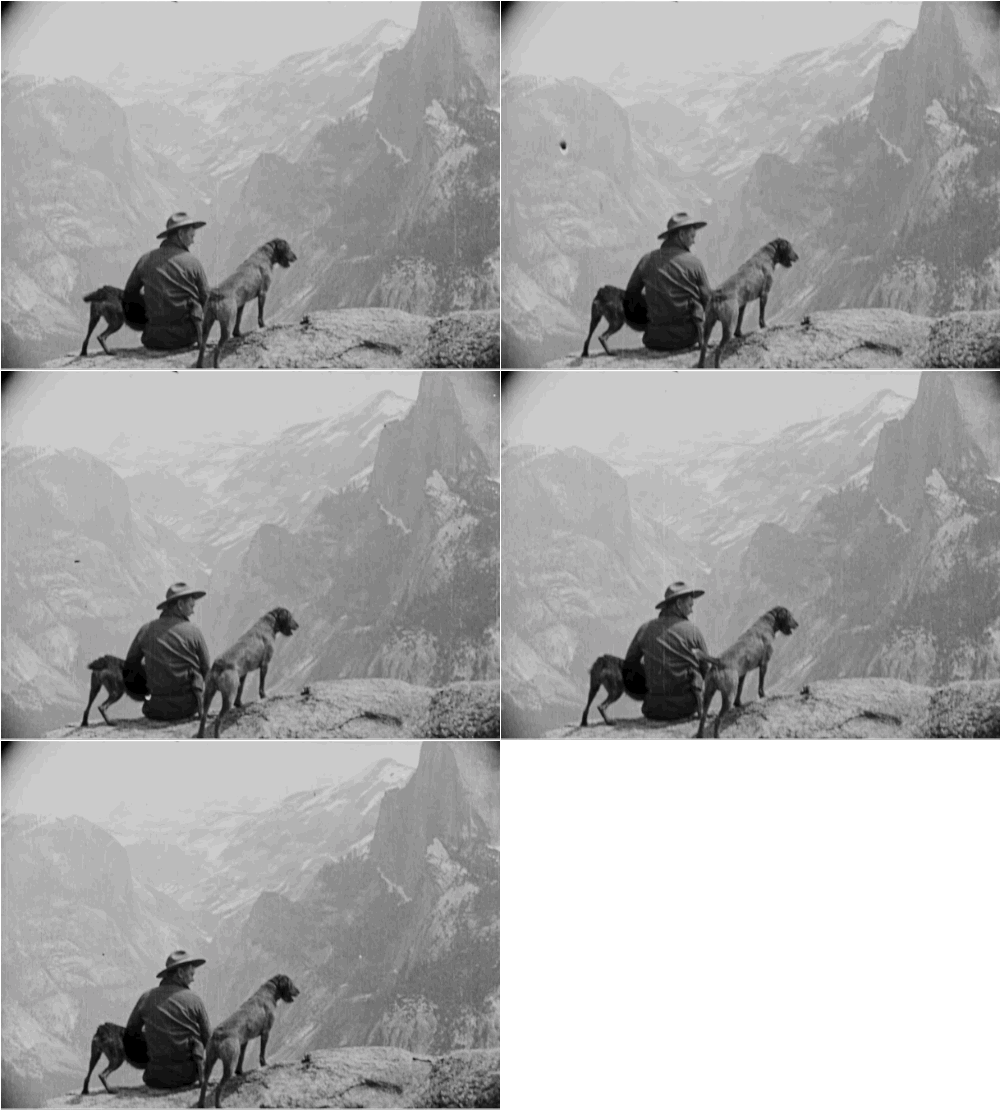
Leo Tolstoy