"I am not one who was born in the custody of wisdom. I am one who is fond of olden times and intense in quest of the sacred knowing of the ancients." Gustave Courbet
Showing posts with label economics. Show all posts

27 February 2024

Just.


Leopold Kohr and modesty ...
In medieval philosophy, temperament referred to the combination of qualities in a certain proportion, determining the characteristic nature of something. So in physiology one sought to balance the four cardinal humors of the body—the sanguine, choleric, phlegmatic, and melancholic temperaments—in order to achieve the proper relative proportions. Temperament always implied a due or proportionate mixture, a proper or fitting combination. “To temper” was to bring something to its proper or suitable condition, to modify or moderate something favorably, to achieve a just measure.

At the beginning of the eighteenth century, “to temper” came to mean to tune a note or instrument in music to some temperament—that is, to adjust the intervals of the scale in instruments of fixed intonation such as the piano. This was a radical departure from the earlier meaning and signaled the effective disappearance of the ancient notion of proportion in music as in other areas of modern life.

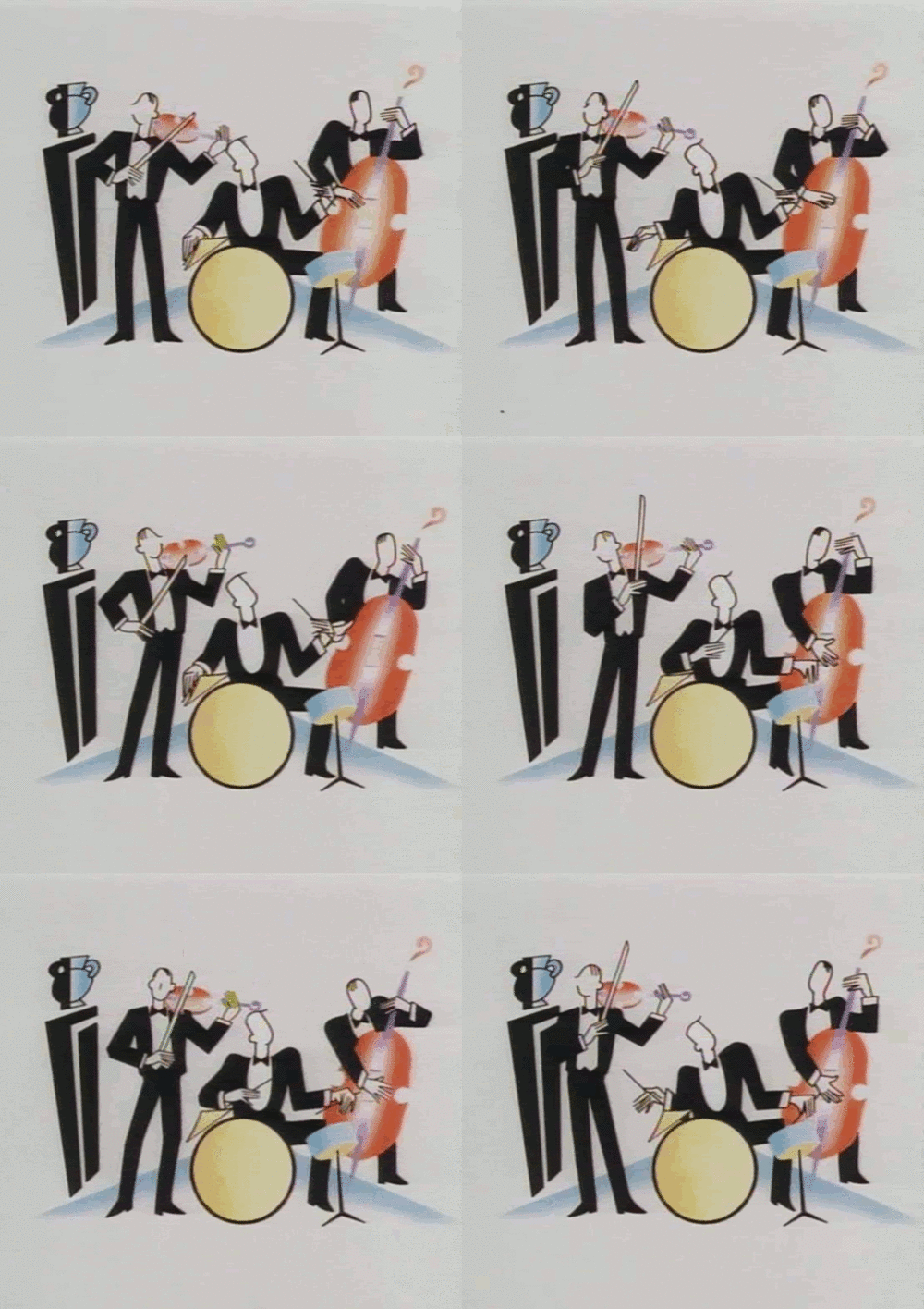
In ethics, values are as opposed to an immanent, concrete proportion as are the sounds of Helmholtz. Like them, values run counter to tonos, the specific tension of a mutuality or reciprocity. As timbre separated from tone, so that one could play a violin’s part on the piano, so an ethics of value—with its misplaced concreteness—allowed one to speak of human problems. If people had problems, it no longer made sense to speak of human choice. People could demand solutions. To find them, values could be shifted and prioritized, manipulated and maximized. Not only the language but the very modes of thinking found in mathematics could norm the realm of human relationships. Algorithms “purified” value by filtering out appropriateness, thereby taking the good out of ethics.

So charming as individuals or small aggregations ... 

When one attempts to utilize or exploit the good, natural inclination is extinguished. Such a propensity, the desire of everything for its own good, was accepted as inherent to all existence and was termed natural love. Even for several generations after Newton, rain was not drawn downward but sought its natural place. Flowers reached up toward the sun. Among people, this attraction was understood as a step toward friendship and friendship as the fruit of civil life. All were called to the other, to friendship.

Kohr lived in the fidelity of friendship, and he served this vision by awakening wisdom, sapientia—a word derived from tasting food. He knew that not any inclination but a certain awareness and feeling, a certain sensitivity to the appropriate, is the necessary condition of friendship. He knew that the historical loss of this knowledge fosters the emergence of social mutations that can be recognized now as monsters. Get Greek melodies from a piano? As well get beauty from economics!

Thanks to Kurt for pointing the way.

03 December 2023

Constantly.

Awful ...


It is because every individual knows so little and, in particular, because we rarely know which of us knows best that we trust the independent and competitive efforts of many [within the market] to induce the emergence of what we shall want when we see it.

Friedrich Hayek

Burn down the disco
Hang the blessed DJ
Because the music that they constantly play
It says nothing to me about my life

Johnny Marr and Steven Patrick Morrissey

25 April 2021

Making.


The act of making music, clothes, art, or even food has a very different, and possibly more beneficial effect on us than simply consuming those things. And yet for a very long time, the attitude of the state toward teaching and funding the arts has been in direct opposition to fostering creativity among the general population. It can often seem that those in power don’t want us to enjoy making things for ourselves—they’d prefer to establish a cultural hierarchy that devalues our amateur efforts and encourages consumption rather than creation. This might sound like I believe there is some vast conspiracy at work, which I don’t, but the situation we find ourselves in is effectively the same as if there were one. The way we are taught about music, and the way it’s socially and economically positioned, affect whether it’s integrated (or not) into our lives, and even what kind of music might come into existence in the future. Capitalism tends toward the creation of passive consumers, and in many ways this tendency is counterproductive.

David Byrne, from How Music Works

Thank you, Daniel.

28 March 2020

Interest.


We are becoming a nation of thieves by trying to live at everyone else’s expense. We have lost our moral mooring and the Church is partially responsible by failing to uphold its beliefs. One of the 10 Commandments says, “Thou shall not steal.” Now I am fairly confident that God did not mean, “Thou shall not steal–unless you get a majority vote” ...

Do-gooders fail to realize that most good is not done in the name of good but done in the name of self-interest.  It is not from the benevolence of the butcher, the brewer, or the baker that we expect our dinner, but from their regard to their own interest.

Dr. Walter E. Williams, from American Contempt for Liberty

Dr. Tawni Hunt Ferrarini and Dr. Walter Williams discuss the United States Constitution and defending liberty in America ...


C-SPAN's In Depth with Dr. Williams ... HERE.

07 April 2019

Difference.


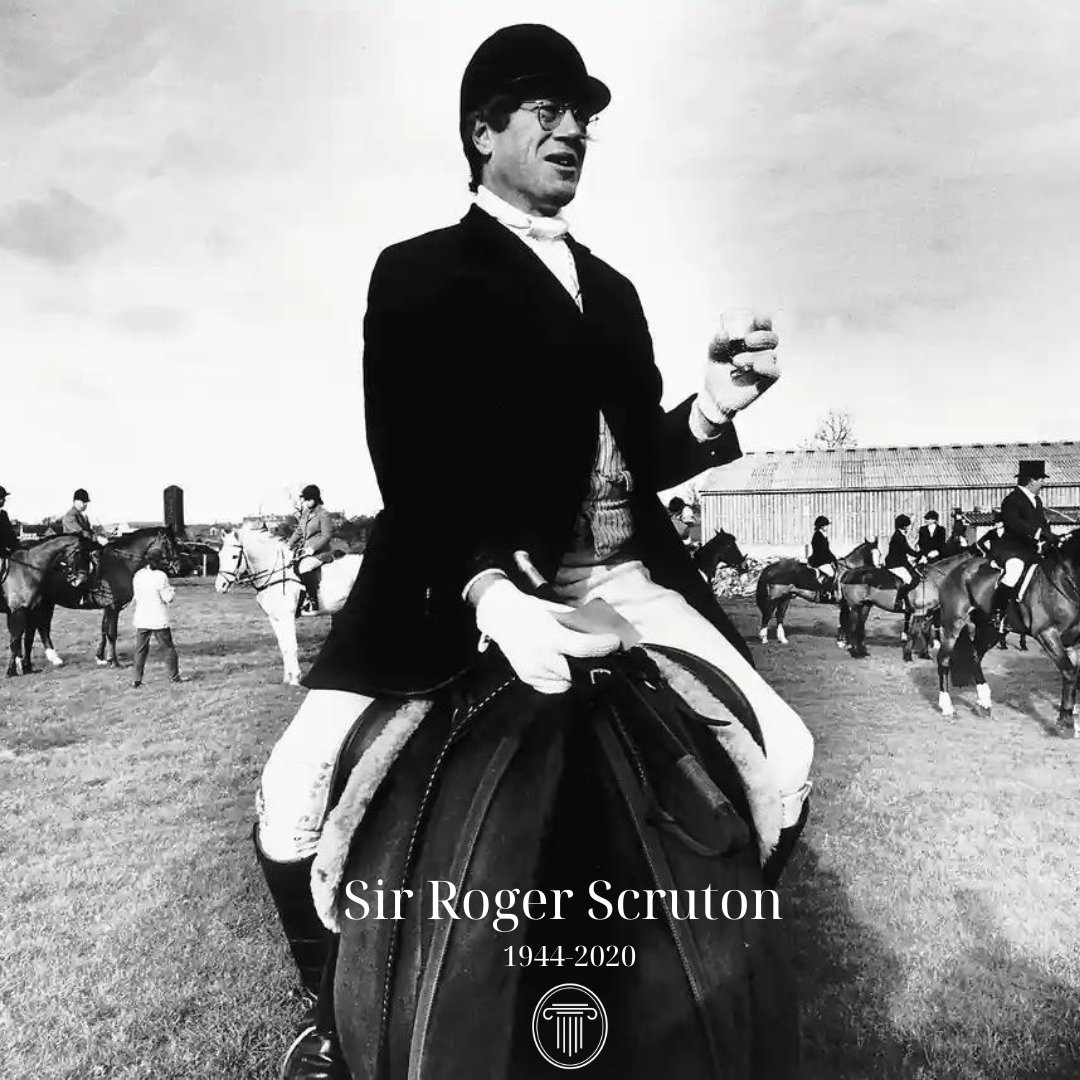
Roger Scruton on living like a barbarian in a plant-infested no-man's land ...

Once that you point out that there is a difference life lived with the idea of beauty and focus and life that is not so lived, then people immediately understand and recognize that there is something missing.

Don't let the cultural elite hypnotize you.  Beauty is real and universal.  Beauty can be and often is purposeless.  Beauty truly is priceless and, once given a value, usually loses its appeal.

Uncle Roman is alive and well and teaching economics at Harvard.

Thanks, Kurt. 

18 December 2018

Improvement.

Doisneau, Pendule du Sancerrois, 1953


“On what principle is it that with nothing but improvement behind us, we are to expect nothing but deterioration before us?”

Thank you, Kurt.