"I am not one who was born in the custody of wisdom. I am one who is fond of olden times and intense in quest of the sacred knowing of the ancients." Gustave Courbet
Showing posts with label Kant. Show all posts

07 July 2026

Refuge.

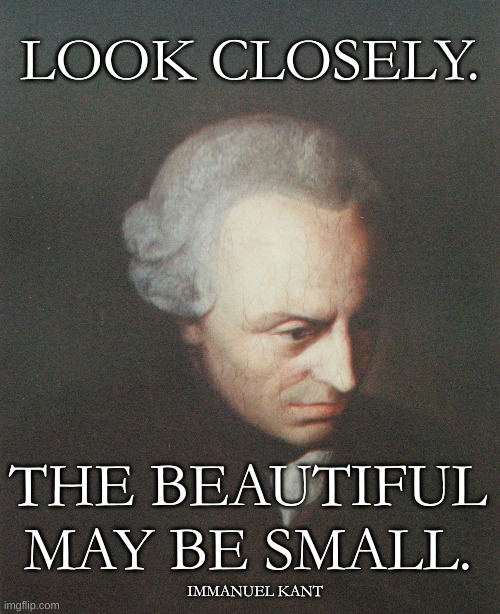
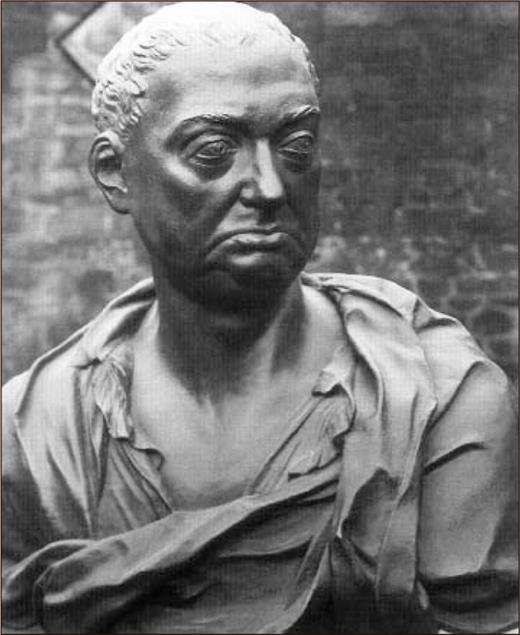
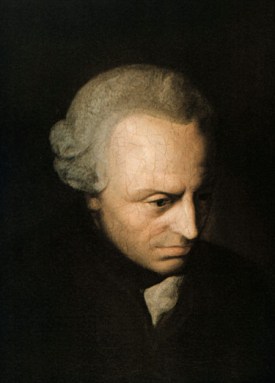
Unknown, Kant, 1790


Fifth Thesis
The greatest problem for the human species, whose solution nature compels it to seek, is to achieve a universal civil society administered in accord with the right. Since it is only in society—and, indeed, only in one that combines the greatest freedom, and thus a thoroughgoing antagonism among its members, with a precise determination and protection of the boundaries of this freedom, so that it can coexist with the freedom of others—since it is only in such a society that nature’s highest objective, namely, the highest attainable development of mankind’s capacities, can be achieved, nature also wills that mankind should itself accomplish this, as well as all the other goals that constitute mankind’s vocation. Thus must there be a society in which one will find the highest possible degree of freedom under external laws combined with irresistible power, i.e., a perfectly rightful civil consitution, whose attainment is the supreme task nature has set for the human species; for only by solving and completing it can nature fulfill her other objectives with our species. Necessity compels men, who are otherwise so deeply enamoured with unrestricted freedom, to enter into this state of coercion; and indeed, they are forced to do so by the greatest need of all, namely, the one that men themselves bring about, for their propensities do not allow them to coexist for very long in wild freedom. But once in a refuge such as civil society furnishes, these same propensities have the most salutary effect. It is just as with trees in a forest, which need each other, for in seeking to take the air and sunlight from the others, each obtains a beautiful, straight shape, while those that grow in freedom and separate from one another branch out randomly, and are stunted, bent, and twisted. All the culture and art that adorn mankind, as well as the most beautiful social order, are fruits of unsociableness that is forced to discipline itself and thus through an imposed art to develop nature’s seed completely.

Immanuel Kant, from Critique of Pure Reason

22 April 2026

Happy Birthday, Immanuel Kant

Unknown, Kant, 1790


Enlightenment is man's release from his self-incurred tutelage. Tutelage is man's inability to make use of his understanding without direction from another. Self-incurred is this tutelage when its cause lies not in lack of reason but in lack of resolution and courage to use it without direction from another. Sapere aude! "Have courage to use your own reason!" -- that is the motto of enlightenment.

Immanuel Kant

22 April 2024

Happy Birthday, Kant

von Stägemann, Immanuel Kant, 1790


Enlightenment is man's release from his self-incurred tutelage. Tutelage is man's inability to make use of his understanding without direction from another. Self-incurred is this tutelage when its cause lies not in lack of reason but in lack of resolution and courage to use it without direction from another. Sapere aude!  Have courage to use your own reason! -- that is the motto of enlightenment.

Immanuel Kant, born on this day in 1724

07 June 2023

Welfare.

von Stägemann, Immanuel Kant (detail), 1790


So what does Kant want to do in his philosophising? Kant himself declares: “it is metaphysics which it is my fate to be in love with” because on it rests “the true and enduring welfare of humanity.” Therefore we cannot be indifferent to it. There are three respects in which metaphysics is important to Kant: Is there something in human beings that transcends their contingent existence? Is the world a realm of pure causality, or is there the possibility of uncaused acts? Is there anything on which the world is ultimately based? These considerations lead Kant to ask the questions which he believes metaphysics cannot avoid: the questions of immortality, freedom and God. It is no secret that these questions are difficult to answer, and Kant acknowledges that there has been much “tapping in the dark” by philosophers who have tried to find answers. Therefore, we cannot simply begin by straightforwardly answering these questions, but there is a lot of philosophical preparation that has to be carefully worked out beforehand: Why is metaphysics so elusive, what makes it so?

22 April 2023

Closely.

Happy Birthday, Kant

von Stägemann, Immanuel Kant, 1790


Enlightenment is man's release from his self-incurred tutelage. Tutelage is man's inability to make use of his understanding without direction from another. Self-incurred is this tutelage when its cause lies not in lack of reason but in lack of resolution and courage to use it without direction from another. Sapere aude! "Have courage to use your own reason!"- that is the motto of enlightenment.
Immanuel Kant, born on this day in 1724.

22 April 2022

Happy Birthday, Kant

von Stägemann, Immanuel Kant, 1790


Immanuel Kant was born on this day in 1724.

Enlightenment is man's release from his self-incurred tutelage. Tutelage is man's inability to make use of his understanding without direction from another. Self-incurred is this tutelage when its cause lies not in lack of reason but in lack of resolution and courage to use it without direction from another. Sapere aude! "Have courage to use your own reason!"- that is the motto of enlightenment.

Immanuel Kant

22 April 2021

Own.

von Stägemann, Immanuel Kant, 1790


Immanuel Kant was born on this day in 1724.

Enlightenment is man's release from his self-incurred tutelage. Tutelage is man's inability to make use of his understanding without direction from another. Self-incurred is this tutelage when its cause lies not in lack of reason but in lack of resolution and courage to use it without direction from another. Sapere aude! "Have courage to use your own reason!"- that is the motto of enlightenment.

Immanuel Kant

02 May 2020

Aude.


Enlightenment is man's emergence from his self-imposed nonage. Nonage is the inability to use one's own understanding without another's guidance. This nonage is self-imposed if its cause lies not in lack of understanding but in indecision and lack of courage to use one's own mind without another's guidance. Dare to know! Sapere aude.  "Have the courage to use your own understanding," is therefore the motto of the enlightenment.

Laziness and cowardice are the reasons why such a large part of mankind gladly remain minors all their lives, long after nature has freed them from external guidance. They are the reasons why it is so easy for others to set themselves up as guardians. It is so comfortable to be a minor. If I have a book that thinks for me, a pastor who acts as my conscience, a physician who prescribes my diet, and so on--then I have no need to exert myself. I have no need to think, if only I can pay; others will take care of that disagreeable business for me. Those guardians who have kindly taken supervision upon themselves see to it that the overwhelming majority of mankind--among them the entire fair sex--should consider the step to maturity, not only as hard, but as extremely dangerous. First, these guardians make their domestic cattle stupid and carefully prevent the docile creatures from taking a single step without the leading-strings to which they have fastened them. Then they show them the danger that would threaten them if they should try to walk by themselves. Now this danger is really not very great; after stumbling a few times they would, at last, learn to walk. However, examples of such failures intimidate and generally discourage all further attempts.

Thus it is very difficult for the individual to work himself out of the nonage which has become almost second nature to him. He has even grown to like it, and is at first really incapable of using his own understanding because he has never been permitted to try it. Dogmas and formulas, these mechanical tools designed for reasonable use--or rather abuse--of his natural gifts, are the fetters of an everlasting nonage. The man who casts them off would make an uncertain leap over the narrowest ditch, because he is not used to such free movement. That is why there are only a few men who walk firmly, and who have emerged from nonage by cultivating their own minds.

It is more nearly possible, however, for the public to enlighten itself; indeed, if it is only given freedom, enlightenment is almost inevitable. There will always be a few independent thinkers, even among the self-appointed guardians of the multitude. Once such men have thrown off the yoke of nonage, they will spread about them the spirit of a reasonable appreciation of man's value and of his duty to think for himself. It is especially to be noted that the public which was earlier brought under the yoke by these men afterwards forces these very guardians to remain in submission, if it is so incited by some of its guardians who are themselves incapable of any enlightenment. That shows how pernicious it is to implant prejudices: they will eventually revenge themselves upon their authors or their authors' descendants. Therefore, a public can achieve enlightenment only slowly. A revolution may bring about the end of a personal despotism or of avaricious tyrannical oppression, but never a true reform of modes of thought. New prejudices will serve, in place of the old, as guide lines for the unthinking multitude.

Immanuel Kant

CONNECT

21 April 2020

Happy Birthday, Kant


Immanuel Kant was born on this date in 1724.

Enlightenment is man's release from his self-incurred tutelage. Tutelage is man's inability to make use of his understanding without direction from another.  Self-incurred is this tutelage when its cause lies not in lack of reason but in lack of resolution and courage to use it without direction from another. Sapere aude!  Have courage to use your own reason! -- that is the motto of enlightenment.

Immanuel Kant 

19 January 2020

Aude.

Unknown, Kant, 1790


Enlightenment is man's release from his self-incurred tutelage. Tutelage is man's inability to make use of his understanding without direction from another. Self-incurred is this tutelage when its cause lies not in lack of reason but in lack of resolution and courage to use it without direction from another. Sapere aude! "Have courage to use your own reason!" -- that is the motto of enlightenment.

Immanuel Kant

17 March 2018

Experience.


Although all our knowledge begins with experience, it does not follow that it arises from experience.

Immanuel Kant

02 August 2017

Seek.

Wyeth, Lawn Chair, 1962


Mathematics, natural science, laws, arts, even morality, etc. do not completely fill the soul; there is always a space left over reserved for pure and speculative reason, the emptiness of which prompts us to seek in vagaries, buffooneries, and mysticism for what seems to be employment and entertainment, but what actually is mere pastime undertaken in order to deaden the troublesome voice of reason, which, in accordance with its nature, requires something that can satisfy it and does not merely subserve other ends or the interests of our inclinations.

Immanuel Kant