"I am not one who was born in the custody of wisdom. I am one who is fond of olden times and intense in quest of the sacred knowing of the ancients." Gustave Courbet

24 May 2016

Itadakimasu.


Gary Snyder, the Zen poet, lives on a hundred backcountry acres in the foothills of the Sierra Nevada, meditates mornings, and thanks his food before he eats it, clapping his hands together and saying “Itadakimasu,” which is Japanese for “Thank you very much.” He likes a boilermaker at dinnertime (a shot of bourbon and a tall glass of beer) and, on occasion, the bullfrogs from his pond. “I follow the Joy of Cooking," he says. “You’ve got to skin them and brine them overnight. She recommends rolling them in bread crumbs and frying them.” He finds that vulture feathers make the best pens for calligraphy, and collects them when he hikes. Some nights, he takes a blanket and a thermos of sake and a star map, walks along a gravel riverbed not far from his house to a spot among the mounded diggings left by the gold-mining ventures of the past two centuries, and, by the light of a red torch, works on the constellations.

23 May 2016

Immensity.


My house is buried in the deepest recess of the forest
Every year, ivy vines grow longer than the year before.
Undisturbed by the affairs of the world I live at ease,
Woodmen’s singing rarely reaching me through the trees.
While the sun stays in the sky, I mend my torn clothes
And facing the moon, I read holy texts aloud to myself.
Let me drop a word of advice for believers of my faith.
To enjoy life’s immensity, you do not need many things.

Ryokan

Colin Hay, "Waiting for My Real Life to Begin"

One.

O'Keeffe, Starlight Night, 1917


LAMENT

Everything is far
and long gone by.
I think that the star
glittering above me
has been dead for a million years.
I think there were tears
in the car I heard pass
and something terrible was said.
A clock has stopped striking in the house
across the road...
When did it start?...
I would like to step out of my heart
an go walking beneath the enormous sky.
I would like to pray.
And surely of all the stars that perished
long ago,
one still exists.
I think that I know
which one it is--
which one, at the end of its beam in the sky,
stands like a white city ...

Rainer Maria Rilke

Makers.

The Map Makers ...

Ziggy Marley, "Reggae in My Head"

21 May 2016

Starting.

Neil Gaiman gives the 2012 commencement address at The University of the Arts.

The urge, starting out, is to copy. And that's not a bad thing. Most of us only find our own voices after we've sounded like a lot of other people. But the one thing that you have that nobody else has is you. Your voice, your mind, your story, your vision. So write and draw and build and play and dance and live as only you can.

The moment that you feel that, just possibly, you're walking down the street naked, exposing too much of your heart and your mind and what exists on the inside, showing too much of yourself. That's the moment you may be starting to get it right.

20 May 2016

Listen.


37

Beware, O wanderer, the road is walking too, 
said Rilke one day to no one in particular
as good poets address the six directions.
If you can't bow, you're dead meat. You'll break
like uncooked spaghetti. Listen to the gods.
They're shouting in your ear every second.

Jim Harrison, from After Ikkyu

Greatest.

Before Lewis and Clark there was David Thompson ...

In 1788, David Thompson was working for Hudson’s Bay Company when he suffered an accident, breaking his leg so badly he almost died. But he didn’t die. It took him a year to learn to walk again. And in that year, he spent his time studying astronomy, navigation, and map-making. He looked at the maps at Hudson’s Bay Company, where he worked, and dreamed about what lay beyond their unfinished borders. He decided he wanted to finish those maps. And he did. David Thompson became the greatest map-maker who ever lived, travelling 90,000 kilometres throughout North America, and mapping 4.9 million square kilometers along the way.

The Country of Adventurers: David Thompson ...


Uncharted Territory: David Thompson on the Columbia Plateau ...

J. Geils Band, "Night Time"

Happy Friday!

19 May 2016

Alexi Murdoch, "All of My Days"

Story.


Looking at a globe close-up is a wonderful thing. Interacting with a round replica of our world gives an entirely different sensation to say looking at Google maps and even a physical atlas doesn’t really give the true geographical sense of our planet. Two dimensional maps, often relying on the Mercator Projection, can show Greenland to be the size of all of Africa when it’s really more like Mexico. It takes a globe to really see that Texas may be the largest state in the continental U.S. but Australia’s largest state is three times its size. Or that the entire eastern seaboard of America fits quite comfortably into Kazakhstan.

For Peter Bellerby, a passion for globes has quite unexpectedly turned into a successful business—his company is one of the world’s only remaining traditional globe makers. “I think everyone has some sort of soft spot for globes,” he explains. “Maps are wonderful but globes are tangible and tell so much more of a story."

CONNECT


Bellerby & Co. is HERE.

Superior.

Rinehart, Little Bear, 1899


American sculptors travel thousands of miles to study Greek Statues in the Vatican in Rome, seemingly unaware that in their own country there exists a race of men equal in form and grace (if not superior) to the finest beau ideal ever dreamed of by the Greeks.  And it does seem a little extraordinary that up to this time (as far as I am aware) not a single sculptor has thought it worth his while to make a journey among these Indians, who are now sojourning on the western side of the Rocky Mountains, and are rapidly passing away.  Most unquestionably, that sculptor who travels here, -- and models from what he sees (supposing him to have equal power and genius), will far excel any other who merely depends on his own conception of what it ought to be.

Alfred Jacob Miller, The West

Guy Clark, "Dublin Blues"

With Emmylou and Shawn Camp, fiddle ...

Forward.

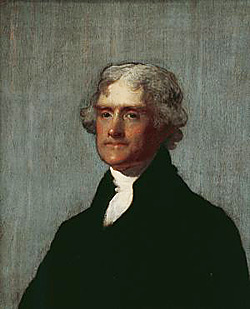
Stuart, The Edgehill Jefferson, 1825


The ground of liberty is to be gained by inches, that we must be contented to secure what we can get from time to time, and eternally press forward for what is yet to get. It takes time to persuade men to do even what is for their own good.

Thomas Jefferson

Keep reminding me.

One.


THE SUMMER DAY

Who made the world?
Who made the swan, and the black bear?
Who made the grasshopper?
This grasshopper, I mean-
the one who has flung herself out of the grass,
the one who is eating sugar out of my hand,
who is moving her jaws back and forth instead of up and down-
who is gazing around with her enormous and complicated eyes.
Now she lifts her pale forearms and thoroughly washes her face.
Now she snaps her wings open, and floats away.
I don't know exactly what a prayer is.
I do know how to pay attention, how to fall down
into the grass, how to kneel in the grass,
how to be idle and blessed, how to stroll through the fields,
which is what I have been doing all day.
Tell me, what else should I have done?
Doesn't everything die at last, and too soon?
Tell me, what is it you plan to do
With your one wild and precious life?

Mary Oliver

Far.

Homer, Saguenay River, Lower Rapids, 1897


THE GOLDEN WINDOW

By accident my heart lifted with a rush.
Gone for weeks, finally home on a darkish day
of blustery wind, napped, waking in a few minutes
and the sun had come clean and crept around the house,
this light from one of trillions of stars
falling through the window skeined
by the willow’s greenish bright yellow leaves
so that my half-asleep head opened wide
for the first time in many months, a cold sunstroke,
so yellow-gold, so gold-yellow, yellow-gold,
this eye beyond age bathed in yellow light.

Seventy days on the river with a confusion between
river turbulence and human tribulation. We are here
to be curious not consoled. The gift of the gods
is consciousness not my forlorn bleating prayers
for equilibrium, the self dog-paddling in circles
on its own alga-lidded pond. Emily Walter wrote:
“We are given rivers so we know our hearts
can break, but still keep us breathing.”

When you run through the woods blindfolded
you’re liable to collide with trees, I thought
one hot afternoon on the river. You can’t drown yourself
if you swim well. We saw some plovers
and then a few yellow legs with their peculiar cries,
and I remembered a very cold, windy September day
with Matthiessen and Danny when the birds lifted
me far out of myself. It was so cold and blustery the avian
world descended into the river valley and while fishing
we saw a golden eagle, two immature and two adult
bald eagles, two prairie falcons, two peregrines, Cooper’s
hawks, two Swainson’s, a sharp-shinned,
a rough-legged, a harrier, five turkey vultures,
three ospreys, and also saw buffleheads, widgeon,
teal, mallards, morning doves, kingfishers,
ring-billed gulls, killdeer, spotted plovers,
sandpipers and sandhill cranes.
They also saw us. If a peregrine sees fifty times better
than we, what do we look like to them?
Unanswerable.

Nearing seventy there is a tinge of the usually
unseen miraculous when you wake up alive
from a night’s sleep or a nap. We always rise in the terrifying
posture of the living. Some days the river is incomprehensible.
No, not the posture, but that a terrifying beauty
is born within us. I think of the 20-acre thicket
my mother planted after the deaths 40 years ago,
the thicket now nearly impenetrable as its own beauty.
Across the small pond the green heron looked at me quizzically—
who is this? I said I wasn’t sure at that moment
wondering if the green heron could be Mother.

Now back in the Absarokas I’m awake
to these diffuse corridors of light. The grizzlies
have buried themselves below that light cast down
across the mountain meadow, following a canyon
to the valley floor where the rattlesnakes will also sleep
until mid-April. Meanwhile we’ll travel toward the border
with the birds. The moon is swollen tonight
and the mountain this summer I saw bathed
in a thunderstorm now bathes itself in a mist of snow.

Rushing, turbulent water and light, convinced by animals
and rivers that nature only leads us to herself,
so openly female through the window of my single eye.
For half a year my alphabet blinded me to beauty,
forgetting my nature which came from the boy lost
comfortably in the woods, how and why he suspected home,
this overmade world where old paths are submerged
in metal and cement.

This morning in the first clear sunlight making its way
over the mountains, the earth covered with crunchy frost,
I walked the dogs past Weber’s sheep pasture
where a ram was covering a ewe who continued eating,
a wise and experienced woman. I headed due west
up the slope toward Antelope Butte in the delicious
cold still air, turning at the irrigation ditch hearing
the staccato howl of sandhill cranes behind me,
a couple of hundred rising a mile away from Cargill’s
alfalfa, floating up into the white mist rising
from the frost, and moving north in what I judge
is the wrong direction for this weather. Birds make mistakes,
so many dying against windows and phone wires.
I continued west toward the snake den to try to catch
the spirit of the place when it’s asleep, the sheer otherness
of hundreds of rattlesnakes sleeping in a big ball
deep in the rocky earth beneath my feet. The dogs,
having been snake trained, are frightened of this place.
So am I. So much protective malevolence. I fled.
Back home in the studio, a man-made wonder. We planted
a chokecherry tree near the window and now through cream-
colored blinds the precise silhouette of the bare branches,
gently but firmly lifting my head, a Chinese screen
that no one made which I accept from the nature of light.

I think of Mother’s thicket as her bird garden.
How obsessed she was with these creatures. When I told
her a schizophrenic in Kentucky wrote, “Birds are holes
in heaven through which a man must pass,” her eyes teared.
She lost husband and daughter to the violence of the road
and I see their spirits in the bird garden. On our last night
a few years ago she asked me, “Are we the same species as God?”
At eighty-five she was angry that the New Testament wasn’t fair
to women and then she said, “During the Great Depression
we had plenty to eat,” meaning at the farmhouse,
barn and chicken coop a hundred yards to the north
that are no longer there, disappeared with the inhabitants.
The child is also the mother of the man.

In the U.P. in the vast place southeast of the river
I found my way home by following the path
where my shadow was the tallest
which led to the trail which led
to another trail which led to the road home
to the cabin where I wrote to her:
“Found two dead redtail hawks, missing
their breasts, doubtless a goshawk took them
as one nests just north of here a half mile
in a tall hemlock on the bend of the river.”

With only one eye I’ve learned
to celebrate vision, the eye a painter,
the eye a monstrous fleshy camera
which can’t stop itself in the dark
where it sees its private imagination.
The tiny eye that sees the cosmos overhead.

Last winter I lost heart between each of seven cities.
Planes never land with the same people who boarded.

Walking Mary and Zilpha every morning I wonder
how many dogs are bound by regret
because they are captured by our imaginations
and affixed there by our need to have them do
as we wish when their hearts are quite otherwise.

I hope to define my life, whatever is left,
by migrations, south and north with the birds
and far from the metallic fever of clocks,
the self staring at the clock saying, “I must do this.”
I can’t tell the time on the tongue of the river
in the cool morning air, the smell of the ferment
of greenery, the dust off the canyon’s rock walls,
the swallows swooping above the scent of raw water.

Maybe we’re not meant to wake up completely.
I’m trying to think of what I can’t remember.
Last week in France I read that the Ainu in Japan
receive messages from the gods through willow trees
so I’m not the only one. I looked down into the garden
of Matignon and wondered at the car trip the week before
where at twilight in Narbonne 27,000 blackbirds swirled
and that night from the window
it was eerie with a slip of the waning moon
off the right shoulder of the Romanesque cathedral
with Venus sparkling shamelessly above the moon,
Venus over whom the church never had any power.
Who sees? Whose eye is this? A day later in Collioure
from the Hermitage among vineyards in the mountains
I could look down steep canyons still slightly green
from the oaks in November to the startling blue of the Mediterranean,
storm-wracked from the mistral’s seventy knot winds,
huge lumpy whitecaps, their crests looking toward Africa.

I always feared losing my remaining eye,
my singular window to the world. When closed it sees
the thousands of conscious photos I’ve taken with it,
impressionist rather than crystalline, from a lion’s mouth
in the Serengeti in 1972 to a whale’s eye in the Humboldt current,
the mountain sun gorged with the color of forest
fires followed by a moon orange as a simple orange,
a thousand girls and women I’ve seen but never met,
the countless birds I adopted since losing the eye in 1945
including an albino grouse creamy as that goshawk’s breast
that came within feet of Mother in our back pasture,
the female trogon that appeared when Dalva
decided to die, and the thousands of books out of whose print
vision is created in the mind’s eye, as real as any garden at dawn.


No rhapsodies today. Home from France
and the cold wind and a foot of snow have destroyed
my golden window, but then the memory
has always been more vivid than the life. The memory
is the not-quite-living museum of our lives.
Sometimes its doors are insufferably wide open
with black stars in a grey sky, and horses
clattering in and out, our dead animals resting here
and there but often willing to come to life again
to greet us, parents and brothers and sisters sit
at the August table laughing while they eat twelve
fresh vegetables from the garden. Rivers, creeks, lakes
over which birds funnel like massive schools of minnows.
In memory the clocks have drowned themselves, leaving
time to the life spans of trees. The world of our lives
comes unbidden as night.

Jim Harrison

Weyrauch, "Preludio"

Margret Köll, harp, and Luca Pianca, lute ...

Honored.


When famed Arizona author and naturalist Edward Abbey died in 1989 his friends honored his last wishes and packed him in dry ice, drove him into the desert and buried him. Doug Peacock was there and shares his experience.

Free.

Wyeth, Spruce Grove, 1970


THE SKYLARK

The rolls and harrows lie at rest beside 
The battered road; and spreading far and wide 
Above the russet clods, the corn is seen 
Sprouting its spiry points of tender green, 
Where squats the hare, to terrors wide awake, 
Like some brown clod the harrows failed to break. 
Opening their golden caskets to the sun, 
The buttercups make schoolboys eager run, 
To see who shall be first to pluck the prize— 
Up from their hurry, see, the skylark flies, 
And o'er her half-formed nest, with happy wings 
Winnows the air, till in the cloud she sings, 
Then hangs a dust-spot in the sunny skies, 
And drops, and drops, till in her nest she lies, 
Which they unheeded passed—not dreaming then 
That birds which flew so high would drop agen 
To nests upon the ground, which anything 
May come at to destroy. Had they the wing 
Like such a bird, themselves would be too proud, 
And build on nothing but a passing cloud! 
As free from danger as the heavens are free 
From pain and toil, there would they build and be, 
And sail about the world to scenes unheard 
Of and unseen— Oh, were they but a bird! 
So think they, while they listen to its song, 
And smile and fancy and so pass along; 
While its low nest, moist with the dews of morn, 
Lies safely, with the leveret, in the corn.

John Clare 

18 May 2016

Dream.


Be careful when you eat bear because you will dream of bears.

Jim Harrison

Health.

Unattributed, Walt Whitman Fishing with Friends, 1863


A long-lost book-length guide to “manly health” by Walt Whitman, in which the great American poet tackles everything from virility to “care of the feet” and the attainment of a “nobler physique”, has been rediscovered by a scholar, more than 150 years after it was first published under a pen-name.

CONNECT

Manly Heath and Training, here.

Lyle Lovett, "The Waltzing Fool"

Resolve.

Rengetsu, Flowing Stream, 1870


Whatever the tasks, do them slowly with ease, in mindfulness, so not do any tasks with the goal of getting them over with. Resolve to each job in a relaxed way, with all your attention.

Thich Nhat Hanh

Just.

Voice.

Collins, White Pines, Vinalhaven, 2007


O take me from the busy crowd,
I cannot bear the noise!
For Nature's voice is never loud;
I seek for quiet joys.
The book I love is everywhere,
And not in idle words;
The book I love is known to all,
And better lore affords.

John Clare

Passion.


For Guy Clark ...

BERRYMAN

I will tell you what he told me
in the years just after the war
as we then called
the second world war

don't lose your arrogance yet he said
you can do that when you're older
lose it too soon and you may
merely replace it with vanity

just one time he suggested
changing the usual order
of the same words in a line of verse
why point out a thing twice

he suggested I pray to the Muse
get down on my knees and pray
right there in the corner and he
said he meant it literally

it was in the days before the beard
and the drink but he was deep
in tides of his own through which he sailed
chin sideways and head tilted like a tacking sloop

he was far older than the dates allowed for
much older than I was he was in his thirties
he snapped down his nose with an accent
I think he had affected in England

as for publishing he advised me
to paper my wall with rejection slips
his lips and the bones of his long fingers trembled
with the vehemence of his views about poetry

he said the great presence
that permitted everything and transmuted it
in poetry was passion
passion was genius and he praised movement and invention

I had hardly begun to read
I asked how can you ever be sure
that what you write is really
any good at all and he said you can't

you can't you can never be sure
you die without knowing
whether anything you wrote was any good
if you have to be sure don't write

W.S. Merwin

Today.

1999.


"Pacing the Cage"

17 May 2016

Figured.


The poet Sappho was so celebrated in the ancient world that the Roman Empire was still producing statues and paintings of her centuries after her death. Her work was organized into nine books of lyric poetry in the famous library at Alexandria, yet we know almost nothing about her life, except that she lived on the Greek island of Lesbos and wrote love poems to women. She remains famous to the present day, even though only a few fragments of her poetry have survived. One of these fragments, called "Midnight Poem," was written in the mid-sixth century BCE to an absent lover. Due to tantalizing hints in the poem, scholars have long debated when it was written. Now, thanks to software used to simulate night skies in planetariums, scientists have figured it out.

CONNECT

Lives.


VIRTUE

Sweet day, so cool, so calm, so bright, 
The bridal of the earth and sky; 
The dew shall weep thy fall to-night, 
For thou must die. 

Sweet rose, whose hue angry and brave 
Bids the rash gazer wipe his eye; 
Thy root is ever in its grave, 
And thou must die. 

Sweet spring, full of sweet days and roses, 
A box where sweets compacted lie; 
My music shows ye have your closes, 
And all must die. 

Only a sweet and virtuous soul, 
Like season'd timber, never gives; 
But though the whole world turn to coal,
Then chiefly lives. 

George Herbert

For Jessica, with Love.

Haunts.

McCleary, Morning Sun on the Meadow, undated


PRELUDE: BOOK 2: SCHOOL-TIME                                                    

Thus far, O Friend! have we, though leaving much
Unvisited, endeavour'd to retrace 
My life through its first years, and measured back 
The way I travell'd when I first began 
To love the woods and fields; the passion yet 
Was in its birth, sustain'd, as might befal, 
By nourishment that came unsought, for still, 
From week to week, from month to month, we liv'd 
A round of tumult: duly were our games 
Prolong'd in summer till the day-light fail'd; 
No chair remain'd before the doors, the bench 
And threshold steps were empty; fast asleep 
The Labourer, and the old Man who had sate, 
A later lingerer, yet the revelry 
Continued, and the loud uproar: at last, 
When all the ground was dark, and the huge clouds 
Were edged with twinkling stars, to bed we went, 
With weary joints, and with a beating mind. 
Ah! is there one who ever has been young, 
Nor needs a monitory voice to tame 
The pride of virtue, and of intellect? 
And is there one, the wisest and the best 
Of all mankind, who does not sometimes wish 
For things which cannot be, who would not give, 
If so he might, to duty and to truth 
The eagerness of infantine desire? 
A tranquillizing spirit presses now 
On my corporeal frame: so wide appears 
The vacancy between me and those days, 
Which yet have such self-presence in my mind 
That, sometimes, when I think of them, I seem 
Two consciousnesses, conscious of myself 
And of some other Being. A grey Stone 
Of native rock, left midway in the Square 
Of our small market Village, was the home 
And centre of these joys, and when, return'd 
After long absence, thither I repair'd, 
I found that it was split, and gone to build 
A smart Assembly-room that perk'd and flar'd 
With wash and rough-cast elbowing the ground 
Which had been ours. But let the fiddle scream, 
And be ye happy! yet, my Friends! I know 
That more than one of you will think with me 
Of those soft starry nights, and that old Dame 
From whom the stone was nam'd who there had sate 
And watch'd her Table with its huckster's wares 
Assiduous, thro' the length of sixty years. 

       We ran a boisterous race; the year span round 
With giddy motion. But the time approach'd 
That brought with it a regular desire 
For calmer pleasures, when the beauteous forms 
Of Nature were collaterally attach'd 
To every scheme of holiday delight, 
And every boyish sport, less grateful else, 
And languidly pursued. 

                                                       When summer came 
It was the pastime of our afternoons 
To beat along the plain of Windermere 
With rival oars, and the selected bourne 
Was now an Island musical with birds 
That sang for ever; now a Sister Isle 
Beneath the oaks' umbrageous covert, sown 
With lillies of the valley, like a field; 
And now a third small Island where remain'd 
An old stone Table, and a moulder'd Cave, 
A Hermit's history. In such a race, 
So ended, disappointment could be none, 
Uneasiness, or pain, or jealousy: 
We rested in the shade, all pleas'd alike, 
Conquer'd and Conqueror. Thus the pride of strength, 
And the vain-glory of superior skill 
Were interfus'd with objects which subdu'd 
And temper'd them, and gradually produc'd 
A quiet independence of the heart. 
And to my Friend, who knows me, I may add, 
Unapprehensive of reproof, that hence 
Ensu'd a diffidence and modesty, 
And I was taught to feel, perhaps too much, 
The self-sufficing power of solitude. 

       No delicate viands sapp'd our bodily strength; 
More than we wish'd we knew the blessing then 
Of vigorous hunger, for our daily meals 
Were frugal, Sabine fare! and then, exclude 
A little weekly stipend, and we lived 
Through three divisions of the quarter'd year 
In pennyless poverty. But now, to School 
Return'd, from the half-yearly holidays, 
We came with purses more profusely fill'd, 
Allowance which abundantly suffic'd 
To gratify the palate with repasts 
More costly than the Dame of whom I spake, 
That ancient Woman, and her board supplied. 
Hence inroads into distant Vales, and long 
Excursions far away among the hills, 
Hence rustic dinners on the cool green ground, 
Or in the woods, or near a river side, 
Or by some shady fountain, while soft airs 
Among the leaves were stirring, and the sun 
Unfelt, shone sweetly round us in our joy. 

       Nor is my aim neglected, if I tell 
How twice in the long length of those half-years 
We from our funds, perhaps, with bolder hand 
Drew largely, anxious for one day, at least, 
To feel the motion of the galloping Steed; 
And with the good old Inn-keeper, in truth, 
On such occasion sometimes we employ'd 
Sly subterfuge; for the intended bound 
Of the day's journey was too distant far 
For any cautious man, a Structure famed 
Beyond its neighbourhood, the antique Walls 
Of that large Abbey which within the vale 
Of Nightshade, to St. Mary's honour built, 
Stands yet, a mouldering Pile, with fractured Arch, 
Belfry, and Images, and living Trees, 
A holy Scene! along the smooth green turf 
Our Horses grazed: to more than inland peace 
Left by the sea wind passing overhead 
(Though wind of roughest temper) trees and towers 
May in that Valley oftentimes be seen, 
Both silent and both motionless alike; 
Such is the shelter that is there, and such 
The safeguard for repose and quietness. 

       Our steeds remounted, and the summons given, 
With whip and spur we by the Chauntry flew 
In uncouth race, and left the cross-legg'd Knight, 
And the stone-Abbot, and that single Wren 
Which one day sang so sweetly in the Nave 
Of the old Church, that, though from recent showers 
The earth was comfortless, and, touch'd by faint 
Internal breezes, sobbings of the place, 
And respirations, from the roofless walls 
The shuddering ivy dripp'd large drops, yet still, 
So sweetly 'mid the gloom the invisible Bird 
Sang to itself, that there I could have made 
My dwelling-place, and liv'd for ever there 
To hear such music. Through the Walls we flew 
And down the valley, and a circuit made 
In wantonness of heart, through rough and smooth 
We scamper'd homeward. Oh! ye Rocks and Streams, 
And that still Spirit of the evening air! 
Even in this joyous time I sometimes felt 
Your presence, when with slacken'd step we breath'd 
Along the sides of the steep hills, or when, 
Lighted by gleams of moonlight from the sea, 
We beat with thundering hoofs the level sand. 

       Upon the Eastern Shore of Windermere, 
Above the crescent of a pleasant Bay, 
There stood an Inn, no homely-featured Shed, 
Brother of the surrounding Cottages, 
But 'twas a splendid place, the door beset 
With Chaises, Grooms, and Liveries, and within 
Decanters, Glasses, and the blood-red Wine. 
In ancient times, or ere the Hall was built 
On the large Island, had this Dwelling been 
More worthy of a Poet's love, a Hut, 
Proud of its one bright fire, and sycamore shade. 
But though the rhymes were gone which once inscribed 
The threshold, and large golden characters 
On the blue-frosted Signboard had usurp'd 
The place of the old Lion, in contempt 
And mockery of the rustic painter's hand, 
Yet to this hour the spot to me is dear 
With all its foolish pomp. The garden lay 
Upon a slope surmounted by the plain 
Of a small Bowling-green; beneath us stood 
A grove; with gleams of water through the trees 
And over the tree-tops; nor did we want 
Refreshment, strawberries and mellow cream. 
And there, through half an afternoon, we play'd 
On the smooth platform, and the shouts we sent 
Made all the mountains ring. But ere the fall 
Of night, when in our pinnace we return'd 
Over the dusky Lake, and to the beach 
Of some small Island steer'd our course with one, 
The Minstrel of our troop, and left him there, 
And row'd off gently, while he blew his flute 
Alone upon the rock; Oh! then the calm 
And dead still water lay upon my mind 
Even with a weight of pleasure, and the sky 
Never before so beautiful, sank down 
Into my heart, and held me like a dream. 

       Thus daily were my sympathies enlarged, 
And thus the common range of visible things 
Grew dear to me: already I began 
To love the sun, a Boy I lov'd the sun, 
Not as I since have lov'd him, as a pledge 
And surety of our earthly life, a light 
Which while we view we feel we are alive; 
But, for this cause, that I had seen him lay 
His beauty on the morning hills, had seen 
The western mountain touch his setting orb, 
In many a thoughtless hour, when, from excess 
Of happiness, my blood appear'd to flow 
With its own pleasure, and I breath'd with joy. 
And from like feelings, humble though intense, 
To patriotic and domestic love 
Analogous, the moon to me was dear; 
For I would dream away my purposes, 
Standing to look upon her while she hung 
Midway between the hills, as if she knew 
No other region; but belong'd to thee, 
Yea, appertain'd by a peculiar right 
To thee and thy grey huts, my darling Vale! 

       Those incidental charms which first attach'd 
My heart to rural objects, day by day 
Grew weaker, and I hasten on to tell 
How Nature, intervenient till this time, 
And secondary, now at length was sought 
For her own sake. But who shall parcel out 
His intellect, by geometric rules, 
Split, like a province, into round and square? 
Who knows the individual hour in which 
His habits were first sown, even as a seed, 
Who that shall point, as with a wand, and say, 
'This portion of the river of my mind 
Came from yon fountain?' Thou, my Friend! art one 
More deeply read in thy own thoughts; to thee 
Science appears but, what in truth she is, 
Not as our glory and our absolute boast, 
But as a succedaneum, and a prop 
To our infirmity. Thou art no slave 
Of that false secondary power, by which, 
In weakness, we create distinctions, then 
Deem that our puny boundaries are things 
Which we perceive, and not which we have made. 
To thee, unblinded by these outward shows, 
The unity of all has been reveal'd 
And thou wilt doubt with me, less aptly skill'd 
Than many are to class the cabinet 
Of their sensations, and, in voluble phrase, 
Run through the history and birth of each, 
As of a single independent thing. 
Hard task to analyse a soul, in which, 
Not only general habits and desires, 
But each most obvious and particular thought, 
Not in a mystical and idle sense, 
But in the words of reason deeply weigh'd, 
Hath no beginning. 

                                              Bless'd the infant Babe, 
(For with my best conjectures I would trace 
The progress of our Being) blest the Babe, 
Nurs'd in his Mother's arms, the Babe who sleeps 
Upon his Mother's breast, who, when his soul 
Claims manifest kindred with an earthly soul, 
Doth gather passion from his Mother's eye! 
Such feelings pass into his torpid life 
Like an awakening breeze, and hence his mind 
Even [in the first trial of its powers] 
Is prompt and watchful, eager to combine 
In one appearance, all the elements 
And parts of the same object, else detach'd 
And loth to coalesce. Thus, day by day, 
Subjected to the discipline of love, 
His organs and recipient faculties 
Are quicken'd, are more vigorous, his mind spreads, 
Tenacious of the forms which it receives. 
In one beloved presence, nay and more, 
In that most apprehensive habitude 
And those sensations which have been deriv'd 
From this beloved Presence, there exists 
A virtue which irradiates and exalts 
All objects through all intercourse of sense. 
No outcast he, bewilder'd and depress'd; 
Along his infant veins are interfus'd 
The gravitation and the filial bond 
Of nature, that connect him with the world. 
Emphatically such a Being lives, 
An inmate of this active universe; 
From nature largely he receives; nor so 
Is satisfied, but largely gives again, 
For feeling has to him imparted strength, 
And powerful in all sentiments of grief, 
Of exultation, fear, and joy, his mind, 
Even as an agent of the one great mind, 
Creates, creator and receiver both, 
Working but in alliance with the works 
Which it beholds.—Such, verily, is the first 
Poetic spirit of our human life; 
By uniform control of after years 
In most abated or suppress'd, in some, 
Through every change of growth or of decay, 
Pre-eminent till death. 

                                                    From early days, 
Beginning not long after that first time 
In which, a Babe, by intercourse of touch, 
I held mute dialogues with my Mother's heart 
I have endeavour'd to display the means 
Whereby this infant sensibility, 
Great birthright of our Being, was in me 
Augmented and sustain'd. Yet is a path 
More difficult before me, and I fear 
That in its broken windings we shall need 
The chamois' sinews, and the eagle's wing: 
For now a trouble came into my mind 
From unknown causes. I was left alone, 
Seeking the visible world, nor knowing why. 
The props of my affections were remov'd, 
And yet the building stood, as if sustain'd 
By its own spirit! All that I beheld 
Was dear to me, and from this cause it came, 
That now to Nature's finer influxes 
My mind lay open, to that more exact 
And intimate communion which our hearts 
Maintain with the minuter properties 
Of objects which already are belov'd, 
And of those only. Many are the joys 
Of youth; but oh! what happiness to live 
When every hour brings palpable access 
Of knowledge, when all knowledge is delight, 
And sorrow is not there. The seasons came, 
And every season to my notice brought 
A store of transitory qualities 
Which, but for this most watchful power of love 
Had been neglected, left a register 
Of permanent relations, else unknown, 
Hence life, and change, and beauty, solitude 
More active, even, than 'best society', 
Society made sweet as solitude 
By silent inobtrusive sympathies, 
And gentle agitations of the mind 
From manifold distinctions, difference 
Perceived in things, where to the common eye, 
No difference is; and hence, from the same source 
Sublimer joy; for I would walk alone, 
In storm and tempest, or in starlight nights 
Beneath the quiet Heavens; and, at that time, 
Have felt whate'er there is of power in sound 
To breathe an elevated mood, by form 
Or image unprofaned; and I would stand, 
Beneath some rock, listening to sounds that are 
The ghostly language of the ancient earth, 
Or make their dim abode in distant winds. 
Thence did I drink the visionary power. 
I deem not profitless those fleeting moods 
Of shadowy exultation: not for this, 
That they are kindred to our purer mind 
And intellectual life; but that the soul, 
Remembering how she felt, but what she felt 
Remembering not, retains an obscure sense 
Of possible sublimity, to which, 
With growing faculties she doth aspire, 
With faculties still growing, feeling still 
That whatsoever point they gain, they still 
Have something to pursue. 

                                                             And not alone, 
In grandeur and in tumult, but no less 
In tranquil scenes, that universal power 
And fitness in the latent qualities 
And essences of things, by which the mind 
Is mov'd by feelings of delight, to me 
Came strengthen'd with a superadded soul, 
A virtue not its own. My morning walks 
Were early; oft, before the hours of School 
I travell'd round our little Lake, five miles 
Of pleasant wandering, happy time! more dear 
For this, that one was by my side, a Friend 
Then passionately lov'd; with heart how full 
Will he peruse these lines, this page, perhaps 
A blank to other men! for many years 
Have since flow'd in between us; and our minds, 
Both silent to each other, at this time 
We live as if those hours had never been. 
Nor seldom did I lift our cottage latch 
Far earlier, and before the vernal thrush 
Was audible, among the hills I sate 
Alone, upon some jutting eminence 
At the first hour of morning, when the Vale 
Lay quiet in an utter solitude. 
How shall I trace the history, where seek 
The origin of what I then have felt? 
Oft in these moments such a holy calm 
Did overspread my soul, that I forgot 
That I had bodily eyes, and what I saw 
Appear'd like something in myself, a dream, 
A prospect in my mind. 

                                                       'Twere long to tell 
What spring and autumn, what the winter snows, 
And what the summer shade, what day and night, 
The evening and the morning, what my dreams 
And what my waking thoughts supplied, to nurse 
That spirit of religious love in which 
I walked with Nature. But let this, at least 
Be not forgotten, that I still retain'd 
My first creative sensibility, 
That by the regular action of the world 
My soul was unsubdu'd. A plastic power 
Abode with me, a forming hand, at times 
Rebellious, acting in a devious mood, 
A local spirit of its own, at war 
With general tendency, but for the most 
Subservient strictly to the external things 
With which it commun'd. An auxiliar light 
Came from my mind which on the setting sun 
Bestow'd new splendor, the melodious birds, 
The gentle breezes, fountains that ran on, 
Murmuring so sweetly in themselves, obey'd 
A like dominion; and the midnight storm 
Grew darker in the presence of my eye. 
Hence by obeisance, my devotion hence, 
And hence my transport. 

                                                          Nor should this, perchance, 
Pass unrecorded, that I still have lov'd 
The exercise and produce of a toil 
Than analytic industry to me 
More pleasing, and whose character I deem 
Is more poetic as resembling more 
Creative agency. I mean to speak 
Of that interminable building rear'd 
By observation of affinities 
In objects where no brotherhood exists 
To common minds. My seventeenth year was come 
And, whether from this habit, rooted now 
So deeply in my mind, or from excess 
Of the great social principle of life, 
Coercing all things into sympathy, 
To unorganic natures I transferr'd 
My own enjoyments, or, the power of truth 
Coming in revelation, I convers'd 
With things that really are, I, at this time 
Saw blessings spread around me like a sea. 
Thus did my days pass on, and now at length 
From Nature and her overflowing soul 
I had receiv'd so much that all my thoughts 
Were steep'd in feeling; I was only then 
Contented when with bliss ineffable 
I felt the sentiment of Being spread 
O'er all that moves, and all that seemeth still, 
O'er all, that, lost beyond the reach of thought 
And human knowledge, to the human eye 
Invisible, yet liveth to the heart, 
O'er all that leaps, and runs, and shouts, and sings, 
Or beats the gladsome air, o'er all that glides 
Beneath the wave, yea, in the wave itself 
And mighty depth of waters. Wonder not 
If such my transports were; for in all things 
I saw one life, and felt that it was joy. 
One song they sang, and it was audible, 
Most audible then when the fleshly ear, 
O'ercome by grosser prelude of that strain, 
Forgot its functions, and slept undisturb'd. 

       If this be error, and another faith 
Find easier access to the pious mind, 
Yet were I grossly destitute of all 
Those human sentiments which make this earth 
So dear, if I should fail, with grateful voice 
To speak of you, Ye Mountains and Ye Lakes, 
And sounding Cataracts! Ye Mists and Winds 
That dwell among the hills where I was born. 
If, in my youth, I have been pure in heart, 
If, mingling with the world, I am content 
With my own modest pleasures, and have liv'd, 
With God and Nature communing, remov'd 
From little enmities and low desires, 
The gift is yours; if in these times of fear, 
This melancholy waste of hopes o'erthrown, 
If, 'mid indifference and apathy 
And wicked exultation, when good men, 
On every side fall off we know not how, 
To selfishness, disguis'd in gentle names 
Of peace, and quiet, and domestic love, 
Yet mingled, not unwillingly, with sneers 
On visionary minds; if in this time 
Of dereliction and dismay, I yet 
Despair not of our nature; but retain 
A more than Roman confidence, a faith 
That fails not, in all sorrow my support, 
The blessing of my life, the gift is yours, 
Ye mountains! thine, O Nature! Thou hast fed 
My lofty speculations; and in thee, 
For this uneasy heart of ours I find 
A never-failing principle of joy, 
And purest passion. 

                                                Thou, my Friend! wert rear'd 
In the great City, 'mid far other scenes; 
But we, by different roads at length have gain'd 
The self-same bourne. And for this cause to Thee 
I speak, unapprehensive of contempt, 
The insinuated scoff of coward tongues, 
And all that silent language which so oft 
In conversation betwixt man and man 
Blots from the human countenance all trace 
Of beauty and of love. For Thou hast sought 
The truth in solitude, and Thou art one, 
The most intense of Nature's worshippers 
In many things my Brother, chiefly here 
In this my deep devotion.

                                                            Fare Thee well! 
Health, and the quiet of a healthful mind 
Attend thee! seeking oft the haunts of men, 
And yet more often living with Thyself, 
And for Thyself, so haply shall thy days 
Be many, and a blessing to mankind. 

William Wordsworth

Immediately.


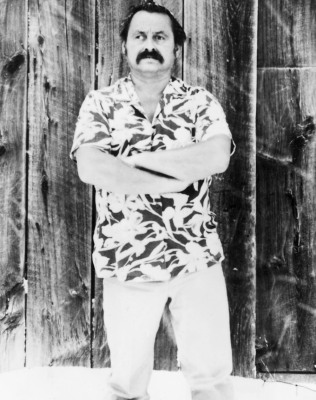
AMY GOODMAN: Why did you find comfort in grizzlies, coming back from Vietnam?

DOUG PEACOCK: Mainly because they got you out of your own mind. You know, if you put on a Kelty pack and you hike in Colorado or California, you’re top dog. You know, you walk down a trail, you think about your girlfriend or your portfolio or I don’t know what. In grizzly country, you can’t do that, because there’s something out there that, if it chose, could kill and eat you at anytime it wanted to. And just having to take that into stock, you know, totally and fundamentally just changes the ambiance of a place. 

All of a sudden, you’re not top dog. And you look a little more closely. You walk like an animal. You scent the wind. You listen to the brush. And it really accelerates your inner — much more ancient finished system than our modern industrial culture provides. I mean, getting back into the wilderness like that, having a grizzly bear in there, just within three or four days, something happens to me. You know, I’m really like another animal almost. And it’s a wonderful thing, because everything is externalized, and, you know, you live immediately in the present. 

CONNECT

Thank You, Jessica.

Guy Clark, R.I.P.

"The Cape"

He did not know he could not fly, so he did ...


Thank you, Kurt.

Frighten.


I walk in the forest at night to frighten myself.

Jim Harrison

Happy birthday, Satie.


Erik Satie was born on this day in 1866.

Experience is a form of paralysis.

Erik Satie

Orchestre National de Lorraine performs Gymnopedies No. 3 & No. 1, led by Jacques Mercier ...

Heart.


AMOR LOCI

I could draw its map by heart
showing its contours
strata and vegetation
name every height,
small burn and lonely shieling

W.H. Auden