"I am not one who was born in the custody of wisdom. I am one who is fond of olden times and intense in quest of the sacred knowing of the ancients." Gustave Courbet

25 May 2017

Happy birthday, Emerson.

 
Ralph Waldo Emerson was born on this day in 1803.

What I must do is all that concerns me, not what the people think. This rule, equally arduous in actual and in intellectual life, may serve for the whole distinction between greatness and meanness. It is the harder, because you will always find those who think they know what is your duty better than you know it. It is easy in the world to live after the world's opinion; it is easy in solitude to live after our own; but the great man is he who in the midst of the crowd keeps with perfect sweetness the independence of solitude.

The objection to conforming to usages that have become dead to you is, that it scatters your force. It loses your time and blurs the impression of your character. If you maintain a dead church, contribute to a dead Bible-society, vote with a great party either for the government or against it, spread your table like base housekeepers, — under all these screens I have difficulty to detect the precise man you are. And, of course, so much force is withdrawn from your proper life. But do your work, and I shall know you. Do your work, and you shall reinforce yourself. A man must consider what a blindman's-buff is this game of conformity. If I know your sect, I anticipate your argument. I hear a preacher announce for his text and topic the expediency of one of the institutions of his church. Do I not know beforehand that not possibly can he say a new and spontaneous word? Do I not know that, with all this ostentation of examining the grounds of the institution, he will do no such thing? Do I not know that he is pledged to himself not to look but at one side, — the permitted side, not as a man, but as a parish minister? He is a retained attorney, and these airs of the bench are the emptiest affectation. Well, most men have bound their eyes with one or another handkerchief, and attached themselves to some one of these communities of opinion. This conformity makes them not false in a few particulars, authors of a few lies, but false in all particulars. Their every truth is not quite true. Their two is not the real two, their four not the real four; so that every word they say chagrins us, and we know not where to begin to set them right. Meantime nature is not slow to equip us in the prison-uniform of the party to which we adhere. We come to wear one cut of face and figure, and acquire by degrees the gentlest asinine expression. There is a mortifying experience in particular, which does not fail to wreak itself also in the general history; I mean "the foolish face of praise," the forced smile which we put on in company where we do not feel at ease in answer to conversation which does not interest us. The muscles, not spontaneously moved, but moved by a low usurping wilfulness, grow tight about the outline of the face with the most disagreeable sensation.

For nonconformity the world whips you with its displeasure. And therefore a man must know how to estimate a sour face. The by-standers look askance on him in the public street or in the friend's parlour. If this aversation had its origin in contempt and resistance like his own, he might well go home with a sad countenance; but the sour faces of the multitude, like their sweet faces, have no deep cause, but are put on and off as the wind blows and a newspaper directs. Yet is the discontent of the multitude more formidable than that of the senate and the college. It is easy enough for a firm man who knows the world to brook the rage of the cultivated classes. Their rage is decorous and prudent, for they are timid as being very vulnerable themselves. But when to their feminine rage the indignation of the people is added, when the ignorant and the poor are aroused, when the unintelligent brute force that lies at the bottom of society is made to growl and mow, it needs the habit of magnanimity and religion to treat it godlike as a trifle of no concernment.

The other terror that scares us from self-trust is our consistency; a reverence for our past act or word, because the eyes of others have no other data for computing our orbit than our past acts, and we are loath to disappoint them.

But why should you keep your head over your shoulder? Why drag about this corpse of your memory, lest you contradict somewhat you have stated in this or that public place? Suppose you should contradict yourself; what then? It seems to be a rule of wisdom never to rely on your memory alone, scarcely even in acts of pure memory, but to bring the past for judgment into the thousand-eyed present, and live ever in a new day. In your metaphysics you have denied personality to the Deity: yet when the devout motions of the soul come, yield to them heart and life, though they should clothe God with shape and color. Leave your theory, as Joseph his coat in the hand of the harlot, and flee.

A foolish consistency is the hobgoblin of little minds, adored by little statesmen and philosophers and divines. With consistency a great soul has simply nothing to do. He may as well concern himself with his shadow on the wall. Speak what you think now in hard words, and to-morrow speak what to-morrow thinks in hard words again, though it contradict every thing you said to-day. — 'Ah, so you shall be sure to be misunderstood.' — Is it so bad, then, to be misunderstood? Pythagoras was misunderstood, and Socrates, and Jesus, and Luther, and Copernicus, and Galileo, and Newton, and every pure and wise spirit that ever took flesh. To be great is to be misunderstood.

Ralph Waldo Emerson

CONNECT

Harold Bloom on Emerson ... HERE.

Hope.

24 May 2017

Differently.


Justice. To be ever ready to admit that another person is something quite different from what we read when he is there (or when we think about him). Or rather, to read in him that he is certainly something different, perhaps something completely different from what we read in him.

Every being cries out silently to be read differently.

Simone Weil

Ssssssssstones, "Beast of Burden"

Inside.


Everybody has a secret world inside of them. I mean everybody. All of the people in the whole world, I mean everybody — no matter how dull and boring they are on the outside. Inside them they've all got unimaginable, magnificent, wonderful, stupid, amazing worlds... Not just one world. Hundreds of them. Thousands, maybe.

Neil Gaiman

Deeper.


An old man's thought of school;
An old man, gathering youthful memories and
blooms that youth itself cannot,
Now only do I know you!
O fair auroral skies! O morning dew upon the
grass!
And these I see—these sparkling eyes,
These stores of mystic meaning—these young lives,
Building, equipping, like a fleet of ships—immortal
ships!
Soon to sail out over the measureless seas,
On the Soul's voyage.
Only a lot of boys and girls?
Only the tiresome spelling, writing, ciphering classes?
Only a public school?
Ah! more—infinitely more;
(As George Fox rais'd his warning cry, "Is it this
pile of brick and mortar—these dead floors,
windows, rails—you call the church?
Why this is not the church at all—the church is
living, ever living souls.")
And you, America,
Cast you the real reckoning for your present?
The lights and shadows of your future—good or evil?
This Union multiform, with all its dazzling hopes
and terrible fears?
Look deeper, nearer, earlier far—provide ahead—
counsel in time;
Not to your verdicts of election days—not to your
voters look,
To girlhood, boyhood look—the teacher and the
school.

Walt Whitman

23 May 2017

Crazy Horse, "Like a Hurricane"

Sacred.


That is why The Ring Cycle is of ever-increasing importance to music-lovers in our times. Its theme is the death of the gods, and what the gods have bequeathed to us, namely, the knowledge of, and longing for, the sacred. Until we recognise sacred moments, Wagner implies in this monumental work, we cannot live fully as free beings. These moments are the foundation of all our attempts to endow human life with significance. 

22 May 2017

Both.


A master in the art of living draws no sharp distinction between his work and his play; his labor and his leisure; his mind and his body; his education and his recreation. He hardly knows which is which. He simply pursues his vision of excellence through whatever he is doing, and leaves others to determine whether he is working or playing. To himself, he always appears to be doing both.

Yvon Chouinard

Liberate.


DREAM POEM

One evening I lay down thinking
wouldn’t it be nice for once
to dream that one poetic image
which would liberate me to write.
As I slept, I dreamt of a huge black lake,
so big and so black it can’t be described.
I was unsure if this was a dream
or if I was really just sleeping,
not dreaming at all, so I felt
around on the banks of my sleep
for a smooth, flat stone to skip
across the surface in the hope
that the ripples, when they collided,
might form that image and tell me
this was the dream I had waited for.
But I couldn’t find a stone. The only
things on the shore were the feathers
of a shredded pillow. When I grasped these
one by one and threw them into the lake,
they flew away to form the stars.

Kendall Dunkelberg

Happy birthday, Wagner.


Richard Wagner was born on this day in 1813.

If we are to make sense of the great Wagnerian dramas, we must understand the currency in which they trade -- the currency of the sacred.

Roger Scruton

Claudio Abbado leads the Orchestra of the Festival of Lucerne, performing the Overture to Lohengrin ...

Finer.


Miracles seem to me to rest not so much upon healing power coming suddenly near us from afar but upon our perceptions being made finer, so that, for a moment, our eyes can see and our ears can hear what is there around us always.

Willa Cather

Leading.

Feel.

O'Keeffe, Blue, Black and Grey, 1960


The unexplainable thing in nature that makes me feel the world is big and fat beyond my understanding – to understand maybe by trying to put it into form. To find the feeling of infinity on the horizon line or just over the next hill.

Georgia O'Keeffe

17 May 2017

Infinite.


Do not ask your children
to strive for extraordinary lives.
Such striving may seem admirable,
but it is the way of foolishness.
Help them instead to find the wonder
and the marvel of an ordinary life.
Show them the joy of tasting
tomatoes, apples and pears.
Show them how to cry
when pets and people die.
Show them the infinite pleasure
in the touch of a hand.
And make the ordinary come alive for them.
The extraordinary will take care of itself.

William Martin

Contact.


“The more contact I have with people, the better I feel: eye contact, a smile, I’ll take anything. The moment somebody makes any kind of overture, I’m heading their way. So many people ask for my photograph. I always say ‘yes.’ It’s thrilling. Aren’t we lucky? We’re so lucky to be here. This street is so full of sweetness and people. I love this street so much because it leads to the park. I can smell it. Look at that beautiful dog over there!” 

CONNECT

Forget.

16 May 2017

Entwine.


Philosophers have long been pondering the origins of genius. Early Greek thinkers believed an overabundance of black bile—one of the four bodily humors proposed by Hippocrates—endowed poets, philosophers, and other eminent souls with “exalted powers,” says historian Darrin McMahon, author of Divine Fury: A History of Genius. Phrenologists attempted to find genius in bumps on the head; craniometrists collected skulls—including philosopher Immanuel Kant’s—which they probed, measured, and weighed.

None of them discovered a single source of genius, and such a thing is unlikely to be found. Genius is too elusive, too subjective, too wedded to the verdict of history to be easily identified. And it requires the ultimate expression of too many traits to be simplified into the highest point on one human scale. Instead we can try to understand it by unraveling the complex and tangled qualities—intelligence, creativity, perseverance, and simple good fortune, to name a few—that entwine to create a person capable of changing the world.

Paradise.


I have always imagined that Paradise will be a kind of library.

Jorge Luis Borges

Money.


Huck Finn's wealth and the fact that he was now under the Widow Douglas' protection introduced him into society—no, dragged him into it, hurled him into it—and his sufferings were almost more than he could bear. The widow's servants kept him clean and neat, combed and brushed, and they bedded him nightly in unsympathetic sheets that had not one little spot or stain which he could press to his heart and know for a friend. He had to eat with a knife and fork; he had to use napkin, cup, and plate; he had to learn his book, he had to go to church; he had to talk so properly that speech was become insipid in his mouth; whithersoever he turned, the bars and shackles of civilization shut him in and bound him hand and foot.

He bravely bore his miseries three weeks, and then one day turned up missing. For forty–eight hours the widow hunted for him everywhere in great distress. The public were profoundly concerned; they searched high and low, they dragged the river for his body. Early the third morning Tom Sawyer wisely went poking among some old empty hogsheads down behind the abandoned slaughter–house, and in one of them he found the refugee. Huck had slept there; he had just breakfasted upon some stolen odds and ends of food, and was lying off, now, in comfort, with his pipe. He was unkempt, uncombed, and clad in the same old ruin of rags that had made him picturesque in the days when he was free and happy. Tom routed him out, told him the trouble he had been causing, and urged him to go home. Huck's face lost its tranquil content, and took a melancholy cast. He said:

"Don't talk about it, Tom. I've tried it, and it don't work; it don't work, Tom. It ain't for me; I ain't used to it. The widder's good to me, and friendly; but I can't stand them ways. She makes me get up just at the same time every morning; she makes me wash, they comb me all to thunder; she won't let me sleep in the woodshed; I got to wear them blamed clothes that just smothers me, Tom; they don't seem to any air git through 'em, somehow; and they're so rotten nice that I can't set down, nor lay down, nor roll around anywher's; I hain't slid on a cellar–door for—well, it 'pears to be years; I got to go to church and sweat and sweat—I hate them ornery sermons! I can't ketch a fly in there, I can't chaw. I got to wear shoes all Sunday. The widder eats by a bell; she goes to bed by a bell; she gits up by a bell—everything's so awful reg'lar a body can't stand it."

"Well, everybody does that way, Huck."

"Tom, it don't make no difference. I ain't everybody, and I can't STAND it. It's awful to be tied up so. And grub comes too easy—I don't take no interest in vittles, that way. I got to ask to go a–fishing; I got to ask to go in a–swimming—dern'd if I hain't got to ask to do everything. Well, I'd got to talk so nice it wasn't no comfort—I'd got to go up in the attic and rip out awhile, every day, to git a taste in my mouth, or I'd a died, Tom. The widder wouldn't let me smoke; she wouldn't let me yell, she wouldn't let me gape, nor stretch, nor scratch, before folks—" [Then with a spasm of special irritation and injury]—"And dad fetch it, she prayed all the time! I never see such a woman! I HAD to shove, Tom—I just had to. And besides, that school's going to open, and I'd a had to go to it—well, I wouldn't stand THAT, Tom. Looky here, Tom, being rich ain't what it's cracked up to be. It's just worry and worry, and sweat and sweat, and a–wishing you was dead all the time. Now these clothes suits me, and this bar'l suits me, and I ain't ever going to shake 'em any more. Tom, I wouldn't ever got into all this trouble if it hadn't 'a' ben for that money; now you just take my sheer of it along with your'n, and gimme a ten–center sometimes—not many times, becuz I don't give a dern for a thing 'thout it's tollable hard to git—and you go and beg off for me with the widder."

Martk Twain, from The Adventures of Tom Sawyer

Typography..

Inverted.

14 May 2017

Calendars.


There are perhaps no days of our childhood we lived so fully as those we believe we left without having lived them, those we spent with a favorite book. Everything that filled them for others, so it seemed, and that we dismissed as a vulgar obstacle to a divine pleasure; the game for which a friend would come to fetch us at the most interesting passage; the troublesome bee or sun ray that forced us to lift our eyes from the page or to change position; the provisions for the afternoon snack that we had been made to take along and that we left beside us on the bench, without touching while above our head the sun was diminishing in force in the blue sky; the dinner we had to return home for, and during which we thought only of going up immediately afterward to finish the interrupted chapter, all those things which reading should have kept us from feeling anything but annoyance at, it has on the contrary engraved in us so sweet a memory of (so much more precious to our present judgment than what we read then with such love), that if we still happen today to leaf through those books of another time, it is for no other reason than that they are the only calendars we have kept of days that have vanished, and we hope to see reflected on their pages the dwellings and pond which no longer exist.

Marcel Proust

Processes.


If you spend a lot of time in the woods and see a lot of bears, obviously you reach a point where you know a bear is not just a bear and a wolf is not just a wolf. In that sense it's what Wallace Stevens said, "We were all Indians once." If you really study crows and ravens for a long time, you don't overlook their splendors and peculiarities. Most of the bad attitudes against the natural world, of course, come from utter ignorance of the processes of the natural world. If you really knew what a river was you couldn't dump all that garbage in it, but most of the people who dump the garbage in the river don't have any idea what a river is.

Jim Harrison

Humility.


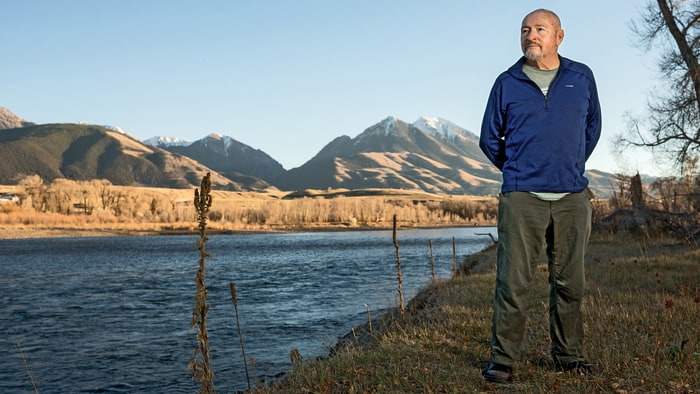
We've been walking slowly through the dark for a long time, the old soldier and I, beneath a thumbnail silver moon, the coyotes chattering like roosters. He makes his way using a wooden flagpole for a cane, a rifle and a tripod strapped to his back. Here, some 30 miles north of Yellowstone, at the edge of Montana's Crazy Mountains, on this cold morning in November, the mind feels clean and clear, focused on this one moment. We're hoping to kill an elk at daylight.

Doug Peacock has barely hunted, or even fired a gun, since his days in Vietnam. He experienced enough killing there, he says, to last several lifetimes. He was 27 when he came home, racked with PTSD, back before there was a name for it — his Army medical papers described his condition as: "Occupational and social impairment . . . due to such symptoms as: depressed mood, anxiety, suspiciousness, panic attacks, sleep impairment . . ."

Peacock thought he was alone back then; he didn't know that every soldier experienced some version of this. Once home, he wandered the West — Utah, Arizona, Wyoming — in solitude for weeks at a time. Eventually, he found his way into Yellowstone country, just a day's walk from the sagebrush prairie we're traversing this morning. In the small number of grizzly bears that were holding on there, Peacock found something worth living for. He began to follow those bears — tracking them year after year, getting to know them, filming them. Over the years, he came to understand them in ways few others, if any, had before. Now no one knows wild grizzlies better. Other researchers fly over them in airplanes, and many good scientists sit in front of computers doing the important work of spatial modeling and scat analysis. But for nearly his entire adult life, Peacock has been out with the bears — in their country, watching and learning. "It's the one animal out there that can kill and eat you anytime it chooses to — even though it seldom does," he says. "It stands as an instant lesson in humility."

13 May 2017

Ronnie Wood, "I Gotta See"

Jack Ingram, with Bruce & Charlie Robison, "Dim Lights, Thick Smoke (and Loud, Loud Music)"

Better.


the trick of finding what you didn't lose
(existing's tricky:but to live's a gift)

the teachable imposture of always
arriving at the place you never left

(and i refer to thinking)rests upon
a dismal misconception;namely that
some neither ape nor angel called a man
is measured by his quote eye cue unquote.

Much better than which, every woman who's
(despite the ultramachinations of
some loveless infraworld)a woman knows;
and certain men quite possibly may have

shall we say guessed?"
"we shall" quoth gifted she:
and played the hostess to my morethanme

e.e. cummings

11 May 2017

Never.

Midnight Oil, "Dead Heart"

Bread, "Guitar Man"

R.E.M., "Maps & Legends"

De-grading.


Alfie Kohn on de-grading ...

You can tell a lot about a teacher’s values and personality just by asking how he or she feels about giving grades. Some defend the practice, claiming that grades are necessary to“motivate”students. Many of these teachers actually seem to enjoy keeping intricate records of students’marks. Such teachers periodically warn students that they’re“going to have to know this for the test”as a way of compelling them to pay attention or do the assigned readings—and they may even use surprise quizzes for that purpose, keeping their gradebooks at the ready. 

Frankly, we ought to be worried for these teachers’students. In my experience, the most impressive teachers are those who despise the whole process of giving grades. Their aversion, as it turns out, is supported by solid evidence that raises questions about the very idea of traditional grading.

Everything.


And this, our life, exempt from public haunt, finds tongues in trees, books in the running brooks, sermons in stones, and good in everything.

William Shakespeare

Haydn, Symphony No. 60 in C major, H. I/60

Giovanni Antonini directs Il Giardino Armonico, with Geddy Lee, cello ...

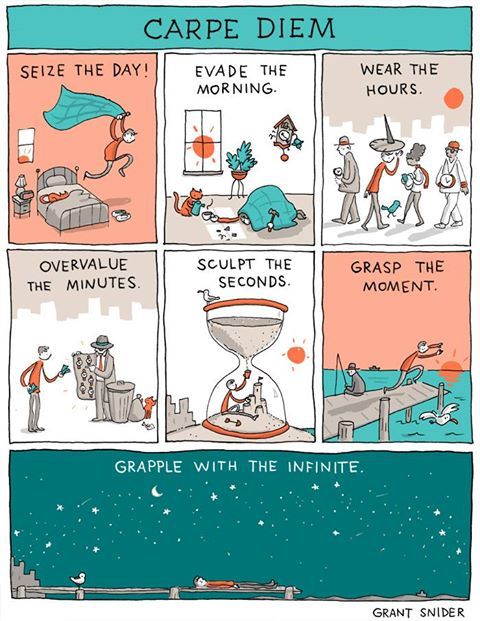
Carpe.

10 May 2017

Neil Young, "Expecting to Fly"

Tim O'Brien, "Gentle on My Mind"

With Bryan Sutton, guitar, and Stuart Duncan, fiddle ...

Willing.


Those who are willing to be vulnerable move among mysteries.

Theodore Roethke

Objectively.

Tiepolo, Woman with as Parrot, 1760


Audience Member:  What’s the most beautiful color … objectively?

Roger Scruton: The most beautiful color, objectively, is the pale violet used by Tiepolo in painting the lips of degenerate women.

Audience Member: What’s the most truthful one?

Scruton:  I think that one is equally truthful.

Ronnie Wood & Buddy Guy, "Miss You"

Spinning.


Tricycle remembers Robert Pirsig ...

Quality—you know what it is, yet you don’t know what it is. But that’s self-contradictory. But some things are better than others, that is, they have more quality. But when you try to say what the quality is, apart from the things that have it, it all goes poof! There’s nothing to talk about. But if you can’t say what Quality is, how do you know what it is, or how do you know that it even exists? If no one knows what it is, then for all practical purposes it doesn’t exist at all. But for all practical purposes it really does exist. What else are the grades based on? Why else would people pay fortunes for some things and throw others in the trash pile? Obviously some things are better than others—but what’s the “betterness?" So round and round you go, spinning mental wheels and nowhere finding any place to get traction. What the hell is Quality? What is it?

When.

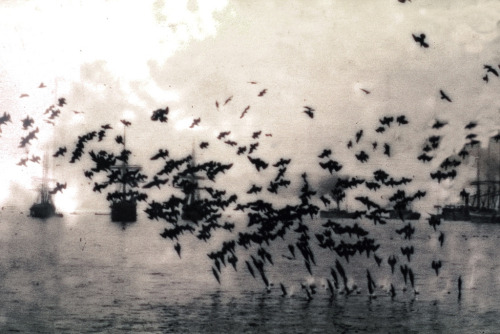
N/A, Pelicans in Valparaíso, Chile, 1893


WHY the DAY FLIES

The poet, throughout his life, leans for a moment against some tree, or sea, or bank of earth, or cloud of a certain hue, as circumstances permit. He is not fused to the distractions of others. His love, his joy, his astonished reach have their equivalent in all the places he has not gone, all the places he will never go, among strangers he will not know. When we lift our voices to him, when we greet him with honors that bind, if we invoke the stars in his name, he responds that he is from the country beside, from the sky that has just gone under. 

The poet quickens, then runs to the outcome. At evening, despite the apprentice’s dimples on his cheeks, he is a courteous passerby whose farewells are brief so he can be there when the bread comes out of the oven.


René Char

Robert Plant, "Carry Me Down to the Sea"

Souls.


Perhaps reading and writing books is one of the last defenses human dignity has left, because in the end they remind us of what God once reminded us before He too evaporated in this age of relentless humiliations – that we are more than ourselves; that we have souls.

Richard Flanagan

Tim O'Brien & Darrell Scott, "Time to Talk to Joseph"

It’s time to talk to Joseph
Gonna pack my little sack
'Ere isn’t much I really need
To wander off the track
I’ll be sleeping under ledges
Eating what I ­need
I’ll read the reaching branches
Strum your heartstrings in my mind

Here.


Geese appear high over us,
pass, and the sky closes. Abandon,
as in love or sleep, holds
them to their way, clear
in the ancient faith: what we need
is here. And we pray, not
for new earth or heaven, but to be
quiet in heart, and in eye,
clear. What we need is here.

Wendell Berry 

Silence.