Showing posts with label tea. Show all posts
Showing posts with label tea. Show all posts
14 September 2025


13 January 2025
Rejuvenation.

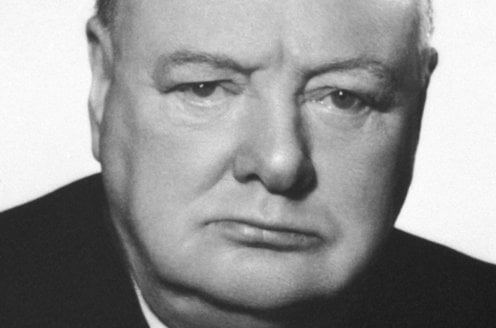
Sir Winston's ritual of rejuvenation ...
Tea was much more than a mere beverage for Winston Churchill; it was a ritual of rejuvenation. His days were famously demanding, filled with war councils, strategic planning, and speeches that rallied a nation. Amid this, tea served as a moment of calm, offering clarity and comfort. Churchill’s tea preferences reflected his character – bold yet balanced.The tea of choice for Churchill was often strong, traditional blends such as Earl Grey, English Breakfast, or Lapsang Souchong. The latter, a smoky Chinese tea, was particularly fitting for a man who appreciated bold flavors and complexity.
05 October 2024
Tea-Tray.

From the latter weeks of October to Christmas-Eve, therefore is the period during which happiness is in season, which, in my judgement, enters the room with the tea-tray.
Thomas De Quincey, from Confessions of an English Opium Eater
29 May 2024
True.
Funny because it's true ...
Technique is the proof of your seriousness.
Most people who don't care for tea (especially green tea) would benefit from understanding the proper techniques of brewing it. The best tea you'll drink is made from loose leaf tea, but if a tea bag is used, for best results, prepare it properly.
27 August 2023
Spiritual.
Le Sidaner, The Table in the Sun, 1911

Tea is also a sort of spiritual refreshment, an elixir of clarity and wakeful tranquility. Respectfully preparing tea and partaking of it mindfully creates heart-to-heart conviviality, a way to go beyond this world and enter a realm apart. No pleasure is simpler, no luxury cheaper, no consciousness-altering agent more benign. Tea is quiet and our thirst for tea is never far from our craving for beauty.
James Norwood Pratt
21 July 2023
Memory.
Anker, Old Man Drinking Tea, 1895

No sooner had the warm liquid mixed with the crumbs touched my palate than a shudder ran through me and I stopped, intent upon the extraordinary thing that was happening to me. An exquisite pleasure had invaded my senses, something isolated, detached, with no suggestion of its origin. And at once the vicissitudes of life had become indifferent to me, its disasters innocuous, its brevity illusory – this new sensation having had on me the effect which love has of filling me with a precious essence; or rather this essence was not in me it was me. Whence did it come? What did it mean? How could I seize and apprehend it?
Suddenly the memory revealed itself. The taste was that of the little piece of madeleine which on Sunday mornings at Combray (because on those mornings I did not go out before mass), when I went to say good morning to her in her bedroom, my aunt Léonie used to give me, dipping it first in her own cup of tea or tisane. The sight of the little madeleine had recalled nothing to my mind before I tasted it. And all from my cup of tea.
Marcel Proust, from In Search of Lost Time
Thanks, Mum.

21 June 2023

08 March 2023
Both.

There are those who love to get dirty and fix things. They drink coffee at dawn, beer after work. And those who stay clean, just appreciate things. At breakfast they have milk and juice at night. There are those who do both, they drink tea.
Gary Snyder
23 November 2022

26 February 2022
17 January 2022
Both.
Firchau, Head in the Clouds, January 11, 2013

There are those who love to get dirty and fix things.
They drink coffee at dawn, beer after work.
And those who stay clean, just appreciate things.
At breakfast they have milk and juice at night.
There are those who do both, they drink tea.
Gary Snyder
29 December 2021

30 March 2021
01 July 2020
Both.
They drink coffee at dawn, beer after work.
And those who stay clean, just appreciate things.
At breakfast they have milk and juice at night.
There are those who do both, they drink tea.
Gary Snyder
05 May 2020
Tea.

There are those who love to get dirty and fix things.
They drink coffee at dawn, beer after work.
And those who stay clean, just appreciate things.
At breakfast they have milk and juice at night.
There are those who do both, they drink tea.
Gary Snyder
01 March 2020
26 January 2020
Strong.
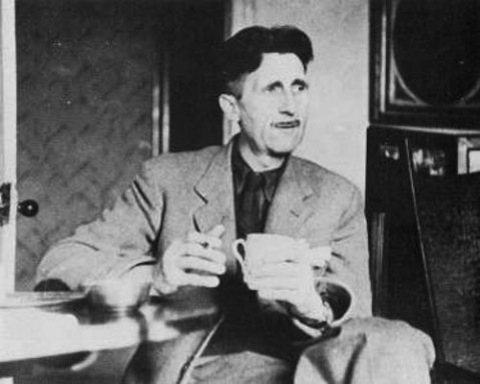
George Orwell's "A Nice Cup of Tea" ...
If you look up "tea" in the first cookery book that comes to hand you will probably find that it is unmentioned; or at most you will find a few lines of sketchy instructions which give no ruling on several of the most important points.
This is curious, not only because tea is one of the main stays of civilization in this country, as well as in Eire, Australia and New Zealand, but because the best manner of making it is the subject of violent disputes.
When I look through my own recipe for the perfect cup of tea, I find no fewer than eleven outstanding points. On perhaps two of them there would be pretty general agreement, but at least four others are acutely controversial. Here are my own eleven rules, every one of which I regard as golden:
- First of all, one should use Indian or Ceylonese tea. China tea has virtues which are not to be despised nowadays — it is economical, and one can drink it without milk — but there is not much stimulation in it. One does not feel wiser, braver or more optimistic after drinking it. Anyone who has used that comforting phrase "a nice cup of tea" invariably means Indian tea.
- Secondly, tea should be made in small quantities — that is, in a teapot. Tea out of an urn is always tasteless, while army tea, made in a cauldron, tastes of grease and whitewash. The teapot should be made of china or earthenware. Silver or Britanniaware teapots produce inferior tea and enamel pots are worse; though curiously enough a pewter teapot (a rarity nowadays) is not so bad.
- Thirdly, the pot should be warmed beforehand. This is better done by placing it on the hob than by the usual method of swilling it out with hot water.
- Fourthly, the tea should be strong. For a pot holding a quart, if you are going to fill it nearly to the brim, six heaped teaspoons would be about right. In a time of rationing, this is not an idea that can be realized on every day of the week, but I maintain that one strong cup of tea is better than twenty weak ones. All true tea lovers not only like their tea strong, but like it a little stronger with each year that passes — a fact which is recognized in the extra ration issued to old-age pensioners.
- Fifthly, the tea should be put straight into the pot. No strainers, muslin bags or other devices to imprison the tea. In some countries teapots are fitted with little dangling baskets under the spout to catch the stray leaves, which are supposed to be harmful. Actually one can swallow tea-leaves in considerable quantities without ill effect, and if the tea is not loose in the pot it never infuses properly.
- Sixthly, one should take the teapot to the kettle and not the other way about. The water should be actually boiling at the moment of impact, which means that one should keep it on the flame while one pours. Some people add that one should only use water that has been freshly brought to the boil, but I have never noticed that it makes any difference.
- Seventhly, after making the tea, one should stir it, or better, give the pot a good shake, afterwards allowing the leaves to settle.
- Eighthly, one should drink out of a good breakfast cup — that is, the cylindrical type of cup, not the flat, shallow type. The breakfast cup holds more, and with the other kind one's tea is always half cold before one has well started on it.
- Ninthly, one should pour the cream off the milk before using it for tea. Milk that is too creamy always gives tea a sickly taste.
- Tenthly, one should pour tea into the cup first. This is one of the most controversial points of all; indeed in every family in Britain there are probably two schools of thought on the subject. The milk-first school can bring forward some fairly strong arguments, but I maintain that my own argument is unanswerable. This is that, by putting the tea in first and stirring as one pours, one can exactly regulate the amount of milk whereas one is liable to put in too much milk if one does it the other way round.
- Lastly, tea — unless one is drinking it in the Russian style — should be drunk without sugar. I know very well that I am in a minority here. But still, how can you call yourself a true tea lover if you destroy the flavour of your tea by putting sugar in it? It would be equally reasonable to put in pepper or salt. Tea is meant to be bitter, just as beer is meant to be bitter. If you sweeten it, you are no longer tasting the tea, you are merely tasting the sugar; you could make a very similar drink by dissolving sugar in plain hot water.
Some people would answer that they don't like tea in itself, that they only drink it in order to be warmed and stimulated, and they need sugar to take the taste away. To those misguided people I would say: Try drinking tea without sugar for, say, a fortnight and it is very unlikely that you will ever want to ruin your tea by sweetening it again.
These are not the only controversial points to arise in connection with tea drinking, but they are sufficient to show how subtilized the whole business has become. There is also the mysterious social etiquette surrounding the teapot (why is it considered vulgar to drink out of your saucer, for instance?) and much might be written about the subsidiary uses of tea leaves, such as telling fortunes, predicting the arrival of visitors, feeding rabbits, healing burns and sweeping the carpet. It is worth paying attention to such details as warming the pot and using water that is really boiling, so as to make quite sure of wringing out of one's ration the twenty good, strong cups of that two ounces, properly handled, ought to represent.
23 December 2019
Then.
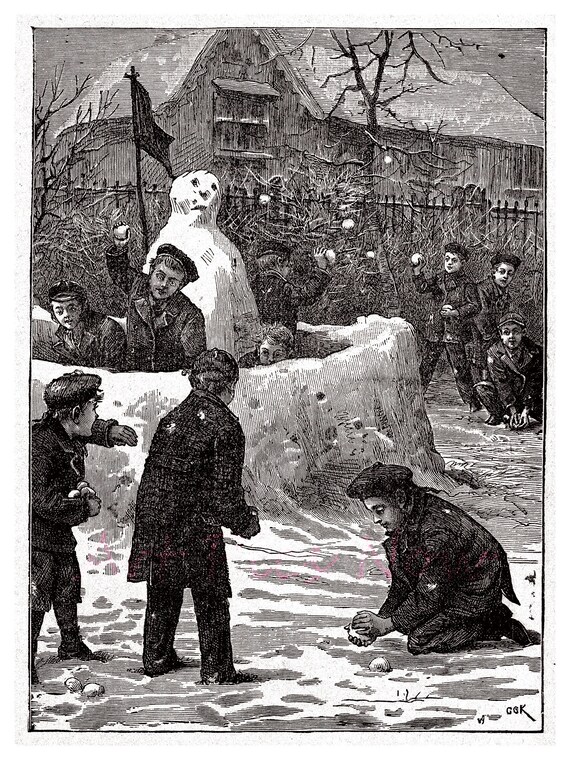
It snowed last year too: I made a snowman and my brother knocked it down and I knocked my brother down and then we had tea.
Dylan Thomas, from A Child's Christmas in Wales
26 October 2019
Perfect.
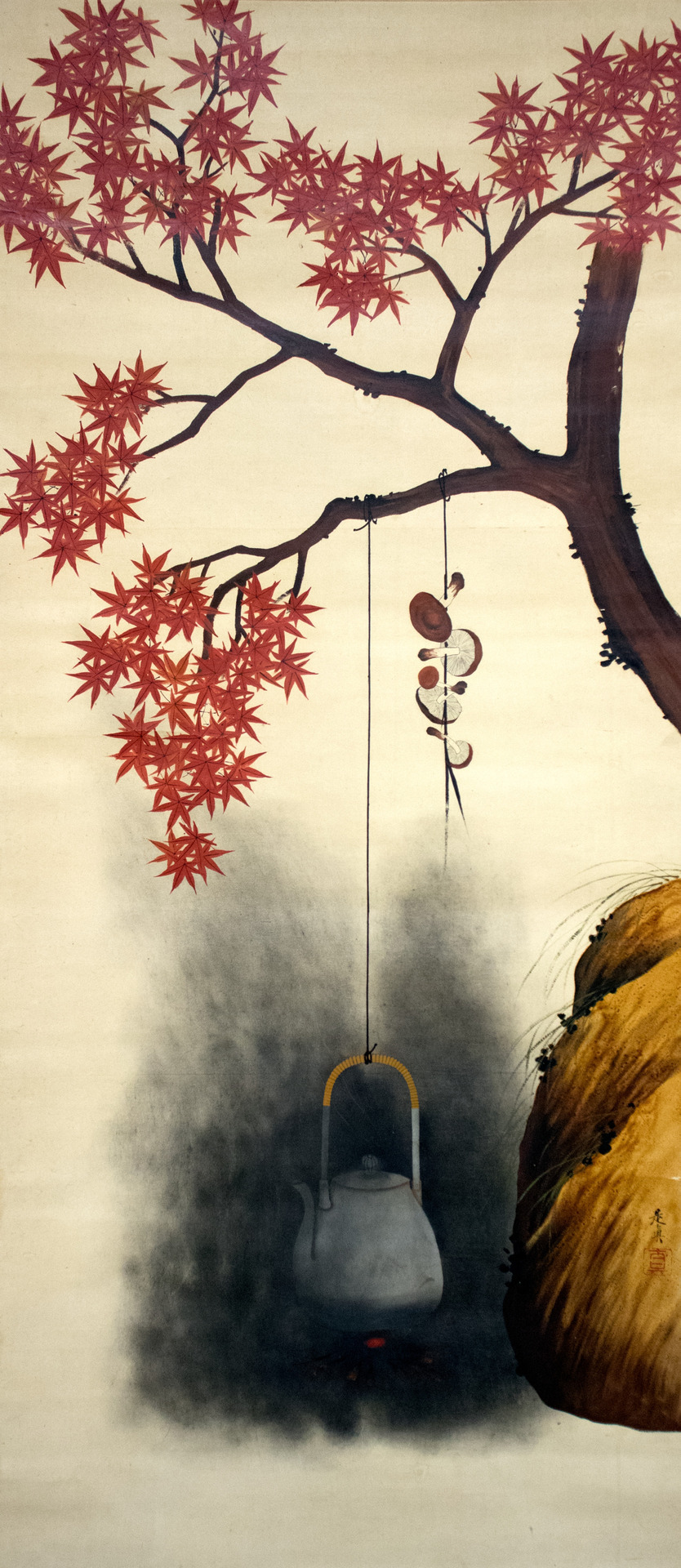
TIMES for DRINKING TEA
In idle moments
When bored with poetry
Thought confused
Beating time to songs
When the music stops
Living in seclusion
Enjoying scholarly pastimes
Conversing late at night
Studying on a sunny day
In the bridal chamber
Detaining favored quests
Playing host to scholars or pretty girls
Visiting friends returned from far away
In perfect weather
When skies are overcast
Watching boats glide past on the canal
Midst trees and bamboos
When flowers bud and birds chatter
On hot days by a lotus pond
Burning incense in the courtyard
After tipsy guests have left
When the youngsters have gone out
On visits to secluded temples
When viewing springs and scenic rocks
Hsü Jan-Ming
Subscribe to:
Posts (Atom)