"I am not one who was born in the custody of wisdom. I am one who is fond of olden times and intense in quest of the sacred knowing of the ancients." Gustave Courbet
Showing posts with label Zen. Show all posts

05 August 2021

Becomes.


TRAVELLING THE GREAT ROAD

I come across Zen writing that speaks to me. Venerable Juching's poem goes like this:
The Great Road has no gate.
It begins in your own mind.
The sky has no marked trails,
yet it finds its way to your nostrils
and becomes your breath.
Somehow we meet like tricksters
or bandits of dharma.
Ah! The great house comes tumbling down.
Astonished, maple leaves fly and scatter.
No longer in residence at the Zen Center, no longer having a regular sitting group, I take to the Great Road where there are no marked trails.  Students appear, often in cyberspace, and somehow we meet: in person, by Skype, by the Perfection of Wisdom, the Lovely, the Holy.

And so it goes. Finding an audience for this tumbled-down priest with threadbare robes-along with a sparkling new brown rakusu sewn by one of my far-flung students, signed by Sojun Roshi- is a matter for tricksters or bandits.

This message from the airport in Frankfurt, as I head for two and a half months in the Czeska Republika, Germany, and Austria: people and places that welcome me -- including for the first time in my ancestral Czech homelands, visiting where my mother Frantiska's parents were born, and leading a meditation retreat at the Village House.

As always relying on my beloved teacher Suzuki Roshi, who said: "Some of you are trying to be good Zen students. Why don't you be yourself. I'll get to know you better that way."

And for the maple leaves flying and scattering, here's a fragment of Raymond Carver that the wind brought my way:
And did you get what you wanted from this life, even so?
I did.
And what did you want?
To call myself beloved, to feel myself beloved on the earth.

Edward Espe Brown 

06 June 2021

Decisions.

An excellent cookbook ...


A traveler asked a teacher, "What is the secret of life?"

The master replied, "The secret of life is to make wise decisions."

The traveler then asked, "How can I make wise decisions?"

To which the master replied,"You will make wise decisions based on your experience."

"How do I gain experience?" the traveler asked.

"Poor decisions."

A Sufi proverb told by Edward Espe Brown

17 March 2020

Contributes.


No one else has access to the world you carry around within yourself; you are its custodian and entrance. No one else can see the world the way you see it. No one else can feel your life the way you feel it. Thus it is impossible to ever compare two people because each stands on such different ground. When you compare yourself to others, you are inviting envy into your consciousness; it can be a dangerous and destructive guest. If you try to avoid or remove this awkward quality, it will pursue you. The only effective way to still its unease is to transfigure it, to let it become something creative and positive that contributes to who you are.

Nietzsche said that one of the best days in his life was the day when he rebaptized all his negative qualities as his best qualities. Rather than banishing what is at first glimpse unwelcome, you bring it home to unity with your life. One of your sacred duties is to exercise kindness toward them. In a sense, you are called to be a loving parent to your delinquent qualities.

John O'Donohue

13 January 2019

Just.


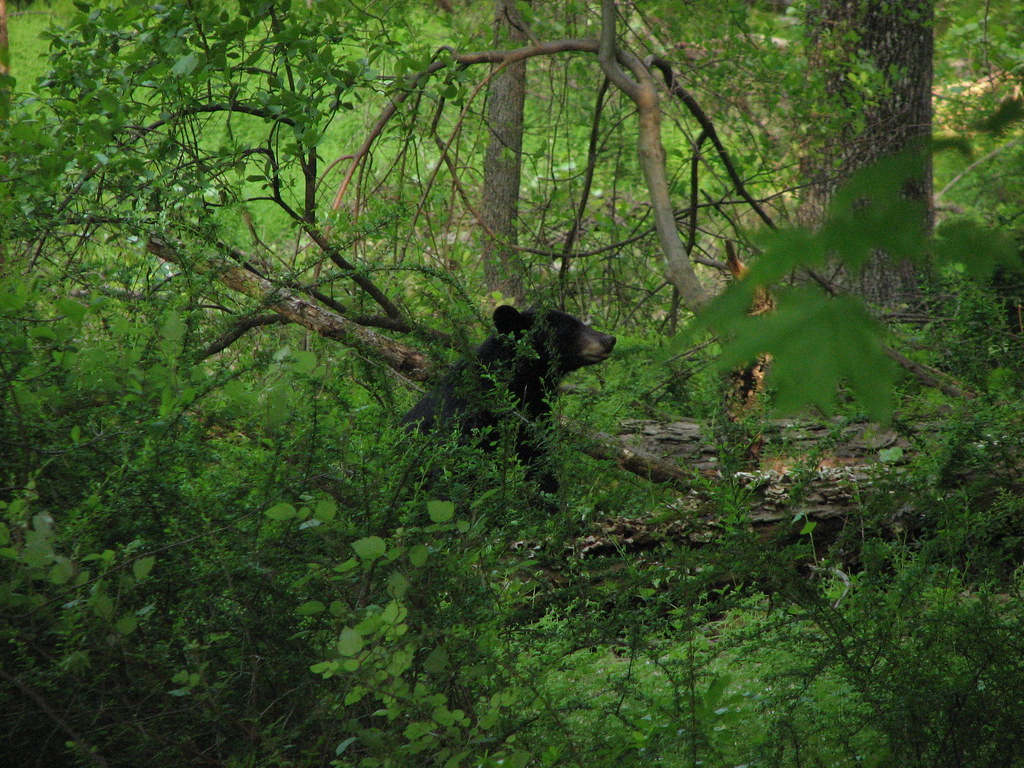
One of my amusements is to try to find and follow black bears, which have always been a dharma gate for me, aside from being bears.  Black bears aren’t remotely as dangerous as grizzlies, but it is best to be in a state of total attention because, frankly, the bear is.  We want to fully inhabit the earth while we are here and not lose our lives to endless rehearsals and illusions.  Perhaps my sitting is more like that of an addled bird, but the bear is always out there, not calling to me, just a bear.

Jim Harrison

06 December 2018

Original.


Stumps and logs help me forget the world of achievement, disappointment, rewards, the illusion of being right, struggling to hold the world together, and help me shed many of the illusions that the very notion of “personality” is heir to; there is a frequent mistake here in equating personality with “ego,” which is a Freudian term and unfortunately rather Prussian. The point seems to be to rid yourself of vanities in order to understand your true character. In sitting, the host returns to the original mind while the guest dithers. Then the dithering stops.

For years I’ve had a quote by Deshimaru pinned above my desk: “You must concentrate upon and consecrate yourself wholly to each day, as though a fire were raging in your hair.” What a ruthless statement. But maybe not. Both you and a piece of wood burn up, and at the end of the day you have ashes which don’t return to wood. This is wonderfully obvious but can be forgotten for years at a time. Sometimes the statement wears out and I put it away for a while to rest, though it doesn’t take long for it to refresh itself ...


There is a particular problem for the artist, writer, poet who begins early to separate himself for vision and lucidity, also to get the work done, and then this separation can easily become distorted, a “fiction” in itself, a personality egg you drown within juices of your own making. Thus, the artist’s Zen can become the arhat’s Zen, harsh, dry, attenuated, remote, somewhat selfish. Frequently he would be better off at an American Legion barn dance or sitting in a country bar talking to farmers.


Jim Harrison, from his essay, "Sitting Around"

10 May 2017

Spinning.


Tricycle remembers Robert Pirsig ...

Quality—you know what it is, yet you don’t know what it is. But that’s self-contradictory. But some things are better than others, that is, they have more quality. But when you try to say what the quality is, apart from the things that have it, it all goes poof! There’s nothing to talk about. But if you can’t say what Quality is, how do you know what it is, or how do you know that it even exists? If no one knows what it is, then for all practical purposes it doesn’t exist at all. But for all practical purposes it really does exist. What else are the grades based on? Why else would people pay fortunes for some things and throw others in the trash pile? Obviously some things are better than others—but what’s the “betterness?" So round and round you go, spinning mental wheels and nowhere finding any place to get traction. What the hell is Quality? What is it?

09 February 2017

Nourishes.


It is obvious that here in the USA manual labor doesn’t count anymore; it’s devalued and not honored. Not only when it comes to cooking, also the carpenter, the mechanic, the plumber, the farmer, the gardener and the seamstresses are affected by this. Their knowledge and craft are devaluated. We don’t have time for all those things anymore. We are too busy earning money at often uninteresting jobs. If people were to do more simple, down-to-earth activities like gardening, sewing or cooking they would feel more satisfied and fulfilled, more connected. You won’t get this from watching television. Working with our hands nourishes us. It doesn’t matter, if you cook or do garden work, it will give you a feeling of being connected to the world. You work with the things of this world. Today, if you are a successful person, you hire a cook, a housekeeper, you buy your clothes and somebody buys your food. Nobody touches a broom anymore to sweep the floor. What are hands for? To put chips in your mouth and punch the remote?

Edward Brown

CONNECT

13 December 2016

Blissful.


TEN BULLS

1. The Search for the Bull

In the pasture of this world, I endlessly push aside the tall grasses in search of the bull.
Following unnamed rivers, lost upon the interpenetrating paths of distant mountains,
My strength failing and my vitality exhausted, I cannot find the bull.
I only hear the locusts chirring through the forest at night.

2.  Discovering the Footprints

Along the riverbank under the trees, I discover footprints!
Even under the fragrant grass I see his prints.
Deep in remote mountains they are found.
These traces no more can be hidden than one's nose, looking heavenward.

3.  Perceiving the Bull

I hear the song of the nightingale.
The sun is warm, the wind is mild, willows are green along the shore,
Here no bull can hide!
What artist can draw that massive head, those majestic horns?

4.  Catching the Bull

I seize him with a terrific struggle.
His great will and power are inexhaustible.
He charges to the high plateau far above the cloud-mists,
Or in an impenetrable ravine he stands.

5.  Taming the Bull

The whip and rope are necessary,
Else he might stray off down some dusty road.
Being well trained, he becomes naturally gentle.
Then, unfettered, he obeys his master.

6.  Riding the Bull Home

Mounting the bull, slowly I return homeward.
The voice of my flute intones through the evening.
Measuring with hand-beats the pulsating harmony, I direct the endless rhythm.
Whoever hears this melody will join me.

7.  The Bull Transcended

Astride the bull, I reach home.
I am serene. The bull too can rest.
The dawn has come. In blissful repose,
Within my thatched dwelling I have abandoned the whip and rope.

8.  Both Bull and Self Transcended

Whip, rope, person, and bull -- all merge in No-Thing.
This heaven is so vast no message can stain it.
How may a snowflake exist in a raging fire?
Here are the footprints of the patriarchs.

9.  Reaching the Source

Too many steps have been taken returning to the root and the source.
Better to have been blind and deaf from the beginning!
Dwelling in one's true abode, unconcerned with that without --
The river flows tranquilly on and the flowers are red.

10.   In the World

Barefooted and naked of breast, I mingle with the people of the world.
My clothes are ragged and dust-laden, and I am ever blissful.
I use no magic to extend my life;
Now, before me, the dead trees become alive.

Kakuan
22 November 2016

Imagination.


INTERVIEWER
What does zazen do for the poetry? Do you feel that there is a relation there that helps somehow in the writing?

SNYDER
I was very hesitant to even think about that for many years, out of a kind of gambler's superstition not to want to talk too much or think too much about the things that might work for you or might give you luck. I'm not so superstitious anymore, and to demystify zazen Buddhist meditation, it can be said that it is a perfectly simple, ordinary activity to be silent, to pay attention to your own consciousness and your breath, and to temporarily stop listening or looking at things that are coming in from the outside. To let them just pass through you as they happen. There's no question that spending time with your own consciousness is instructive. You learn a lot. You can just watch what goes on in your own mind, and some of the beneficial effects are you get bored with some of your own tapes and quit playing them back to yourself. You also realize—I think anyone who does this comes to realize— that we have a very powerful visual imagination and that it is very easy to go totally into visual realms where you are walking around in a landscape or where any number of things can be happening with great vividness. This taught me something about the nature of thought and it led me to the conclusion—in spite of some linguists and literary theorists of the French ilk—that language is not where we start thinking. We think before language, and thought-images come into language at a certain point. We have fundamental thought processes that are prelinguistic. Some of my poetry reaches back to that.

28 March 2016

Jim Harrison, R.I.P

My sensei has passed.


You have to follow the affections of your heart and the truth of your imagination.  Otherwise, you will feel badly.

Jim Harrison

04 November 2015

Process.


This labor-intensive method is both an artistic and spiritual practice. The mandalas are beautiful, but the process is perhaps most fascinating. It takes tremendous effort and time to build a mandala—no sketch pads or Adobe Illustrator here—and once these masterpieces are completed, the final step takes place: ceremonial destruction. The destruction is the culmination of the process, meant to remind us of the impermanence of life.

While any creative ruled by ego might be heartbroken at the thought of killing good work on purpose (and what creative isn’t, really?), it is part of what makes these pieces so incredible—and a powerful metaphor for the creative process. As you embark on your next creative endeavor, remember these three lessons from the Buddhist monks who create mandalas.

08 April 2015

Light.


Hotei didn't need a zafu,
saying that his ass was sufficient.
The head's a cloud anchor
that the feet must follow,
Travel light, he said,
or don't travel at all.

Jim Harrison

22 February 2015

Quench.


Six Poems on Living in the Mountains

1.
I've got a little picture in my mind of a clean and quiet place.
Everywhere you look it's completely natural.
The house is made of plaited rushes.
There's a good half-acre for growing tubers and flowers.
Beautiful birds perch on cliffs
That encase a few clouds that hang around green peaks.
The world's red dust won't be able to get up here.
Simple elegance is better than saintliness or spirituality.

2.
Can joy be found in the mountains?
Let me tell you. There's more joy in the mountains
Than anywhere else.
Pines and bamboos perform sacred chants.
The songs of Sheng flutes are played by birds.
In the trees, monkeys climb for fruit.
In the ponds, ducks cavort with lotus lilies.
This escape from the ordinary world
Month by month and year by year
Eliminates the hindrances to Enlightenment.

3.
Don't try to stand tall in the courtyards of fame.
In the mountains such dreams fade away.
Your body stands on its own when it's up with the clouds.
Your heart pulls away from worldly attachments.
The moon that I love clears a path through the pines
And guides a stream right to the bamboo gate.
Naturally, this is nothing short of amazing.
How could you disparage it ... or ever tire of the sight?

4.
In the mountains there's nothing at all which prohibits
Dreams of cooking millet during afternoon naps.
If you're lazy by nature, you won't brood about problems.
You'll make light of the body and won't fear the cold.
Chrysanthemums grow by the three ancient paths.
A few planted plum trees make the whole yard fragrant.
Engagements are blessedly short.
Leisure is blessedly long.

5.
Just wake up from an afternoon nap in a grass hut.
Drag a walking stick and let it bounce free and easy.
Lean on a rock and watch the clouds rise.
Listen to the pine saplings and hear the sound of waves.
When the forest is dense, no guests pass by.
When the roads are dangerous, they're only used for gathering firewood.
The place is so pristine and cool
How could it fail to quench my mind's furnace of cares?

6.
People complain of a hard life in the mountains.
I don't think it's much different from the hardships of anywhere else.
A clay oven burning birch twigs,
A stone cauldron boiling wild sprouts.
It seems that you've only just picked the chrysanthemums
That grow in the three months of autumn
When it's time to view the flowers of March.
Pity more the moon that night after night
Is forced to entertain society.

Hsu Yun