"I am not one who was born in the custody of wisdom. I am one who is fond of olden times and intense in quest of the sacred knowing of the ancients." Gustave Courbet

03 August 2016

Wonder.

Carracci, Study of the Head of a Woman, 1609


Wonder—is not precisely Knowing
And not precisely Knowing not—

Emily Dickinson

Wonderful.


It’s hard to think about, but by the time I die, if I make it another twenty years, wouldn’t it be wonderful to stand out here, hidden from view, in this big jungle of bushes and wildflowers?  That’s my idea of, a nice thing.

Jim Harrison

Triumph, "Fight the Good Fight"

Rights.


From Daniel Pennac's Better Than Life.

Jimmie Dale Gilmore, "Another Colorado"

Enchantress.


TO THE RURAL MUSE  

Simple enchantress! wreath'd in summer blooms  
Of slender bent-stalks topt with feathery down, 
Heath's creeping vetch, and glaring yellow brooms,  
With ash-keys wavering on thy rushy crown; 
Simple enchantress! how I've woo'd thy smiles,  
How often sought thee far from flush'd renown; 
Sought thee unseen where fountain-waters fell;  
Touch'd thy wild reed unheard, in weary toils; 
And though my heavy hand thy song defiles,  
'Tis hard to leave thee, and to bid farewell.  

Simple enchantress! ah, from all renown, 
Far off, my soul hath warm'd in bliss to see  
The varied figures on thy summer-gown, 
That nature's finger works so 'witchingly;    
The coloured flower, the silken leaves that crown 
Green nestling bower-bush, and high towering  tree;  
Brooks of the sunny green and shady dell:  
Ah, sweet full many a time they've been to me;  
And though my weak song falters, sung to thee, 
I cannot, wild enchantress, bid farewell.  

Still must I seek thee, though I wind the brook  
When morning sunbeams o'er the waters glide, 
And trace thy footsteps in the lonely nook  
As evening moists the daisy by thy side; 
Ah, though I woo thee on thy bed of thyme,  
If courting thee be deem'd ambition's pride, 
It is so passing sweet with thee to dwell  
If love for thee in clowns be call'd a crime, 
Forgive presumption, O thou queen of rhyme!  
I've lov'd thee long, I cannot bid farewell.

John Clare 

Darell Scott & Tim O'Brien, "Memories & Moments"

Hiding.

Believe.


I truly believe the number one natural steroid is sleep and the number two natural steroid is milk, whole milk, and three would be water.  Four would be steak. I take a vitamin every day, it’s called a steak.

Jim Harbaugh

Quality.


I'm sadly realizing that years of digital listenings of classical music on YouTube and similar sound-compressing devices were enough to create a whole generation of tone-illiterate musicians and audiences.

Buy CDs, guys.  They're not the best sound quality, but much better than the crap you listen to online.

Enrico Onofri

Dog.

Haydn, Divertimento in D

Tanya Anisimova performs, accompanied by Lydia Frumkin ... "Good Ol' Frumkin" they call her.

02 August 2016

Paul Weller, "Wild Wood"

With The Orchestra of Syrian Musicians ...

High tide, mid afternoon

Ever.


Memory begins to qualify the imagination, to give it another formation, one that is peculiar to the self. I remember isolated, yet fragmented and confused, images–and images, shifting, enlarging, is the word, rather than moments or events–which are mine alone and which are especially vivid to me. They involve me wholly and immediately, even though they are the disintegrated impressions of a young child. They call for a certain attitude of belief on my part now; that is, they must mean something, but their best reality does not consist in meaning. They are not stories in that sense, but they are story-like, mythic, never evolved but evolving ever. There are such things in the world: it is their nature to be believed; it is not necessarily in them to be understood. Of all that must have happened to and about me in those my earliest days, why should these odd particulars alone be fixed in my mind? If I were to remember other things, I should be someone else.

N. Scott Momaday

Conducive.


eudaemonic (adj.)
also eudemonic, "producing happiness," 1856, from Greek eudaimonikos "conducive to happiness," from eudaimonia "happiness," from eu "good" + daimon "guardian, genius".

Haydn, Oboe Concerto in C major, Hob.VIIg:C1

François Leleux performs the Adagio with the Norwegian Chamber Orchestra ...

Know.

Anonymous, "Folia Rodrigo Martinez"

Jordi Savall performs with one of the incarnations of Hesperion ... all that matters is that Pedro is shaking something that sounds really neat ...

Abundance.


When it comes to solving problems, your perspective only provides one singular view of the situation. This can seriously limit creativity, and is therefore damaging to the overall progress of your idea. 
Edward de Bono’s Six Thinking Hats is a great technique for breaking away from a narrow point of view as it encourages us to look at a problem from many different angles and experiment with different approaches.

WHITE HAT: Gather the facts
To begin the exercise, gather all of the information surrounding your problem and focus on the facts. Study the data that is available and see what you can learn from it. Do you need any additional information to help find a solution to your problem? If so, attempt to find it or take account of it. It’s important to remain neutral and objective during this stage.


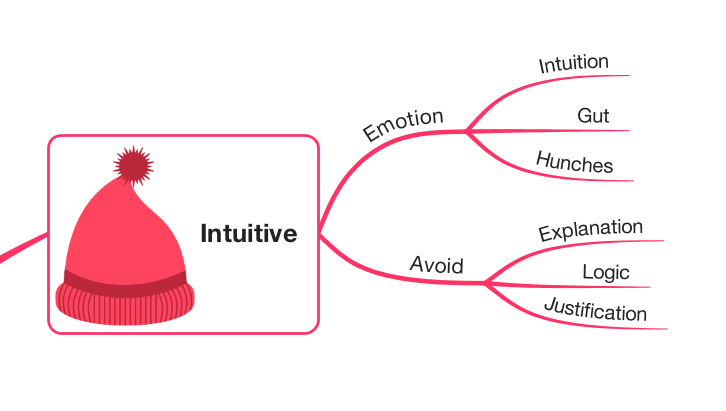
RED HAT: Listen to your instincts
Good ideas can stem from gut instincts, so for the next stage look at your problem using feelings and intuition. Don’t worry about justifying the way you feel towards the problem, just be aware of your immediate personal hunches, as well as how others will react to them.


BLACK HAT: Pick out the faults
For this stage, look at the negative aspects of a potential solution. Think about why it might not work, and point out any possible problems. Highlighting the risks and weaknesses of the solution will help you decide whether to simply amend it or disregard it, which will lead to a stronger solution for your problem in the long run.


YELLOW HAT: Focus on the benefits
During this stage, think positively and focus on the values and benefits of the possible solution. Think about how you can build on its advantages and explore why it would work. Adding a little optimism is especially helpful when things are looking a bit disappointing.


GREEN HAT: Get creative
This is the stage where you seek fresh, creative solutions to the problem (and Mind Mapping really comes into its own). A Mind Map’s structure and use of one key word per branch triggers associations in the brain, sparking new ideas. You will likely discover fresh associations that may have been invisible before. Take the output of the other stages and use it to trigger new possibilities and ideas; overthrow Black Hat problems and build on the beneficial aspects recognised in the Yellow Hat stage.


BLUE HAT: Step back and evaluate the process
Focus on the thinking process itself during this stage. Determine what thinking is needed to progress; if you’re struggling to generate ideas, aim your attention towards Green Hat thinking. If a contingency plan is needed, target Black Hat thinking. Create a summary to round things off.


The great thing about the Six Thinking Hats technique is that it triggers your mind into action, forcing it to think differently and consider ideas outside of your norm. Combined with the associative nature of Mind Mapping, you’ll have an abundance of information to build on for the best possible solution for your problem.

Liberty.

Doisneau, The Clock, 1957


How sweet I roam'd from field to field, 
         And tasted all the summer's pride, 
'Till I the prince of love beheld, 
         Who in the sunny beams did glide! 

He shew'd me lilies for my hair, 
         And blushing roses for my brow; 
He led me through his gardens fair, 
         Where all his golden pleasures grow. 

With sweet May dews my wings were wet, 
         And Phoebus fir'd my vocal rage; 
He caught me in his silken net, 
         And shut me in his golden cage. 

He loves to sit and hear me sing, 
         Then, laughing, sports and plays with me; 
Then stretches out my golden wing, 
         And mocks my loss of liberty.

William Blake

Between.


Lyra's knowledge had great gaps in it, like a map of the world largely eaten by mice.

Philip Pullman, from The Golden Compass

As a passionate believer in the democracy of reading, I don't think it's the task of the author of a book to tell the reader what it means.

The meaning of a story emerges in the meeting between the words on the page and the thoughts in the reader's mind. So when people ask me what I meant by this story, or what was the message I was trying to convey in that one, I have to explain that I'm not going to explain.

Anyway, I'm not in the message business; I'm in the "Once upon a time" business.

Philip Pullman

Become.


WATER

Before I was born I was water.
I thought of this sitting on a blue
chair surrounded by pink, red, white
hollyhocks in the yard in front
of my green studio. There are conclusions
to be drawn but I can't do it anymore.
Born man, child man, singing man,
dancing man, loving man, old man,
dying man. This is a round river
and we are her fish who become water. 

Jim Harrison

Beginning.

Protected.

Outburst.


On the nights leading up to and including August 11-12, a Perseid meteor outburst is possible.

The Perseid meteor shower is perhaps the most beloved meteor shower of the year for the Northern Hemisphere, and the 2016 prediction for an outburst should have many watching this year’s shower on the night of August 11-12. On that night, if the outburst occurs for you, and if the moon is down and the radiant point is high when it occurs, you might see 200 meteors per hour. But also remember, the Perseids build gradually to a peak beginning in early August. So don’t wait. Watch for Perseid meteors on the nights leading up to the shower, too, even as early as early August. Perseid meteors tend to strengthen in number as late night deepens into midnight, and typically produce the most meteors in the wee hours before dawn. They radiate from a point in the constellation Perseus the Hero, but, as with all meteor shower radiant points, you don’t need to know Perseus to watch the shower; instead, the meteors appear in all parts of the sky. They are typically fast and bright meteors. They frequently leave persistent trains. Predicted peak morning in 2016: night of August 11-12. A waxing gibbous moon will be interfering with the show, but it’ll be gone from the sky by the predawn hours. For best results, watch after moonset and before dawn on the mornings of August 11 and 13. Watch all night on August 11-12 (evening of August 11, morning of August 12).

CONNECT

Today.

1988.


"Buenos Noches from a Lonely Room (She Wore Red Dresses)"

Sings.


I would like to paint the way a bird sings.

Claude Monet

01 August 2016

Existence.


WE THREE

My love wanders the rooms, melodious,
flute notes, plucked wires,
full of a wine the magi drank
on the way to Bethlehem.
We are three. The moon comes
from its quiet corner, puts a pitcher
of water down in the center.
The circle of surface flames.
One of us kneels to kiss the threshold.
One drinks, with wine-flames playing over his face.
One watches the gathering,
and says to any cold onlookers,

          This dance is the joy of existence.

I am filled with you.
Skin, blood, bone, brain, and soul.
There’s no room for lack of trust, or trust.
Nothing in this existence but that existence.

Rumi

Wonder.


Remain in wonder if you want the mysteries to open up for you. 
Mysteries never open up for those who go on questioning. 
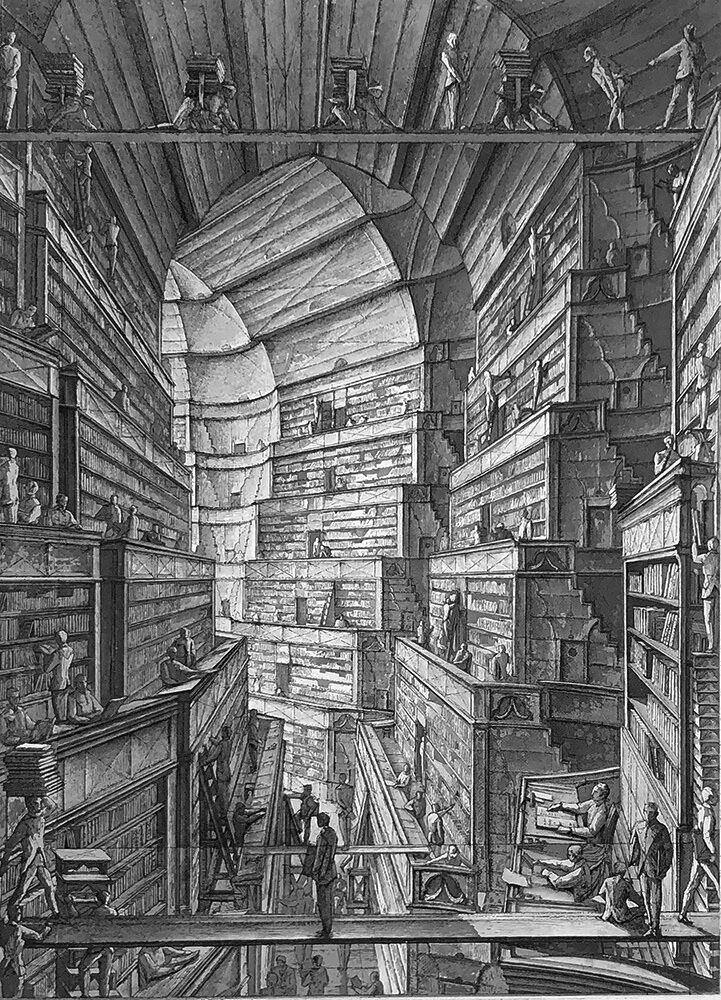
Questioners sooner or later end up in a library. 
Questioners sooner or later end up with scriptures, because scriptures are full of answers.
And answers are dangerous, they kill your wonder.

Osho

Dexter Gordon, "What's New"

Know.


I am too alone in the world, and yet not alone enough
to make every hour holy.
I am too small in the world, and yet not tiny enough
just to stand before you like a thing,
dark and shrewd.
I want my will, and I want to be with my will
as it moves towards deed;
and in those quiet, somehow hesitating times,
when something is approaching,

I want to be with those who know secret things,
or else alone.
I want always to be a mirror that reflects your whole being,
and never to be too blind or too old
to hold your heavy, swaying image.
I want to unfold.
Nowhere do I want to remain folded,
because where I am bent and folded, there I am lie.
And I want my meaning
true for you. I want to describe myself
like a painting that I studied
closely for a long, long time,
like a word I finally understood,
like the pitcher of water I use every day ,
like the face of my mother,
like a ship
that carried me
through the deadliest storm of all.

Rainer Maria Rilke

Complement.


During a visit to North America in 1748, Swedish-Finnish botanist and naturalist Peter Kalm observed Guinea peppers being cultivated by slaves in Philadelphia, noting that the pods were occasionally pounded and "mixed with salt preserved in a bottle" to be used as a sauce for meats and fish. Kalm reported that the pepper sauce gave the food a "very fine taste." Ever since, Americans have been evolving new flavors to complement their smoked meats. Here's a primer on America's principle barbecue sauce styles.

Heard.


REPOSE OF RIVERS

The willows carried a slow sound, 
A sarabande the wind mowed on the mead. 
I could never remember 
That seething, steady leveling of the marshes 
Till age had brought me to the sea. 

Flags, weeds. And remembrance of steep alcoves 
Where cypresses shared the noon’s 
Tyranny; they drew me into hades almost. 
And mammoth turtles climbing sulphur dreams 
Yielded, while sun-silt rippled them 
Asunder ... 

How much I would have bartered! the black gorge 
And all the singular nestings in the hills 
Where beavers learn stitch and tooth. 
The pond I entered once and quickly fled— 
I remember now its singing willow rim. 

And finally, in that memory all things nurse; 
After the city that I finally passed 
With scalding unguents spread and smoking darts 
The monsoon cut across the delta 
At gulf gates ... There, beyond the dykes 

I heard wind flaking sapphire, like this summer, 
And willows could not hold more steady sound.

Hart Crane

Louis Armstrong, "A Kiss to Build a Dream On"

Ecstatic.


Ecstatic cognitive music communicates what cannot be discursively conveyed.

Harold Bloom

CONNECT

Chant.


1
When lilacs last in the dooryard bloom’d, 
And the great star early droop’d in the western sky in the night, 
I mourn’d, and yet shall mourn with ever-returning spring. 

Ever-returning spring, trinity sure to me you bring, 
Lilac blooming perennial and drooping star in the west, 
And thought of him I love. 

2
O powerful western fallen star! 
O shades of night—O moody, tearful night! 
O great star disappear’d—O the black murk that hides the star! 
O cruel hands that hold me powerless—O helpless soul of me! 
O harsh surrounding cloud that will not free my soul. 

3
In the dooryard fronting an old farm-house near the white-wash’d palings, 
Stands the lilac-bush tall-growing with heart-shaped leaves of rich green, 
With many a pointed blossom rising delicate, with the perfume strong I love, 
With every leaf a miracle—and from this bush in the dooryard, 
With delicate-color’d blossoms and heart-shaped leaves of rich green, 
A sprig with its flower I break. 

4
In the swamp in secluded recesses, 
A shy and hidden bird is warbling a song. 

Solitary the thrush, 
The hermit withdrawn to himself, avoiding the settlements, 
Sings by himself a song. 

Song of the bleeding throat, 
Death’s outlet song of life, (for well dear brother I know, 
If thou wast not granted to sing thou would’st surely die.) 

5
Over the breast of the spring, the land, amid cities, 
Amid lanes and through old woods, where lately the violets peep’d from the ground, spotting the gray debris, 
Amid the grass in the fields each side of the lanes, passing the endless grass, 
Passing the yellow-spear’d wheat, every grain from its shroud in the dark-brown fields uprisen, 
Passing the apple-tree blows of white and pink in the orchards, 
Carrying a corpse to where it shall rest in the grave, 
Night and day journeys a coffin. 

6
Coffin that passes through lanes and streets, 
Through day and night with the great cloud darkening the land, 
With the pomp of the inloop’d flags with the cities draped in black, 
With the show of the States themselves as of crape-veil’d women standing, 
With processions long and winding and the flambeaus of the night, 
With the countless torches lit, with the silent sea of faces and the unbared heads, 
With the waiting depot, the arriving coffin, and the sombre faces, 
With dirges through the night, with the thousand voices rising strong and solemn, 
With all the mournful voices of the dirges pour’d around the coffin, 
The dim-lit churches and the shuddering organs—where amid these you journey, 
With the tolling tolling bells’ perpetual clang, 
Here, coffin that slowly passes, 
I give you my sprig of lilac. 

7
(Nor for you, for one alone, 
Blossoms and branches green to coffins all I bring, 
For fresh as the morning, thus would I chant a song for you O sane and sacred death. 

All over bouquets of roses, 
O death, I cover you over with roses and early lilies, 
But mostly and now the lilac that blooms the first, 
Copious I break, I break the sprigs from the bushes, 
With loaded arms I come, pouring for you, 
For you and the coffins all of you O death.) 

8
O western orb sailing the heaven, 
Now I know what you must have meant as a month since I walk’d, 
As I walk’d in silence the transparent shadowy night, 
As I saw you had something to tell as you bent to me night after night, 
As you droop’d from the sky low down as if to my side, (while the other stars all look’d on,) 
As we wander’d together the solemn night, (for something I know not what kept me from sleep,) 
As the night advanced, and I saw on the rim of the west how full you were of woe, 
As I stood on the rising ground in the breeze in the cool transparent night, 
As I watch’d where you pass’d and was lost in the netherward black of the night, 
As my soul in its trouble dissatisfied sank, as where you sad orb, 
Concluded, dropt in the night, and was gone. 

9
Sing on there in the swamp, 
O singer bashful and tender, I hear your notes, I hear your call, 
I hear, I come presently, I understand you, 
But a moment I linger, for the lustrous star has detain’d me, 
The star my departing comrade holds and detains me. 

10
O how shall I warble myself for the dead one there I loved? 
And how shall I deck my song for the large sweet soul that has gone? 
And what shall my perfume be for the grave of him I love? 

Sea-winds blown from east and west, 
Blown from the Eastern sea and blown from the Western sea, till there on the prairies meeting, 
These and with these and the breath of my chant, 
I’ll perfume the grave of him I love. 

11
O what shall I hang on the chamber walls? 
And what shall the pictures be that I hang on the walls, 
To adorn the burial-house of him I love? 

Pictures of growing spring and farms and homes, 
With the Fourth-month eve at sundown, and the gray smoke lucid and bright, 
With floods of the yellow gold of the gorgeous, indolent, sinking sun, burning, expanding the air, 
With the fresh sweet herbage under foot, and the pale green leaves of the trees prolific, 
In the distance the flowing glaze, the breast of the river, with a wind-dapple here and there, 
With ranging hills on the banks, with many a line against the sky, and shadows, 
And the city at hand with dwellings so dense, and stacks of chimneys, 
And all the scenes of life and the workshops, and the workmen homeward returning. 

12
Lo, body and soul—this land, 
My own Manhattan with spires, and the sparkling and hurrying tides, and the ships, 
The varied and ample land, the South and the North in the light, Ohio’s shores and flashing Missouri, 
And ever the far-spreading prairies cover’d with grass and corn. 

Lo, the most excellent sun so calm and haughty, 
The violet and purple morn with just-felt breezes, 
The gentle soft-born measureless light, 
The miracle spreading bathing all, the fulfill’d noon, 
The coming eve delicious, the welcome night and the stars, 
Over my cities shining all, enveloping man and land. 

13
Sing on, sing on you gray-brown bird, 
Sing from the swamps, the recesses, pour your chant from the bushes, 
Limitless out of the dusk, out of the cedars and pines. 

Sing on dearest brother, warble your reedy song, 
Loud human song, with voice of uttermost woe. 

O liquid and free and tender! 
O wild and loose to my soul—O wondrous singer! 
You only I hear—yet the star holds me, (but will soon depart,) 
Yet the lilac with mastering odor holds me. 

14
Now while I sat in the day and look’d forth, 
In the close of the day with its light and the fields of spring, and the farmers preparing their crops, 
In the large unconscious scenery of my land with its lakes and forests, 
In the heavenly aerial beauty, (after the perturb’d winds and the storms,) 
Under the arching heavens of the afternoon swift passing, and the voices of children and women, 
The many-moving sea-tides, and I saw the ships how they sail’d, 
And the summer approaching with richness, and the fields all busy with labor, 
And the infinite separate houses, how they all went on, each with its meals and minutia of daily usages, 
And the streets how their throbbings throbb’d, and the cities pent—lo, then and there, 
Falling upon them all and among them all, enveloping me with the rest, 
Appear’d the cloud, appear’d the long black trail, 
And I knew death, its thought, and the sacred knowledge of death. 

Then with the knowledge of death as walking one side of me, 
And the thought of death close-walking the other side of me, 
And I in the middle as with companions, and as holding the hands of companions, 
I fled forth to the hiding receiving night that talks not, 
Down to the shores of the water, the path by the swamp in the dimness, 
To the solemn shadowy cedars and ghostly pines so still. 

And the singer so shy to the rest receiv’d me, 
The gray-brown bird I know receiv’d us comrades three, 
And he sang the carol of death, and a verse for him I love. 

From deep secluded recesses, 
From the fragrant cedars and the ghostly pines so still, 
Came the carol of the bird. 

And the charm of the carol rapt me, 
As I held as if by their hands my comrades in the night, 
And the voice of my spirit tallied the song of the bird. 

Come lovely and soothing death,
Undulate round the world, serenely arriving, arriving,
In the day, in the night, to all, to each,
Sooner or later delicate death.

Prais’d be the fathomless universe,
For life and joy, and for objects and knowledge curious,
And for love, sweet love—but praise! praise! praise!
For the sure-enwinding arms of cool-enfolding death.

Dark mother always gliding near with soft feet,
Have none chanted for thee a chant of fullest welcome?
Then I chant it for thee, I glorify thee above all,
I bring thee a song that when thou must indeed come, come unfalteringly.

Approach strong deliveress,
When it is so, when thou hast taken them I joyously sing the dead,
Lost in the loving floating ocean of thee,
Laved in the flood of thy bliss O death.

From me to thee glad serenades,
Dances for thee I propose saluting thee, adornments and feastings for thee,
And the sights of the open landscape and the high-spread sky are fitting,
And life and the fields, and the huge and thoughtful night.

The night in silence under many a star,
The ocean shore and the husky whispering wave whose voice I know,
And the soul turning to thee O vast and well-veil’d death,
And the body gratefully nestling close to thee.

Over the tree-tops I float thee a song,
Over the rising and sinking waves, over the myriad fields and the prairies wide,
Over the dense-pack’d cities all and the teeming wharves and ways,
I float this carol with joy, with joy to thee O death.

15
To the tally of my soul, 
Loud and strong kept up the gray-brown bird, 
With pure deliberate notes spreading filling the night. 

Loud in the pines and cedars dim, 
Clear in the freshness moist and the swamp-perfume, 
And I with my comrades there in the night. 

While my sight that was bound in my eyes unclosed, 
As to long panoramas of visions. 

And I saw askant the armies, 
I saw as in noiseless dreams hundreds of battle-flags, 
Borne through the smoke of the battles and pierc’d with missiles I saw them, 
And carried hither and yon through the smoke, and torn and bloody, 
And at last but a few shreds left on the staffs, (and all in silence,) 
And the staffs all splinter’d and broken. 

I saw battle-corpses, myriads of them, 
And the white skeletons of young men, I saw them, 
I saw the debris and debris of all the slain soldiers of the war, 
But I saw they were not as was thought, 
They themselves were fully at rest, they suffer’d not, 
The living remain’d and suffer’d, the mother suffer’d, 
And the wife and the child and the musing comrade suffer’d, 
And the armies that remain’d suffer’d. 

16
Passing the visions, passing the night, 
Passing, unloosing the hold of my comrades’ hands, 
Passing the song of the hermit bird and the tallying song of my soul, 
Victorious song, death’s outlet song, yet varying ever-altering song, 
As low and wailing, yet clear the notes, rising and falling, flooding the night, 
Sadly sinking and fainting, as warning and warning, and yet again bursting with joy, 
Covering the earth and filling the spread of the heaven, 
As that powerful psalm in the night I heard from recesses, 
Passing, I leave thee lilac with heart-shaped leaves, 
I leave thee there in the door-yard, blooming, returning with spring. 

I cease from my song for thee, 
From my gaze on thee in the west, fronting the west, communing with thee, 
O comrade lustrous with silver face in the night. 

Yet each to keep and all, retrievements out of the night, 
The song, the wondrous chant of the gray-brown bird, 
And the tallying chant, the echo arous’d in my soul, 
With the lustrous and drooping star with the countenance full of woe, 
With the holders holding my hand nearing the call of the bird, 
Comrades mine and I in the midst, and their memory ever to keep, for the dead I loved so well, 
For the sweetest, wisest soul of all my days and lands—and this for his dear sake, 
Lilac and star and bird twined with the chant of my soul,
There in the fragrant pines and the cedars dusk and dim.

Walt Whitman

Act.


OF MODERN POETRY

The poem of the mind in the act of finding   
What will suffice. It has not always had   
To find: the scene was set; it repeated what   
Was in the script. 
                               Then the theatre was changed   
To something else. Its past was a souvenir. 

It has to be living, to learn the speech of the place.   
It has to face the men of the time and to meet   
The women of the time. It has to think about war   
And it has to find what will suffice. It has   
To construct a new stage. It has to be on that stage   
And, like an insatiable actor, slowly and 
With meditation, speak words that in the ear,   
In the delicatest ear of the mind, repeat, 
Exactly, that which it wants to hear, at the sound   
Of which, an invisible audience listens, 
Not to the play, but to itself, expressed 
In an emotion as of two people, as of two   
Emotions becoming one. The actor is 
A metaphysician in the dark, twanging 
An instrument, twanging a wiry string that gives   
Sounds passing through sudden rightnesses, wholly   
Containing the mind, below which it cannot descend,   
Beyond which it has no will to rise. 
                                                      It must 
Be the finding of a satisfaction, and may 
Be of a man skating, a woman dancing, a woman   
Combing. The poem of the act of the mind.

Wallace Stevens

Perceive.


A child said, What is the grass? fetching it to me with full
hands;
How could I answer the child? ... I do not know what it
is any more than he.

I guess it must be the flag of my disposition, out of hopeful
green stuff woven.

Or I guess it is the handkerchief of the Lord,
A scented gift and remembrancer designedly dropped,
Bearing the owner's name someway in the corners, that we
may see and remark, and say Whose?

Or I guess the grass is itself a child ... the produced babe
of the vegetation.

Or I guess it is a uniform hieroglyphic,
And it means, Sprouting alike in broad zones and narrow
zones,
Growing among black folks as among white,
Kanuck, Tuckahoe, Congressman, Cuff, I give them the
same, I receive them the same.

And now it seems to me the beautiful uncut hair of graves.

Tenderly will I use you curling grass,
It may be you transpire from the breasts of young men,
It may be if I had known them I would have loved them;
It may be you are from old people and from women, and
from offspring taken soon out of their mother's laps,
And here you are the mother's laps.

This grass is very dark to be from the white heads of old
mothers,
Darker than the colorless beards of old men,
Dark to come from under the faint red roofs of mouths.

O I perceive after all so many uttering tongues!
And I perceive they do not come from the roofs of mouths
for nothing.

I wish I could translate the hints about the dead young men
and women,
And the hints about old men and mothers, and the offspring
taken soon out of their laps.

What do you think has become of the young and old men?
What do you think has become of the women and
children?

They are alive and well somewhere;
The smallest sprouts show there is really no death,
And if ever there was it led forward life, and does not wait
at the end to arrest it,
And ceased the moment life appeared.

All goes onward and outward ... and nothing collapses,
And to die is different from what any one supposed, and
luckier.

Walt Whitman

Journey.


A Fish and Bread Journey: The natural and social history of bagels and lox.

Eddies.


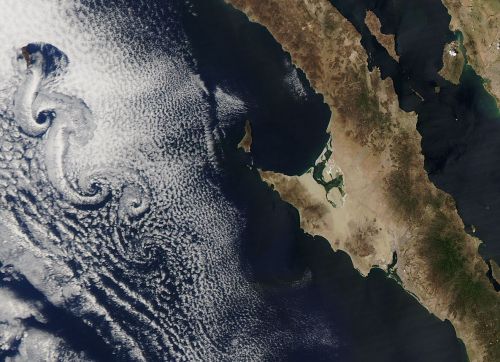
The phenomenon that is shown in the image of Guadalupe Island at the top of this page (acquired on August 20, 1999) features a ubiquitous occurrence in the motion of fluids—a vortex street, which is a linear chain of spiral eddies called von Karman vortices. Von Karman vortices are named after Theodore von Karman, who first described the phenomenon in the atmosphere. Dr. von Karman was a co-founder of NASA's Jet Propulsion Laboratory.


von Karman vortices form nearly everywhere that fluid flow is disturbed by an object. In the cloud images shown on this page, the "object" that is disturbing the fluid flow is an island or group of islands. As a prevailing wind encounters the island, the disturbance in the flow propagates downstream of the island in the form of a double row of vortices which alternate their direction of rotation. The animation below shows how a von Karman vortex street develops behind a cylinder moving through a fluid.


Both the ocean and atmosphere are fluids, in constant motion. On our limited “human”-scale, we are aware of this motion when we feel the wind blow,  or when we encounter a current running along the beach while swimming. Yet our eyes alone can rarely observe the larger scale of fluid motion in the  ocean and atmosphere.

Technical description: As a fluid particle flows toward the leading edge of a  cylinder, the pressure on the particle rises from the free stream pressure  to the stagnation pressure. The high fluid pressure near the leading edge   impels flow about the cylinder as boundary layers develop about both sides. The high pressure is not sufficient to force the flow about the back of the  cylinder at high Reynolds numbers. Near the widest section of the cylinder,  the boundary layers separate from each side of the cylinder surface and form  two shear layers that trail aft in the flow and bound the wake. Since the  innermost portion of the shear layers, which is in contact with the cylinder,  moves much more slowly than the outermost portion of the shear layers, which  is in contact with the free flow, the shear layers roll into the near wake,  where they fold on each other and coalesce into discrete swirling vortices.  A regular pattern of vortices, called a vortex street, trails aft in the wake.

Bud Powell, "I Remember April"

Strauss, An Alpine Symphony, Op. 64

Bernard Haitink conducts the Vienna Philharmonic ...

Giant.


"Moby-Dick is not a novel,” Professor Bloom remarks. “It is a giant Shakespearean prose poem."

Times.


I sit beside the fire and think
Of all that I have seen
Of meadow flowers and butterflies
In summers that have been

Of yellow leaves and gossamer
In autumns that there were
With morning mist and silver sun
And wind upon my hair

I sit beside the fire and think
Of how the world will be
When winter comes without a spring
That I shall ever see

For still there are so many things
That I have never seen
In every wood in every spring
There is a different green

I sit beside the fire and think
Of people long ago
And people that will see a world
That I shall never know

But all the while I sit and think
Of times there were before
I listen for returning feet
And voices at the door

J.R.R. Tolkien

Happy birthday, Melville.


Herman Melville was born on this day in 1819.

Consider the subtleness of the sea; how its most dreaded creatures glide under water, unapparent for the most part, and treacherously hidden beneath the loveliest tints of azure. Consider also the devilish brilliance and beauty of many of its most remorseless tribes, as the dainty embellished shape of many species of sharks. Consider, once more, the universal cannibalism of the sea; all whose creatures prey upon each other, carrying on eternal war since the world began.

Consider all this; and then turn to the green, gentle, and most docile earth; consider them both, the sea and the land; and do you not find a strange analogy to something in yourself? For as this appalling ocean surrounds the verdant land, so in the soul of man there lies one insular Tahiti, full of peace and joy, but encompassed by all the horrors of the half-known life. God keep thee! Push not off from that isle, thou canst never return!

Herman Melville

Your hymnal is here.

Freely.


You do not have to leave the room. Remain standing at your table and listen.

Do not even listen, simply wait.

Do not even wait. Be quite still and solitary.

The world will freely offer itself to you to be unmasked.

It has no choice. It will roll in ecstasy at your feet.

Franz Kafka

Today.

1995.


"Barometer Soup"

Survived.

Josquin, "Nymphes de Bois"

Cappella Pratensis performs ...

Rewards.


I am bound to praise the simple life, because I have lived it and found it good. When I depart from it, evil results follow. I love a small house, plain clothes, simple living. Many persons know the luxury of a skin bath — a plunge in the pool or the wave unhampered by clothing. That is the simple life — direct and immediate contact with things, life with the false wrappings torn away — the fine house, the fine equipage, the expensive habits, all cut off. How free one feels, how good the elements taste, how close one gets to them, how they fit one’s body and one’s soul!

To see the fire that warms you, or better yet, to cut the wood that feeds the fire that warms you; to see the spring where the water bubbles up that slakes your thirst, and to dip your pail into it; to see the beams that are the stay of your four walls, and the timbers that uphold the roof that shelters you; to be in direct and personal contact with the sources of your material life; to want no extras, no shields; to find the universal elements enough; to find the air and the water exhilarating; to be refreshed by a morning walk or an evening saunter; to find a quest of wild berries more satisfying than a gift of tropic fruit; to be thrilled by the stars at night; to be elated over a bird’s nest, or over a wildflower in spring — these are some of the rewards of the simple life.

John Burroughs

Thanks, Kelly.