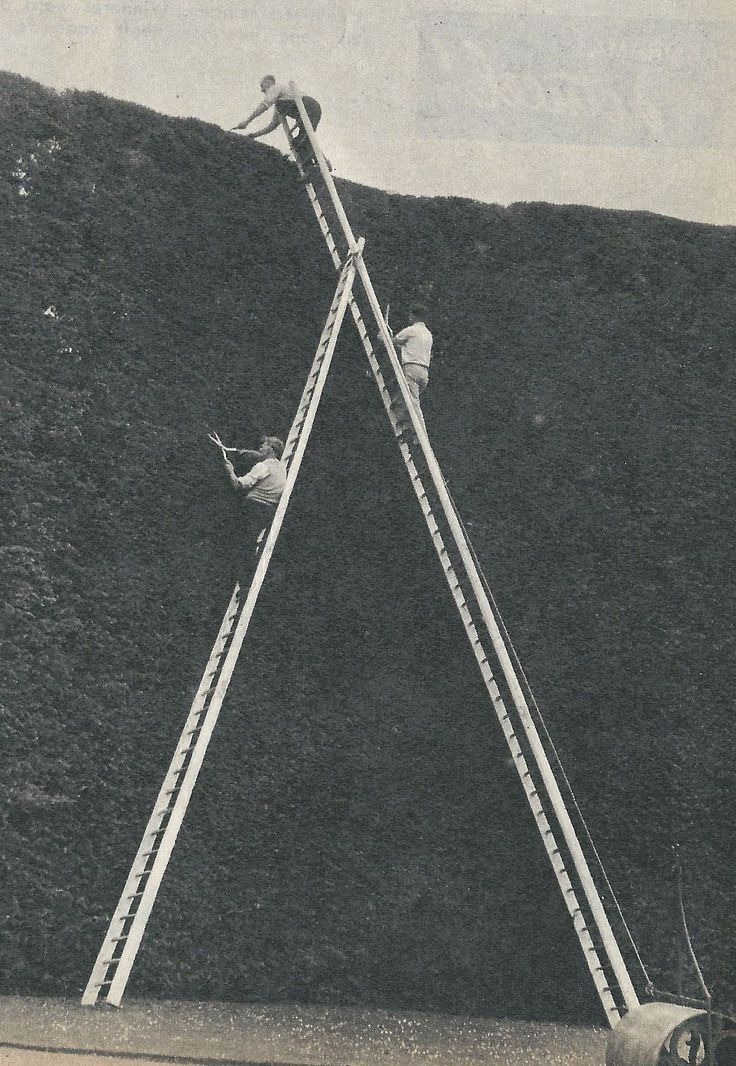
The maze is constructed of more than 16,000 English yews and
is the longest hedge maze in the world, covering 1.48 acres, and
1.69 miles of pathway.
Showing posts with label Neat. Show all posts
29 July 2019
01 August 2016
Eddies.
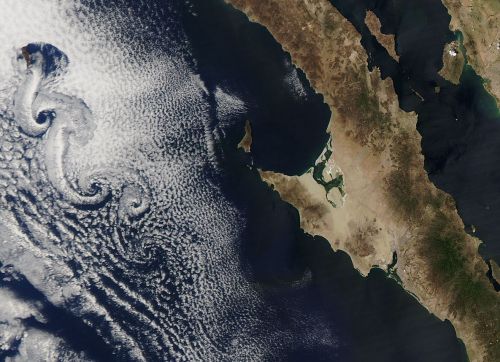
The phenomenon that is shown in the image of Guadalupe
Island at the top of this page (acquired on August 20, 1999) features a
ubiquitous occurrence in the motion of fluids—a vortex street, which is a
linear chain of spiral eddies called von Karman vortices. Von Karman
vortices are named after Theodore von Karman, who first described the
phenomenon in the atmosphere. Dr. von Karman was a co-founder of NASA's Jet
Propulsion Laboratory.
von Karman vortices form nearly everywhere that fluid flow
is disturbed by an object. In the cloud images shown on this page, the
"object" that is disturbing the fluid flow is an island or group of islands.
As a prevailing wind encounters the island, the disturbance in the flow
propagates downstream of the island in the form of a double row of vortices
which alternate their direction of rotation. The animation below shows how a
von Karman vortex street develops behind a cylinder moving through a fluid.
Both the ocean and atmosphere are fluids, in constant
motion. On our limited “human”-scale, we are aware of this motion when we feel
the wind blow, or when we encounter a current running along the beach
while swimming. Yet our eyes alone can rarely observe the larger scale of fluid
motion in the ocean and atmosphere.
Technical description: As a fluid particle flows
toward the leading edge of a cylinder, the pressure on the particle rises
from the free stream pressure to the stagnation pressure. The high fluid
pressure near the leading edge impels flow about the cylinder as
boundary layers develop about both sides. The high pressure is not sufficient
to force the flow about the back of the cylinder at high Reynolds
numbers. Near the widest section of the cylinder, the boundary layers
separate from each side of the cylinder surface and form two shear layers
that trail aft in the flow and bound the wake. Since the innermost
portion of the shear layers, which is in contact with the cylinder, moves
much more slowly than the outermost portion of the shear layers, which is
in contact with the free flow, the shear layers roll into the near wake,
where they fold on each other and coalesce into discrete swirling
vortices. A regular pattern of vortices, called a vortex street, trails
aft in the wake.
31 July 2016
Appear.
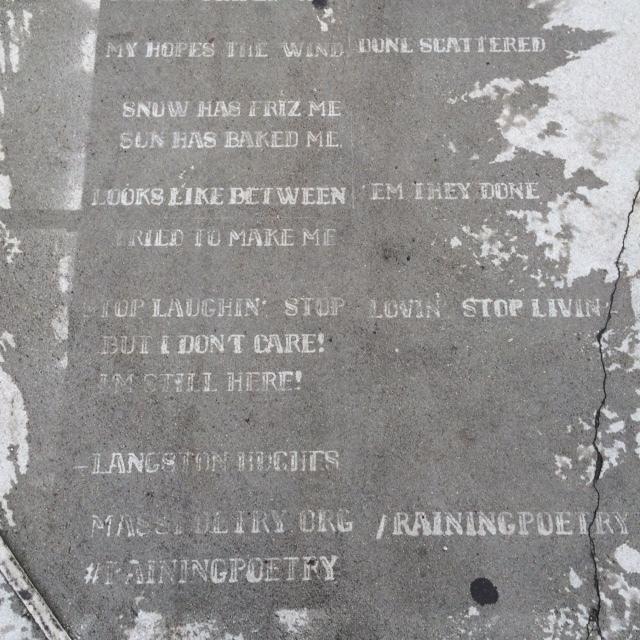
If you’re walking through Boston during a downpour, make
sure to keep your eyes on the pavement: you might just see a poem appear before
your eyes. For the last few months, Bostonians wandering the city streets in
the rain may have come across poems written on the sidewalk.
28 February 2016
21 January 2016
Meditations.
Beware—not all circuitous paths are labyrinths. Mazes, for
example, are completely different; they may have one correct path, but are
designed to trick someone into hitting a dead end or getting lost. If you
associate the word “labyrinth” with the Minotaur of Daedalus or David
Bowie’s Goblin King, you’ve been mislead. Unlike those pop culture mazes,
real labyrinths only have one route and contain no wrong turns. They aren’t
puzzles; they are meditations.
26 October 2015
Occurence.
Want to be mesmerized by an expanding orange glow while
being reminded of how little and flightless you are? Then ebird.org's bird
occurrence maps, which track the movement of 57 different bird species across
the US using lava lamp-esque visuals, are perfect for you.
The maps, a collaboration between the Cornell Lab of
Ornithology and the National Audubon Society, are predictions for how
likely you are to find any given bird on a one kilometer walk at 7 a.m. in the
morning. They are built from a massive collection of data–280 million
observations from around the world submitted by thousands of birdwatchers–and
use a method known as the Spatio-Temporal Exploratory Model (STEM).
Labels:
appreciation,
birds,
nature,
Neat,
science,
technology
20 October 2015
18 August 2015
Unobservable.
The San Diego Studies is a series of short videos that
manipulate time to reveal otherwise unobservable rhythms and movement in the
city. There are no CG elements, these are all real kites that have been
separated from their original shots and compiled together.
CONNECT
28 July 2015
27 July 2015
Road-tripping.
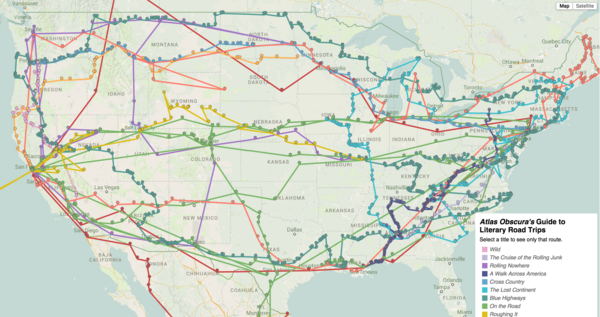
... [T]he result of a painstaking and admittedly quixotic effort
to catalog the country as it has been described in the American road-tripping
literature.
Thank You, Jessica.
05 March 2015
15 January 2015
Downpour.
A field of falling water that pauses wherever a human body
is detected, Rain Room offers visitors the experience of controlling
the rain. Known for their distinctive approach to contemporary digital
practice, Random International’s experimental projects come alive through
audience interaction—and Rain Room is their largest and most
ambitious to date. The work invites visitors to explore the roles that science,
technology, and human ingenuity can play in stabilizing our environment. Using
digital technology, Rain Room creates a carefully choreographed
downpour, simultaneously encouraging people to become performers on an
unexpected stage and creating an intimate atmosphere of contemplation.
16 October 2014
15 October 2014
Believe.
What We Believe …
1. There is something NEW under the sun, every day, all over
the world.
2. Around the corner is something that will SURPRISE the hell out of you.
3. Atlas Obscura is for people who still believe in DISCOVERY.
CONNECT
Labels:
appreciation,
blogs,
fascination,
Neat,
noticing
24 August 2014
Liberation.
We were at the Ritz Bar. I was on my third
martini and Hemingway was on his fourth when the bartender made a speech. Though the accolades were directed at
him, Hemingway leaned into my ear and said, “Bartenders should stick to what
they do best – bartending.” I had to agree. The acoustics weren’t conducive to
formal speeches, especially long ones.
Besides, our cocktails were getting warm. We chinked glasses, exchanged nods and sneaked sips during
the toast.
1929? 1949? Nope: Aug. 24, 1999. The Hemingway in question? Jack
Hemingway, son of Ernest and Hadley, father to Margaux and Mariel. The
occasion? An exclusive party to
celebrate the 55th anniversary of Ernest Hemingway’s “liberation” of
the Ritz.
For those of you who don’t know this particular
footnote in Hemingway lore, just after the Allied troops declared victory on
Aug. 24, 1944, Hemingway, with a band of irregulars just outside the Paris
periphery, sped straight to the Place Vendome.
Their self-appointed mission was to relieve
the Nazi officers of their occupation headquarters: the Hotel Ritz. That night, as word spread that the war
was over, Papa and crew played host to one of the most jubilant parties the
Ritz has ever seen. Fifty-five years later, people were still celebrating, and
still remembering.
14 August 2014
Transarquitetônica.
Given a cavernous gallery space at the Museu de Arte Contemporânea da Universidade in São Paulo, artist Henrique Oliveira has created Transarquitetônica, a breathtaking installation from plywood, which fills the room with twisted tree roots large enough for gallery visitors to walk inside.
CONNECT
CONNECT
07 July 2014
Fireworks.
A drone's-eye view of fireworks …
28 June 2014
Visualization.
Mitchell, Best-Candidate IV Sampling of van Gogh's A Starry Night, undated
But algorithms are also a reminder that visualization is more than a tool for finding patterns in data. Visualization leverages the human visual system to augment human intellect: we can use it to better understand these important abstract processes, and perhaps other things, too.
Algorithms are a fascinating use case for visualization. To visualize an algorithm, we don’t merely fit data to a chart; there is no primary dataset. Instead there are logical rules that describe behavior. This may be why algorithm visualizations are so unusual, as designers experiment with novel forms to better communicate. This is reason enough to study them.
But algorithms are also a reminder that visualization is more than a tool for finding patterns in data. Visualization leverages the human visual system to augment human intellect: we can use it to better understand these important abstract processes, and perhaps other things, too.
27 June 2014
Laws.
Physicist Geoffrey West has found that simple, mathematical laws govern the properties of cities -- that wealth, crime rate, walking speed and many other aspects of a city can be deduced from a single number: the city's population. In this talk he shows how it works and how similar laws hold for organisms and corporations.
West's site, here.
Scaling and fractals, here.
Power laws here, here, and here .
West's site, here.
Scaling and fractals, here.
Power laws here, here, and here .
Labels:
appreciation,
creativity,
innovation,
math,
Neat,
patterns,
science
Subscribe to:
Posts (Atom)