"I am not one who was born in the custody of wisdom. I am one who is fond of olden times and intense in quest of the sacred knowing of the ancients." Gustave Courbet
Showing posts with label Rothko. Show all posts

25 September 2025

Peeling.

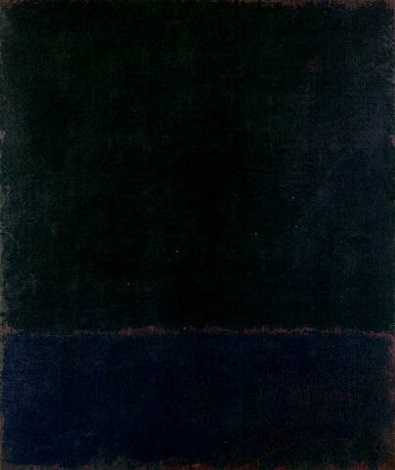
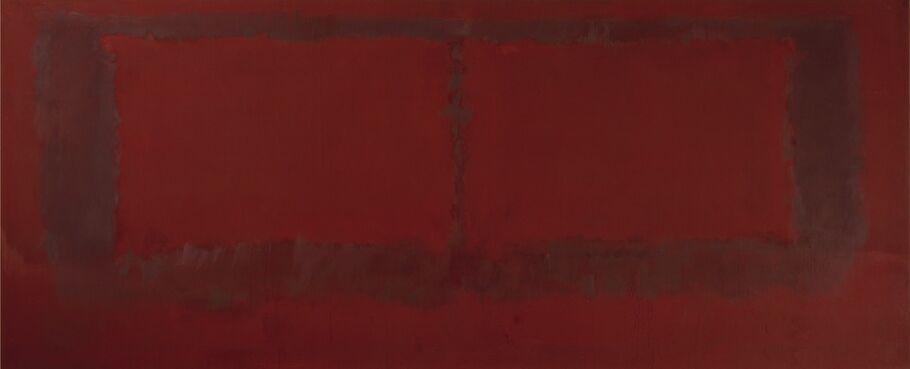
Rothko, Seagram Mural, Section 6, Untitled (detail), 1959


Abigail Cain looks at Rothko's Seagram murals ...
The numerous Seagram murals (he eventually made 30), are some of the first paintings in which he experimented with darker shades. This so-called “dark palette” is the focus of a current, unprecedented show at Pace Gallery, featuring works drenched in deep hues of black, blue, purple, and red, spanning 1955 through the 1960s. It’s a period of his artmaking that is often overlooked, according to Pace Gallery chairman and founder Arne Glimcher. This is the gallery’s 12th Rothko show, and the first to explore his dark palette in great depth.

“Each show has been a kind of peeling of the onion, revealing other layers of the artist’s work,” Glimcher said. “It’s so easy to just think of Rothko as this kind of museum postcard image of a red picture, or of a red-and-yellow picture. But there’s this other side of Rothko, deep and voluptuous colors that reveal themselves very slowly.”

Glimcher said there’s a misperception that these darker-hued works are “end-of-life” paintings that preceded Rothko’s suicide in 1970. But many of these works were created long before that date, as is the case with the Seagram murals. Additionally, Glimcher notes, for Rothko, bright colors could be as menacing as rust or burgundy.

He recalls a moment at Rothko’s studio when he complimented a painting done in shades of burgundy, plum, and black. The painter responded that he’d offered the work to someone just that day and she’d refused, saying: “Mr. Rothko I’d like a happy painting. A red painting, an orange painting, a yellow painting. A happy painting.” Rothko’s retort? “Red, orange, yellow—isn’t that the color of an inferno?”

Rothko took a break from the Seagram murals in June 1959 and traveled to Europe with his family. Upon his return to the United States, he went to eat at the completed Four Seasons with his wife, Mell. Jackson Pollock’s Blue Poles (1952) hung on the wall as a stand-in for Rothko’s soon-to-be-completed commission. For a man who once proclaimed it was “criminal to spend more than $5 on a meal,” it comes as no surprise that he found the experience off-putting. What is shocking was the level of his distaste. That night, he called a friend and informed them that he would be returning every cent of the commission and reclaiming his paintings. “Anybody who will eat that kind of food for those kind of prices will never look at a painting of mine,” he seethed to a studio assistant.

In.

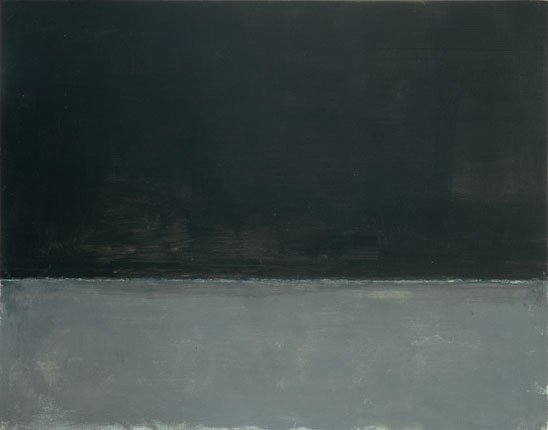
Mark Rothko, Untitled, 1969


Mark Rothko was born on this day in 1903.


The reason for my painting large canvases is that I want to be intimate and human. To paint a small picture is to place yourself outside your experience, to look upon an experience as a stereopticon view or with a reducing glass.  This world of the imagination is fancy-free and violently opposed to common sense. However you paint the larger picture, you are in it. It isn't something you command. 


Mark Rothko

Experience.


They are complete realizations of a subject that moves us by the beauty of its moods, by the fullness of its forms, and the excitement of its design.  In short, many of these pieces are capable of moving us emotionally. Without going into an involved discussion of the aesthetics involved, that is more or less what fine works of art do to us. It is significant, that dozens of artists viewed this exhibition and were amazed and stirred by it.

These children have ideas, often fine ones, and they express them vividly and beautifully, so that they make us feel what they feel. Hence their efforts are intrinsically works of art.

Our critics of art, poetry, music, theatre and movies deplore that so many artists occupy themselves with precious themes, such as still life in painting, decadent amatory situations in the drama and literature and futile atonalities in music.  'l'hey accuse our artists of being unsocial, that they neglect the life about them,
and urge that they turn toward the surging tide which is their life. Well, let the critics view our children's work. Everything is there: factories, docks, streets, crowds, mountains, lakes, farms, cattle, men, women, ships, water-everything conceivable.  Here is a social art.

Most of these children will probably lose their imaginativeness and vivacity as they mature. But a few will not. And it is hoped that in their cases, the experience of eight years will not be forgotten and they will continue to find the same beauty about them. As to the others, it is hoped, that their experience will help them to revive their own early artistic pleasures in the work of others.

Everyone.

Unknown, Hands, ca. 31,000 BP


While the authority of the doctor or plumber is never questioned, everyone deems himself a good judge and an adequate arbiter of what a work of art should be and how it should be done.

Mark Rothko

Adventure.


Statement — June 7, 1943

1. To us art is an adventure into an unknown world, which can be explored only by those willing to take the risks.

2. This world of imagination is fancy-free and violently opposed to common sense.

3. It is our function as artists to make the spectator see the world our way not his way.

4. We favor the simple expression of the complex thought. We are for the large shape because it has the impact of the unequivocal. We wish to reassert the picture plane. We are for flat forms because they destroy illusion and reveal truth.

5. It is a widely accepted notion among painters that it does not matter what one paints as long as it is well painted. This is the essence of academicism.

There is no such thing as a good painting about nothing.

We assert that the subject is crucial and only that subject matter is valid which is tragic and timeless. That is why we profess spiritual kinship with primitive and archaic art.

Mark Rothko

Happy Birthday, Mark Rothko

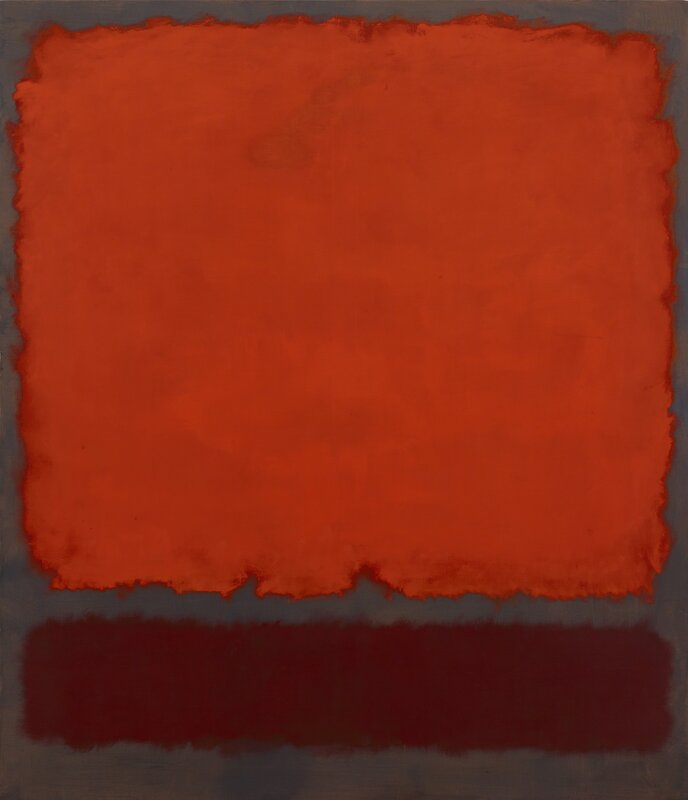
Rothko, Orange, Red, and Navy, 1962


A picture lives by companionship, expanding and quickening in the eyes of the sensitive observer. It dies by the same cause. It is therefore risky to work out into the world. How often it must be impaired by the eyes of the unfeeling and the cruelty of the careless.

Mark Rothko, born on this day in 1903

29 September 2024

Squints.


Architectural Digest explores Rothko's Seagram's-era studio ...
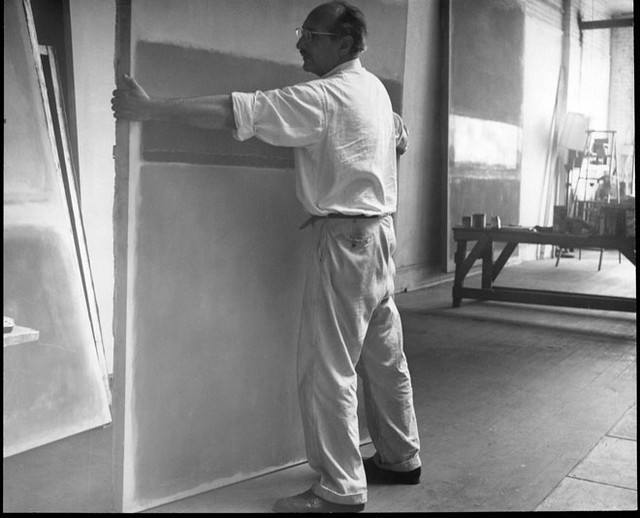
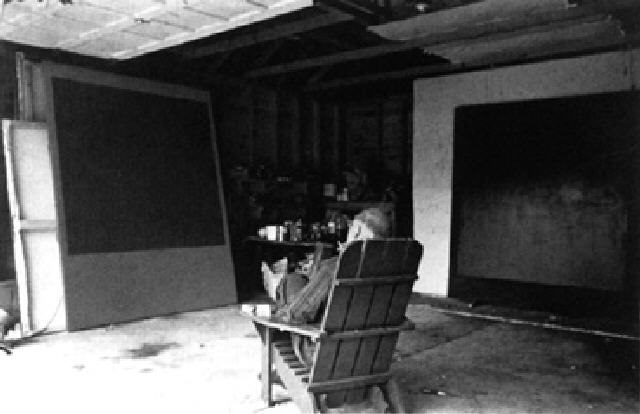
A visitor walking through Mark Rothko’s former studio will immediately be struck by an ineffability that only appears when entering a sacred space. The floors of the studio look as if a small explosion was set off in the room, caking the wooden floorboards with various layers of colored paint. It’s a fitting floor for the son of Russian anarchists (Rothko’s parents immigrated to America in 1913, when Mark was ten years old). Rothko was extremely voluble when he wanted to be, and if one squints in the studio, the image of a man walking around the space—adjusting his thick-lensed glasses, burning cigarette in one hand, paintbrush in the other, discussing his work with one of his assistants—flashes before them in series of movements.

28 September 2024

Companionship.


A picture lives by companionship, expanding and quickening in the eyes of the sensitive observer. It dies by the same cause. It is therefore risky to put work out into the world. How often it must be impaired by the eyes of the unfeeling and the cruelty of the careless.

Mark Rothko

25 September 2021

Happy Birthday, Rothko

Mark Rothko, Black Blue Painting, 1968


Mark Rothko was born on this day in 1903.


The reason for my painting large canvases is that I want to be intimate and human. To paint a small picture is to place yourself outside your experience, to look upon an experience as a stereopticon view or with a reducing glass.  This world of the imagination is fancy-free and violently opposed to common sense. However you paint the larger picture, you are in it. It isn't something you command. 


Mark Rothko


Simon Schama's Power of Art: Mark Rothko ...

20 July 2021

Sensitive.


A picture lives by companionship, expanding and quickening in the eyes of the sensitive observer. It dies by the same token. It is therefore risky to send it out into the world. How often it must be impaired by the eyes of the unfeeling and the cruelty of the impotent.

Mark Rothko

The Rothko episode of Simon Schama's Power of Art ...


American Masters' "Rothko: Pictures Must Be Miraculous" ...

Accurate.


Silence is so accurate.

Mark Rothko

Spiritual.


Statement — June 7, 1943

1. To us art is an adventure into an unknown world, which can be explored only by those willing to take the risks.

2. This world of imagination is fancy-free and violently opposed to common sense.

3. It is our function as artists to make the spectator see the world our way not his way.

4. We favor the simple expression of the complex thought. We are for the large shape because it has the impact of the unequivocal. We wish to reassert the picture plane. We are for flat forms because they destroy illusion and reveal truth.

5. It is a widely accepted notion among painters that it does not matter what one paints as long as it is well painted. This is the essence of academicism.

There is no such thing as a good painting about nothing.

We assert that the subject is crucial and only that subject matter is valid which is tragic and timeless. That is why we profess spiritual kinship with primitive and archaic art.

Mark Rothko

Find.


When I was a younger man, art was a lonely thing. No galleries, no collectors, no critics, no money. Yet, it was a golden age, for we all had nothing to lose and a vision to gain. Today it is not quite the same. It is a time of tons of verbiage, activity, consumption. Which condition is better for the world at large I shall not venture to discuss. But I do know, that many of those who are driven to this life are desperately searching for those pockets of silence where we can root and grow. We must all hope we find them.

Mark Rothko

Continue.


They are complete realizations of a subject that moves us by the beauty of its moods, by the fullness of its forms, and the excitement of its design.  In short, many of these pieces are capable of moving us emotionally. Without going into an involved discussion of the aesthetics involved, that is more or less what fine works of art do to us. It is significant, that dozens of artists viewed this exhibition and were amazed and stirred by it.

These children have ideas, often fine ones, and they express them vividly and beautifully, so that they make us feel what they feel. Hence their efforts are intrinsically works of art.

Our critics of art, poetry, music, theatre and movies deplore that so many artists occupy themselves with precious themes, such as still life in painting, decadent amatory situations in the drama and literature and futile atonalities in music.  'l'hey accuse our artists of being unsocial, that they neglect the life about them,
and urge that they turn toward the surging tide which is their life. Well, let the critics view our children's work. Everything is there: factories, docks, streets, crowds, mountains, lakes, farms, cattle, men, women, ships, water-everything conceivable.  Here is a social art.

Most of these children will probably lose their imaginativeness and vivacity as they mature. But a few will not. And it is hoped that in their cases, the experience of eight years will not be forgotten and they will continue to find the same beauty about them. As to the others, it is hoped, that their experience will help them to revive their own early artistic pleasures in the work of others.

25 September 2018

Happy birthday, Rothko.

Mark Rothko, Untitled, 1969


Mark Rothko was born on this day in 1903.


The reason for my painting large canvases is that I want to be intimate and human. To paint a small picture is to place yourself outside your experience, to look upon an experience as a stereopticon view or with a reducing glass.  This world of the imagination is fancy-free and violently opposed to common sense. However you paint the larger picture, you are in it. It isn't something you command. 


Mark Rothko


Simon Schama's Power of Art: Mark Rothko ...