"I am not one who was born in the custody of wisdom. I am one who is fond of olden times and intense in quest of the sacred knowing of the ancients." Gustave Courbet
Showing posts with label Morris. Show all posts

24 March 2026

Produce.


Apart from the desire to produce beautiful things, the leading passion of my life has been and is hatred of modern civilization.

William Morris, born on this day in 1834

Happy Birthday, William Morris

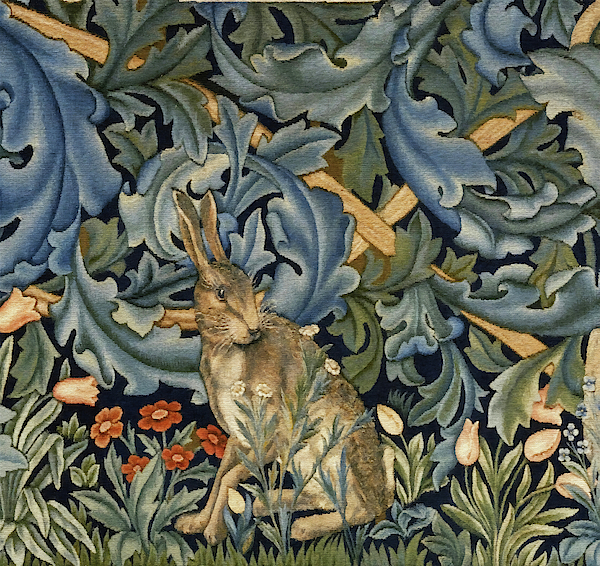
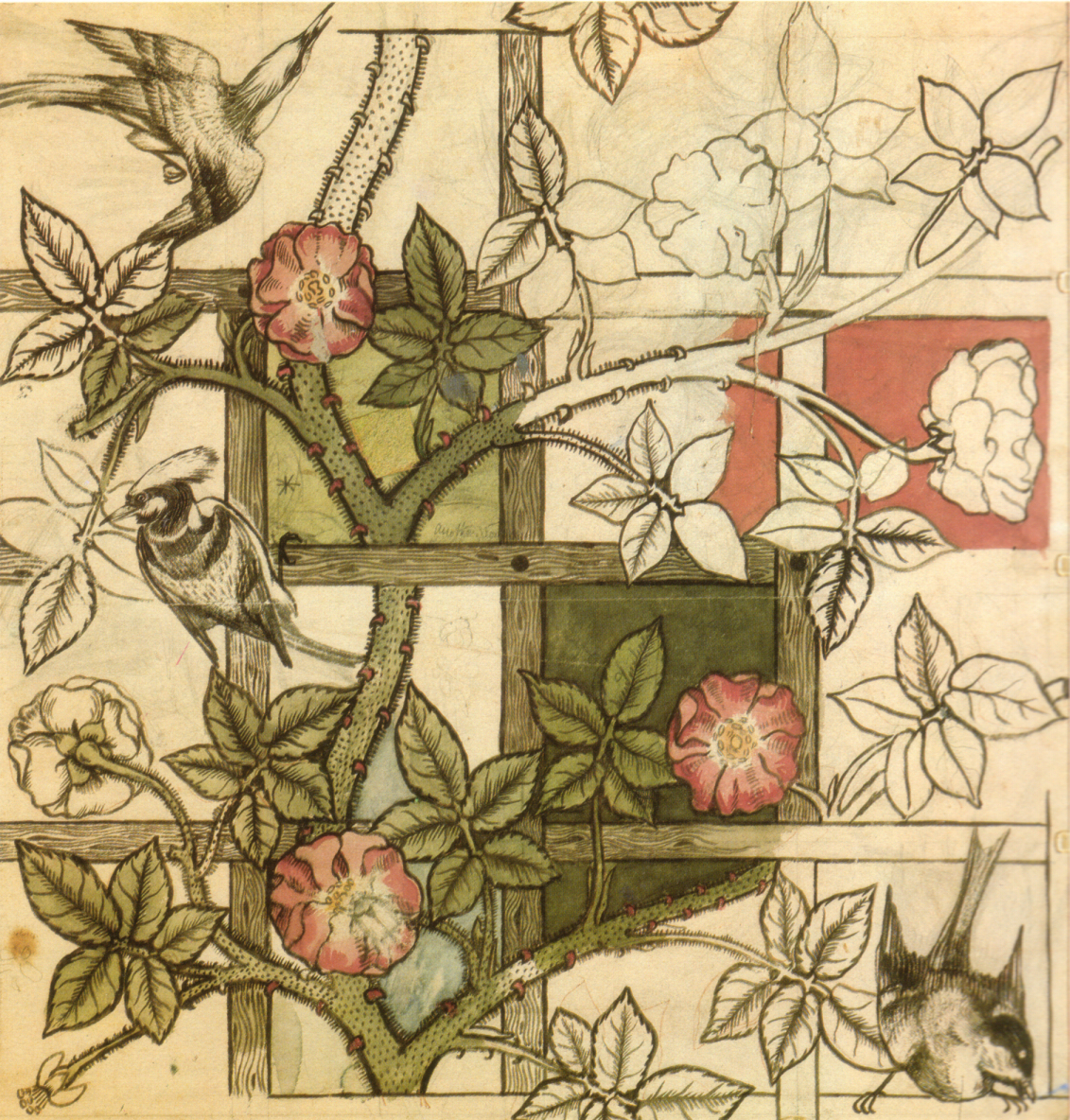
Morris, The Forest (detail), 1887


If a chap can't compose an epic poem while he's weaving tapestry, he had better shut up, he'll never do any good at all.

William Morris, from The Life of William Morris

31 July 2024

Compose.


If a chap can't compose an epic poem while he's weaving tapestry, he had better shut up, he'll never do any good at all.

William Morris, from The Life of William Morris

24 March 2023

Happy Birthday, Morris

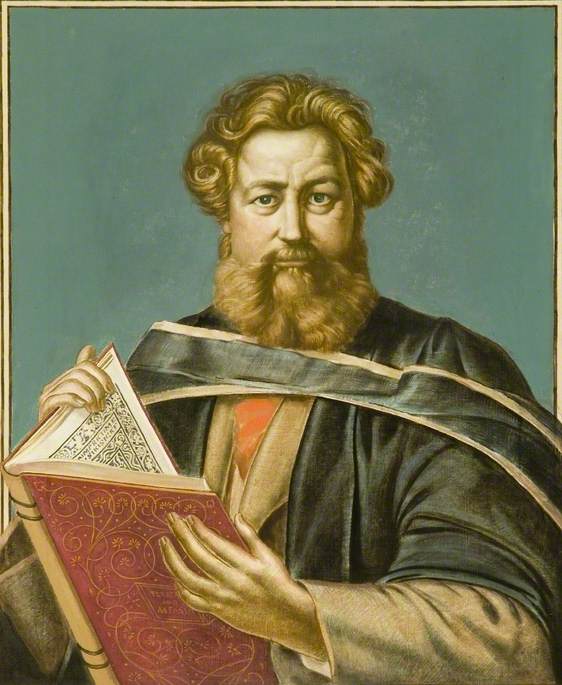
Watts, William Morris, 1870


TAPESTRY TREES

Oak.

I am the Roof-tree and the Keel;
I bridge the seas for woe and weal.

Fir.

High o’er the lordly oak I stand,
And drive him on from land to land.

Ash.

I heft my brother’s iron bane;
I shaft the spear, and build the wain.

Yew.

Dark down the windy dale I grow,
The father of the fateful Bow.

Poplar.

The war-shaft and the milking-bowl
I make, and keep the hay-wain whole.

Olive.

The King I bless; the lamps I trim;
In my warm wave do fishes swim.

Apple-tree.

I bowed my head to Adam’s will;
The cups of toiling men I fill.

Vine.

I draw the blood from out the earth;
I store the sun for winter mirth.

Orange-tree.

Amidst the greenness of my night,
My odorous lamps hang round and bright.

Fig-tree.

I who am little among trees
In honey-making mate the bees.

Mulberry —tree.

Love’s lack hath dyed my berries red:
For Love’s attire my leaves are shed.

Pear-tree.

High o’er the mead-flowers’ hidden feet
I bear aloft my burden sweet.

Bay.

Look on my leafy boughs, the Crown
Of living song and dead renown!

William Morris, born on this day in 1834

11 February 2023

Left.

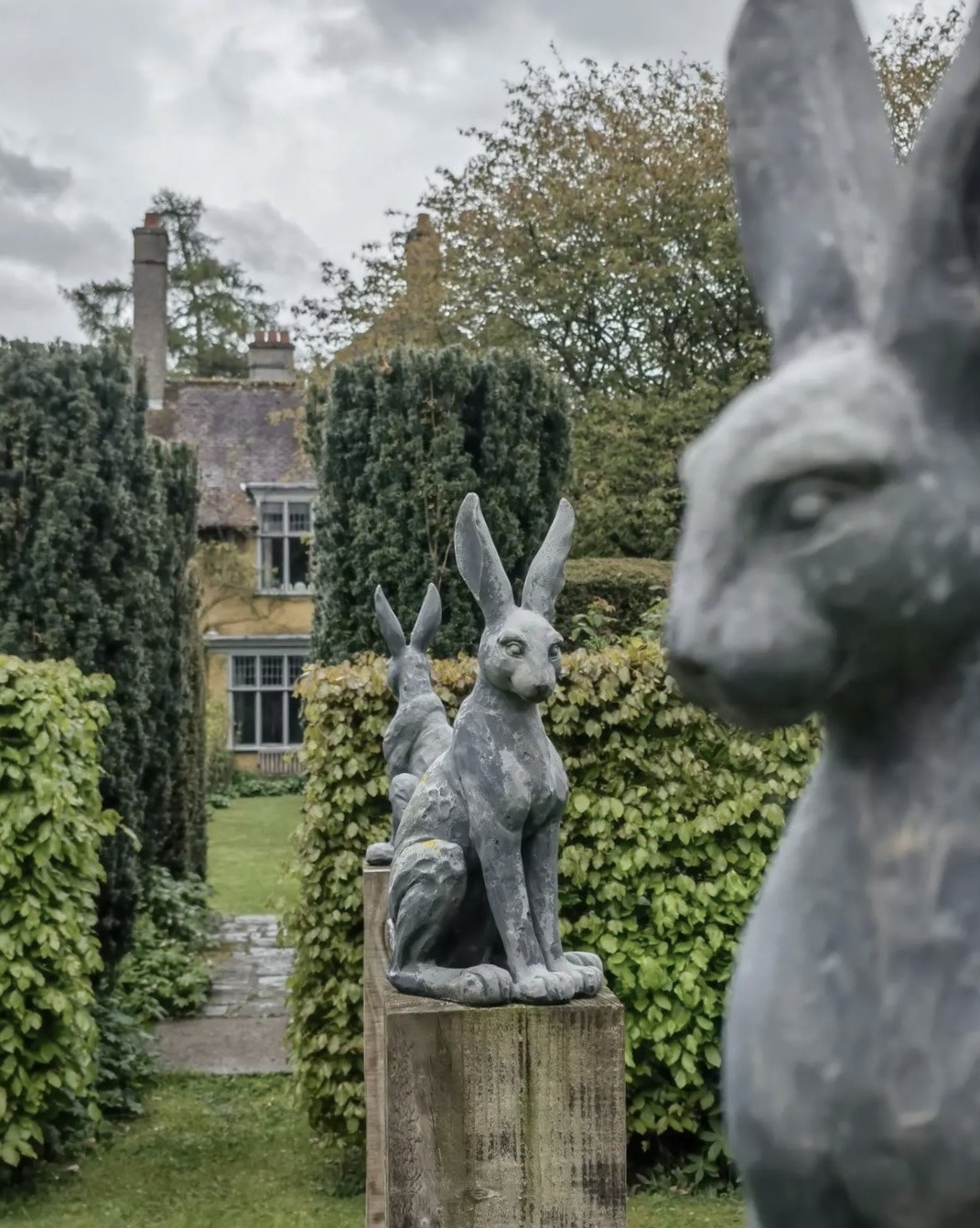
Morris, The Hare and The Moon, 2020


The HARE

In the black furrow of a field
        I saw an old witch-hare this night;
     And she cocked a lissome ear,
        And she eyed the moon so bright,
     And she nibbled of the green;
        And I whispered "Wh-s-st! witch-hare,"
     Away like a ghostie o'er the field
        She fled, and left the moonlight there.

Walter de la Mare

24 March 2022

Happy Birthday, Morris

Rushbury, William Morris of Walthamstow, Poet and Craftsman, 1938

If a chap can't compose an epic poem while he's weaving tapestry, he had better shut up; he'll never do any good at all.

William Morris, born on this day in 1834.

11 June 2021

Becoming.


Whenever you make a decision, whenever you act, you are never just doing, you are becoming.

Tom Morris

Thank you, Mr.  Wade, this is going on the wall in the classroom.

26 March 2021

While.


If a chap can't compose an epic poem while he's weaving tapestry, he had better shut up; he'll never do any good at all.

William Morris

25 March 2021

Act.


To do nothing but grumble and not to act - that is throwing away one's life.

William Morris

24 March 2021

Happy Birthday, Morris


William Morris was born on this day in 1834.

With the arrogance of youth, I determined to do no less than to transform the world with beauty. If I have succeeded in some small way, if only in one small corner of the world, amongst the men and women I love, then I shall count myself blessed, and blessed, and blessed, and the work goes on.

William Morris

Memories of the Future: William Morris and John Ruskin ...

23 March 2021

Joy.


Speak not, move not, but listen, the sky is full of gold. No ripple on the river, no stir in field or fold, all gleams but naught doth glisten, but the far-off unseen sea. Forget days past, heart broken, put all memory by! No grief on the green hillside, no pity in the sky, joy that may not be spoken fills mead and flower and tree.

William Morris

22 March 2021

Born.

Rushbury, William Morris of Walthamstow, Poet and Craftsman, 1938


Let us look backward in history once more for a short while, and then steadily forward till my words are done: I began by saying that part of the common and necessary advice given to Art students was to study antiquity; and no doubt many of you, like me, have done so; have wandered, for instance, through the galleries of the admirable museum of South Kensington, and, like me, have been filled with wonder and gratitude at the beauty which has been born from the brain of man. Now, consider, I pray you, what these wonderful works are, and how they were made; and indeed, it is neither in extravagance nor without due meaning that I use the word 'wonderful' in speaking of them. Well, these things are just the common household goods of those past days, and that is one reason why they are so few and so carefully treasured. They were common things in their own day, used without fear of breaking or spoiling--no rarities then--and yet we have called them "wonderful."

And how were they made? Did a great artist draw the designs for them--a man of cultivation, highly paid, daintily fed, carefully housed, wrapped up in cotton wool, in short, when he was not at work? By no means. Wonderful as these works are, they were made by 'common fellows,' as the phrase goes, in the common course of their daily labour. Such were the men we honour in honouring those works. And their labour--do you think it was irksome to them? Those of you who are artists know very well that it was not; that it could not be. Many a grin of pleasure, I'll be bound--and you will not contradict me--went to the carrying through of those mazes of mysterious beauty, to the invention of those strange beasts and birds and flowers that we ourselves have chuckled over at South Kensington. While they were at work, at least, these men were not unhappy, and I suppose they worked most days, and the most part of the day, as we do.

Or those treasures of architecture that we study so carefully nowadays--what are they? how were they made? There are great minsters among them, indeed, and palaces of kings and lords, but not many; and, noble and awe-inspiring as these may be, they differ only in size from the little grey church that still so often makes the commonplace English landscape beautiful, and the little grey house that still, in some parts of the country at least, makes an English village a thing apart, to be seen and pondered on by all who love romance and beauty. These form the mass of our architectural treasures, the houses that everyday people lived in, the unregarded churches in which they worshipped.

And, once more, who was it that designed and ornamented them? The great architect, carefully kept for the purpose, and guarded from the common troubles of common men? By no means. Sometimes, perhaps, it was the monk, the ploughman's brother; oftenest his other brother, the village carpenter, smith, mason, what not--'a common fellow,' whose common everyday labour fashioned works that are to-day the wonder and despair of many a hard-working 'cultivated' architect. And did he loathe his work? No, it is impossible. I have seen, as we most of us have, work done by such men in some out-of-the-way hamlet--where to-day even few strangers ever come, and whose people seldom go five miles from their own doors; in such places, I say, I have seen work so delicate, so careful, and so inventive, that nothing in its way could go further. And I will assert, without fear of contradiction, that no human ingenuity can produce work such as this without pleasure being a third party to the brain that conceived and the hand that fashioned it. Nor are such works rare. The throne of the great Plantagenet, or the great Valois, was no more daintily carved than the seat of the village mass-john, or the chest of the yeoman's good-wife.

So, you see, there was much going on to make life endurable in those times. Not every day, you may be sure, was a day of slaughter and tumult, though the histories read almost as if it were so; but every day the hammer chinked on the anvil, and the chisel played about the oak beam, and never without some beauty and invention being born of it, and consequently some human happiness.

William Morris
21 March 2021

Cultivated.


It is real learning, knowledge cultivated for its own sake—the Art of Knowledge, in short—which is followed there, not the Commercial learning of the past. Though perhaps you do not know that in the nineteenth century Oxford and its less interesting sister Cambridge became definitely commercial. They (and especially Oxford) were the breeding places of a peculiar class of parasites, who called themselves cultivated people; they were indeed cynical enough, as the so-called educated classes of the day generally were; but they affected an exaggeration of cynicism in order that they might be thought knowing and worldly-wise. The rich middle classes (they had no relation with the working classes) treated them with the kind of contemptuous toleration with which a mediaeval baron treated his jester; though it must be said that they were by no means so pleasant as the old jesters were, being, in fact, the bores of society. They were laughed at, despised—and paid. Which last was what they aimed at.

William Morris

24 March 2020

Passion.


Apart from the desire to produce beautiful things, the leading passion of my life has been and is hatred of modern civilization.

William Morris

Happy Birthday, Morris

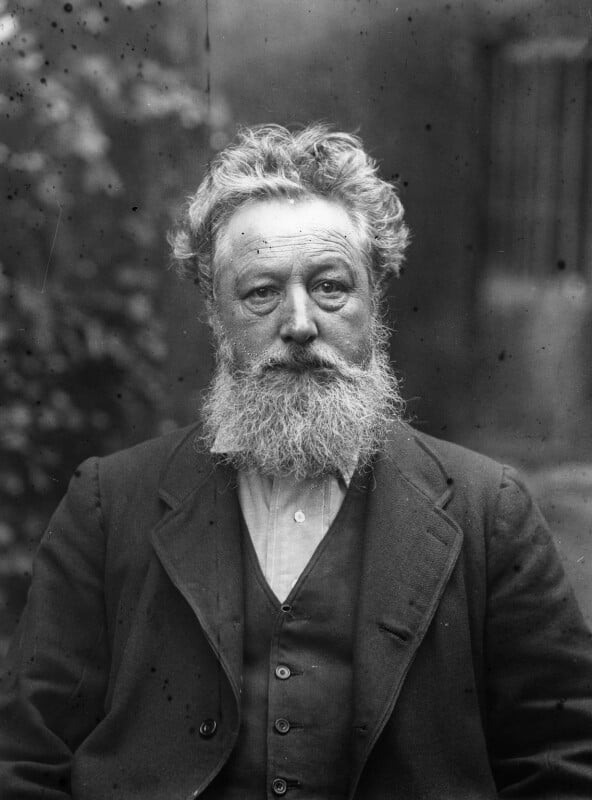
Hollyer, William Morris, 1888


A good way to rid one's self of a sense of discomfort is to do something. That uneasy, dissatisfied feeling is actual force vibrating out of order; it may be turned to practical account by giving proper expression to its creative character.  

William Morris

Memories of the Future, a documentary on the aesthetics of William Morris and John Ruskin ...
08 February 2020

Happy Birthday, Ruskin


John Ruskin was born on this date in 1819.

What do we, as a nation, care about books? How much do you think we spend altogether on our libraries, public or private, as compared with what we spend on our horses? 

John Ruskin

William Morris & John Ruskin: Memories of the Future ...