"I am not one who was born in the custody of wisdom. I am one who is fond of olden times and intense in quest of the sacred knowing of the ancients." Gustave Courbet

16 December 2015

Magic.

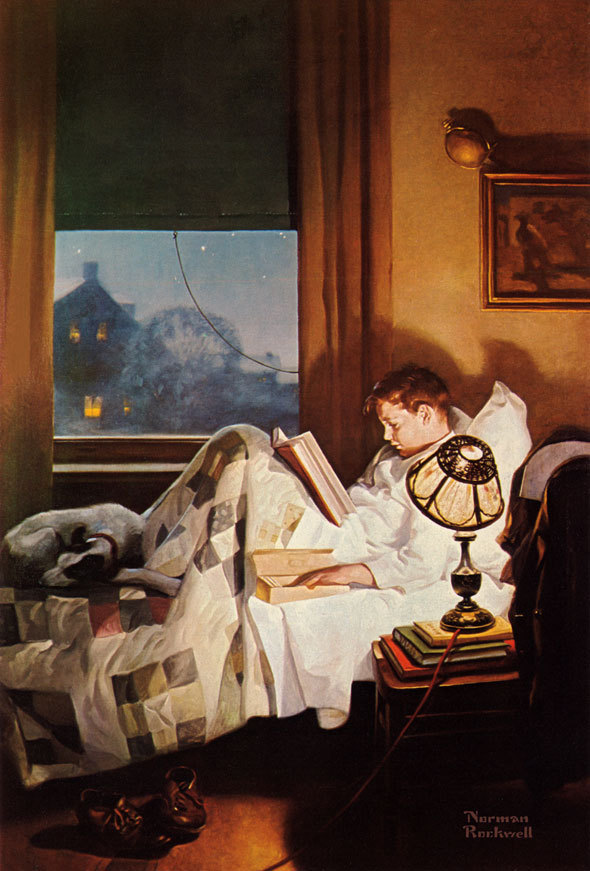
Sagantini, The Bell Ringer, 1880


It's all a matter of paying attention, being awake in the present moment, and not expecting a huge payoff. The magic in this world seems to work in whispers and small kindnesses.

Charles de Lint

Happy birthday. Beethoven.

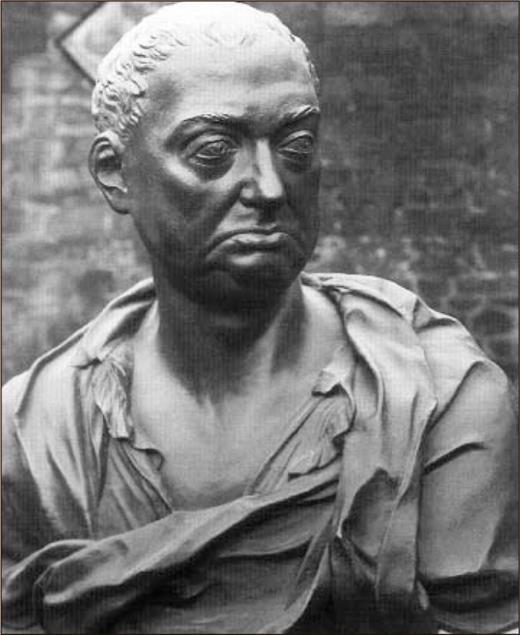
Mähler, Beethoven (detail), 1804


Ludwig van Beethoven was born on this day in 1770. 

To sing a wrong note is insignificant, but to sing without passion is unforgivable.

Ludwig van Beethoven

Symphony no. 6 in F major, "Pastoral," Op. 68.  Bernard Haitink leads the Concertgebouw Amsterdam ...


Thank you for pointing the way, Kurt.

Hat.

Snowflakes.

Brilliant.


Some minds corrode, and grow inactive, under the loss of personal liberty; others grow morbid and irritable; but it is the nature of the poet to become tender and imaginative in the loneliness of confinement. He banquets upon the honey of his own thoughts, and, like the captive bird, pours forth his soul in melody.

Have you not seen the nightingale, 
A pilgrim coop'd into a cage, 
How doth she chant her wonted tale, 
In that her lonely hermitage! 
Even there her charming melody doth prove 
That all her boughs are trees, her cage a grove.

Roger L'Estrange.


Indeed, it is the divine attribute of the imagination, that it is irrepressible, unconfinable—that when the real world is shut out, it can create a world for itself, and, with a necromantic power, can conjure up glorious shapes and forms and brilliant visions, to make solitude populous, and irradiate the gloom of the dungeon. 

Washington Irving, from "The Royal Poet"

CONNECT

Living.

Bob Dylan, "Must Be Santa"

Reindeer sleigh, 
Come our way
HO HO HO, 
Cherry nose
Cap on head, 
Suit that's red
Special night, 
Beard that's white

In fifth grade you just repeat this over and over and over! It's fun!

15 December 2015

Quiet.


I can't extend to every friend
In need a helping hand--
No matter though I wish it so,
'Tis not as Fortune planned;

But haply may I fancy they
Are men of different stripe
Than others think who hint and wink,--
And so--I smoke my pipe!

A golden coal to crown the bowl--
My pipe and I alone,--
I sit and muse with idler views
Perchance than I should own:--

It might be worse to own the purse
Whose glutted bowels gripe
In little qualms of stinted alms;
And so I smoke my pipe.

And if inclined to moor my mind
And cast the anchor Hope,
A puff of breath will put to death
The morbid misanthrope

That lurks inside--as errors hide
In standing forms of type
To mar at birth some line of worth;
And so I smoke my pipe.

The subtle stings misfortune flings
Can give me little pain
When my narcotic spell has wrought
This quiet in my brain:

When I can waste the past in taste
So luscious and so ripe
That like an elf I hug myself;
And so I smoke my pipe.

And wrapped in shrouds of drifting clouds
I watch the phantom's flight,
Till alien eyes from Paradise
Smile on me as I write:

And I forgive the wrongs that live,
As lightly as I wipe
Away the tear that rises here;
And so I smoke my pipe.

John Whitcomb Riley

Process.

A documentary film of the process of creating Russell Chatham's autographic lithograph, Winter at Deep Creek. The documentary features and is narrated by the artist.

Bad drawing or painting is recognized by timidity, indecision, insensitivity, conventionality, and, of course in the larger sense, by the absence of soul and heart.

Russell Chatham


Russell Chatham, immersed deeply in the process of his craft. I love that documents like this (and this) exist and that I can watch an artist at work.

Salvation.


I am a nomad, not a farmer. I am an adorer of the unfaithful, the changing, the fantastic.
Good luck to the farmer! Good luck to the man who owns this place,
the man who works it, the faithful, the virtuous!
I can love him, I can revere him, I can envy him.
But I have wasted half my life trying to live his life. I wanted to be something that I was not.
I even wanted to be a poet and a middle class person at the same time.
I wanted to be an artist and a man of fantasy, but I also wanted to be a good man, a man at home.
It all went on for a long time, till I knew that a man cannot be both and have both,
that I am a nomad and not a farmer, a man who searches
and not a man who keeps.
A long time I castigated myself before gods and laws, which were only idols for me.
That was what I did wrong, my anguish, by doing violence to myself,
by not daring to walk toward my own salvation.
The way to salvation leads neither to the left nor the right; it leads
into your own heart, and there alone is God, and there alone is peace.

Herman Hesse

Ran.

Karr, treeshadow, 2012


Xmas Cheeseburgers

I was without Christmas spirit
so I made three cow dogs, Lola, Blacky, and Pinto
cheeseburgers with ground chuck and French St. Andre cheese
so that we'd all feel better.
I delivered them to Hard Luck Ranch and said,
"Chew each bite 32 times."
They ignored me and gobbled.

The world that used to nurse us
now keeps shouting inane instructions.

That's why I ran to the woods.

Jim Harrison

Thank You, Jessica.

Proudly.


Seeing, now, that there were no curtains to the window, and that the street being very narrow, the house opposite commanded a plain view into the room, and observing more and more the indecorous figure that Queequeg made, staving about with little else but his hat and boots on; I begged him as well as I could, to accelerate his toilet somewhat, and particularly to get into his pantaloons as soon as possible. He complied, and then proceeded to wash himself. At that time in the morning any Christian would have washed his face; but Queequeg, to my amazement, contented himself with restricting his ablutions to his chest, arms, and hands. He then donned his waistcoat, and taking up a piece of hard soap on the wash-stand centre table, dipped it into water and commenced lathering his face. I was watching to see where he kept his razor, when lo and behold, he takes the harpoon from the bed corner, slips out the long wooden stock, unsheathes the head, whets it a little on his boot, and striding up to the bit of mirror against the wall, begins a vigorous scraping, or rather harpooning of his cheeks. Thinks I, Queequeg, this is using Rogers’s best cutlery with a vengeance. Afterwards I wondered the less at this operation when I came to know of what fine steel the head of a harpoon is made, and how exceedingly sharp the long straight edges are always kept.

The rest of his toilet was soon achieved, and he proudly marched out of the room, wrapped up in his great pilot monkey jacket, and sporting his harpoon like a marshal’s baton.

I quickly followed suit, and descending into the bar-room accosted the grinning landlord very pleasantly. I cherished no malice towards him, though he had been skylarking with me not a little in the matter of my bedfellow.

However, a good laugh is a mighty good thing, and rather too scarce a good thing; the more’s the pity. So, if any one man, in his own proper person, afford stuff for a good joke to anybody, let him not be backward, but let him cheerfully allow himself to spend and be spent in that way. And the man that has anything bountifully laughable about him, be sure there is more in that man than you perhaps think for.

The bar-room was now full of the boarders who had been dropping in the night previous, and whom I had not as yet had a good look at. They were nearly all whalemen; chief mates, and second mates, and third mates, and sea carpenters, and sea coopers, and sea blacksmiths, and harpooneers, and ship keepers; a brown and brawny company, with bosky beards; an unshorn, shaggy set, all wearing monkey jackets for morning gowns.

You could pretty plainly tell how long each one had been ashore. This young fellow’s healthy cheek is like a sun-toasted pear in hue, and would seem to smell almost as musky; he cannot have been three days landed from his Indian voyage. That man next him looks a few shades lighter; you might say a touch of satin wood is in him. In the complexion of a third still lingers a tropic tawn, but slightly bleached withal; HE doubtless has tarried whole weeks ashore. But who could show a cheek like Queequeg? which, barred with various tints, seemed like the Andes’ western slope, to show forth in one array, contrasting climates, zone by zone.

“Grub, ho!” now cried the landlord, flinging open a door, and in we went to breakfast.

They say that men who have seen the world, thereby become quite at ease in manner, quite self-possessed in company. Not always, though: Ledyard, the great New England traveller, and Mungo Park, the Scotch one; of all men, they possessed the least assurance in the parlor. But perhaps the mere crossing of Siberia in a sledge drawn by dogs as Ledyard did, or the taking a long solitary walk on an empty stomach, in the negro heart of Africa, which was the sum of poor Mungo’s performances—this kind of travel, I say, may not be the very best mode of attaining a high social polish. Still, for the most part, that sort of thing is to be had anywhere.

These reflections just here are occasioned by the circumstance that after we were all seated at the table, and I was preparing to hear some good stories about whaling; to my no small surprise, nearly every man maintained a profound silence. And not only that, but they looked embarrassed. Yes, here were a set of sea-dogs, many of whom without the slightest bashfulness had boarded great whales on the high seas—entire strangers to them—and duelled them dead without winking; and yet, here they sat at a social breakfast table—all of the same calling, all of kindred tastes—looking round as sheepishly at each other as though they had never been out of sight of some sheepfold among the Green Mountains. A curious sight; these bashful bears, these timid warrior whalemen!

Herman Melville, from Moby-Dick

14 December 2015

David Bowie, "Wild is the Wind"

Discovering.


The work of Brunelleschi and Alberti made an enormous impact on the artists of the time. Obviously, it allowed more accurate rendering. It was also a great confidence-builder: here, at last, was a major discovery that clearly went beyond what had been achieved by the ancient Greeks and Romans. For artists, it was no longer a matter of recovering what had been lost, but of discovering a fundamentally new creative power.

CONNECT

Pushed.

In the winter of 1820, the New England whaling ship Essex was assaulted by something no one could believe: a whale of mammoth size and will, and an almost human sense of vengeance. The real-life maritime disaster would inspire Herman Melville’s Moby-Dick. But that told only half the story.

“In the Heart of the Sea” reveals the encounter’s harrowing aftermath, as the ship’s surviving crew is pushed to their limits and forced to do the unthinkable to stay alive. Braving storms, starvation, panic and despair, the men will call into question their deepest beliefs, from the value of their lives to the morality of their trade, as their captain searches for direction on the open sea and his first mate still seeks to bring the great whale down.

Happy birthday, London Calling.


The Clash released London Calling on this day in 1979.

The Last Testament: The Making of London Calling ...


Clash home movies of the family get-together ...


Phoney Beatle-mania has bitten the dust.  I love it.

12 December 2015

Cheer.


A merry band went wassailing, out through drifts of winter’s snow.
They left along the hidden path that all wassailers know.
But returning from their wassails to warm by Christmas hearth,
Their merry band had doubled, and was twice those that went forth.

Moved by a curiosity, no doubt born of Christmas cheer,
I hid amongst some bushes when next the wassailers came near.
Through the secret meadows and along the unmarked road,
I stalked the outbound choir, to know where their growth was owed.

From a dark and glutted building, still as a Christmas mouse,
I watched as the wassailers approached a bewreathed house.
Warming to their wassail, a family came to fill the door,
And then the song proceeded. It lives with me forevermore.

The starry night, the fretted neck, along which rang the chorus line.
The notes as clear as crystalled winter, ringing out in frozen time.
A countless thousand harmonies, at once near yet beyond reach,
Involving every ounce of air, robbing Nature of her speech.

Before the gathered wassailers could once repeat their sounding joy,
The attendant family had come and joined the wassailing envoy.
Voices raised in Christmas, they marched together down the street,
And I, I followed after, as if Marley’s ghost compelled my feet.

Through the silvered city, stores would empty to greet the song,
And every one who listened was converted to the throng.
Mulled wine was left to cooling, the turkey abandoned there to rot,
Job posts went untended, and babies were left crying in the cot.

Lovers broken from embraces, surgeons from patients in distress,
Joined in their interrupted finest, or arrived in gross undress.
Even motorists in transit, tumbling abruptly from speeding cars,
Would crawl along after the song, streaking blood across the tar.

Bewitching mind, bedeviling ear – beguiling whosoever chances hear
Its demonic promise of delights, its jolly strains of godless cheer!
A siren song of sallow tinsel, a gift loveless and hollow of all benefit,
Like sulfuric coal inside your stocking, burning the hand to close on it.

Noel! Noel! Natalis lumen, nephel. So cried the Adversary as he fell
Across the void, through silent night, unto the fiery lakes of hell,
Where screams are mocked by tawdry jingling bells,
And holly decks the halls of Mulciber, and crowns accursed Azazel!

Subsuming all the wassail-able, the wassailing army still did not cease,
But will insist on piggy pudding till the whole earth knows their peace.
An incessant, drumming “rum-pum-pum” from a place far and forlorn,
Keeps the shuffling footsteps moving, marching Westward, ever on.


I’ve past the end of my retelling, yet you seem unmoved by the affair.
Perhaps you notice I’ve been wassailing and returned no worse for wear.
You suppose that I’ve escaped somehow, and therefore you can too,
But of course I’ve known and know the song, and now, friend, so do you.


CONNECT

Danced.


A Childhood Christmas

I
One side of the potato-pits was white with frost-
How wonderful that was, how wonderful
And when we put our ears to the paling-post
The music that came out was magical
The light between the ricks of hay and straw
Was a hole in Heaven's gable. An apple tree
With its December-glinting fruit we saw-
O you, Eve, were the world that tempted me
To eat the knowledge that grew in clay
And death the germ within it! Now and then
I can remember something of the gay
Garden that was childhoods. Again
The tracks of Cattle to a drinking-place,
A green stone lying sideways in a ditch
Or any common sight the transfigured face
Of a beauty that the world did not touch.

II
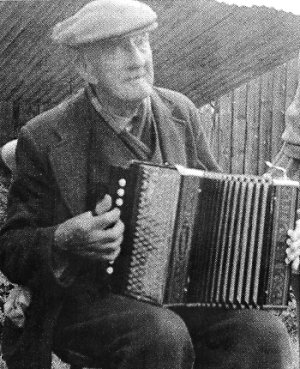
My father played the melodeon
Outside at our gate
There were stars in the morning east
And they danced to his music.

Across the wild bogs his melodeon called
To Lennons and Callans.
As I pulled on my trousers in a hurry
I knew some strange thing had happened.
Outside in the cow-house my mother
Made the music of milking;
The light of her stable-lamp was a star
And the frost of Bethlehem made it twinkle.

A water-hen screeched in the bog,
Mass-going feet
Crunched the wafer-ice on the pot-holes,
Somebody wistfully twisted the bellows wheel.
My child poet picked out the letters
On the grey stone,
In silver the wonder of a Christmas townland,
The winking glitter of a frosty dawn.

Cassiopeia was over
Cassidy's hanging hill,
I looked and three whin bushes rode across
The horizon-the Three Wise Kings.
An old man passing said:
'Can't he make it talk' -
The melodeon. I hid in the doorway
And tightened the belt of my box-pleated coat.
I nicked six nicks on the door-post
With my penknife's big blade-

There was a little one for cutting tobacco.
And I was six Christmases of age.
My father played the melodeon,
My mother milked the cows,
And I had a prayer like a white rose pinned
On the Virgin Mary's blouse.

Patrick Kavanagh

11 December 2015

ZZ TOP, "Just Got Paid"

Happy Friday!

More.

Weapons.

Mike Loades, a professional film fight coordinator and medieval weapons trainer, explores the actual history and effectiveness of the ancient medieval weapons and armor of medieval Britain. Through historical examinations, scientific experiments of the items in question, and wargaming demonstrations with volunteers, Loades illustrates the nature of the weapons and armor that played significant roles in the history of Britain.

"Sword"


"Longbow"


"Lance"


"Shield"


"Armor"

Glorious.


You don’t get lucky without preparation, and there’s no sense in being prepared if you’re not open to the possibility of a glorious accident.

Twyla Tharp

Tricked.

... that Oriental way of thinking where they think they've tricked you, and then ... 

Tricks.


What use is an inflatable dummy tank in a very real war? A lot, if the enemy believes that it’s real. The men of the 23rd Headquarters Special Troops knew that their lives and the lives of thousands of others depended on tricks and tactics that often had to be improvised on the spot.

10 December 2015

Zeppelin.

On this day in 2007, Led Zeppelin took the stage at London’s O2 Arena to perform a tribute concert for Atlantic Records founder Ahmet Ertegun ...

Happy birthday, Dickinson.


Emily Dickinson was born on this day in 1830.

I’m Nobody! Who are you?
Are you – Nobody – too?
Then there’s a pair of us!
Don’t tell! they’d advertise – you know! 

How dreary – to be – Somebody!
How public – like a Frog –  
To tell one’s name – the livelong June –  
To an admiring Bog!

Emily Dickinson

Typography.

Flash.


Before your light quite fail,
Already paling star,
(The quail
Sings in the thyme afar!)

Turn on the poet's eyes
That love makes overrun-
(See rise
The lark to meet the sun!)

Your glance, that presently
Must drown in the blue morn;
(What glee
Amid the rustling corn!)

Then flash my message true
Down yonder,-far away!-
(The dew
Lies sparkling on the hay.)

Across what visions seek
The Dear One slumbering still.
(Quick, quick!
The sun has reached the hill!)

Paul Verlaine

Beethoven, French Horn Sonata, Op. 17

Dennis Brain performs with Denis Matthews accompanying ...

Happy birthday, MacDonald.


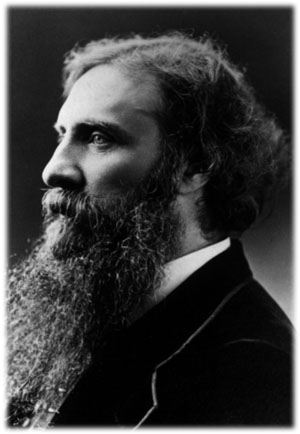
George MacDonald was born on this date in 1824.

Work is not always required ... in fact, there is such a thing as sacred idleness, the cultivation of which is now fearfully neglected.

George MacDonald

Wisdom.


It is the beginning of wisdom when you recognize that the best you can do is choose which rules you want to live by, and it's persistent and aggravated imbecility to pretend you can live without any.

Wallace Stegner

Pleasure.


Do not be afraid of cooking, as your ingredients will know, and misbehave.  Enjoy your cooking and the food will behave; moreover it will pass your pleasure on to those who eat it.

Fergus Henderson

Understood.


I think one of the most important things about Fergus is his ability to inspire, and his gift for explaining things in such a way that everyone can understand them. He would have sayings like, “Are we all ready for service, chefs? Are we poised like a puma?” The simplest things, like trying to explain to a chef exactly how much stock to add to a braise, for example, he would explain as “fill the stock up to the side of the duck legs so that they sit just out of the water like a crocodile’s nostrils.” Everyone can instantly picture this and get it right.
I now always try to think of analogies I can use when explaining things to people, as it’s such a great way of getting rid of things that are unnecessary. Fergus taught me to cut to the important bit and make sure you’re understood.

Bone.


After twenty years of serving roast bone marrow to his guests at St. John in London, chef Fergus Henderson has not lost his enthusiasm for the dish that has become shorthand for his aggressively humble style of cooking. While the bone marrow "has taken on a quality of its own" as an all-time classic, Henderson remains committed. "I suppose I'm married to the dish. It's very close to me." He adds: "There's never a dull moment between me and the bone."

Arguably the inspiration for basically every other bone marrow and toast dish on menus today — and a huge reason why there's so much bone marrow on menus now, period — the St. John roast bone marrow and parsley salad is the only dish to have been on the St. John menu continuously since the restaurant opened in October of 1994.

What attracts Henderson to serving roasted marrow bones is the physicality of it, the gnawing, the sucking, and the chewing of perfectly cooked bones. ("It's a bit cheeky," Henderson says of the plate.) The roasted bone marrow has not changed over the years. "It still gives such joy," he explains. "It always has."

Henderson's strategy is simple: "Celebrate the bone." To that end, marrow bones are cooked until precisely the right moment, paired with a thoughtful salad, toast, and then presented to the guest to attack as they will. The dish continues to captivate diners, and Henderson is modest when he says that "quite a few" tables order the bones each night. "The roasted bones, it's big."

Transcend.


Those of us who have been true readers all our life seldom fully realize the enormous extension of our being which we owe to authors. We realize it best when we talk with an unliterary friend. He may be full of goodness and good sense, but he inhabits a tiny world. In it, we should be suffocated. The man who is contented to be only himself, and therefore less a self, is in prison. My own eyes are not enough for me, I will see through those of others. Reality, even seen through the eyes of many, is not enough. I will see what others have invented. Even the eyes of all humanity are not enough. I regret that the brutes cannot write books. Very gladly would I learn what face things present to a mouse or a bee; more gladly still would I perceive the olfactory world charged with all the information and emotion it carries for a dog. Literary experience heals the wound, without undermining the privilege, of individuality.  In reading great literature I become a thousand men and yet remain myself. Like the night sky in the Greek poem, I see with a myriad of eyes, but it is still I who see. Here, as in worship, in love, in moral action, and in knowing, I transcend myself; and am never more myself than when I do.

C.S. Lewis

Refreshingly.


You got something to prove? Well, go ahead and prove it.  You ain't gotta talk about it.

Coach Herman Edwards very refreshingly preaches about the complete narcissism that is social media and, what Coach Pat Riley calls, "The Disease of Me," which is a pandemic in sports from Little League to the pros ... here.

09 December 2015

Adventures.


The Threshold

If, gentle reader, you will step across this threshold, now, as the moon rises in the keen Christmas air, and will find a place by the ruddy ingle within-doors, you may hear, if you will, a Babel of voices from many lands, telling over the adventures of the road and falling into the good-fellowship of the happy Christmas season.

Here from the north, with his ample furs thrown back, sits the Russian in friendly talk with a gay little wanderer from Sicilian valleys. There, with elbow crooked by a foaming tankard, leans the German, narrating his perils and pleasures to a gallant Frenchman and a sun-browned Spaniard who smoke and chatter together as now and then Mynheer stops for a pull at his pipe.

A Swede, Norwegians, an Englishman or two, and even a happy-go-lucky American, are clustered about the Yule-log; for the place you have entered is the common-room of the wide world.

From In the Glow of the Yule Log


Inspiring.

In 1982, Jeff and Chris Reade family packed up their farm and family in Somerset and moved to a derelict collection of buildings known as ‘Scriob Ruadh’ (pronounced ‘Ski-Brua’) . Over the next 33 years, powered on little more than their own skill, effort and ingenuity, they have built one of the most inspiring farms and businesses we work with.


Splendor.


Read deeply, not to believe, not to accept, not to contradict, but to learn to share in that one nature that writes and reads.  Reading the very best writers—let us say Homer, Dante, Shakespeare, Tolstoy—is not going to make us better citizens. Art is perfectly useless, according to the sublime Oscar Wilde, who was right about everything. He also told us that all bad poetry is sincere. Had I the power to do so, I would command that these words be engraved above every gate at every university, so that each student might ponder the splendor of the insight.

Harold Bloom

Wonders.


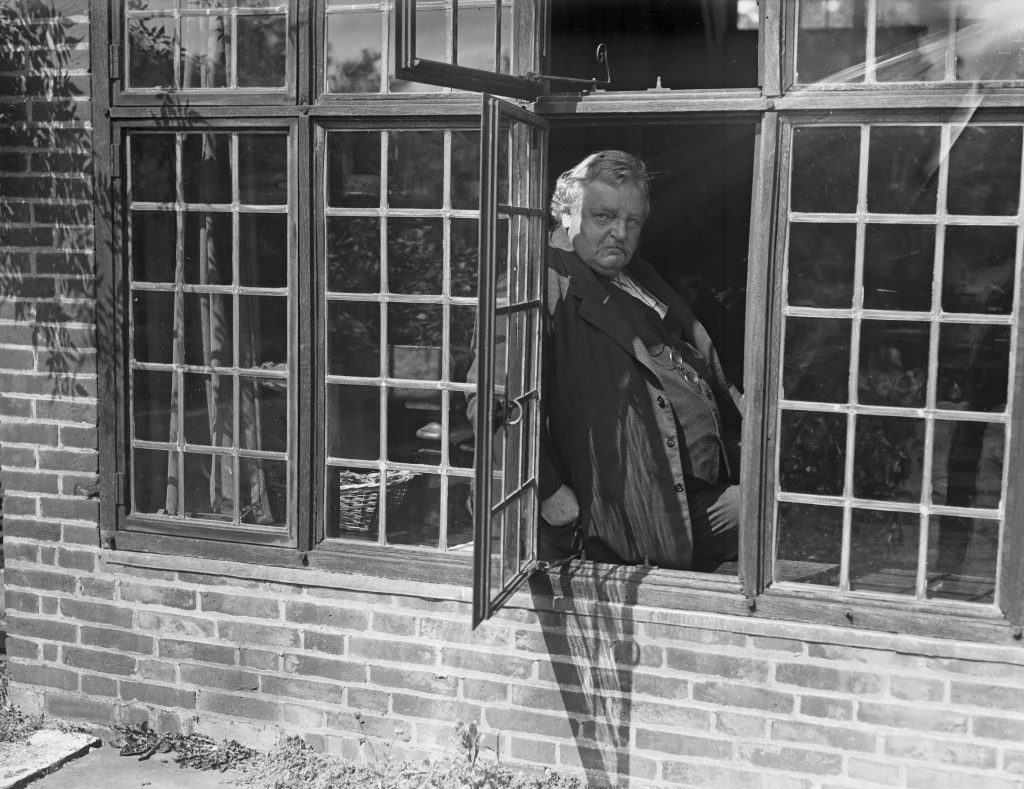
We are perishing for want of wonder, not for want of wonders.

G.K. Chesterton 

King's College Choir, "The Holly & The Ivy"

Book.

Arise.


The Dawn Wind

At two o'clock in the morning, if you open your window and listen,  
You will hear the feet of the Wind that is going to call the sun.
And the trees in the shadow rustle and the trees in the moonlight glisten,  
And though it is deep, dark night, you feel that the night is done.          

So do the cows in the field. They graze for an hour and lie down,  
Dozing and chewing the cud; or a bird in the ivy wakes, 
Chirrups one note and is still, and the restless Wind strays on,  
Fidgeting far down the road, till, softly, the darkness breaks. 

Back comes the Wind full strength with a blow like an angel's wing, 
Gentle but waking the world, as he shouts: "The Sun! The Sun!"
And the light floods over the fields and the birds begin to sing, 
And the Wind dies down in the grass. It is day and his work is done.                               

So when the world is asleep, and there seems no hope of her waking  
Out of some long, bad dream that makes her mutter and moan,
Suddenly, all men arise to the noise of fetters breaking,  

And every one smiles at his neighbour and tells him his soul is his own!

Rudyard Kipling