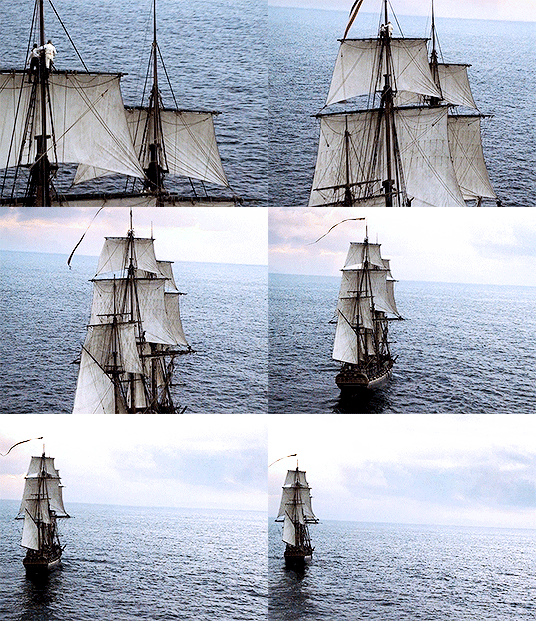
"I am not one who was born in the custody of wisdom. I am one who is fond of olden times and intense in quest of the sacred knowing of the ancients." Gustave Courbet

15 July 2014

Read.


Wherever you are, wherever you can read. Whether you're alone or with others, it's a very good thing to read aloud, whether to yourself or to others, if they will countenance it.


Harold Bloom


Brian Lamb's Booknotes interview with Professor Bloom on the occasion of the release of his book, How to Read and Why, here.

14 July 2014

Resemble.

Dumonstier, Right Hand of Artemisia Gentileschi Holding a Brush, 1625


I wish to be of service to the artists of our own day, by showing them how a small beginning leads to the highest elevation, and how from so noble a situation it is possible to fall to utmost ruin, and consequently, how these arts resemble nature as shown in our human bodies. 

Giorgio Vasari

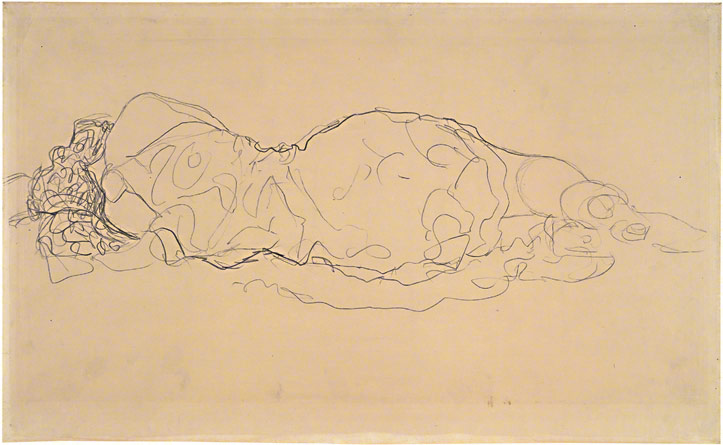
Happy birthday, Klimt.

Klimt, Reclining Woman, Seen from Behind, 1917


Gustav Klimt was born on this date in 1862.

There is nothing that special to see when looking at me. I'm a painter who paints day in day out, from morning till evening.  Whoever wants to know something about me - as an artist which alone is significant - they should look attentively at my pictures and there seek to recognize what I am and what I want.

Gustav Klimt

12 July 2014

Great.


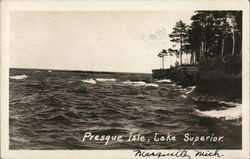
37 Great Lakes Facts That Will Blow Your Mind

5. There is enough water in Lake Superior to submerge all of North and South America in 1 foot of water.

CONNECT

08 July 2014

Language.

Fireflies communicate with a "language of light" that scientists still don't completely understand. James Lloyd and Marc Branham of the University of Florida, Gainesville, discuss unique flash patterns and times for some of the 2,000 types of fireflies that light up the summer nights.


CONNECT

Renews.

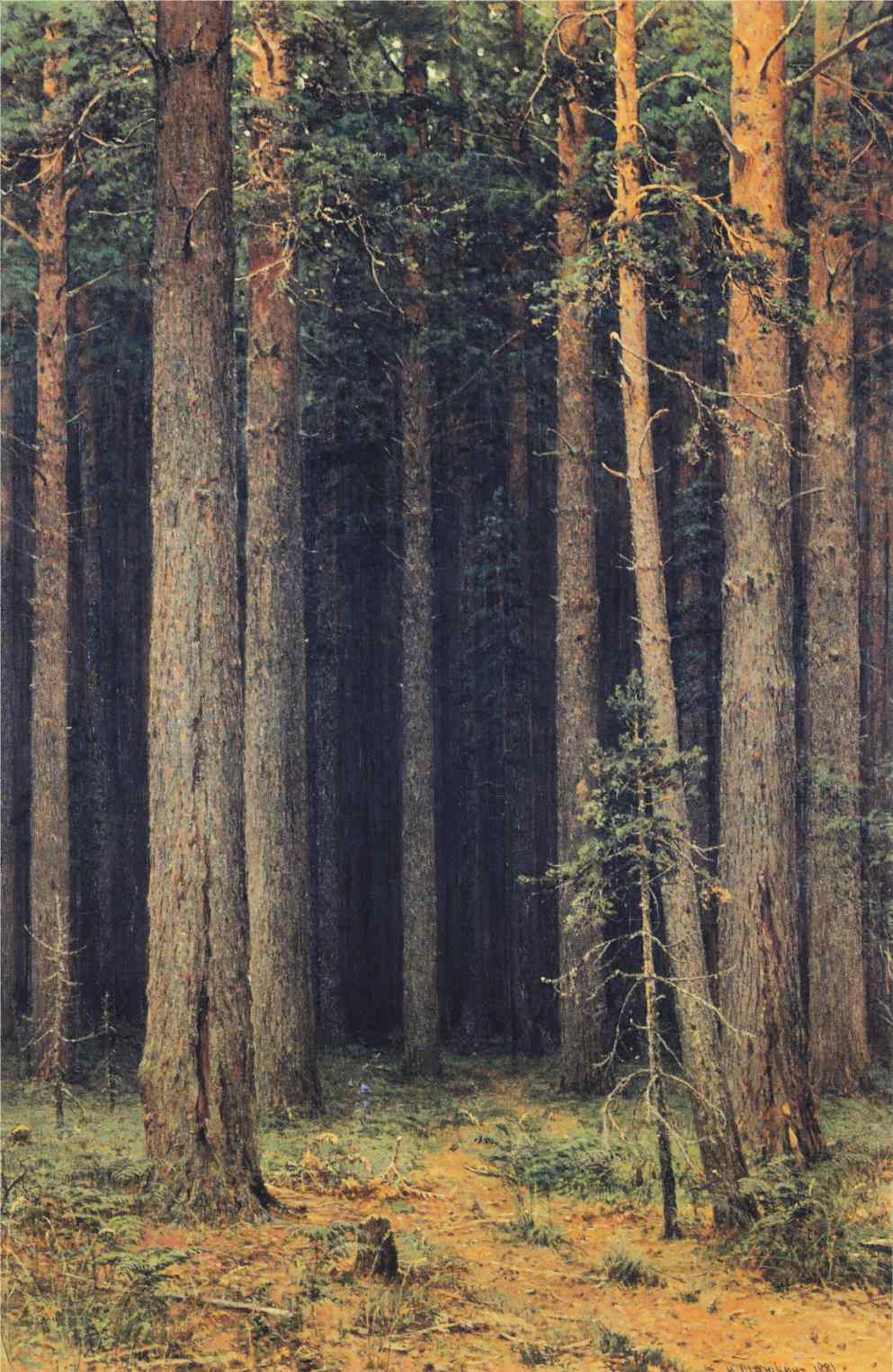
Shishkin, Forest Reserve: Pine Grove, 1911


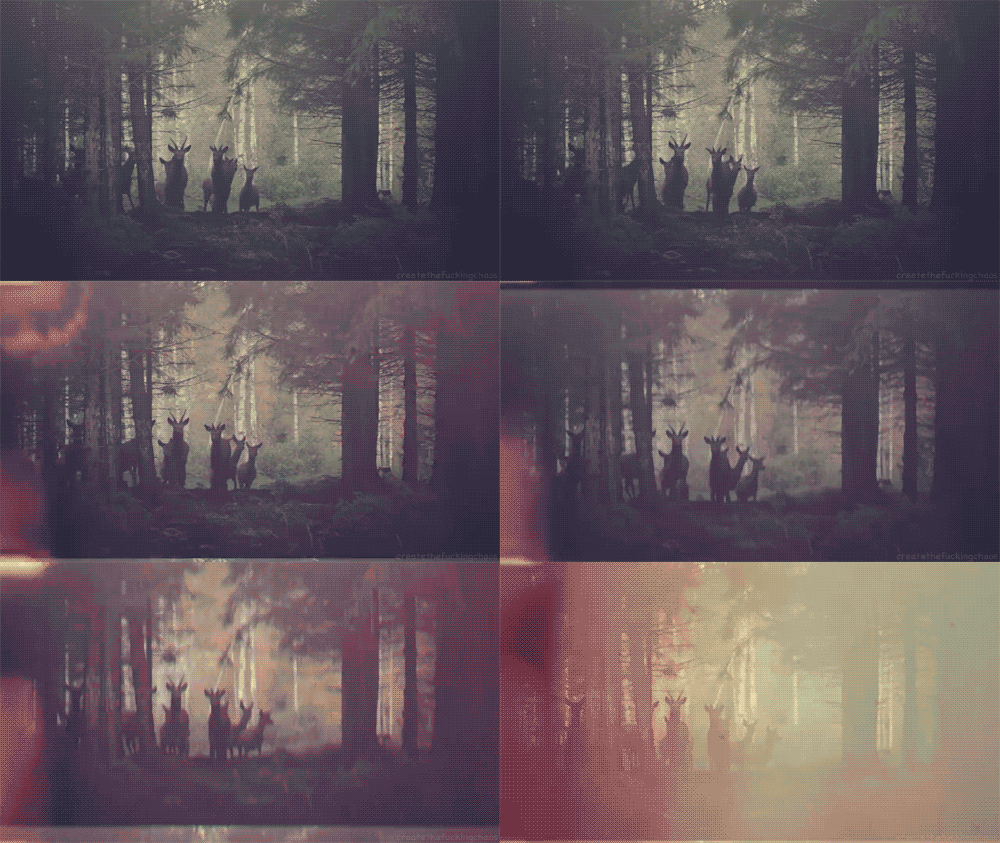
It is not so much for its beauty that the forest makes a claim upon men's hearts, as for that subtle something, that quality of air that emanation from old trees, that so wonderfully changes and renews a weary spirit.

Robert Louis Stevenson

Handel, Concerti Grossi, Op. 6

Giovanni Antonini directs Il Giardino Armonico in the Number 7 in B-flat Major, HWV 325

Happy birthday, Gentileschi.

Gentileschi, Self Portrait as the Allegory of Painting, 1639


Artemisia Gentileschi was born on this date in 1593.

CONNECT

Valuable.


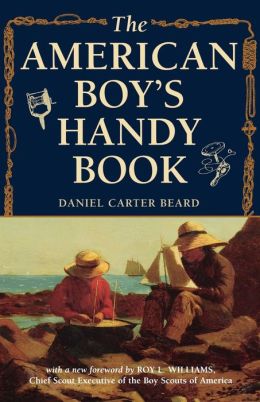
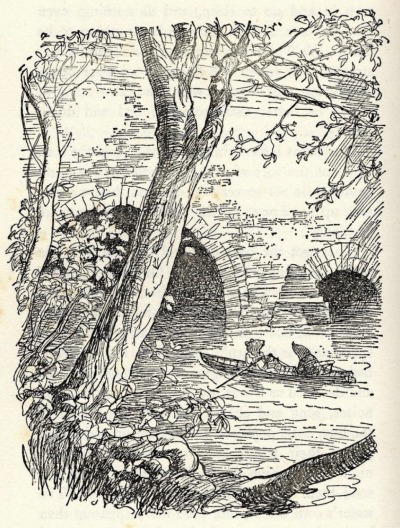
While today's youth are more likely to face a touch screen than a vast expanse of wilderness, the principles established in The American Boy's Handy Book remain as valuable as ever. A comprehensive reference for the practical skills all boys (and girls) should still know, the guide has remained in circulation since the original 1882 publication, offering detailed, approachable instructions and diagrams on how to rig river boats, defend yourself in a snowball fight, choose a dog, use your finger as a match, put on a dramatic rendition of Puss-in-Boots and more.


The 1920 edition can be found here.

07 July 2014

Wonderful.


 The Sun

Have you ever seen
anything
in your life
more wonderful

than the way the sun,
every evening,
relaxed and easy,
floats toward the horizon

and into the clouds or the hills,
or the rumpled sea,
and is gone--
and how it slides again

out of the blackness,
every morning,
on the other side of the world,
like a red flower

streaming upward on its heavenly oils,
say, on a morning in early summer,
at its perfect imperial distance--
and have you ever felt for anything
such wild love--
do you think there is anywhere, in any language,
a word billowing enough
for the pleasure

that fills you,
as the sun
reaches out,
as it warms you

as you stand there,
empty-handed--
or have you too
turned from this world--

or have you too
gone crazy
for power,
for things?

Mary Oliver

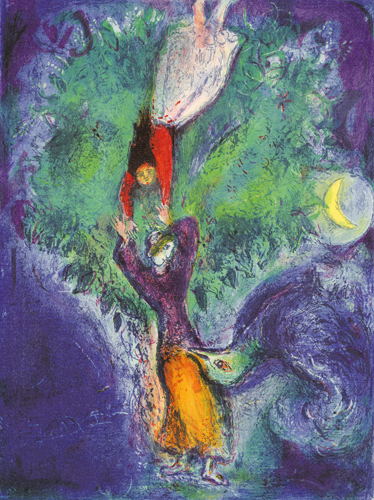
Happy birthday, Chagall.

Chagall, So she came down from the tree ..., 1948


Marc Chagall was born on this date in 1887.

The stars were my best friends. The air was full of legends and phantoms, full of mythical and fairy tale creatures, which suddenly flew away over the roof, so that one was at one with the firmament. 

Marc Chagall

The Waterboys, "How Long Will I Love You"

Fireworks.

A drone's-eye view of fireworks …

Nest.


Wouldn't it be great to change places with a bird? To fly freely, to perch on the highest branch – even to share the joys of building a nest! Just like that, your wish is granted. You switch places with a robin. The flying part is fun, but there's work to do – there's a nest to build.

CONNECT

Survived.


Although much has been learned about the Aztecs, the question of how this formidable empire fell to the Spaniards in only a few weeks of fighting continues to vex historians, and excavations in their capital have added little information to the debate. Despite new research highlighting the possible role of disease brought by Europeans, Mexican archaeologists believe the key factor was the resentment the Aztecs’ neighbors felt toward them. “The Spaniards were joined by thousands of indigenous people who were enemies of the Aztecs. Why? Because they were sick of paying tribute. They saw Cortés as their salvation,” says Matos Moctezuma. But before the Aztecs’ collapse, Moctezuma and Cortés shared a brief moment of friendship. Díaz wrote: “Moctezuma took [Cortés] by the hand and told him to gaze over his great city and the many others all around the lake.” He then invited Cortés to climb the Templo Mayor to get a better view. Within two years of that moment, Moctezuma’s great city was gone. Only now are archaeologists learning how much of it actually survived and is sitting beneath the paving stones and buildings that make up Mexico City today.

CONNECT

Invasion.

Between 1776 and 1887, the United States seized over 1.5 billion acres from America's indigenous people by treaty and executive order. The Invasion of America shows how by mapping every treaty and executive order during that period. It also contains present-day federal Indian reservations.


CONNECT

Fibonacci.

Math is logical, functional and just ... awesome. Mathemagician Arthur Benjamin explores hidden properties of that weird and wonderful set of numbers, the Fibonacci series.

Awareness.


He’d been speculating about the relationship of Quality to mind and matter and had identified Quality as the parent of mind and matter, that event which gives birth to mind and matter.  This Copernican inversion of the relationship of Quality to the objective world could sound mysterious if not carefully explained, but he didn’t mean to be mysterious.  He simply meant that at the cutting edge of time, before an object can be distinguished, there must be a kind of nonintellectual awareness, which he called awareness of Quality.  You can’t be aware that you’ve seen a tree until after you’ve seen the tree, and between the instant of vision and instant of awareness there must be a time lag.  The past exists only in our memories, the future only in our plans.  The present is our only reality.  The tree that you are aware of intellectually, because of that small time lag, is always in the past and therefore is always unreal.  Any intellectually conceived object is always in the past and therefore unreal. Reality is always the moment of vision before the intellectualization takes place.  There is no other reality.  This preintellectual reality is what Phaedrus felt he had properly defined as Quality.  Since all intellectual identifiable things must emerge from this preintellectual reality, Quality is the parent, the source of all subjects and objects.

CONNECT

Seem.

Leonardo, Codex Atlanticus Camera Obscura, 1508


Things are not always as they seem; the first appearance deceives many.   The intelligence of a few perceives what has been carefully hidden.

Phaedrus

Drew Nelson, "Hallelujah Morning"

Ancestors.


Standing on this elephant-head bluff, I often think about what it must have been like in the last days of the Ice Age. You'd see the blue ice of glaciers capping the mountains and receding into the passes, then the slow movement of distant herds feeding on the steppes below: now-extinct species of camel, long-horned bison, tapir, deer, giant sloth, and horse. You wouldn't see them at first, but sabertooth tigers, gigantic short-faced bears, and dire wolves prowl the land, stalking the grazers. The valley is wet, the high benches are pocked with pothole lakes, springs, and ponds, and mastodons browse along a braided watercourse snaking across the bottomland at the foot of the cliff.

And you'd see people. A wisp of smoke curls up from a tiny fire. A man wearing a bearskin robe squats, mixing pulverized iron oxide with his own blood on a flat rock. He prepares red ocher, the most holy of pigments, a token of life. A child has died. At the foot of the bluff, the band mourns the child who represented its future. The bluff faces north, the sacred direction from which their ancestors came, where the declining herds of great mammoths still roam.

The shaman rises; the red ocher is ready. A section of mammoth hide lies on the ground next to a shelter dug out of the soft gray clay at the foot of the bluff. Spread out on the hide are dozens of exquisitely flaked stone tools of different colors. These huge spear points, knives, and mammoth-ivory implements possess power; they are alive. The shaman carefully paints the child red, sprinkling the remaining ocher over the tools and weapons. The hide bundle is drawn taut with sinew and placed inside the shelter with the body. Large flat stones are placed over the burial to keep animals out. The people turn away, facing into the frigid wind that pours down from the mountains to the north.

That's the scene that comes to mind when I think about the small body that was laid to rest here. We know almost nothing about this child. In fact, little is known of these shadowy early people we call Clovis, who ranged across the continent at the end of the Ice Age. Beyond the unmistakable beauty and menace reflected in their mastery of tool manufacturing, this vanished culture is cloaked in conjecture and controversy. Only one partial Clovis skeleton has ever been unearthed—this child who was buried in the bluff near the Shields River—and the secrets locked within those bones could provide answers that have eluded archaeologists since the first Clovis artifacts were discovered in the Southwest 70 years ago.

Where did these people come from? Are they the ancestors of modern Native Americans? Why did their culture disappear?

CONNECT

28 June 2014

Caravan.

Modigliani, Caryatid, 1911


Sed Non Satiata

Strange deity, brown as nights,
Whose perfume is mixed with musk and Havanah,
Magical creation, Faust of the savanna,
Sorceress with the ebony thighs, child of black midnights,

I prefer to African wines, to opium, to burgundy,
The elixir of your mouth where love parades itself;
When my desires leave in caravan for you,
Your eyes are the reservoir where my cares drink.

Charles Baudelaire, translated by Geoffrey Wagner

Visualization.

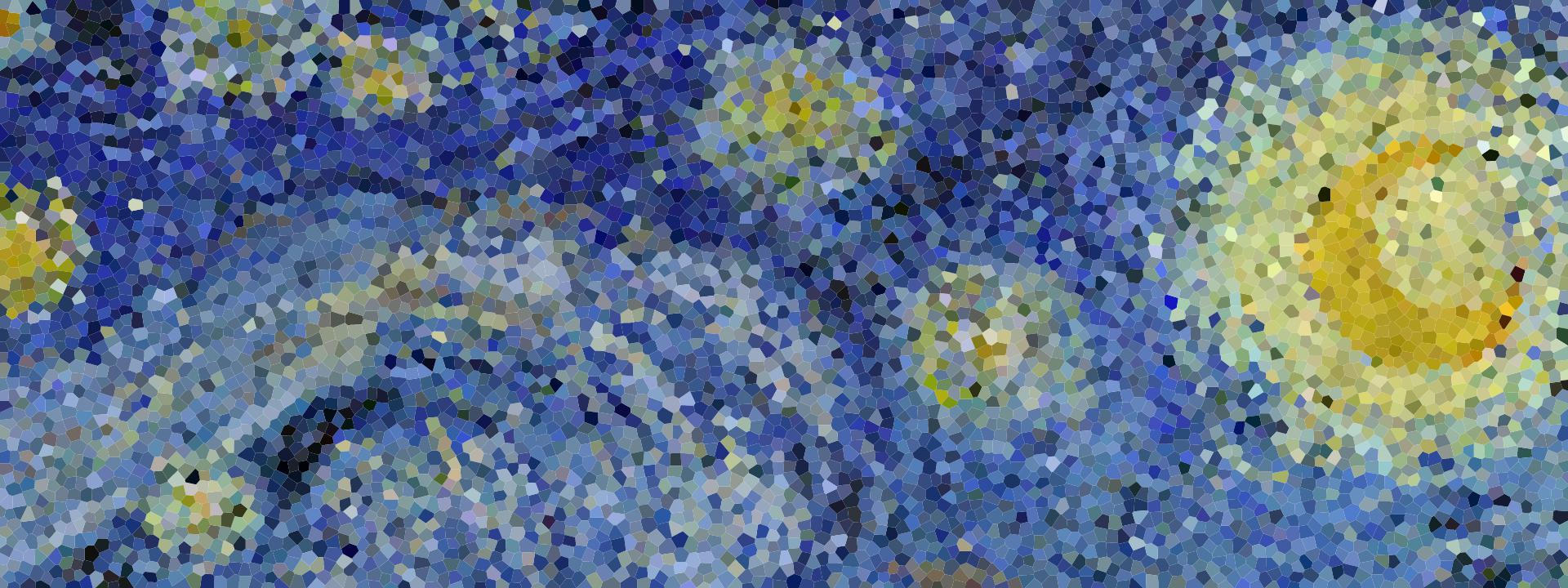
Mitchell, Best-Candidate IV Sampling of van Gogh's A Starry Night, undated


Algorithms are a fascinating use case for visualization. To visualize an algorithm, we don’t merely fit data to a chart; there is no primary dataset. Instead there are logical rules that describe behavior. This may be why algorithm visualizations are so unusual, as designers experiment with novel forms to better communicate. This is reason enough to study them.


But algorithms are also a reminder that visualization is more than a tool for finding patterns in data. Visualization leverages the human visual system to augment human intellect: we can use it to better understand these important abstract processes, and perhaps other things, too.

Marvel.


Having Brunelleschi's spirit whisper in your ear may be about the only way to know for sure how he worked. Secretive to the end, he carried many mysteries of his dome to the grave.

To this day, we don't know where he got the inspiration for the double-shell dome, the herringbone brickwork, and the other features that architects through ensuing centuries could only marvel at. 

Perhaps the most haunting mystery is the simplest of all: How did Brunelleschi and his masons position each brick, stone beam, and other structural element with such precision inside the vastly complex cathedral—a task that modern architects with their laser levels, GPS positioning devices, and CAD software would still find challenging today?

Biber, The Mystery Sonatas

Lutenist Luca Pianca accompanies Mr. Sensitive-with-a-Ponytail as he saws away at the Ciaccone in D minor, entitled "The Presentation."

Visionary.

Ross King gave a lecture at the Royal Ontario Museum as part of the Canadian Art Foundation International Speaker Series.
King's new book Leonardo and The Last Supper is both a record of Leonardo da Vinci's last five years in Milan and a biography of one of the most famous works of art ever painted.
Drawing on his gripping book during the course of the lecture, King revealed why The Last Supper ensured Leonardo's universal renown as a visionary master of the arts.

Pyramid.

The Great Pyramid of Khufu (Cheops) at Gīza, one of the Seven Wonders of the ancient world, remains an awe-inspiring phenomenon and mystery to the modern world.

David Macaulay explores the history, archaeology, mythology, and religion of ancient Egypt when monarchs built pyramids with secret chambers to preserve their mummified bodies for eternity. King Khufu's tomb is the largest pyramid in the world, 40 stories tall covering 13 acres.

27 June 2014

Robert Earl Keen, "Jesse With The Long Hair Hanging Down"

… all that matters in the end.

Happy.


As I ate the oysters with their strong taste of the sea and their faint metallic taste that the cold white wine washed away, leaving only the sea taste and the succulent texture, and as I drank their cold liquid from each shell and washed it down with the crisp taste of the wine, I lost the empty feeling and began to be happy and to make plans.

Ernest Hemingway

Jimmy Buffett, "Son of a Son of a Sailor"

As a dreamer of dreams and a travelin' man, 
I have chalked up many a mile
Read dozens of books about heroes and crooks, 
and I learned much from both of their styles …


Advice, here.

Left.

Shishkin, Fog in a Wood, 1885


Inversnaid

This darksome burn, horseback brown,

His rollrock highroad roaring down,

In coop and in comb the fleece of his foam

Flutes and low to the lake falls home.


A windpuff-bonnet of fawn-froth

Turns and twindles over the broth

Of a pool so pitchblack, fell-frowning,

It rounds and rounds Despair to drowning.


Degged with dew, dappled with dew,

Are the groins of the braes that the brook treads through,

Wiry heathpacks, flitches of fern,

And the beadbonny ash that sits over the burn.


What would the world be, once bereft

Of wet and wildness? Let them be left,

O let them be left, wildness and wet;

Long live the weeds and the wilderness yet.


Gerard Manley Hopkins

Ready.


Being on deck is more a state of mind than an actual place, and that’s not just because nobody actually spends time in that quaint little painted circle any more. The mental space between spectating on the bench and participating in the game is complicated, if you believe the calisthenics and rituals you see performed there. And yet the goal is simple: relax and get ready to play.

CONNECT

Laws.

Physicist Geoffrey West has found that simple, mathematical laws govern the properties of cities -- that wealth, crime rate, walking speed and many other aspects of a city can be deduced from a single number: the city's population. In this talk he shows how it works and how similar laws hold for organisms and corporations.


West's site, here.

Scaling and fractals, here.

Power laws here, here, and here .

Mozart, Clarinet Concerto in A, K 622

Michael Alexander Willens conducts the Kölner Akademie performing the Adagio, with Eric Hoeprich, basset clarinet …

Across.

Every day, between two and three thousand aircraft fly across the North Atlantic between Canada, the United States and Europe. Airspace across the North Atlantic is divided into six Oceanic Control Areas (or OCAs).

CONNECT


Thank you, Col. Hadfield

26 June 2014

Golden.

Chagall, Couple with Flowers, 1927


A thousand Dreams within me softly burn:
From time to time my heart is like some oak
Whose blood runs golden where a branch is torn.

Arthur Rimbaud

Lucinda Williams, "Something About What Happens When We Talk"

Worthy.

Lipchitz, Descent of The Spirit, 1994


Wisdom is often buried somewhere within the fibers of things that seem mundane or obvious, as well as in the puzzling space between two opposites, and in our ability to tolerate the discomfort of this cognitive dissonance. Knowledge is obscured within the subplots of our main narratives. Furthermore, compared to the age of our Universe, we humans are like mere infants on our journey to understand the nature of consciousness and existence; we are still in the cradle of the cosmos. Most likely we will never have a definitive formula for cultivating grit, sisu or willpower (even though every institution, teacher and trainer keeps searching for such a recipe and some even claim to have one). However, as long as we continue to love the questions and keep traveling with our heart full of hope (despite the occasional futility of our mission), we are bound to be on a worthy journey.

CONNECT

Poetry.

Rengetsu, A Breath of Spring, 1873


What can be explained is not poetry.

W.B. Yeats

Zirka.

In 2003, Robert Plant was booked to perform in Mali at the Festival in the Desert, alongside Ali Farka Touré and Tinariwen. "It was a journey of revelation — one of the most illuminating and humbling experiences of my life," Plant tells Rolling Stone. While he was there, Plant and his crew filmed their experience.


Part 1


Part 2


Part 3


Part 4


Part 5


Part 6


Part 7


Part 8

Bach, The Musical Offering, BWV 1079

Jordi Savall performs and directs La Capella Reial de Catalunya and Le Concert des Nations …


25 June 2014

Happy birthday, Bourdain.

Anthony Bourdain was born on this date in 1956.

Precious.


All Human Knowledge is precious whether or not it serves the slightest human use.

A.E. Housman

Pleasure.

What will it be tomorrow? Could it be that we don't need to go to school at all? Could it be that, at the point in time when you need to know something, you can find out in two minutes? Could it be -- a devastating question, a question that was framed for me by Nicholas Negroponte -- could it be that we are heading towards or maybe in a future where knowing is obsolete? But that's terrible. We are homo sapiens. Knowing, that's what distinguishes us from the apes. But look at it this way. It took nature 100 million years to make the ape stand up and become Homo sapiens. It took us only 10,000 to make knowing obsolete. What an achievement that is. But we have to integrate that into our own future.

Encouragement seems to be the key. If you look at Kuppam, if you look at all of the experiments that I did, it was simply saying, "Wow," saluting learning.

There is evidence from neuroscience. The reptilian part of our brain, which sits in the center of our brain, when it's threatened, it shuts down everything else, it shuts down the prefrontal cortex, the parts which learn, it shuts all of that down. Punishment and examinations are seen as threats. We take our children, we make them shut their brains down, and then we say, "Perform." Why did they create a system like that? Because it was needed. There was an age in the Age of Empires when you needed those people who can survive under threat. When you're standing in a trench all alone, if you could have survived, you're okay, you've passed. If you didn't, you failed. But the Age of Empires is gone. What happens to creativity in our age? We need to shift that balance back from threat to pleasure.

Sugata Mitra's TED Talk, "Build a School in the Cloud" …

Vital.


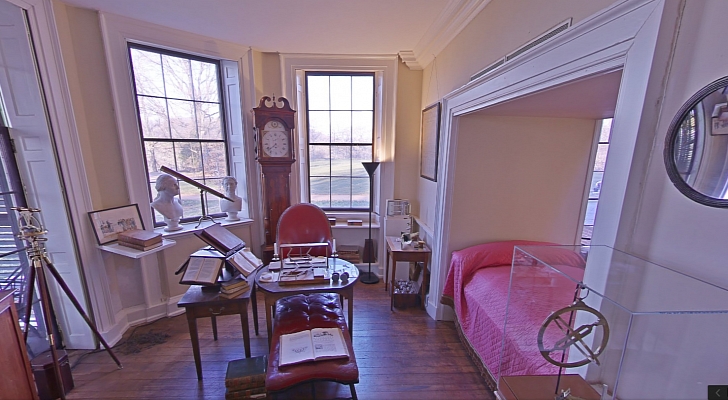
Throughout his life, books were vital to Thomas Jefferson's education and well-being. When his family home Shadwell burned in 1770 Jefferson most lamented the loss of his books. In the midst of the American Revolution and while United States minister to France in the 1780s, Jefferson acquired thousands of books for his library at Monticello. Jefferson's library went through several stages, but it was always critically important to him. Books provided the little traveled Jefferson with a broader knowledge of the contemporary and ancient worlds than most contemporaries of broader personal experience.

Mozart, Mass in C Minor

Sir John Eliot Gardiner conducts the Monteverdi Choir and the English Baroque Soloists with Barbara Bonney performing "Et Incarnatus Est" ...

Fractals.


Look at the honeycomb pattern in a beehive, say, and the hexagonal structure is only visible if you're not too close or too far away. But look at some kinds of plants and you'll see their fronds are made up of ever-smaller versions of the overall leaf. This is known as scale invariance, and is a feature of fractals. Richardson noticed that coastlines have a similar property, their jagged outlines appearing just as jagged as one zooms in to ever-smaller scales.

CONNECT

More here.

Asking.


If creativity originates with a question, then it is the art of asking dumb questions that leads to enhanced creativity.

Hear.


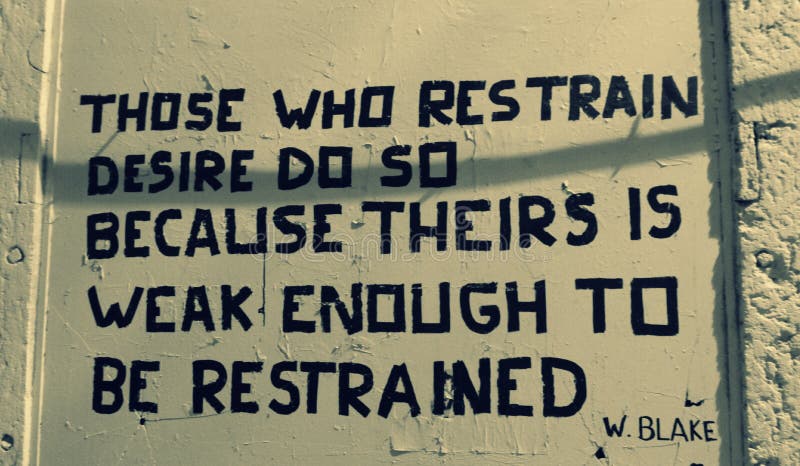
Hear the voice of the Bard,
Who present, past, and future, sees;
Whose ears have heard
The Holy Word
That walk'd among the ancient trees;
 
Calling the lapsèd soul,
And weeping in the evening dew;
That might control
The starry pole,
And fallen, fallen light renew!
 
'O Earth, O Earth, return!
Arise from out the dewy grass!
Night is worn,
And the morn
Rises from the slumbrous mass.
 
'Turn away no more;
Why wilt thou turn away?
The starry floor,
The watery shore,
Is given thee till the break of day.

William Blake