09 August 2023


Happy Birthday, Walton
Huysmans, Izaak Walton, 1672

Quivering fears, heart-tearing cares,
Anxious sighs, untimely tears,
Fly, fly to courts,
Fly to fond worldlings' sports,
Where strain'd sardonic smiles are glosing still,
And Grief is forc'd to laugh against her will:
Where mirth's but mummery,
And sorrows only real be.
Fly from our country pastimes, fly,
Sad troops of human misery.
Come, serene looks,
Clear as the crystal brooks,
Or the pure azur'd heaven that smiles to see
The rich attendance of our poverty:
Peace and a secure mind,
Which all men seek, we only find.
Abused mortals I did you know
Where joy, heart's-ease, and comforts grow,
You'd scorn proud towers,
And seek them in these bowers;
Where winds, sometimes, our woods perhaps may shake,
But blust'ring care could never tempest make,
Nor murmurs e'er come nigh us,
Saving of fountains that glide by us.
Here's no fantastick mask, nor dance,
But of our kids that frisk and prance;
Nor wars are seen
Unless upon the green
Two harmless lambs are butting one the other,
Which done, both bleating run, each to his mother
And wounds are never found,
Save what the plough-share gives the ground.
Here are no false entrapping baits,
To hasten too, too hasty Fates,
Unless it be
The fond credulity
Of silly fish, which worldling like, still look
Upon the bait, but never on the hook;
Nor envy, unless among
The birds, for prize of their sweet song.
We all pearls scorn,
Save what the dewy morn
Congeals upon each little spire of grass,
Which careless shepherds beat down as they pass:
And gold ne'er here appears,
Save what the yellow Ceres bears,
Blest silent groves, oh may ye be,
For ever, mirth's best nursery !
May pure contents
For ever pitch their tents
Upon these downs, these meads, these rocks, these mountains.
And peace still slumber by these purling fountains:
Which we may, every year,
Meet when we come a-fishing here.
Izaak Walton, born on this day in 1593, from The Compleat Angler, or the Contemplative Man's Recreation
Happy Birthday, Dryden
Richardson, John Dryden, 1733

EPILOGUE to CONSTANTINE the GREAT
Our hero's happy in the play's conclusion,
The holy rogue at last has met confusion:
Though Arius all along appeared a saint,
The last act showed him a True Protestant.
Eusebius (for you know I read Greek authors)
Reports that after all these plots and slaughters
The court of Constantine was full of glory,
And every Trimmer turned addressing Tory;
They followed him in herds as they were mad:
When Clause was king, then all the world was glad.
Whigs kept the places they possessed before,
And most were in a way of getting more;
Which was as much as saying, gentlemen,
Here's power and money to be rogues again.
Indeed, there were a sort of peaking tools,
Some call them modest, but I call 'em fools,
Men much more loyal, though not half so loud;
But these poor devils were cast behind the crowd.
For bold knaves thrive without one grain of sense,
But good men starve for want of impudence.
Besides all these, there were a sort of wights
(I think my author calls them Teckelites),
Such hearty rogues against the King and laws,
They favoured ev'n a foreign rebel's cause;
When their own damned design was quashed and awed,
At least they gave it their good word abroad:
As many a man who, for a quiet life,
Breeds out his bastard not to nose his wife.
Thus o'er their darling plot these Trimmers cry
And though they cannot keep it in their eye,
They bind it prentice to Count Teckely.
They believe not the last plot; may I be cursed
If I believe they e'er believed the first;
No wonder their own plot no plot they think —
The man that makes it never smells the stink.
And, now it comes into my head, I'll tell
Why these damned Trimmers loved the Turks so well.
Th' orig'nal Trimmer, though a friend to no man,
Yet in his heart adored a pretty woman:
He knew that Mahomet laid up for ever
Kind black-eyed rogues for every true believer;
And, which was more than mortal man e'er tasted,
One pleasure that for threescore twelve-months lasted.
To turn for this may surely be forgiven:
Who'd not be circumcised for such a heaven!
John Dryden, born on this day in 1631
Happy Birthday, Piaget

The principle goal of education is to create men who are capable of doing new things, not simply of repeating what other generations have done—men who are creative, inventive, and discoverers.
The second goal of education is to form minds which can be critical, can verify, and not accept everything they are offered. The great danger today is of slogans, collective opinions, ready-made trends of thought. We have to be able to resist individually, to criticize, to distinguish between what is proven and what is not.
So we need pupils who are active; who learn early to find out by themselves, partly by their own spontaneous activity and partly through material we set up for them, and who learn early to tell what is verifiable and what is simply the first idea to come to them.
Jean Piaget, born on this day in 1896
Accord.

The conviction reigns that it is only through the sacrifices and accomplishments of the ancestors that the tribe exists--and that one has to pay them back with sacrifices and accomplishments; one thus recognizes a debt that constantly grows greater, since these forebears never cease, in their continued existence as powerful spirits, to accord the tribe new advantages and new strength.
Friedrich Nietzsche, from On the Genealogy of Morals
Thank you, Kurt.
08 August 2023


Happy Birthday, Bulfinch
Ustick, United States Capitol (detail), 1859

Charles Bullfinch was born on this day in 1763.
Joseph Cornish, architectural historian and director of Design Review of the Boston Landmarks Commission, presents a lecture titled "Building Boston: The Architecture of Charles Bulfinch" ...
07 August 2023
Happy Birthday, Dickinson

Bruce Dickinson was born on this day in 1958.
"Can I Play with Madness"
Give me the sense to wonder
To wonder if I'm free
Give me a sense of wonder
To know I can be me
Give me the strength to hold my head up
Spit back in their face
Don't need no key to unlock this door
Gonna break down the walls, break out of this bad place ...

Vision.

The HIGHER PANTHEISM
The sun, the moon, the stars, the seas, the hills and the plains,-
Are not these, O Soul, the Vision of Him who reigns?
Is not the Vision He, tho' He be not that which He seems?
Dreams are true while they last, and do we not live in dreams?
Earth, these solid stars, this weight of body and limb,
Are they not sign and symbol of thy division from Him?
Dark is the world to thee; thyself art the reason why,
For is He not all but thou, that hast power to feel "I am I"?
Glory about thee, without thee; and thou fulfillest thy doom,
Making Him broken gleams and a stifled splendour and gloom.
Speak to Him, thou, for He hears, and Spirit with Spirit can meet-
Closer is He than breathing, and nearer than hands and feet.
God is law, say the wise; O soul, and let us rejoice,
For if He thunder by law the thunder is yet His voice.
Law is God, say some; no God at all, says the fool,
For all we have power to see is a straight staff bent in a pool;
And the ear of man cannot hear, and the eye of man cannot see;
But if we could see and hear, this Vision -- were it not He?
Alfred, Lord Tennyson
Thanks to Walker's Arms for the image.
Choose
Ari Weinzweig on facing and working with change ...
In much the same way as people like me have long loved listening to “River Man” without having a clue about the complexity of playing in 5/4 time signature, many people like the feel of Zingerman’s without understanding the impact of collaborative and only minimally hierarchical ways in which we work. Many experiment with our alternative approaches but all too often abandon them before they can really start to take hold. The same awkwardness that goes with starting to learn to play 5/4 is, I’ll suggest, true as well when it comes to leading in this collaborative, consensus, leader-among-leaders sort of way. At first, both will feel uncomfortable, and the urge to “go back” to what one is accustomed to will be strong. But like 5/4, if we stick with these “different” governance approaches, a whole host of new possibilities will open up for us and for our organizations. It will likely take a while, but over time it will take hold. For me, after all these years, working with collaboration and consensus nearly always feels completely normal and natural. And yet, at the same time, for new folks coming into the ZCoB, it can feel frustrating—like things take forever.It's up to us to choose: We can work the way most around us have worked, sticking with the ways that feel most comfortable. Or, alternatively, we can lean into the awkward, work at it over time, and in the process create our own collaborative way. As Susan Griffin writes, “How many small decisions accumulate to form a habit? What a multitude of decisions, made by others, in other times, must shape our lives now.” Both 4/4 and 5/4 can work, but the latter, as Mike Goodman writes, opens new possibilities. As someone taught me many years ago, “Practice doesn’t make perfect, but if you stick with it does make ‘permanent.’"
06 August 2023


Lured.
Cameron, Poet Alfred, Lord Tennyson, 1865
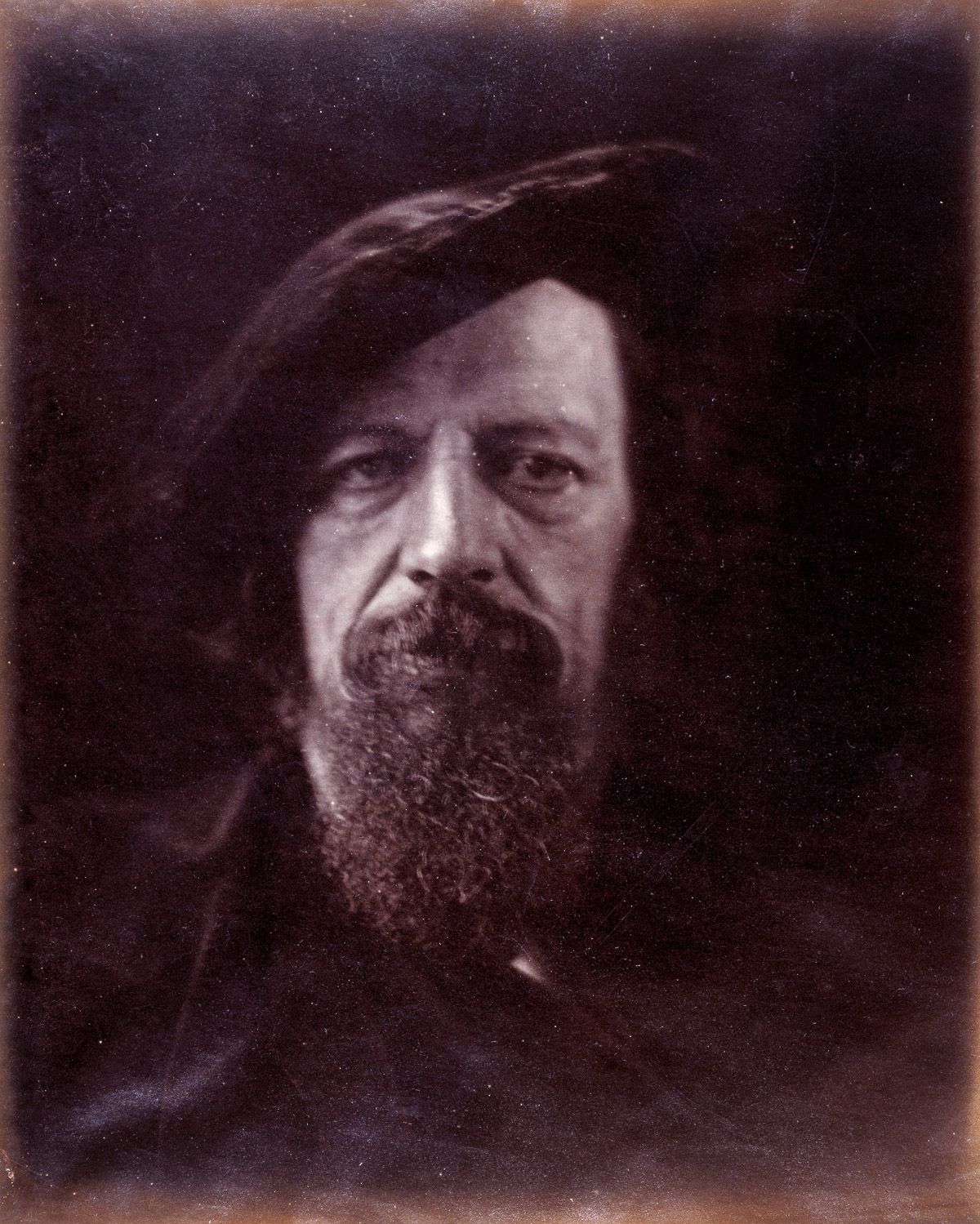
What sight so lured him thro’ the fields he knew
As where earth’s green stole into heaven’s own hue,
Far–far–away?
What sound was dearest in his native dells?
The mellow lin-lan-lone of evening bells
Far–far–away.
What vague world-whisper, mystic pain or joy,
Thro’ those three words would haunt him when a boy,
Far–far–away?
A whisper from his dawn of life? a breath
From some fair dawn beyond the doors of death
Far–far–away?
Far, far, how far? from o’er the gates of Birth,
The faint horizons, all the bounds of earth,
Far–far–away?
What charm in words, a charm no words could give?
O dying words, can Music make you live
Far–far–away?
Alfred, Lord Tennyson
Symbolism.

If you roll a ball that would have landed in the gutter, scoring zero, it instead hits a bumper and ricochets toward the center of the lane. You get points every time, whether you are good at aiming the ball or not.
Debating.
Pinckney, Draft of United States Constitution: Report of the Committee of Detail, August 6, 1787

On this day in 1787, delegates to the Constitutional Convention began debating the first complete draft of the Constitution of the United States.
Happy Birthday, Tennyson
Cameron, Tennyson, 1865
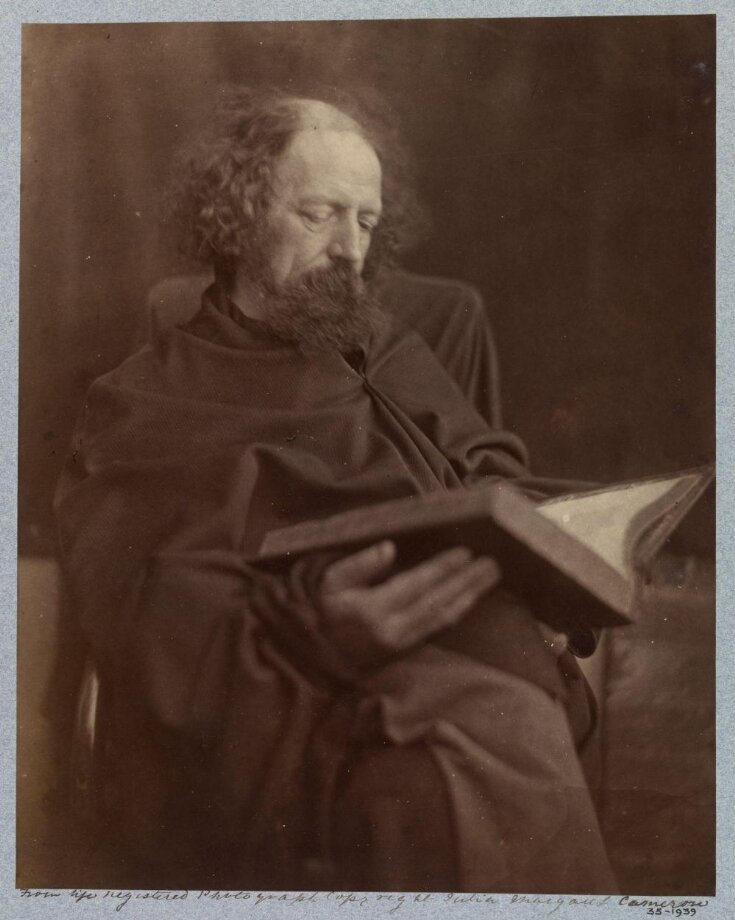
The FLOWER
Once in a golden hour
I cast to earth a seed.
Up there came a flower,
The people said, a weed.
To and fro they went
Thro’ my garden bower,
And muttering discontent
Cursed me and my flower.
Then it grew so tall
It wore a crown of light,
But thieves from o’er the wall
Stole the seed by night.
Sow’d it far and wide
By every town and tower,
Till all the people cried,
‘Splendid is the flower! ’
Read my little fable:
He that runs may read.
Most can raise the flowers now,
For all have got the seed.
And some are pretty enough,
And some are poor indeed;
And now again the people
Call it but a weed.
Alfred, Lord Tennyson, born on this day in 1809
05 August 2023

Happy Birthday, Dufay
van Eyck, Portrait of Guillaume Dufay, 1432

Guillaume Dufay was born on this day in 1397.
Anne-Isabelle de Parcevaux performs a Kyrie ...
A wise man once said, "Apart from mayonnaise, the French are good for very little." Dufay offers a strong counter.
04 August 2023

Lully, “Di rigori armata il seno”
Soprano Svetlana Mamresheva and clangist Daria Volobueva perform ...
Happy Birthday, Shelley
Severn, Posthumous Portrait of Shelley Writing Prometheus Unbound, 1845

HYMN of PAN
From the forests and highlands
We come, we come;
From the river-girt islands,
Where loud waves are dumb
Listening to my sweet pipings.
The wind in the reeds and the rushes,
The bees on the bells of thyme,
The birds on the myrtle bushes,
The cicale above in the lime,
And the lizards below in the grass,
Were as silent as ever old Tmolus was,
Listening to my sweet pipings.
Liquid Peneus was flowing,
And all dark Tempe lay
In Pelion's shadow, outgrowing
The light of the dying day,
Speeded by my sweet pipings.
The Sileni, and Sylvans, and Fauns,
And the Nymphs of the woods and the waves,
To the edge of the moist river-lawns,
And the brink of the dewy caves,
And all that did then attend and follow,
Were silent with love, as you now, Apollo,
With envy of my sweet pipings.
I sang of the dancing stars,
I sang of the daedal Earth,
And of Heaven, and the giant wars,
And Love, and Death, and Birth—
And then I chang'd my pipings,
Singing how down the vale of Maenalus
I pursu'd a maiden and clasp'd a reed.
Gods and men, we are all deluded thus!
It breaks in our bosom and then we bleed.
All wept, as I think both ye now would,
If envy or age had not frozen your blood,
At the sorrow of my sweet pipings.
Percy Bysshe Shelley, born on this day in
Don't miss Peter Ackroyd's masterpiece, The Romantics, featuring, in this the last of its three episodes, Keats, Byron, and Shelley ...
03 August 2023
Infinite.

A little consideration of what takes place around us every day would show us that a higher law than that of our will regulates events; that our painful labors are unnecessary and fruitless; that only in our easy, simple, spontaneous action are we strong, and by contenting ourselves with obedience we become divine. Belief and love,--a believing love will relieve us of a vast load of care. O my brothers, God exists. There is a soul at the center of nature and over the will of every man, so that none of us can wrong the universe. It has so infused its strong enchantment into nature that we prosper when we accept its advice, and when we struggle to wound its creatures our hands are glued to our sides, or they beat our own breasts. The whole course of things goes to teach us faith. We need only obey. There is guidance for each of us, and by lowly listening we shall hear the right word. Why need you choose so painfully your place and occupation and associates and modes of action and of entertainment? Certainly there is a possible right for you that precludes the need of balance and willful election. For you there is a reality, a fit place and congenial duties. Place yourself in the middle of the stream of power and wisdom which animates all whom it floats, and you are without effort impelled to truth, to right and a perfect contentment. Then you put all gainsayers in the wrong. Then you are the world, the measure of right, of truth, of beauty. If we will not be mar-plots with our miserable interferences, the work, the society, letters, arts, science, religion of men would go on far better than now, and the heaven predicted from the beginning of the world, and still predicted from the bottom of the heart, would organize itself, as do now the rose and the air and the sun.
I say, do not choose; but that is a figure of speech by which I would distinguish what is commonly called choice among men, and which is a partial act, the choice of the hands, of the eyes, of the appetites, and not a whole act of the man. But that which I call right or goodness, is the choice of my constitution; and that which I call heaven, and inwardly aspire after, is the state or circumstance desirable to my constitution; and the action which I in all my years tend to do, is the work for my faculties. We must hold a man amenable to reason for the choice of his daily craft or profession. It is not an excuse any longer for his deeds that they are the custom of his trade. What business has he with an evil trade? Has he not a calling in his character?
Each man has his own vocation. The talent is the call. There is one direction in which all space is open to him. He has faculties silently inviting him thither to endless exertion. He is like a ship in a river; he runs against obstructions on every side but one, on that side all obstruction is taken away and he sweeps serenely over a deepening channel into an infinite sea. This talent and this call depend on his organization, or the mode in which the general soul incarnates itself in him. He inclines to do something which is easy to him and good when it is done, but which no other man can do. He has no rival. For the more truly he consults his own powers, the more difference will his work exhibit from the work of any other. His ambition is exactly proportioned to his powers. The height of the pinnacle is determined by the breadth of the base. Every man has this call of the power to do somewhat unique, and no man has any other call. The pretense that he has another call, a summons by name and personal election and outward "signs that mark him extraordinary, and not in the roll of common men," is fanaticism, and betrays obtuseness to perceive that there is one mind in all the individuals, and no respect of persons therein.
By doing his work he makes the need felt which he can supply, and creates the taste by which he is enjoyed. By doing his own work he unfolds himself. It is the vice of our public speaking that it has not abandonment. Somewhere, not only every orator but every man should let out all the length of all the reins; should find or make a frank and hearty expression of what force and meaning is in him.
Ralph Waldo Emerson, from "Spiritual Laws"
Onward.

HYMN to INTELLECTUAL BEAUTY
The awful shadow of some unseen Power
Floats though unseen among us; visiting
This various world with as inconstant wing
As summer winds that creep from flower to flower;
Like moonbeams that behind some piny mountain shower,
It visits with inconstant glance
Each human heart and countenance;
Like hues and harmonies of evening,
Like clouds in starlight widely spread,
Like memory of music fled,
Like aught that for its grace may be
Dear, and yet dearer for its mystery.
Spirit of BEAUTY, that dost consecrate
With thine own hues all thou dost shine upon
Of human thought or form, where art thou gone?
Why dost thou pass away and leave our state,
This dim vast vale of tears, vacant and desolate?
Ask why the sunlight not for ever
Weaves rainbows o'er yon mountain-river,
Why aught should fail and fade that once is shown,
Why fear and dream and death and birth
Cast on the daylight of this earth
Such gloom, why man has such a scope
For love and hate, despondency and hope?
No voice from some sublimer world hath ever
To sage or poet these responses given:
Therefore the names of Demon, Ghost, and Heaven,
Remain the records of their vain endeavour:
Frail spells whose utter'd charm might not avail to sever,
From all we hear and all we see,
Doubt, chance and mutability.
Thy light alone like mist o'er mountains driven,
Or music by the night-wind sent
Through strings of some still instrument,
Or moonlight on a midnight stream,
Gives grace and truth to life's unquiet dream.
Love, Hope, and Self-esteem, like clouds depart
And come, for some uncertain moments lent.
Man were immortal and omnipotent,
Didst thou, unknown and awful as thou art,
Keep with thy glorious train firm state within his heart.
Thou messenger of sympathies,
That wax and wane in lovers' eyes;
Thou, that to human thought art nourishment,
Like darkness to a dying flame!
Depart not as thy shadow came,
Depart not—lest the grave should be,
Like life and fear, a dark reality.
While yet a boy I sought for ghosts, and sped
Through many a listening chamber, cave and ruin,
And starlight wood, with fearful steps pursuing
Hopes of high talk with the departed dead.
I call'd on poisonous names with which our youth is fed;
I was not heard; I saw them not;
When musing deeply on the lot
Of life, at that sweet time when winds are wooing
All vital things that wake to bring
News of birds and blossoming,
Sudden, thy shadow fell on me;
I shriek'd, and clasp'd my hands in ecstasy!
I vow'd that I would dedicate my powers
To thee and thine: have I not kept the vow?
With beating heart and streaming eyes, even now
I call the phantoms of a thousand hours
Each from his voiceless grave: they have in vision'd bowers
Of studious zeal or love's delight
Outwatch'd with me the envious night:
They know that never joy illum'd my brow
Unlink'd with hope that thou wouldst free
This world from its dark slavery,
That thou, O awful LOVELINESS,
Wouldst give whate'er these words cannot express.
The day becomes more solemn and serene
When noon is past; there is a harmony
In autumn, and a lustre in its sky,
Which through the summer is not heard or seen,
As if it could not be, as if it had not been!
Thus let thy power, which like the truth
Of nature on my passive youth
Descended, to my onward life supply
Its calm, to one who worships thee,
And every form containing thee,
Whom, SPIRIT fair, thy spells did bind
To fear himself, and love all human kind.
Percy Bysshe Shelley


02 August 2023

Mozart, Horn Concerto No. 4, K.495
Radovan Vlatković performs the Rondo: Allegro vivace with The Arctic Philharmonic Chamber Orchestra ...
Improvise.
My friend Randolph Hodgson, one of the co-founders of Neals Yard Dairy in London, told me many years ago that the industrial approach to pasteurizing milk and the use of lab-produced starter cultures for the purposes of making cheese had, in fact, radically reduced the number of really bad cheeses that had once been quite common. Unfortunately, pasteurization and purchased (rather than made-for-yourself) starter cultures also eliminated a lot of the “highs.” Consumers no longer had to suffer through terrible cheese, but at the same time, they lost a little of the joy and pleasure that was possible with the best of the best.
Excessive application of rules in the workplace can do similarly destructive things in the context of wisdom. They’re designed to drum out the worst of the worst, but you’ll likely have no trouble finding examples of places where people took a pass on doing what was both possible and right, because the rulebook told them they “couldn’t.” Practical wisdom helps us move in the opposite direction. Barry Schwartz believes,A wise person is like a jazz musician—using the notes on the page, but dancing around them, inventing combinations that are appropriate for the situation and the people at hand. A wise person knows how to use these moral skills in the service of the right aims. To serve other people, not to manipulate other people. And finally, perhaps most important, a wise person is made, not born. Wisdom depends on experience, and not just any experience. You need the time to get to know the people that you’re serving. You need permission to be allowed to improvise, try new things, occasionally to fail and to learn from your failures. And you need to be mentored by wise teachers.Where, I started to wonder, would wisdom show up in the organizational ecosystem metaphor? I stumbled on a good answer in the work of Duke Redbird, an Ojibwe-Canadian elder, poet, writer, and businessperson. Wisdom, it turns out, is in the woods. When we feel like we’re in the weeds, the wisdom we need is up in the tallest of the trees. In a talk given four weeks before the onset of the pandemic, Redbird says of the forest:The first canopy are the oldest trees that grow the tallest in the forest and protect all the other plants. Among these tall trees are the walnut, the chestnut, the beechnut, and the maple trees. From them we learn wisdom. For example, the meat of the walnut is shaped like the human brain and modern science tells us what our ancestors already knew: that walnuts provide nutrition for the mind along with the sap from the maple tree. Therefore, we call the tallest trees in the food forest the canopy of wisdom.Suzanne Simard, whose book The Mother Tree I highly recommend, backs up Redbird’s good words, when she says, “forests are wired for wisdom.” There is wisdom, Simard says, to be found in a healthy forest. And as is true in any organization, every element of the ecosystem contributes to making that wisdom possible. The tall trees that make the “canopy of wisdom” cannot exist without all the fungi and insects and berries and bushes that work in their shadows. Wisdom, by definition, embraces imperfection and humility.
01 August 2023
Happy Birthday, Elliott
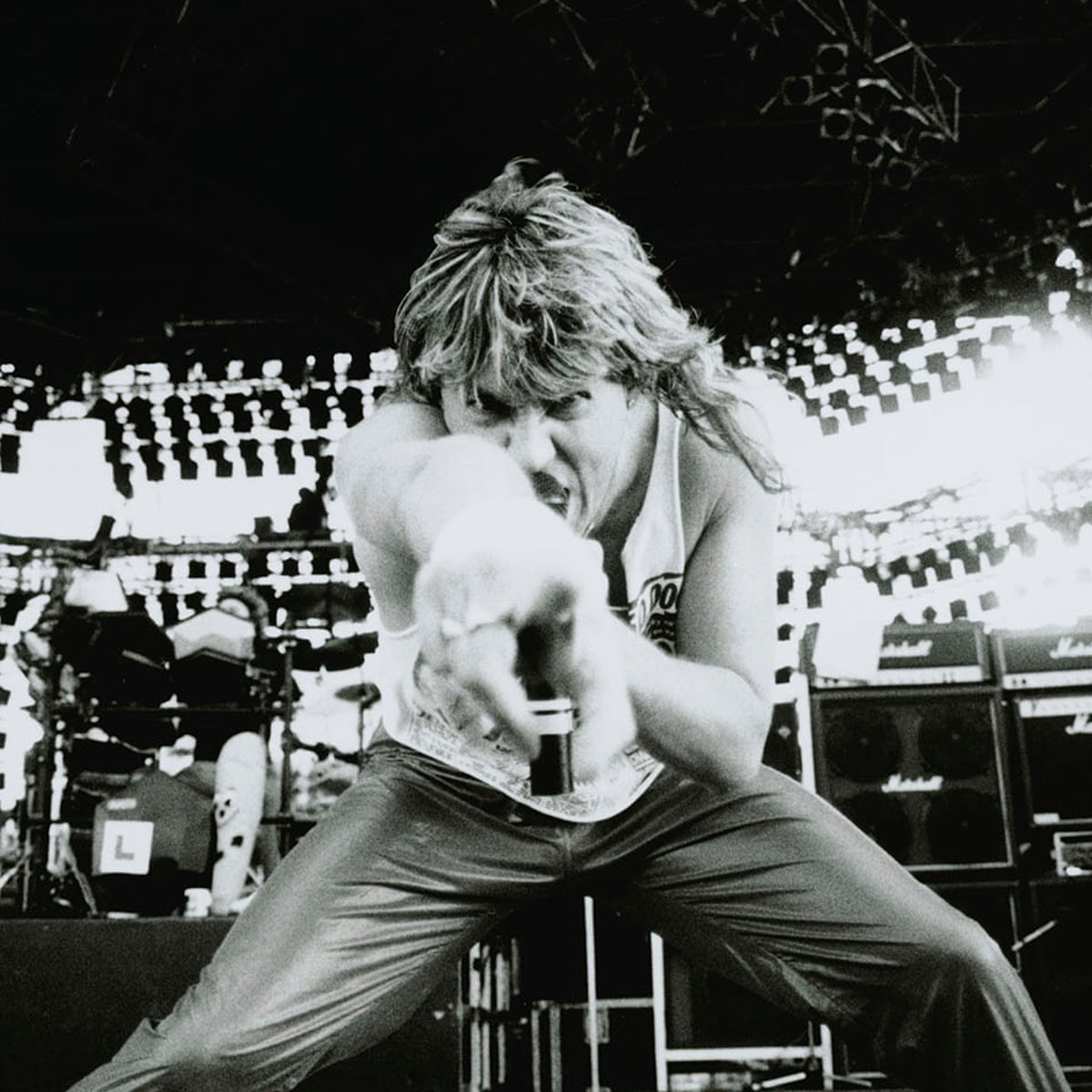
Joe Elliott was born on this day in 1959.
"High 'N' Dry (Saturday Night)" ...
Here.
Cézanne, Farm in Normandy, Summer (Hattenville), 1882

CLOCK-O'-CLAY
In the cowslip pips I lie,
Hidden from the buzzing fly,
While green grass beneath me lies,
Pearled with dew like fishes' eyes,
Here I lie, a clock-o'-clay,
Waiting for the time o' day.
While the forest quakes surprise,
And the wild wind sobs and sighs,
My home rocks as like to fall,
On its pillar green and tall;
When the pattering rain drives by
Clock-o'-clay keeps warm and dry.
Day by day and night by night,
All the week I hide from sight;
In the cowslip pips I lie,
In the rain still warm and dry;
Day and night and night and day,
Red, black-spotted clock-o'-clay.
My home shakes in wind and showers,
Pale green pillar topped with flowers,
Bending at the wild wind's breath,
Till I touch the grass beneath;
Here I live, lone clock-o'-clay,
Watching for the time of day.
Musings.

SUMMER IMAGES
Now swarthy Summer, by rude health embrowned,
Precedence takes of rosy fingered Spring;
And laughing Joy, with wild flowers prank’d, and crown’d,
A wild and giddy thing,
And Health robust, from every care unbound,
Come on the zephyr’s wing,
And cheer the toiling clown.
Happy as holiday-enjoying face,
Loud tongued, and “merry as a marriage bell,”
Thy lightsome step sheds joy in every place;
And where the troubled dwell,
Thy witching charms wean them of half their cares;
And from thy sunny spell,
They greet joy unawares.
Then with thy sultry locks all loose and rude,
And mantle laced with gems of garish light,
Come as of wont; for I would fain intrude,
And in the world’s despite,
Share the rude wealth that thy own heart beguiles;
If haply so I might
Win pleasure from thy smiles.
Me not the noise of brawling pleasure cheers,
In nightly revels or in city streets;
But joys which soothe, and not distract the ears,
That one at leisure meets
In the green woods, and meadows summer-shorn,
Or fields, where bee-fly greets
The ear with mellow horn.
The green-swathed grasshopper, on treble pipe,
Sings there, and dances, in mad-hearted pranks;
There bees go courting every flower that’s ripe,
On baulks and sunny banks;
And droning dragon-fly, on rude bassoon,
Attempts to give God thanks
In no discordant tune.
The speckled thrush, by self-delight embued,
There sings unto himself for joy’s amends,
And drinks the honey dew of solitude.
There Happiness attends
With inbred Joy until the heart o’erflow,
Of which the world’s rude friends,
Nought heeding, nothing know.
There the gay river, laughing as it goes,
Plashes with easy wave its flaggy sides,
And to the calm of heart, in calmness shows
What pleasure there abides,
To trace its sedgy banks, from trouble free:
Spots Solitude provides
To muse, and happy be.
There ruminating ‘neath some pleasant bush,
On sweet silk grass I stretch me at mine ease,
Where I can pillow on the yielding rush;
And, acting as I please,
Drop into pleasant dreams; or musing lie,
Mark the wind-shaken trees,
And cloud-betravelled sky.
There think me how some barter joy for care,
And waste life’s summer-health in riot rude,
Of nature, nor of nature’s sweets aware.
When passions vain intrude,
These, by calm musings, softened are and still;
And the heart’s better mood
Feels sick of doing ill.
There I can live, and at my leisure seek
Joys far from cold restraints—not fearing pride—
Free as the winds, that breathe upon my cheek
Rude health, so long denied.
Here poor Integrity can sit at ease,
And list self-satisfied
The song of honey-bees.
The green lane now I traverse, where it goes
Nought guessing, till some sudden turn espies
Rude batter’d finger post, that stooping shows
Where the snug mystery lies;
And then a mossy spire, with ivy crown,
Cheers up the short surprise,
And shows a peeping town.
I see the wild flowers, in their summer morn
Of beauty, feeding on joy’s luscious hours;
The gay convolvulus, wreathing round the thorn,
Agape for honey showers;
And slender kingcup, burnished with the dew
Of morning’s early hours,
Like gold yminted new.
And mark by rustic bridge, o’er shallow stream,
Cow-tending boy, to toil unreconciled,
Absorbed as in some vagrant summer dream;
Who now, in gestures wild,
Starts dancing to his shadow on the wall,
Feeling self-gratified,
Nor fearing human thrall.
Or thread the sunny valley laced with streams,
Or forests rude, and the o’ershadow’d brims
Of simple ponds, where idle shepherd dreams,
Stretching his listless limbs;
Or trace hay-scented meadows, smooth and long,
Where joy’s wild impulse swims
In one continued song.
I love at early morn, from new mown swath,
To see the startled frog his route pursue;
To mark while, leaping o’er the dripping path,
His bright sides scatter dew,
The early lark that from its bustle flies,
To hail his matin new;
And watch him to the skies.
To note on hedgerow baulks, in moisture sprent,
The jetty snail creep from the mossy thorn,
With earnest heed, and tremulous intent,
Frail brother of the morn,
That from the tiny bent’s dew-misted leaves
Withdraws his timid horn,
And fearful vision weaves.
Or swallow heed on smoke-tanned chimney top,
Wont to be first unsealing Morning’s eye,
Ere yet the bee hath gleaned one wayward drop
Of honey on his thigh;
To see him seek morn’s airy couch to sing,
Until the golden sky
Bepaint his russet wing.
Or sauntering boy by tanning corn to spy,
With clapping noise to startle birds away,
And hear him bawl to every passer by
To know the hour of day;
While the uncradled breezes, fresh and strong,
With waking blossoms play,
And breathe Æolian song.
I love the south-west wind, or low or loud,
And not the less when sudden drops of rain
Moisten my glowing cheek from ebon cloud,
Threatening soft showers again,
That over lands new ploughed and meadow grounds,
Summer’s sweet breath unchain,
And wake harmonious sounds.
Rich music breathes in Summer’s every sound;
And in her harmony of varied greens,
Woods, meadows, hedge-rows, corn-fields, all around
Much beauty intervenes,
Filling with harmony the ear and eye;
While o’er the mingling scenes
Far spreads the laughing sky.
See, how the wind-enamoured aspen leaves
Turn up their silver lining to the sun!
And hark! the rustling noise, that oft deceives,
And makes the sheep-boy run:
The sound so mimics fast-approaching showers,
He thinks the rain’s begun,
And hastes to sheltering bowers.
But now the evening curdles dank and grey,
Changing her watchet hue for sombre weed;
And moping owls, to close the lids of day,
On drowsy wing proceed;
While chickering crickets, tremulous and long,
Light’s farewell inly heed,
And give it parting song.
The pranking bat its flighty circlet makes;
The glow-worm burnishes its lamp anew;
O’er meadows dew-besprent, the beetle wakes
Inquiries ever new,
Teazing each passing ear with murmurs vain,
As wanting to pursue
His homeward path again.
Hark! ’tis the melody of distant bells
That on the wind with pleasing hum rebounds
By fitful starts, then musically swells
O’er the dim stilly grounds;
While on the meadow-bridge the pausing boy
Listens the mellow sounds,
And hums in vacant joy.
Now homeward-bound, the hedger bundles round
His evening faggot, and with every stride
His leathern doublet leaves a rustling sound,
Till silly sheep beside
His path start tremulous, and once again
Look back dissatisfied,
And scour the dewy plain.
How sweet the soothing calmness that distills
O’er the heart’s every sense its opiate dews,
In meek-eyed moods and ever balmy trills!
That softens and subdues,
With gentle Quiet’s bland and sober train,
Which dreamy eve renews
In many a mellow strain!
I love to walk the fields, they are to me
A legacy no evil can destroy;
They, like a spell, set every rapture free
That cheer’d me when a boy.
Play—pastime—all Time’s blotting pen conceal’d,
Comes like a new-born joy,
To greet me in the field.
For Nature’s objects ever harmonize
With emulous Taste, that vulgar deed annoys;
Which loves in pensive moods to sympathize,
And meet vibrating joys
O’er Nature’s pleasing things; nor slighting, deems
Pastimes, the Muse employs,
Vain and obtrusive themes.
John Clare
Work.
Preparation ...
The only rule is work. If you work it will lead to something. It’s the people who do all of the work all of the time who eventually catch on to things.

Released.

Jimmy Buffett released Barometer Soup on this day in 1995.
"The Night I Painted the Sky" ...
Happy Birthday, Melville
Eaton, Herman Melville, 1870
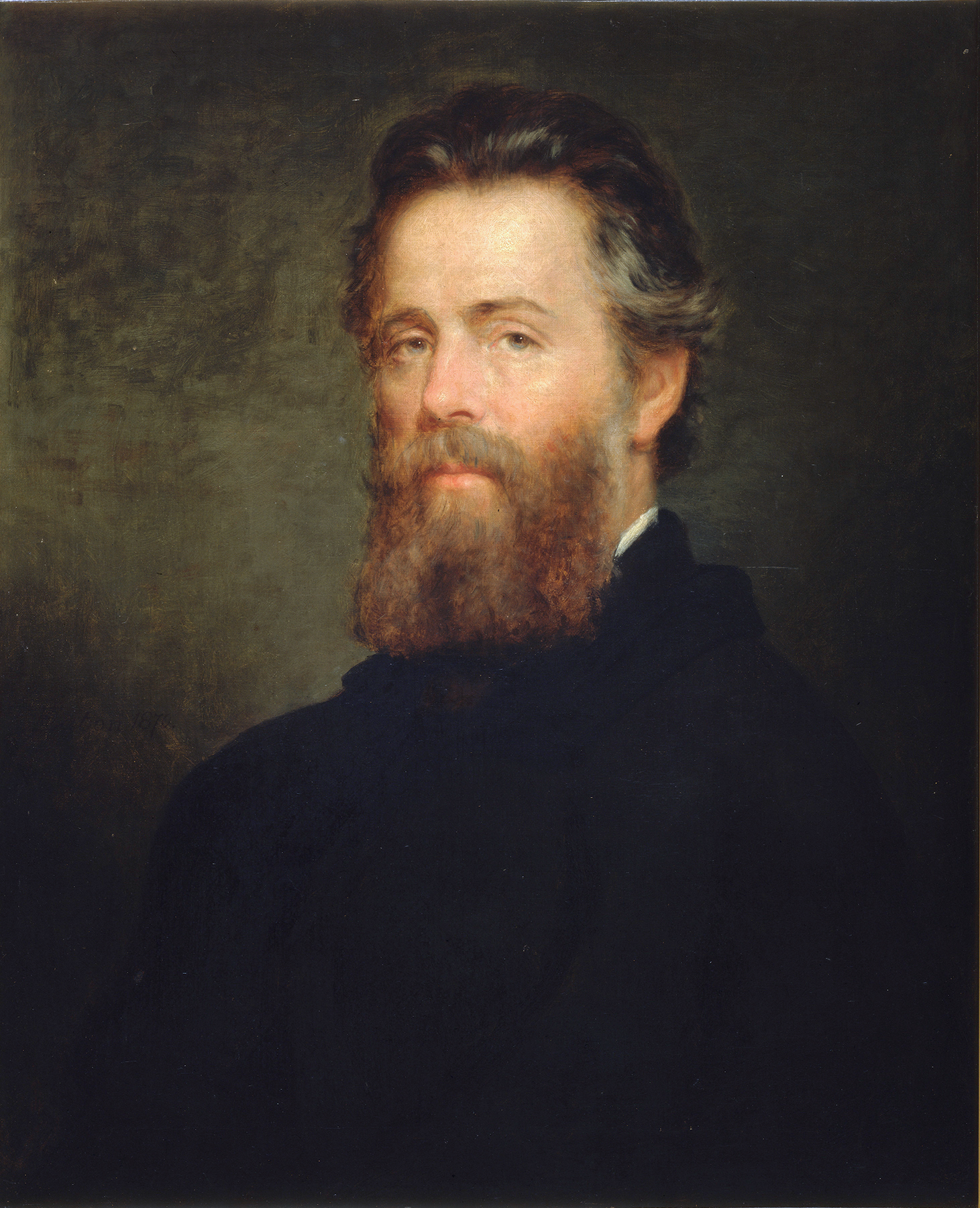
Whenever I find myself growing grim about the mouth; whenever it is a damp, drizzly November in my soul; whenever I find myself involuntarily pausing before coffin warehouses, and bringing up the rear of every funeral I meet; and especially whenever my hypos get such an upper hand of me, that it requires a strong moral principle to prevent me from deliberately stepping into the street, and methodically knocking people's hats off - then, I account it high time to get to sea as soon as I can.
Herman Melville, born on this day in 1819, from Moby-Dick, or The Whale
Quiet.
Spenser, Month of August, 1579

SHEPHERD's CALENDAR: August
Harvest approaches with its bustling day
The wheat tans brown and barley bleaches grey
In yellow garb the oat land intervenes
And tawney glooms the valley thronged with beans
Silent the village grows, wood wandering dreams
Seem not so lovely as its quiet seems
Doors are shut up as on a winters day
And not a child about them lies at play
The dust that winnows neath the breezes feet
Is all that stirs about the silent street
Fancy might think that desert spreading fear
Had whisperd terrors into quiets ear
Or plundering armys past the place had come
And drove the lost inhabitants from home
The fields now claim them where a motley crew
Of old and young their daily tasks pursue
The barleys beard is grey and wheat is brown
And wakens toil betimes to leave the town
The reapers leave their beds before the sun
And gleaners follow when home toils are done
To pick the littered ear the reaper leaves
And glean in open fields among the sheaves
The ruddy child nursed in the lap of care
In toils rude ways to do its little share
Beside its mother poddles oer the land
Sun burnt and stooping with a weary hand
Picking its tiney glean of corn or wheat
While crackling stubbles wound its legs and feet
Full glad it often is to sit awhile
Upon a smooth green baulk to ease its toil
And feign would spend an idle hour to play
With insects strangers to the moiling day
Creeping about each rush and grassy stem
And often wishes it was one of them
In weariness of heart that it might lye
Hid in the grass from the days burning eye
That raises tender blisters on his skin
Thro holes or openings that have lost a pin
Free from the crackling stubs to toil and glean
And smiles to think how happy it had been
Whilst its expecting mother stops to tye
Her handful up and waiting his supply
Misses the resting younker from her side
And shouts of rods and morts of threats beside
Pointing to the grey willows while she tells
His fears shall fetch one if he still rebells
Picturing harsh truths in its unpracticed eye
How they who idle in the harvest lye
Shall well deserving in the winter pine
Or hunt the hedges with the birds and swine
In vain he wishes that the rushes height
Were tall as trees to hide him from her sight
Leaving his pleasant seat he sighs and rubs
His legs and shows scratchd wounds from piercing stubs
To make excuse for play but she disdains
His little wounds and smiles while he complains
And as he stoops adown in troubles sore
She sees his grief and bids him sob no more
As bye and bye on the next sabbath day
She'll give him well earned pence as well as play
When he may buy almost with out a stint
Sweet candied horehound cakes and pepper mint
Or streaking sticks of lusious lolipop
What ere he chuses from the tempting shop
Wi in whose diamond winder shining lye
Things of all sorts to tempt his eager eye
Rich sugar plumbs in phials shining bright
In every hue young fancys to delight
Coaches and ladys of gilt ginger bread
And downy plumbs and apples streaked with red
Such promises all sorrows soon displace
And smiles are instant kindled in his face
Scorning all troubles which he felt before
He picks the trailing ears and mourns no more
The fields are all alive with busy noise
Of labours sounds and insects humming joys
Some oer the glittering sickle sweating stoop
Startling full oft the partridge coveys up
Some oer the rustling scythe go bending on
And shockers follow where their toils have gone
First turning swaths to wither in the sun
Where mice from terrors dangers nimbly run
Leaving their tender young in fears alarm
Lapt up in nests of chimbled grasses warm
And oft themselves for safty search in vain
From the rude boy or churlish hearted swain
Who beat their stone chinkd forks about the groun(
And spread an instant murder all around
Tho oft the anxious maidens tender prayer
Urges the clown their little lives to spare
Who sighs while trailing the long rake along
At scenes so cruel and forgets her song
And stays wi love his murder aiming hand
Some ted the puffing winnow down the land
And others following roll them up in heaps
While cleanly as a barn door beesome sweeps
The hawling drag wi gathering weeds entwind
And singing rakers end the toils behind
When the sun stoops to meet the western sky
And noons hot hours have wanderd weary bye
They seek an awthorn bush or willow tree
Or stouk or shock where coolest shadows be
Where baskets heapd and unbroachd bottles lye
Which dogs in absence watchd with wary eye
To catch their breath awhile and share the boon
Which beavering time alows their toil at noon
All gathering sit on stubbs or sheaves the hour
Where scarlet poppys linger still in flower
Stript in his shirt the hot swain drops adown
And close beside him in her unpind gown
Next to her favoured swain the maiden steals
Blushing at kindness which her love reveals
Who makes a seat for her of things around
And drops beside her on the naked ground
Wearied wi brambles catching at her gown
And pulling nutts from branches pulld adown
By friendly swain the maid Wi heaving breast
Upon her lovers shoulder leans at rest
Then from its cool retreat the beer they bring
And hand the stout hooped bottle round the ring
Each swain soaks hard-the maiden ere she sips
Shrieks at the bold whasp settling on her lips
That seems determined only hers to greet
As if it fancied they were cherrys sweet
So dog forgoes his sleep awhile or play
Springing at frogs that rustling jump away
To watch each morsel that the boon bestows
And wait the bone or crumb the shepherd throws
For shepherds are no more of ease possest
But share the harvests labours with the rest
When day declines and labour meets repose
The bawling boy his evening journey goes
At toils unwearied call the first and last
He drives his horses to their nights repast
In dewey close or meadow to sojourn
And often ventures on his still return
Oer garden pales or orchard walls to hie
When sleeps safe key hath locked up dangers eye
All but the mastiff watching in the dark
Who snufts and knows him and forbears to bark
With fearful haste he climbs each loaded tree
And picks for prizes which the ripest be
Pears plumbs or filberts covered oer in leams
While the pale moon creeps high in peaceful dreams
And oer his harvest theft in jealous light
Fills empty shadows with the power to fright
And owlet screaming as it bounces nigh
That from some barn hole pops and hurries bye
Scard at the cat upon her nightly watch
For rats that come for dew upon the thatch
He hears the noise and trembling to escape
While every object grows a dismal shape
Drops from the tree in fancys swiftest dread
By ghosts pursued and scampers home to bed
Quick tumbling oer the mossy mouldering wall
And looses half his booty in the fall
Where soon as ere the morning opes its eyes
The restless hogs will happen on the prize
And crump adown the mellow and the green
And makes all seem as nothing ne'er had been
Amid the broils of harvests weary reign
How sweet the sabbath wakes its rest again
For each weary mind what rapture dwells
To hear once more its pleasant chiming bells
That from each steeple peeping here and there
Murmur a soothing lullaby to care
The shepherd journying on his morning rounds
Pauses awhile to hear their pleasing sounds
While the glad childern free from toils employ
Mimic the ding dong sounds and laugh for joy
The fields themselves seem happy to be free
Where insects chatter with unusual glee
While solitude the stubbs and grass among
Apears to muse and listen to the song
In quiet peace awakes the welcomed morn
Men tired and childern with their gleaning worn
Weary and stiff lye round their doors the day
To rest themselves with little heart for play
No more keck horns in homestead close resounds
As in their school boy days at hare and hounds
Nor running oer the street from wall to wall
With eager shouts at 'cuck and catch the ball'
In calm delight the sabbath wears along
Yet round the cross at noon a tempted throng
Of little younkers with their pence repair
To buy the downy plumb and lucious pear
That melt i' th mouth-which gardners never fail
For gains strong impulse to expose for sale
And on the circling cross steps in the sun
Sit when the parson has his sermon done
When grandams that against his rules rebell
Come wi their baskets heapd wi fruit to sell
That thither all the season did pursue
Wi mellow goosberrys of every hue
Green ruffs and raspberry reds and drops of gold
That makes mouths water often to behold
Sold out to clowns in totts oft deemd too small
Who grudging much the price eat husks and all
Nor leaves a fragment round to cheer the eye
Of searching swine that murmurs hungry bye
And currans red and white on cabbage leaves
While childerns fingers itches to be thieves
And black red cherrys shining to the sight
As rich as brandy held before the light
Now these are past he still as sunday comes
Sits on the cross wi baskets heapd wi plumbs
And Jenitens streakd apples suggar sweet
Others spice scented ripening wi the wheat
And pears that melt ith' mouth like honey which
He oft declares to make their spirits itch
They are so juicy ripe and better still
So rich they een might suck em thro a quill
Here at their leisure gather many a clown
To talk of grain and news about the town
And here the boy wi toils earnd penny comes
In hurrying speed to purchase pears or plumbs
And oer the basket hangs wi many a smile
Wi hat in hand to hold his prize the while
Not so the boys that begs for pence in vain
Of deaf eard dames that threat while they complain
Who talk of the good dinners they have eat
And wanting more as nothing but consiet
Vowing they ne'er shall throw good pence away
So bids them off and be content wi play
Reaching her rod that hangs the chimney oer
And scaring their rude whinings to the door
Who sob aloud and hang their hats adown
To hide their tears and sawn along the town
Venturing wi sullen step his basket nigh
And often dipping a desiring eye
Stone hearted dames thrifts errors to believe
Who make their little bellys yearn to thieve
But strong temptation must to fears resign
For close beside the stocks in terror shine
So choaking substitutes for loss of pelf
He keeps his hungry fingers to himself
And mopes and sits the sabbath hours away
Wi heart too weary and too sad for play
So Sunday's scenes and leisure passes bye
In rests soft peace and home tranquillity
Till Monday morning doth its cares pursue
And wakes the harvests busy toils anew
John Clare
Subscribe to:
Posts (Atom)
About Me

- Rob Firchau
- "A man should stir himself with poetry, stand firm in ritual, and complete himself in music." -Gary Snyder
Think ...

GASTON BACHELARD

"The house shelters day-dreaming, the house protects the dreamer, the house allows one to dream in peace.”


CARL R. FIRCHAU (1884-1973)

"The strength of a man’s virtue should not be measured by his special exertions but by his habitual acts.” Blaise Pascal

REMEMBER


SUPPORT OUR TROOPS


C.S. LEWIS


G.K. CHESTERTON

"Tradition refuses to submit to the small and arrogant oligarchy of those who merely happen to be walking about."

KENNETH GRAHAME

"O Mole! the beauty of it! The merry bubble and joy, the thin, clear, happy call of the distant piping!"


BARRY HINES

"That's why it makes me mad when I take her out and I'll hear somebody say, 'Look, there's Billy Casper there wi' his pet hawk. I could shout at 'em; it's not a pet, Sir, hawks are not pets. Or when folks stop me and say, 'Is it tame?' Is it heck tame, it's trained that's all. It's fierce, and it's wild, an' it's not bothered about anybody, not even about me, right. And that's why it's great.Look, there's Billy Casper there wi' his pet hawk.' I could shout at 'em. It's not a pet, Sir. Hawks are not pets. Or when folks stop me and say, 'Is it tame?' Is it heck tame, it's trained, that's all. It's fierce, and it's wild, an' it's not bothered about anybody, not even about me right. And that's why it's great." (A Kestrel for a Knave)

GEORDIE WALKER


FIORENTINO

The Musician Angel


ECHO & THE BUNNYMEN

JIM HARRISON

37. Beware, O wanderer, the road is walking too, said Rilke one day to no one in particular as good poets everywhere address the six directions. If you can’t bow, you’re dead meat. You’ll break like uncooked spaghetti. Listen to the gods. They’re shouting in your ear every second.
GIMME FIIIVE!

THE FURS
Suggestions

WOLFGANG AMADEUS MOZART

"When I am, as it were, completely myself, entirely alone and of good cheer – say travelling in a carriage or walking after a good meal, or during the night when I cannot sleep – it is on such occasions that my ideas flow best and most abundantly. Whence, and how, they come I know not ; nor can I force them. Those ideas that please me I retain in memory and am accustomed, as I have been told, to hum them to myself. If I continue in this way, it soon occurs to me how I may turn this dainty morsel to account, so as to make a good dish of it. That is to say, agreeable to the rules of counterpoint, to the peculiarities of various instruments etc. All this fires my soul, and, provided I am not disturbed, my subject enlarges itself, becomes methodised, and defined, and the whole, though it be long, stands almost complete and finished in my mind, so that I can survey it like a fine picture or a beautiful statue at a glance. Nor do I hear in my imagination the parts successively, but I hear them, as it were, all at once. What a delight this is, I cannot tell."

HOOKY



MARY SHELLEY



GREEN MAN

"Feel wind stir the greenwood, or turn pages of a book made from his flesh -- lean close, then, and hear, Green Man's voice."
WALLACE STEVENS

"Technique is the proof of your seriousness."






N.C. WYETH

Cold Maker, Winter, 1909


Dick's Pour House, Lake Leelanau, Michigan

Smelt Basket
PanAm "Pacific Clipper" (1941)

JOHN SINGER SARGENT

Elizabeth Winthrop Chanler (detail), 1893
WILLIAM F. BUCKLEY JR.

"We are so concerned to flatter the majority that we lose sight of how very often it is necessary, in order to preserve freedom for the minority, let alone for the individual, to face that majority down."



SIR ROGER SCRUTON

"Beauty is a value, as important as truth and goodness."
SIR WINSTON CHURCHILL

"A gentleman does not have a ham sandwich without mustard."




J.R.R. TOLKIEN

"If more of us valued food and cheer and song above hoarded gold, it would be a merrier world."

JOHN MASEFIELD
"When the midnight strikes in the belfry dark/And the white goose quakes at the fox’s bark/We saddle the horse that is hayless, oatless/Hoofless and pranceless, kickless and coatless/We canter off for a midnight prowl/Whoo-hoo-hoo, says the hook-eared owl."
IKKYU

VIRGINIA WOOLF


OLD MISSION


JOHN QUINCY ADAMS

"However tiresome to others, the most indefatigable orator is never tedious to himself. The sound of his own voice never loses its harmony to his own ear; and among the delusions, which self-love is ever assiduous in attempting to pass upon virtue, he fancies himself to be sounding the sweetest tones."

SIR KENNETH GRAHAME

"Take the Adventure, heed the call, now, ere the irrevocable moment passes! ‘Tis but a banging of the door behind you, a blithesome step forward, and you are out of the old life and into the new! Then some day, some day long hence, jog home here if you will, when the cup has been drained and the play has been played, and sit down by your quiet river with a store of goodly memories for company."


JIM HARRISON

"Barring love I'll take my life in large doses alone--rivers, forests, fish, grouse, mountains. Dogs."
WILLIAM WORDSWORTH

WALT WHITMAN

The spotted hawk swoops by and accuses me, he complains of my gab and my loitering. I too am not a bit tamed, I too am untranslatable, I sound my barbaric yawp over the roofs of the world. The last scud of day holds back for me, It flings my likeness after the rest and true as any on the shadow’d wilds, It coaxes me to the vapor and the dusk. I depart as air, I shake my white locks at the runaway sun, I effuse my flesh in eddies, and drift it in lacy jags. I bequeath myself to the dirt to grow from the grass I love, If you want me again look for me under your boot-soles. You will hardly know who I am or what I mean, But I shall be good health to you nevertheless, And filter and fibre your blood. Failing to fetch me at first keep encouraged, Missing me one place search another, I stop somewhere waiting for you.

SAMUEL ADAMS

"It is a very great mistake to imagine that the object of loyalty is the authority and interest of one individual man, however dignified by the applause or enriched by the success of popular actions."

TAO TE CHING, Lao Tzu



MARCUS AURELIUS

"Is your cucumber bitter? Throw it away. Are there briars in your path? Turn aside. That is enough. Do not go on and say, 'Why were things of this sort ever brought into this world?' neither intolerable nor everlasting - if thou bearest in mind that it has its limits, and if thou addest nothing to it in imagination. Pain is either an evil to the body (then let the body say what it thinks of it!)-or to the soul. But it is in the power of the soul to maintain its own serenity and tranquility."

VINCENT van GOGH

"What am I in the eyes of most people? A nonentity or an oddity or a disagreeable person — someone who has and will have no position in society, in short a little lower than the lowest. Very well — assuming that everything is indeed like that, then through my work I’d like to show what there is in the heart of such an oddity, such a nobody. This is my ambition, which is based less on resentment than on love in spite of everything, based more on a feeling of serenity than on passion. Even though I’m often in a mess, inside me there’s still a calm, pure harmony and music. In the poorest little house, in the filthiest corner, I see paintings or drawings. And my mind turns in that direction as if with an irresistible urge. As time passes, other things are increasingly excluded, and the more they are the faster my eyes see the picturesque. Art demands persistent work, work in spite of everything, and unceasing observation."
RICK LEACH (1975-1978)

48 career games started; 2,176 rushing yards, 34 touchdowns; 4,284 passing yards, 48 touchdowns; 7-2 career record versus Michigan State, Notre Dame, and Ohio combined; three-time All-American, All-Big Ten, and Heisman finalist



RICHARD ADAMS

"One cloud feels lonely."

JOHN SINGER SARGENT

"Cultivate an ever continuous power of observation. Wherever you are, be always ready to make slight notes of postures, groups and incidents. Store up in the mind a continuous stream of observations."
WINSLOW HOMER

The Lone Boat, North Woods Club, Adirondacks, 1892


THOMAS BABINGTON MACAULEY

And how can man die better / Than facing fearful odds / For the ashes of his fathers / And the temples of his gods



WATERHOUSE, BOREAS, 1903

WHITE HORSES Far out at sea / There are horses to ride, / Little white horses / That race with the tide. / Their tossing manes / Are the white sea-foam, / And the lashing winds / Are driving them home- / To shadowy stables / Fast they must flee, / To the great green caverns / Down under the sea. Irene Pawsey



CINDY WILSON


UMBERTO LIMONGIELLO

"The euphony transformed me and inundated my soul in a roguish countenance, the likes of which I had know well in younger days. Such impishness soon drove out the complaints of the day."

F. SCOTT FITZGERALD

"I don't want to repeat my innocence. I want the pleasure of losing it again.” This Side of Paradise
RALPH WALDO EMERSON

"In skating over thin ice, our safety is in our speed."
ROBERT PLANT




GARY SNYDER

"There are those who love to get dirty and fix things. They drink coffee at dawn, beer after work. And those who stay clean, just appreciate things. At breakfast they have milk and juice at night. There are those who do both, they drink tea.”

IMMANUEL KANT

"Enlightenment is man's emergence from his self-imposed nonage. Nonage is the inability to use one's own understanding without another's guidance. This nonage is self-imposed if its cause lies not in lack of understanding but in indecision and lack of courage to use one's own mind without another's guidance. Dare to know! Sapere aude. 'Have the courage to use your own understanding,' is therefore the motto of the enlightenment."

DAN CAMPBELL

"We’re gonna kick you in the teeth, and when you punch us back we’re gonna smile at you, and when you knock us down we’re going to get up, and on the way, we’re going to bite a kneecap off. We’re going to stand up, and it’s going to take two more shots to knock us down. And on the way up, we’re going to take your other kneecap, and we’re going to get up, and it’s gonna take three shots to get us down. And when we do, we’re gonna take another hunk out of you."
THOMAS HUXLEY

"Sit down before fact as a little child, be prepared to give up every conceived notion, follow humbly wherever and whatever abysses nature leads, or you will learn nothing."
JOHN DRYDEN

"Bold knaves thrive without one grain of sense, but good men starve for want of impudence.”

WILLIAM BLAKE

"Those who restrain desire do so because theirs is weak enough to be restrained."
HERMANN HESSE

"Whoever wants music instead of noise, joy instead of pleasure, soul instead of gold, creative work instead of business, passion instead of foolery, finds no home in this trivial world of ours."
GEORGE MACDONALD

"Certainly work is not always required of a man. There is such a thing as a sacred idleness, the cultivation of which is now fearfully neglected."
REV. DR. CORNEL WEST

"You have to have a habitual vision of greatness … you have to believe in fact that you will refuse to settle for mediocrity. You won’t confuse your financial security with your personal integrity, you won’t confuse your success with your greatness or your prosperity with your magnanimity … believe in fact that living is connected to giving.”
IT'S A WONDERFUL LIFE

"You see George, you've really had a wonderful life. Don't you see what a mistake it would be to just throw it away?"

WOODY

"There's a basic rule which runs through all kinds of music, kind of an unwritten rule. I don't know what it is, but I've got it."
MIGGY

"Exuberance is beauty." (William Blake)





Festina Lente

GARAGE SALINGER

JOHN RUSKIN

"Sunshine is delicious, rain is refreshing, wind braces us up, snow is exhilarating; there is really no such thing as bad weather, only different kinds of good weather."

Spitzweg, The Bookworm, 1850

"Literature is the most agreeable way of ignoring life.” Fernando Pessoa
WILLIAM F. BUCKLEY JR.

"[I]in the spiky fall season, days like today with the little chill that makes one feel freshly laundered ..."
SYRINX

TINA WEYMOUTH

WALT WHITMAN

"Do I contradict myself? Very well then I contradict myself, (I am large, I contain multitudes)."


H.L. MENCKEN

"Every normal man must be tempted, at times, to spit on his hands, hoist the black flag, and begin slitting throats. But this business, alas, is fatal to the placid moods and fine other-worldliness of the poet."

FYODOR DOSTOEVSKY

"I say let the world go to hell, but I should always have my tea."
DUDLEY

"We all come from our own little planets. That's why we're all different. That's what makes life interesting."
HERMAN MELVILLE


"We're just dancing in the rain ..."
LEO TOLSTOY

"If, then, I were asked for the most important advice I could give, that which I considered to be the most useful to the men of our century, I should simply say: in the name of God, stop a moment, cease your work, look around you."


HAROLD BLOOM

"It is hard to go on living without some hope of encountering the extraordinary."
I'm reading ...

Unlikely General: "Mad" Anthony Wayne and the Battle for America
ARTHUR RIMBAUD

"I have stretched ropes from steeple to steeple; Garlands from window to window; Golden chains from star to star ... And I dance."

RUMI

"When you do things from your soul, you feel a river moving in you, a joy.”
Shunryu Suzuki, "Beginner's Mind"

"In the beginner's mind there are many possibilities, but in the expert's there are few."
JIM HARRISON

¨The danger of civilization, of course, is that you will piss away your life on nonsense.¨
NEW ORDER
van EYCK, PORTRAIT of a MAN in a RED TURBAN, 1433

"The Poet is the Priest of The Invisible." Wallace Stevens
Atget, Notre-Dame de Paris, 1923

Technique.

"Technique is the proof of your seriousness." Wallace Stevens
TIGHT LINES!



W.B. Yeats


THE CAPTAIN


NICHOLAS HAWKSMOOR

"Whatever is goode in its kinde ought to be preserv'd in respect for antiquity, as well as our present advantage, for destruction can be profitable to none but such as live by it."
THOMAS PAINE

"Whatever is my right as a man is also the right of another; and it becomes my duty to guarantee as well as to possess."
LIBERTY

"...the imprisoned lightning"
WILLIAM F. BUCKLEY JR.

"The best defense against a usurpatory government is an assertive citizenry."

SIR PHILIP PULLMAN

"We don’t need a list of rights and wrongs, tables of dos and don’ts: we need books, time, and silence."
TRUE-BORN


THOMAS MERTON

C.S. LEWIS

“We may ignore, but we can nowhere evade, the presence of God. The world is crowded with him. He walks everywhere incognito.” (Thank you, Mr. Wade)

THOMAS PAINE



Readers

