"I am not one who was born in the custody of wisdom. I am one who is fond of olden times and intense in quest of the sacred knowing of the ancients." Gustave Courbet
Showing posts with label Spenser. Show all posts

01 May 2026

Whistles.


THE SHEPHERD'S CALENDAR: MAY

Come queen of months in company
Wi all thy merry minstrelsy
The restless cuckoo absent long
And twittering swallows chimney song
And hedge row crickets notes that run
From every bank that fronts the sun
And swathy bees about the grass
That stops wi every bloom they pass
And every minute every hour
Keep teazing weeds that wear a flower
And toil and childhoods humming joys
For there is music in the noise
The village childern mad for sport
In school times leisure ever short
That crick and catch the bouncing ball
And run along the church yard wall
Capt wi rude figured slabs whose claims
In times bad memory hath no names
Oft racing round the nookey church
Or calling ecchos in the porch
And jilting oer the weather cock
Viewing wi jealous eyes the clock
Oft leaping grave stones leaning hights
Uncheckt wi mellancholy sights
The green grass swelld in many a heap
Where kin and friends and parents sleep
Unthinking in their jovial cry
That time shall come when they shall lye
As lowly and as still as they
While other boys above them play
Heedless as they do now to know
The unconcious dust that lies below
The shepherd goes wi happy stride
Wi moms long shadow by his side
Down the dryd lanes neath blooming may
That once was over shoes in clay
While martins twitter neath his eves
Which he at early morning leaves
The driving boy beside his team
Will oer the may month beauty dream
And cock his hat and turn his eye
On flower and tree and deepning skye
And oft bursts loud in fits of song
And whistles as he reels along
Crack[ing] his whip in starts of joy
A happy dirty driving boy
The youth who leaves his corner stool
Betimes for neighbouring village school
While as a mark to urge him right
The church spires all the way in sight
Wi cheerings from his parents given
Starts neath the joyous smiles of heaven
And sawns wi many an idle stand
Wi bookbag swinging in his hand
And gazes as he passes bye
On every thing that meets his eye
Young lambs seem tempting him to play
Dancing and bleating in his way
Wi trembling tails and pointed ears
They follow him and loose their fears
He smiles upon their sunny faces
And feign woud join their happy races
The birds that sing on bush and tree
Seem chirping for his company
And all in fancys idle whim
Seem keeping holiday but him
He lolls upon each resting stile
To see the fields so sweetly smile
To see the wheat grow green and long
And list the weeders toiling song
Or short not[e] of the changing thrush
Above him in the white thorn bush
That oer the leaning stile bends low
Loaded wi mockery of snow
Mozzld wi many a lushing thread
Of crab tree blossoms delicate red
He often bends wi many a wish
Oer the brig rail to view the fish
Go sturting by in sunny gleams
And chucks in the eye dazzld streams
Crumbs from his pocket oft to watch
The swarming struttle come to catch
Them where they to the bottom sile
Sighing in fancys joy the while
Hes cautiond not to stand so nigh
By rosey milkmaid tripping bye
Where he admires wi fond delight
And longs to be there mute till night
He often ventures thro the day
At truant now and then to play
Rambling about the field and plain
Seeking larks nests in the grain
And picking flowers and boughs of may
To hurd awhile and throw away
Lurking neath bushes from the sight
Of tell tale eyes till schools noon night
Listing each hour for church clocks hum
To know the hour to wander home
That parents may not think him long
Nor dream of his rude doing wrong
Dreading thro the night wi dreaming pain
To meet his masters wand again
Each hedge is loaded thick wi green
And where the hedger late hath been
Tender shoots begin to grow
From the mossy stumps below
While sheep and cow that teaze the grain
will nip them to the root again
They lay their bill and mittens bye
And on to other labours hie
While wood men still on spring intrudes
And thins the shadow solitudes
Wi sharpend axes felling down
The oak trees budding into brown
Where as they crash upon the ground
A crowd of labourers gather round
And mix among the shadows dark
To rip the crackling staining bark
From off the tree and lay when done
The rolls in lares to meet the sun
Depriving yearly where they come
The green wood pecker of its home
That early in the spring began
Far from the sight of troubling man
And bord their round holes in each tree
In fancys sweet security
Till startld wi the woodmans noise
It wakes from all its dreaming joys
The blue bells too that thickly bloom
Where man was never feared to come
And smell smocks that from view retires
Mong rustling leaves and bowing briars
And stooping lilys of the valley
That comes wi shades and dews to dally
White beady drops on slender threads
Wi broad hood leaves above their heads
Like white robd maids in summer hours
Neath umberellas shunning showers
These neath the barkmens crushing treads
Oft perish in their blooming beds
Thus stript of boughs and bark in white
Their trunks shine in the mellow light
Beneath the green surviving trees
That wave above them in the breeze
And waking whispers slowly bends
As if they mournd their fallen friends
Each morning now the weeders meet
To cut the thistle from the wheat
And ruin in the sunny hours
Full many wild weeds of their flowers
Corn poppys that in crimson dwell
Calld 'head achs' from their sickly smell
And carlock yellow as the sun
That oer the may fields thickly run
And 'iron weed' content to share
The meanest spot that spring can spare
Een roads where danger hourly comes
Is not wi out its purple blooms
And leaves wi points like thistles round
Thickset that have no strength to wound
That shrink to childhoods eager hold
Like hair-and with its eye of gold
And scarlet starry points of flowers
Pimpernel dreading nights and showers
Oft calld 'the shepherds weather glass'
That sleep till suns have dyd the grass
Then wakes and spreads its creeping bloom
Till clouds or threatning shadows come
Then close it shuts to sleep again
Which weeders see and talk of rain
And boys that mark them shut so soon
will call them 'John go bed at noon
And fumitory too a name
That superstition holds to fame
Whose red and purple mottled flowers
Are cropt by maids in weeding hours
To boil in water milk and way1
For washes on an holiday
To make their beauty fair and sleak
And scour the tan from summers cheek
And simple small forget me not
Eyd wi a pinshead yellow spot
I'th'2 middle of its tender blue
That gains from poets notice due
These flowers the toil by crowds destroys
And robs them of their lowly joys
That met the may wi hopes as sweet
As those her suns in gardens meet
And oft the dame will feel inclind
As childhoods memory comes to mind
To turn her hook away and spare
The blooms it lovd to gather there
My wild field catalogue of flowers
Grows in my ryhmes as thick as showers
Tedious and long as they may be
To some, they never weary me
The wood and mead and field of grain
I coud hunt oer and oer again
And talk to every blossom wild
Fond as a parent to a child
And cull them in my childish joy
By swarms and swarms and never cloy
When their lank shades oer morning pearls
Shrink from their lengths to little girls
And like the clock hand pointing one
Is turnd and tells the morning gone
They leave their toils for dinners hour
Beneath some hedges bramble bower
And season sweet their savory meals
Wi joke and tale and merry peals
Of ancient tunes from happy tongues
While linnets join their fitful songs
Perchd oer their heads in frolic play
Among the tufts of motling may
The young girls whisper things of love
And from the old dames hearing move
Oft making 'love knotts' in the shade
Of blue green oat or wheaten blade
And trying simple charms and spells
That rural superstition tells
They pull the little blossom threads
From out the knapweeds button heads
And put the husk wi many a smile
In their white bosoms for awhile
Who if they guess aright the swain
That loves sweet fancys trys to gain
Tis said that ere its lain an hour
Twill blossom wi a second flower
And from her white breasts hankerchief
Bloom as they ne'er had lost a leaf
When signs appear that token wet
As they are neath the bushes met
The girls are glad wi hopes of play
And harping of the holiday
A hugh blue bird will often swim
Along the wheat when skys grow dim
Wi clouds-slow as the gales of spring
In motion wi dark shadowd wing
Beneath the coming storm it sails
And lonly chirps the wheat hid quails
That came to live wi spring again
And start when summer browns the grain
They start the young girls joys afloat
Wi 'wet my foot' its yearly note
So fancy doth the sound explain
And proves it oft a sign of rain
About the moor 'mong sheep and cow
The boy or old man wanders now
Hunting all day wi hopful pace
Each thick sown rushy thistly place
For plover eggs while oer them flye
The fearful birds wi teazing cry
Trying to lead their steps astray
And coying him another way
And be the weather chill or warm
Wi brown hats truckd beneath his arm
Holding each prize their search has won
They plod bare headed to the sun
Now dames oft bustle from their wheels
Wi childern scampering at their heels
To watch the bees that hang and swive
In clumps about each thronging hive
And flit and thicken in the light
While the old dame enjoys the sight
And raps the while their warming pans
A spell that superstition plans
To coax them in the garden bounds
As if they lovd the tinkling sounds
And oft one hears the dinning noise
Which dames believe each swarm decoys
Around each village day by day
Mingling in the warmth of may
Sweet scented herbs her skill contrives
To rub the bramble platted hives
Fennels thread leaves and crimpld balm
To scent the new house of the swarm
The thresher dull as winter days
And lost to all that spring displays
Still mid his barn dust forcd to stand
Swings his frail round wi weary hand
While oer his head shades thickly creep
And hides the blinking owl asleep
And bats in cobweb corners bred
Sharing till night their murky bed
The sunshine trickles on the floor
Thro every crevice of the door
And makes his barn where shadows dwell
As irksome as a prisoners cell
And as he seeks his daily meal
As schoolboys from their tasks will steal
ile often stands in fond delay
To see the daisy in his way
And wild weeds flowering on the wall
That will his childish sports recall
Of all the joys that came wi spring
The twirling top the marble ring
The gingling halfpence hussld up
At pitch and toss the eager stoop
To pick up heads, the smuggeld plays
Neath hovels upon sabbath days
When parson he is safe from view
And clerk sings amen in his pew
The sitting down when school was oer
Upon the threshold by his door
Picking from mallows sport to please
Each crumpld seed he calld a cheese
And hunting from the stackyard sod
The stinking hen banes belted pod
By youths vain fancys sweetly fed
Christning them his loaves of bread
He sees while rocking down the street
Wi weary hands and crimpling feet
Young childern at the self same games
And hears the self same simple names
Still floating on each happy tongue
Touchd wi the simple scene so strong
Tears almost start and many a sigh
Regrets the happiness gone bye
And in sweet natures holiday
His heart is sad while all is gay
How lovly now are lanes and balks
For toils and lovers sunday walks
The daisey and the buttercup
For which the laughing childern stoop
A hundred times throughout the day
In their rude ramping summer play
So thickly now the pasture crowds
In gold and silver sheeted clouds
As if the drops in april showers
Had woo'd the sun and swoond to flowers
The brook resumes its summer dresses
Purling neath grass and water cresses
And mint and flag leaf swording high
Their blooms to the unheeding eye
And taper bowbent hanging rushes
And horse tail childerns bottle brushes
And summer tracks about its brink
Is fresh again where cattle drink
And on its sunny bank the swain
Stretches his idle length again
Soon as the sun forgets the day
The moon looks down on the lovly may
And the little star his friend and guide
Travelling together side by side
And the seven stars and charleses wain1
Hangs smiling oer green woods agen
The heaven rekindles all alive
Wi light the may bees round the hive
Swarm not so thick in mornings eye
As stars do in the evening skye
All all are nestling in their joys
The flowers and birds and pasture boys
The firetail, long a stranger, comes
To his last summer haunts and homes
To hollow tree and crevisd wall
And in the grass the rails odd call
That featherd spirit stops the swain
To listen to his note again
And school boy still in vain retraces
The secrets of his hiding places
In the black thorns crowded cops~e1
Thro its varied turns and stops
The nightingale its ditty weaves
Hid in a multitude of leaves
The boy stops short to hear the strain
And 'sweet jug jug' he mocks again
The yellow hammer builds its nest
By banks where sun beams earliest rest
That drys the dews from off the grass
Shading it from all that pass
Save the rude boy wi ferret gaze
That hunts thro evry secret maze
He finds its pencild eggs agen
All streakd wi lines as if a pen
By natures freakish hand was took
To scrawl them over like a book
And from these many mozzling marks
The school boy names them 'writing larks'
Bum barrels twit on bush and tree
Scarse bigger then a bumble bee
And in a white thorns leafy rest
It builds its curious pudding-nest
Wi hole beside as if a mouse
Had built the little barrel house
Toiling full many a lining feather
And bits of grey tree moss together
Amid the noisey rooky park
Beneath the firdales branches dark
The little golden crested wren
Hangs up his glowing nest agen
And sticks it to the furry leaves
As martins theirs beneath the eaves
The old hens leave the roost betimes
And oer the garden pailing climbs
To scrat the gardens fresh turnd soil
And if unwatchd his crops to spoil
Oft cackling from the prison yard
To peck about the houseclose sward
Catching at butterflys and things
Ere they have time to try their wings
The cattle feels the breath of may
And kick and toss their heads in play
The ass beneath his bags of sand
Oft jerks the string from leaders hand
And on the road will eager stoop
To pick the sprouting thistle up
Oft answering on his weary way
Some distant neighbours sobbing bray
Dining the ears of driving boy
As if he felt a fit of joy
Wi in its pinfold circle left
Of all its company bereft
Starvd stock no longer noising round
Lone in the nooks of foddering ground
Each skeleton of lingering stack
By winters tempests beaten black
Nodds upon props or bolt upright
Stands swarthy in the summer light
And oer the green grass seems to lower
Like stump of old time wasted tower
All that in winter lookd for hay
Spread from their batterd haunts away
To pick the grass or lye at lare
Beneath the mild hedge shadows there
Sweet month that gives a welcome call
To toil and nature and to all
Yet one day mid thy many joys
Is dead to all its sport and noise
Old may day where's thy glorys gone
All fled and left thee every one
Thou comst to thy old haunts and homes
Unnoticd as a stranger comes
No flowers are pluckt to hail the now
Nor cotter seeks a single bough
The maids no more on thy sweet morn
Awake their thresholds to adorn
Wi dewey flowers-May locks new come
And princifeathers cluttering bloom
And blue bells from the woodland moss
And cowslip cucking balls to toss
Above the garlands swinging hight
Hang in the soft eves sober light
These maid and child did yearly pull
By many a folded apron full
But all is past the merry song
Of maidens hurrying along
To crown at eve the earliest cow
Is gone and dead and silent now
The laugh raisd at the mocking thorn
Tyd to the cows tail last that morn
The kerchief at arms length displayd
Held up by pairs of swain and maid
While others bolted underneath
Bawling loud wi panting breath
'Duck under water' as they ran
Alls ended as they ne'er began
While the new thing that took thy place
Wears faded smiles upon its face
And where enclosure has its birth
It spreads a mildew oer her mirth
The herd no longer one by one
Goes plodding on her morning way
And garlands lost and sports nigh gone
Leaves her like thee a common day
Yet summer smiles upon thee still
Wi natures sweet unalterd will
And at thy births unworshipd hours
Fills her green lap wi swarms of flowers
To crown thee still as thou hast been
Of spring and summer months the queen.

John Clare

02 January 2026

Story.

Spenser, January from "The Shepherd's Calendar," 1597


The SHEPHERD'S CALENDAR: JANUARY
WINTER'S DAY

Withering and keen the winter comes
While comfort flyes to close shut rooms
And sees the snow in feathers pass
Winnowing by the window glass
And unfelt tempests howl and beat
Above his head in corner seat
And musing oer the changing scene
Farmers behind the tavern screen
Sit-or wi elbow idly prest
On hob reclines the corners guest
Reading the news to mark again
The bankrupt lists or price of grain
Or old moores anual prophecys
That many a theme for talk supplys
Whose almanacks thumbd pages swarm
Wi frost and snow and many a storm
And wisdom gossipd from the stars
Of polities and bloody wars
He shakes his head and still proceeds
Neer doubting once of what he reads
All wonders are wi faith supplyd
Bible at once and weather guide
Puffing the while his red tipt pipe
Dreaming oer troubles nearly ripe
Yet not quite lost in profits way
He'll turn to next years harvest day
And winters leisure to regale
Hopes better times and sips his ale
While labour still pursues his way
And braves the tempest as he may
The thresher first thro darkness deep
Awakes the mornings winter sleep
Scaring the owlet from her prey
Long before she dreams of day
That blinks above head on the snow
Watching the mice that squeaks below
And foddering boys sojourn again
By ryhme hung hedge and frozen plain
Shuffling thro the sinking snows
Blowing his fingers as he goes
To where the stock in bellowings hoarse
Call for their meals in dreary close
And print full many a hungry track
Round circling hedge that guards the stack
Wi higgling tug he cuts the hay
And bares the forkfull loads away
And morn and evening daily throws
The little heaps upon the snows
The shepherd too in great coat wrapt
And straw bands round his stockings lapt
Wi plodding dog that sheltering steals
To shun the wind behind his heels
Takes rough and smooth the winter weather
And paces thro the snow together
While in the fields the lonly plough
Enjoys its frozen sabbath now
And horses too pass time away
In leisures hungry holiday
Rubbing and lunging round the yard
Dreaming no doubt of summer sward
As near wi idle pace they draw
To brouze the upheapd cribs of straw
While whining hogs wi hungry roar
Crowd around the kitchen door
Or when their scanty meal is done
Creep in the straw the cold to shun
And old hens scratting all the day
Seeks curnels chance may throw away
Pausing to pick the seed and grain
Then dusting up the chaff again
While in the barn holes hid from view
The cats their patient watch pursue
For birds which want in flocks will draw
From woods and fields to pick the straw
The soodling boy that saunters round
The yard on homward dutys bound
Now fills the troughs for noisy hogs
Oft asking aid from barking dogs
That tuggles at each flopping ear
Of such as scramble on too near
Or circld round wi thirsty stock
That for his swinging labours flock
At clanking pump his station takes
Half hid in mist their breathing makes
Or at the pond before the door
Which every night leaves frozen oer
Wi heavy beetle1 splinters round
The glossy ice wi jarring sound
While huddling geese as half asleep
Doth round the imprisond water creep
Silent and sad to wait his aid
And soon as ere a hole is made
They din his ears wi pleasures cry
And hiss at all that ventures nigh
Splashing wi jealous joys & vain
Their fill ere it be froze again
And woodstack climbs at maids desire
Throwing down faggots for the fire
Where stealing time he often stands
To warm his half froze tingling hands
The schoolboy still in dithering joys
Pastime in leisure hours employs
And be the weather as it may
Is never at a loss for play
Rolling up giant heaps of snow
As noontide frets its little thaw
Making rude things of various names
Snow men or aught their fancy frames
Till numbd wi cold they quake away
And join at hotter sports to play
Kicking wi many a flying bound
The football oer the frozen ground
Or seeking bright glib ice to play
To sailing slide the hours away
As smooth and quick as shadows run
When clouds in autumn pass the sun
Some hurrying rambles eager take
To skait upon the meadow lake
Scaring the snipe from her retreat
From shelving banks unfrozen seat
Or running brook where icy spars
Which the pale sunlight specks wi stars
Shoots crizzling oer the restless tide
To many a likness petrified
Where fancy often stoops to pore
And turns again to wonder more
The more hen too wi fear opprest
Starts from her reedy shelterd nest
Bustling to get from foes away
And scarcly flies more fast then they
Skaiting along wi curving springs
Wi arms spread out like herons wings
They race away for pleasures sake
A hunters speed along the lake
And oft neath trees where ice is thin
Meet narrow scapes from breaking in
Again the robin waxes tame
And ventures pitys crumbs to claim
Picking the trifles off the snow
Which dames on purpose daily throw
And perching on the window sill
Where memory recolecting still
Knows the last winters broken pane
And there he hops and peeps again
The clouds of starnels dailey fly
Blackening thro the evening sky
To whittleseas1 reed wooded mere
And ozier holts by rivers near
And many a mingld swathy crowd
Rook crow and jackdaw noising loud
Fly too and fro to dreary fen
Dull winters weary flight agen
Flopping on heavy wings away
As soon as morning wakens grey
And when the sun sets round and red
Returns to naked woods to bed
Wood pigeons too in flocks appear
By hunger tamd from timid fear
They mid the sheep unstartld steal
And share wi them a scanty meal
Picking the green leaves want bestows
Of turnips sprouting thro the snows
The ickles from the cottage eaves
Which cold nights freakish labour leaves
Fret in the sun a partial thaw
Pattring on the pitted snow
But soon as ere hes out of sight
They eke afresh their tails at night
The sun soon creepeth out of sight
Behind the woods-and running night
Makes haste to shut the days dull eye
And grizzles oer the chilly sky
Dark deep and thick by day forsook
As cottage chimneys sooty nook
While maidens fresh as summer roses
Joining from the distant closes
Haste home wi yokes and swinging pail
And thresher too sets by his flail
And leaves the mice at peace agen
To fill their holes wi stolen grain
And owlets glad his toils are oer
Swoops by him as he shuts the door
The shepherd seeks his cottage warm
And tucks his hook beneath his arm
And weary in the cold to roam
Scenting the track that leadeth home
His dog wi swifter pace proceeds
And barks to urge his masters speed
Then turns and looks him in the face
And trotts before Wi mending pace
Till out of whistle from the swain
He sits him down and barks again
Anxious to greet the opend door
And meet the cottage fire once more
The robin that wi nimble eye
Glegs round a danger to espy
Now pops from out the opend door
From crumbs half left upon the floor
Nor wipes his bill on perching chair
Nor stays to clean a feather there
Scard at the cat that sliveth in
A chance from evenings glooms to win
To jump on chairs or tables nigh
Seeking what plunder may supply
The childerns litterd scraps to thieve
Or aught that negligence may leave
Creeping when huswives cease to watch
Or dairey doors are off the latch
On cheese or butter to regale
Or new milk reeking in .the pale
The hedger now in leathern coat
From woodland wilds and fields remote
After a journey far and slow
Knocks from his shoes the caking snow
And opes the welcome creaking door
Throwing his faggot on the floor
And at his listening wifes desire
To eke afresh the blazing fire
Wi sharp bill cuts the hazel bands
Then sets him down to warm his hands
And tell in labours happy way
His story of the passing day
While as the warm blaze cracks and gleams
The supper reeks in savoury steams
Or keetle simmers merrily
And tinkling cups are set for tea
Thus doth the winters dreary day
From morn to evening wear away.

John Clare

01 July 2025

Hum.


JULY

Loud is the Summer's busy song,
The smallest breeze can find a tongue,
While insects of each tiny size
Grow teasing with their melodies,
Till noon burns with its blistering breath
Around, and day lies still as death

The busy noise of man and brute
Is on a sudden lost and mute;
Even the brook that leaps along,
Seems weary of its bubbling song,
And, so soft its waters creep,
Tired silence sinks in sounder sleep;

The cricket on its bank is dumb;
The very flies forget to hum;
And, save the wagon rocking round,
The landscape sleeps without a sound.
The breeze is stopped, the lazy bough
Hath not a leaf that danceth now;

The taller grass upon the hill,
And spider's threads, are standing still;
The feathers, dropped from moorhen's wing
Which to the water's surface cling,
Are steadfast, and as heavy seem
As stones beneath them in the stream;

Hawkweed and groundsel's fanny downs
Unruffled keep their seedy crowns;
And in the over-heated air
Not one light thing is floating there,
Save that to the earnest eye
The restless heat seems twittering by.

Noon swoons beneath the heat it made,
And flowers e'en within the shade;
Until the sun slopes in the west,
Like weary traveler, glad to rest
On pillowed clouds of many hues.
Then Nature's voice its joy renews,

And chequered field and grassy plain
Hum with their summer songs again,
A requiem to the day's decline,
Whose setting sunbeams coolly shine;
As welcome to day's feeble powers
As falling dews to thirsty flowers.

John Clare

06 April 2025

Birth.


THE SHEPHERD'S CALENDAR: APRIL

I
Now infant April joins the Spring,
And views the watery sky,
As youngling linnet tries its wing,
And fears at first to fly;
With timid step she ventures on,
And hardly dares to smile,
Till blossoms open one by one,
And sunny hours beguile.

II
But finer days are coming yet,
With scenes more sweet to charm,
And suns arrive that rise and set
Bright strangers to a storm:
Then, as the birds with louder song
Each morning's glory cheer,
With bolder step she speeds along,
And loses all her fear.

III
In wanton gambols, like a child,
She tends her early toils,
And seeks the buds along the wild,
That blossoms while she smiles;
Or, laughing on, with nought to chide,
She races with the Hours,
Or sports by Nature's lovely side,
And fills her lap with flowers.

IV
The shepherd on his pasture walks
The first fair cowslip finds,
Whose tufted flowers, on slender stalks,
Keep nodding to the winds.
And though the thorns withhold the May,
Their shades the violets bring,
Which children stoop for in their play
As tokens of the Spring.

V
Those joys which childhood calls its own,
Would they were kin to men!
Those treasures to the world unknown,
When known, are wither'd then!
But hovering round our growing years,
To gild Care's sable shroud,
Their spirit through the gloom appears
As suns behind a cloud.

VI
Since thou didst meet my infant eyes,
As through the fields I flew,
Whose distance, where they meet the skies,
Was all the world I knew;
That warmth of Fancy's wildest hours,
Which fill'd all things with life,
Which heard a voice in trees and flowers,
Has swoon'd in Reason's strife.

VII
Sweet Month! thy pleasures bid thee be
The fairest child of Spring;
And every hour, that comes with thee,
Comes some new joy to bring:
The trees still deepen in their bloom,
Grass greens the meadow-lands,
And flowers with every morning come,
As dropt by fairy hands.

VIII
The field and garden's lovely hours
Begin and end with thee;
For what's so sweet, as peeping flowers
And bursting buds to see,
What time the dew's unsullied drops,
In burnish'd gold, distil
On crocus flowers' unclosing tops,
And drooping daffodil?

IX
To see thee come, all hearts rejoice;
And, warm with feelings strong,
With thee all Nature finds a voice,
And hums a waking song.
The lover views thy welcome hours,
And thinks of summer come,
And takes the maid thy early flowers,
To tempt her steps from home.

X
Along each hedge and sprouting bush
The singing birds are blest,
And linnet green and speckled thrush
Prepare their mossy nest;
On the warm bed thy plains supply,
The young lambs find repose,
And 'mid thy green hills basking lie
Like spots of ling'ring snows.

XI
Thy open'd leaves and ripen'd buds
The cuckoo makes his choice,
And shepherds in thy greening woods
First hear his cheering voice:
And to thy ripen'd blooming bowers
The nightingale belongs;
And, singing to thy parting hours,
Keeps night awake with songs!

XII
With thee the swallow dares to come,
And cool his sultry wing;
And, urged to seek his yearly home,
Thy suns the martin bring.
O! lovely Month! be leisure mine
Thy yearly mate to be;
Though May-day scenes may brighter shine,
Their birth belongs to thee.

XIII
I waked me with thy rising sun,
And thy first glories viewed,
And, as thy welcome hours begun,
Their sunny steps pursued.
And now thy sun is on thee set,
Like to a lovely eve,
I view thy parting with regret,
And linger loath to leave. —

XIV
Though at her birth the northern gale
Come with its withering sigh;
And hopeful blossoms, turning pale,
Upon her bosom die;
Ere April seeks another place,
And ends her reign in this,
She leaves us with as fair a face
As e'er gave birth to bliss!

01 February 2025

Dream.

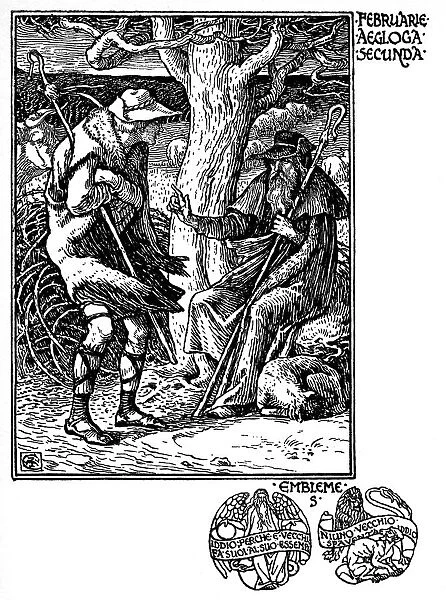
Crane, The Shepherd's Calendar: February, 1898


THE SHEPHERD'S CALENDAR: FEBRUARY

The snow has left the cottage top;
The thatch moss grows in brighter green;
And eaves in quick succession drop,
Where grinning icicles have been,
Pit-patting with a pleasant noise
In tubs set by the cottage-door;
While ducks and geese, with happy joys,
Plunge in the yard-pond brimming o'er.

The sun peeps through the window-pane;
Which children mark with laughing eye,
And in the wet street steal again
To tell each other spring is nigh:
Then, as young hope the past recalls,
In playing groups they often draw,
To build beside the sunny walls
Their spring-time huts of sticks or straw.

And oft in pleasure's dreams they hie
Round homesteads by the village side,
Scratching the hedgerow mosses by,
Where painted pooty shells abide,
Mistaking oft the ivy spray
For leaves that come with budding spring,
And wondering, in their search for play,
Why birds delay to build and sing.

The milkmaid singing leaves her bed,
As glad as happy thoughts can be,
While magpies chatter o'er her head
As jocund in the change as she:
Her cows around the closes stray,
Nor lingering wait the foddering-boy,
Tossing the molehills in their play,
And staring round with frolic joy.

The shepherd now is often seen
Near warm banks o'er his hook to bend,
Or o'er a gate or stile to lean,
Chattering to a passing friend:
Ploughmen go whistling to their toils,
And yoke again the rested plough;
And, mingling o'er the mellow soils,
Boys shout, and whips are noising now.

The barking dogs, by lane and wood,
Drive sheep afield from foddering ground;
And Echo, in her summer mood,
Briskly mocks the cheering sound.
The flocks, as from a prison broke,
Shake their wet fleeces in the sun,
While, following fast, a misty smoke
Reeks from the moist grass as they run.

No more behind his master's heels
The dog creeps on his winter-pace;
But cocks his tail, and o'er the fields
Runs many a wild and random chase,
Following, in spite of chiding calls,
The startled cat with harmless glee,
Scaring her up the weed-green walls,
Or mossy mottled apple-tree.

As crows from morning perches fly,
He barks and follows them in vain;
E'en larks will catch his nimble eye,
And off he starts and barks again,
With breathless haste and blinded guess,
Oft following where the hare hath gone,
Forgetting, in his joy's excess,
His frolic puppy-days are done.

The hedgehog, from his hollow root,
Sees the wood-moss clear of snow,
And hunts the hedge for fallen fruit--
Crab, hip, and winter-bitten sloe;
But often checked by sudden fears,
As shepherd-dog his haunt espies,
He rolls up in a ball of spears,
And all his barking rage defies.

The gladdened swine bolt from the sty,
And round the yard in freedom run,
Or stretching in their slumbers lie
Beside the cottage in the sun.
The young horse whinnies to his mate,
And, sickening from the thresher's door,
Rubs at the straw-yard's banded gate,
Longing for freedom on the moor.

The small birds think their wants are o'er,
To see the snow-hills fret again,
And, from the barn's chaff-littered door,
Betake them to the greening plain.
The woodman's robin startles coy,
Nor longer to his elbow comes,
To peck, with hunger's eager joy,
'Mong mossy stulps the littered crumbs.

'Neath hedge and walls that screen the wind,
The gnats for play will flock together;
And e'en poor flies some hope will find
To venture in the mocking weather;
From out their hiding-holes again,
With feeble pace, they often creep
Along the sun-warmed window-pane,
Like dreaming things that walk in sleep.

The mavis thrush with wild delight,
Upon the orchard's dripping tree,
Mutters, to see the day so bright,
Fragments of young Hope's poesy:
And oft Dame stops her buzzing wheel
To hear the robin's note once more,
Who tootles while he pecks his meal
From sweetbrier hips beside the door.

The sunbeams on the hedges lie,
The south wind murmurs summer-soft;
The maids hang out white clothes to dry
Around the elder-skirted croft:
A calm of pleasure listens round,
And almost whispers winter by;
While Fancy dreams of summer's sound,
And quiet rapture fills the eye.

Thus Nature of the spring will dream
While south winds thaw; but soon again
Frost breathes upon the stiffening stream,
And numbs it into ice: the plain
Soon wears its mourning garb of white;
And icicles, that fret at noon,
Will eke their icy tails at night
Beneath the chilly stars and moon.

Nature soon sickens of her joys,
And all is sad and dumb again.
Save merry shouts of sliding boys
About the frozen furrowed plain.
The foddering-boy forgets his song,
And silent goes with folded arms;
And croodling shepherds bend along,
Crouching to the whizzing storms.

John Clare

01 September 2024

Delight.

Spenser, September in The Shepheardes Calender (detail), 1579


The SHEPHERD'S CALENDAR: SEPTEMBER

Harvest awakes the morning still,
And toil's rude groups the valleys fill;
Deserted is each cottage hearth
To all life, save the cricket's mirth;
Each burring wheel its sabbath meets,
Nor walks a gossip in the streets;
The bench beneath the eldern bough,
Lined o'er with grass, is empty now,
Where blackbirds, caged from out the sun,
Would whistle while their mistress spun:
All haunt the thronged fields, to share
The harvest's lingering bounty there.
As yet, no meddling boys resort
About the streets in idle sport;
The butterfly enjoys its hour,
And flirts, unchased, from flower to flower;
The humming bees, which morning calls
From out the low hut's mortar walls,
And passing boy no more controls —
Fly undisturb'd about their holes;
The sparrows in glad chirpings meet,
Unpelted in the quiet street.
None but imprison'd children now
Are seen, where dames with angry brow
Threaten each younker to his seat,
Who, through the window, eyes the street;
Or from his hornbook turns away,
To mourn for liberty and play.
Yet loud are morning's early sounds;
The farm or cottage yard abounds
With creaking noise of opening gate,
And clanking pumps, where boys await
With idle motion, to supply
The thirst of cattle crowding nigh.

Upon the dovecote's mossy slates,
The pigeons coo around their mates;
And close beside the stable wall,
Where morning sunbeams earliest fall,
The basking hen, in playful rout,
Flaps the powdery dust about.
Within the barn-hole sits the cat
Watching to seize the thirsty rat,
Who oft at morn its dwelling leaves
To drink the moisture from the eaves;
The red-breast, with his nimble eye,
Dares scarcely stop to catch the fly,
That, tangled in the spider's snare,
Mourns in vain for freedom there.
The dog beside the threshold lies,
Mocking sleep, with half-shut eyes —
With head crouch'd down upon his feet,
Till strangers pass his sunny seat —
Then quick he pricks his ears to hark,
And bustles up to growl and bark;
While boys in fear stop short their song,
And sneak in startled speed along;
And beggar, creeping like a snail,
To make his hungry hopes prevail
O'er the warm heart of charity,
Leaves his lame halt and hastens by.
The maid afield now leaves the farm,
With dinner basket on her arm,
Loitering unseen in narrow lane,
To be o'ertook by following swain,
Who, happy thus her truth to prove,
Carries the load and talks of love.
Soon as the dew is off the ground,
Rumbling like distant thunder round,
The waggons haste the corn to load,
And hurry down the dusty road;
While driving boy with eager eye
Watches the church clock passing by —
Whose gilt hands glitter in the sun —
To see how far the hours have run;
Right happy, in the breathless day,
To see time wearing fast away.
But now and then a sudden shower
Will bring to toil a resting hour;
Then, under sheltering shocks, a crowd
Of merry voices mingle loud,
Draining, with leisure's laughing eye,
Each welcome, bubbling bottle dry;
Till peeping suns dry up the rain,
Then off they start to toil again.
Anon the fields are getting clear,
And glad sounds hum in labour's ear;
When children halloo " Here they come! "
And run to meet the Harvest Home,
Cover'd with boughs, and throng'd with boys,
Who mingle loud a merry noise,

And, when they meet the stack-throng'd yard,
Cross-buns and pence their shouts reward.
Then comes the harvest-supper night,
Which rustics welcome with delight;
When merry game and tiresome tale,
And songs, increasing with the ale,
Their mingled uproar interpose,
To crown the harvest's happy close;
While Mirth, that at the scene abides,
Laughs, till she almost cracks her sides.
Now harvest's busy hum declines,
And labour half its help resigns.
Boys, glad at heart, to play return;
The shepherds to their peace sojourn,
Rush-bosom'd solitudes among,
Which busy toil disturb'd so long.
The gossip, happy all is o'er,
Visits again her neighbour's door,
On scandal's idle tales to dwell,
Which harvest had no time to tell;
And free from all its sultry strife,
Enjoys once more her idle life.
A few, whom waning toil reprieves,
Thread the forest's sea of leaves,
Where the pheasant loves to hide,
And the darkest glooms abide,
Beneath the old oaks moss'd and grey,
Whose shadows seem as old as they;
Where time hath many seasons won,
Since aught beneath them saw the sun;
Within these brambly solitudes,
The ragged, noisy boy intrudes,
To gather nuts, that, ripe and brown,
As soon as shook will patter down.
Thus harvest ends its busy reign,
And leaves the fields their peace again;
Where Autumn's shadows idly muse
And tinge the trees in many hues:
Amid whose scenes I'm fain to dwell,
And sing of what I love so well.
But hollow winds, and tumbling floods,
And humming showers, and moaning woods,
All startle into sudden strife,
And wake a mighty lay to life;
Making, amid their strains divine,
Unheard a song so mean as mine.

John Clare

01 August 2024

Home-Tranquillity.

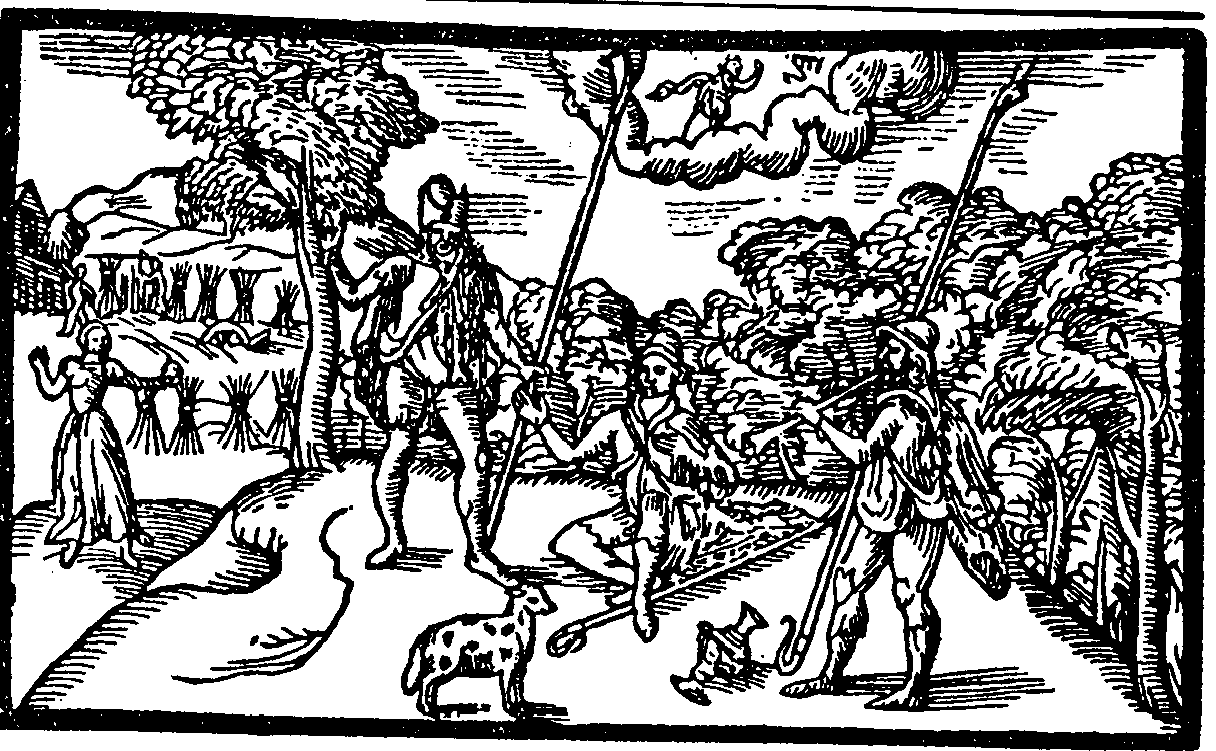
Spenser, The Shepheard's Calendar: August, 1579


The SHEPHERD'S CALENDAR: AUGUST

Harvest approaches with its busy day;
The wheat tans brown, and barley bleaches grey;
In yellow garb the oatland intervenes,
And tawny glooms the valley throng'd with beans.
Silent the village grows, — wood-wandering dreams
Seem not so lonely as its quiet seems;
Doors are shut up as on a winter's day,
And not a child about them lies at play;
The dust that winnows 'neath the breeze's feet
Is all that stirs about the silent street:
Fancy might think that desert-spreading Fear
Had whisper'd terrors into Quiet's ear,
Or plundering armies past the place had come
And drove the lost inhabitants from home.
The fields now claim them, where a motley crew
Of old and young their daily tasks pursue.
The reapers leave their rest before the sun,
And gleaners follow in the toils begun
To pick the litter'd ear the reaper leaves,
And glean in open fields among the sheaves.
The ruddy child, nursed in the lap of Care,
In Toil's rude strife to do its little share,
Beside its mother poddles o'er the land,
Sunburnt, and stooping with a weary hand,
Picking its tiny glean of corn or wheat,
While crackling stubbles wound its little feet.
Full glad it often is to sit awhile
Upon a smooth green bank to ease its toil,
And fain would spend an idle hour in play
With insects, strangers to the moiling day,
Creeping about each rush and grassy stem,
And often wishes it were one of them:
Meanwhile the expecting mother stops to tie
Her handful up, and, waiting his supply,
Misses the idle younker from her side;
Then shouts of rods, and morts of threats beside
Picture harsh truths in his unpractised breast, —
How they, who idle in the harvest rest,
Shall well-deserving in the winter pine,
Or hunt the hedges with the birds and swine.
In vain he wishes that the rushes' height
Were tall as trees to hide him from her sight.
Leaving his pleasant seat, he sighs and rubs
His legs, and shows scatch'd wounds from piercing stubs,
To make excuse for play; but she disdains
His little wounds, and smiles while he complains;
And as he stoops adown in troubles sore,
She sees his grief, and bids him mourn no more,
For by and by, on the next Sabbath-day,
He shall have well-earn'd pence as well as play,
When he may buy, almost without a stint,
Sweet candied horehound, cakes, and peppermint,
At the gay shop, within whose window lie
Things of all sorts to tempt his eager eye:
Rich sugar-plums in phials shining bright,
In every hue, young fancies to delight;
Coaches and ladies of gilt gingerbread;
And downy plums, and apples streak'd with red.
Such promises all sorrow soon displace,
And smiles are instant kindled in his face;
Scorning the troubles which he felt before,
He picks the trailing ears, and mourns no more.
The fields are all alive with sultry noise
Of labour's sounds, and insects' busy joys.
The reapers o'er their glittering sickles stoop,
Startling full oft the partridge coveys up;
Some o'er the rustling scythe go bending on;
And shockers follow where their toils have gone,
Heaping the swaths that rustle in the sun,
Where mice from Terror's dangers nimbly run,
Leaving their tender young in fear's alarm,
Lapt up in nests of chimbled grasses warm,
Hoping for safety from their flight in vain;
While the rude boy, or churlish-hearted swain,
Pursues with lifted weapons o'er the ground,
And spreads an instant murder all around.
In vain the anxious maiden's tender prayer
Urges the clown their little lives to spare;
She sighs, while trailing the long rake along,
At scenes so cruel, and forgets her song.
When the Sun stoops to meet the western sky,
And Noon's hot hours have wander'd weary by,
Seeking a hawthorn bush or willow-tree
For resting-places that the coolest be,
Where baskets heaped and unbroached bottles lie,
Which dogs in absence watch'd with wary eye,
They catch their breath awhile, and share the boon
Which bevering-time allows their toil at noon.

Next to her favour'd swain the maiden steals,
Blushing at kindness which his love reveals;
Making a seat for her of sheaves around,
He drops beside her on the naked ground.
Then from its cool retreat the beer they bring,
And hand the stout-hoop'd bottle round the ring.
Each swain soaks hard; the maiden, ere she sips,
Shrieks at the bold wasp settling on her lips,
That seems determined only her's to greet,
As if it fancied they were cherries sweet!
The dog foregoes his sleep awhile, or play,
Springing at frogs that rustling jump away,
To watch each morsel carelessness bestows,
Or wait the bone or crust the shepherd throws;
For shepherds are no more of ease possest,
But share in harvest-labours with the rest.
When day declines and others meet repose,
The bawling boy his evening journey goes;
At toil's unwearied call the first and last,
He drives his horses to their night's repast,
In dewy close or meadow to sojourn;
And often ventures, on his still return,
O'er garden pales, or orchard walls, to hie,
When sleep's safe key hath lock'd up danger's eye,
All but the mastiff watching in the dark,
Who snuffs and knows him, and forbears to bark.
With fearful haste he climbs each loaded tree,
And picks for prizes, that the ripest be;

While the pale moon, creeping with jealous light,
Fills empty shadows with the power to fright;
And, from the barn-hole, pops and hurries by,
The grey owl, screaming with a fearful cry; —
He hears the noise, and, hastening to escape,
Thinks each thing grows around a dismal shape.

Quick tumbling o'er the mossy, mould'ring wall,
He loses half his booty in the fall;
Where, soon as ever Morning opes its eyes,
The restless hogs will happen on the prize,
And crump adown the mellow and the green,
Making all seem as nothing e'er had been.
Amid the broils of harvest's weary reign,
How sweet the Sabbath wakes its rest again!
And on each weary mind what rapture dwells,
To hear once more the pleasant chiming bells,
That from each steeple, peeping here and there,
Murmur a soothing lullaby to care.
The shepherd, journeying on his morning rounds,
Pauses awhile to hear the pleasing sounds,
While the glad children, free from toil's employ,
Mimic the " ding dong " hums, and laugh for joy.
The fields themselves seem happy to be free,
Where insects chatter with unusual glee;
While Solitude, the grass and stubs among,
Appears to muse and listen to the song.
In quiet peace awakes the welcome morn;
Men tired, and children with their gleaning worn,
Weary and stiff, lie round the doors all day,
To rest themselves, with little heart for play.

In calm delight, the Sabbath wears along;
Yet round the Cross, at noon, a tempted throng
Of little younkers, with their pence, repair
To buy the downy plum and luscious pear
That melts i' th' mouth, which gardeners never fail,
For gain's strong impulse, to expose for sale;
Placed on the circling Cross-steps in the sun,
What time the parson has his sermon done.

There, soon the boy his sore-earn'd penny spends;
And he the while, that pennyless attends,

In sullen, silent mood, approaching nigh,
Full often drops a keen, desiring eye,
Upon each loaded basket, to perceive,
What makes his little fingers itch to thieve; —
But, close at hand, the stocks in terror shine,
And temptings strong, to stronger fears resign.

Thus Sunday's leisure passes swiftly by
In rest, soft peace, and home-tranquillity,
Till Monday morning doth its cares pursue,
Rousing the harvest's busy toils anew.

John Clare

01 June 2024

Hum.

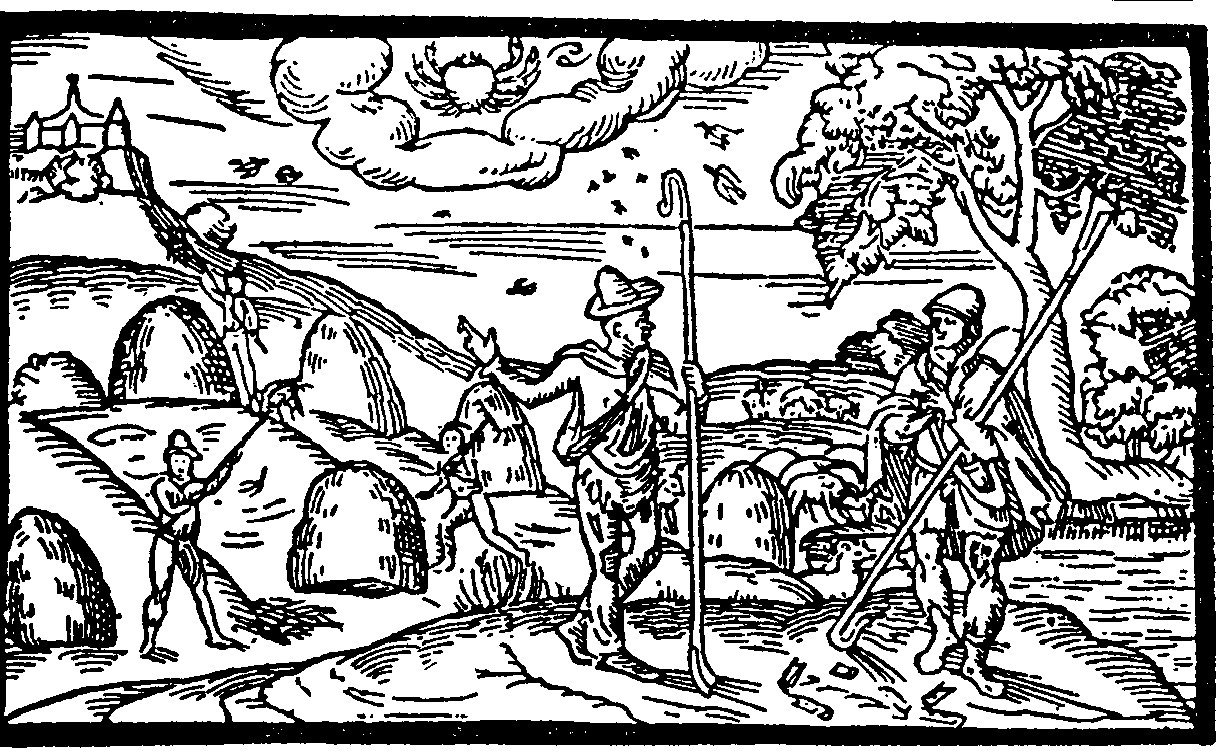
Spenser, June, 1579


THE SHEPHERD'S CALENDAR: JUNE

Now summer is in flower and natures hum
Is never silent round her sultry bloom
Insects as small as dust are never done
Wi' glittering dance and reeling in the sun
And green wood fly and blossom haunting bee
Are never weary of their melody
Round field hedge now flowers in full glory twine
Large bindweed bells wild hop and streakd woodbine
That lift athirst their slender throated flowers
Agape for dew falls and for honey showers
These round each bush in sweet disorder run
And spread their wild hues to the sultry sun
Where its silk netting lace on twigs and leaves
The mottld spider at eves leisure weaves
That every morning meet the poets eye
Like faireys dew wet dresses hung to dry
The wheat swells into ear and leaves below
The may month wild flowers and their gaudy show
Bright carlock bluecap and corn poppy red
Which in such clouds of colors wid [e] ly spread
That at the sun rise might to fancys eye
Seem to reflect the many colord sky
And leverets seat and lark and partridge nest
It leaves a schoolboys height in snugger rest
And oer the weeders labour overgrows
Who now in merry groups each morning goes
To willow skirted meads wi fork and rake
The scented hay cocks in long rows to make
Where their old visitors in russet brown
The haytime butterflyes dance up and down
And gads that teaze like whasps the timid maid
And drive the herdboys cows to pond and shade
Who when his dogs assistance fails to stop
Is forcd his half made oaten pipes to drop
And start and hallo thro the dancing heat
To keep their gadding tumult from the wheat
Who in their rage will dangers overlook
And leap like hunters oer the pasture brook
Brushing thro blossomd beans in maddening haste
And 'stroying corn they scarce can stop to taste
Labour pursues its toil in weary mood
And feign woud rest wi shadows in the wood
The mowing gangs bend oer the beeded grass
Where oft the gipseys hungry journeying ass
Will turn its wishes from the meadow paths
Listning the rustle of the falling swaths
The ploughman sweats along the fallow vales
And down the suncrackt furrow slowly trails
Oft seeking when athirst the brooks supply
Where brushing eager the brinks bushes bye
For coolest water he oft brakes the rest
Of ring dove brooding oer its idle nest
And there as loath to leave the swaily place
He'll stand to breath and whipe his burning face
The shepherds idle hours are over now
Nor longer leaves him neath the hedgrow bough
On shadow pillowd banks and lolling stile
Wilds looses now their summer friends awhile
Shrill whistles barking dogs and chiding scold
Drive bleating sheep each morn from fallow fold
To wash pits where the willow shadows lean
Dashing them in their fold staind coats to clean
Then turnd on sunning sward to dry agen
They drove them homeward to the clipping pen
In hurdles pent where elm or sycamore
Shut out the sun-or in some threshing floor
There they wi scraps of songs and laugh and tale
Lighten their anual toils while merry ale
Goes round and gladdens old mens hearts to praise
The thread bare customs of old farmers days
Who while the sturting sheep wi trembling fears
Lies neath the snipping of his harmless sheers
Recalls full many a thing by bards unsung
And pride forgot-that reignd when he was young
How the hugh bowl was in the middle set
At breakfast time as clippers yearly met
Filld full of frumity where yearly swum
The streaking sugar and the spotting plumb
Which maids coud never to the table bring
Without one rising from the merry ring
To lend a hand who if twas taen amiss
Woud sell his kindness for a stolen kiss
The large stone pitcher in its homly trim
And clouded pint horn wi its copper rim
Oer which rude healths was drank in spirits high
From the best broach the cellar woud supply
While sung the ancient swains in homly ryhmes
Songs that were pictures of the good old times
When leathern bottles held the beer nut brown
That wakd the sun wi songs and sung him down
Thus will the old man ancient ways bewail
Till toiling sheers gain ground upon the tale
And brakes it off-when from the timid sheep
The fleece is shorn and wi a fearfull leap
He starts-while wi a pressing hand
His sides are printed by the tarry brand
Shaking his naked skin wi wondering joys
And fresh ones are tugd in by sturdy boys
Who when theyre thrown down neath the sheering swain
Will wipe his brow and start his tale again
Tho fashions haughtv frown hath thrown aside
Half the old forms simplicity supplyd
Yet their are some prides winter deigns to spare
Left like green ivy when the trees are bare
And now when sheering of the flocks are done
Some ancient customs mixd wi harmless fun
Crowns the swains merry toils-the timid maid
Pleasd to be praisd and yet of praise affraid
Seeks her best flowers not those of woods and fields
But such as every farmers garden yield
Fine cabbage roses painted like her face
And shining pansys trimmd in golden lace
And tall tuft larkheels featherd thick wi flowers
And woodbines climbing oer the door in bowers
And London tufts of many a mottld hue
And pale pink pea and monkshood darkly blue
And white and purple jiliflowers that stay
Lingering in blossom summer half away
And single blood walls of a lucious smell
Old fashiond flowers which huswives love so well
And columbines stone blue or deep night brown
Their honey-comb-like blossoms hanging down
Each cottage gardens fond adopted child
Tho heaths still claim them where they yet grow wild
Mong their old wild companions summer blooms
Furze brake and mozzling ling and golden broom
Snap dragons gaping like to sleeping clowns
And 'clipping pinks' (which maidens sunday gowns
Full often wear catcht at by tozing chaps)
Pink as the ribbons round their snowy caps
'Bess in her bravery' too of glowing dyes
As deep as sunsets crimson pillowd skyes
And majoram notts sweet briar and ribbon grass
And lavender the choice of every lass
And sprigs of lads love all familiar names
Which every garden thro the village claims
These the maid gathers wi a coy delight
And tyes them up in readiness for night
Giving to every swain tween love and shame
Her 'clipping poseys' as their yearly claim
And turning as he claims the custom kiss
Wi stifld smiles half ankering after bliss
She shrinks away and blushing calls it rude
But turns to smile and hopes to be pursued
While one to whom the seeming hint applied
Follows to claim it and is not denyd
No doubt a lover for within his coat
His nosegay owns each flower of better sort
And when the envious mutter oer their beer
And nodd the secret to his neighbor near
Raising the laugh to make the mutter known
She blushes silent and will not disown
And ale and songs and healths and merry ways
Keeps up a shadow of old farmers days
But the old beachen bowl that once supplyd
Its feast of frumity is thrown aside
And the old freedom that was living then
When masters made them merry wi' their men
Whose coat was like his neighbors russet brown
And whose rude speech was vulgar as his clown
Who in the same horn drank the rest among
And joind the chorus while a labourer sung
All this is past-and soon may pass away
The time torn remnant of the holiday
As proud distinction makes a wider space
Between the genteel and the vulgar race
Then must they fade as pride o'er custom showers
Its blighting mildew on her feeble flowers

John Clare

01 March 2024

Wild.

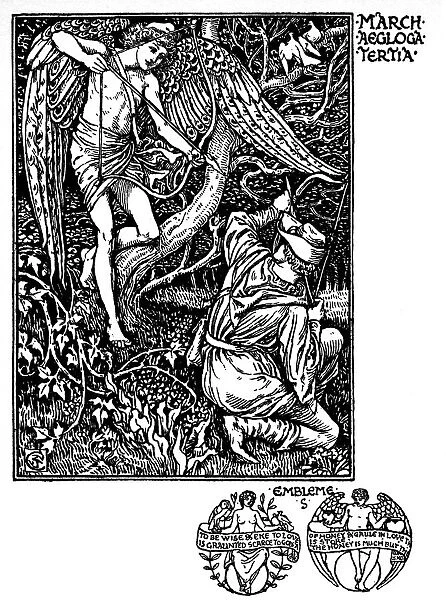
Spenser, The Shepherd's Calendar: March, 1898


THE SHEPHERD'S CALENDAR: MARCH

March month of 'many weathers' wildly comes
In hail and snow and rain and threatning hums
And floods: while often at his cottage door
The shepherd stands to hear the distant roar
Loosd from the rushing mills and river locks
Wi thundering sound and over powering shocks
And headlong hurry thro the meadow brigs
Brushing the leaning sallows fingering twigs
In feathery foam and eddy hissing chase
Rolling a storm oertaken travellers pace
From bank to bank along the meadow leas
Spreading and shining like to little seas
While in the pale sunlight a watery brood
Of swopping white birds flock about the flood
Yet winter seems half weary of its toil
And round the ploughman on the elting soil
Will thread a minutes sunshine wild and warm
Thro the raggd places of the swimming storm
And oft the shepherd in his path will spye
The little daisey in the wet grass lye
That to the peeping sun enlivens gay
Like Labour smiling on an holiday
And where the stunt bank fronts the southern sky
By lanes or brooks where sunbeams love to lye
A cowslip peep will open faintly coy
Soon seen and gatherd by a wandering boy
A tale of spring around the distant haze
Seems muttering pleasures wi the lengthening days
Morn wakens mottld oft wi may day stains
And shower drops hang the grassy sprouting plains
And on the naked thorns of brassy hue
Drip glistning like a summer dream of dew
While from the hill side freshing forest drops
As one might walk upon their thickening tops
And buds wi young hopes promise seemly swells
Where woodman that in wild seclusion dwells
Wi chopping toil the coming spring decieves
Of many dancing shadows flowers and leaves
And in his pathway down the mossy wood
Crushes wi hasty feet full many a bud
Of early primrose yet if timely spied
Shelterd some old half rotten stump beside
The sight will cheer his solitery hour
And urge his feet to stride and save the flower
Muffld in baffles leathern coat and gloves
The hedger toils oft scaring rustling doves
From out the hedgrows who in hunger browze
The chockolate berrys on the ivy boughs
And flocking field fares speckld like the thrush
Picking the red awe from the sweeing bush
That come and go on winters chilling wing
And seem to share no sympathy wi spring
The stooping ditcher in the water stands
Letting the furrowd lakes from off the lands
Or splashing cleans the pasture brooks of mud
Where many a wild weed freshens into bud
And sprouting from the bottom purply green
The water cresses neath the wave is seen
Which the old woman gladly drags to land
Wi reaching long rake in her tottering hand
The ploughman mawls along the doughy sloughs
And often stop their songs to clean their ploughs
From teazing twitch that in the spongy soil
Clings round the colter terryfying toil
The sower striding oer his dirty way
Sinks anckle deep in pudgy sloughs and clay
And oer his heavy hopper stoutly leans
Strewing wi swinging arms the pattering beans
Which soon as aprils milder weather gleams
Will shoot up green between the furroed seams
The driving boy glad when his steps can trace
The swelling edding as a resting place
Slings from his clotted shoes the dirt around
And feign woud rest him on the solid ground
And sings when he can meet the parting green
Of rushy balks that bend the lands between
While close behind em struts the nauntling crow
And daws whose heads seem powderd oer wi snow
To seek the worms-and rooks a noisey guest
That on the wind rockd elms prepares her nest
On the fresh furrow often drops to pull
The twitching roots and gathering sticks and wool
Neath trees whose dead twigs litter to the wind
And gaps where stray sheep left their coats behind
While ground larks on a sweeing clump of rushes
Or on the top twigs of the oddling bushes
Chirp their 'cree creeing' note that sounds of spring
And sky larks meet the sun wi flittering wing
Soon as the morning opes its brightning eye
Large clouds of sturnels blacken thro the sky
From oizer holts about the rushy fen
And reedshaw borders by the river Nen
And wild geese regiments now agen repair
To the wet bosom of broad marshes there
In marching coloms and attention all
Listning and following their ringleaders call
The shepherd boy that hastens now and then
From hail and snow beneath his sheltering den
Of flags or file leavd sedges tyd in sheaves
Or stubble shocks oft as his eye percieves
Sun threads struck out wi momentery smiles
Wi fancy thoughts his lonliness beguiles
Thinking the struggling winter hourly bye
As down the edges of the distant sky
The hailstorm sweeps-and while he stops to strip
The stooping hedgbriar of its lingering hip
He hears the wild geese gabble oer his head
And pleasd wi fancys in his musings bred
He marks the figurd forms in which they flye
And pausing follows wi a wandering eye
Likening their curious march in curves or rows
To every letter which his memory knows
While far above the solitary crane
Swings lonly to unfrozen dykes again
Cranking a jarring mellancholy cry
Thro the wild journey of the cheerless sky
Full oft at early seasons mild and fair
March bids farewell wi garlands in her hair
Of hazzel tassles woodbines hairy sprout
And sloe and wild plumb blossoms peeping out
In thickset knotts of flowers preparing gay
For aprils reign a mockery of may
That soon will glisten on the earnest eye
Like snow white cloaths hung in the sun to drye
The old dame often stills her burring wheel
When the bright sun will thro the window steal
And gleam upon her face and dancing fall
In diamond shadows on the picturd wall
While the white butterflye as in amaze
Will settle on the glossy glass to gaze
And oddling bee oft patting passing bye
As if they care to tell her spring was nigh
And smiling glad to see such things once more
Up she will get and potter to the door
And look upon the trees beneath the eves
Sweet briar and ladslove swelling into leaves
And damsin trees thick notting into bloom
And goosberry blossoms on the bushes come
And stooping down oft views her garden beds
To see the spring flowers pricking out their heads
And from her apron strings she'll often pull
Her sissars out an early bunch to cull
For flower pots on the window board to stand
Where the old hour glass spins its thread of sand
And maids will often mark wi laughing eye
In elder where they hang their cloaths to drye
The sharp eyd robin hop from grain to grain
Singing its little summer notes again
As a sweet pledge of Spring the little lambs
Bleat in the varied weather round their dams
Or hugh molehill or roman mound behind
Like spots of snow lye shelterd from the wind
While the old yoes bold wi paternal cares
Looses their fears and every danger dares
Who if the shepherds dog but turns his eye
And stops behind a moment passing bye
Will stamp draw back and then their threats repeat
Urging defiance wi their stamping feet
And stung wi cares hopes cannot recconsile
They stamp and follow till he leaps a stile
Or skulking from their threats betakes to flight
And wi the master lessens out of sight
Clowns mark the threatning rage of march pass bye
And clouds wear thin and ragged in the sky
While wi less sudden and more lasting smiles
The growing sun their hopes of spring beguiles
Who often at its end remark wi pride
Days lengthen in their visits a 'cocks stride'
Dames clean their candlesticks and set them bye
Glad of the makeshift light that eves supply
The boy returning home at night from toil
Down lane and close oer footbrig gate and style1
Oft trembles into fear and stands to hark
The waking fox renew his short gruff bark
While badgers eccho their dread evening shrieks
And to his thrilling thoughts in terror speaks
And shepherds that wi in their hulks remain
Night after night upon the chilly plain
To watch the dropping lambs that at all hours
Come in the quaking blast like early flowers
Demanding all the shepherds care who find
Warm hedge side spots and take them from the wind
And round their necks in wary caution tyes
Long shreds of rags in red or purple dyes
Thats meant in danger as a safty spell
Like the old yoe that wears a tinkling bell
The sneaking foxes from his thefts to fright
That often seizes the young lambs at night
These when they in their nightly watchings hear
The badgers shrieks can hardly stifle fear
They list the noise from woodlands dark recess
Like helpless shrieking woman in distress
And oft as such fears fancying mystery
Believes the dismal yelling sounds to be
For superstition hath its thousand tales
To people all his midnight woods and vales
And the dread spot from whence the dismal noise
Mars the night musings of their dark employs
Owns its sad tale to realize their fear
At which their hearts in boyhood achd to hear
A maid at night by treacherous love decoyd
Was in that shrieking wood years past destroyd
She went twas said to meet the waiting swain
And home and friends ne'er saw her face again
Mid brakes and thorns that crowded round the dell
And matting weeds that had no tongues to tell
He murderd her alone at dead midnight
While the pale moon threw round her sickly light
And loud shrieks left the thickets slumbers deep
That only scard the little birds from sleep
When the pale murderers terror frowning eye
Told its dread errand that the maid shoud dye
Mid thick black thorns her secret grave was made
And there ere night the murderd girl was laid
When no one saw the deed but god and he
And moonlight sparkling thro the sleeping tree
Around-the red breast might at morning steel
There for the worm to meet his morning meal
In fresh turnd moulds that first beheld the sun
Nor knew the deed that dismal night had done
Such is the tale that superstition gives
And in her midnight memory ever lives
That makes the boy run by wi wild affright
And shepherds startle on their rounds at night

Now love teazd maidens from their droning wheel
At the red hour of sunset sliving steals
From scolding dames to meet their swains agen
Tho water checks their visits oer the plain
They slive where no one sees some wall behind
Or orchard apple trees that stops the wind
To talk about springs pleasures hoveing nigh
And happy rambles when the roads get dry
The insect world now sunbeams higher climb
Oft dream of spring and wake before their time
Blue flyes from straw stacks crawling scarce alive
And bees peep out on slabs before the hive
Stroaking their little legs across their wings
And venturing short flight where the snow drop hings
Its silver bell-and winter aconite
Wi buttercup like flowers that shut at night
And green leaf frilling round their cups of gold
Like tender maiden muffld from the cold
They sip and find their honey dreams are vain
And feebly hasten to their hives again
And butterflys by eager hopes undone
Glad as a child come out to greet the sun
Lost neath the shadow of a sudden shower
Nor left to see tomorrows April flower .

John Clare