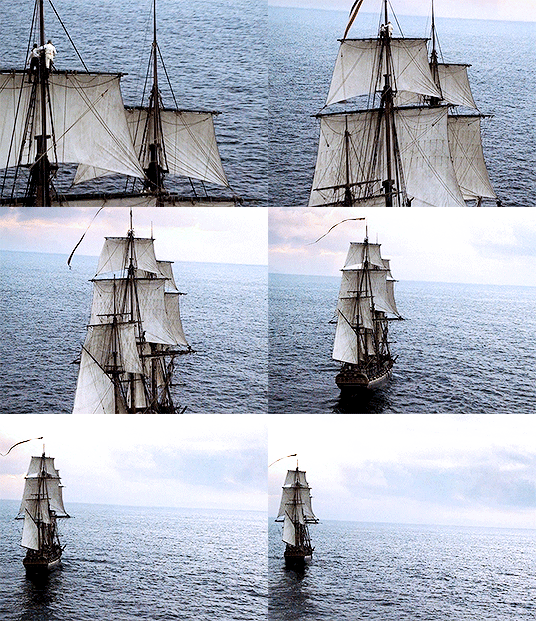
"I am not one who was born in the custody of wisdom. I am one who is fond of olden times and intense in quest of the sacred knowing of the ancients." Gustave Courbet
Showing posts with label Nietzsche. Show all posts

15 October 2025

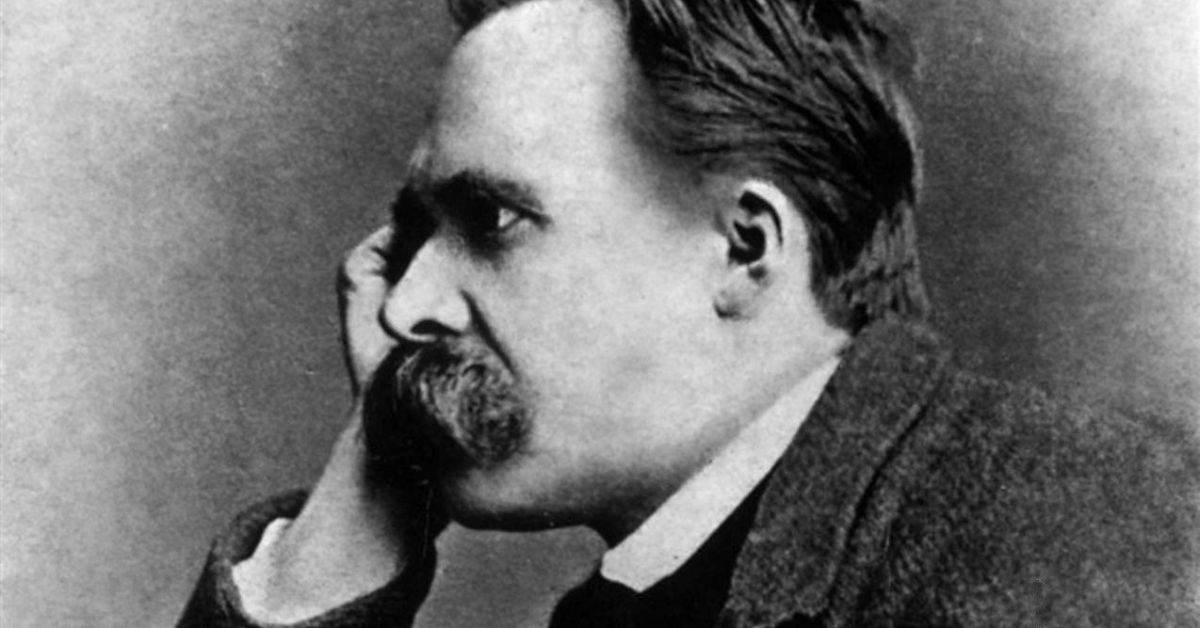
Happy Birthday, Friedrich Nietzsche


The individual has always had to struggle to keep from being overwhelmed by the tribe. If you try it, you will be lonely often, and sometimes frightened. But no price is too high to pay for the privilege of owning yourself.

Friedrich Nietzsche, born on this day in 1844

10 December 2024

Taught.


PERNICIOUS.—A young man can be most surely corrupted when he is taught to value the like-minded more highly than the differently minded.

Friedrich Nietzsche, from The Dawn of Day

17 December 2023

Pernicious.


PERNICIOUS.—A young man can be most surely corrupted when he is taught to value the like-minded more highly than the differently minded.

Friedrich Nietzsche, from The Dawn of Day, Section 297

09 August 2023

Accord.


The conviction reigns that it is only through the sacrifices and accomplishments of the ancestors that the tribe exists--and that one has to pay them back with sacrifices and accomplishments; one thus recognizes a debt that constantly grows greater, since these forebears never cease, in their continued existence as powerful spirits, to accord the tribe new advantages and new strength.

Friedrich Nietzsche, from On the Genealogy of Morals

Thank you, Kurt.

21 June 2023

Such.


A touching tale will come of this, that there was once such an art, such belief by artists.

Friedrich Nietzsche

08 June 2023

Choices.


Philosophy Now looks at hive-mindedness and free will ...
We are undeniably in a process of increasing interconnectivity. Are we just improving our social and professional lives as individuals, or are we beginning to create "one mind"? Comparing our online selves to the neurons in a brain, can our individual minds be rightly called "one mind", or is it more like a hive of "mini-minds"? Perhaps we will fracture into several hive-minds before any singular global consciousness can be formed, and even eventually revert back into individualism.

We must also ask whether this process could be controlled or limited in some way. For instance, could a hive mind like the internet in the future be compartmentalized enough to preserve a sense of individuality for its users? We cannot know the answer to this now, but I believe that in order to remain individuals and exercise individual freedom we would eventually need to reject the cyberconnection altogether. This seems very unlikely to happen. This leads to a sharp question: how much control do we have even now?

Control over the hive would require there to be a widely shared desire for individual control. But if individual control is dependent on the desire of the collective, this is tantamount to saying that we have no control as individuals. The question is, will the hive relinquish some of its power and tolerate dissent among the units that compose it? 

Dr. Daniel Toker weighs in ...

Now the real question is, what happens to our individuality if we give rise to a hive mind? Are our individual minds obliterated? Or is it just business as usual while a collective intelligence supervenes on our brains, unbeknownst to us? Giulio Tononi (of the information integration theory) actually thinks that the individual consciousness winks out when the group forms a truly integrated whole. At a lecture last year Tononi said that if the United States ever came to a point where it, as a nation, integrated more information than any of the individuals that make up the nation, those individuals would cease to be conscious. This is because, as has been shown mathematically in artificial networks, the amount of information integrated inside the parts of the network (e.g. U.S. citizens) winks out to 0 bits as soon the information integrated across a whole network (e.g. the United States) exceeds the amount previously integrated inside its parts (its citizens). But, the theory remains untested in real brains, so it’s not entirely clear how plausible this assertion is.

But, say that we do lose our individual consciousness if a hive mind emerges. Is that necessarily a bad thing? Clearly our gut reaction is yes, because we value our own mentality. But suppose it were the case that the collective human mind could receive more utility than could all individual humans combined ...

Does Twitter offer the benefits of hive-mind, or ...

Just like the brain, the functioning of these groups is entirely dependent on their structure. Simple models of collective behavior in animal groups recover their functional properties. We understand how interactions enable collective navigation, predator avoidance, and decision-making. 

Through this, we’ve learned how remarkably sensitive emergent behavior can be to the structure and nature of interactions between individuals. Changes to the network size or structure, altering how information is shared, or adding feedback tends to degrade collective behavior into failed states.

So, Elon’s premise that Twitter can behave like a collective intelligence only holds if the structure of the network and nature of interactions is tuned to promote collective outcomes. Everything we know suggests the design space that would promote effective collective behavior at scale—if it exists—is quite small compared to the possible design space on the internet.

Nietzsche warned, "Madness is rare in individuals – but in groups, political parties, nations, and eras it’s the rule.” 

 

To experience transformation in a group and to experience it in oneself are two totally different things. If any considerable group of persons are united and identified with one another by a particular frame of mind, the resultant transformation experience bears only a very re¬ mote resemblance to the experience of individual transformation. A group experience takes place on a lower level of consciousness than the experience of an individual. This is due to the fact that, when many people gather together to share one common emotion, the total psyche emerging from the group is below the level of the individual psyche. If it is a very large group, the collective psyche will be more like the psyche of an animal, which is the reason why the ethical attitude of large organizations is always doubtful. The psychology of a large crowd inevitably sinks to the level of mob psychology. If, therefore, I have a so-called collective experience as a member of a group, it takes place on a lower level of consciousness than if I had the experience by myself alone. That is why this group experience is very much more frequent than an individual experience of transformation.

Christopher Hitchens ... 

The only real radicalism in our time will come as it always has—from people who insist on thinking for themselves and who reject party-mindedness.

Better remember what ol' Possum said ...
I've had choices
Since the day that I was born
There were voices
That told me right from wrong
If I had listened
No, I wouldn't be here today
Living and dying
With the choices I've made
04 June 2021

Construe.


No wonder, then, if the entrenched, secretly smoldering emotions of revenge and hatred put this belief to their own use and, in fact, do not defend any belief more passionately than that the strong are free to be weak, and the birds of prey are free to be lambs: – in this way, they gain the right to make the birds of prey responsible for being birds of prey.  When the oppressed, the downtrodden, the violated say to each other with the vindictive cunning of powerlessness: "Let us be different from evil people, let us be good! And a good person is anyone who does not rape, does not harm anyone, who does not attack, does not retaliate, who leaves the taking of revenge to God, who keeps hidden as we do, avoids all evil and asks little from life in general, like us who are patient, humble and upright" – this means, if heard coolly and impartially, nothing more than: "We weak people are just weak; it is good to do nothing for which we are not strong enough" – but this grim state of affairs, this cleverness of the lowest rank which even insects possess (which play dead, in order not to "do too much" when in great danger), has, thanks to the counterfeiting and self- deception of powerlessness, clothed itself in the finery of self-denying, quiet, patient virtue, as though the weakness of the weak were itself – I mean its essence, its effect, its whole unique, unavoidable, irredeemable reality – a voluntary achievement, something wanted, chosen, a deed, an accomplishment. This type of man needs to believe in an unbiased "subject" with freedom of choice, because he has an instinct of self-preservation and self-affirmation in which every lie is sanctified. The reason the subject (or, as we more colloquially say, the soul) has been, until now, the best doctrine on earth, is perhaps because it facilitated that sublime self- deception whereby the majority of the dying, the weak and the oppressed of every kind could construe weakness itself as freedom, and their particular mode of existence as an accomplishment.

Friedrich Nietzsche

09 September 2020

Live.


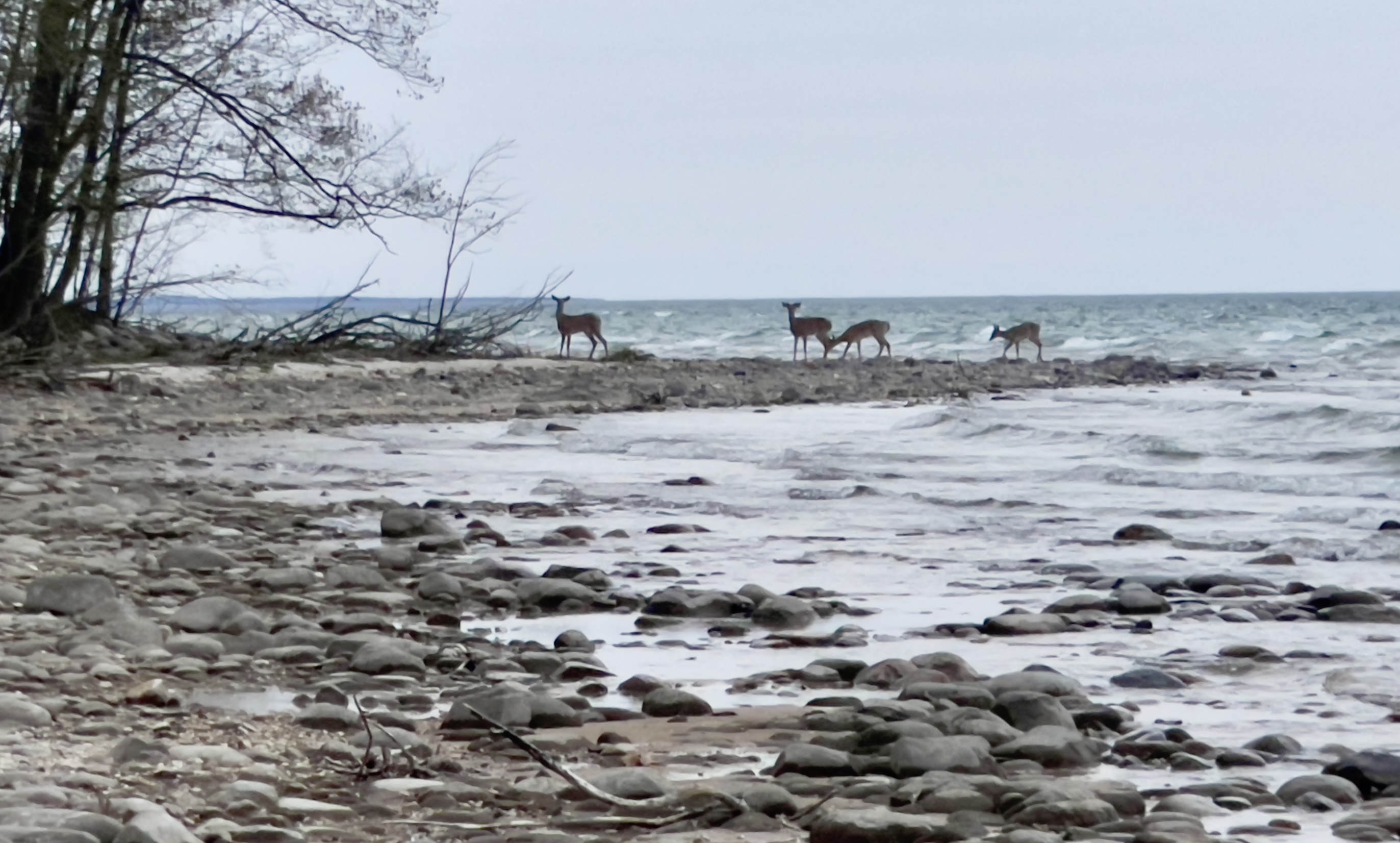
Preparatory men, I welcome all signs that a more manly, a warlike, age is about to begin, an age which, above all, will give honor to valor once again. For this age shall prepare the way for one yet higher, and it shall gather the strength which this higher age will need one day - this age which is to carry heroism into the pursuit of knowledge and wage wars for the sake of thoughts and their consequences. To this end we now need many preparatory-valorous men who cannot leap into being out of nothing - any more than out of the sand and slime of our present civilisation and metropolitanism: men who are bent on seeking for that aspect in all things which must be overcome; men characterised by cheerfulness, patience, unpretentiousness, and contempt for all great vanities, as well as by magnanimity in victory and forbearance regarding the small vanities of the vanquished; men possessed of keen and free judgement concerning all victors and the share of chance in every victory and every fame; men who have their own festivals, their own weekdays, their own periods of mourning, who are accustomed to command with assurance and are no less ready to obey when necessary, in both cases equally proud and serving their own cause; men who are in greater danger, more fruitful, and happier! For, believe me, the secret of the greatest fruitfulness and the greatest enjoyment of existence is: to live dangerously! Build your cities under Vesuvius! Send your ships into uncharted seas! Live at war with your peers and yourselves! Be robbers and conquerors, as long as you cannot be rulers and owners, you lovers of knowledge! Soon the age will be past when you could be satisfied to live like shy deer, hidden in the woods! At long last the pursuit of knowledge will reach out for its due: it will want to rule and own, and you with it!

Friedrich Nietzsche

16 May 2018

Accustom.


To learn to see- to accustom the eye to calmness, to patience, and to allow things to come up to it; to defer judgment, and to acquire the habit of approaching and grasping an individual case from all sides. This is the first preparatory schooling of intellectuality. One must not respond immediately to a stimulus; one must acquire a command of the obstructing and isolating instincts.

Friedrich Nietzsche

12 July 2017

Still.


The higher its type, always the seldomer doth a thing succeed. Ye higher men here, have ye not all—been failures?

Be of good cheer; what doth it matter? How much is still possible! Learn to laugh at yourselves, as ye ought to laugh!

What wonder even that ye have failed and only half-succeeded, ye half-shattered ones! Doth not—man's future strive and struggle in you?

Man's furthest, profoundest, star-highest issues, his prodigious powers—do not all these foam through one another in your vessel?

What wonder that many a vessel shattereth! Learn to laugh at yourselves, as ye ought to laugh! Ye higher men, Oh, how much is still possible!

Friedrich Nietzsche

20 June 2017

Necessity.

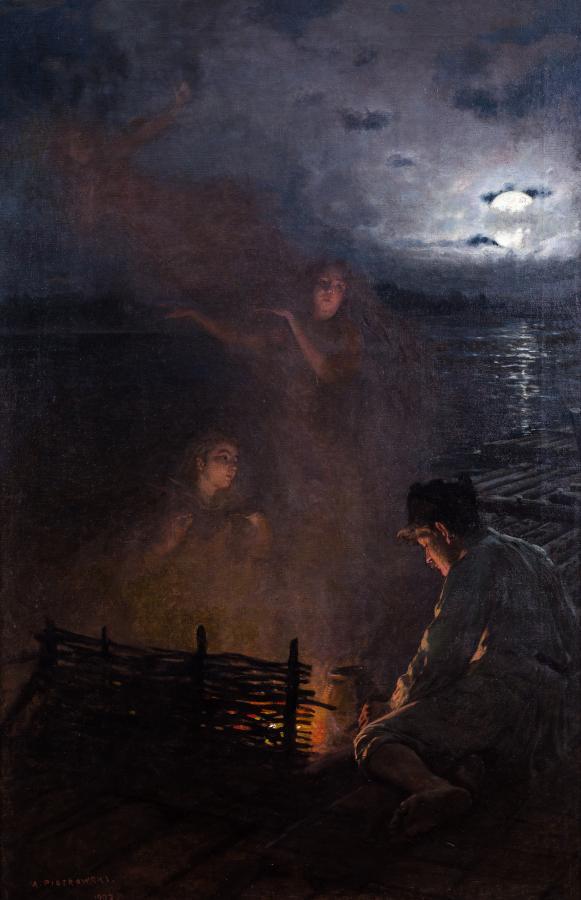
Piotrowski, Inside the Flames, 1907


My friend, it is the poet’s work Dreams to interpret and to mark. Believe me that man’s true conceit In a dream becomes complete: All poetry we ever read Is but true dreams interpreted.

The fair illusion of the dream sphere, in the production of which every man proves himself an accomplished artist, is a precondition not only of all plastic art, but even, as we shall see presently, of a wide range of poetry. Here we enjoy an immediate apprehension of form, all shapes speak to us directly, nothing seems indifferent or redundant. Despite the high intensity with which these dream realities exist for us, we still have a residual sensation that they are illusions; at least such has been my experience—and the frequency, not to say normality, of the experience is borne out in many passages of the poets. Men of philosophical disposition are known for their constant premonition that our everyday reality, too, is an illusion, hiding another, totally different kind of reality. It was Schopenhauer who considered the ability to view at certain times all men and things as mere phantoms or dream images to be the true mark of philosophic talent. The person who is responsive to the stimuli of art behaves toward the reality of dream much the way the philosopher behaves toward the reality of existence: he observes exactly and enjoys his observations, for it is by these images that he interprets life, by these processes that he rehearses it. Nor is it by pleasant images only that such plausible connections are made: the whole divine comedy of life, including its somber aspects, its sudden balkings, impish accidents, anxious expectations, moves past him, not quite like a shadow play—for it is he himself, after all, who lives and suffers through these scenes—yet never without giving a fleeting sense of illusion; and I imagine that many persons have reassured themselves amidst the perils of dream by calling out, “It is a dream! I want it to go on.” I have even heard of people spinning out the causality of one and the same dream over three or more successive nights. All these facts clearly bear witness that our innermost being, the common substratum of humanity, experiences dreams with deep delight and a sense of real necessity.

Friedrich Wilhelm Nietzsche, from The Birth of Tragedy from the Spirit of Music 

11 February 2017

Short.


Is life not a thousand times too short for us to bore ourselves?

Friedrich Nietzsche

03 October 2016

Herd.


The instinct of the herd values the juste milieu and the average as the highest and most precious of all things: the spot where the majority is to be found, and the air that it breathes there. In this way it is the opponent of all order of rank; it regards a climb from the level to the heights in the same light as a descent from the majority to the minority. The herd regards the exception, whether it be above or beneath its general level, as something which is antagonistic and dangerous to itself. Their trick in dealing with the exceptions above them, the strong, the mighty, the wise, and the fruitful, is to persuade them to become guardians, herdsmen, and watchmen in fact, to become their head-servants: thus they convert a danger into a thing which is useful. In the middle, fear ceases: here a man is alone with nothing; here there is not much room even for misunderstandings; here there is equality; here a man's individual existence is not felt as a reproach, but as the right existence; here contentment reigns supreme. Mistrust is active only towards the exceptions; to be an exception is to be a sinner.

Friedrich Nietzsche

18 September 2016

Spirit.


As yet you are not free; you still seek freedom. Too unslept has your seeking made you, and too wakeful.  But your bad impulses also thirst for freedom. Your wild dogs want liberty; they bark for joy in their cellar when your spirit endeavours to open all prison doors.

Friedrich Nietzsche