04 June 2020
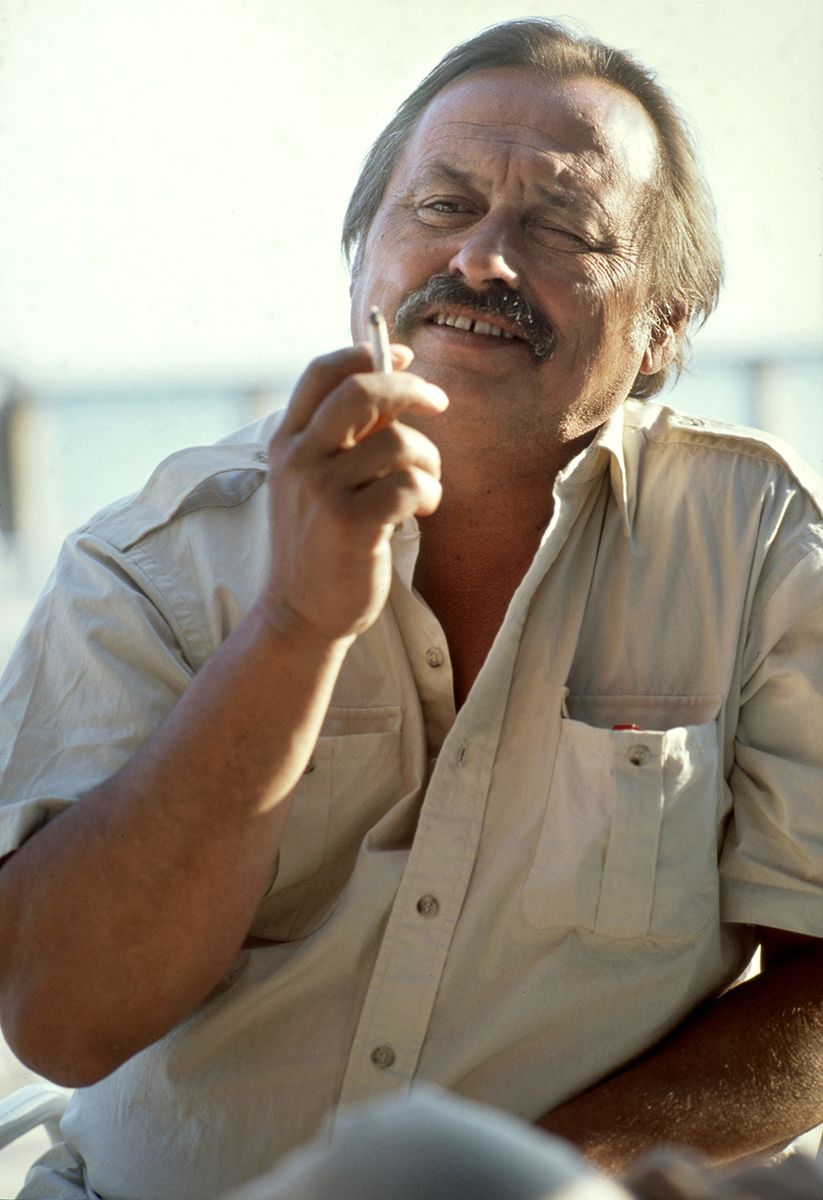
Kris Kristofferson, "Living Legend"
Was it bitter then,
With our backs against the wall?
Were we better men,
Than we'd ever been before?
Say, if she came again today,
Would you still answer to the call?
Tell the truth my friend,
Don't it matter anymore?
Performed by The Highwaymen ...
With our backs against the wall?
Were we better men,
Than we'd ever been before?
Say, if she came again today,
Would you still answer to the call?
Tell the truth my friend,
Don't it matter anymore?
Performed by The Highwaymen ...
Equal.
October 24, 1770. Boston, Massachusetts.
John Adams’ client, Captain Thomas Preston, was probably the most hated man in Boston, at least among those agitating for American independence.
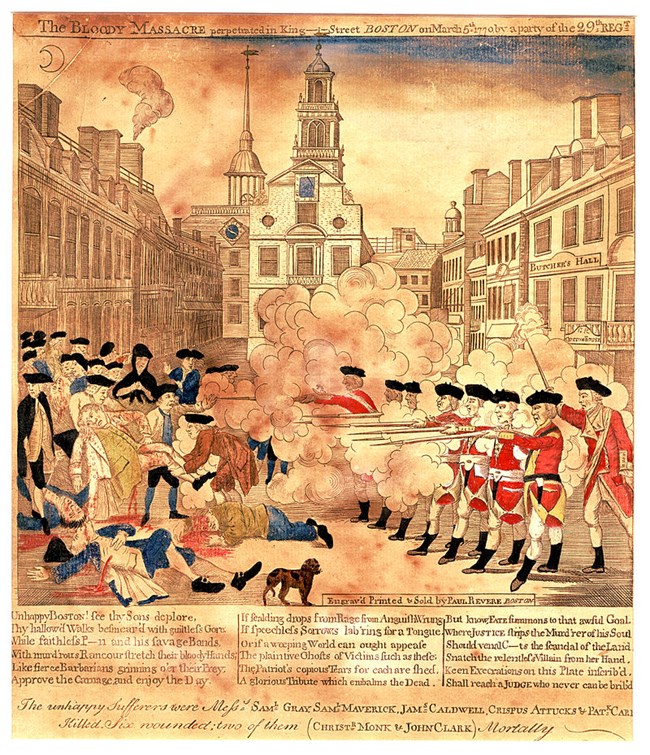
Seven months earlier, Preston led a handful of British soldiers (a.k.a. redcoats) to the King’s Custom House to protect a fellow solider being attacked by a large group of irate Colonists. Though details are sketchy, in the end, the soldiers fired into the crowd and six colonists lay dead, with five wounded.
Preston and the soldiers were immediately arrested and American patriots sprang into action. Some Colonists portrayed the events as an unprovoked attack and named it the “Boston Massacre.” Paul Revere made his famous engraving showing Preston and the soldiers firing callously into the crowd. Tensions between the British and Americans were at an all-time high.
But despite the perilousness of the situation, several men—like John Adams—stepped forward to ensure that the soldiers were provided a proper legal defense in court. It didn’t matter to Adams that his clients were hated British soldiers, or that Massachusetts could soon be at war with these very men. In his eyes, all individuals deserved to be treated equally in the eyes of the law. He would help enshrine this dedication for our country.
Adams was a respected lawyer, statesman, and future president of the United States, but he risked his reputation and the wrath of his countrymen to ensure justice was delivered fairly. It would not be the first time he displayed his commitment to the equal protection of the law.
CONNECT
Sustain.
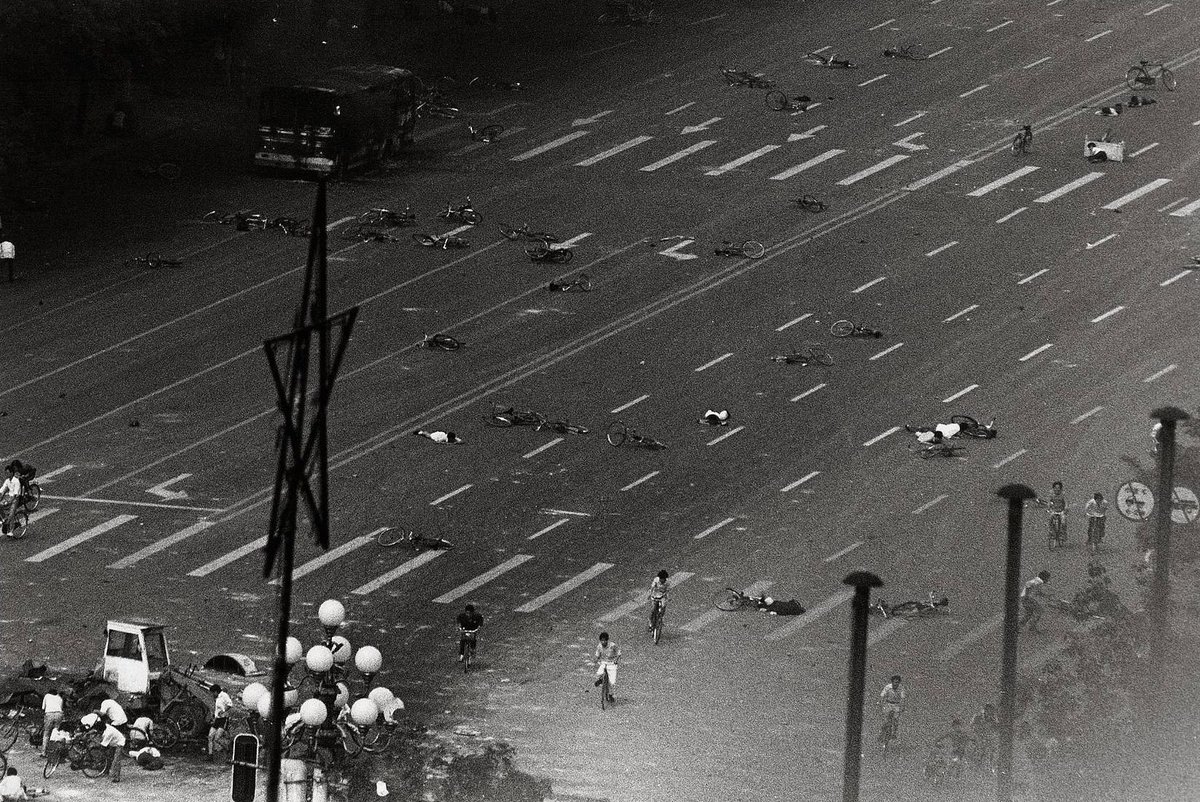
On this date in 1989, Chinese army troops stormed Tiananmen Square in Beijing, attempting to crush the pro-democracy movement.
It’s often said that an impoverished, poorly educated, agrarian country like China cannot sustain democracy. Yet my most powerful memory of that night 15 years ago is of the peasants who had come to Beijing to work as rickshaw drivers. During each lull in the firing, we could see the injured, caught in a no-man’s-land between us and the troops. We wanted to rescue them but didn’t have the guts. While most of us in the crowd cowered and sought cover, it was those uneducated rickshaw drivers who pedaled out directly toward the troops to pick up the bodies of the dead and wounded. Some of the rickshaw drivers were shot, but the rest saved many, many lives that night, rushing the wounded to hospitals as tears streamed down their cheeks. It would be churlish to point out that such people are ill-prepared for democracy, when they risked their lives for it.
Union.
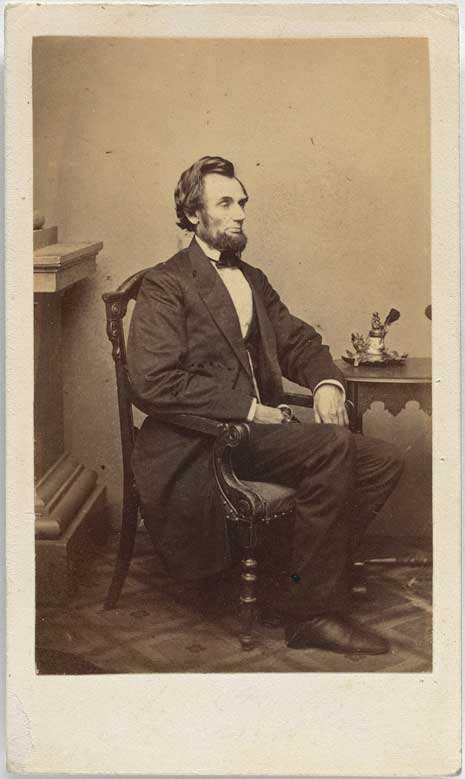
Gardner, Abraham Lincoln, 1861
We are not enemies, but friends. We must not be enemies. Though passion may have strained it must not break our bonds of affection. The mystic chords of memory, stretching from every battlefield and patriot grave to every living heart and hearthstone all over this broad land, will yet swell the chorus of the Union, when again touched, as surely they will be, by the better angels of our nature.
Abraham Lincoln, from his First Inaugural Address, March 4, 1861
Lucas E. Morel provides context ...
The fight was not just to preserve the Union from rebellious Southerners, but to engage the American citizenry—civilian and military—on disparate fronts personally, rhetorically, and politically. With an eye towards the progress of emancipation in Missouri, initiated by fits and starts by both the federal and state government, Lincoln had to negotiate circumstances and personalities—in a word, contingencies—that forecast no certain future for the continued union of the American states.
CONNECT
On.
Winston Churchill, 4 June 1940
Teachings.
Everyday
I see or hear
something
that more or less
kills me
with delight,
that leaves me
like a needle
in the haystack
of light.
It was what I was born for—
to look, to listen,
to lose myself
inside this soft world—
to instruct myself
over and over
in joy,
and acclamation.
Nor am I talking
about the exceptional,
the fearful, the dreadful,
the very extravagant—
but of the ordinary,
the common, the very drab,
the daily presentations.
Oh, good scholar,
I say to myself,
how can you help
but grow wise
with such teachings
as these—
the untrimmable light
of the world,
the ocean’s shine,
the prayers that are made
out of grass?
Mary Oliver
03 June 2020
Returning.
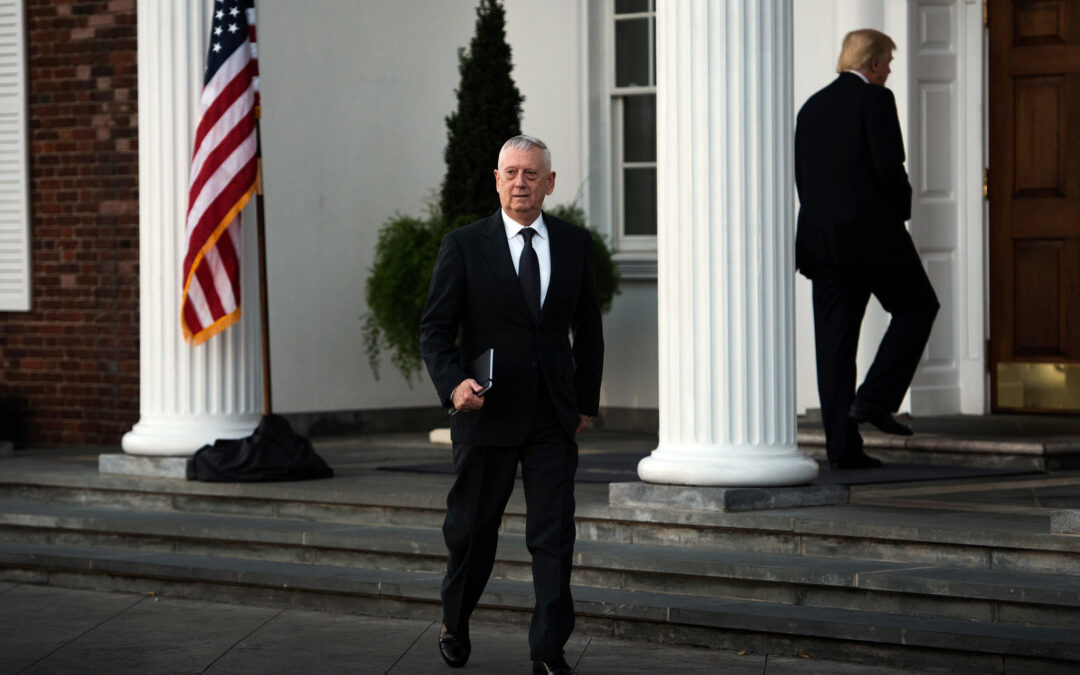
James Mattis, this evening ...
I have watched this week’s unfolding events, angry and appalled. The words “Equal Justice Under Law” are carved in the pediment of the United States Supreme Court. This is precisely what protesters are rightly demanding. It is a wholesome and unifying demand—one that all of us should be able to get behind. We must not be distracted by a small number of lawbreakers. The protests are defined by tens of thousands of people of conscience who are insisting that we live up to our values—our values as people and our values as a nation.
When I joined the military, some 50 years ago, I swore an oath to support and defend the Constitution. Never did I dream that troops taking that same oath would be ordered under any circumstance to violate the Constitutional rights of their fellow citizens—much less to provide a bizarre photo op for the elected commander-in-chief, with military leadership standing alongside.
We must reject any thinking of our cities as a “battlespace” that our uniformed military is called upon to “dominate.” At home, we should use our military only when requested to do so, on very rare occasions, by state governors. Militarizing our response, as we witnessed in Washington, D.C., sets up a conflict—a false conflict—between the military and civilian society. It erodes the moral ground that ensures a trusted bond between men and women in uniform and the society they are sworn to protect, and of which they themselves are a part. Keeping public order rests with civilian state and local leaders who best understand their communities and are answerable to them.
James Madison wrote in Federalist 14 that “America united with a handful of troops, or without a single soldier, exhibits a more forbidding posture to foreign ambition than America disunited, with a hundred thousand veterans ready for combat.” We do not need to militarize our response to protests. We need to unite around a common purpose. And it starts by guaranteeing that all of us are equal before the law.
Instructions given by the military departments to our troops before the Normandy invasion reminded soldiers that “The Nazi slogan for destroying us…was ‘Divide and Conquer.’ Our American answer is ‘In Union there is Strength.’” We must summon that unity to surmount this crisis—confident that we are better than our politics.
Donald Trump is the first president in my lifetime who does not try to unite the American people—does not even pretend to try. Instead he tries to divide us. We are witnessing the consequences of three years of this deliberate effort. We are witnessing the consequences of three years without mature leadership. We can unite without him, drawing on the strengths inherent in our civil society. This will not be easy, as the past few days have shown, but we owe it to our fellow citizens; to past generations that bled to defend our promise; and to our children.
We can come through this trying time stronger, and with a renewed sense of purpose and respect for one another. The pandemic has shown us that it is not only our troops who are willing to offer the ultimate sacrifice for the safety of the community. Americans in hospitals, grocery stores, post offices, and elsewhere have put their lives on the line in order to serve their fellow citizens and their country. We know that we are better than the abuse of executive authority that we witnessed in Lafayette Square. We must reject and hold accountable those in office who would make a mockery of our Constitution. At the same time, we must remember Lincoln’s “better angels,” and listen to them, as we work to unite.
Only by adopting a new path—which means, in truth, returning to the original path of our founding ideals—will we again be a country admired and respected at home and abroad.
02 June 2020
Blessing.
The fact is, squire, the moment a man takes to a pipe, he becomes a philosopher. It’s the poor man’s friend; it calms the mind, soothes the temper, and makes a man patient under difficulties. It has made more good men, good husbands, kind masters, indulgent fathers, than any other blessed thing on this universal earth.
Sam Slick, The Clockmaker
Happy Birthday, Hardy
The SHADOW on the STONE
I went by the Druid stone
That broods in the garden white and lone,
And I stopped and looked at the shifting shadows
That at some moments fall thereon
From the tree hard by with a rhythmic swing,
And they shaped in my imagining
To the shade that a well-known head and shoulders
Threw there when she was gardening.
I thought her behind my back,
Yea, her I long had learned to lack,
And I said: ‘I am sure you are standing behind me,
Though how do you get into this old track?’
And there was no sound but the fall of a leaf
As a sad response; and to keep down grief
I would not turn my head to discover
That there was nothing in my belief.
Yet I wanted to look and see
That nobody stood at the back of me;
But I thought once more: ‘Nay, I’ll not unvision
A shape which, somehow, there may be.’
So I went on softly from the glade,
And left her behind me throwing her shade,
As she were indeed an apparition—
My head unturned lest my dream should fade.
Thomas Hardy
Labels:
appreciation,
bike,
Hardy,
poetry,
poetry rules!
Excellent.
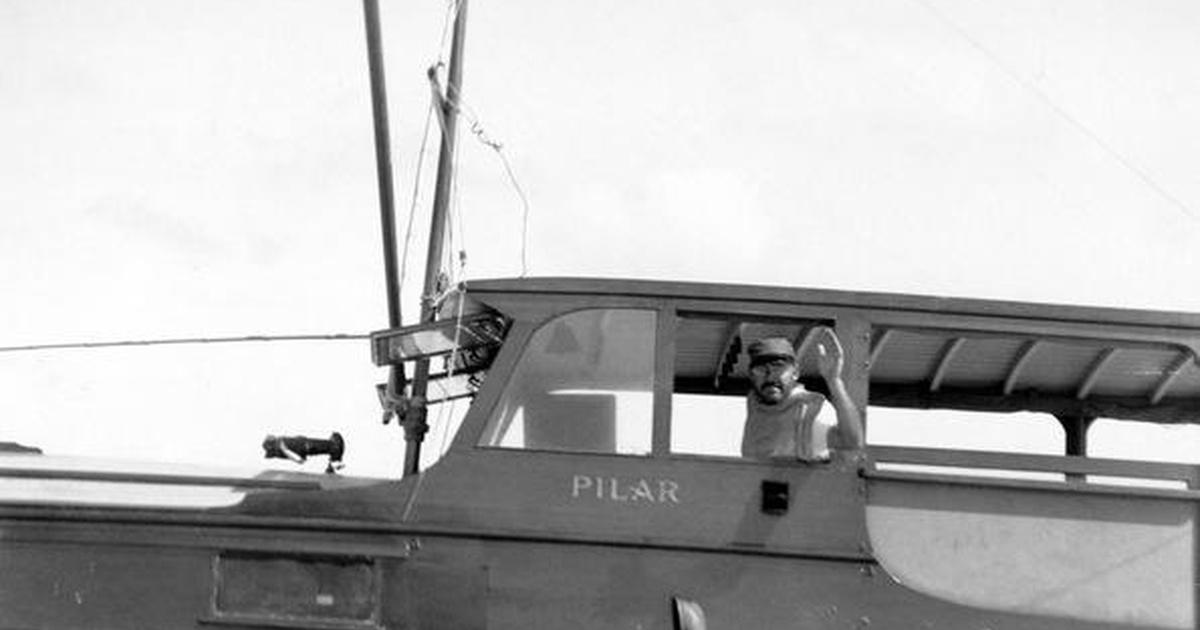
That night, which passed in a blur of wine and delicate meats and leisurely conversation, would be our only up-close glimpse of Buckley, or so we assumed at the time. A month and a half at the job did nothing to dent this impression. Then, in the middle of July, there was a phone call for me. The clipped voice at the other end belonged to Buckley’s personal assistant.
“Bill would like to invite you and Jaime to go sailing with him this Friday,” she said. “You can? Splendid. You’ll be picked up at Stamford at six, then. At the train station, yes. Excellent. Have a nice day.”
CONNECT
01 June 2020
Insisting.
Victims expect assistance always and from everyone. This goes back to the independence issue but the difference here is that expecting – insisting on – assistance colors the experience for everyone involved.
Thank you, Kurt.
Symbolism.
... I’ll not be going back there.
Gettin' real at the yup-yup feed trough. Smart move. It's all symbolism over substance.
Unhinged.
George Will, this afternoon ...
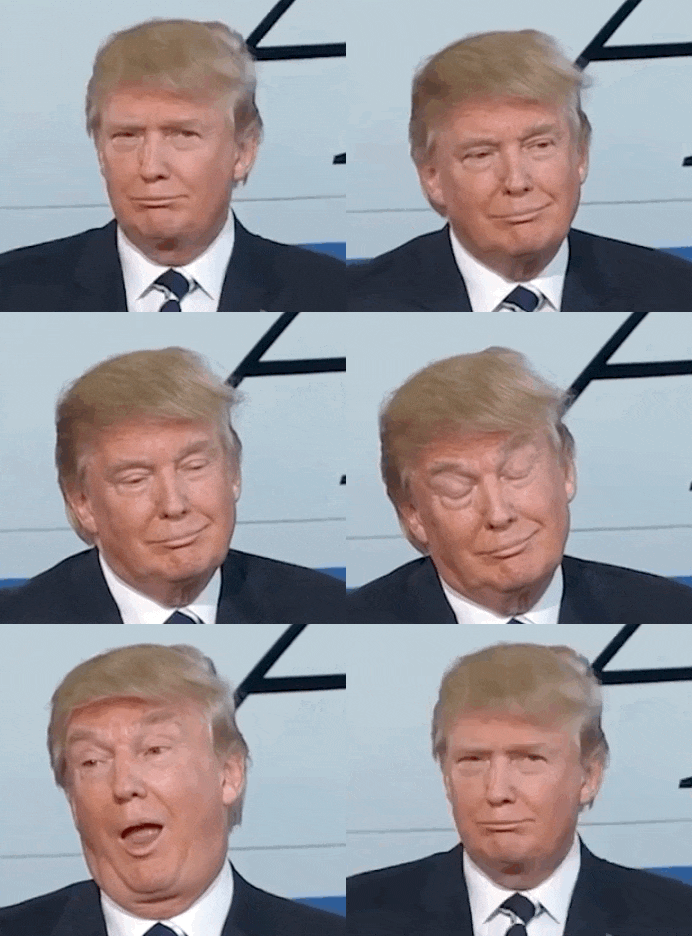
This unraveling presidency began with the Crybaby-in-Chief banging his spoon on his highchair tray to protest a photograph — a photograph — showing that his inauguration crowd the day before had been smaller than the one four years previous. Since then, this weak person’s idea of a strong person, this chest-pounding advertisement of his own gnawing insecurities, this low-rent Lear raging on his Twitter-heath has proven that the phrase malignant buffoon is not an oxymoron.
Presidents, exploiting modern communications technologies and abetted today by journalists preening as the “resistance” — like members of the French Resistance 1940-1944, minus the bravery — can set the tone of American society, which is regrettably soft wax on which presidents leave their marks. The president’s provocations — his coarsening of public discourse that lowers the threshold for acting out by people as mentally crippled as he — do not excuse the violent few. They must be punished. He must be removed ...
In life’s unforgiving arithmetic, we are the sum of our choices. Congressional Republicans have made theirs for more than 1,200 days. We cannot know all the measures necessary to restore the nation’s domestic health and international standing, but we know the first step: Senate Republicans must be routed, as condign punishment for their Vichyite collaboration, leaving the Republican remnant to wonder: Was it sensible to sacrifice dignity, such as it ever was, and to shed principles, if convictions so easily jettisoned could be dignified as principles, for . . . what? Praying people should pray, and all others should hope: May I never crave anything as much as these people crave membership in the world’s most risible deliberative body.
A political party’s primary function is to bestow its imprimatur on candidates, thereby proclaiming: This is who we are. In 2016, the Republican Party gave its principal nomination to a vulgarian and then toiled to elect him. And to stock Congress with invertebrates whose unswerving abjectness has enabled his institutional vandalism, who have voiced no serious objections to his Niagara of lies, and whom T.S. Eliot anticipated:
We are the hollow men . . .Those who think our unhinged president’s recent mania about a murder two decades ago that never happened represents his moral nadir have missed the lesson of his life: There is no such thing as rock bottom.
Our dried voices, when
We whisper together
Are quiet and meaningless
As wind in dry grass
or rats’ feet over broken glass . . .
CONNECT
Happy Birthday, Gallup
Experience.
Every idea that is a true idea has a form, and is capable of many forms. The variety of forms of which it is capable determines the value of the idea. So by way of ideas, and your mastery of them in relation to what you are doing, will come your value as an architect to your society and future. That's where you go to school. You can't get it in a university, you can't get it here, you can't get it anywhere except as you love it, love the feeling of it, desire and pursue it. And it doesn't come when you are very young, I think. I believe it comes faster with each experience, and the next is very simple, or more simple, until it becomes quite natural to you to become master of the idea you would express.
Frank Lloyd Wright
Listing.
Subscribe to:
Posts (Atom)